

Getting started with aquascaping: the step-by-step method
Choosing the tank, building the layout, planting then letting it mature: the complete method for a successful first aquascape without skipping steps.
In this guide
Getting started with aquascaping is above all about following an order: choose a reasonably sized tank, build the mineral and plant layout dry, plant densely, then let the aquarium mature for several weeks before introducing any animals. Aquascaping isn't about expensive equipment, but about patience and composition. Here's the method we follow at the workshop for a first aquatic landscape.
Choosing the right aquarium
For a first project, a tank of 30 to 60 litres offers the best compromise. It stays easy to handle and maintain, while holding enough water to cushion small mistakes: in a larger volume, a temperature swing or overfeeding is diluted more. Very small tanks, under 20 litres, are appealing but more temperamental.
Favour extra-clear glass, which renders colours without a greenish reflection, and plan for stable furniture or a worktop: a full aquarium weighs about one kilogram per litre, plus the substrate and rocks.
Understanding the main styles
Before laying the first stone, choose an intention. Three families guide most compositions:
- The "nature" style recreates a terrestrial landscape, hill, woodland or riverbank, with rocks, wood and plants mixed together.
- The mineral style, called "iwagumi", relies on a small number of stones and a carpeting plant in the foreground. Pared-back, it's also the most demanding.
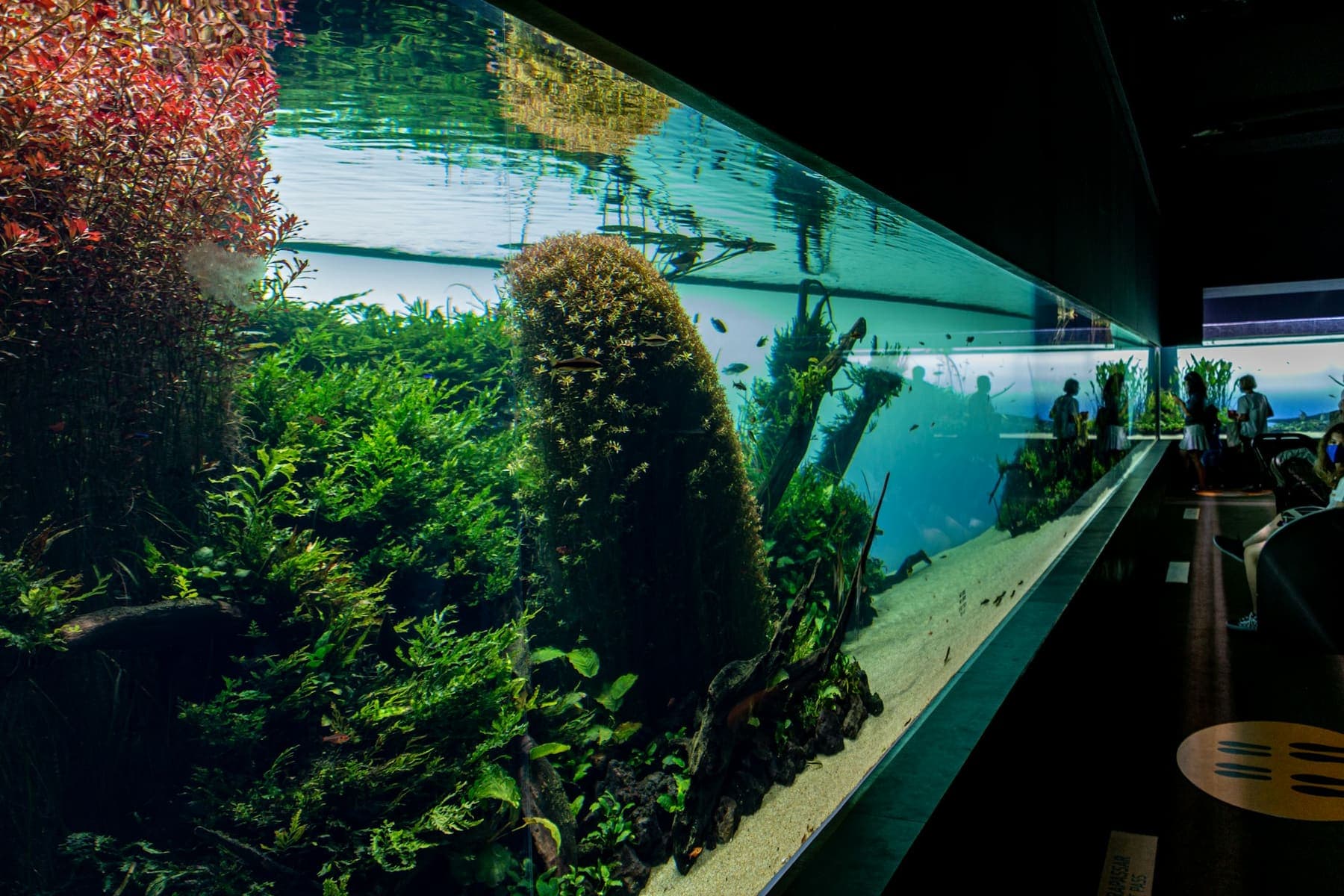
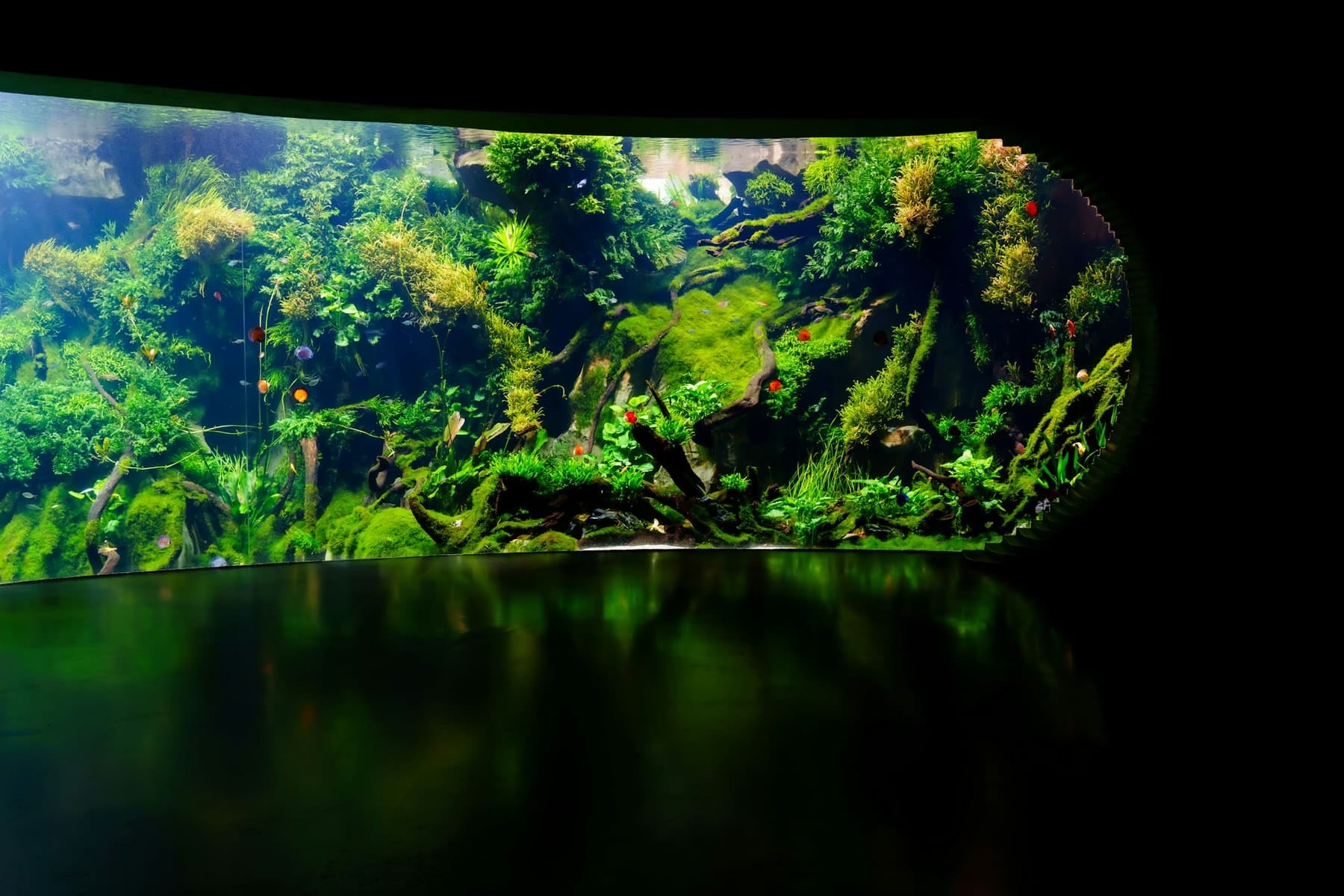
- The "jungle" style lets plants spill over around a central piece of wood. It's often the most forgiving for beginners.
Building the hardscape
Hardscape means the mineral and woody structure: rocks, roots, substrate. It's what gives the landscape its depth and movement.
The substrate
A nutrient-rich substrate is the base of a planted aquascape. Spread it on a slope: around 2 to 3 cm at the front, 6 to 8 cm at the back. This slope creates an illusion of depth and leaves room for the roots of background plants. This type of nutrient substrate lowers the pH and slightly changes the water chemistry, which suits most plants and small freshwater species. To compare nutrient substrates and inert gravels, see our guide which substrate for a planted aquarium.
Rocks and wood
Work dry, with the tank empty, and take your time. A few simple pointers:
- place the main element off-centre, around a third of the way along the tank's length;
- use rocks of a single type, in odd numbers, of different sizes;
- orient the rocks' veins in the same direction for a sense of unity;
- leave open spaces, which will become swimming room and visual breathing space.
Dragon stone, or Ohko stone, is inert: it doesn't raise the water's pH or hardness. Rinse and brush it thoroughly to remove clay and dust. If you add a root, soak it before installing it: it releases tannins that tint the water amber and may develop a light whitish film over the first few weeks, which isn't a concern.
Planting and filling with water
Moisten the substrate with a mister, then plant using long tweezers: they let you push the stems in without disturbing the layout. Plant densely from the start. Numerous plants consume the available nutrients and leave less room for algae. The Dennerle Aquarium Care Set, for example, brings together a straight pair of tweezers, curved scissors, a net, a cloth and a glass sponge.
- Background: stem plants or fast-growing plants.
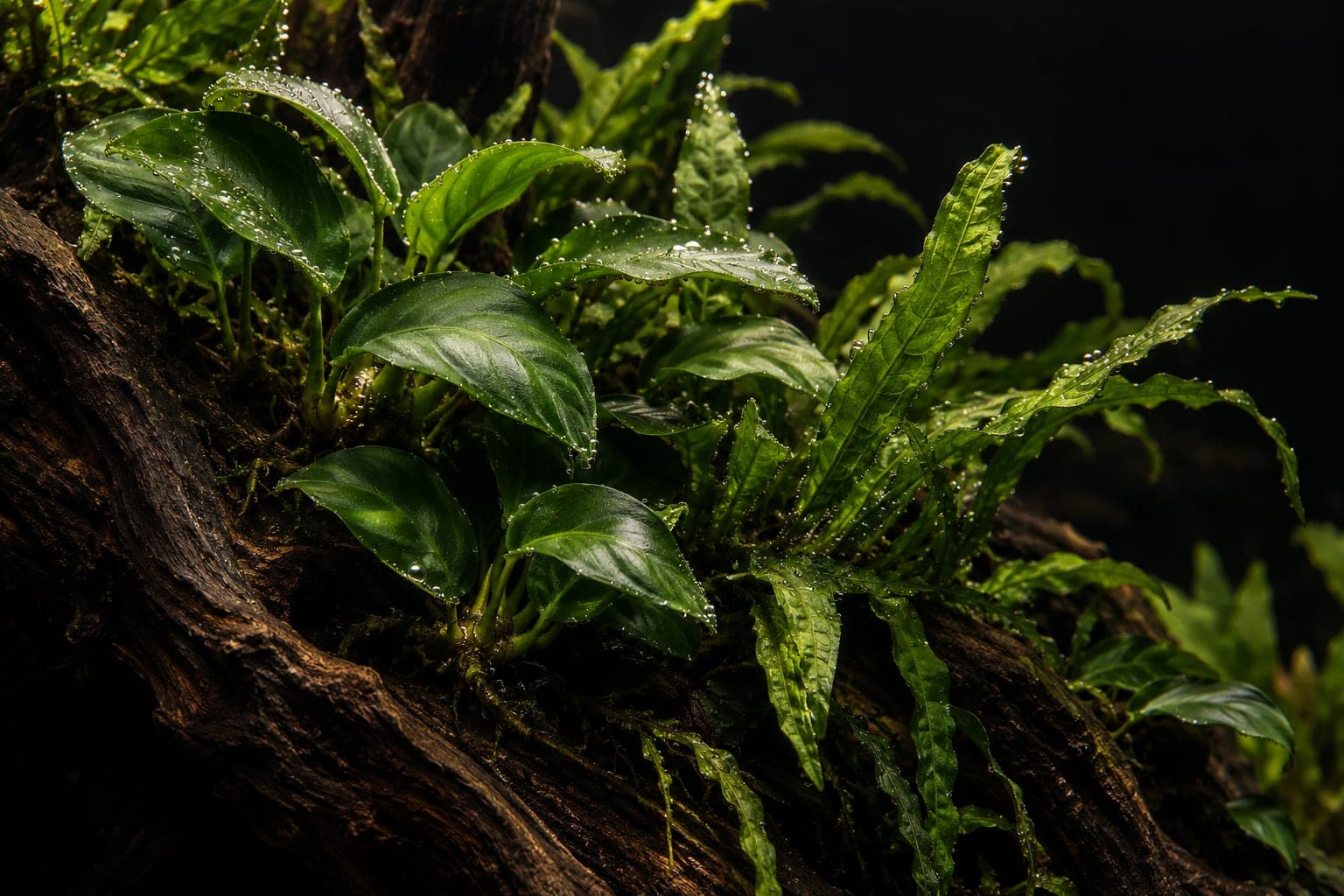
- Midground: ferns and anubias, attached to wood or rocks rather than buried.
- Foreground: carpeting plants or small tufts.
Then fill very slowly, pouring the water onto a plate or a bag placed at the bottom, so as not to dig into the substrate. Treat tap water with a conditioner if it's chlorinated.
The first few weeks
A new aquarium isn't yet a stable living environment. It has to go through the nitrogen cycle, during which bacteria establish themselves in the filter and substrate to break down toxic waste. Allow four to six weeks in general: that's the subject of our guide the nitrogen cycle, explained simply. And if algae appear, don't worry: it's common in a young tank.
During this period:
- limit lighting to 6 hours a day for the first two to three weeks, then gradually increase towards 7 to 8 hours;
- change 25 to 50% of the water at least twice a week for the first four weeks, as Tropica recommends for its nutrient substrate: new substrate releases nutrients;
- remove damaged leaves as they appear;
- test the water regularly before introducing animals.
CO₂ injection isn't essential with easy plants and moderate lighting. It becomes useful for foreground carpets and demanding plants. Above all, remember that algae appear when light, CO₂ and nutrients are out of balance: plenty of light without CO₂ is the most common cause. Our selection of CO₂-free aquarium plants lets you start simply.
Common mistakes
- Too much light too soon: it's the most direct route to a green algae bloom.
- Not enough plants: a sparsely planted tank leaves nutrients unused.
- Animals within the first week: wait for the end of the cycle, confirmed by tests.
- Rocks of different types: the composition loses its coherence.
- Cleaning the filter with tap water: rinse the filter media in aquarium water to preserve the bacteria.
What's next?
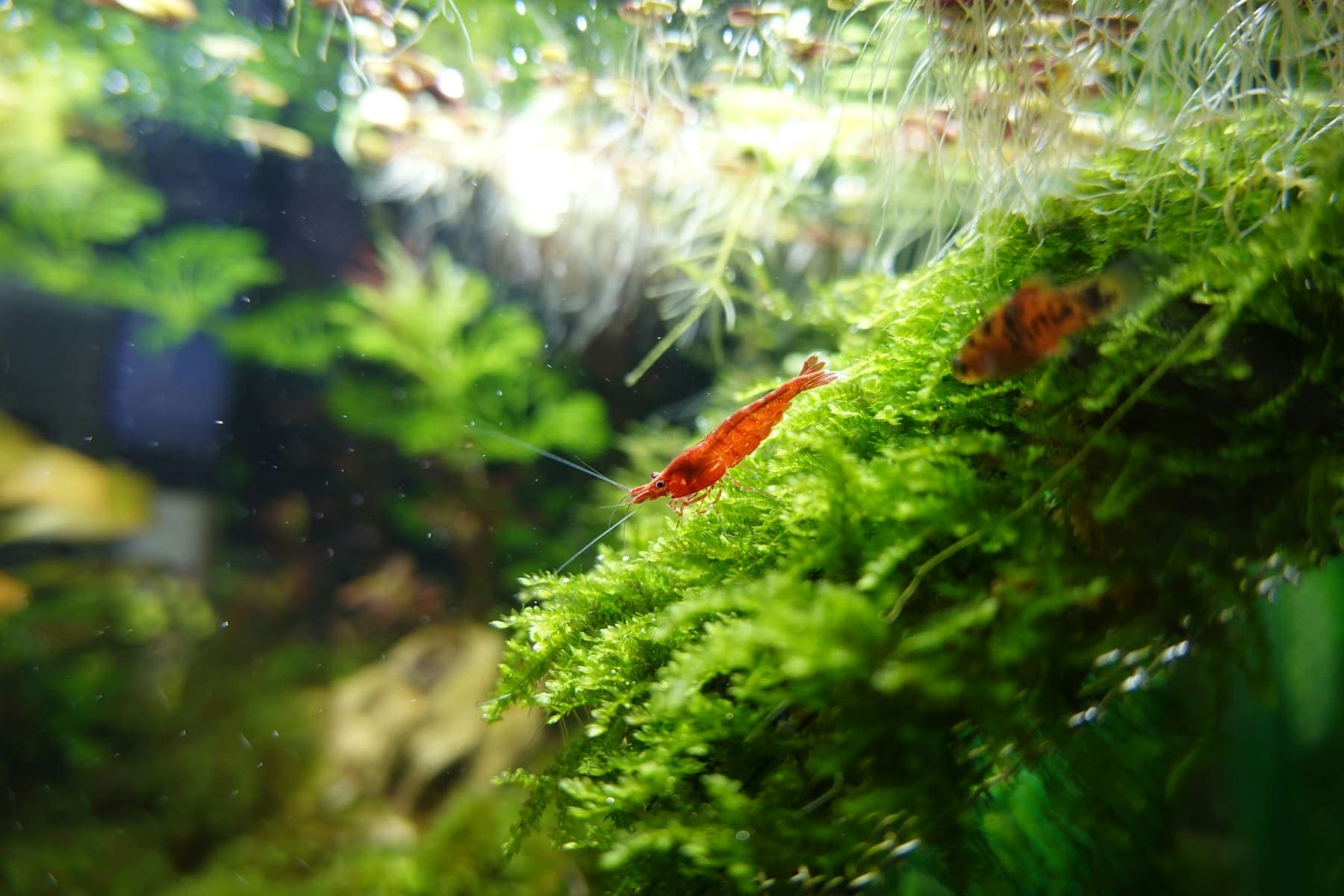
Once the tank is stable, you can consider a few small fish or shrimp, which help with cleaning. If shrimp appeal to you, our comparison which aquarium for freshwater shrimp will help you match the volume and substrate. You'll find rocks and tools in our aquascaping section.
Sources
- Aquarium Soil, a perfect, complete bottom layer for aquariums — Tropica
- Growing-in : démarrer un nouvel aquarium — Tropica
- Guide du débutant, partie 3 : phase de démarrage et entretien — Dennerle
- Ohko Stone (Dragon) — Nature Aquascapes
- Aquarium Care Set, set d'entretien pour aquarium d'eau douce — Dennerle
Frequently asked questions
What budget should you plan for getting into aquascaping?
The budget mainly depends on the tank size and the lighting. A 30-litre nano-aquarium, a nutrient substrate, a few rocks, a root, easy plants, an LED bar and a suitable filter are enough for a first landscape. CO₂ can wait.
How long before you can add fish or shrimp?
You need to wait for the end of the nitrogen cycle, generally four to six weeks. Tests should show no ammonia or nitrites over several consecutive days before introducing animals, in small numbers.
Is CO₂ compulsory in an aquascape?
No. With slow-growing plants like anubias, ferns or mosses and moderate lighting, an aquascape does very well without CO₂. It becomes useful for foreground carpets and light-demanding plants.