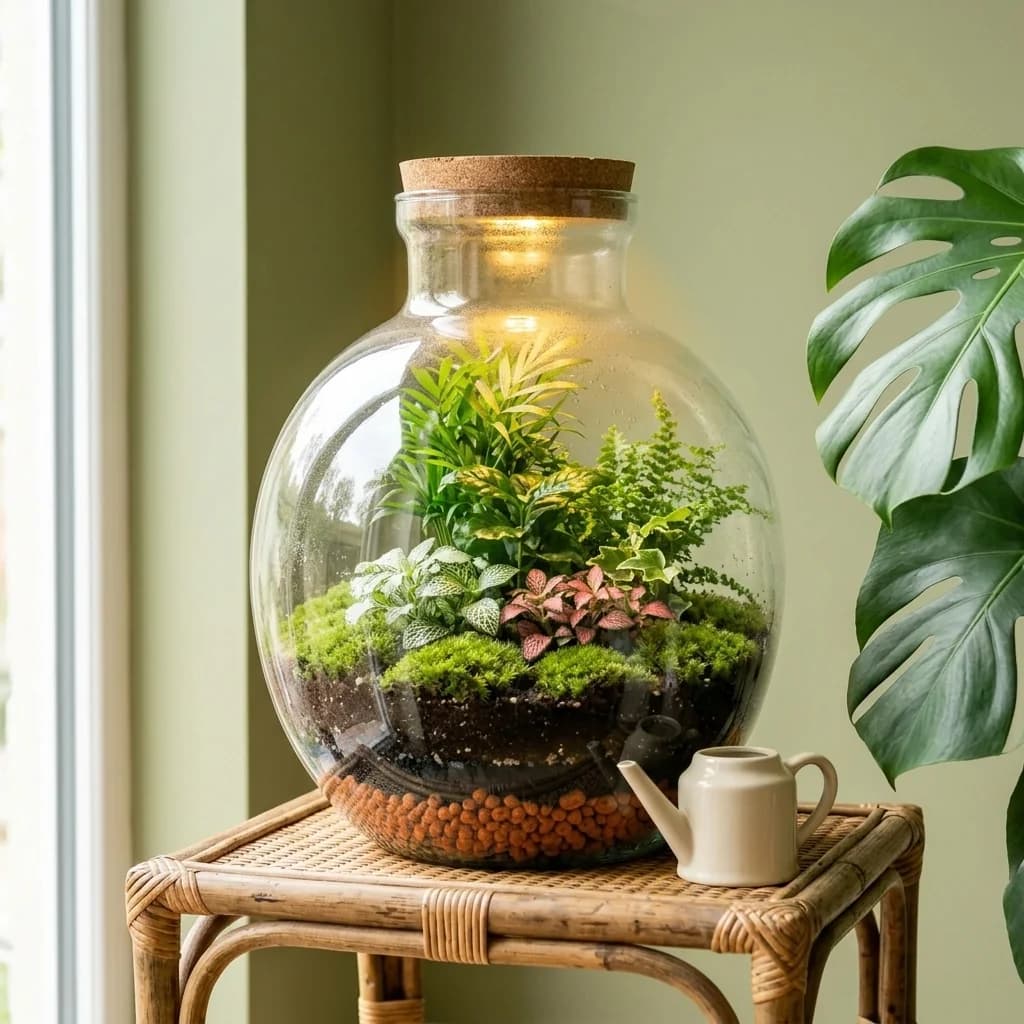
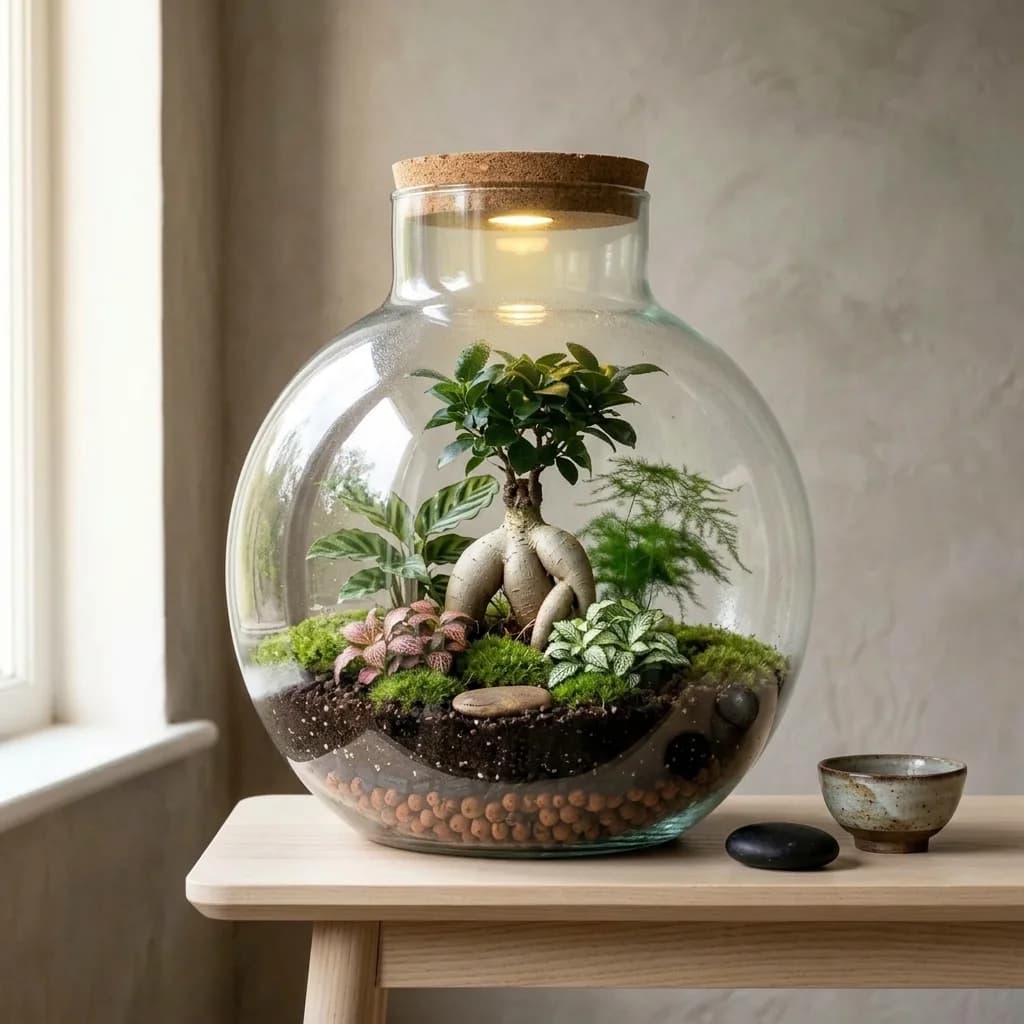


Moss for terrariums: a short guide to the species
Leucobryum, Hypnum, Thuidium, Dicranum: how to recognise the main terrarium mosses, understand what they need, and choose cultivated specimens.
In this guide
Going further: Before buying, tell living moss and preserved moss apart so you pick the right one for the job.
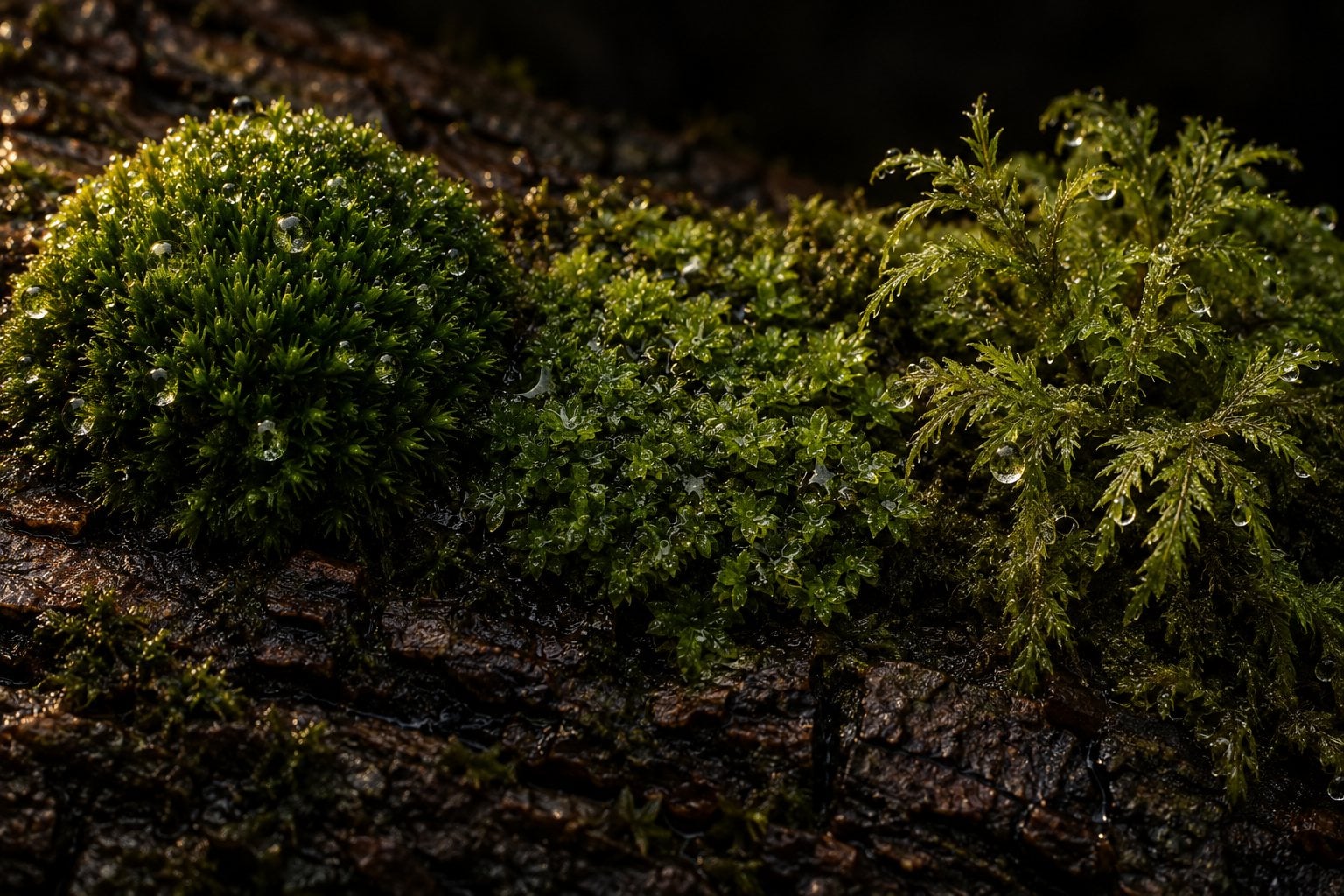
The mosses best suited to a terrarium are Leucobryum, which forms rounded cushions, Hypnum, which carpets in flat sheets, and Thuidium, with its fine fern-like fronds — all of them at home in the humidity of a closed container under indirect light. To keep them thriving long-term, three conditions are enough: low-lime water, no direct sunlight, and a moist substrate without excess. And one principle that isn't up for negotiation: cultivated moss, never moss collected from the wild.
What you need to know about moss
Mosses are bryophytes, among the oldest land plants. They have no flowers, no seeds and no roots: fine filaments called rhizoids anchor them to their support but don't supply them with water or nutrients. Moss therefore takes up moisture directly through its stems and leaves. It reproduces by spores and by fragmentation.
This physiology explains what it needs in a terrarium:
- air humidity matters more than watering the soil;
- water quality matters, because limescale deposits build up directly on the leaves;
- it isn't buried: you lay it down and press it onto the substrate.
The main species for terrariums
Leucobryum: the cushion moss
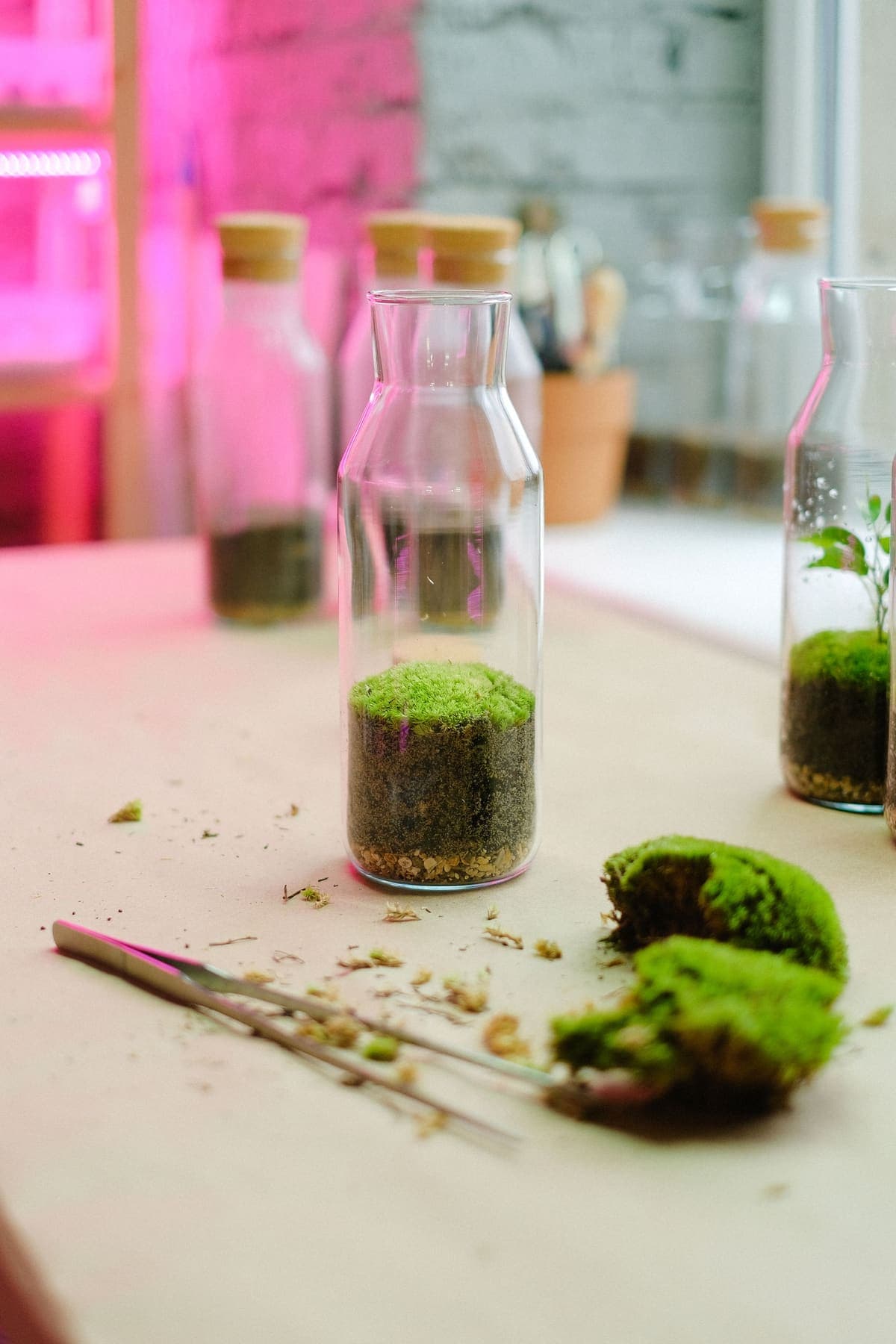
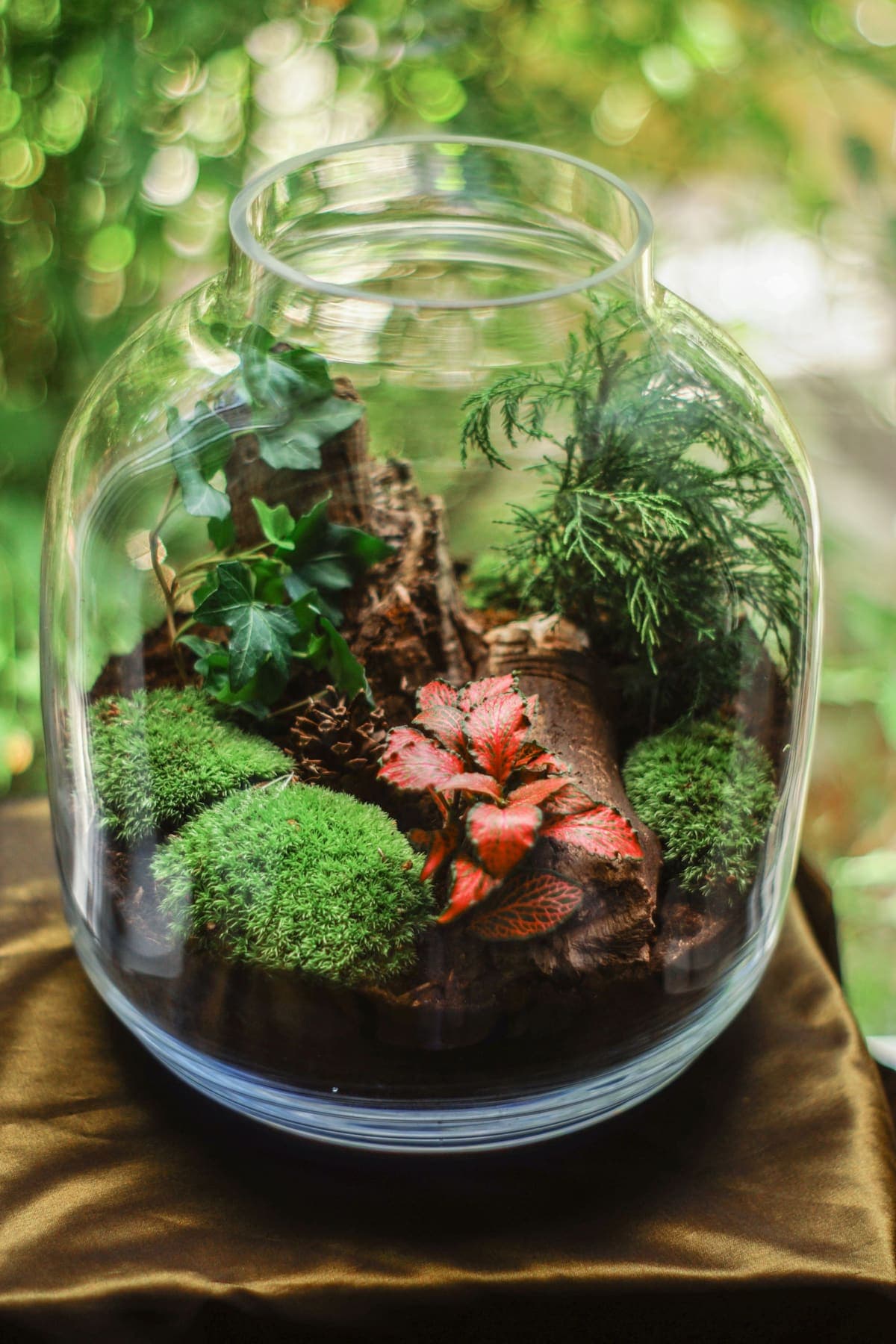
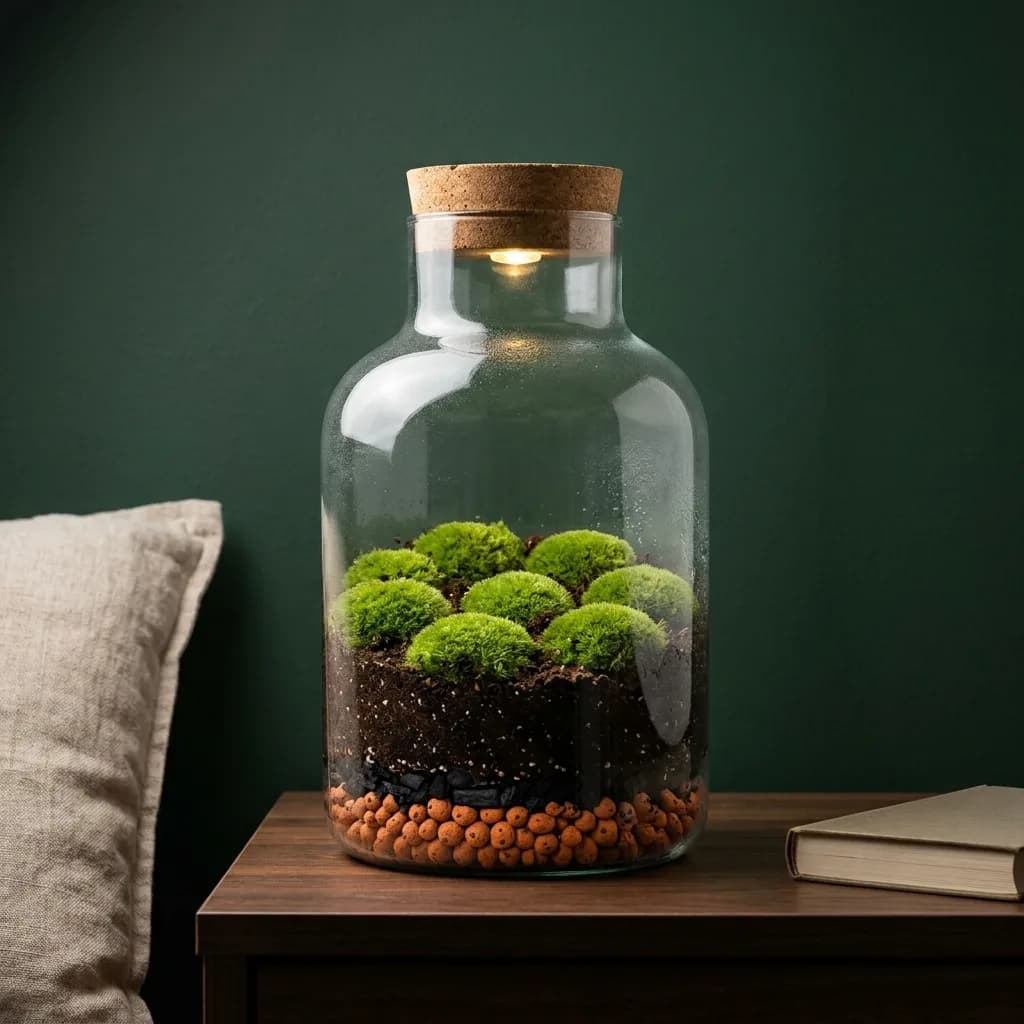
Leucobryum glaucum forms dense, rounded cushions in a slightly bluish, glaucous green. It turns white as it dries and greens up again once rehydrated. It's the ideal moss for creating hills and relief. It likes humidity but hates having its base permanently waterlogged: place it on well-drained substrate, never in a puddle.
Hypnum: the flat moss
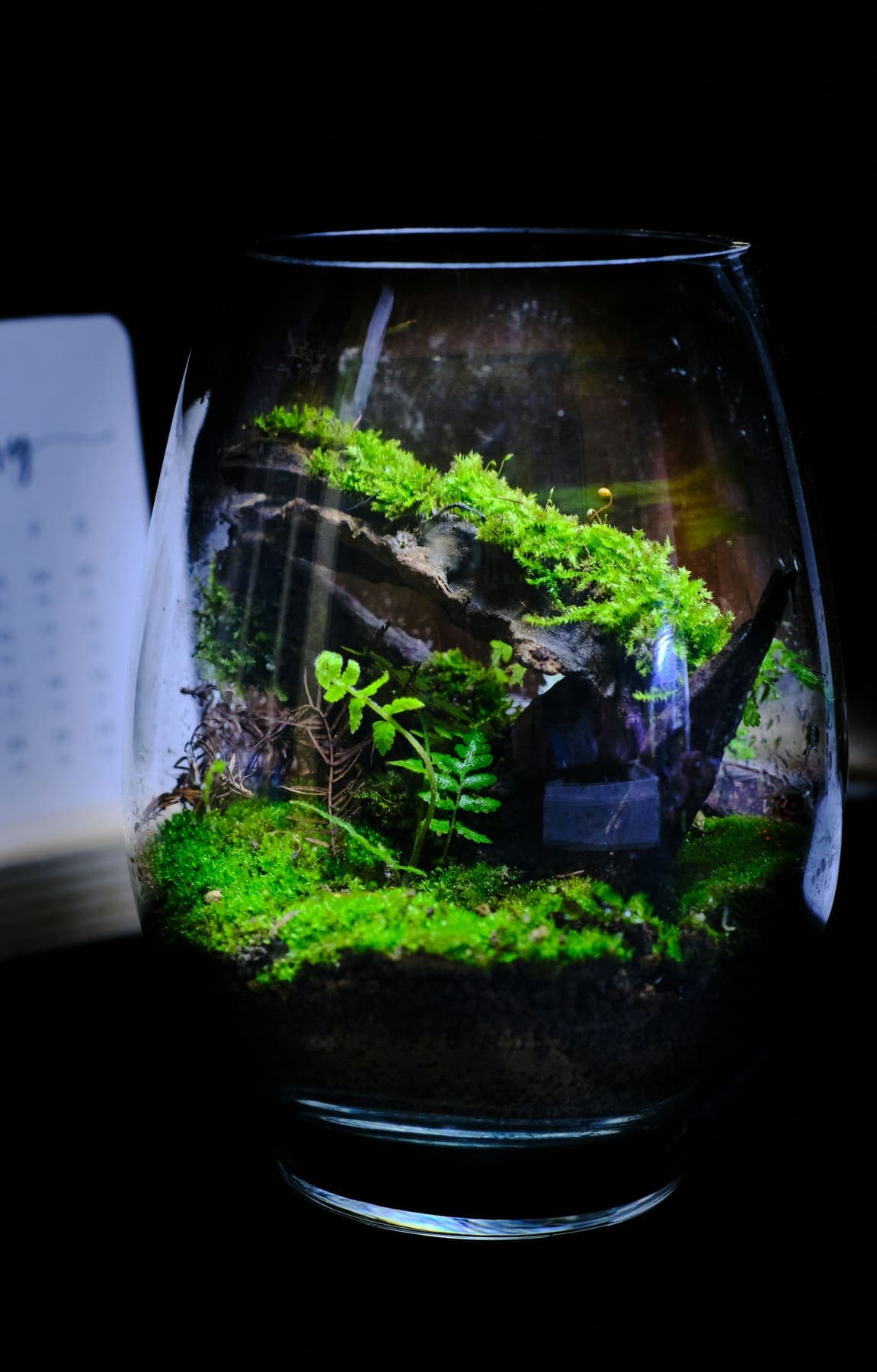
Hypnum cupressiforme grows in low, tight-knit mats with small, curved leaves. Supple and very tolerant, it hugs contours and covers stones and pieces of wood. It's an excellent background moss for covering large surfaces and tying the different elements of a composition together.
Thuidium: the fern moss
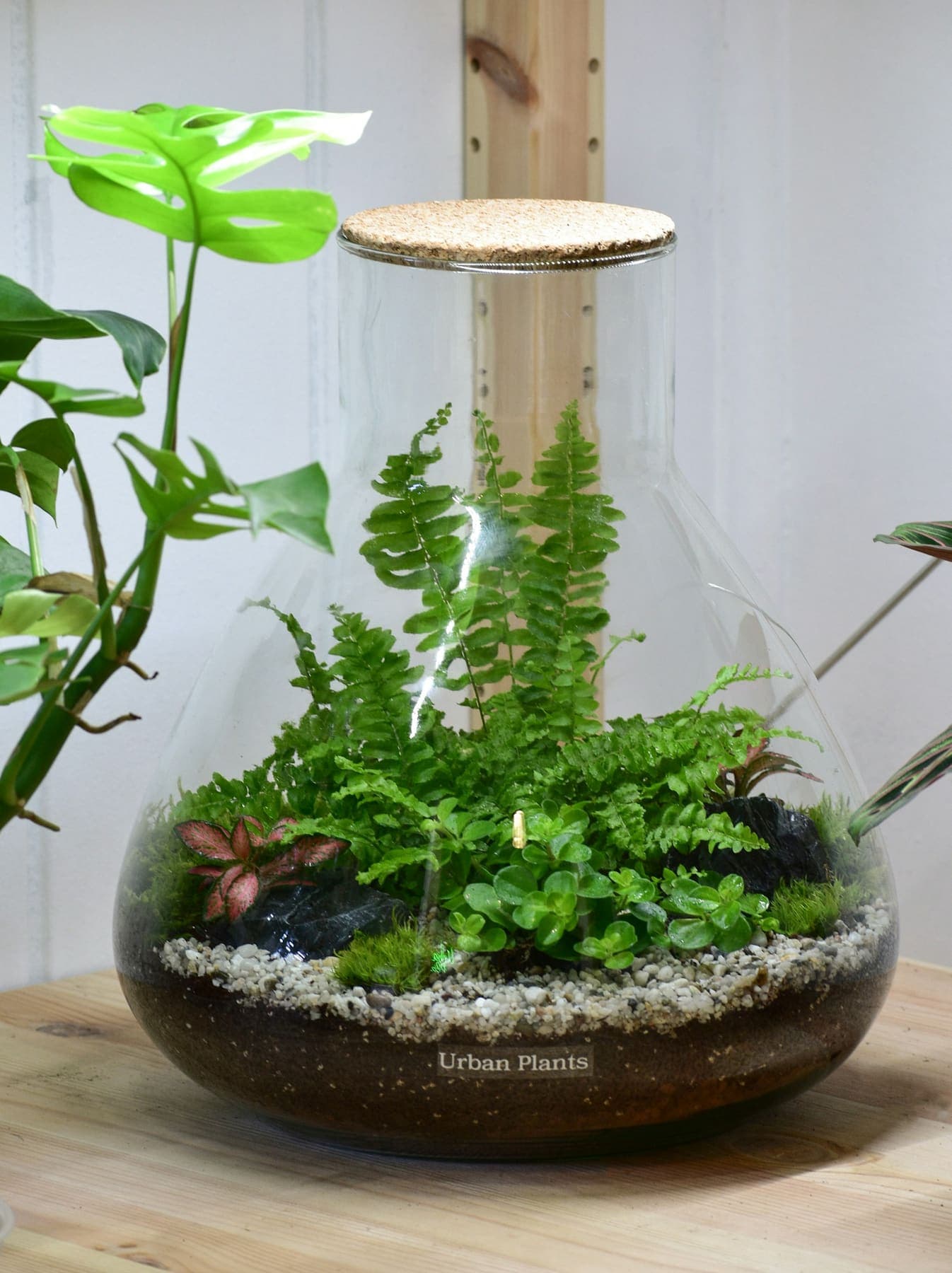
Thuidium tamariscinum is recognisable by its branching stems, which resemble tiny fern fronds. Highly decorative, it likes high, steady humidity, which makes it a good candidate for closed terrariums.
Dicranum: the tufted moss
Dicranum scoparium forms tufts of fine leaves, slightly curved as if swept by the wind. It adds volume and movement. It copes well with a humid environment, provided the air isn't completely still.
Polytrichum: the star moss
Polytrichum sends up taller stems dressed in star-shaped leaves. It needs more light and airflow than the previous species: it does better in an open or semi-open terrarium, and can become leggy in a closed jar that's too dark.
Settling your moss in properly
- Rehydrate the moss on arrival by misting it generously, without soaking it for hours.
- Clean it by removing debris, yellowed strands and any small unwanted hitchhikers.
- Trim with scissors to adjust the shapes, keeping the lower layer intact.
- Press firmly onto the moist substrate to ensure good contact.
- Mist with rainwater, demineralised water or low-lime water.
Why choose cultivated moss
Moss grows slowly: a cushion of Leucobryum can represent years of growth. Collected from the woods, it leaves bare soil behind and deprives many small organisms of their shelter. In France, the Forestry Code punishes removing moss without the landowner's permission — the ONF's [National Forestry Office] in a public forest — with a fourth-class fine. Article R. 163-4 covers the quantities a terrarium keeper would gather, under 2 cubic metres; beyond that, Article L. 163-10 applies. Leucobryum glaucum also appears in Annex V of the EU Habitats Directive, which lists species whose collection from the wild may be subject to management measures. In protected natural areas, stricter rules often apply on top of this: check with the site manager before doing anything.
Cultivated moss also has practical advantages: it's cleaner, more even, and arrives free of slugs, mites or unwanted seeds.
Diagnosing moss in trouble
- It's turning yellow or brown: lack of light, water that's too hard, or excess standing water.
- It's turning white and brittle: it lacks humidity. Mist it and check the container is properly closed.
- It's covered in a white fuzz: mould linked to standing water or a lack of air. Remove the affected area and air it out for a few hours.
- It's stretching and turning pale: light is insufficient. Move the terrarium closer to a window, out of direct sun.
Common mistakes
- Using very hard tap water: white marks appear and the moss withers.
- Exposing it to direct sunlight: under glass, it burns within hours.
- Burying it: it rots from the base.
- Drowning it: moist doesn't mean waterlogged.
- Collecting moss in the forest: a gesture that damages the habitat and often introduces pests.
Take it further
For the laying itself — cutting, contact, misting — follow how to lay moss in a terrarium. Pair your moss with a few woodland plants using our guide which plants for a terrarium, then follow the tutorial how to create a closed terrarium. For which water to use and the right misting rhythm, read how to water a terrarium. All our cultivated mosses are gathered in the moss section.
Further reading
Springtails can contribute to decomposition around mosses. Their presence does not replace airy soil and appropriate moisture.
Sources
- Foire aux questions — Bryophytes de France
- Les bryophytes — Observatoire de la biodiversité des forêts
- Leucobryum glaucum (Hedw.) Ångstr., 1845 — Conservatoire botanique national de Bourgogne-Franche-Comté
- La cueillette des plantes sauvages : régime juridique et protection des espèces végétales — Jardins de France
- Qu'a-t-on le droit de faire en forêt ? — Semeurs de Forêts
- Code forestier, article R. 163-4 — Légifrance
Frequently asked questions
Which moss should I choose for a closed terrarium?
Cushion Leucobryum, carpeting Hypnum and Thuidium are the best suited to the humidity of a closed terrarium. Polytrichum, which prefers more light and air, is better suited to an open terrarium.
Can you collect moss from the forest for a terrarium?
It's not advisable. Moss grows very slowly, its collection is often regulated or banned depending on the location, and it requires the landowner's consent. Collected moss also frequently brings in pests. Choose cultivated moss instead.
Why is my terrarium moss turning yellow?
Yellowing is most often caused by a lack of light, water that's too hard, or too much standing water. Mist with low-lime water, check the drainage, and place the terrarium somewhere bright, out of direct sunlight.