Beginner
Moss and light
from€60.90Closed · M · LEDClosed, size M, LED
4.8· 9 supplier reviews
4.8(9 supplier reviews)
Free delivery from €89
Build your own, layer by layer.
Six steps, in the order you build. Each department offers what goes with the step before.
 Complete refillEverything but the glass: drainage, charcoal, soil, mossFrom €18.90The whole shop
Six kits. Everything is in the box.
The glass, the live plants, the soil and the guide. Every kit comes in three versions.
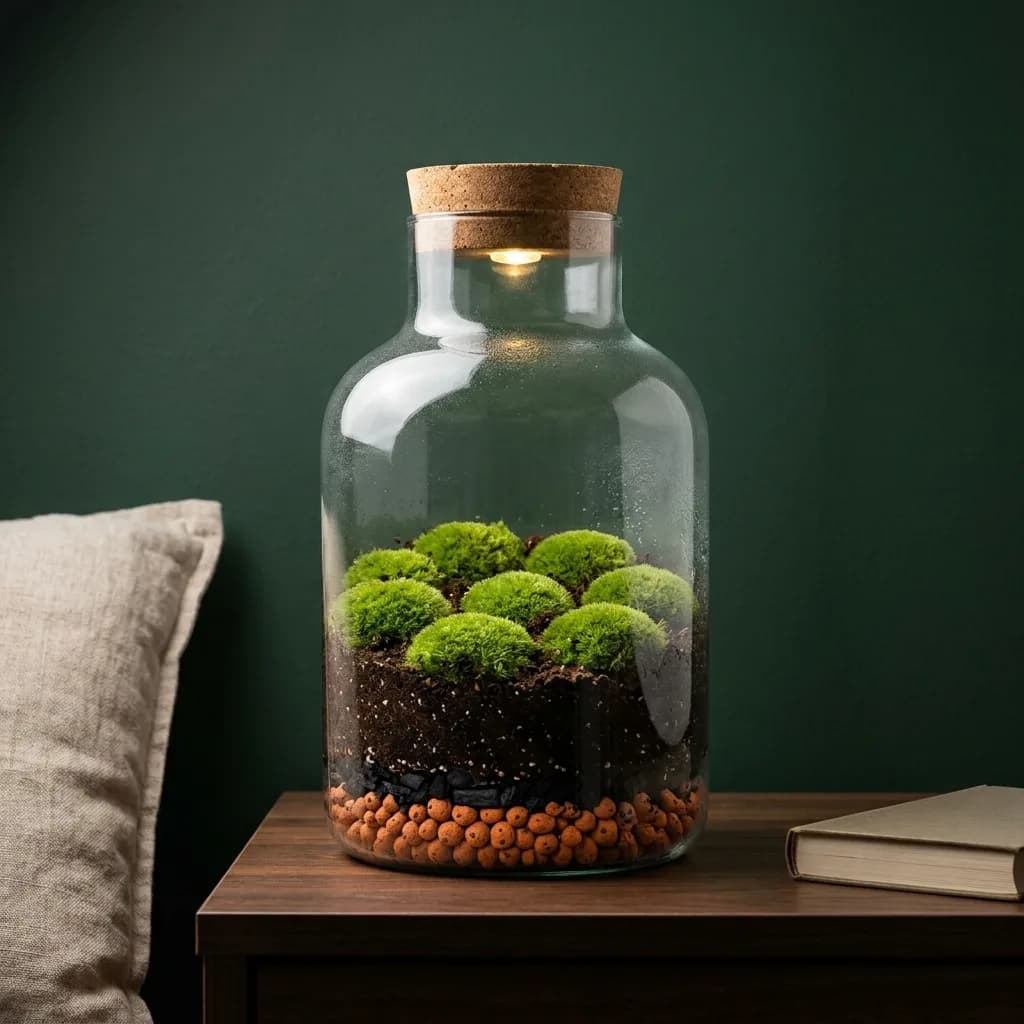 BeginnerMoss and lightClosed · M · LED4.8From €60.90
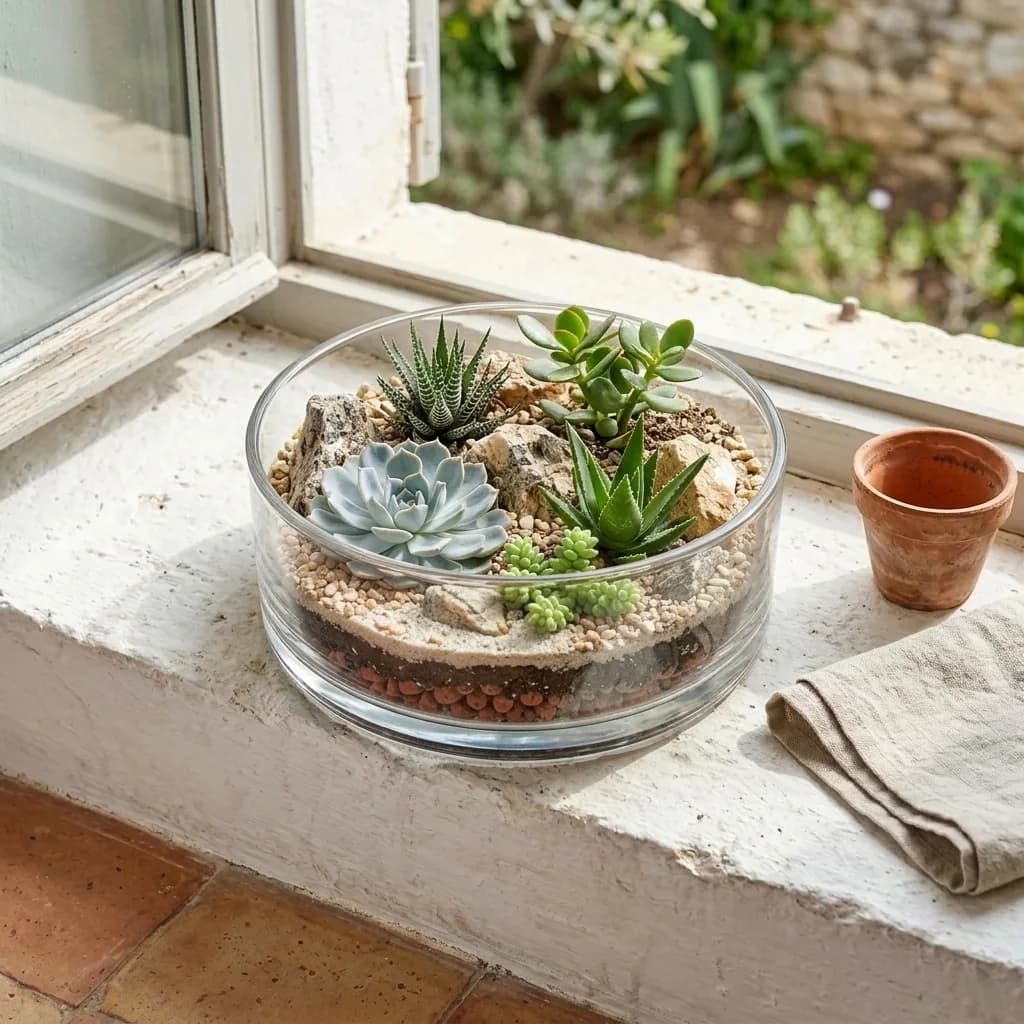 BeginnerOpen desertOpen · MNew kit, no reviews yetFrom €59.90
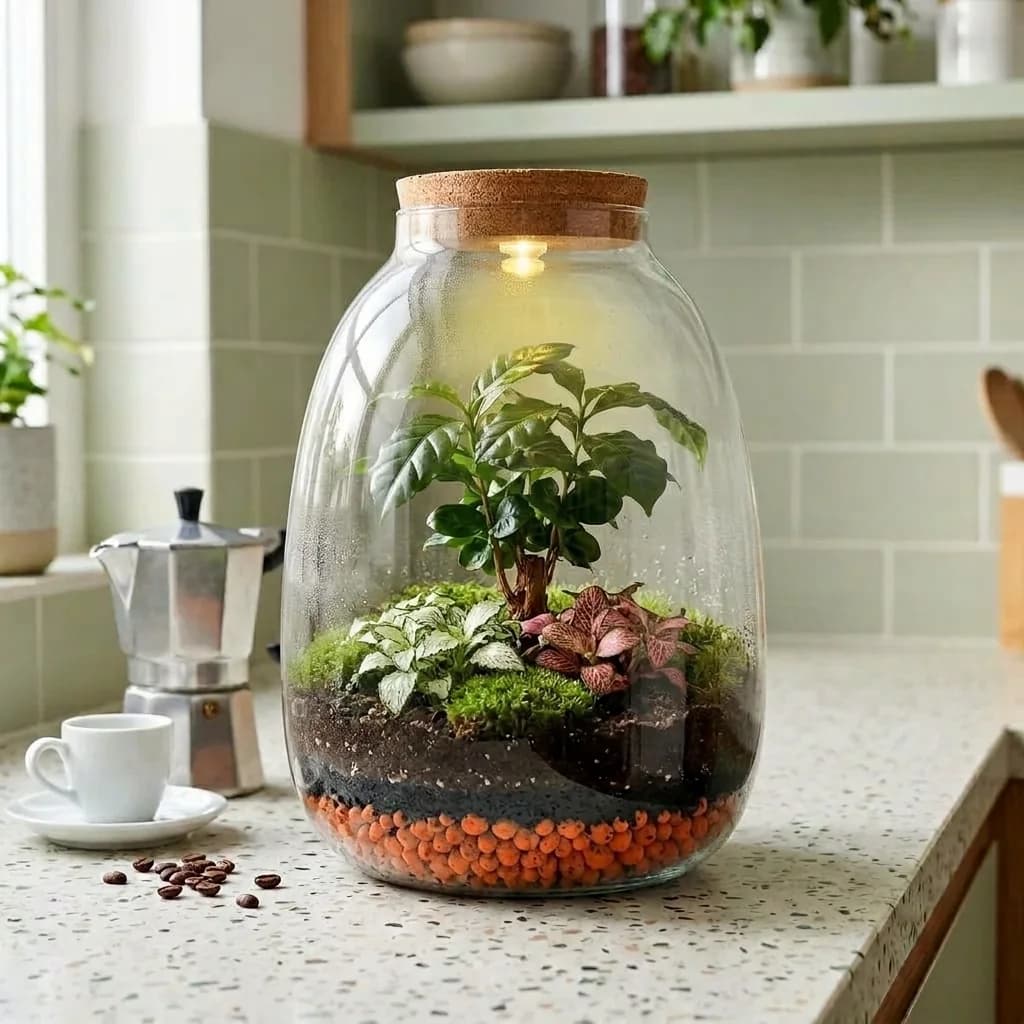 BeginnerTropical coffeeClosed · L · LED4.9From €63.90
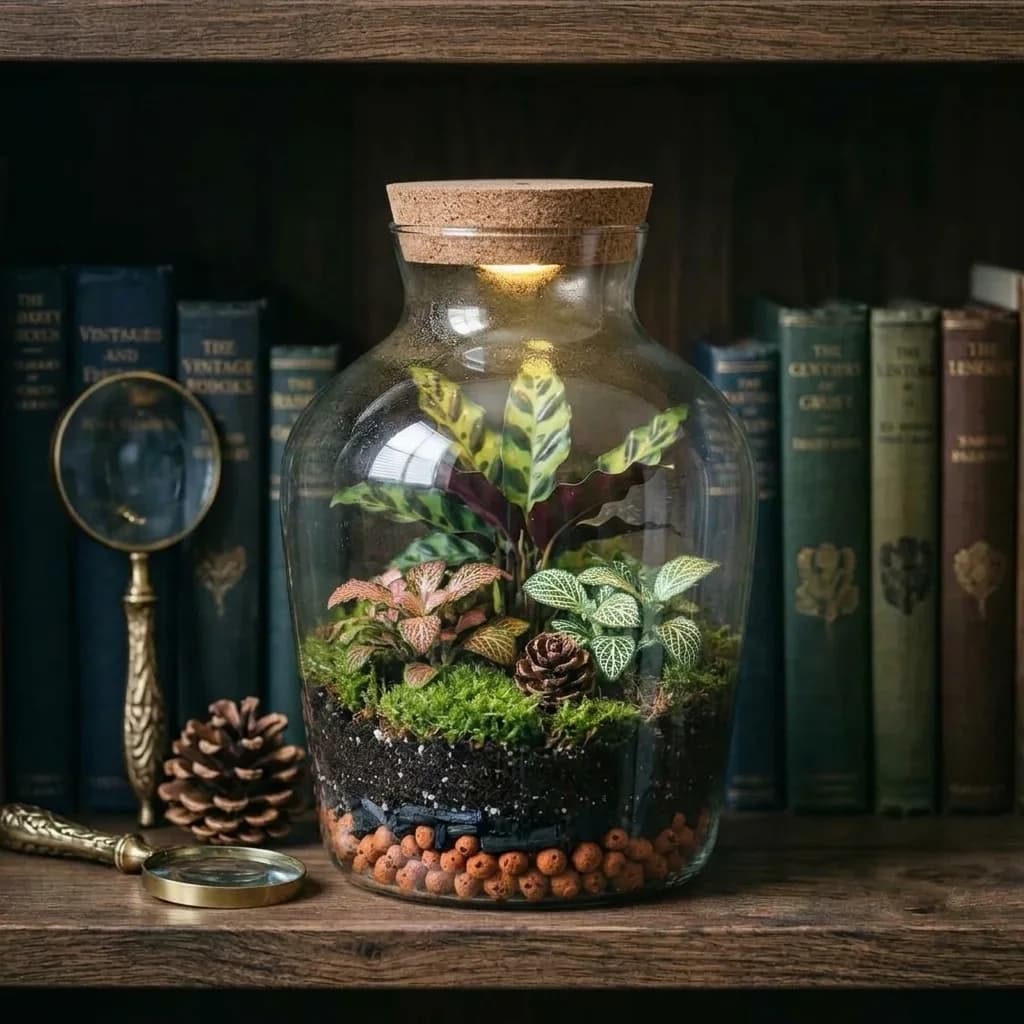 IntermediateForest floorClosed · M · LED4.6From €69.90
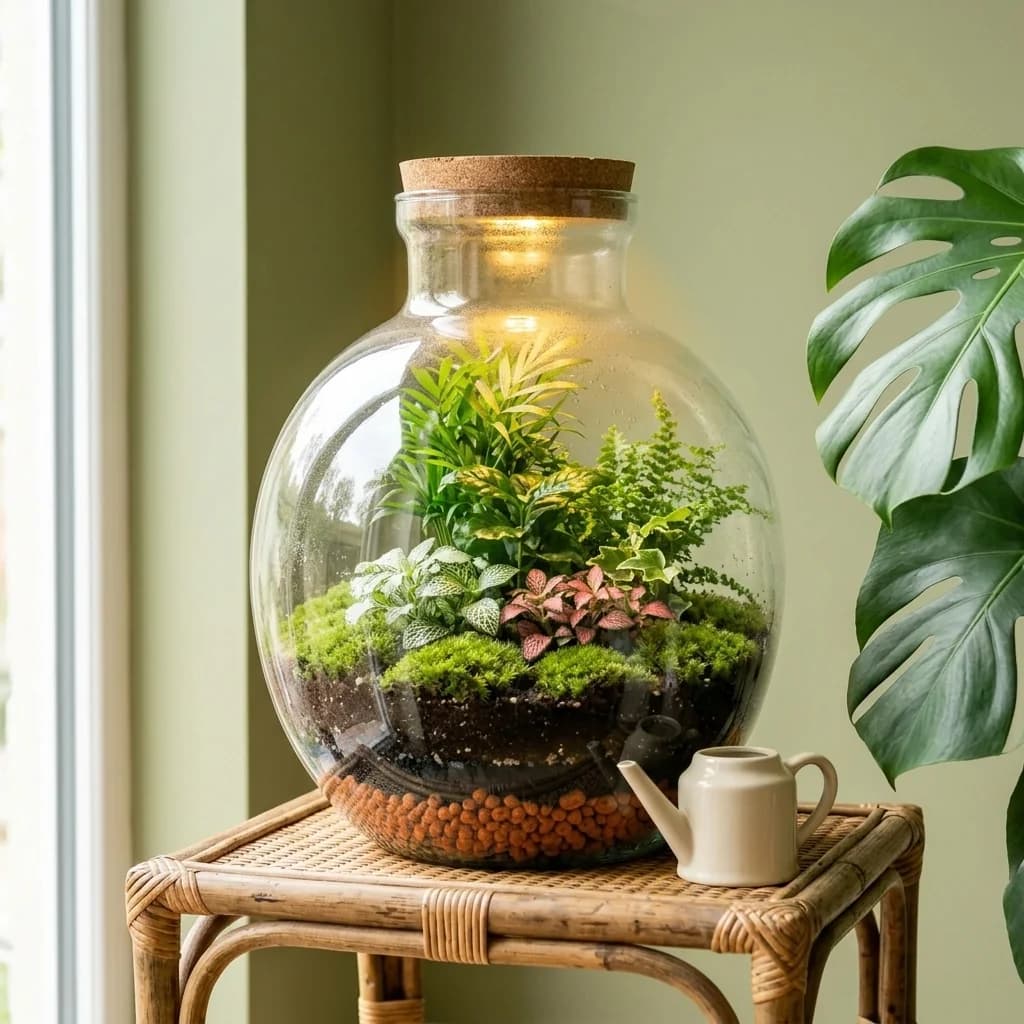 IntermediateJungleClosed · L4.9From €82.90
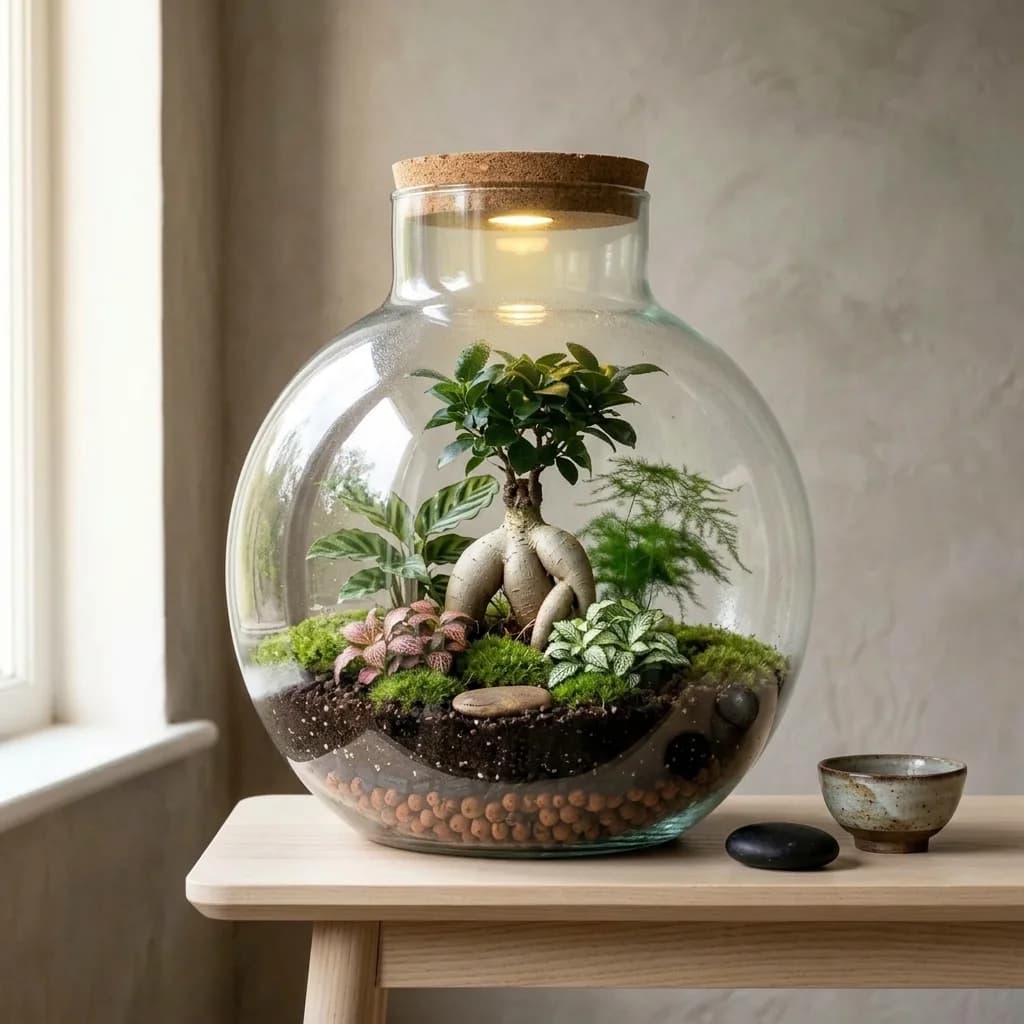 IntermediateZen bonsaiClosed · XL · LED4.8From €92.90
Give a small living world.
A gift that lasts for years, delivered with everything it needs and its assembly guide.
Guides and projects
Worlds
 TerraTerrariumOpen
 AquaAquaticComing soon
 FloraGrowOpen
 AéroWildComing soon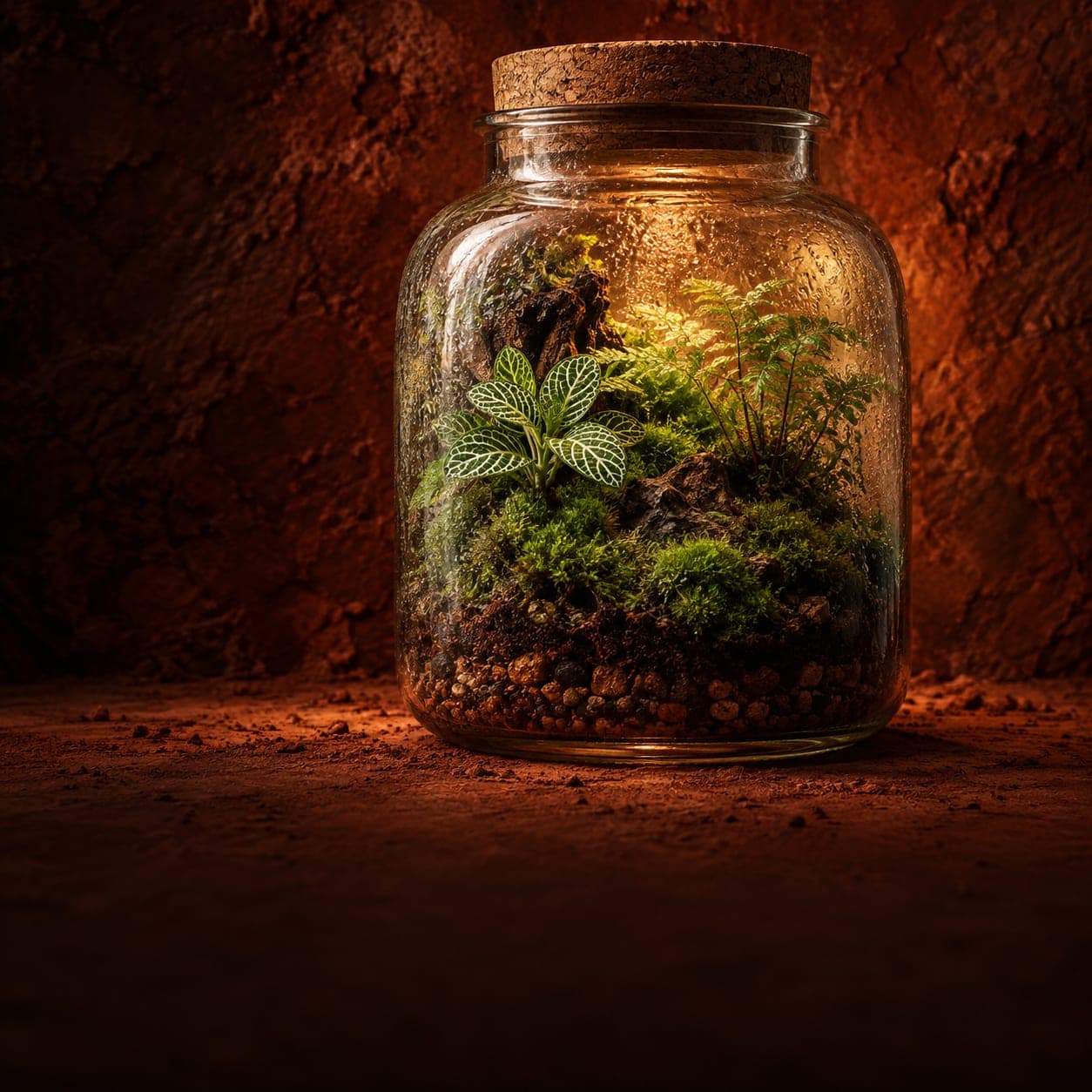
All-inclusive kits, glass, live plants, substrates and tools: everything to build a terrarium that almost looks after itself.
Each kit comes in three versions: Essential, With tools, Complete.
Closed · M · LEDClosed, size M, LED
Closed · L · LEDClosed, size L, LED
Closed · M · LEDClosed, size M, LED
Closed · XL · LEDClosed, size XL, LED
Recycled glass, cork
Height 12 cm · top Ø 25 cm
49 cm rake · 25 cm tweezers and scissors
Length 72 cm
Ø 20 × H 22 cm · 5.5 L
Ø 30 × H 31 cm · 11 L
For terrariums sizes S to XL
The order of the layers, watering and choosing the glass. The rest you learn by watching it live.
All getting-started guidesEach project gives the order of the steps and the list of equipment, added to your cart in one click.
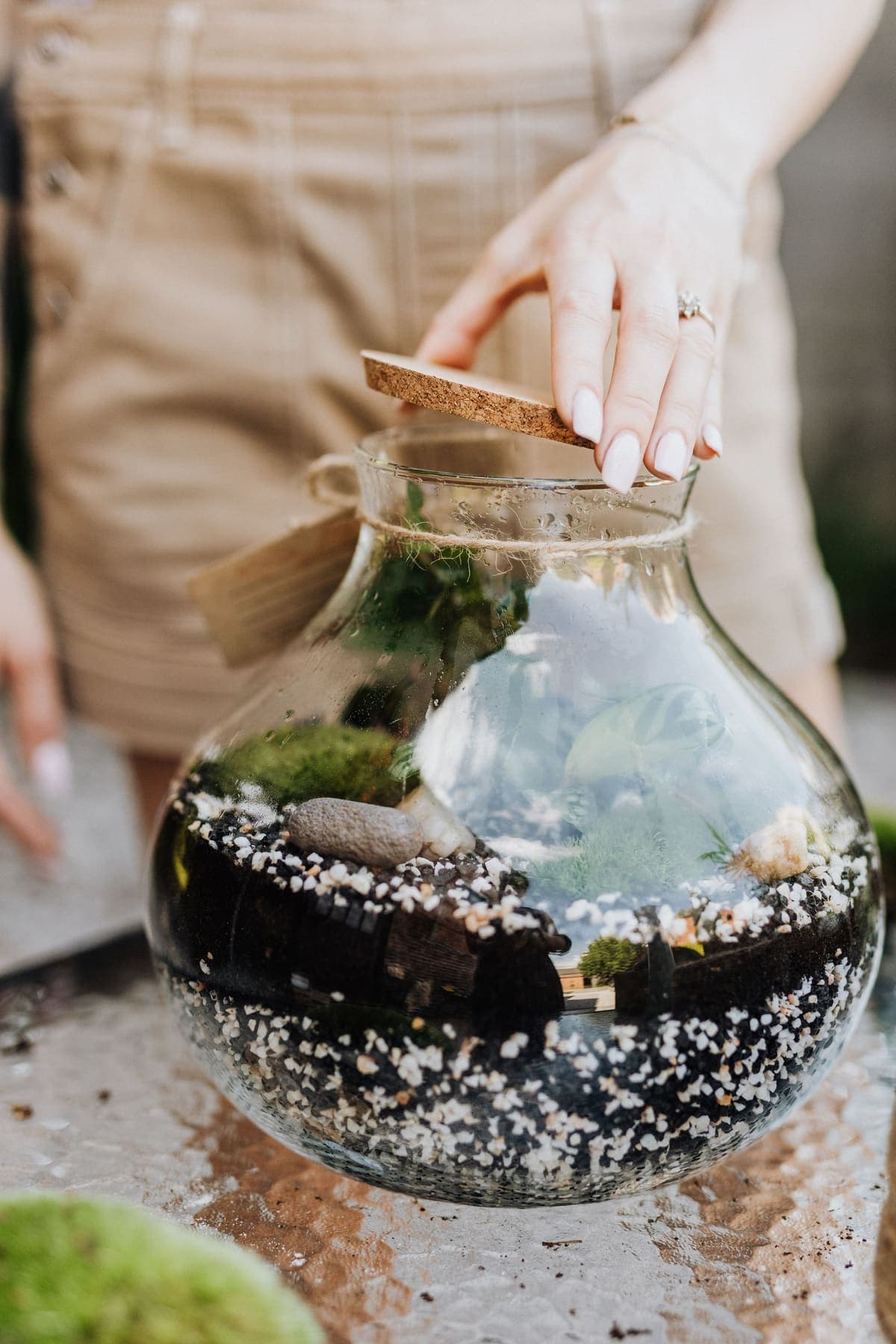 Beginner7 steps · 1 h de montageMon premier terrarium ferméUn kit complet, une heure sur la table de la cuisine, et un petit monde qui se régule seul.View the project
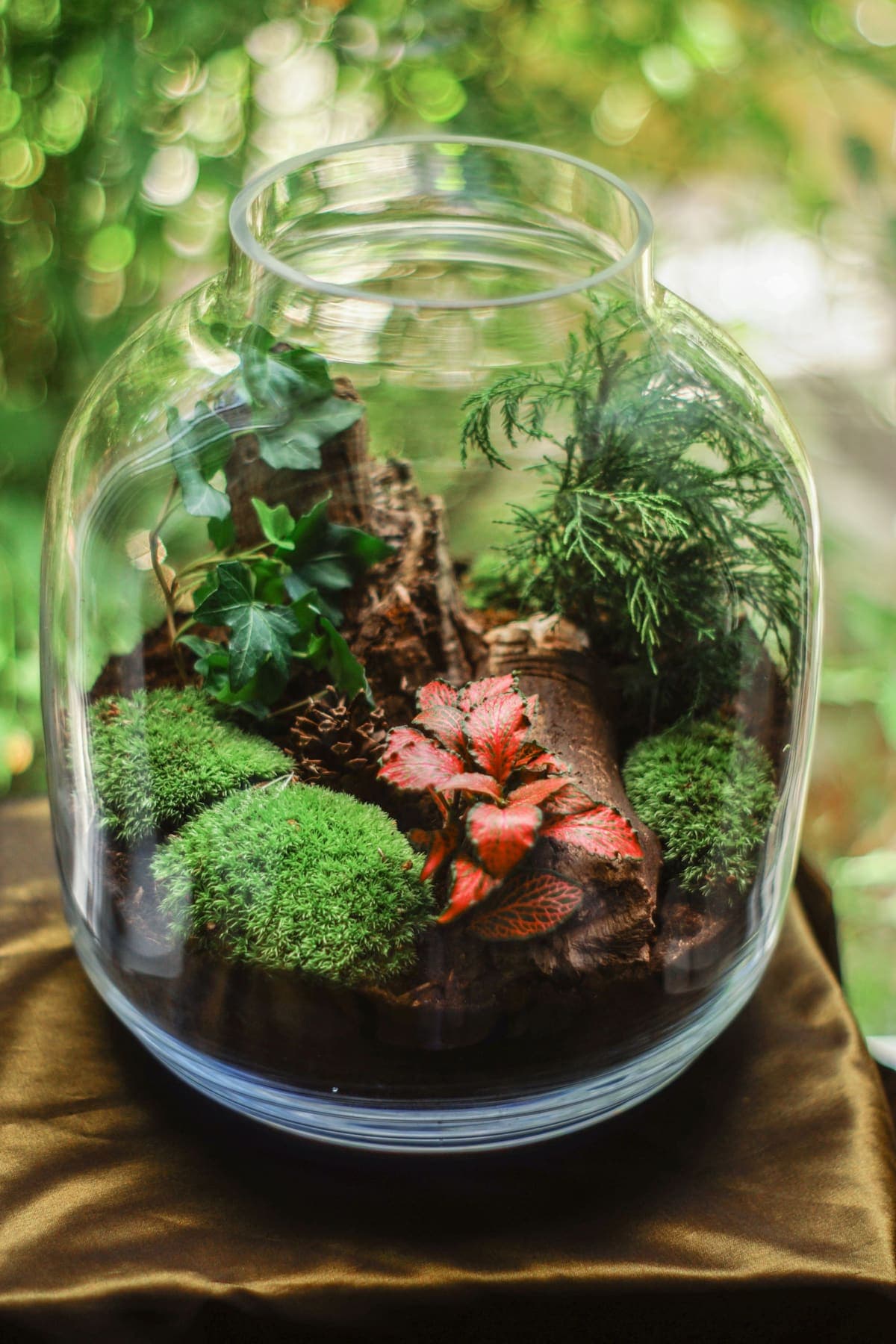 Beginner7 stepsUne forêt miniature sous verreUn sous-bois humide et lumineux, composé pièce par pièce dans sept litres de verre.View the project
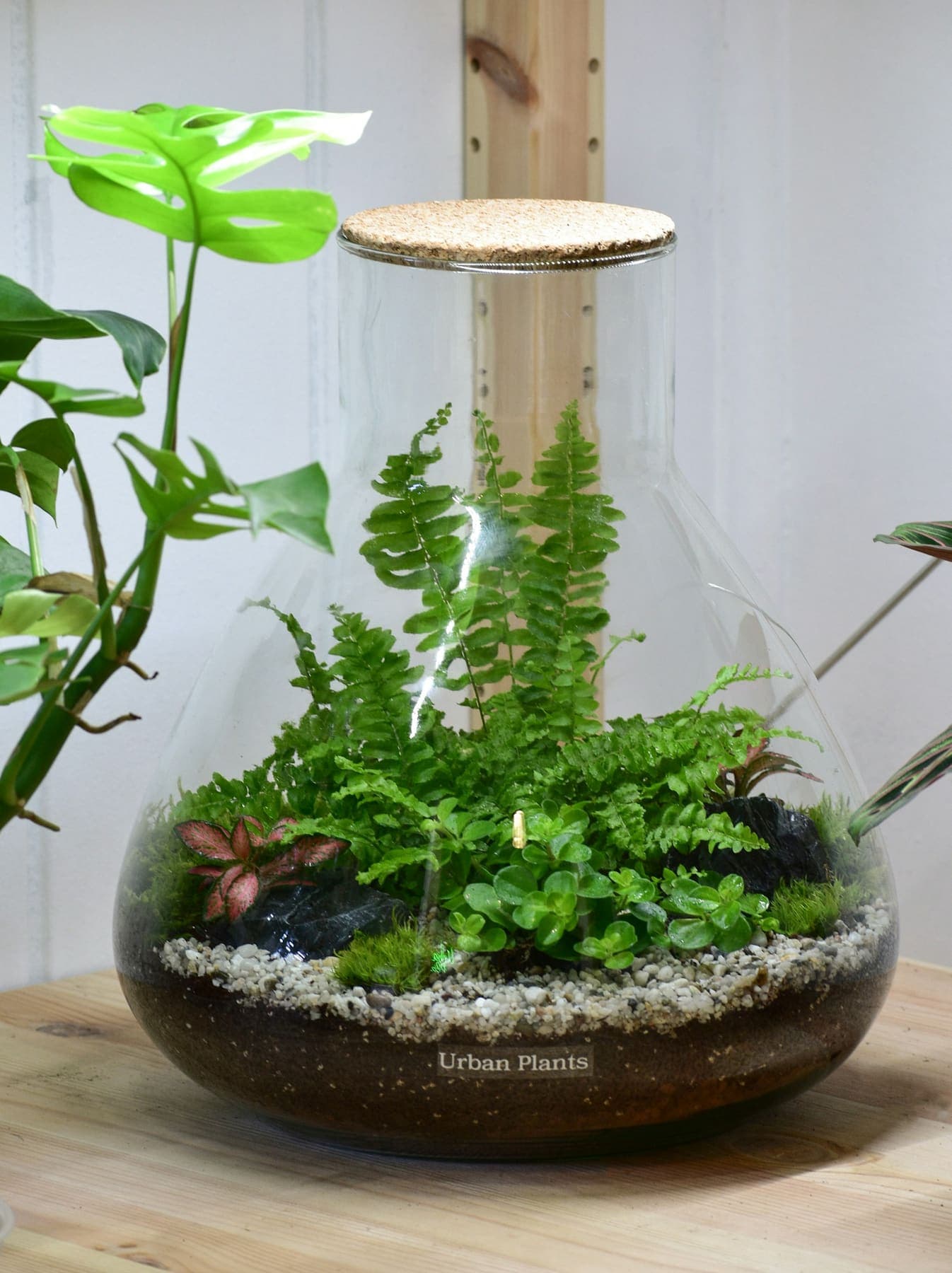 Intermediate7 stepsUn terrarium tropical en bonbonneOnze litres, cinq plantes et un goulot de trente centimètres de profondeur : tout se fait à la pince.View the project
Leave your email: the newsletter announces each opening.
A plant terrarium is a miniature garden that lives at its own pace. Closed, it recycles its own water: moisture evaporates, condenses on the glass and falls back onto the mosses and ferns. Open, it houses succulents and cacti that love dry air and light. The first choice to make is therefore the format, and it depends on the plants you love and the light in your room.
For a first closed terrarium, follow the tutorial How to create a closed terrarium: drainage, an airy substrate, compact plants and cultivated mosses. If a white fuzz appears in the first few weeks, don't worry: our guide to mould in closed terrariums explains what to do.
Prefer a dry, graphic look? The succulent terrarium tutorial covers the open setup in detail. To start with everything you need in one place, check out the A miniature forest under glass project.
FAQ
As long as condensation appears on the glass from time to time, it doesn't need water. Depending on the container and the room, this can last several weeks, even several months. If the glass stays dry and the moss fades, mist it lightly.
Choose demineralised water or filtered rainwater. Tap water, often hard, leaves white marks on the glass and on leaves over time.
No. Succulents and cacti need dry air and plenty of light; in the humidity of a closed container, they rot. They're grown in an open terrarium, with a free-draining mineral substrate.
In a bright room, near a window, but out of direct sunlight and away from a radiator. If natural light is lacking, a warm-spectrum grow light can top up the lighting.
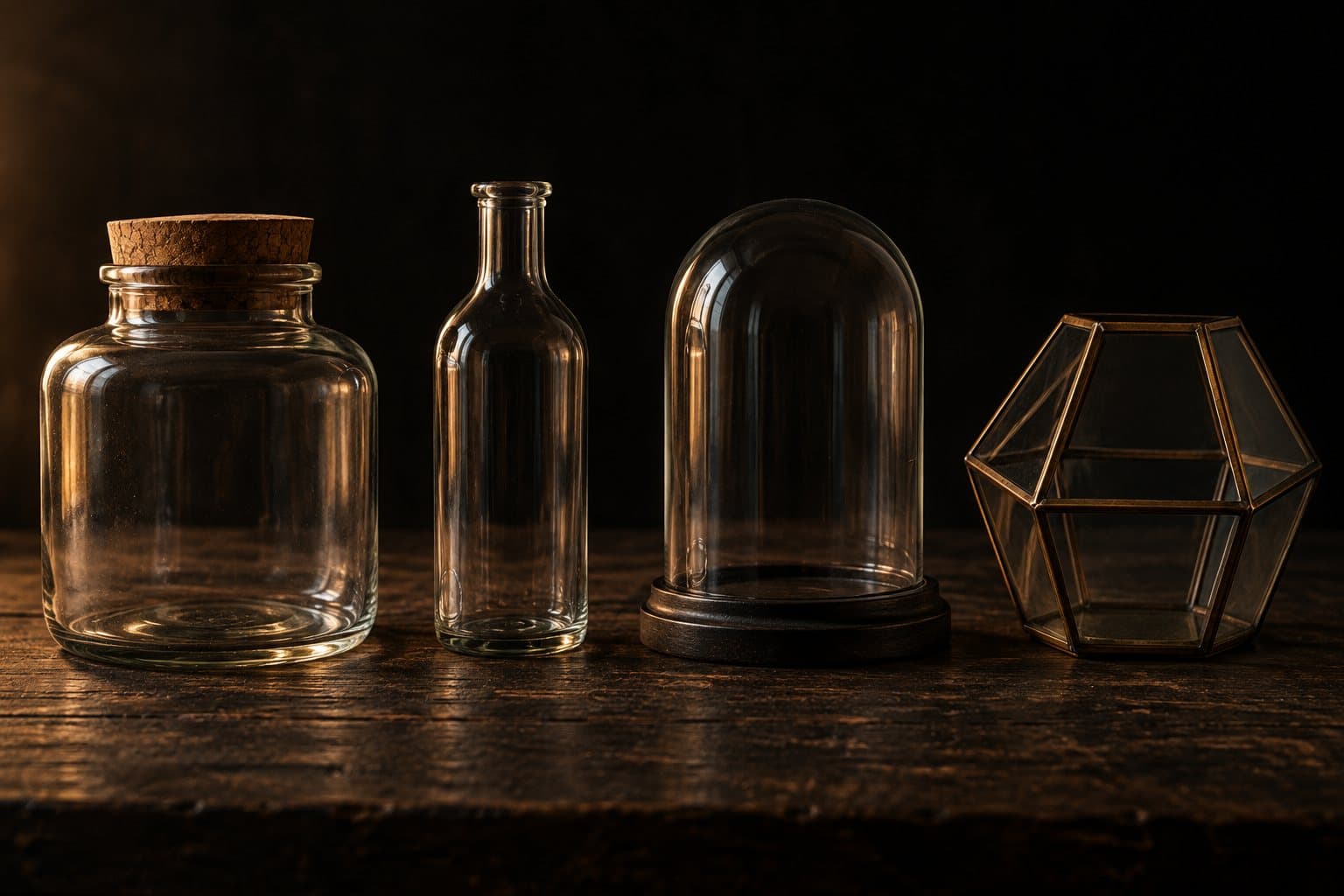
A container 18 to 25 cm in diameter, with a wide opening, is ideal to start with. It leaves enough room for two to five small plants and some moss, while staying easy to plant by hand or with tweezers. Narrow-necked demijohns are trickier to set up.
A closed terrarium needs very little watering once balanced, but you need to watch the condensation in the first few weeks. An open succulent terrarium is very simple if the room is bright. Choose based on your light: a bright room without direct sun for a closed one, a well-lit window for an open one.
Not in a standard closed terrarium. A Venus flytrap, for example, needs direct sun, air and a cool winter rest period. Some tropical sundews tolerate a very bright open or semi-open terrarium. All of them need rainwater or demineralised water, never hard water or fertiliser.
Yes, with a grow light. A white LED placed 20 to 40 cm above the terrarium, set for around ten hours a day, replaces natural light for woodland plants and mosses. Avoid lamps that give off heat: in a closed container, heat builds up quickly.
Trim it. A leaf pressed against the glass stays wet, gets damaged and can rot. Cut overly long stems with fine scissors, just above a leaf, and remove debris with tweezers. If a plant takes over the whole space within a few months, replace it with a more compact species.
A closed terrarium works like a small water cycle: the plants transpire, the moisture condenses on the wall and then runs back down into the substrate. It suits woodland-floor plants that like humid air, such as fittonias, spikemosses, small ferns and mosses. An open terrarium, on the contrary, lets the air circulate: it is the only possible choice for succulents and cacti, which rot in a confined atmosphere. The comparison Closed or open terrarium sets out the merits of each formula.
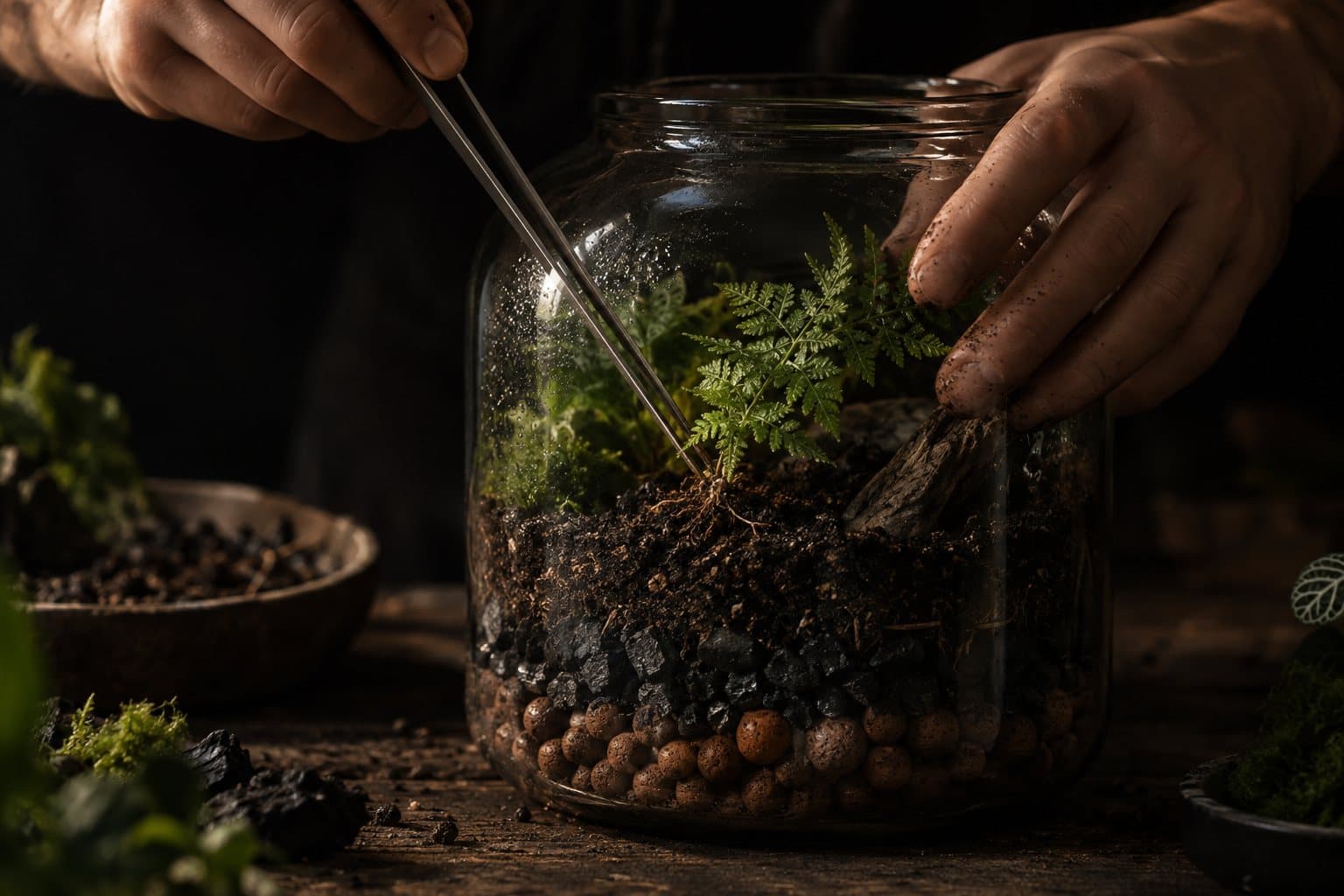
A tropical terrarium is built up in layers: a drainage layer of clay pebbles or gravel, a thin separator so the soil does not work its way into it, a little horticultural charcoal, then an airy, slightly moist substrate. The plants come next, followed by the moss and the decorative elements. The complete step-by-step is in How to create a closed terrarium.
Success depends above all on the plants being compatible with their container. Favour small, slow-growing species that will not touch the glass within a few months. The guide Which plants for a terrarium? presents the best-suited species, and our moss guide helps tell cushion mosses from flat mosses. The mosses in our selection are cultivated, not collected in the wild.
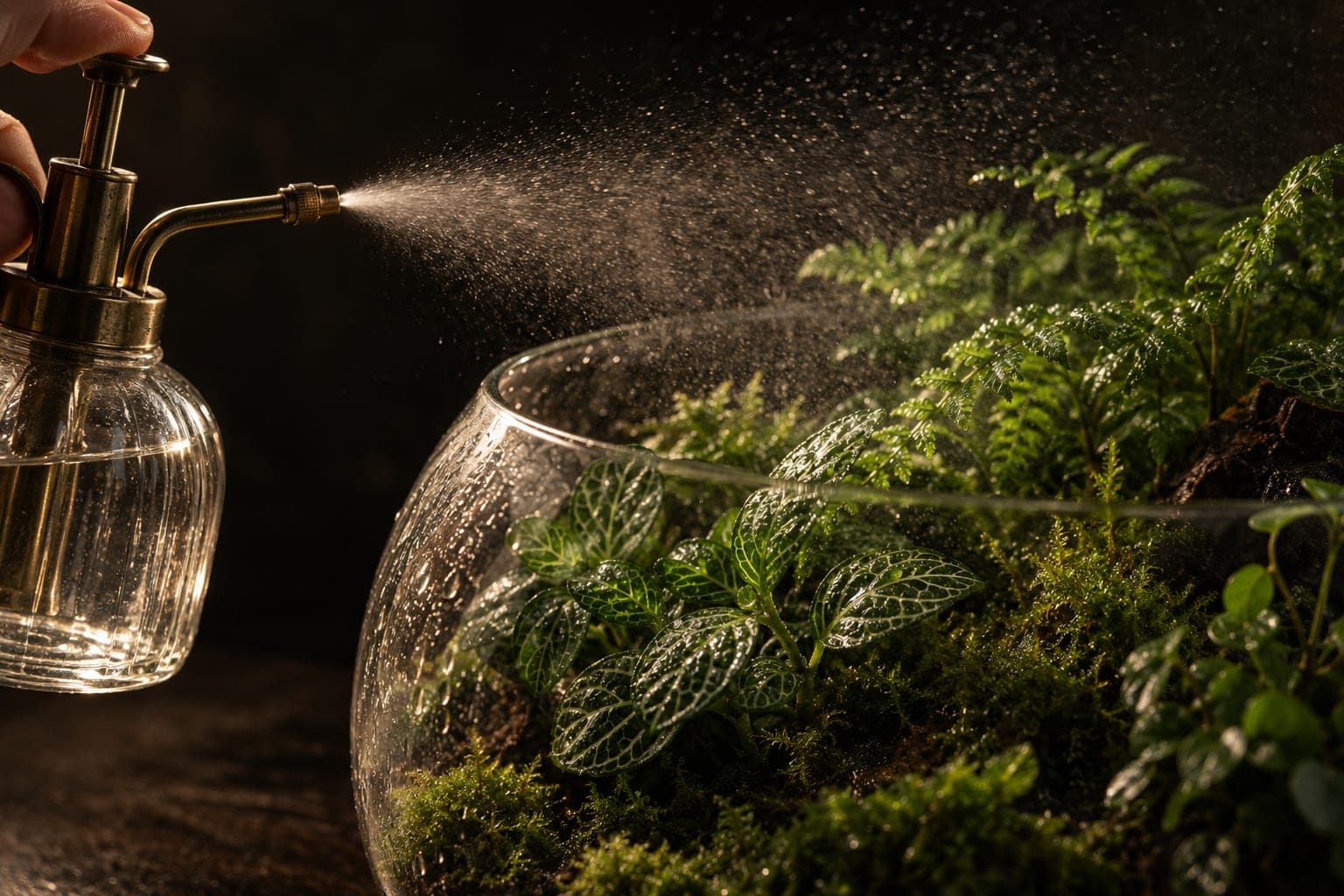
Place the terrarium near a window, in bright light but never in direct sun: under glass, the temperature can climb very fast. A closed terrarium is watered rarely. A light mist in the morning is a good sign; a wall running with water all day long signals an excess, to be corrected by opening the container for a few hours. Remove dead leaves and trim regularly with the right tools.
To take it further, the project A tropical terrarium in a demijohn offers a more ambitious format, and A miniature desert a dry, bright version.
Getting started: the beginner's guide goes over the four decisions to take before buying, 12 terrarium ideas gives compositions to copy, the equipment you need lists the essentials, how much a terrarium costs and doing it cheaply give the budgets, which container to choose compares the formats, and kit or separate purchases settles the assembly question.
Understanding: how a closed terrarium works explains the water cycle and photosynthesis under glass, closed or open terrarium compares the two regimes, terrarium, vivarium, paludarium untangles the three words, and self-sufficient terrarium says what self-sufficiency really means.
The plants: the overall selection is in which plants for a terrarium. Species by species: fittonia, ficus pumila, peperomia, spikemoss, soleirolia, ferns, hypoestes, pilea, calathea and maranta, cryptanthus and carnivorous plants.
The mosses: the species guide, how to lay them, how to grow them, cushion or flat, keeping them before the build and whether you can take them from the forest.
The soil: which substrate to choose, the order of the layers, clay pebbles or pumice and what charcoal really does.
When things go wrong: terrarium too humid, too dry, too hot or in the sun, smelling bad, condensation, mould, fungus gnats, yellow leaves, moss turning brown and plants dying.
Upkeep: caring for a closed terrarium, watering and trimming.
Other builds: bottle terrarium, tropical terrarium for beginners, succulent terrarium, bioactive terrarium and its upkeep, and springtails.
By use: a terrarium on your desk, making one with a child and giving a terrarium as a gift.
Shop by type: closed terrariums, open terrariums, tropical plants, succulents and mosses.
Build your own, layer by layer.
Six steps, in the order you build. Each department offers what goes with the step before.
Complete refillEverything but the glass: drainage, charcoal, soil, mossFrom €18.90The whole shopSix kits. Everything is in the box.
The glass, the live plants, the soil and the guide. Every kit comes in three versions.
BeginnerMoss and lightClosed · M · LED4.8From €60.90BeginnerOpen desertOpen · MNew kit, no reviews yetFrom €59.90BeginnerTropical coffeeClosed · L · LED4.9From €63.90IntermediateForest floorClosed · M · LED4.6From €69.90IntermediateJungleClosed · L4.9From €82.90IntermediateZen bonsaiClosed · XL · LED4.8From €92.90Give a small living world.
A gift that lasts for years, delivered with everything it needs and its assembly guide.
Guides and projects
Worlds
TerraTerrariumOpenAquaAquaticComing soonFloraGrowOpenAéroWildComing soonAll-inclusive kits, glass, live plants, substrates and tools: everything to build a terrarium that almost looks after itself.
Each kit comes in three versions: Essential, With tools, Complete.
Closed · M · LEDClosed, size M, LED
Closed · L · LEDClosed, size L, LED
Closed · M · LEDClosed, size M, LED
Closed · XL · LEDClosed, size XL, LED
Recycled glass, cork
Height 12 cm · top Ø 25 cm
49 cm rake · 25 cm tweezers and scissors
Length 72 cm
Ø 20 × H 22 cm · 5.5 L
Ø 30 × H 31 cm · 11 L
For terrariums sizes S to XL
The order of the layers, watering and choosing the glass. The rest you learn by watching it live.
All getting-started guidesEach project gives the order of the steps and the list of equipment, added to your cart in one click.
Beginner7 steps · 1 h de montageMon premier terrarium ferméUn kit complet, une heure sur la table de la cuisine, et un petit monde qui se régule seul.View the projectBeginner7 stepsUne forêt miniature sous verreUn sous-bois humide et lumineux, composé pièce par pièce dans sept litres de verre.View the projectIntermediate7 stepsUn terrarium tropical en bonbonneOnze litres, cinq plantes et un goulot de trente centimètres de profondeur : tout se fait à la pince.View the projectLeave your email: the newsletter announces each opening.
A plant terrarium is a miniature garden that lives at its own pace. Closed, it recycles its own water: moisture evaporates, condenses on the glass and falls back onto the mosses and ferns. Open, it houses succulents and cacti that love dry air and light. The first choice to make is therefore the format, and it depends on the plants you love and the light in your room.
For a first closed terrarium, follow the tutorial How to create a closed terrarium: drainage, an airy substrate, compact plants and cultivated mosses. If a white fuzz appears in the first few weeks, don't worry: our guide to mould in closed terrariums explains what to do.
Prefer a dry, graphic look? The succulent terrarium tutorial covers the open setup in detail. To start with everything you need in one place, check out the A miniature forest under glass project.
FAQ
As long as condensation appears on the glass from time to time, it doesn't need water. Depending on the container and the room, this can last several weeks, even several months. If the glass stays dry and the moss fades, mist it lightly.
Choose demineralised water or filtered rainwater. Tap water, often hard, leaves white marks on the glass and on leaves over time.
No. Succulents and cacti need dry air and plenty of light; in the humidity of a closed container, they rot. They're grown in an open terrarium, with a free-draining mineral substrate.
In a bright room, near a window, but out of direct sunlight and away from a radiator. If natural light is lacking, a warm-spectrum grow light can top up the lighting.
A container 18 to 25 cm in diameter, with a wide opening, is ideal to start with. It leaves enough room for two to five small plants and some moss, while staying easy to plant by hand or with tweezers. Narrow-necked demijohns are trickier to set up.
A closed terrarium needs very little watering once balanced, but you need to watch the condensation in the first few weeks. An open succulent terrarium is very simple if the room is bright. Choose based on your light: a bright room without direct sun for a closed one, a well-lit window for an open one.
Not in a standard closed terrarium. A Venus flytrap, for example, needs direct sun, air and a cool winter rest period. Some tropical sundews tolerate a very bright open or semi-open terrarium. All of them need rainwater or demineralised water, never hard water or fertiliser.
Yes, with a grow light. A white LED placed 20 to 40 cm above the terrarium, set for around ten hours a day, replaces natural light for woodland plants and mosses. Avoid lamps that give off heat: in a closed container, heat builds up quickly.
Trim it. A leaf pressed against the glass stays wet, gets damaged and can rot. Cut overly long stems with fine scissors, just above a leaf, and remove debris with tweezers. If a plant takes over the whole space within a few months, replace it with a more compact species.
A closed terrarium works like a small water cycle: the plants transpire, the moisture condenses on the wall and then runs back down into the substrate. It suits woodland-floor plants that like humid air, such as fittonias, spikemosses, small ferns and mosses. An open terrarium, on the contrary, lets the air circulate: it is the only possible choice for succulents and cacti, which rot in a confined atmosphere. The comparison Closed or open terrarium sets out the merits of each formula.
A tropical terrarium is built up in layers: a drainage layer of clay pebbles or gravel, a thin separator so the soil does not work its way into it, a little horticultural charcoal, then an airy, slightly moist substrate. The plants come next, followed by the moss and the decorative elements. The complete step-by-step is in How to create a closed terrarium.
Success depends above all on the plants being compatible with their container. Favour small, slow-growing species that will not touch the glass within a few months. The guide Which plants for a terrarium? presents the best-suited species, and our moss guide helps tell cushion mosses from flat mosses. The mosses in our selection are cultivated, not collected in the wild.
Place the terrarium near a window, in bright light but never in direct sun: under glass, the temperature can climb very fast. A closed terrarium is watered rarely. A light mist in the morning is a good sign; a wall running with water all day long signals an excess, to be corrected by opening the container for a few hours. Remove dead leaves and trim regularly with the right tools.
To take it further, the project A tropical terrarium in a demijohn offers a more ambitious format, and A miniature desert a dry, bright version.
Getting started: the beginner's guide goes over the four decisions to take before buying, 12 terrarium ideas gives compositions to copy, the equipment you need lists the essentials, how much a terrarium costs and doing it cheaply give the budgets, which container to choose compares the formats, and kit or separate purchases settles the assembly question.
Understanding: how a closed terrarium works explains the water cycle and photosynthesis under glass, closed or open terrarium compares the two regimes, terrarium, vivarium, paludarium untangles the three words, and self-sufficient terrarium says what self-sufficiency really means.
The plants: the overall selection is in which plants for a terrarium. Species by species: fittonia, ficus pumila, peperomia, spikemoss, soleirolia, ferns, hypoestes, pilea, calathea and maranta, cryptanthus and carnivorous plants.
The mosses: the species guide, how to lay them, how to grow them, cushion or flat, keeping them before the build and whether you can take them from the forest.
The soil: which substrate to choose, the order of the layers, clay pebbles or pumice and what charcoal really does.
When things go wrong: terrarium too humid, too dry, too hot or in the sun, smelling bad, condensation, mould, fungus gnats, yellow leaves, moss turning brown and plants dying.
Upkeep: caring for a closed terrarium, watering and trimming.
Other builds: bottle terrarium, tropical terrarium for beginners, succulent terrarium, bioactive terrarium and its upkeep, and springtails.
By use: a terrarium on your desk, making one with a child and giving a terrarium as a gift.
Shop by type: closed terrariums, open terrariums, tropical plants, succulents and mosses.