

Making a terrarium with a child: the water cycle for real
A jar, some moss, two plants: an hour-long activity that shows the water cycle for real. Ages, safety, the steps, and what to watch for afterwards.
In this guide
A closed terrarium is one of the few science experiments you can run at home in an hour and then watch for months. The child sees water evaporate, condense on the glass and fall back — the water cycle, for real, in a jar on a shelf. Allow an hour to build it, a wide jar, two plants, and an adult for the glass.
What it really shows
The water cycle is taught with a diagram: the ocean, the cloud, the rain, the river. The diagram is accurate, but it stays abstract.
In a closed terrarium, everything is visible:
- evaporation: the surface of the substrate dries out during the day;
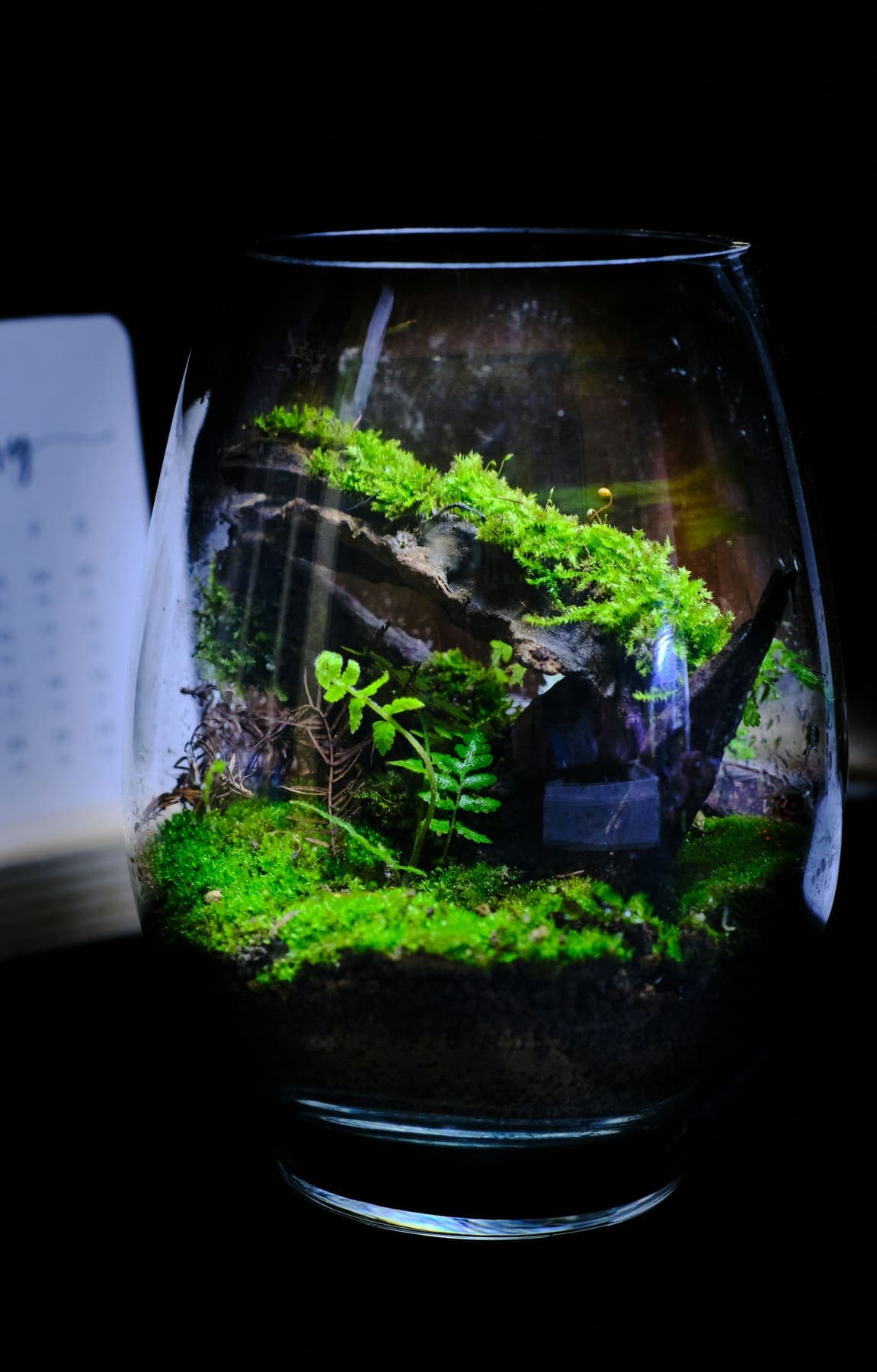
- condensation: mist appears on the glass, above all in the morning;
- precipitation: the drops swell and run back down the wall;
- infiltration: the water returns to the substrate, and the cycle starts again.
And it never stops. That permanence is what strikes children: the jar is shut, nobody adds water, and yet the plants live.
You can extend it towards photosynthesis — plants use light, water and carbon dioxide — and towards decomposition, if a leaf falls and disappears within weeks.
Age and safety
Under 6: the child helps with planting and filling, the adult holds and handles the container. Choose a clear food-grade plastic pot rather than glass.
6 to 9: the child does almost everything, the adult supervises the glass and the scissors.
From 10: on their own, with an adult nearby.
The glass is the only real point of attention. Choose a wide, thick, low jar, of the preserving-jar type. Avoid thin carboys, footed cloches and anything that topples.
Compost is not food: wash hands after the activity, as with any gardening. We give no toxicity advice: as a precaution, use only plants whose name you know, leave out carnivorous plants, and keep an adult present. If anything is swallowed, call a poison control centre.
What you need
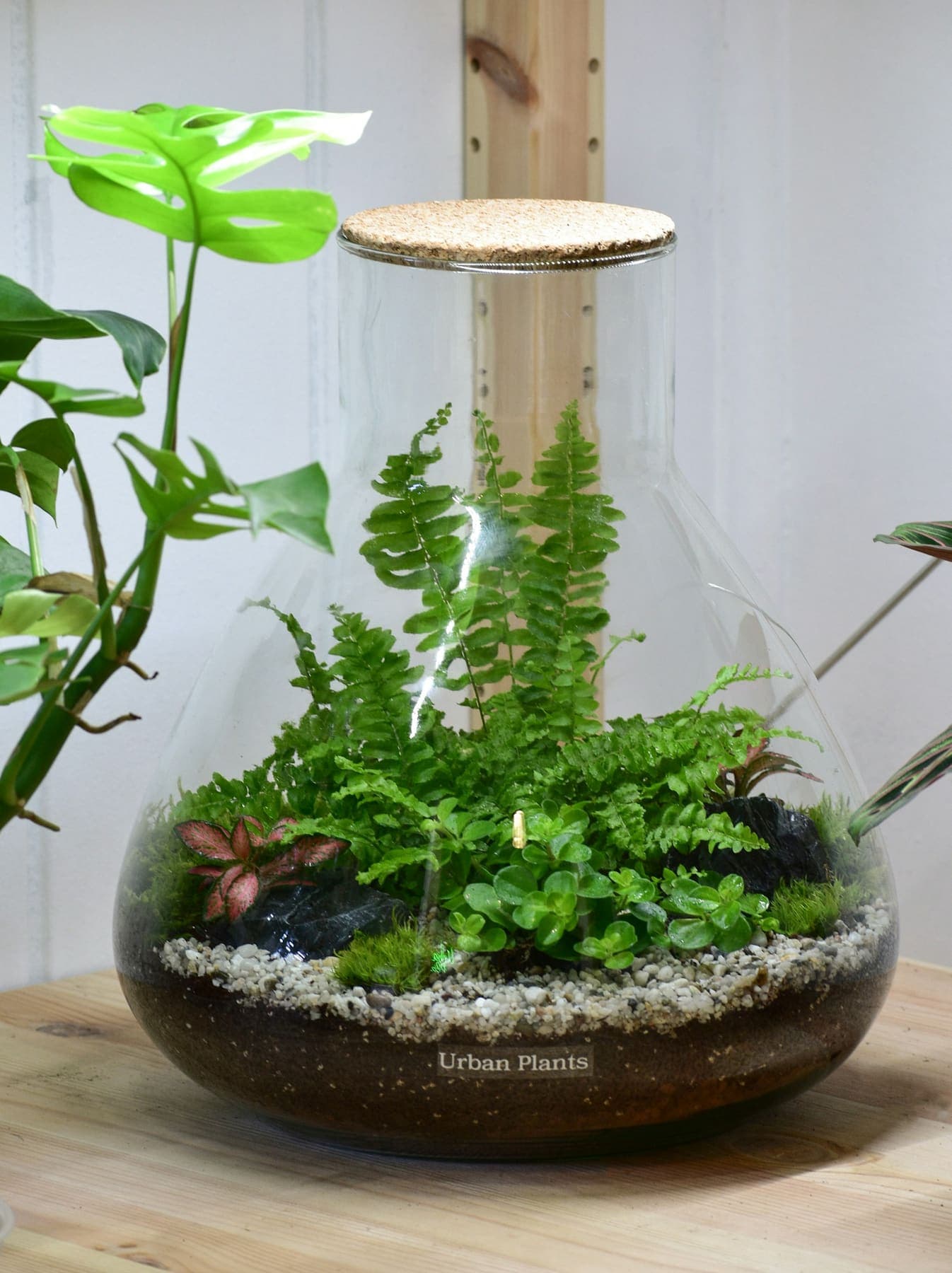
- a wide jar with a lid or a stopper;
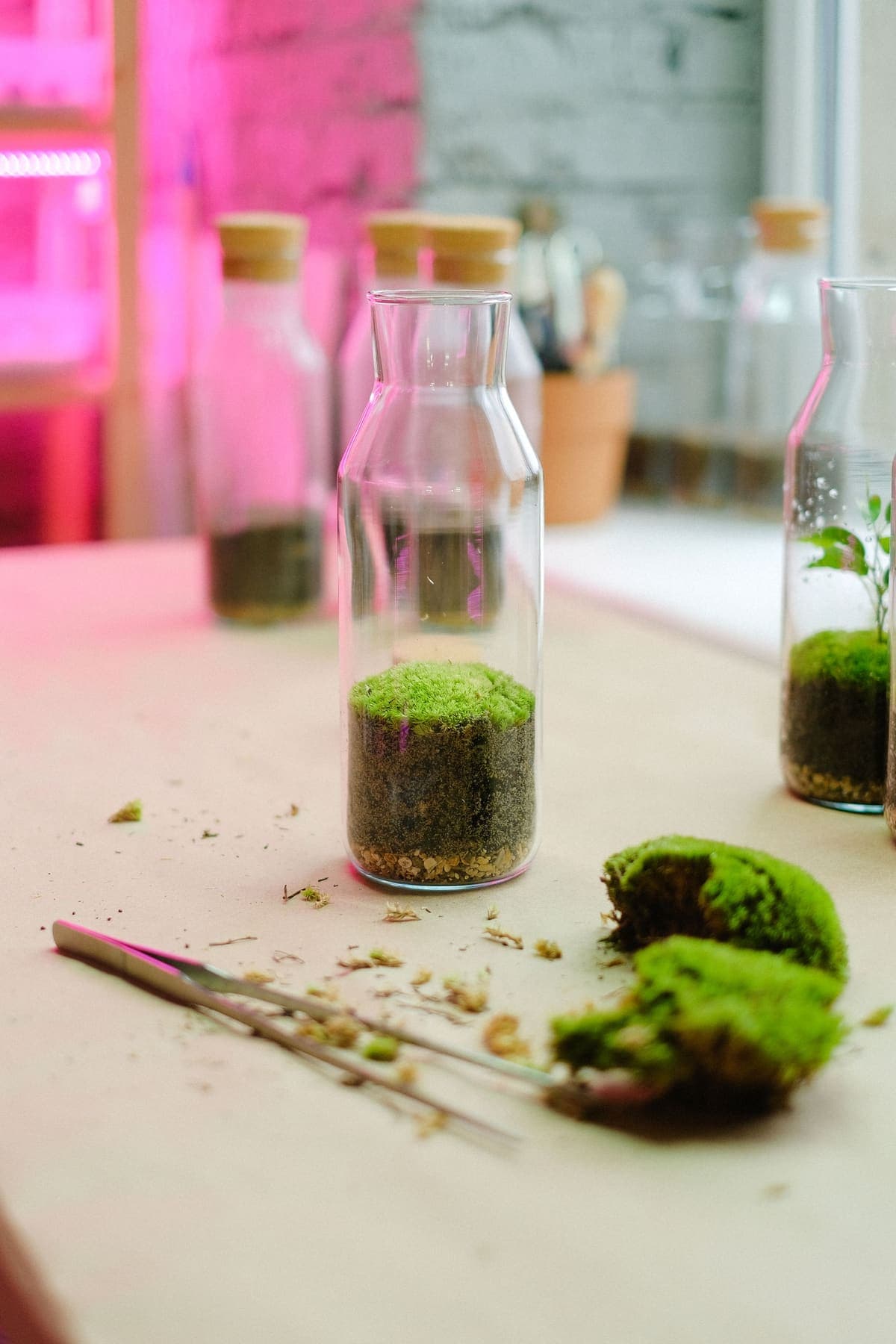
- a handful of gravel or clay pebbles;
- two or three handfuls of terrarium substrate;
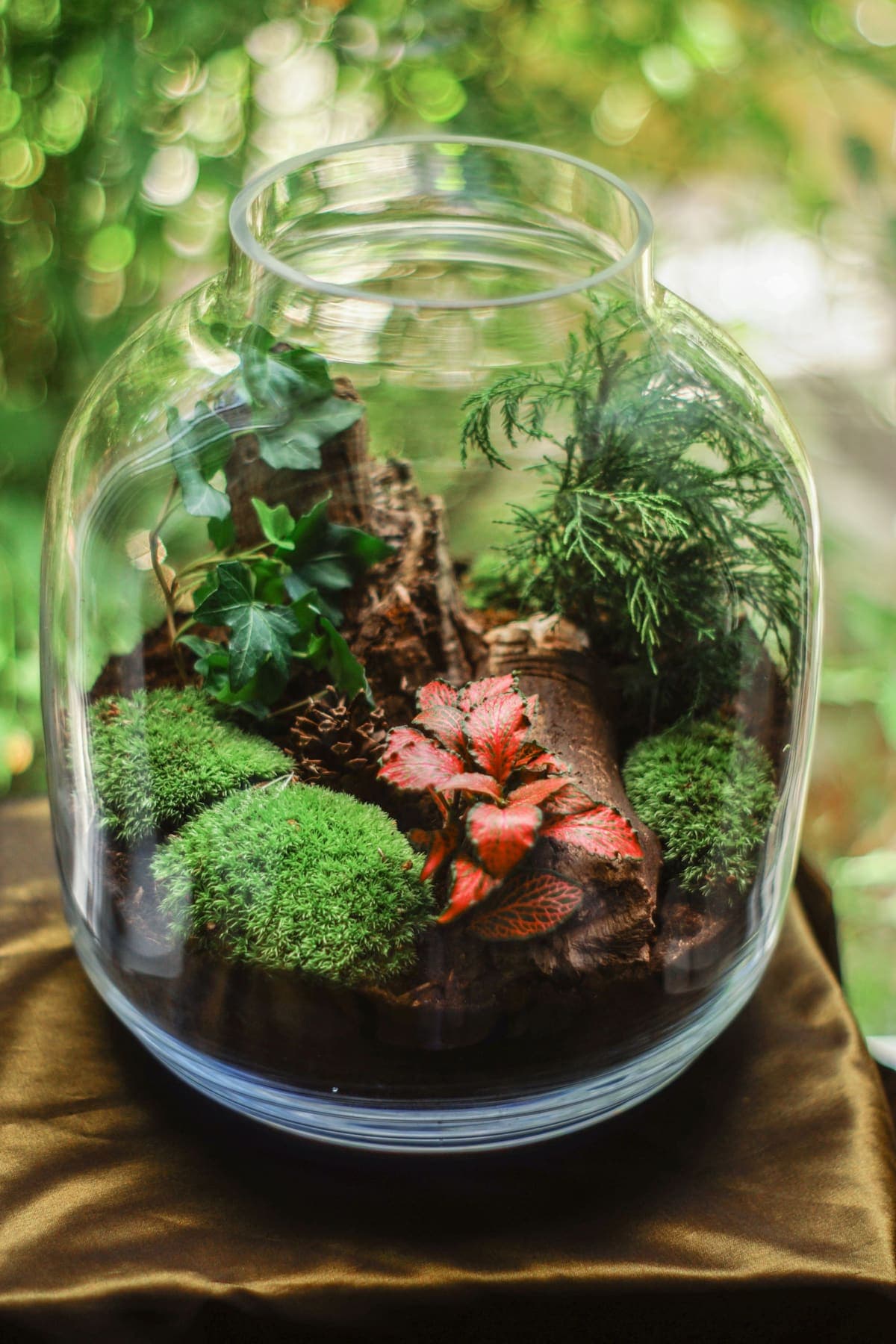
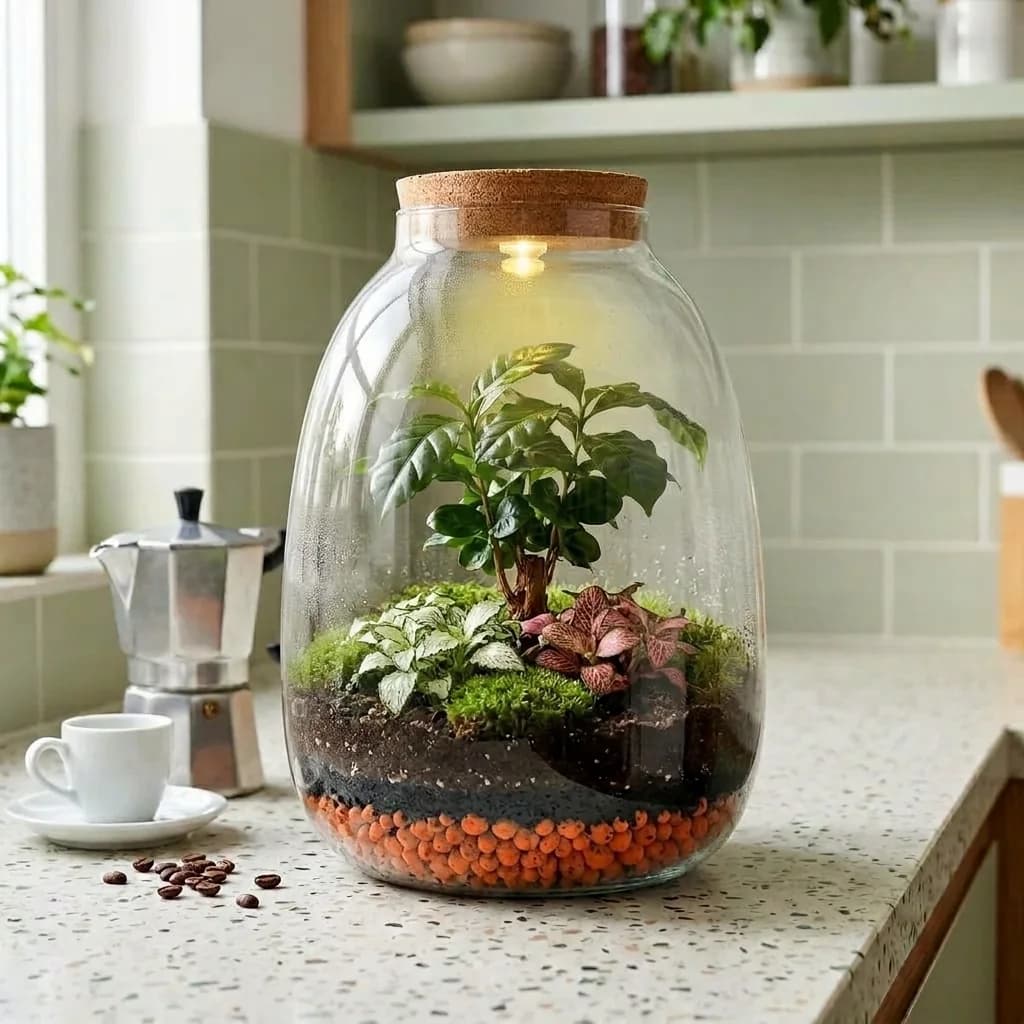
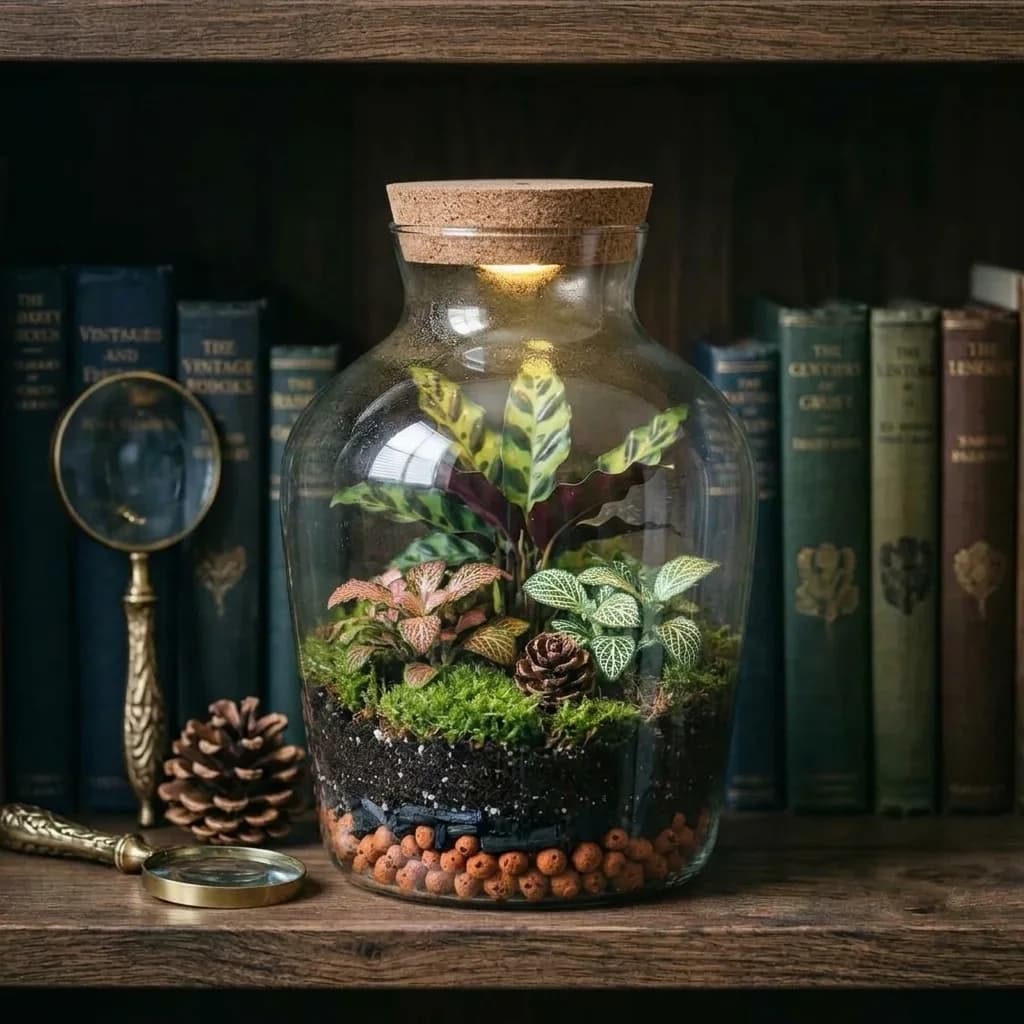
- two small plants: fittonia is perfect for a child because it reacts visibly — its leaves droop when it is thirsty and lift again after watering;
- a piece of moss;
- a spoon and a sprayer.
A kit saves buying five bags for one jar — see Terrarium kit or buying separately.
The steps, six of them
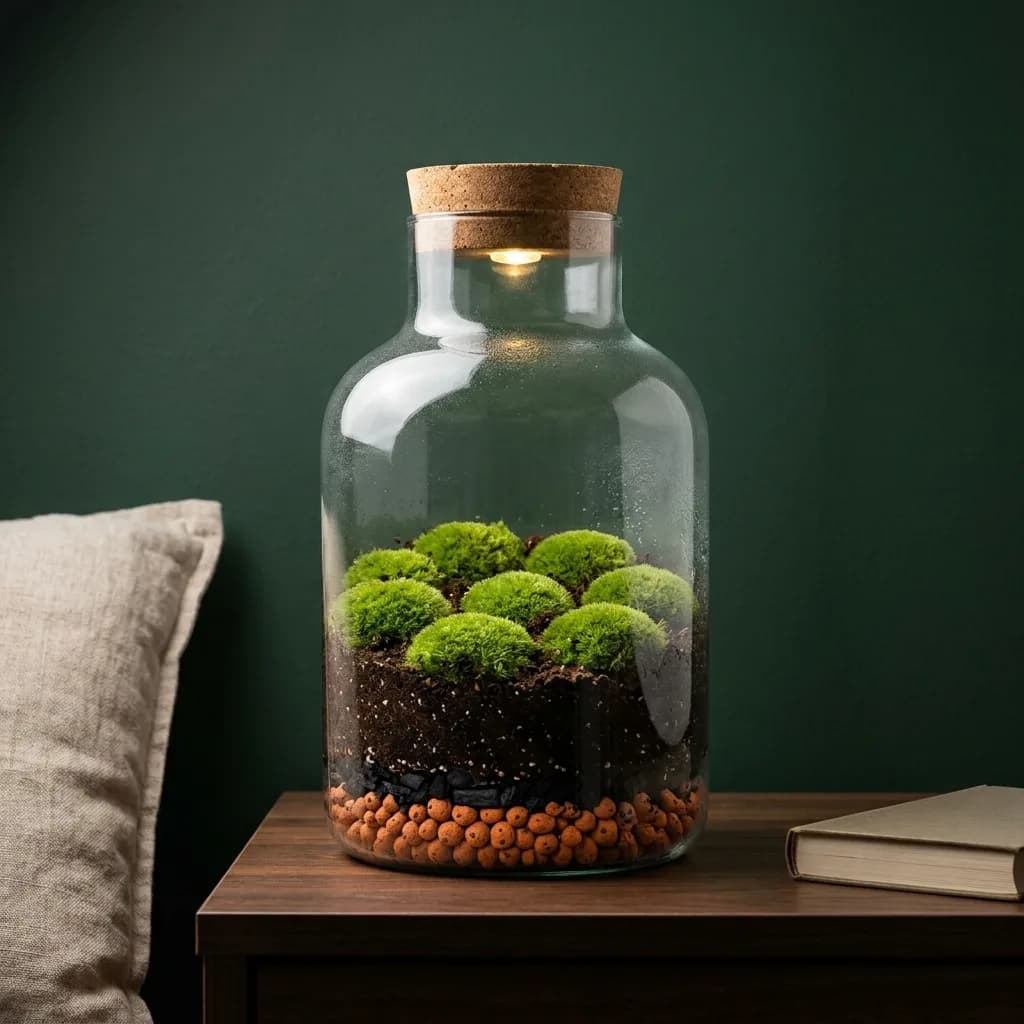
- Drainage. Two centimetres of gravel at the bottom. Explain why: the jar has no hole, so surplus water has to go somewhere.
- The substrate. Four to five centimetres, firmed down with the fingertips. You can raise a small hill on one side: relief makes the landscape livelier.
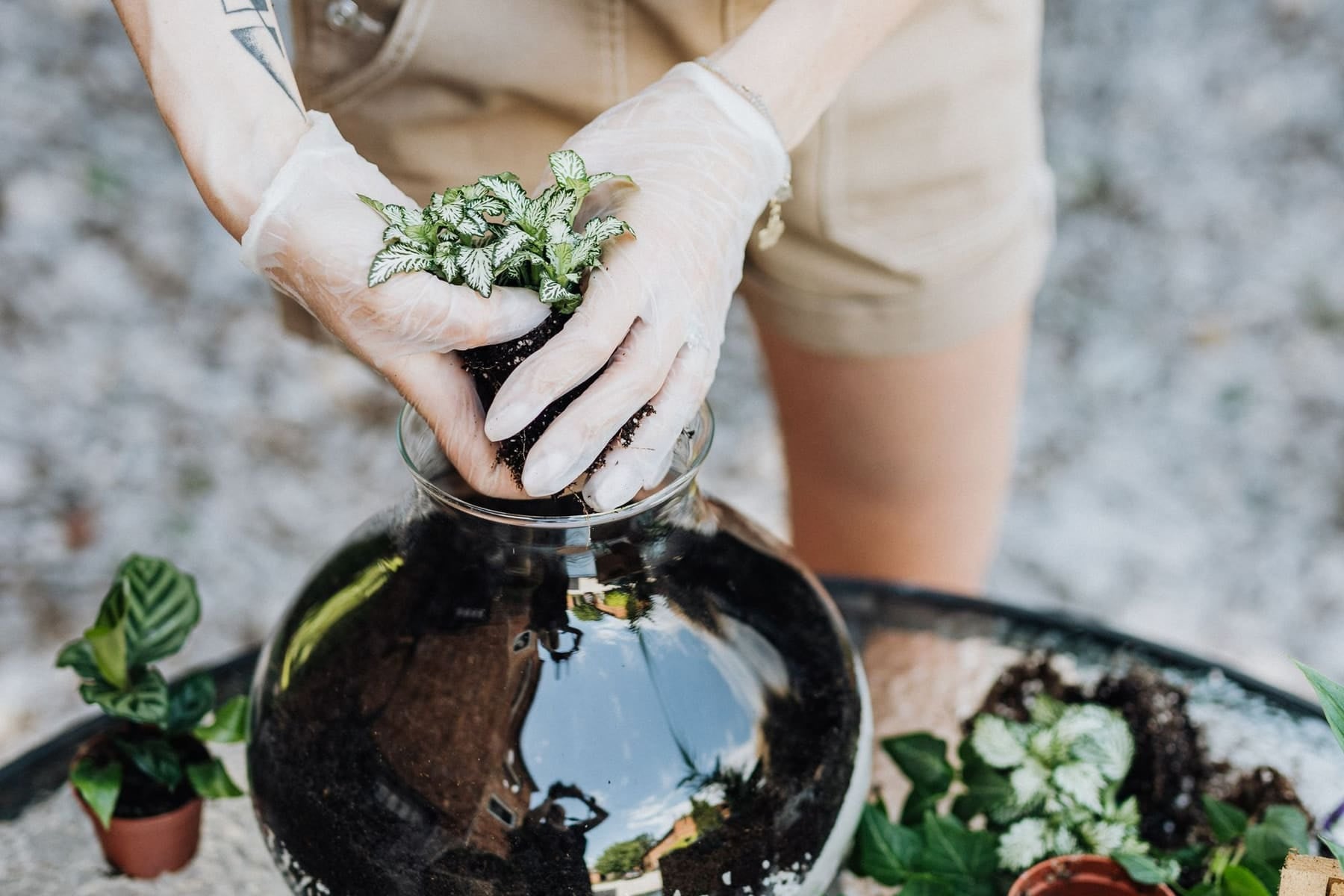
- The plants. Dig a hole with the spoon, take the plant out of its pot, rinse the root ball in tepid water, plant it, firm around it.
- The moss. Lay it down and press firmly — this is the step children do too gently, and it is what decides whether the moss takes. See How to lay moss.
- Misting. A few sprays, no more. Make the point: you can always add water, you cannot take it back out.
- Closing. Clean the inside of the glass, close it, and set it in a bright room, never in the sun.
What to watch for afterwards
Suggest an observation notebook, one line a week: is there mist this morning? A new leaf? Has anything changed colour?
The landmarks in time:
| When | What you see |
|---|---|
| Day 1 to 2 | Mist appears: the cycle has started |
| Week 1 | The plants lift again after the shock of planting |
| Week 3 to 4 | First new leaves, the moss greens up |
| Month 2 to 3 | The composition closes in, the landscape looks natural |
| Month 6 | Time to prune whatever touches the glass |
If it goes wrong
It happens, and it is useful. Two causes dominate:
Too much water — the glass runs permanently, the leaves soften. Open it for a few hours a day until a light mist returns. See Terrarium too wet.
Not enough light — everything slowly pales. Move it closer to a window.
Look together, name the cause, put it right. A terrarium that gets repaired teaches more than one that works first time.
For the classroom
The format transfers well to a group: one jar per pair, a shared observation notebook, and a comparison after a month between jars placed in different parts of the room. The light variable then shows very clearly from one jar to the next.
Sources
Frequently asked questions
From what age?
Around 6 with an adult handling the glass, and fairly independently from 9 or 10. Under 6, the child helps with the planting but the adult holds the container.
Which container avoids breakages?
A wide, thick preserving jar, or a clear food-grade plastic container for the youngest. Avoid thin carboys and footed cloches, which are unstable.
How long before you see anything?
Mist appears on the first or second day, and that is already the heart of the demonstration. Visible plant growth takes three to four weeks.
What if the child's terrarium fails?
That is information, not failure. Open it, look together at what happened — too much water, not enough light — and rebuild. Understanding why teaches more than getting it right first time.