

Calathea and maranta in a terrarium: the dwarf forms
The Marantaceae have the finest foliage in the terrarium, and a reputation for being temperamental. Under glass they become easy. Species, water, light.
In this guide
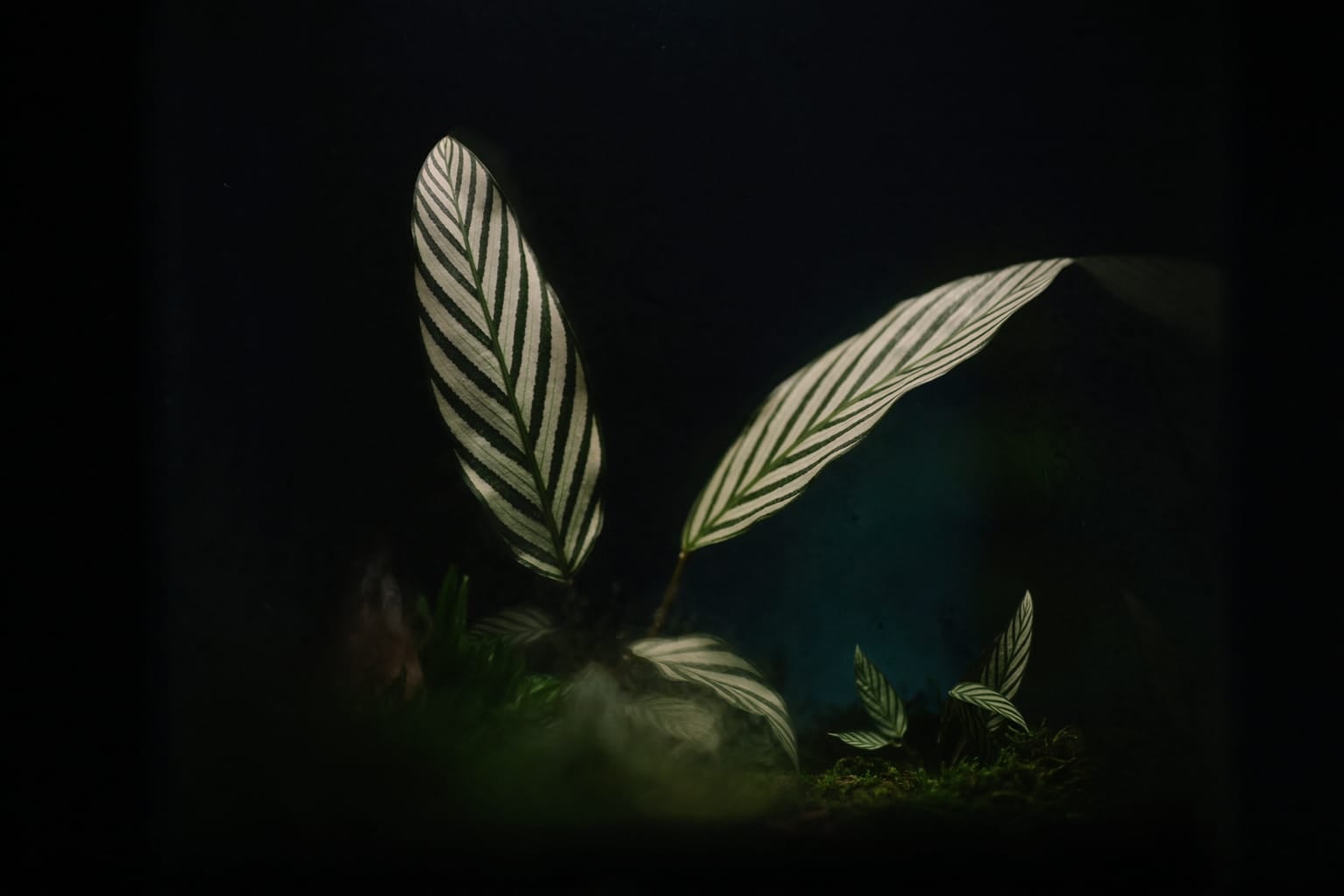
The Marantaceae — calathea, maranta, ctenanthe, stromanthe — have the most graphic foliage you can put in a terrarium: stripes, chevrons, purple undersides. They also have a reputation for being difficult, entirely down to their need for humidity. Under glass that need is met at all times, and they become easy. The only real work is choosing a dwarf form.
Identity card
| Family | Marantaceae (Calathea, Maranta, Ctenanthe) |
| Suitable forms | Dwarf varieties, 15 to 20 cm at most |
| Origin | Tropical forest floors of South America |
| Size under glass | 12 to 20 cm |
| Growth | Slow to moderate |
| Closed terrarium | Yes, this is their ideal setting |
| Open terrarium | No |
| Light | Partial shade to bright indirect light |
| Humidity | Very high, 70 % and above |
| Temperature | 18 to 26 °C, away from cold draughts |
| Difficulty | Difficult in a pot, easy under glass |
Choosing a dwarf form
This is the only trap. The calathea sold in garden centres as houseplants — orbifolia, zebrina, lancifolia — reach 50 to 80 cm. In a jar they touch the glass within months.
Look for dwarf varieties: Calathea 'Dottie' or 'Freddie', Maranta leuconeura in its compact forms, or a young plant of a medium species that you accept you will replace after a year.
One trick of composition: a dwarf calathea fills the upper storey of a 25 cm terrarium. In a 15 cm jar it will already be too large.
Why they work under glass
The Marantaceae come from the tropical forest floor, beneath a dense canopy. Three requirements follow from that, and the terrarium meets all three:
High, constant humidity. This is their weak point indoors: below 50 % humidity, leaf edges brown and dry out. A closed terrarium stays above 70 % without effort.
Filtered light. They scorch in direct sun. Under glass, at a distance from a window, the light suits them.
Steady warmth, no draughts. The jar softens the swings of the room.
The movement of the leaves
A detail that surprises people and is not a problem: the leaves rise in the evening and lower during the day. This movement, caused by a hinged swelling at the base of the leaf stalk, earned the Marantaceae their nickname of prayer plants.
A terrarium in a room where you spend the evening offers a quiet but real spectacle. It is a sign of good health: a plant under strain stops moving.
Substrate and planting
An airy, moisture-retaining terrarium substrate: coir, a little sphagnum, fine bark. Their roots are fine and like neither drought nor suffocation.
Rinse the root ball in lukewarm water, plant without burying the crown, and set the plant at the back of the composition: it is a structural element, to be seen through the rest.
Water: the one thing to watch
The Marantaceae are sensitive to lime. Hard tap water leaves marks and browns the leaf edges, exactly as dry air does — which makes the diagnosis confusing.
If your water is hard, use rainwater or deionised water for misting. See Watering a terrarium.
In a balanced closed terrarium these top-ups are rare in any case: a few sprays once the mist has stayed away for a while.
Common problems
Brown, dry leaf edges. Air too dry or water too hard — the two classic causes. Check the morning mist first.
Leaves curled in on themselves. Not enough water, or heat stress.
Leaves losing their markings, turning plain green. Not enough light.
Soft leaves, blackened base. Too much water — see Terrarium too damp.
Isolated brown spots on the blade. Water left on the foliage. Mist the substrate, not the leaves.
What to grow them with
They dominate visually: surround them with calm textures. Moss on the ground, selaginella or soleirolia as ground cover, Ficus pumila over a piece of wood.
Avoid in the same jar: another plant with strongly marked foliage, such as a red fittonia or a hypoestes. Two strong patterns cancel each other out.
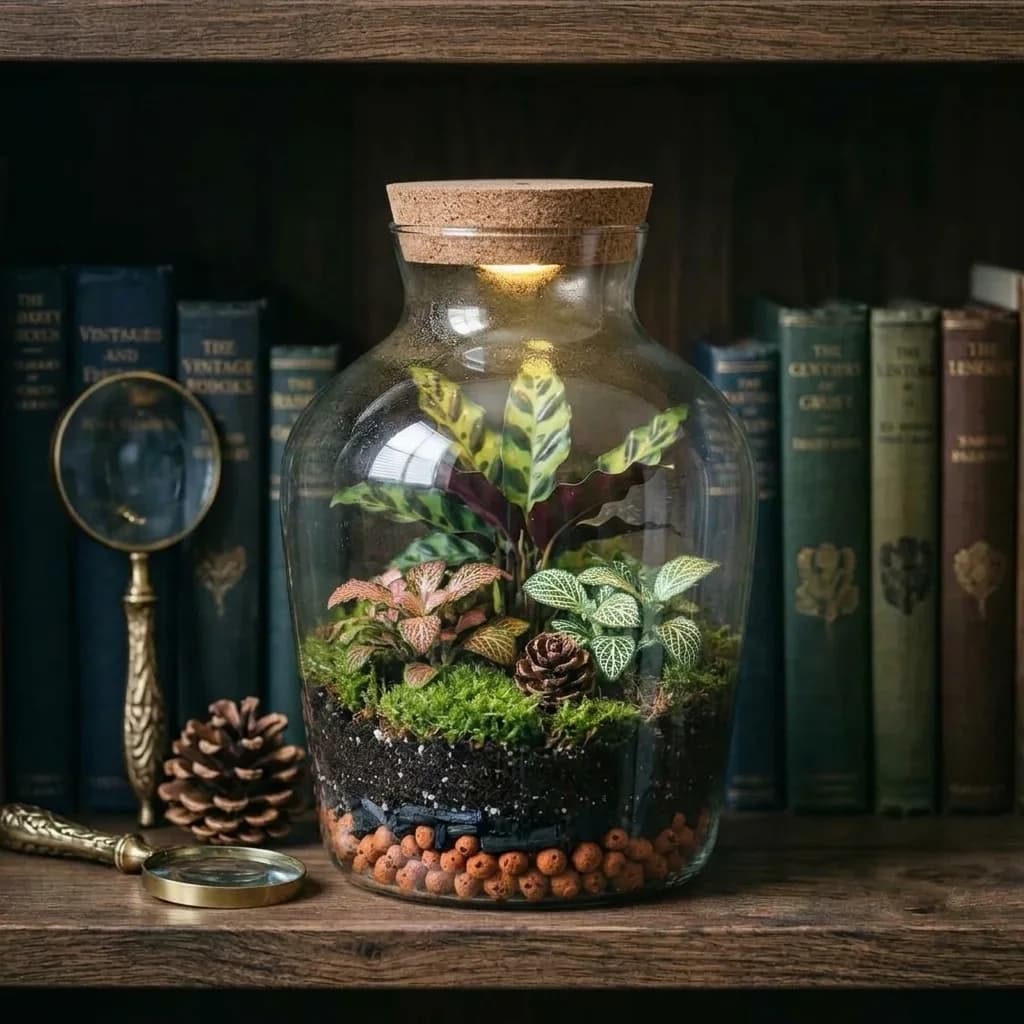
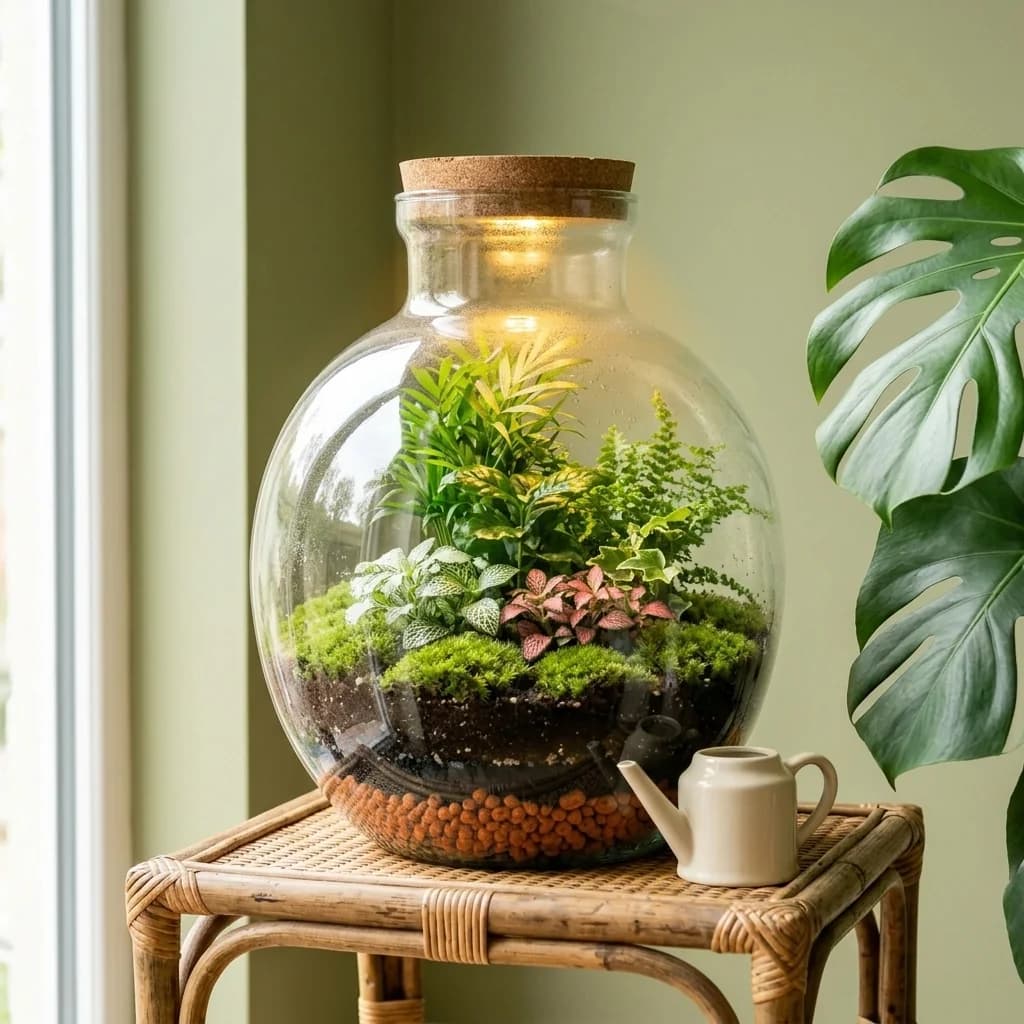
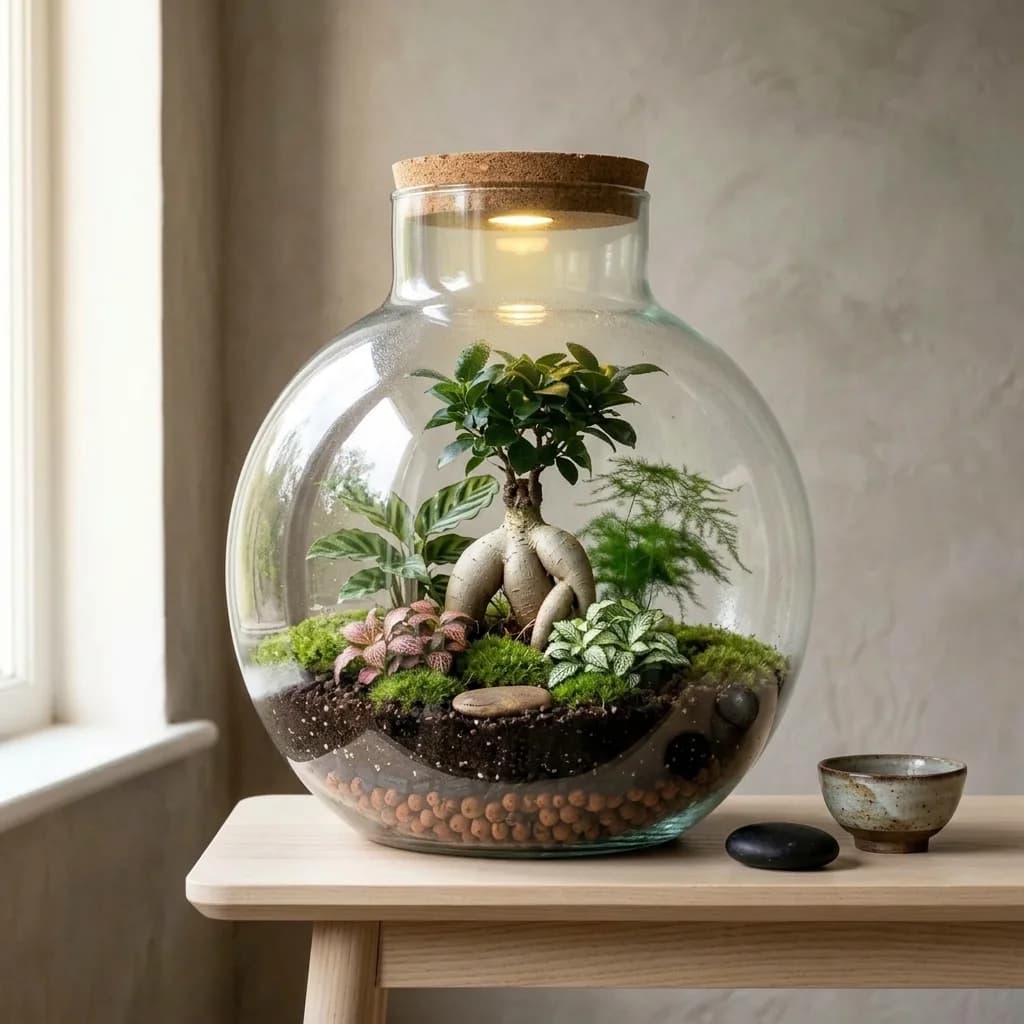
The project A tropical demijohn terrarium suits this kind of composition well, and the tropical plants section gathers our species.
Sources
Frequently asked questions
Why are calathea easier in a terrarium than in a pot?
Their reputation as difficult plants comes from their need for humidity: in a heated room their leaf edges brown. Under glass the air is saturated at all times and the problem disappears.
Which calathea should you choose for a jar?
A dwarf form: Calathea 'Dottie', 'Freddie' or a small maranta. The large houseplant varieties reach 60 cm and have no place under glass.
Why are my leaf edges turning brown?
Air that is too dry, or water that is too hard. These are the two classic causes in the Marantaceae. Check the morning mist, and switch to rainwater or deionised water.
Is it normal for the leaves to move through the day?
Yes, it is characteristic of the Marantaceae: the leaves rise in the evening and lower during the day. They are called prayer plants for that reason. It is a sign of good health.