

12 terrarium ideas, from the simplest to the most ambitious
Moss forest, mineral desert, closed bottle, Japanese woodland: twelve compositions with their level, their container and the plants to plan for.
In this guide
Further reading: Before settling on a miniature tree, check the limits of bonsai in a terrarium.
A good terrarium starts from a clear idea, not from an accumulation of plants. Here are twelve compositions that work, ordered from the simplest to the most demanding, each with its container, its plants and its level. One rule runs through the whole list: every plant in a composition must ask for the same thing. That is what separates a terrarium that lasts from one that declines.
The simple ones
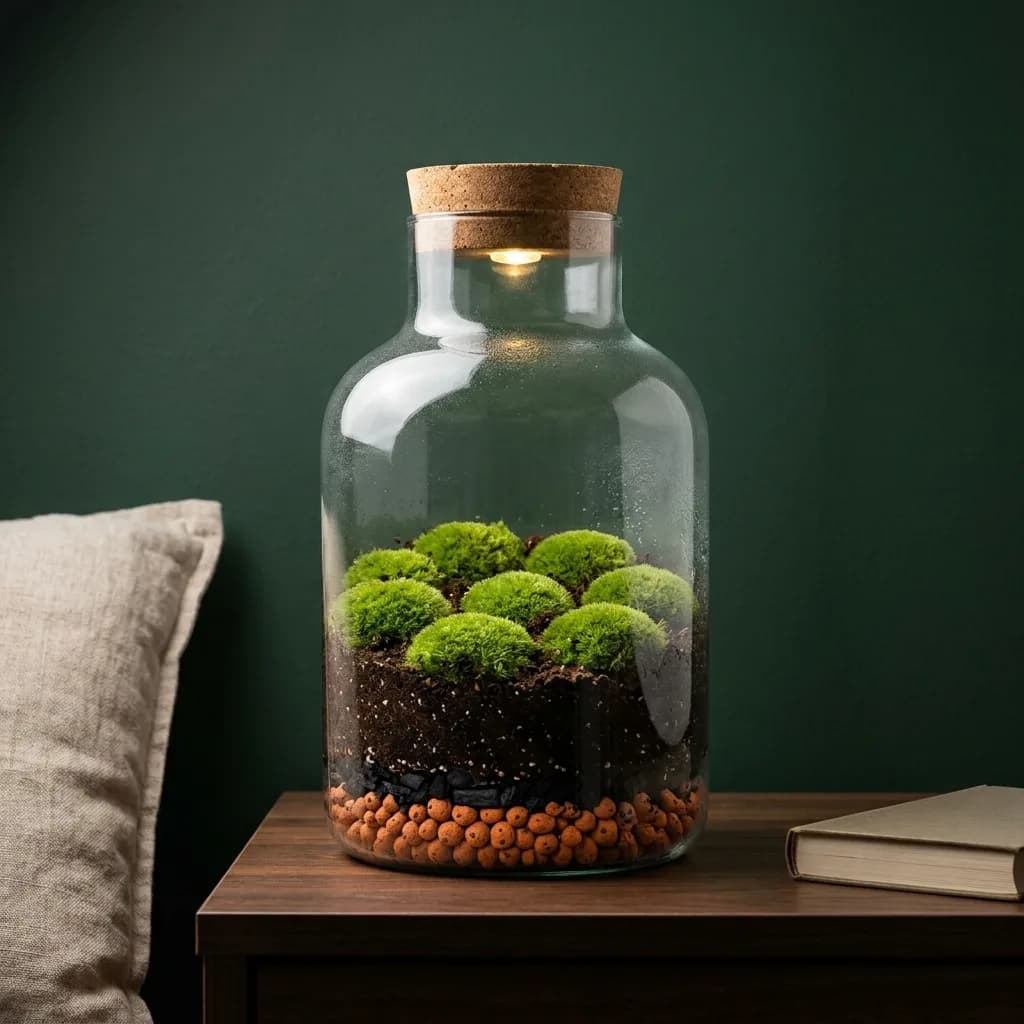
The mossarium
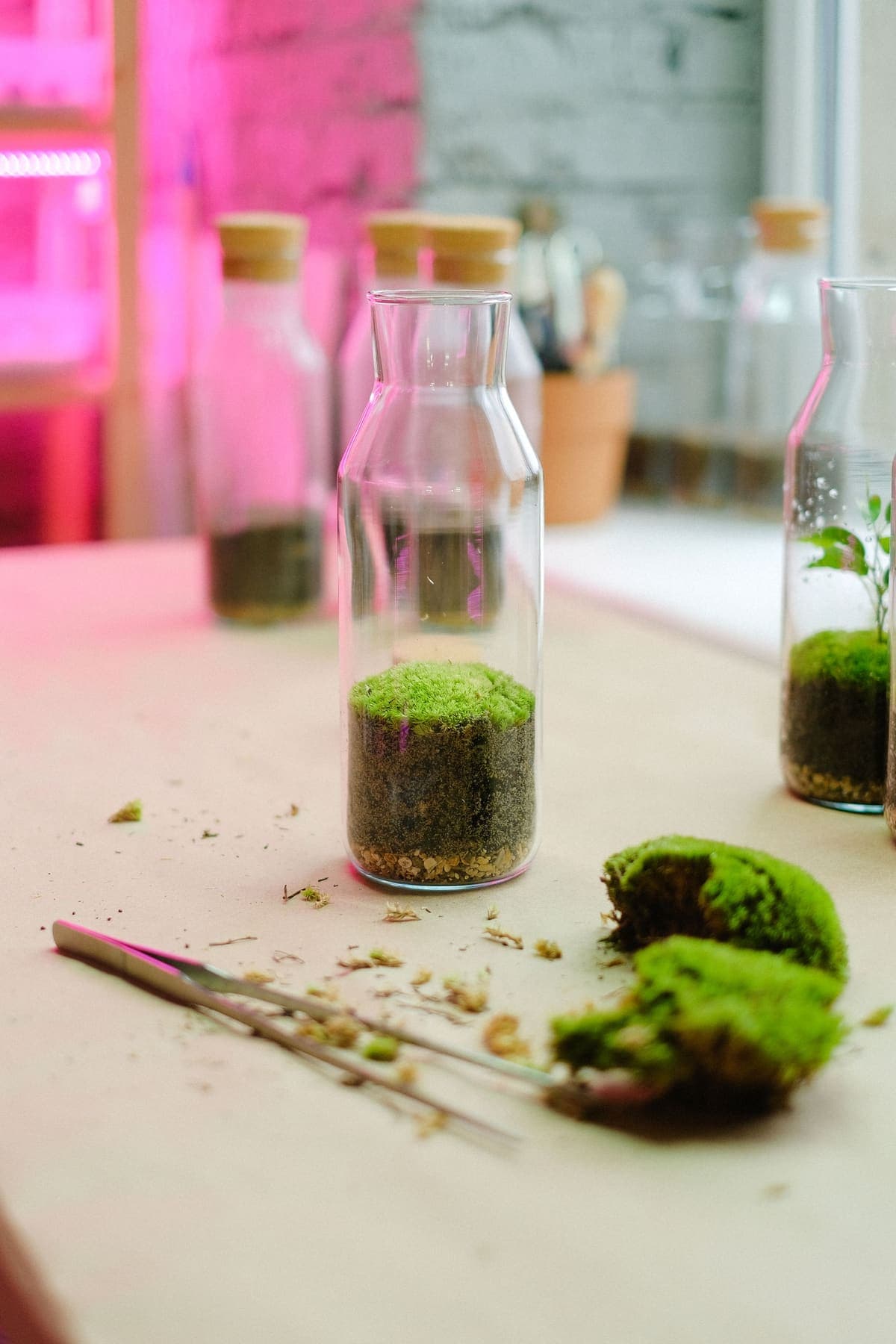
Moss only, perhaps with a fragment of wood or a stone. No vascular plants at all.
Container: any closed jar, however small — it is the only composition that works below 10 cm. What to plan for: sheet moss on the ground, one or two cushions, a piece of dry wood. Level: very easy. See: Cushion moss or sheet moss.
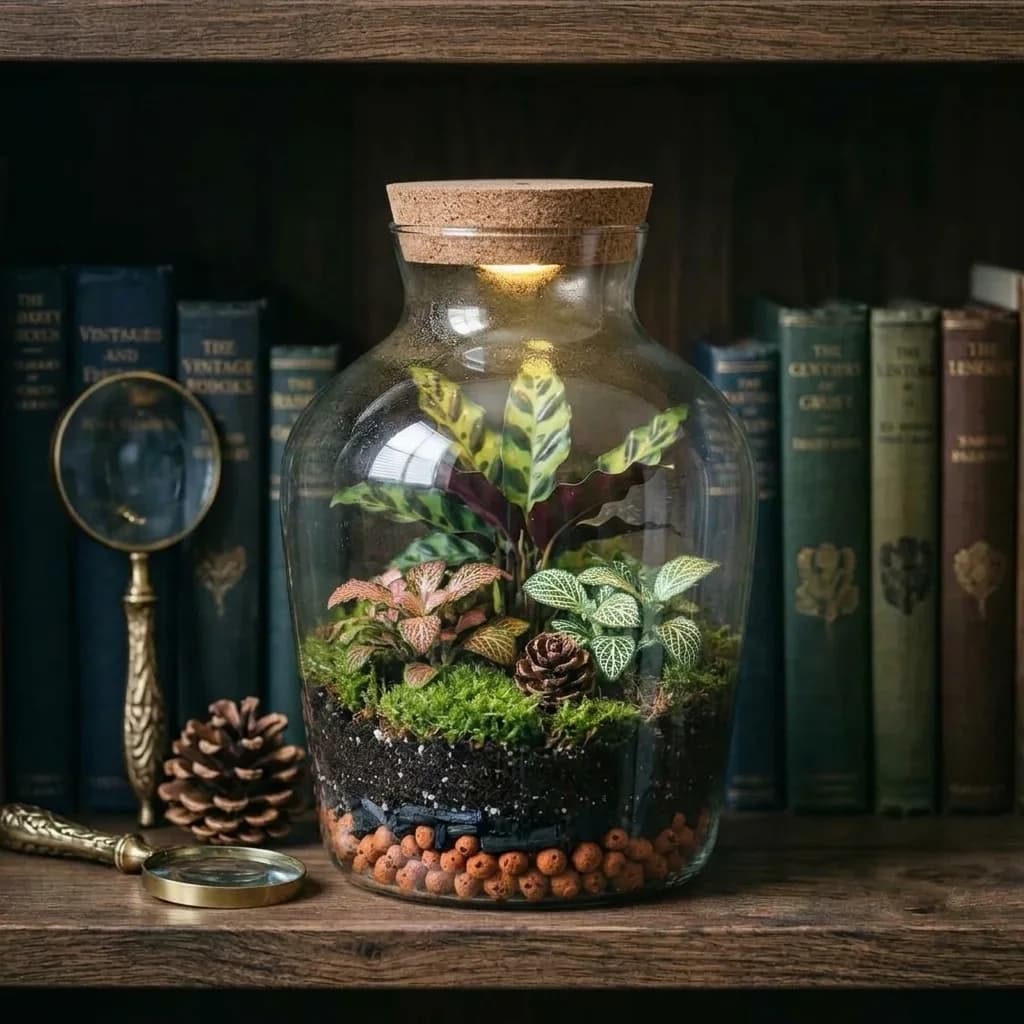
The miniature woodland
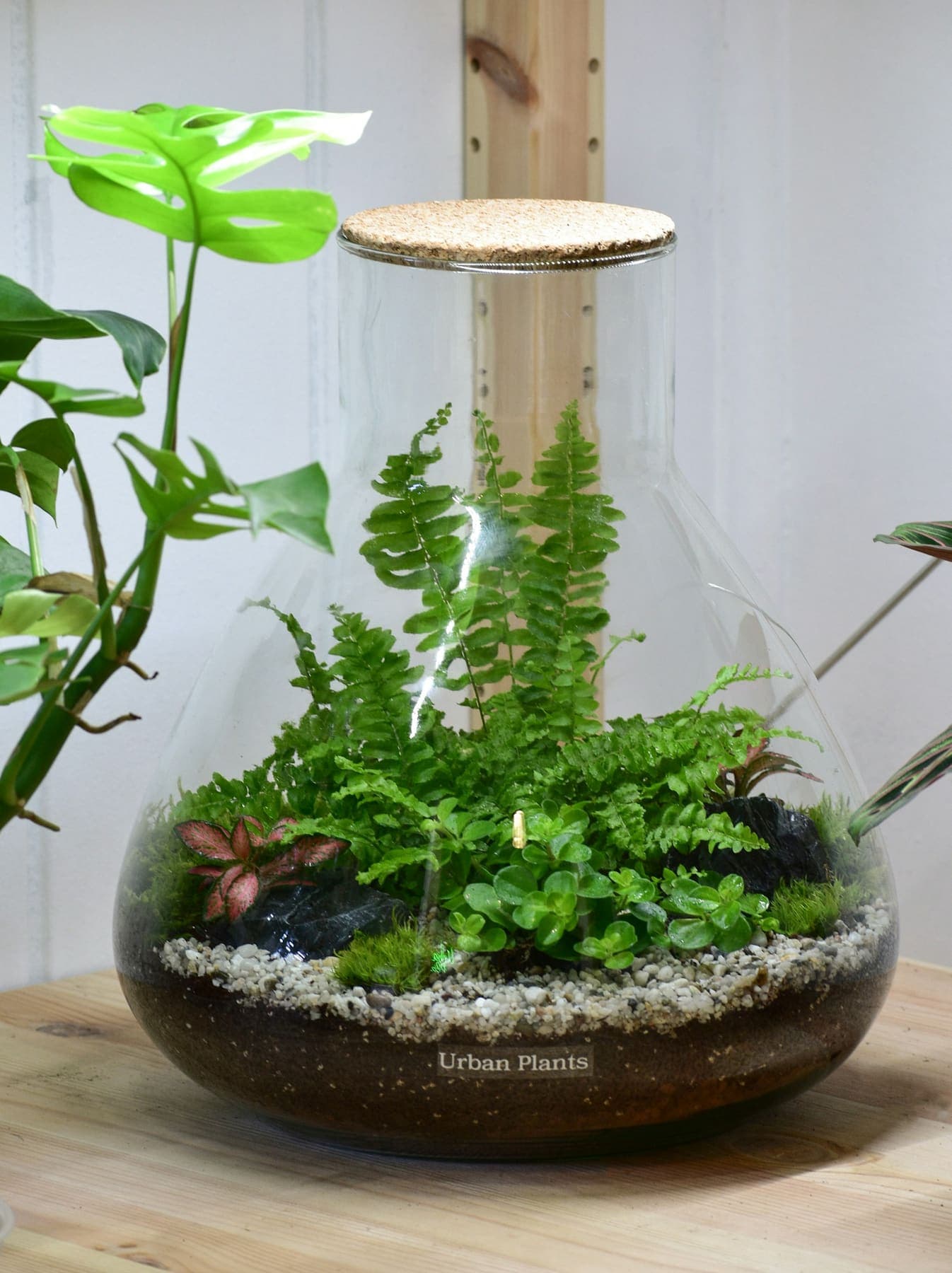
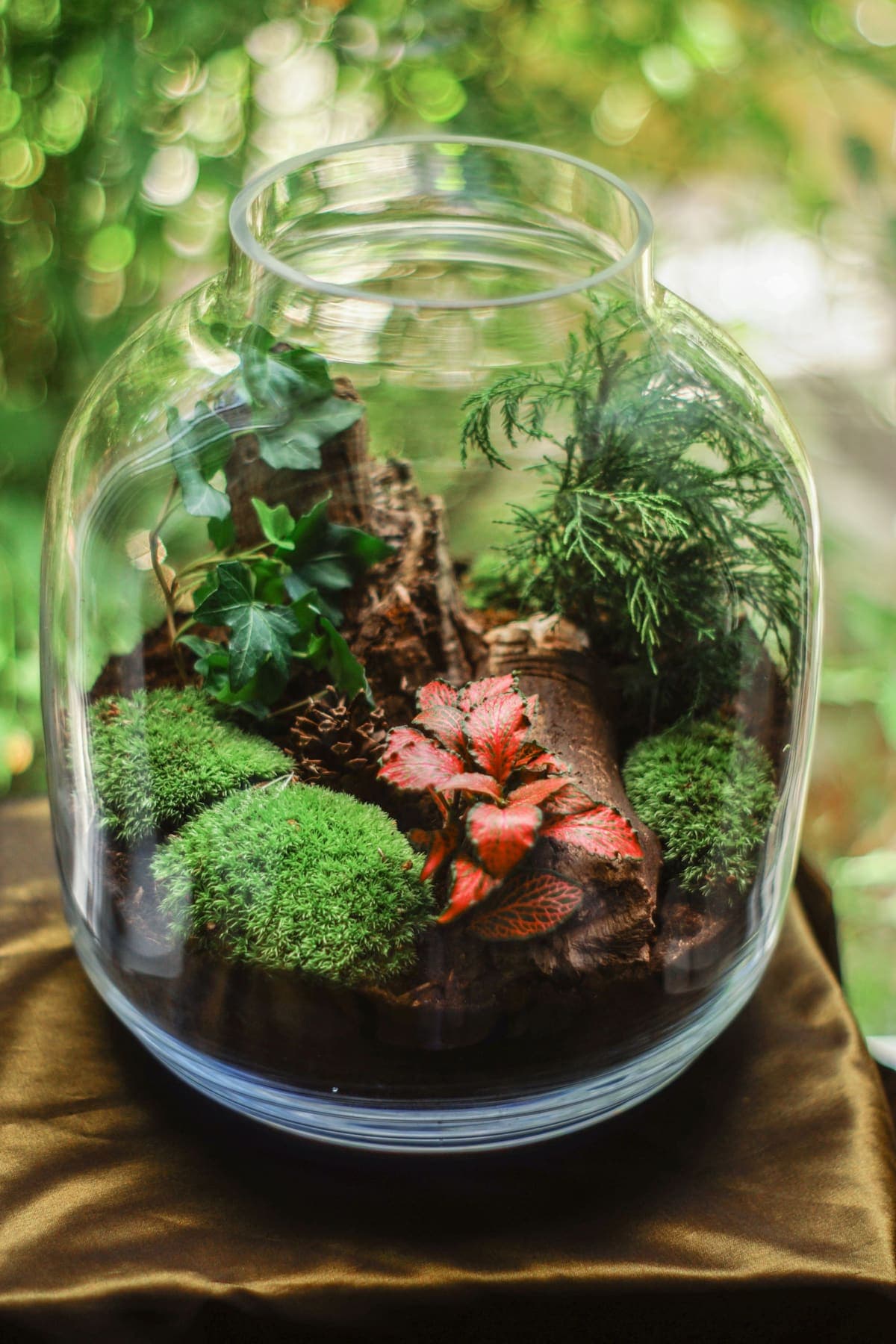
The classic, and the best first terrarium: three woodland plants, a carpet of moss, a small piece of wood.
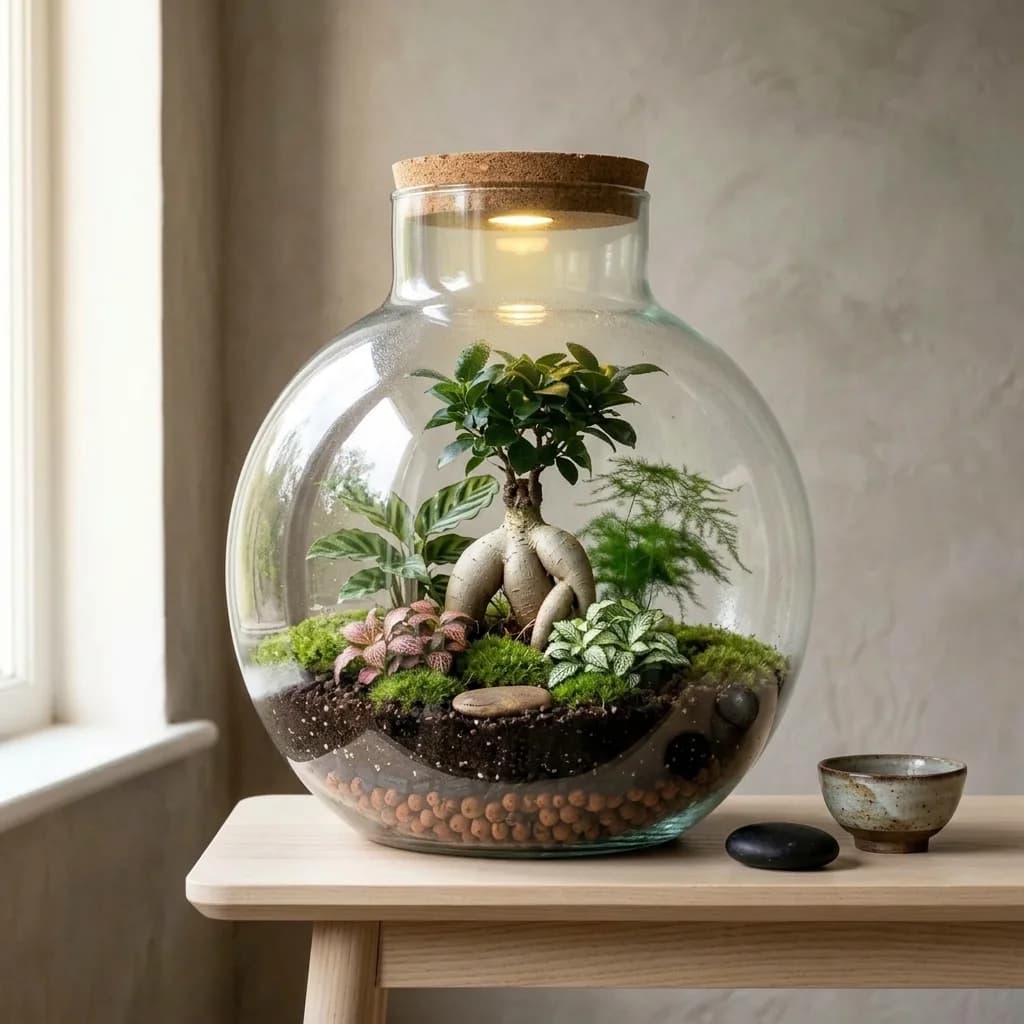
Container: closed jar of 20 to 25 cm, wide mouth. What to plan for: a small fern, a fittonia, a creeping fig, some moss. Level: easy. See: Your first terrarium: the beginner's guide.
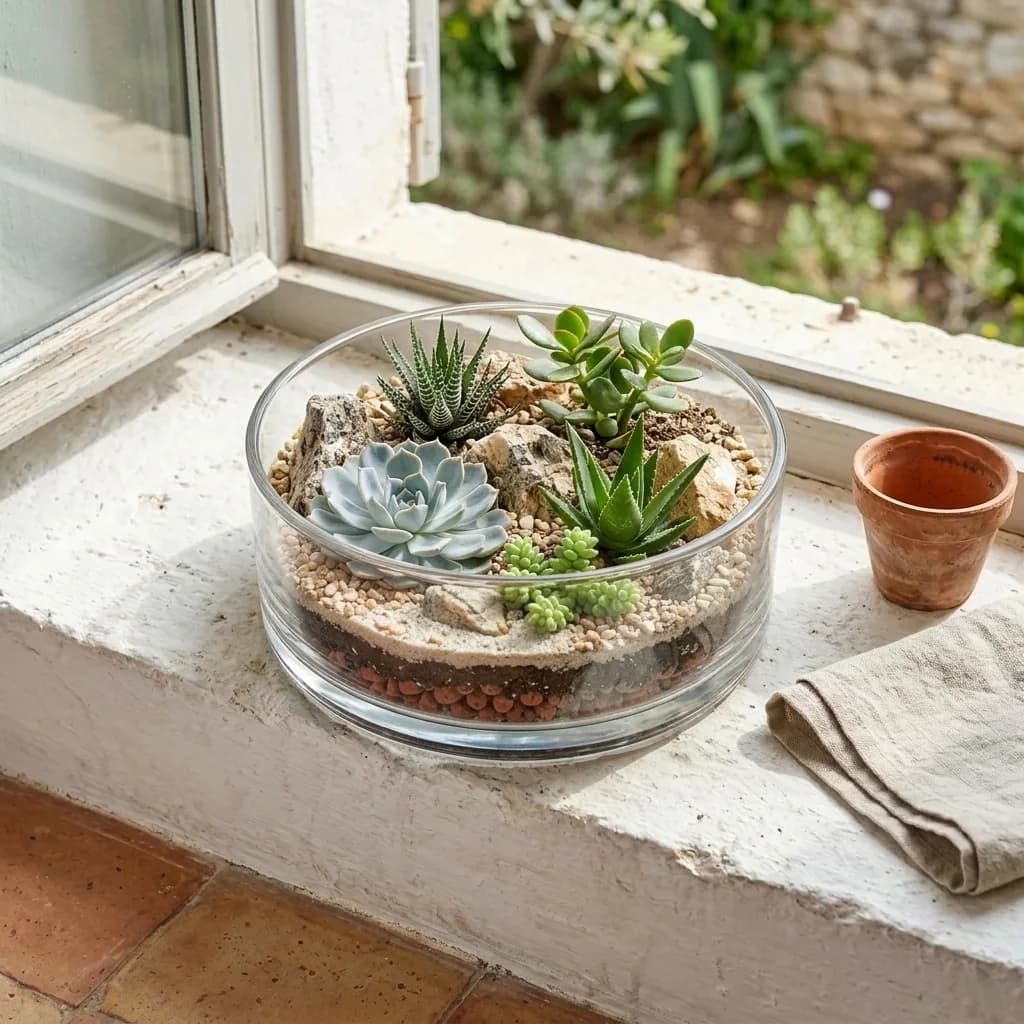
The succulent bowl
A wide, shallow bowl, succulents, a mulch of pale sand. Bright and graphic.
Container: open terrarium, a bowl wider than it is tall. What to plan for: three to five succulents, mineral substrate, gravel to finish. Level: easy, provided you have plenty of light. See: Succulent terrarium.
The desk terrarium
Small format, plants that tolerate moderate light, attention twice a year.
Container: closed jar of 15 to 20 cm. What to plan for: peperomia, a small fern, moss. Level: easy. See: A terrarium on your desk.
The intermediate ones
The miniature forest
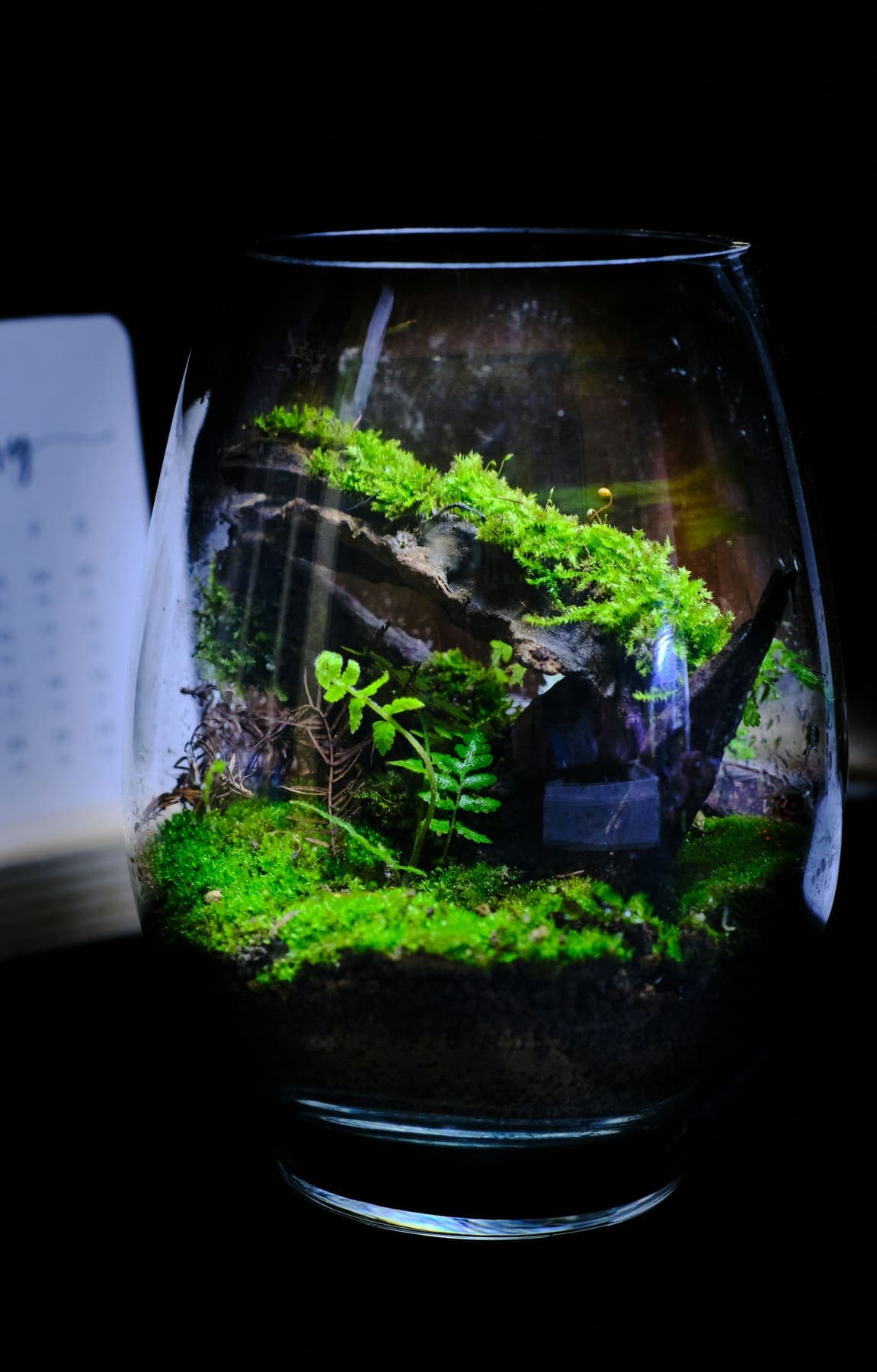
A genuine landscape: relief, a path, a miniature tree, vegetation at several heights.
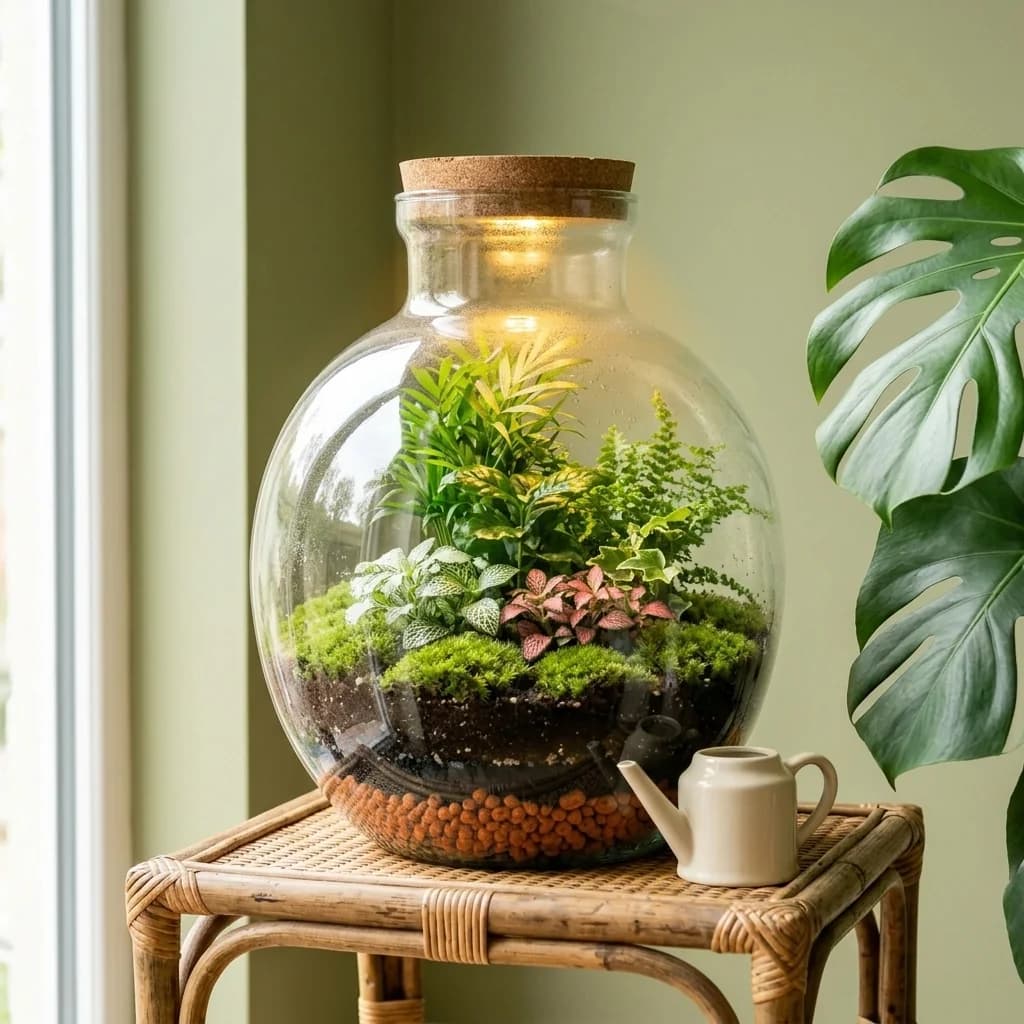
Container: jar or carboy of 25 cm and up. What to plan for: a fern at the back, selaginella on the ground, creeping fig over a piece of wood, mosses, sand for the path. Level: intermediate. See: the project A miniature forest under glass.
The bottle terrarium
A bottle lying down or standing up, planted with tweezers through the neck. The strongest closed-world effect there is.
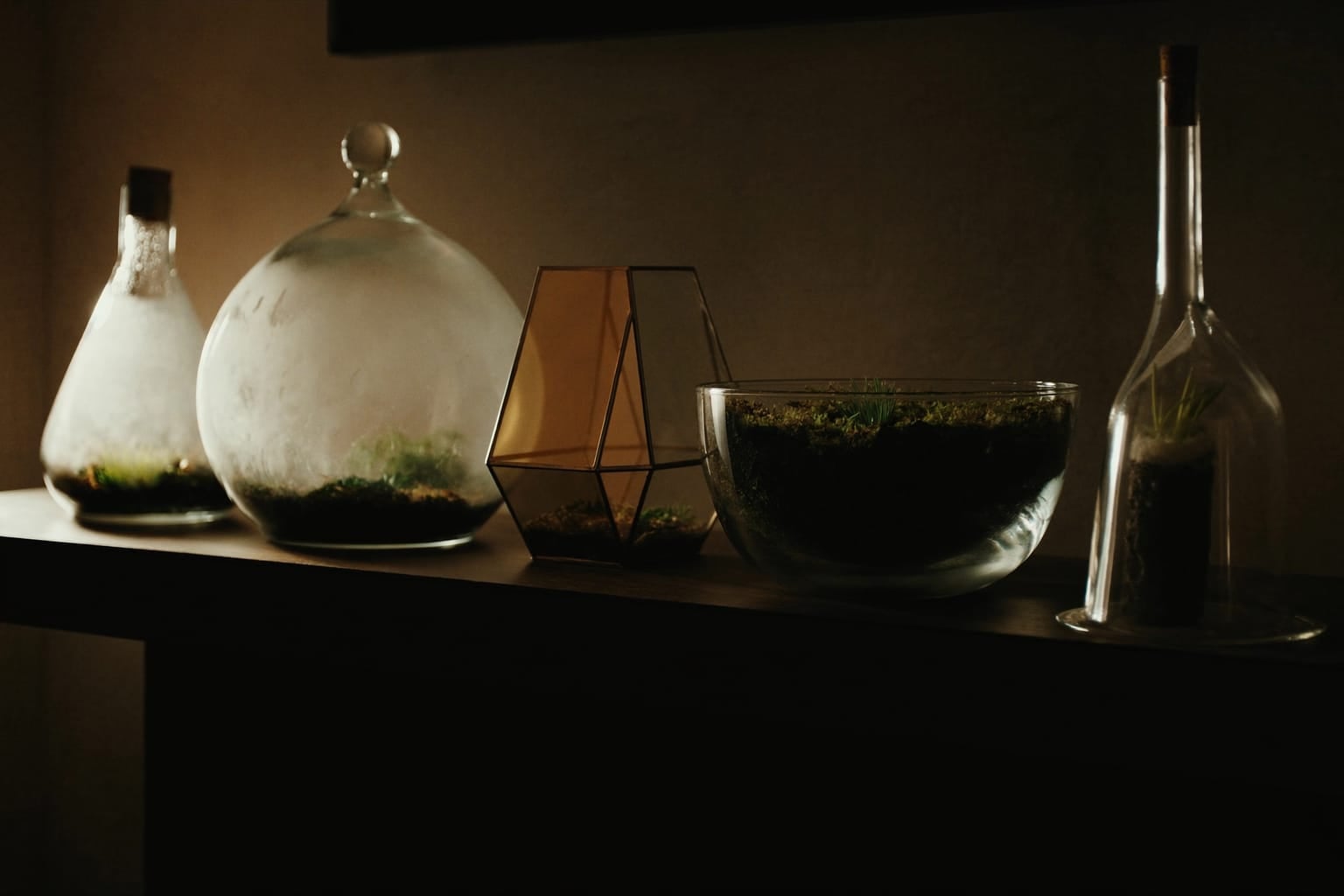
Container: clear glass bottle, cork stopper. What to plan for: long tools are essential, and very small plants. Level: intermediate; the difficulty is in the handling. See: Bottle terrarium.
The Japanese woodland
Moss dominant, one upright stone, a single standing plant. A pared-back composition, drawn from dry gardens.
Container: shallow closed bowl, or a cloche on a base. What to plan for: sheet moss, one well-chosen stone, a single plant — a fern or a selaginella. Level: intermediate. The difficulty is choosing the stone: it makes the composition.
The colour terrarium
A tonal scheme built around one dominant shade: pink with fittonia and hypoestes, or bronze with pilea involucrata and cryptanthus.
Container: closed jar of 20 to 25 cm. Level: intermediate. One dominant shade at a time, or the eye no longer knows where to settle.
The mineral desert
Coloured bands of sand, succulents spaced apart, rocks. A landscape rather than a garden.
Container: open terrarium, geometric or a bowl. What to plan for: mineral substrate, sands in several shades, succulents with contrasting shapes. Level: intermediate. See: the project A miniature desert.
The ambitious ones
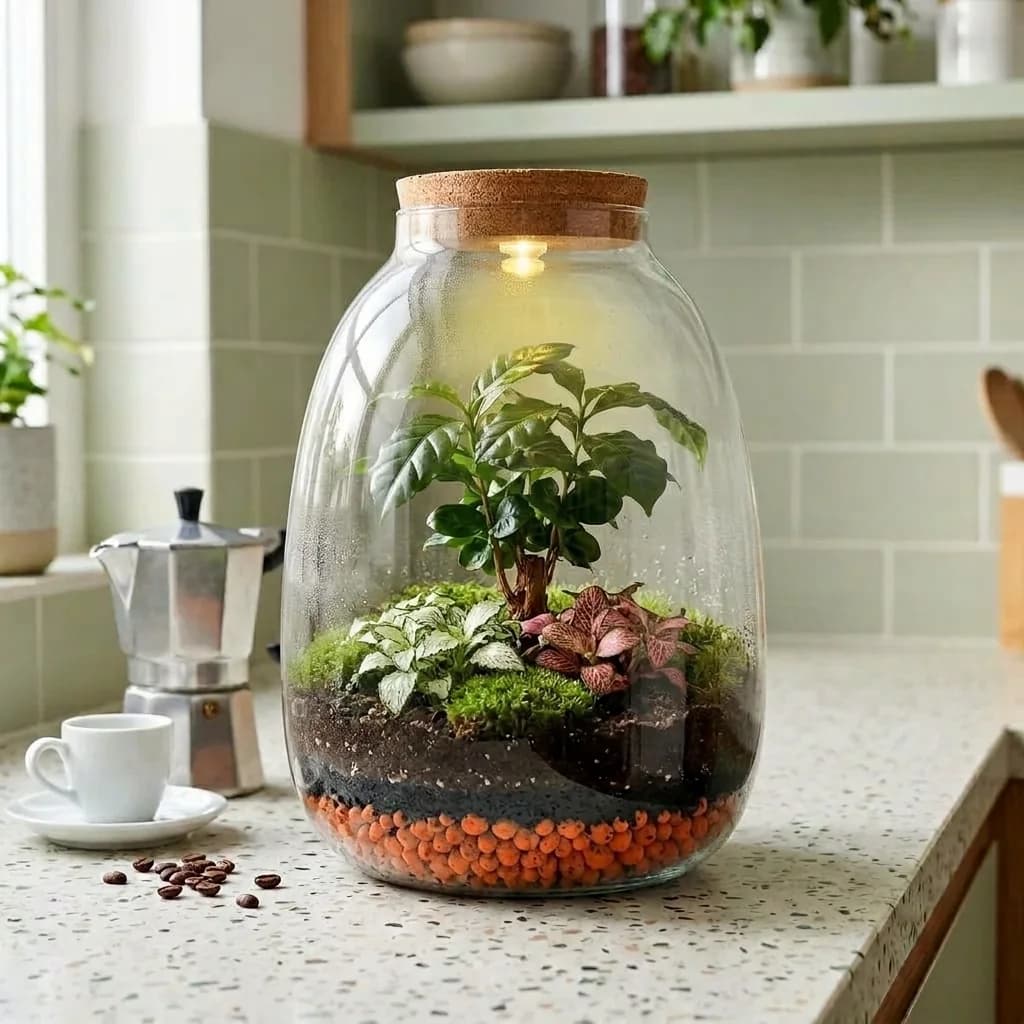
The tropical carboy
Large volume, narrow neck, dense vegetation on several levels. The most striking piece of all.
Container: carboy of 10 litres and up. What to plan for: long tools, patience, slow-growing plants. Level: advanced. See: the project A tropical terrarium in a carboy.
The bioactive terrarium
A living soil, with a microfauna of decomposers that deals with dead matter on the spot.
Container: closed, 15 litres and up so the soil can find its balance. What to plan for: a carefully built drainage layer, a leaf litter, springtails. Level: advanced. See: Bioactive terrarium.
The living wall under glass
A planted back panel, with ferns and creeping fig climbing over a textured background.
Container: a tall closed terrarium with a worked backdrop. What to plan for: a fixing support, sphagnum, climbing plants. Level: advanced. It is the longest composition to build and the most impressive in the end.
Before you choose
Three questions settle everything, before the style even comes up:
What light do you have? Plenty, and direct: desert, succulents. Bright but indirect: everything else. Little: mossarium, ferns, desk terrarium.
How much room? Below 5 litres, only the mossarium really works.
How much time will you give it? All these compositions need two or three interventions a year, except the ambitious ones, which ask for more in the first year.
If you are undecided, the quiz Which little living world should you create? answers in four questions.
Sources
Frequently asked questions
Which idea should you choose for a first terrarium?
The miniature woodland in a wide-mouthed jar: three plants, some moss, and a container that reopens easily so you can put things right. It is the most forgiving composition.
Can several styles be mixed in one terrarium?
Not really. Each style rests on a consistent regime of water and light. Mixing a desert and a woodland in one jar condemns one of the two.
Which idea suits a very small container?
The mossarium: moss only, perhaps with a fragment of wood. It is the only composition that genuinely works below 10 cm.
How long before a terrarium looks like the picture?
Two to three months. On the day you build it, the root balls and the joins in the moss still show; they disappear once the plants meet.