


Charcoal in a terrarium: useful or not?
Activated carbon, horticultural charcoal, wood charcoal: what each one really does in a terrarium, how much to use, and when you can do without it.
In this guide
Charcoal in a terrarium absorbs the compounds behind stale smells and keeps the bottom layer porous when a little water sits there. It is not a magic filter, and it is not compulsory: a terrarium that drains properly, built on an airy substrate and watered with restraint, does perfectly well without it. It stays an inexpensive safeguard, and that is the reason to add it.
What charcoal does, and what it does not
What it does. Its extremely porous structure holds organic molecules at its surface. In a terrarium, that means it limits the musty smell that appears when water sits at the bottom. It also brings porosity and air to the part of the build that lacks both the most: just above the drainage layer.
What it does not do. It does not prevent mould: mould comes from too much moisture and dead matter, not from a lack of charcoal. It does not purify the water of a terrarium the way it would in an aquarium filter, where water passes through it constantly. And it does not rescue a waterlogged terrarium — for that, see Terrarium too damp.
The three charcoals, and which to choose
| Horticultural charcoal | Activated carbon | Barbecue charcoal | |
|---|---|---|---|
| Origin | Charred wood, crushed | Charcoal treated at high temperature to open its pores | Briquettes with binders |
| Absorption | Moderate | High | Not applicable |
| Price | Low | Medium | Low |
| For a terrarium | Works very well | Works, slightly over-specified | Avoid entirely |
Horticultural charcoal is the default choice. It is sold as granules, costs almost nothing, and does exactly what a terrarium asks of it.
Activated carbon, sold for aquariums, absorbs more. In a filter with water running through it, that difference counts. In a static terrarium layer, it changes little: use it if you have some to hand, but there is no need to buy it specially.
Barbecue charcoal is out of the question. The briquettes contain binders and sometimes lighting agents, which have no place in a closed living environment.
Where to put it, and how much
Two methods, both sound.
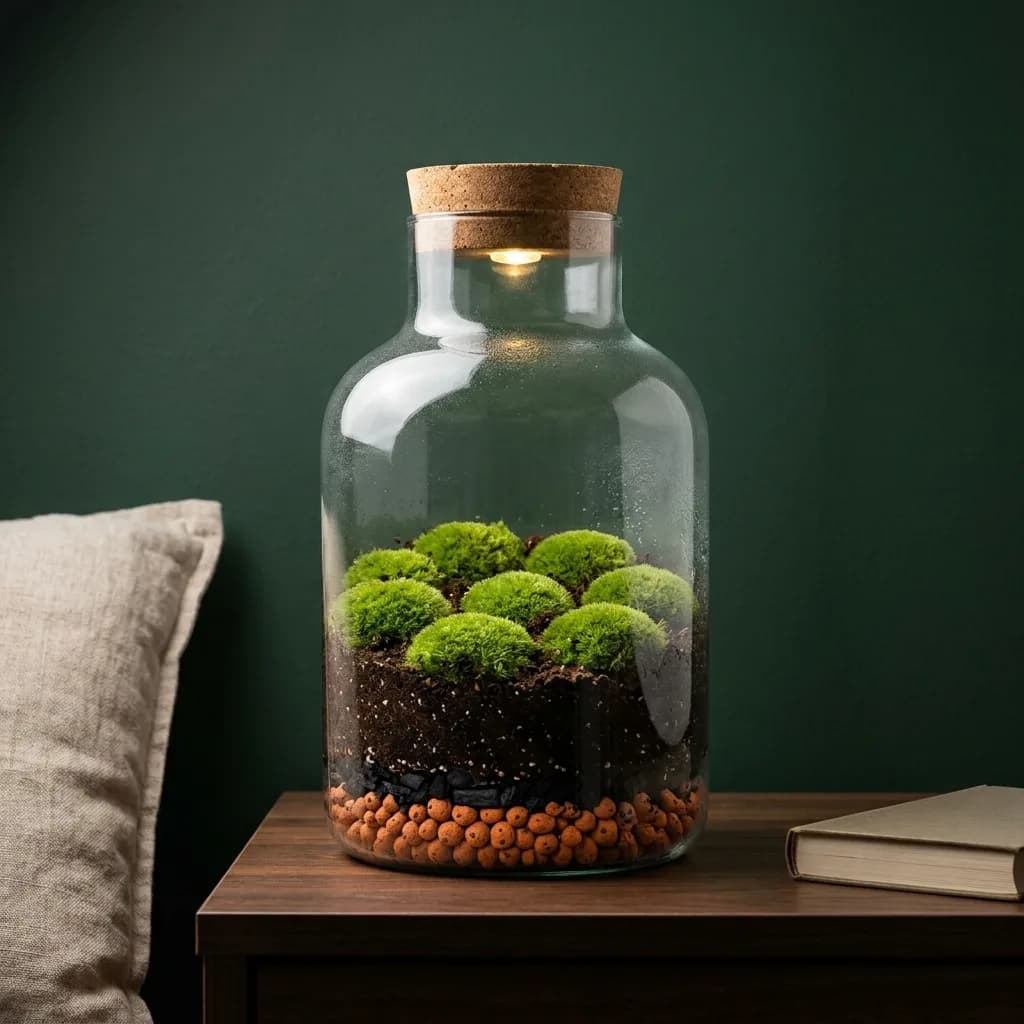
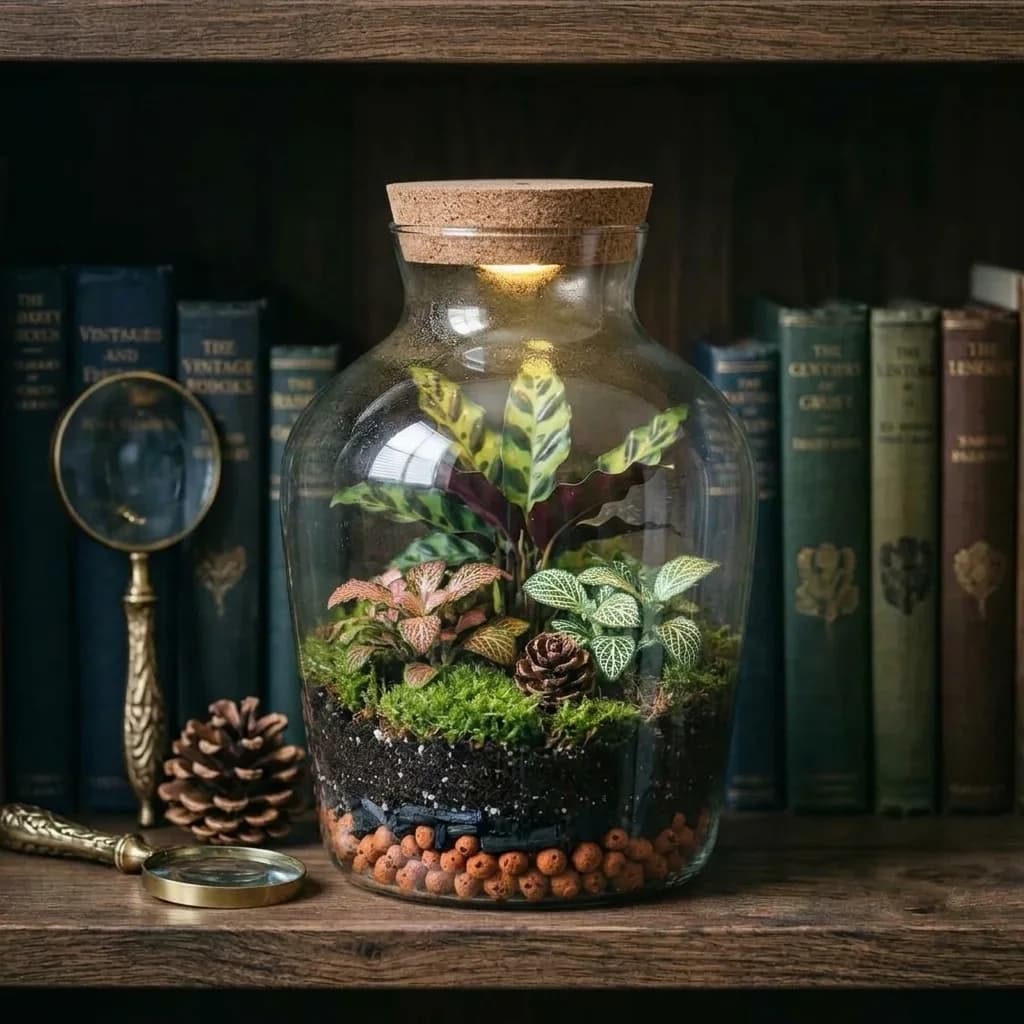
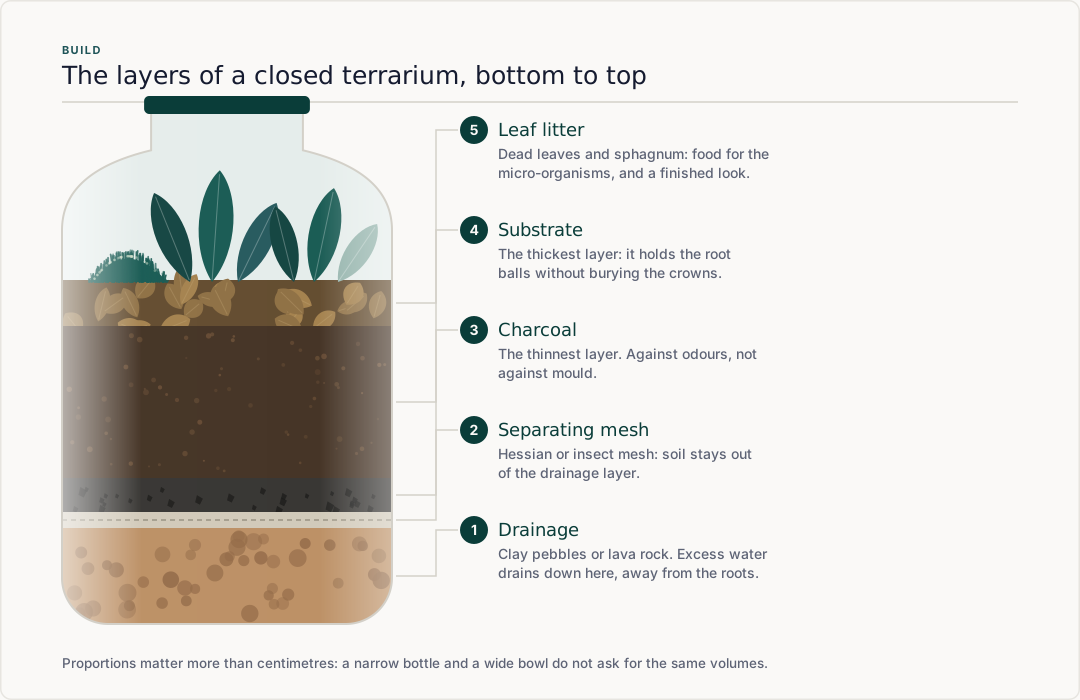
As a thin layer, between the drainage and the substrate: half a centimetre to a centimetre, just enough to cover. This is the classic build, described in The layers of a terrarium.
Mixed into the substrate, a handful for every few litres. Some shop-bought terrarium substrates already contain it: check the composition before adding more.
Either way, there is no point in adding more. A thick layer does not absorb better, it simply takes up root space, which is precisely what a small container is short of.
Is it worth adding to an open terrarium?
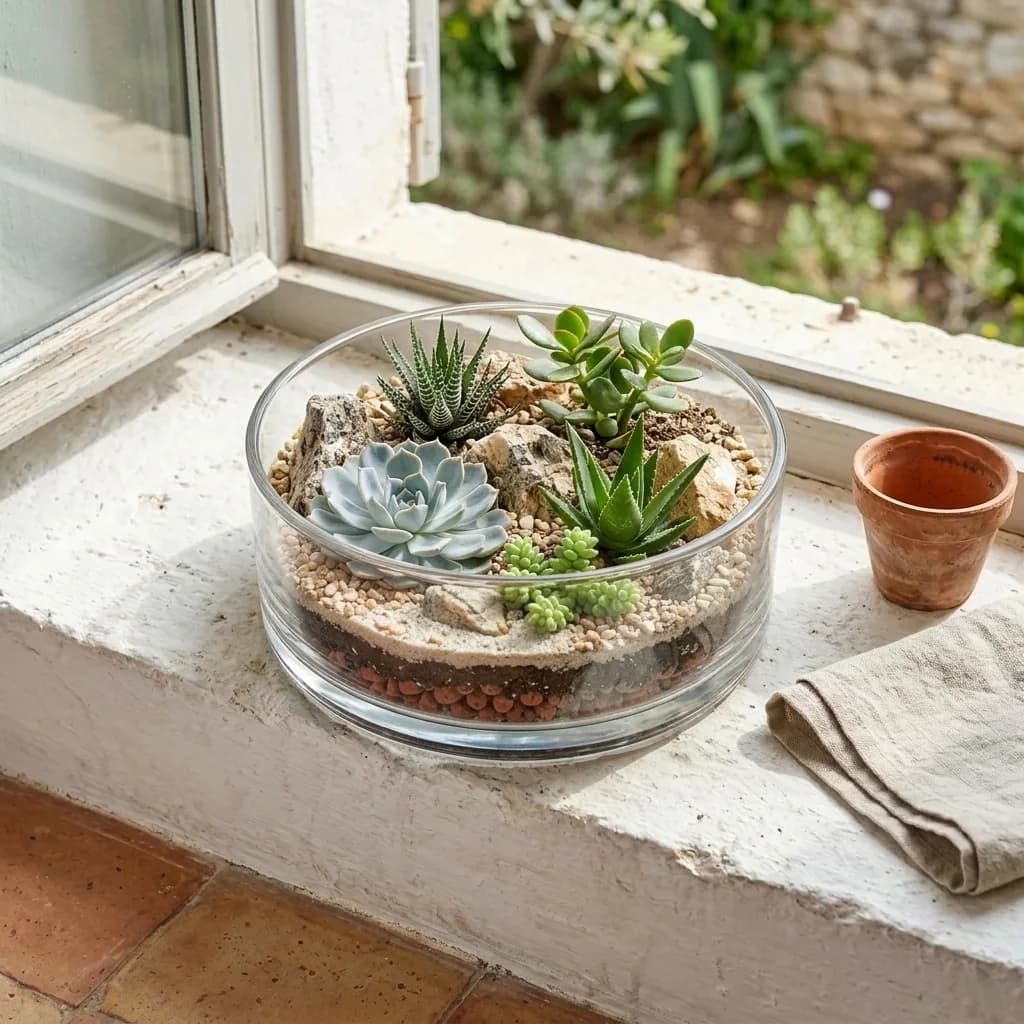
Far less so. In an open terrarium of succulents, water evaporates, air moves, and smells never settle. The mineral drainage layer is quite enough on its own. Keep the charcoal for closed builds.
What matters more than charcoal
If you had to choose where to put your attention, this would be the order:
- Drainage — two to three centimetres of clay pebbles or lava rock at the bottom, with a separating layer;
- The substrate — airy, never potting compost on its own, which holds far too much water under glass;
- Watering — measured, with a pipette, waiting until the next day before adding more;
- Charcoal — the safeguard you add once the first three points are settled.
A terrarium with no charcoal but good drainage lasts for years. A waterlogged terrarium with charcoal dies anyway.
Sources
Frequently asked questions
Can a terrarium do without charcoal?
Yes. A well-drained terrarium, with an airy substrate and measured watering, lives perfectly well without charcoal. Charcoal is a safeguard against smells and standing water, not an essential part of the build.
Can you use barbecue charcoal?
No. Barbecue briquettes contain binders, sometimes lighting agents, and are not suitable for a closed living environment. You need horticultural charcoal or activated carbon sold for aquariums or horticulture.
How thick should the charcoal layer be?
A thin layer is enough: half a centimetre to a centimetre between the drainage and the substrate, or a handful mixed into the substrate. A thick layer does no better, it only takes up space the roots need.
Does the charcoal need replacing?
In a terrarium, no. Its absorbing power fades over time, but it carries on acting as a porous, airy material in the bottom layer. Removing it would mean taking the whole composition apart.