


Beginner


10 pieces, 4-6 cm
Free delivery from €89
Build your own, layer by layer.
Six steps, in the order you build. Each department offers what goes with the step before.
 Complete refillEverything but the glass: drainage, charcoal, soil, mossFrom €18.90The whole shop
Six kits. Everything is in the box.
The glass, the live plants, the soil and the guide. Every kit comes in three versions.
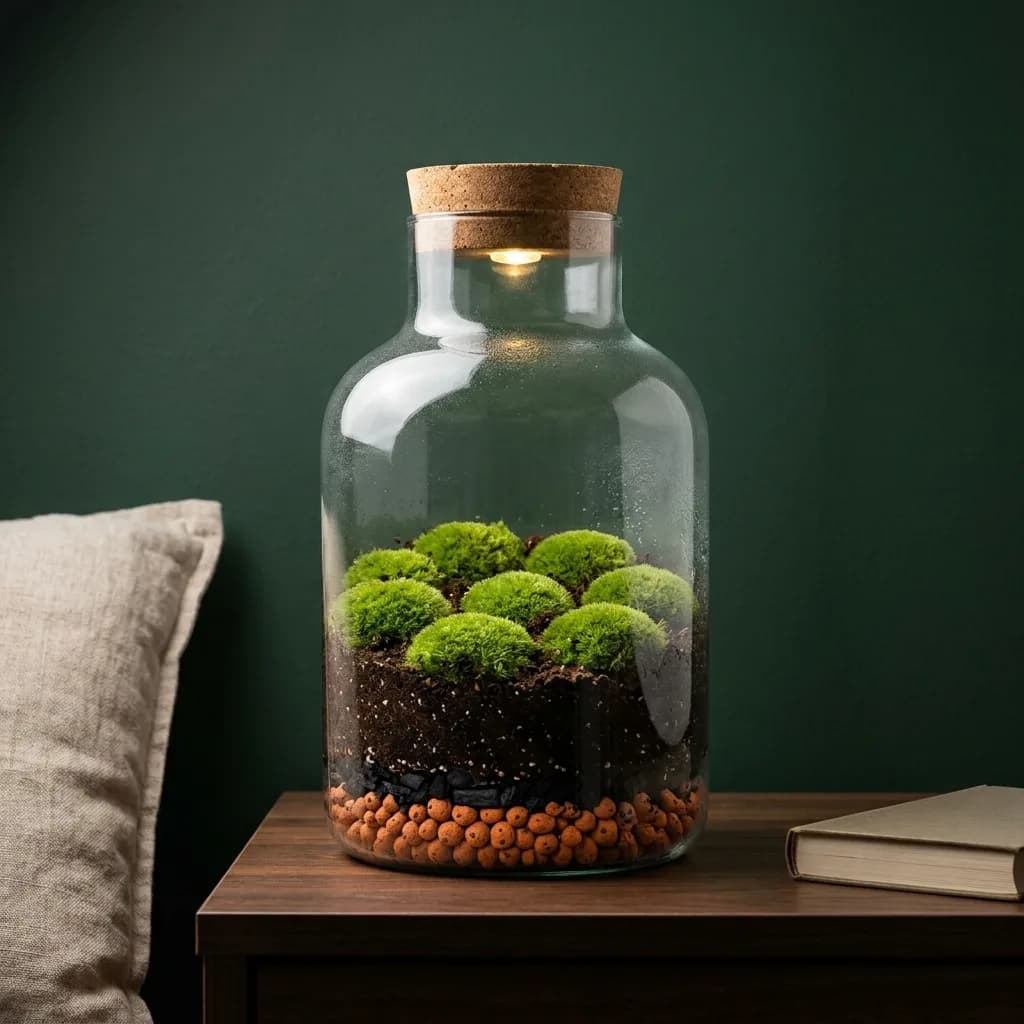 BeginnerMoss and lightClosed · M · LED4.8From €60.90
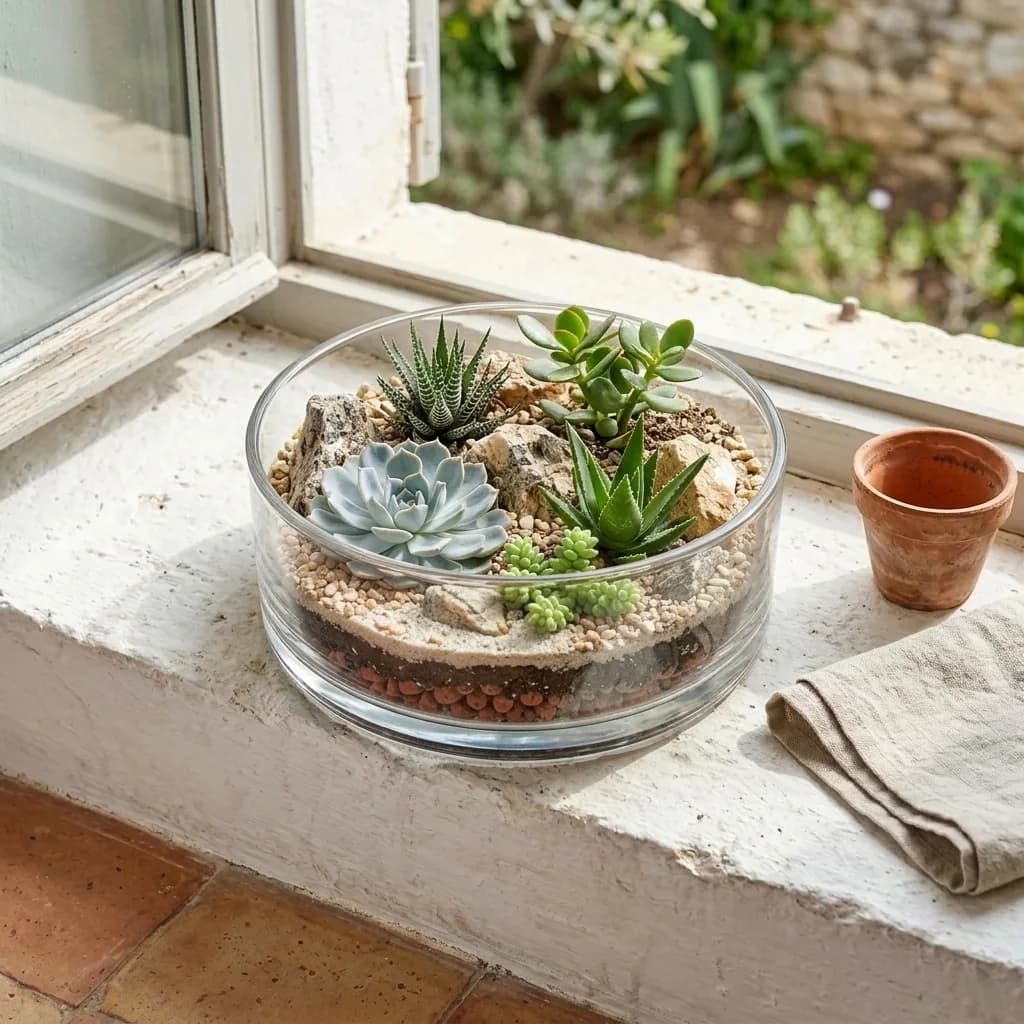 BeginnerOpen desertOpen · MNew kit, no reviews yetFrom €59.90
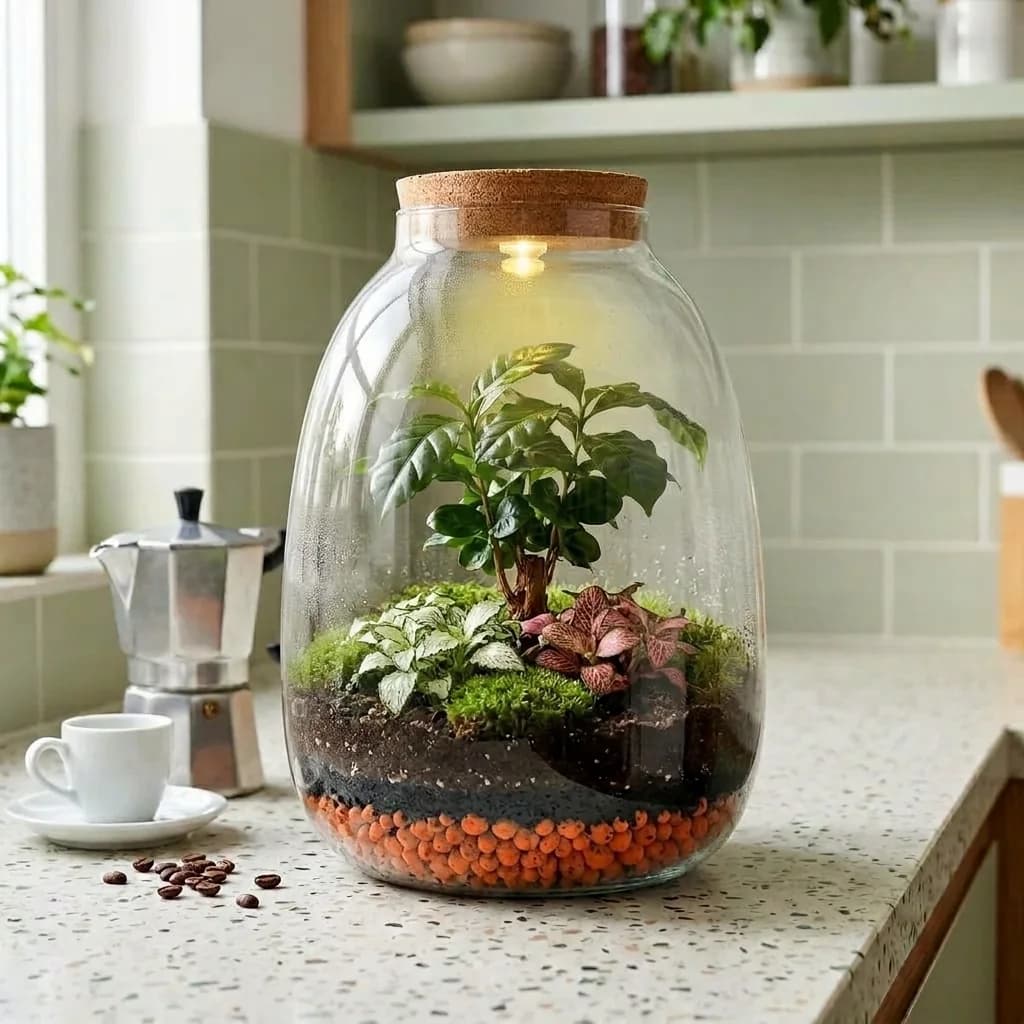 BeginnerTropical coffeeClosed · L · LED4.9From €63.90
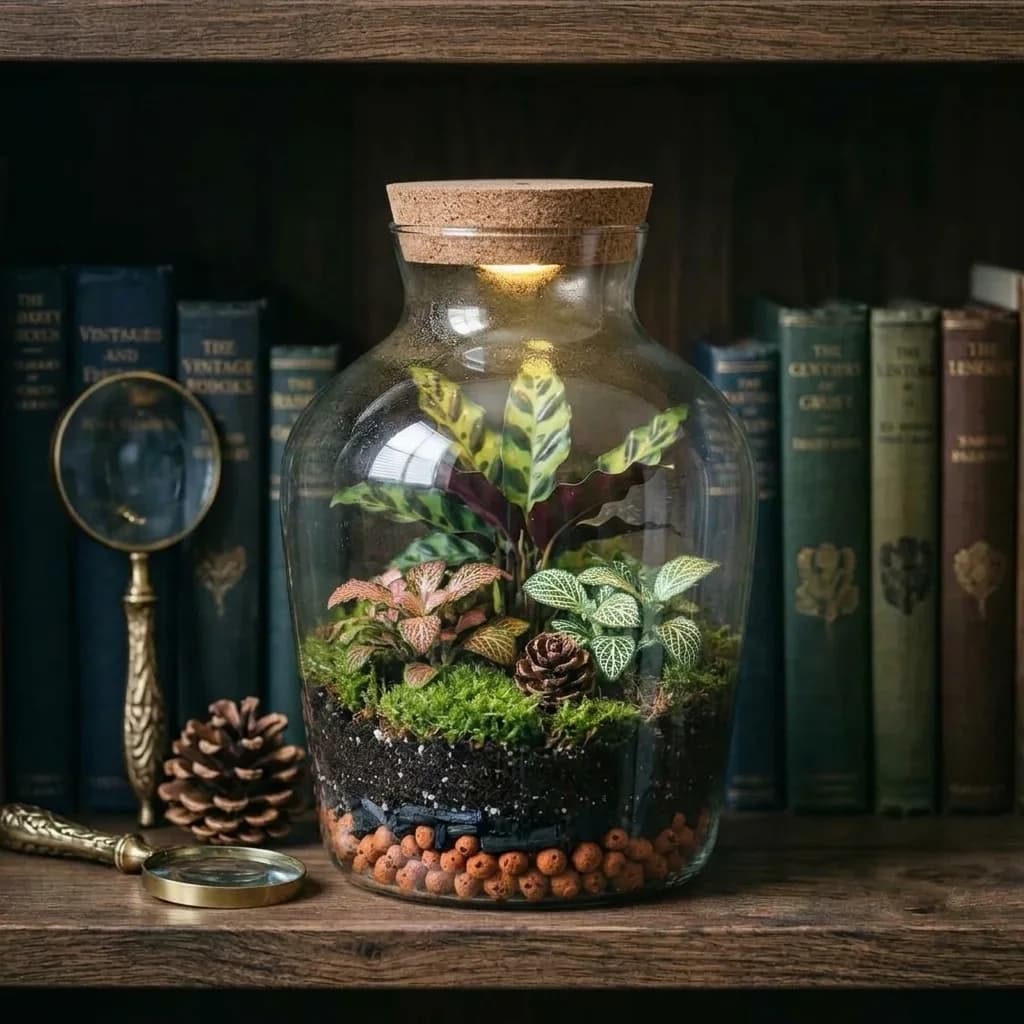 IntermediateForest floorClosed · M · LED4.6From €69.90
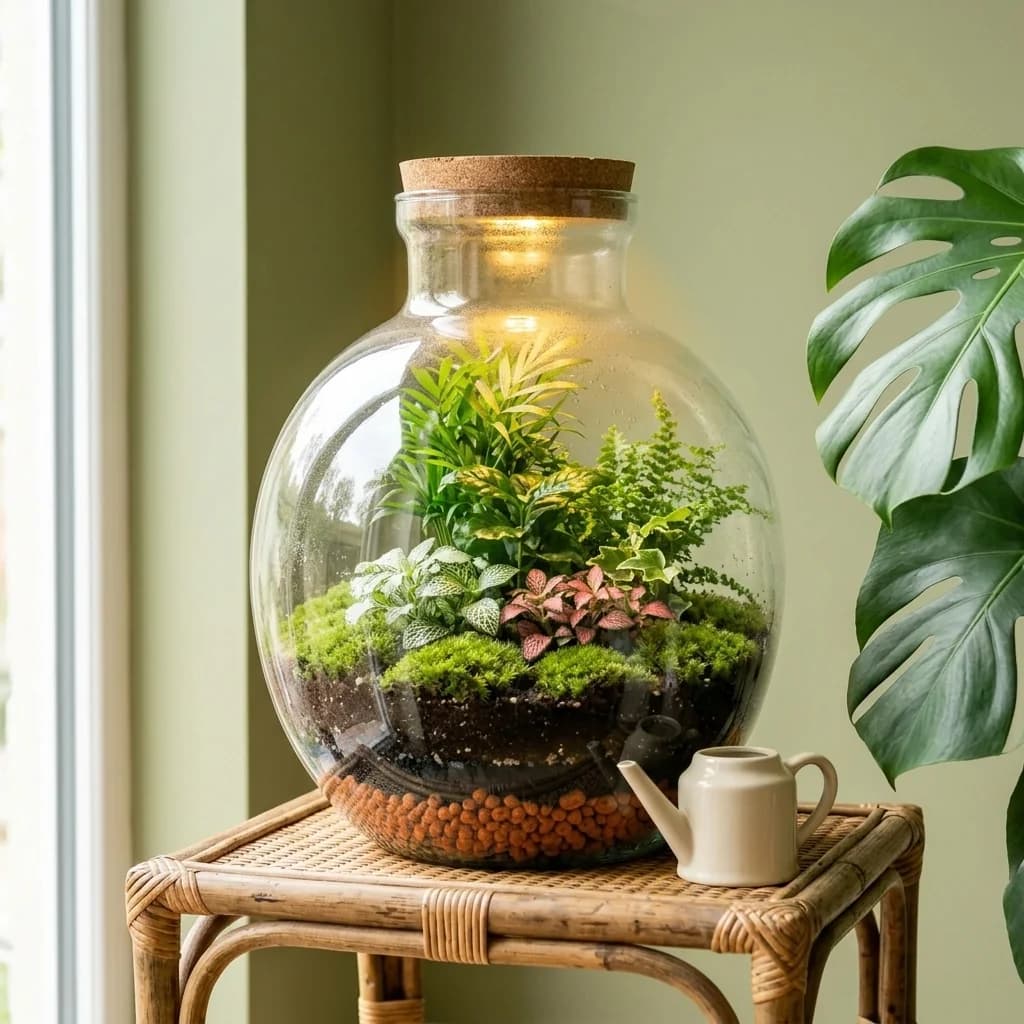 IntermediateJungleClosed · L4.9From €82.90
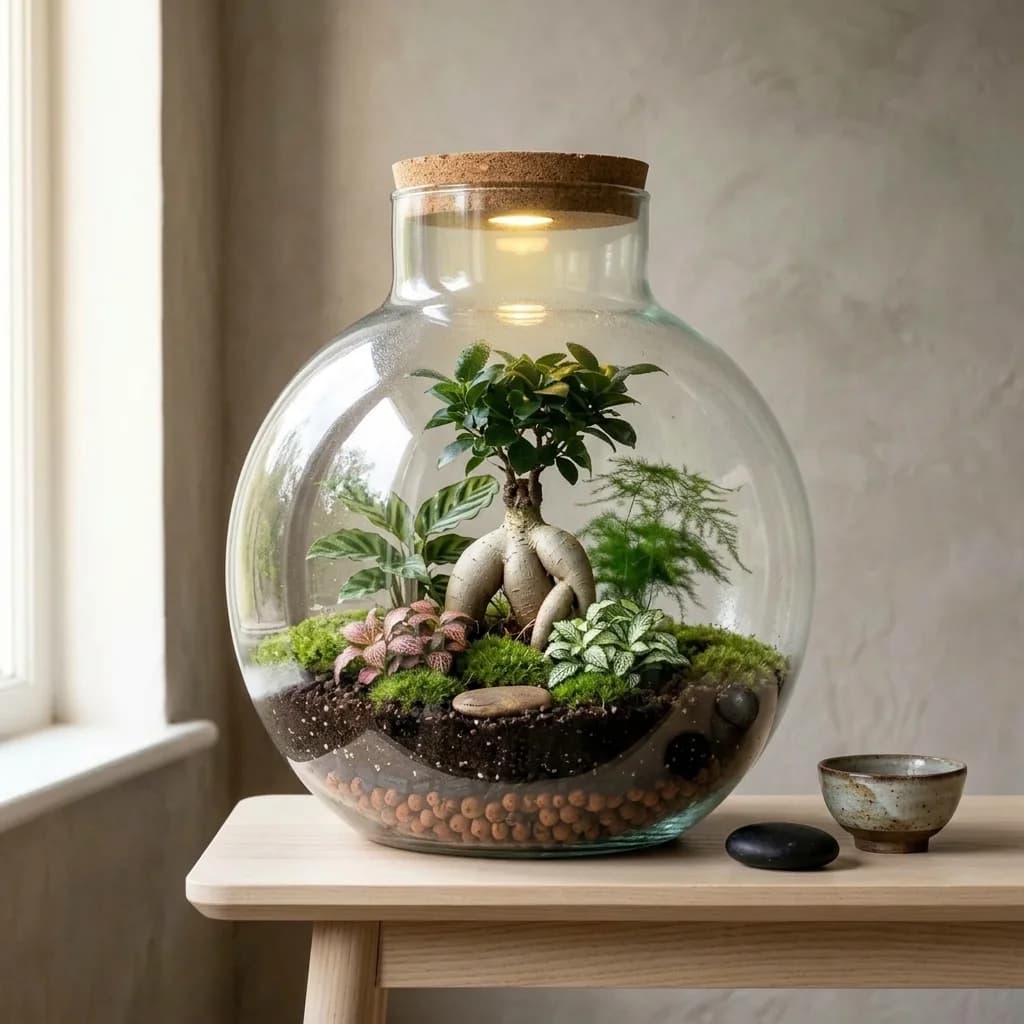 IntermediateZen bonsaiClosed · XL · LED4.8From €92.90
Give a small living world.
A gift that lasts for years, delivered with everything it needs and its assembly guide.
Guides and projects
Worlds
 TerraTerrariumOpen
 AquaAquaticComing soon
 FloraGrowOpen
 AéroWildComing soon
Driftwood roots, stones and decorative sands: the elements that give the landscape its structure before the plants even go in.
In a successful terrarium, what catches the eye is almost never a plant: it's a root running across the frame, a stone creating some relief, a line of sand suggesting a path. These elements go in first, on the levelled substrate, before any planting at all. Once the plants are in place, it becomes very hard to correct the composition without pulling everything apart.
Wood provides the vertical lines and movement. A root placed on the diagonal makes a small container look bigger visually; two parallel roots flatten the scene. Choose wood that's dry, hard and free of bark: bark breaks down under glass and feeds mould. In a closed, humid environment, a fine white fuzz can appear in the first few weeks on new wood, this is a harmless surface fungus, which the microfauna of a bioactive soil eats away, and which our mould guide teaches you to tell apart from a real problem.
Dark, porous stones, such as volcanic rock or lava rock, pair well with mosses, which eventually colonise them. Avoid limestone, which leaches out and shifts the pH. A simple rule of composition: an odd number of elements, clearly different in size, never lined up.
A pale sand on the surface marks out a path or a bank and stands out against the darker substrate. Use it on the surface only: mixed into the substrate, it compacts it and blocks drainage. To see the full method applied to a project, take a look at A miniature forest under glass.
FAQ
Wood sold for terrariums or aquariums is already clean. For wood you've found yourself, soak it, then dry it completely, and strip off all the bark: it's the bark that breaks down and feeds mould.
No, in most cases. It's a common surface fungus on new wood in a humid environment, which goes away on its own within a few weeks. A bioactive soil eats through it even faster.
Build your own, layer by layer.
Six steps, in the order you build. Each department offers what goes with the step before.
Complete refillEverything but the glass: drainage, charcoal, soil, mossFrom €18.90The whole shopSix kits. Everything is in the box.
The glass, the live plants, the soil and the guide. Every kit comes in three versions.
BeginnerMoss and lightClosed · M · LED4.8From €60.90BeginnerOpen desertOpen · MNew kit, no reviews yetFrom €59.90BeginnerTropical coffeeClosed · L · LED4.9From €63.90IntermediateForest floorClosed · M · LED4.6From €69.90IntermediateJungleClosed · L4.9From €82.90IntermediateZen bonsaiClosed · XL · LED4.8From €92.90Give a small living world.
A gift that lasts for years, delivered with everything it needs and its assembly guide.
Guides and projects
Worlds
TerraTerrariumOpenAquaAquaticComing soonFloraGrowOpenAéroWildComing soonDriftwood roots, stones and decorative sands: the elements that give the landscape its structure before the plants even go in.
In a successful terrarium, what catches the eye is almost never a plant: it's a root running across the frame, a stone creating some relief, a line of sand suggesting a path. These elements go in first, on the levelled substrate, before any planting at all. Once the plants are in place, it becomes very hard to correct the composition without pulling everything apart.
Wood provides the vertical lines and movement. A root placed on the diagonal makes a small container look bigger visually; two parallel roots flatten the scene. Choose wood that's dry, hard and free of bark: bark breaks down under glass and feeds mould. In a closed, humid environment, a fine white fuzz can appear in the first few weeks on new wood, this is a harmless surface fungus, which the microfauna of a bioactive soil eats away, and which our mould guide teaches you to tell apart from a real problem.
Dark, porous stones, such as volcanic rock or lava rock, pair well with mosses, which eventually colonise them. Avoid limestone, which leaches out and shifts the pH. A simple rule of composition: an odd number of elements, clearly different in size, never lined up.
A pale sand on the surface marks out a path or a bank and stands out against the darker substrate. Use it on the surface only: mixed into the substrate, it compacts it and blocks drainage. To see the full method applied to a project, take a look at A miniature forest under glass.
FAQ
Wood sold for terrariums or aquariums is already clean. For wood you've found yourself, soak it, then dry it completely, and strip off all the bark: it's the bark that breaks down and feeds mould.
No, in most cases. It's a common surface fungus on new wood in a humid environment, which goes away on its own within a few weeks. A bioactive soil eats through it even faster.
5 products in Décor & wood
10 pieces, 4-6 cm
~25 cm bag, about 1 L
≈ 30 × 20 cm, 1 box
Height 12 cm · top Ø 25 cm


