

Mould in a closed terrarium: causes, action and prevention
Normal white fuzz or a real problem? Understand why a closed terrarium develops mould, act without chemicals and restore a lasting balance.
In this guide
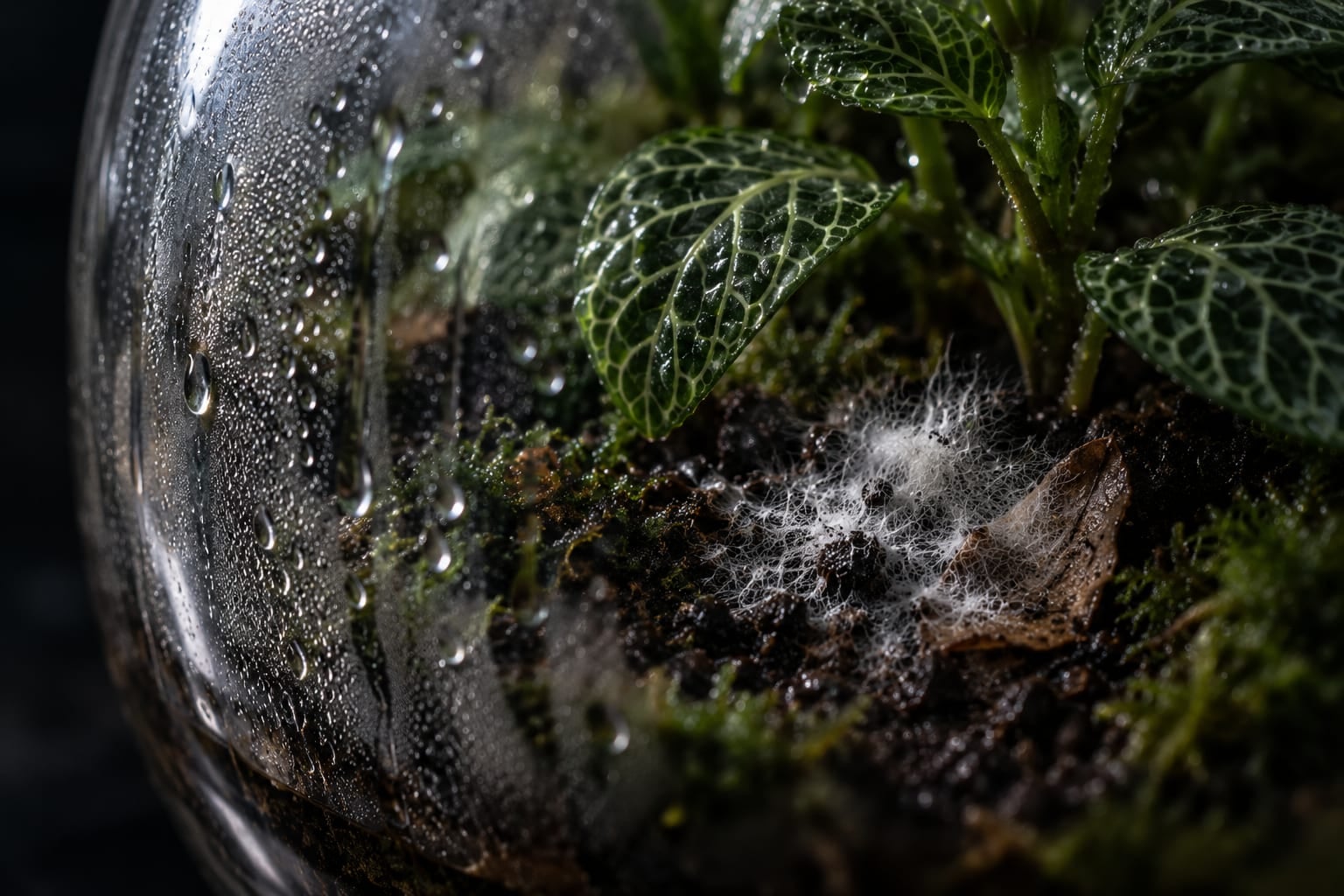
A light white fuzz on a piece of wood or a dead leaf, in the first few weeks of a closed terrarium, is common and usually harmless: remove it with tweezers and air it out for a few hours. Mould that keeps coming back, spreads over the substrate or comes with a musty smell almost always signals the same combination: too much water, not enough air, and decomposing organic matter. In the vast majority of cases, it's fixed without dismantling the terrarium and without any chemicals.
Normal mould or a real problem?
The fuzz of the first few weeks
A new terrarium is an environment settling in. Wood, bark and the small wounds on plants after repotting offer material for fungi, which take advantage of the humidity to establish themselves. This white fuzz, fine and localised, often appears between the first and fourth week. It generally recedes on its own once humidity stabilises and the most fragile matter has been consumed.
The signs that should worry you
- grey, green or black mould, rather than a fine white fuzz;
- an area that spreads from one day to the next over the substrate or moss;
- a musty, boggy or rotten-egg smell when you open it;
- the base of a plant turning soft and black, and coming away;
- drops constantly trickling down the glass.
In these cases, don't wait: the terrarium's balance needs correcting.
The causes, from most to least common
Too much water
This is cause number one. In a closed container, water barely escapes: every "just in case" spray builds up. A waterlogged substrate lacks air, the roots suffer and fungi take over.
Not enough air
A closed terrarium isn't meant to stay sealed forever. A few hours of opening now and then refreshes the air and lowers humidity when it's excessive.
Decomposing matter
Dead leaves left in place, wood unsuited to humidity, repotting compost very rich in organic matter: anything rotting feeds mould. A terrarium substrate should stay airy and break down slowly.
Unsuitable plants
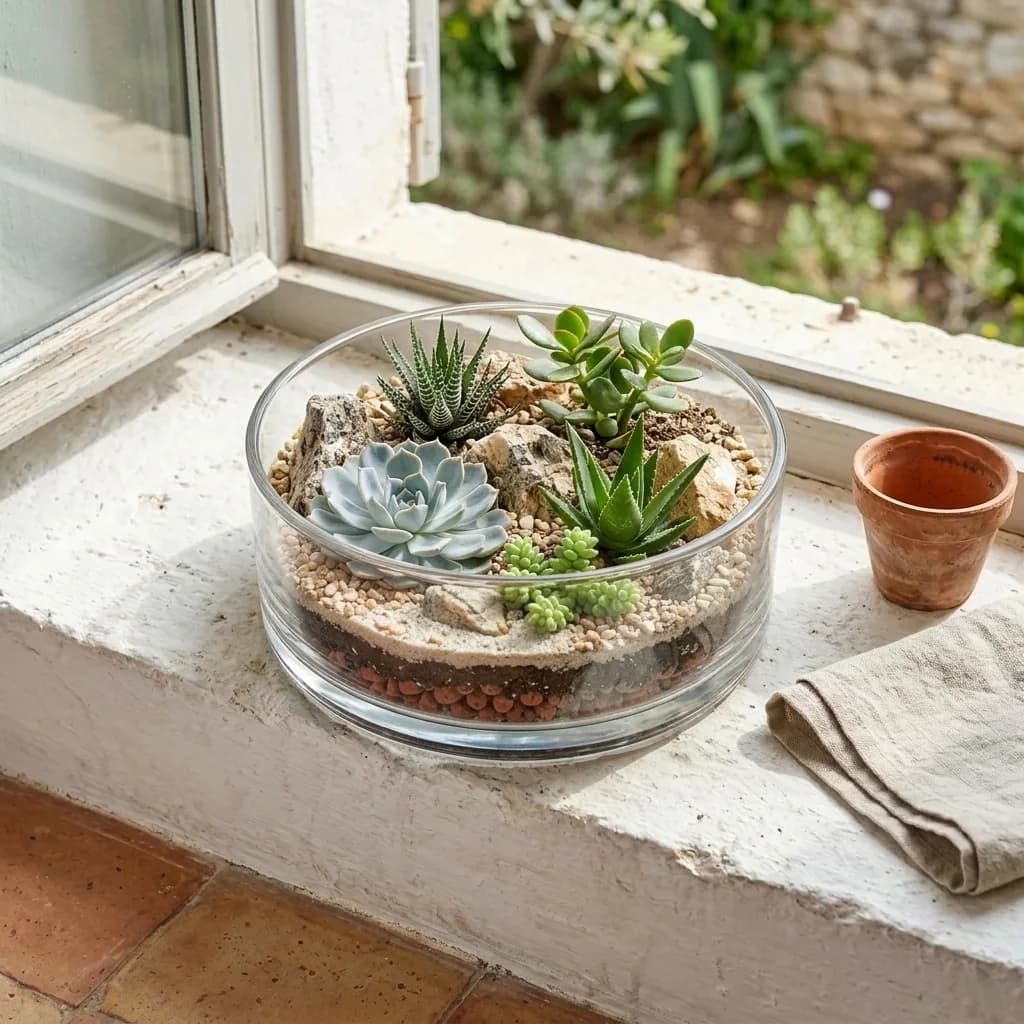
Succulents and cacti can't cope with the humidity of a closed environment. They rot, and their decomposing tissue sustains the mould. Our guide Which plants for a terrarium? shows which species thrive there.
Not enough light or too much heat
Plants short of light grow poorly and lose leaves, which then decompose. Conversely, a terrarium placed near a radiator or in the sun heats up, evaporates and drips, which speeds up the spread.
What to do, step by step
- Remove visible mould. Use long tweezers or a cotton bud fixed to a stick. Also remove the material it's on: the dead leaf, the piece of bark or the affected patch of moss.
- Take out the affected substrate. If it's covered on the surface, remove one to two centimetres with a spoon and replace it with dry, healthy substrate.
- Open the terrarium. Leave it open a few hours a day, sometimes several days running, until condensation stops trickling. Close it again once the glass shows nothing more than a light morning mist.
- Wipe the inside of the glass. A soft cloth wrapped around a stick is enough. Plain water is sufficient.
- Check the bottom. If water is pooling in the drainage layer, remove it with a pipette or a strip of kitchen paper slid along the side.
- Check the location. Bright light but never direct sun, and no heat source nearby.
- Watch it for one to two weeks. If the mould doesn't return, close it gradually and go easy on the mister.
Reading condensation to avoid getting it wrong
Your terrarium's glass is a reliable indicator, especially in the morning:
- a light mist that clears during the day: humidity is right;
- drops constantly trickling down: too much water, open it a few hours a day;
- no mist for several days and softening leaves: the environment is short of water, mist lightly.
Always mist with low-lime water, rain or demineralised, and in small amounts. It's easy to add water, much harder to remove it.
Springtails, a natural helper
Springtails are tiny arthropods, 1 to 5mm long, that live in humid environments rich in organic matter. They feed on decomposing plant matter and micro-organisms, including fungi. In so-called bioactive terrariums, they're deliberately introduced to help with clean-up. They can help limit recurring mould.
Two precautions: they don't fix an excess of water, and it's better to source them from suppliers dedicated to terrariums rather than taking soil from the garden, which can bring in other unwanted organisms.
Preventing it from the build
Most mould is prevented when the terrarium is first built:
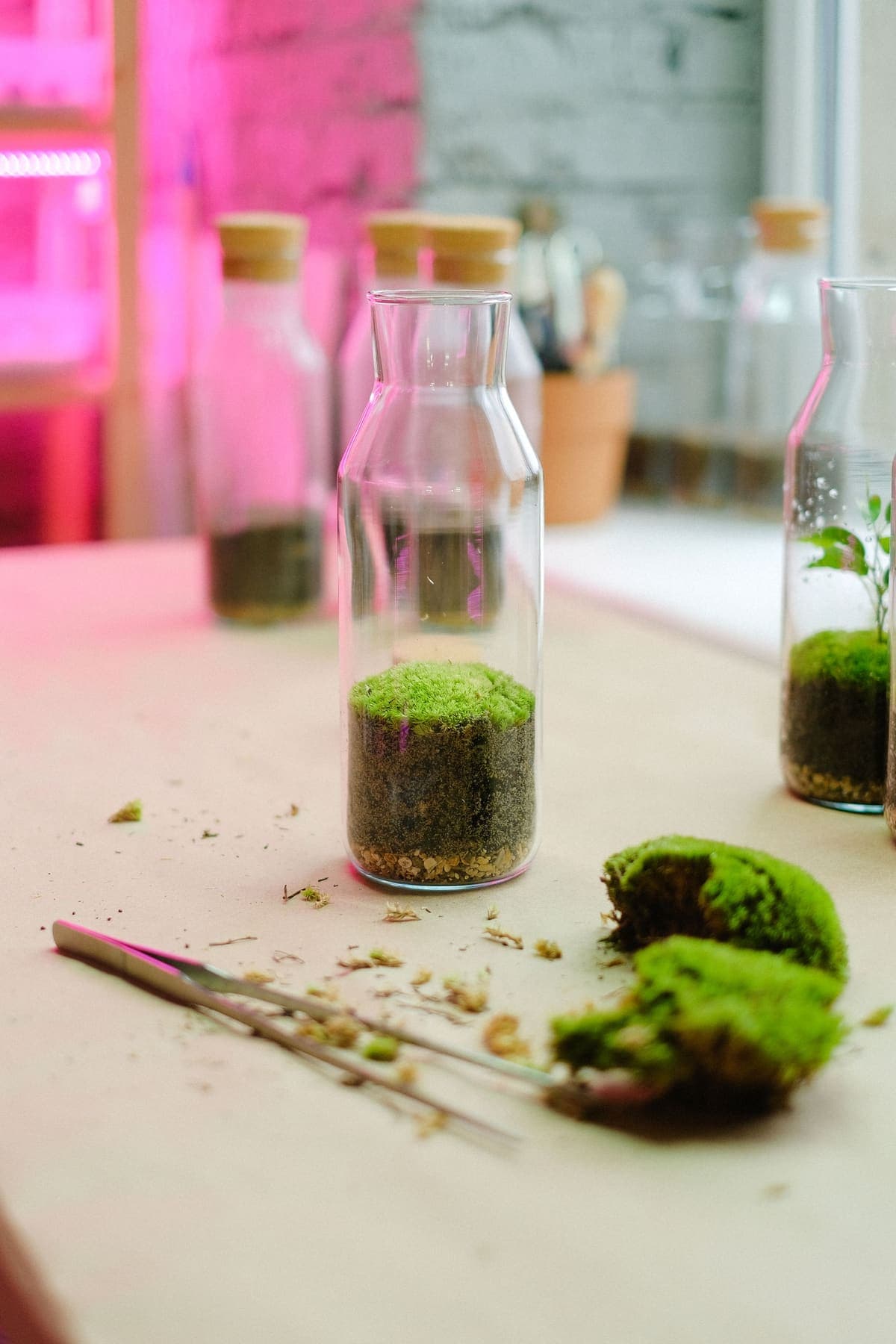
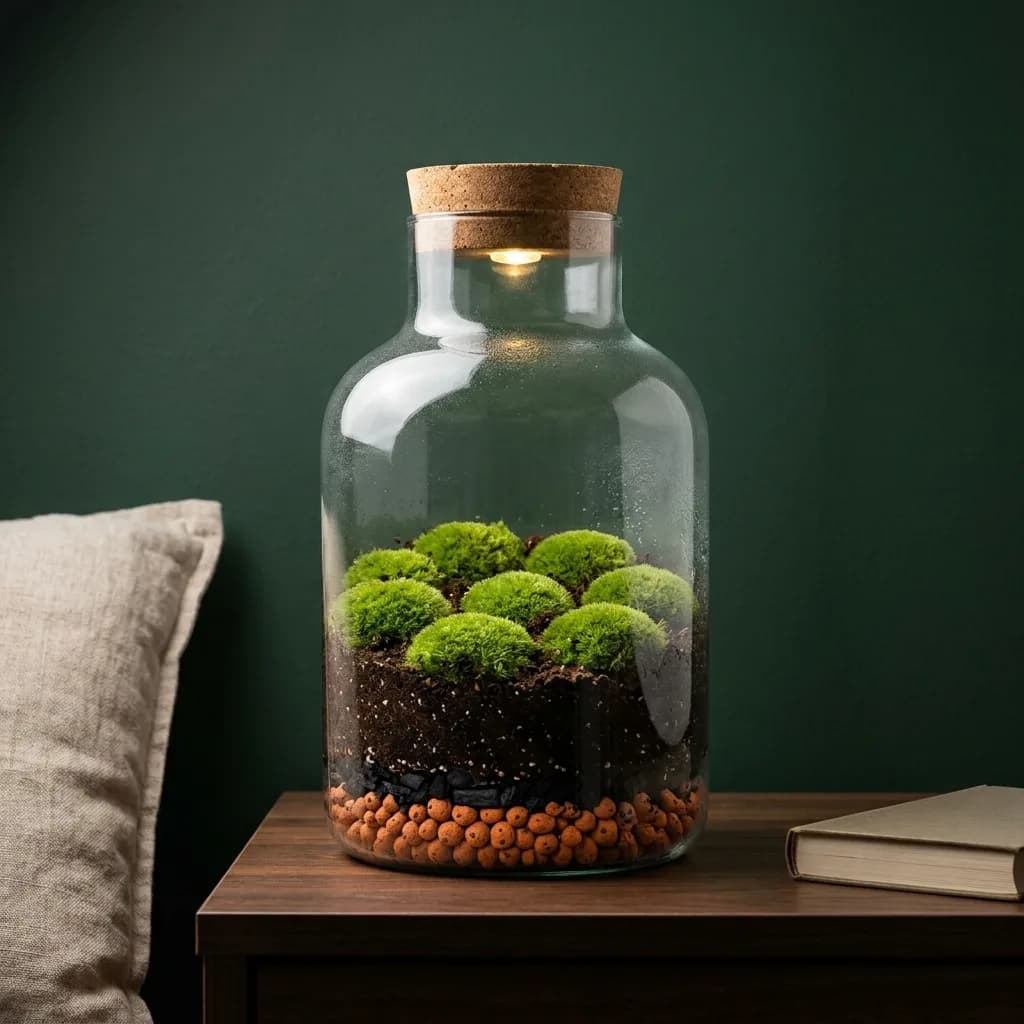
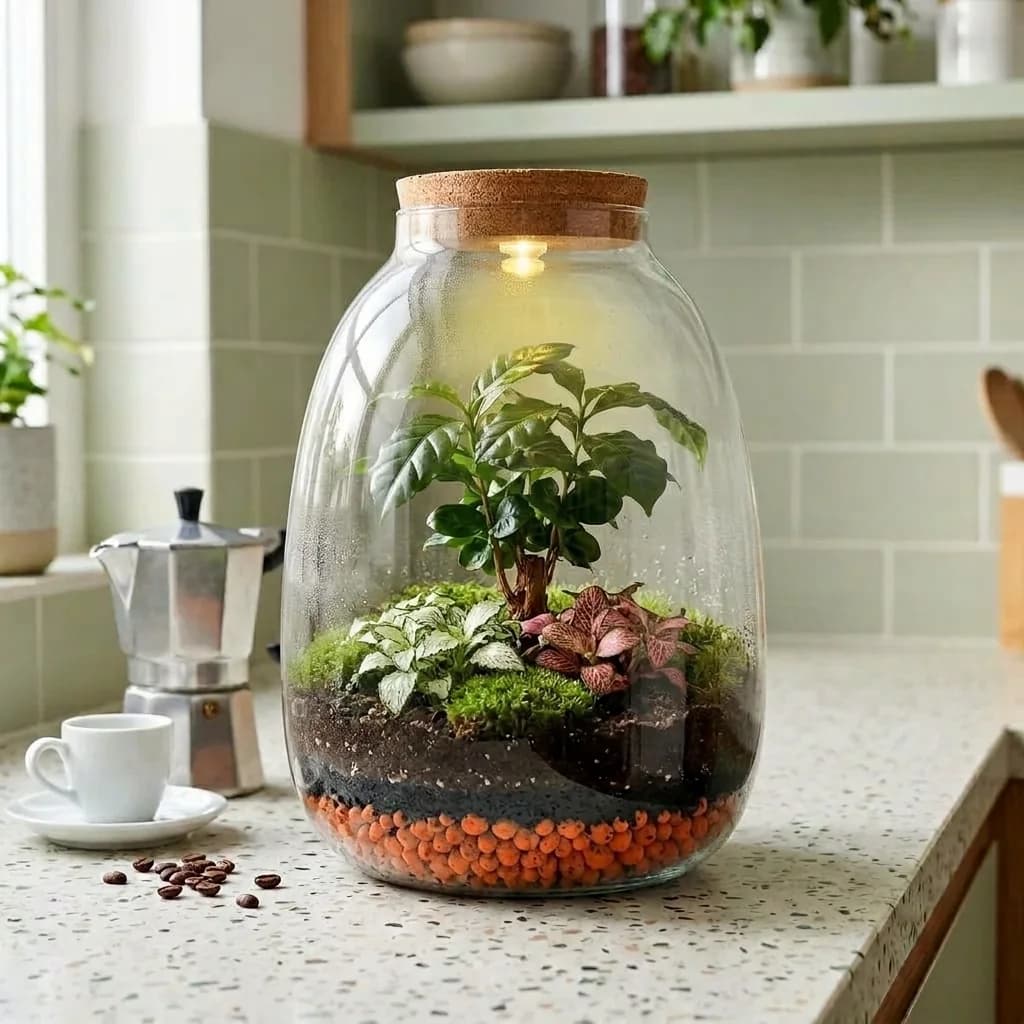
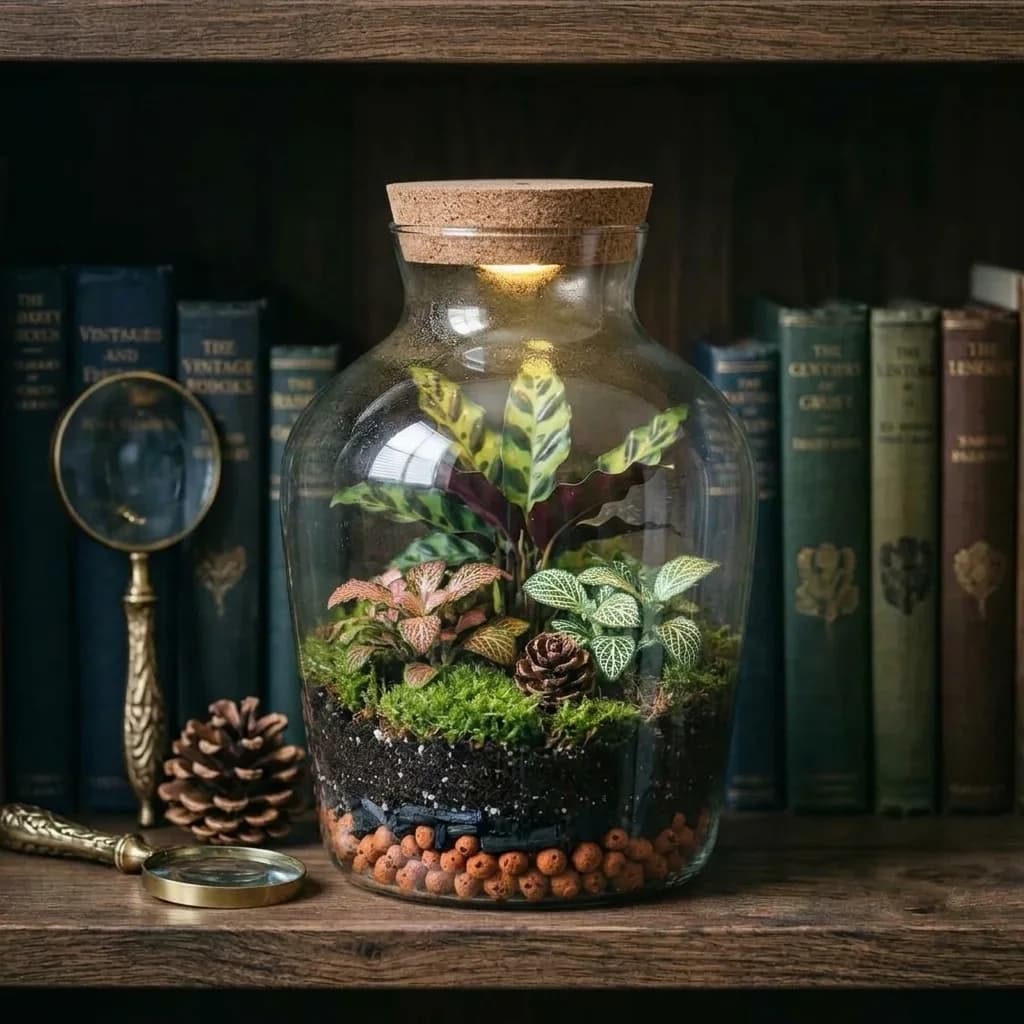
- A drainage layer of 2 to 3cm of clay pebbles or gravel, separated from the substrate by a mesh or a thin layer of moss.
- An airy, well-draining substrate, designed for terrariums or lightened with horticultural grit, rather than a repotting compost very rich in organic matter.
- Clean plants: remove some of the original soil, damaged leaves, and check for pests.
- Dry, suitable decorative elements: hardwood, stones, no softwood collected damp.
- Cultivated moss, rather than moss gathered in the forest.
- Moderate watering at build time: the substrate should be moist, never soaked.
Our tutorial How to create a closed terrarium covers each of these layers in detail.
Small mushrooms and gnats: the same cause
Two other visitors often accompany mould. Small cap mushrooms can grow on the substrate or the wood: these are the visible fruiting bodies of a fungus already present in the organic matter. They're harmless to plants; remove them with tweezers before they release their spores.
Tiny dark gnats, 3 to 4mm, flying above the substrate when you open the terrarium are most often sciarid flies. Their larvae live in damp substrate rich in organic matter. The adults don't harm plants, and letting the substrate dry out a little reduces their numbers. In both cases, the response is the same as for mould: less water, more air, and removing dead leaves.
When should you start over?
If the base of several plants has rotted, if the smell persists despite several days of airing, or if the mould covers most of the substrate, it's simpler to dismantle. Save the healthy parts of the plants and moss, wash the container with hot water, dry it, then rebuild with fresh substrate and a drainage layer. It's also a chance to rethink your choice of plants or the terrarium's location.
Common mistakes
- Misting every time you pass by: a closed terrarium almost never needs water.
- Keeping the lid shut no matter what: airing is a tool, not a failure.
- Pouring in a household product, vinegar or bleach: they harm plants, moss and useful micro-organisms.
- Leaving dead leaves in place: they feed mould.
- Placing the terrarium in the sun: overheating, dripping and scorched plants.
Going further
If you're still torn between two formats, our comparison Closed or open terrarium will help you choose. For moss that yellows or browns, see our guide to species. The A miniature forest under glass project brings together a container, a substrate and plants designed to work together. And to stop overwatering, follow our guide how to water a terrarium.
Further reading
Moving organisms are not necessarily pests: distinguish gnats from springtails. Adjust cleaning with the bioactive care guide.
Sources
Frequently asked questions
Is the white fuzz in my closed terrarium dangerous?
Not necessarily. A fine white fuzz on wood or a dead leaf is common in the first few weeks. Remove it with tweezers along with the material it's on, and air it out for a few hours. If it comes back, spreads, changes colour or smells musty, cut back on water and open it more often.
Should you open a closed terrarium from time to time?
Yes, whenever it's useful. If drops keep trickling down the glass or mould appears, open it a few hours a day until you get back to a light morning mist. A balanced terrarium can then stay closed for a long time.
Can you treat mould in a terrarium with a product?
We'd advise against it. Vinegar, bleach or household products harm plants, moss and useful micro-organisms. Removing the affected area, airing, cutting back on water and fixing the location are enough in the vast majority of cases.