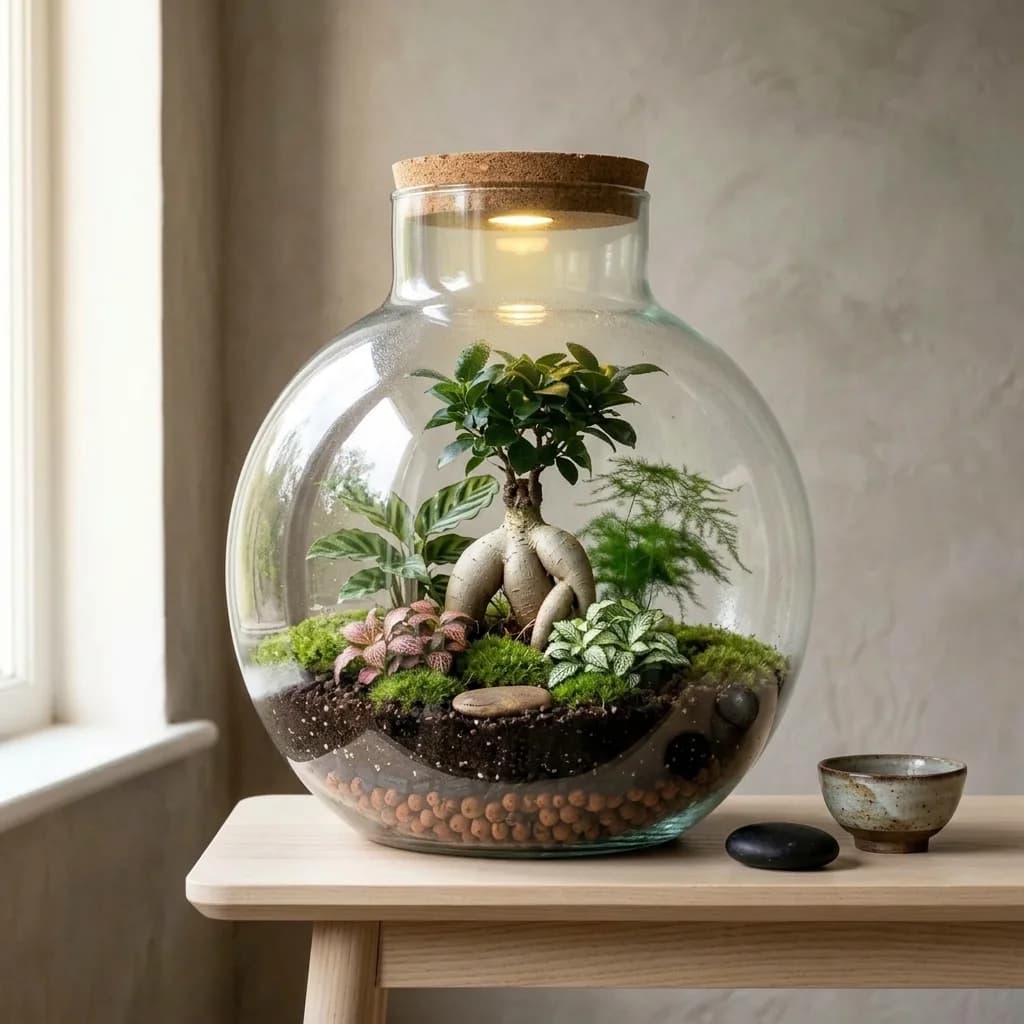


Succulent terrarium: the tutorial for a lasting miniature desert
Open container, mineral substrate, plant choice, light and watering by the spoonful: every step to help a succulent terrarium last for years.
In this guide
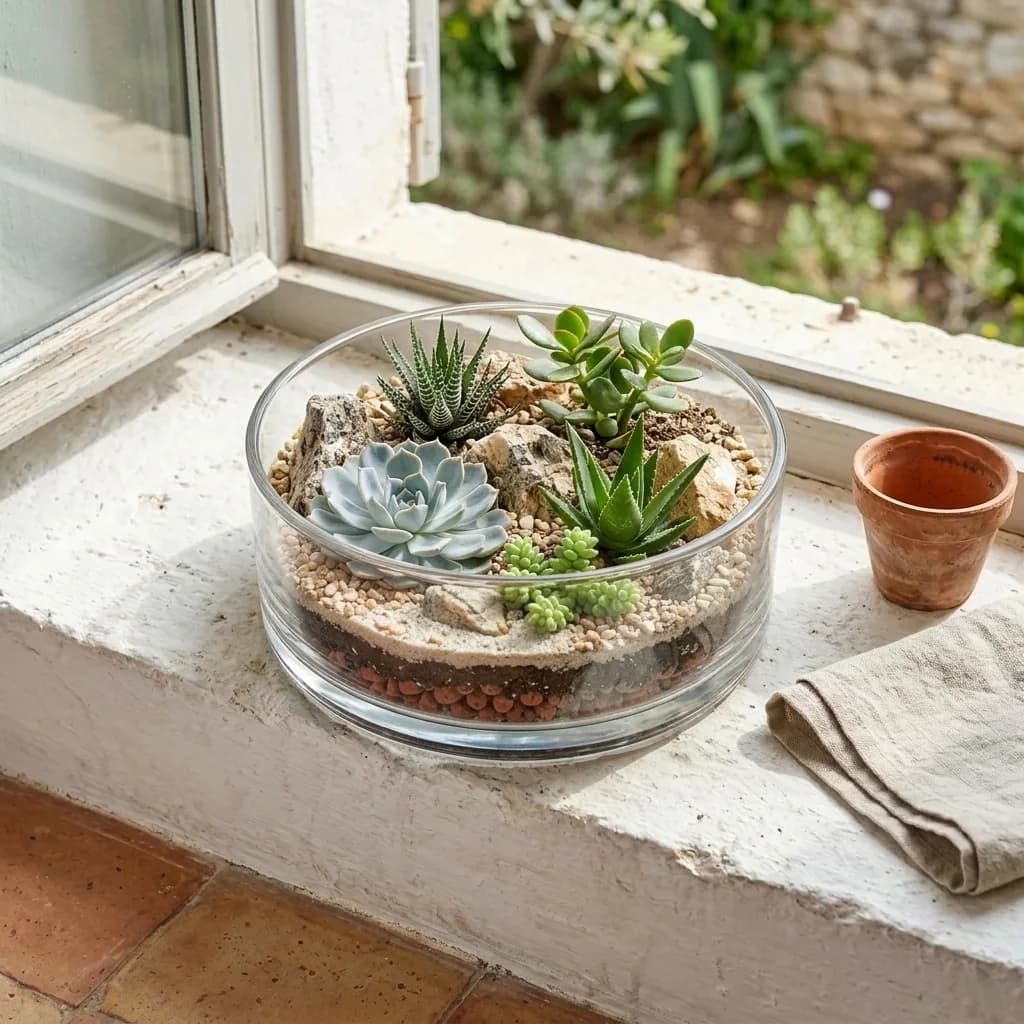
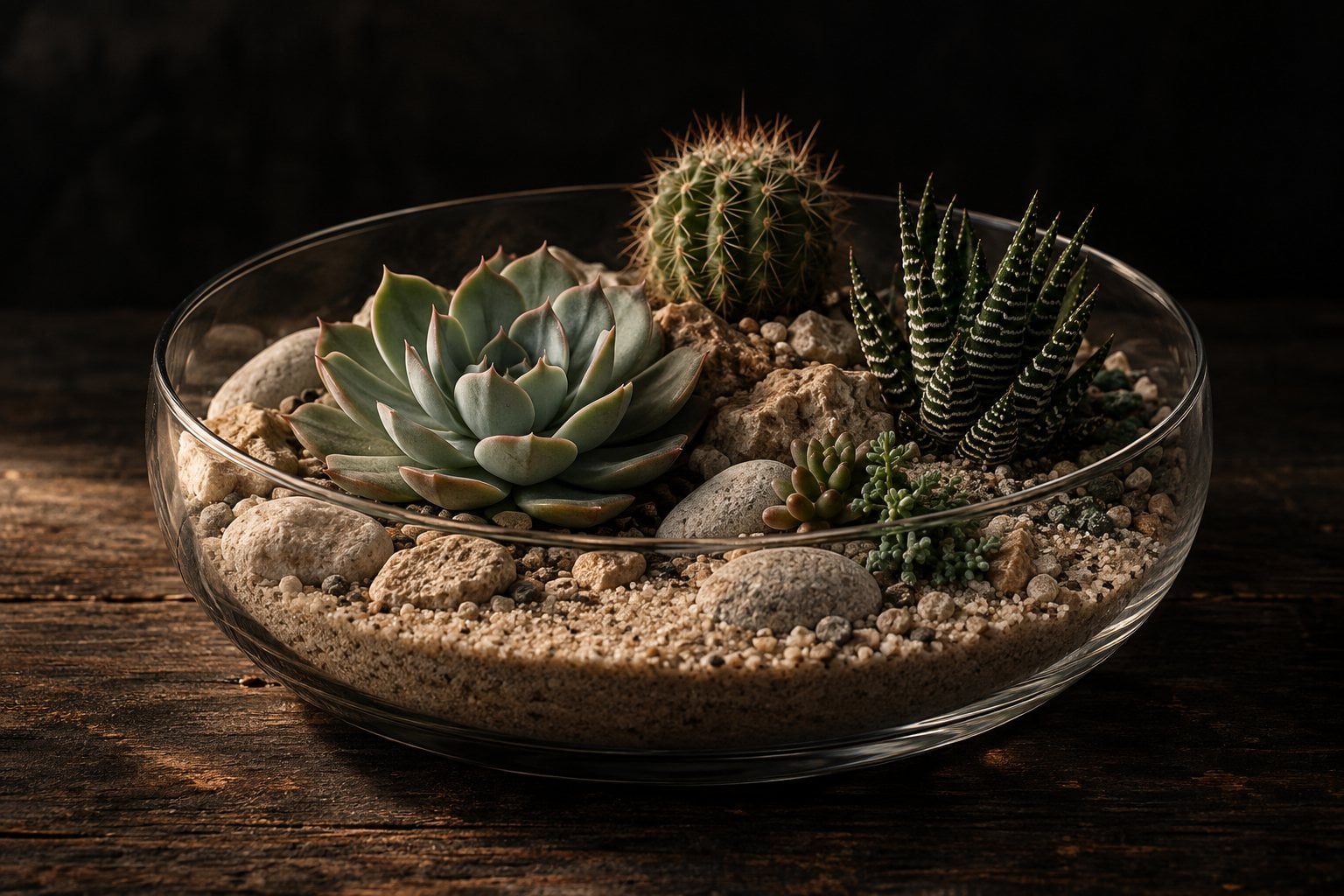
A successful succulent terrarium rests on four rules: a wide-open container, a mineral substrate that dries quickly, plenty of light and very little water. Add 2 cm of drainage, 3 to 5 cm of cactus substrate, plant three to five small succulents with similar needs, finish with sand or pebbles, then wait a week before the first watering. After that, a few spoonfuls of water at the base of each plant every two to three weeks in summer will be enough. Here's the full method.
Why it must stay open
Succulents and cacti come from dry, well-ventilated environments. They store water in their leaves or stems and dread stagnant humidity above all else. In a closed jar, water evaporates, condenses and falls back down: perfect for a fern, fatal for a succulent, which ends up rotting at the base.
A succulent terrarium is therefore always an open one, and ideally a wide-open one. If you're still torn between the two formats, our comparison Closed or open terrarium sets out the differences.
The kit
- a glass or stoneware container, with a wide opening;
- lava rock or gravel for drainage;
- a mineral cactus substrate;
- three to five small potted succulents or cacti;
- sand and a few pebbles for the finish;
- tongs, a small spoon and a soft brush;
- thick gloves or a folded strip of paper for handling cacti.
Choosing the container
The wider the opening, the better the air circulates and the simpler the build. Low bowls, geometric terrariums open on one side, and large lidless jars all work well. Avoid narrow-necked bottles: air stagnates in them and plants lack light.
A shallow container is an advantage: you need 5 to 8 cm of material in total, no more. A container that's too tall leaves plants at the bottom, in the shade of the sides.
Choosing the plants
Pair plants with similar needs and slow growth, so the composition keeps its proportions.
- Haworthia and Gasteria: compact, they tolerate slightly less intense light than most succulents. Good choices for a bright room without direct sun all day.
- Echeveria: graphic rosettes, but very light-hungry. Without enough sun, they stretch and lose their shape.
- Small Crassula: hardy, easy to combine.
- Small cacti, such as certain Mammillaria: very slow-growing, they need plenty of light and even rarer watering.
Avoid plants sold with dried or painted flowers glued on: they sometimes hide a poor state and hinder growth. Also avoid species that grow large within a few months, and never mix succulents with woodland-floor plants such as fittonias or mosses: their needs are opposite.
A batch of six small plants gives you room to choose: keep the three to five that suit each other best in the container, and pot the others separately on the windowsill.
The build, step by step
Drainage
Pour 2 cm of lava rock or gravel into the bottom of the container. Most terrariums have no drainage hole: this layer keeps excess water away from the roots.
The substrate
Add 3 to 5 cm of mineral substrate, for example a mix of lava rock, pumice, akadama and washed sand. Don't use multipurpose compost: it holds too much water. Shape a slight slope, higher at the back.
If you're making your own mix, keep the idea of a substrate that never becomes waterlogged: for potted cacti and succulents, the Royal Horticultural Society recommends a very free-draining compost, lightened with horticultural grit or coarse sand. In a container with no hole, the mineral share needs to be even higher. You'll find the succulents in terrarium plants, the mineral mix in substrates & bioactive and the glass in glass containers.
Preparing the plants
Take each plant out of its pot and gently remove most of the original compost, which is often too rich and too moist. Cut off any dry or damaged roots. If roots have been damaged, let the plant dry for a day in the shade before planting it: the wound heals and the risk of rot goes down.
Planting
Dig a hole with the spoon, position the plant, then firm gently around it. Start with the tallest plant, at the back or offset to one side, then work forward. Leave space between the rosettes: they'll widen out.
The finish
Cover the surface with a thin layer of sand and a few pebbles. This layer keeps the plants' collars dry, where the stem meets the substrate. Then brush the leaves clear with a soft brush.
Waiting
Don't water straight away. Wait about a week: the handled roots heal and recover away from moisture.
Light, the deciding factor
Place the terrarium as close as possible to a bright window. A south-, east- or west-facing spot suits most succulents. Still keep an eye out for summer heat, though: behind glass, in the full afternoon sun, the glass can heat up. An open container limits this risk, without removing it entirely.
A lack of light is easy to spot: the plant stretches, pales, leans towards the window and spreads its leaves apart. If your room is dark, a white-light grow lamp, placed at the distance given by its manufacturer, works well as a substitute. Our guide on grow lamps indoors explains how to set one up.
Watering by the spoonful
In a container with no hole, watering is done with a small spoon or a pipette, at the base of each plant, never onto the leaves.
- In spring and summer: a few spoonfuls per plant, once the substrate is dry all the way through, roughly every two to three weeks.
- In autumn and winter: about once a month, or even less in a cool room.
To check, push a wooden stick right to the bottom: if it comes out damp, wait. When in doubt, don't water. A succulent short of water wrinkles and recovers; a drowned succulent rots.
Upkeep over the months
- remove dry leaves at the base of the rosettes with the tongs;
- dust the plants with the brush;
- turn the container a quarter turn each week for even growth;
- every two or three years, or when the plants start touching, repot the largest ones into a pot and replace them with young specimens.
How long does a succulent terrarium last?
Well placed and sparingly watered, it can stay attractive for several years. Compact succulents grow slowly, but they do grow: after two or three years, the rosettes touch, some produce offsets, and the composition loses its clarity. That's not a failure, it's a sign the plants are thriving.
At that point, remove the offsets with their roots and pot them into a small container of mineral substrate. You can also take leaf cuttings: laid dry on the substrate, many Echeveria and Crassula form new roots within a few weeks. The terrarium regains its proportions, and you get new plants out of it.
Common mistakes
- Closing the container: humidity rots succulents within a few weeks.
- Watering it like a leafy houseplant: this is the leading cause of failure.
- Using multipurpose compost: it stays wet for too long.
- Placing the terrarium in a dark room: the plants become leggy.
- Mixing succulents with tropical plants: one of the two will always suffer.
- Leaving pebbles packed tightly against a damp stem: keep the collar clear and dry.
Going further
The project A miniature desert sets out the steps of a complete composition in detail. To choose the shape and size of the glass, see our guide which container for a terrarium. You'll also find the full Desert selection.
Sources
Frequently asked questions
Can you make a closed succulent terrarium?
No. In a closed container, humidity stays trapped and succulents rot at the base within a few weeks. A succulent terrarium must stay open, with a wide opening, a mineral substrate and plenty of light.
Which soil should you use for a succulent terrarium?
A mineral cactus substrate, based on lava rock, pumice, akadama and washed sand, laid on 2 cm of drainage. Avoid multipurpose compost: it holds too much water in a container with no drainage hole.
Why are my succulents stretching in the terrarium?
They're short of light. The plant stretches towards the light source, pales and spreads its leaves apart. Move the terrarium closer to a well-lit window or add a white-light grow lamp, placed at the distance recommended by its manufacturer.