

Which container for a terrarium? Jar, bottle, cloche or geometric glass
Clear or tinted glass, wide opening or narrow neck, stopper, cloche or open structure: how to choose your terrarium container according to your plants and experience.
In this guide
The right container for a terrarium is made of clear, colourless glass, open enough for you to plant without difficulty, and closed or open depending on the plants you want to put in it. For a first tropical terrarium, choose a wide-mouthed jar with a stopper: it holds humidity in and can be planted by hand. For succulents, take a widely open container, such as a geometric glass piece or a bowl. Narrow-necked bottles are stunning, but save them for a second project.
Glass or plastic?
Universities that publish terrarium guides, such as those in Mississippi or Illinois, accept both: any transparent container can work. Glass still has the edge. It stays perfectly clear over the years, cleans without scratching easily, and doesn't warp. Plastic is light and unbreakable, which matters in a child's room or for a very large format, but it tends to get marked when cleaned.
Clear or tinted glass?
Clear, without hesitation. Plants live off the light that passes through the wall. Both Mississippi State University and Penn State advise against coloured or cloudy glass, which filters light and slows plant growth. A slight tint may still be acceptable for undemanding mosses; a strong tint, green or amber, isn't.
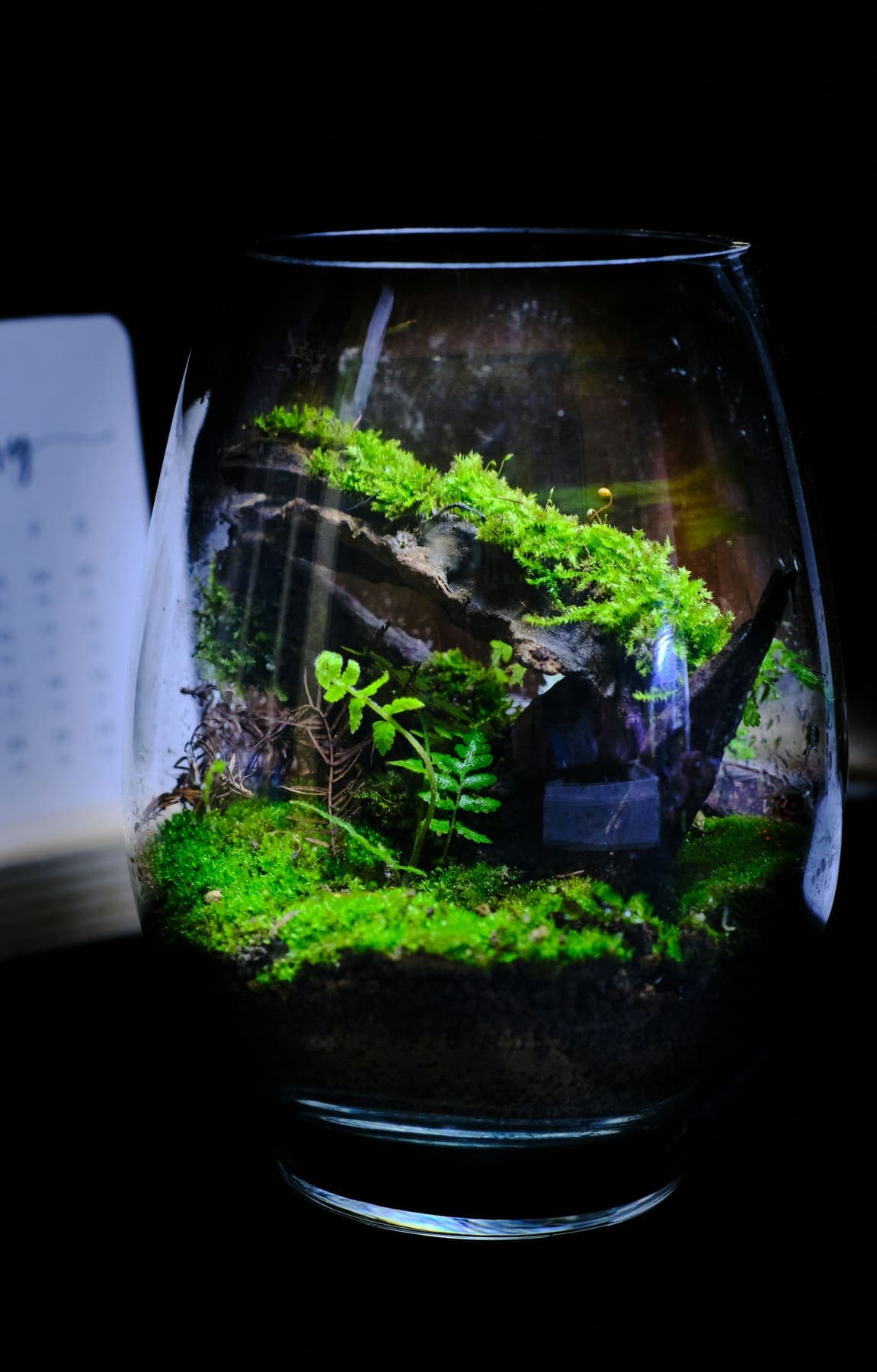
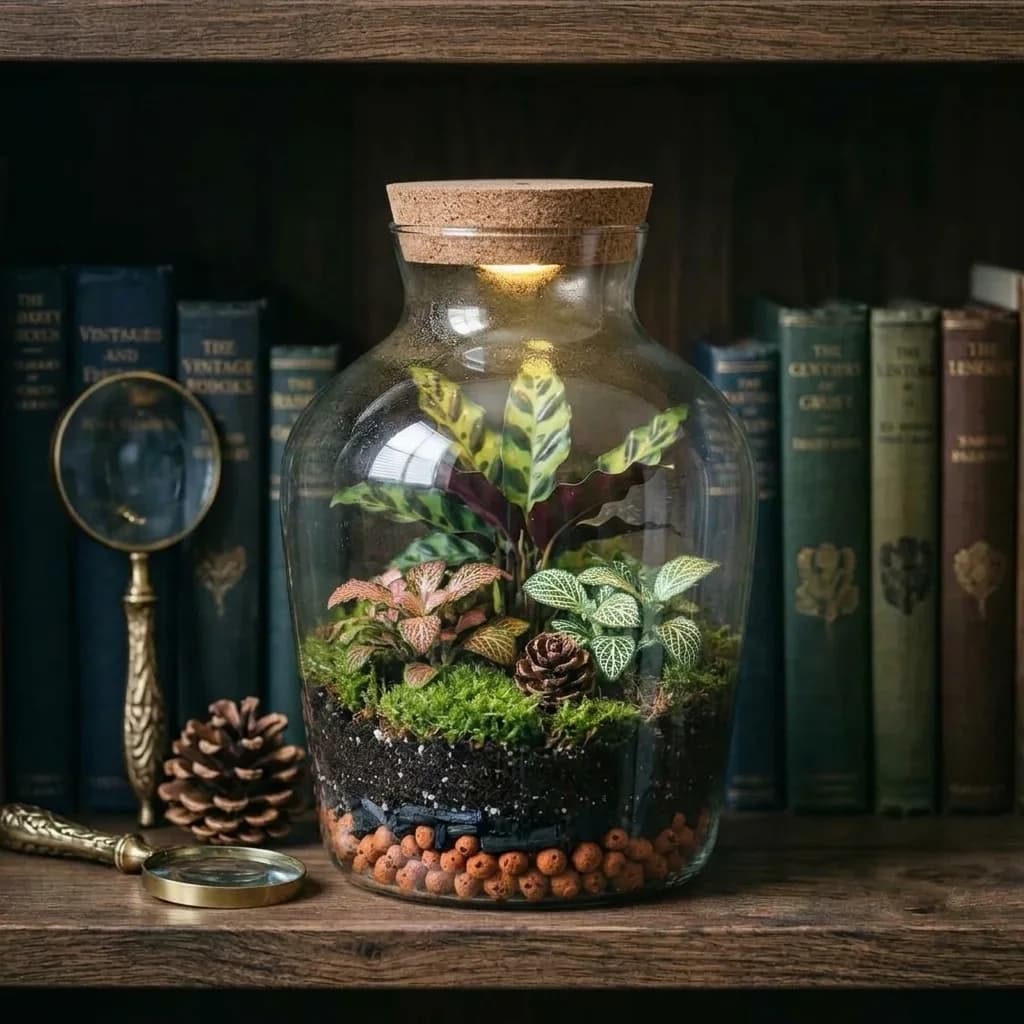
Also look at the bubbles and small flaws in the glass: recycled or blown glass sometimes has small irregularities. They add to the object's charm and don't bother the plants as long as the glass stays transparent.
Jar, bottle, cloche or geometric glass: which should you choose?
The stoppered jar: the simplest for beginners
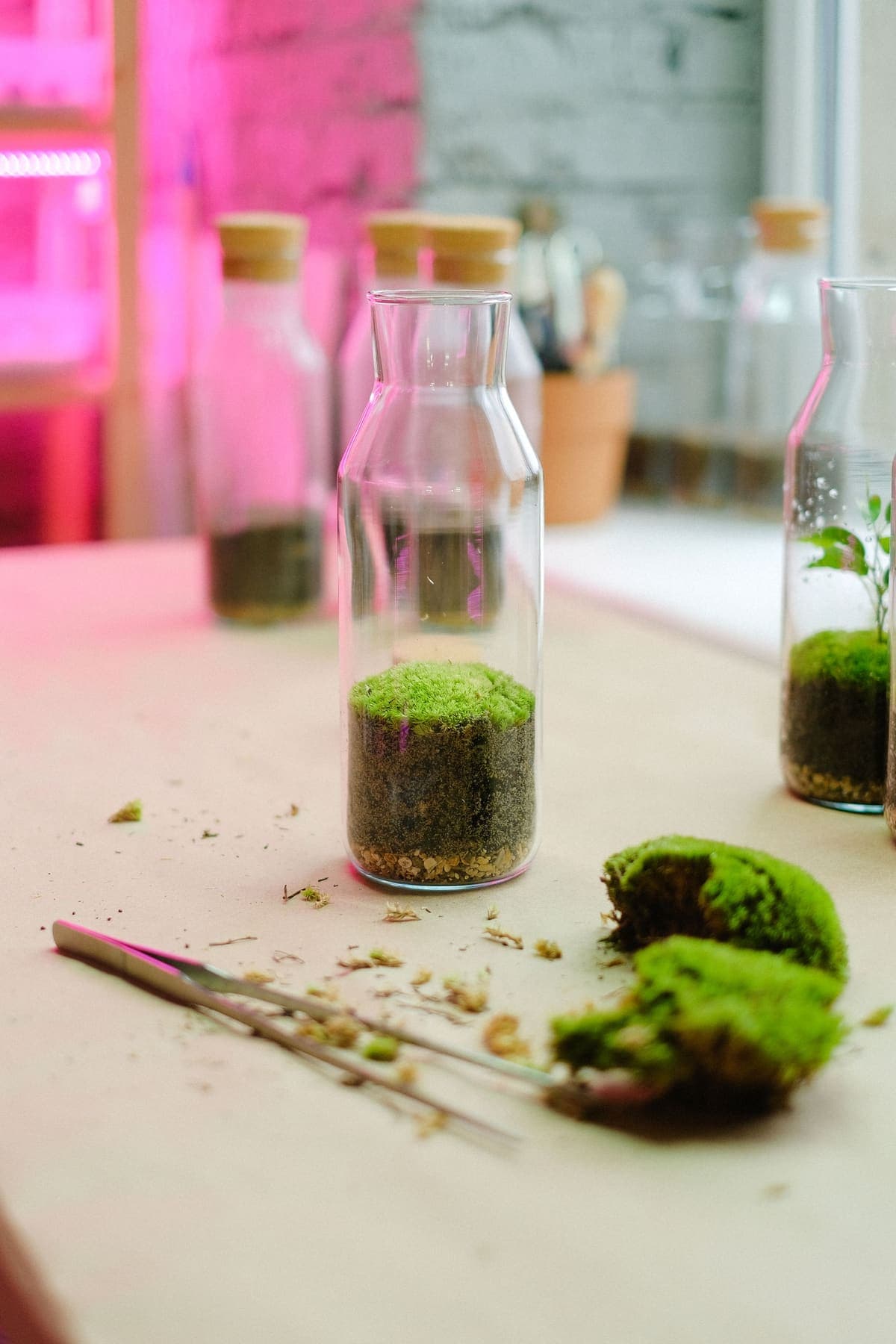
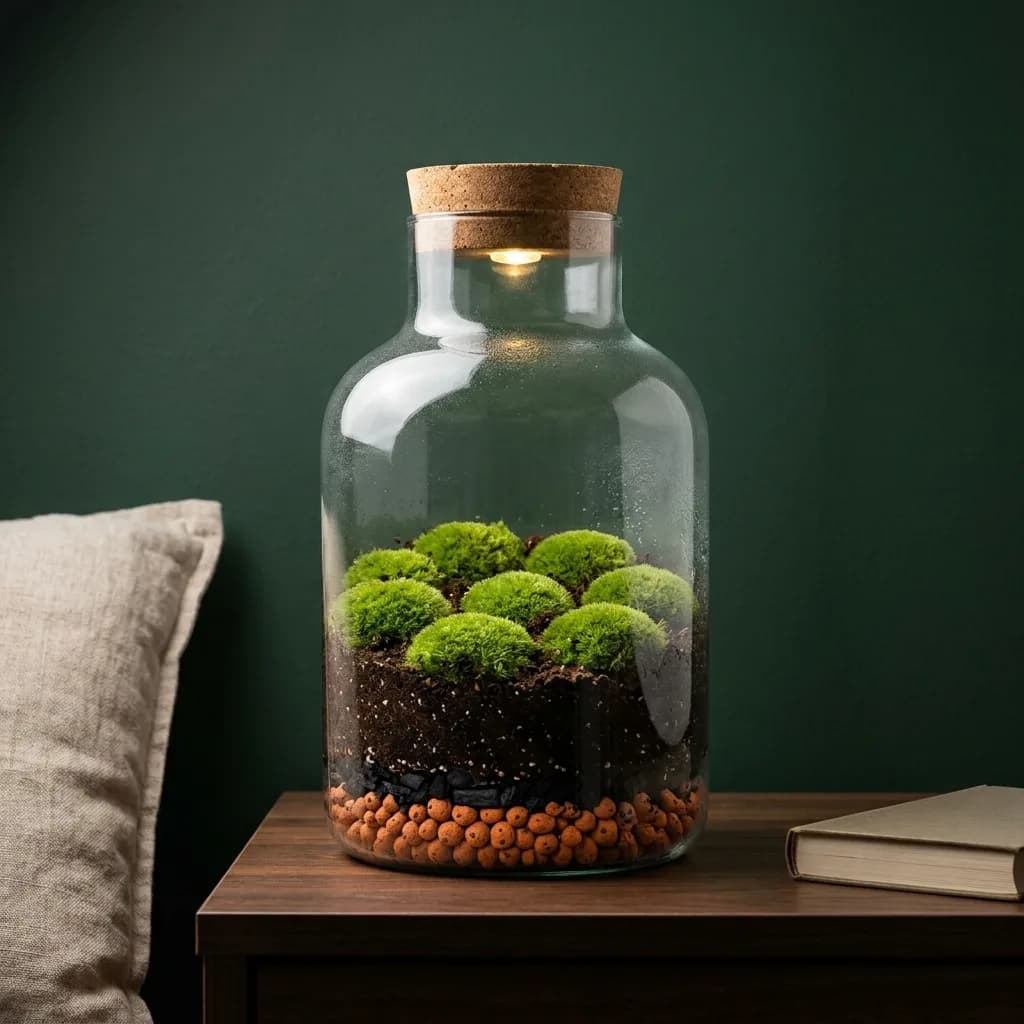
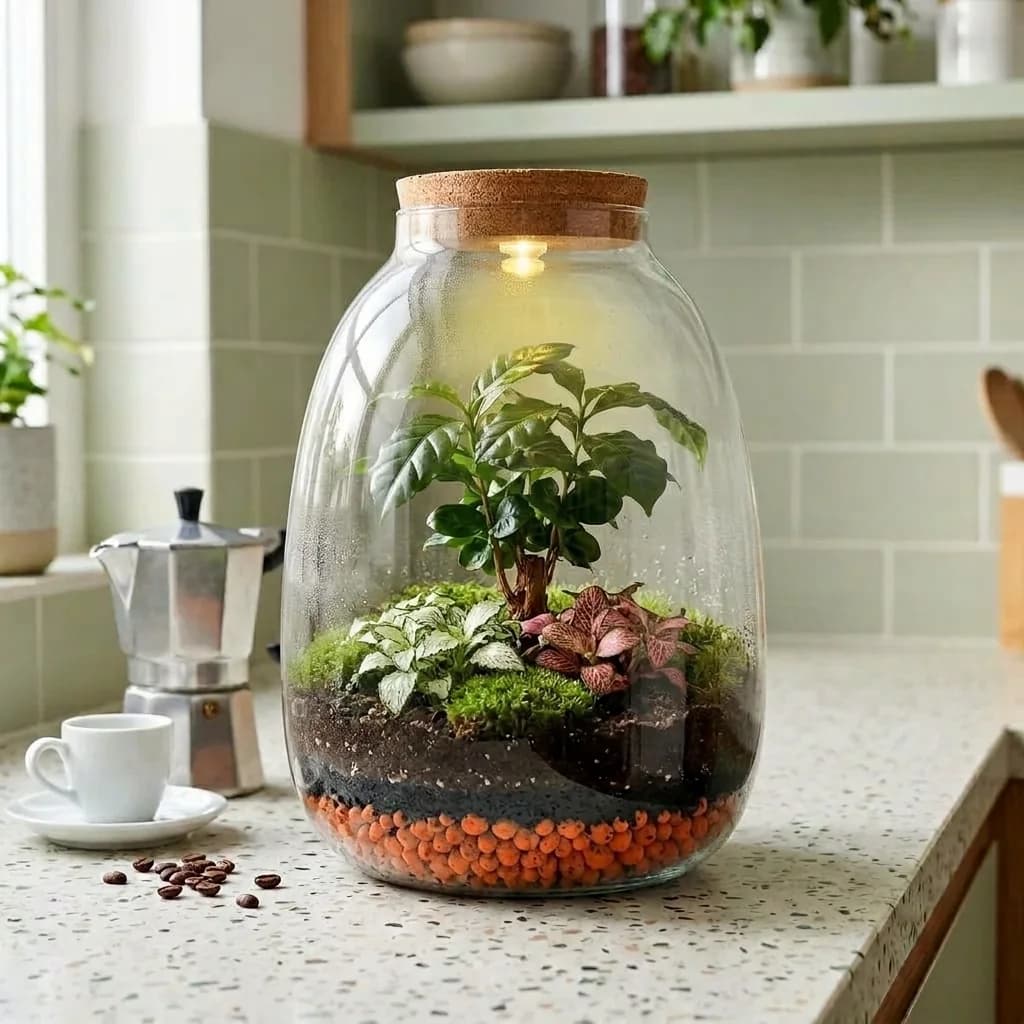
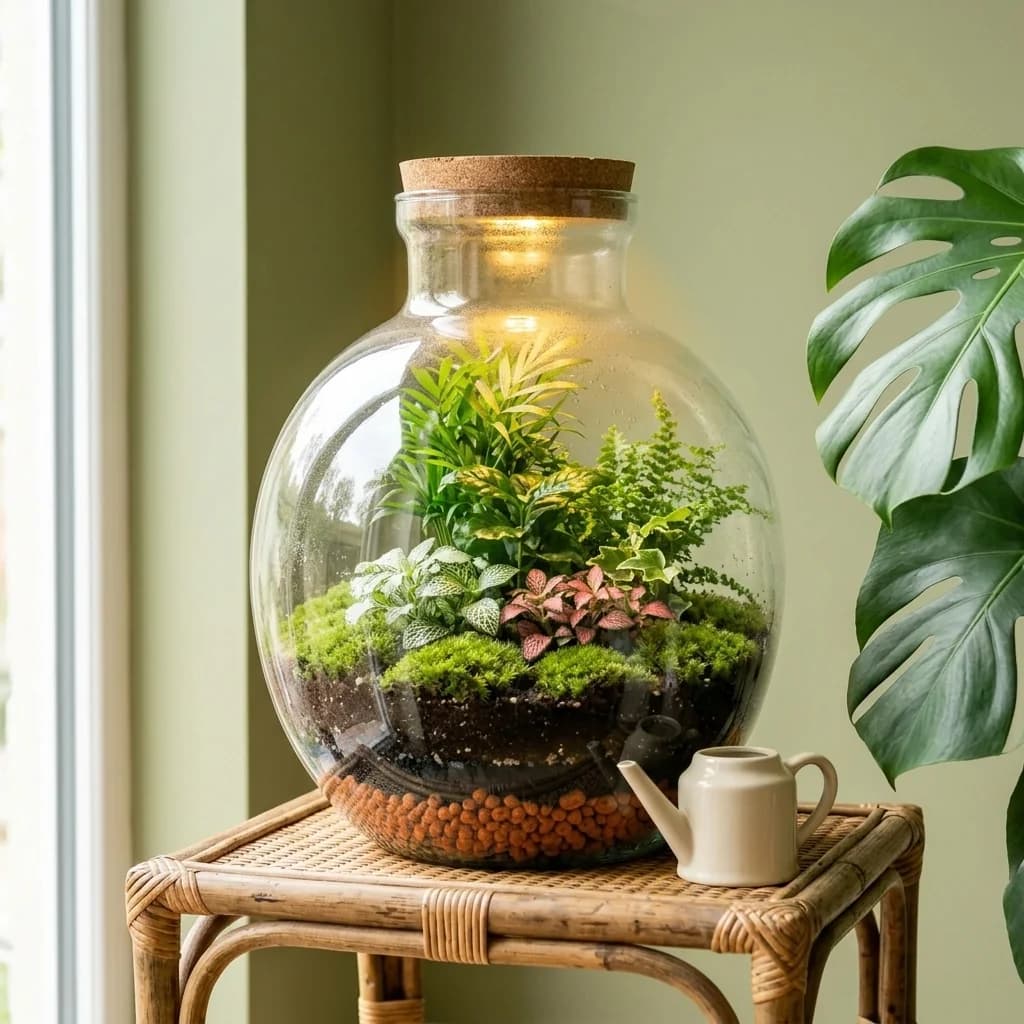
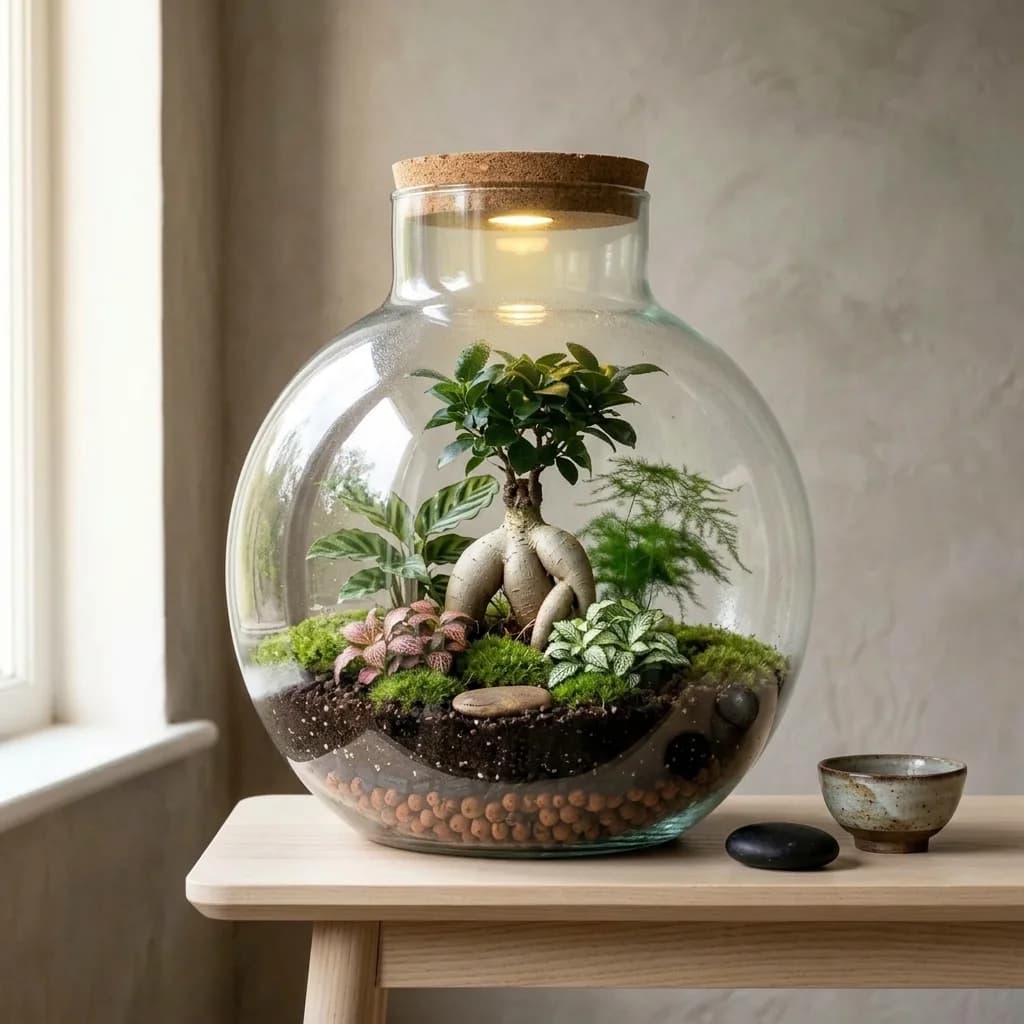
A wide-necked jar, closed with a cork or a lid, brings together every advantage for a first tropical terrarium. You plant with your fingers or a spoon, you see the layers clearly, and the stopper holds the humidity in. If condensation becomes too heavy, simply remove it for a few hours.
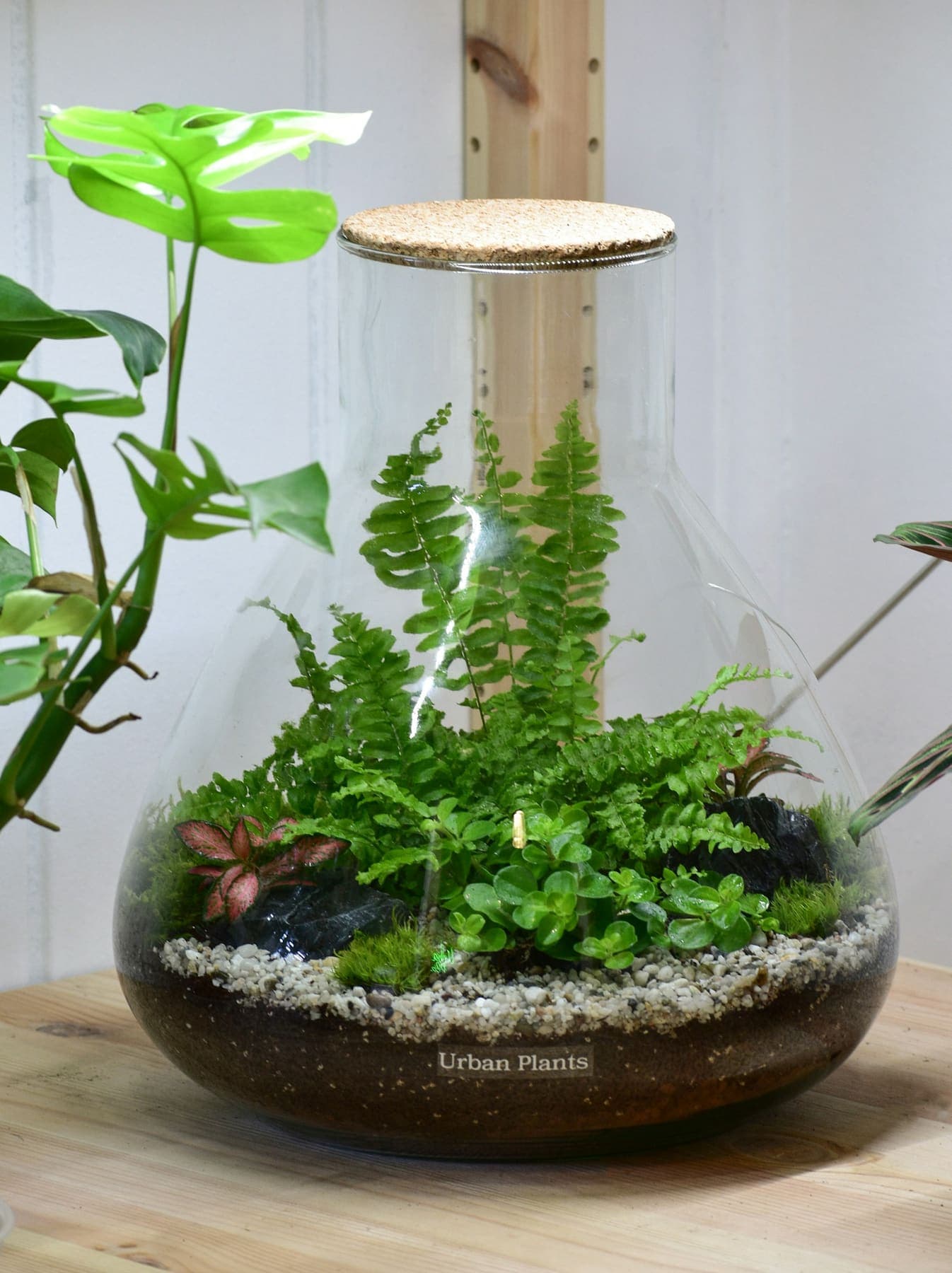
Our closed terrarium in recycled glass and cork, the Noah model, measures 18.5 cm in diameter by 19 cm tall: a tabletop format that holds one or two small plants and some mosses.
The narrow-necked bottle: beautiful, but technical
Demijohns, laboratory bottles, carafes: these containers give the most spectacular terrariums. But Penn State warns that a narrow opening makes planting and maintenance harder. You have to pour the substrate through a funnel, place each plant with long tweezers and tamp it down with a tool. The narrow neck holds humidity very well, which suits tropical plants, and is much less forgiving of watering mistakes. If this format appeals to you, follow our bottle terrarium tutorial.
The cloche: the easiest access
A cloche sits on a tray. You lift it off entirely to plant, trim or clean, which makes it the easiest container to maintain. It holds a good part of the humidity in, but a cloche simply resting on its base is generally less airtight than a stoppered jar.
One point not to overlook: the tray isn't a water reservoir. On a wooden base, set the plants in a watertight saucer or a pot with no hole, with their drainage layer, so the wood never stays wet. A cloche suits a single showcase plant, a fern or a cluster of mosses, better than a layered landscape.
The open geometric glass: for dry-climate plants
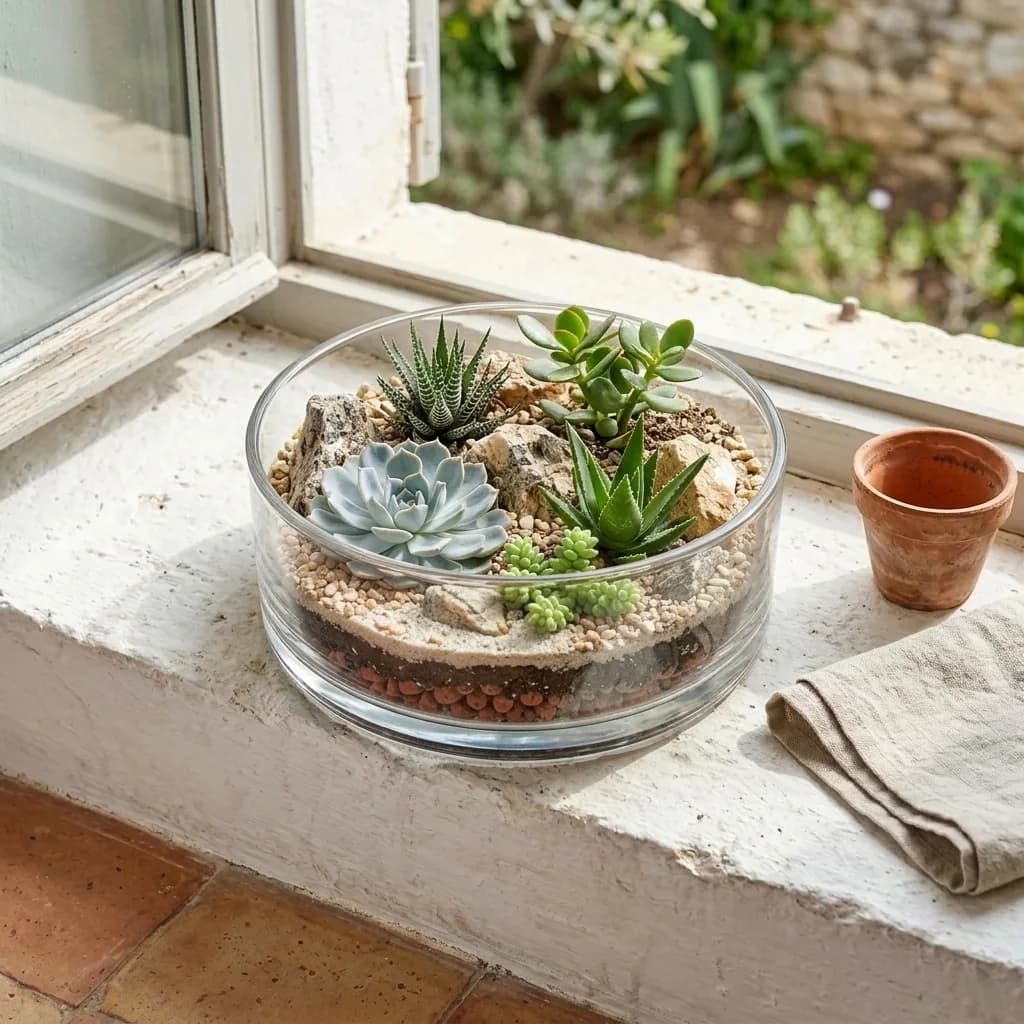
Geometric terrariums, glass panels joined with metal edges, let air circulate through one or several open faces. They suit succulents, cacti and air plants, which hate stagnant humidity. They don't suit mosses and tropical plants, which dry out in them.
Their construction calls for one precaution: the joints at the base aren't always watertight. Before pouring in damp substrate, test with a little water over a sink, or place a glass saucer or a watertight base inside. Our succulent terrarium tutorial explains how to plant one up.
The aquarium or reclaimed large tank
An old aquarium makes an excellent large-format terrarium: clear glass, a wide opening, room for a real landscape. Cover it with a glass sheet for a tropical setting, leave it open for a dry one. Just plan for sturdy furniture: once planted up, it's heavy.
What size opening should you choose?
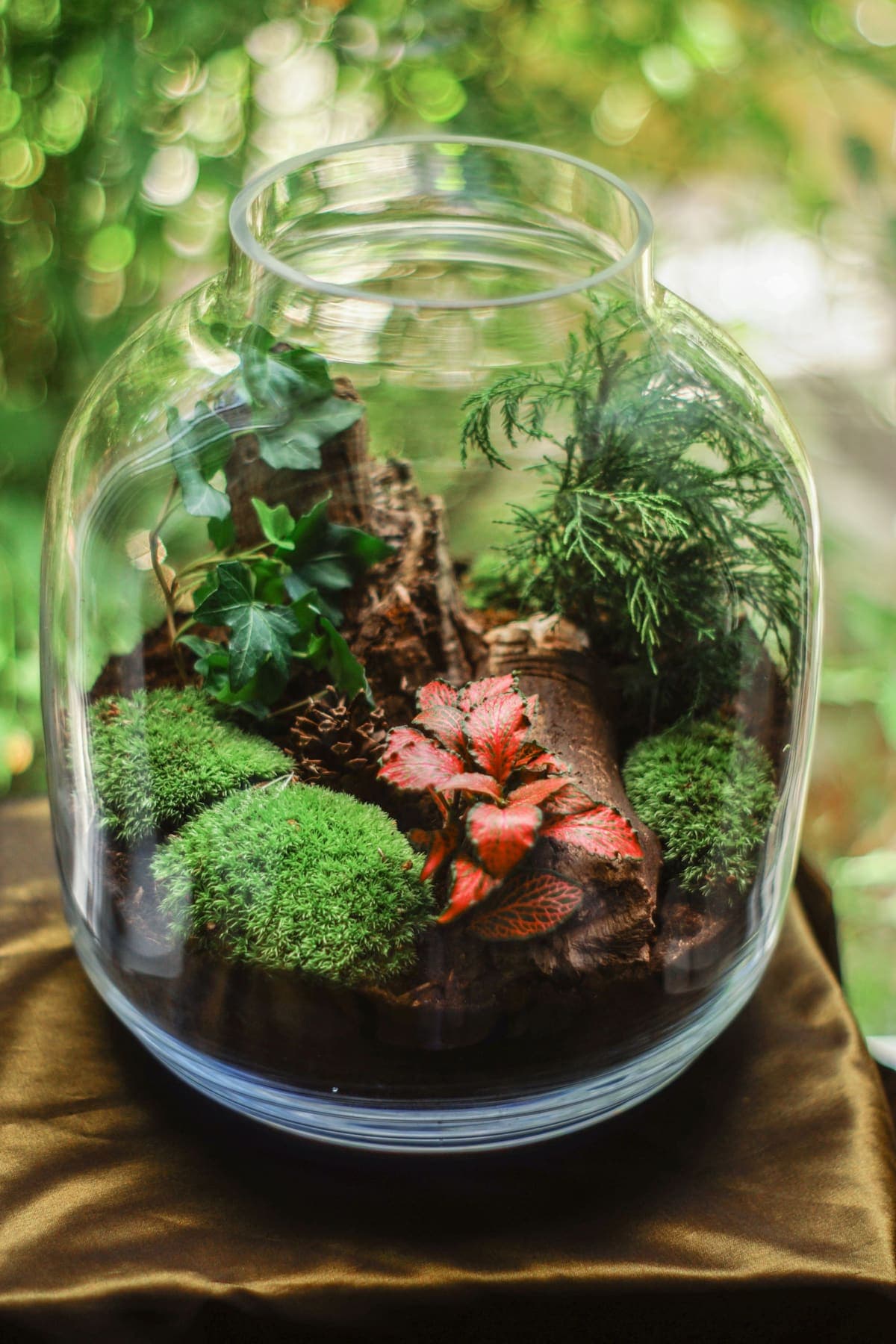
The question to ask is simple: does your hand fit through?
- If yes, you plant as you would in a pot, with your fingers and a spoon. It's the best choice for a first attempt.
- If only two fingers fit, a long-handled spoon and tweezers are enough, with a bit of patience.
- If the neck is narrower still, you'll need a funnel, long tweezers, a rod and a tamper. The University of Illinois mentions skewers and long tweezers depending on the size of the opening.
The opening also affects humidity. The wider it is, the faster water evaporates if the container stays open. A wide jar with a stopper therefore offers the best compromise: easy to plant, and humid once closed. Our guide DIY terrarium: the equipment you need covers tools by neck size.
What size container?
A larger container isn't harder to manage, quite the opposite: humidity and temperature change more slowly in it. It does need more substrate and plants, though. Two things to help you choose:
- The height available: substrate layers take up around a quarter of the volume, according to the University of Illinois. There should be enough height left above for your plants to grow without touching the lid.
- The number of plants: count the space each plant will need as an adult, not the size of its pot. A small jar holds one plant and some mosses; a large format, a landscape of several plants.
To choose species at the right scale, see our guide which plants for a terrarium.
Closed or open: the lid decides the plants
The type of closure shapes everything else. A stopper or lid keeps water inside and creates a humid environment for fittonias, ferns and mosses. A wide opening lets humidity escape: that's the realm of succulents. Our comparison closed or open terrarium covers both approaches in detail.
Reusing a jar: precautions
A preserving jar, a carafe or a vase can serve very well. A few precautions:
- Wash thoroughly in hot water and rinse well, to leave no trace of soap or food residue.
- Rule out cracked or chipped glass, which can break during assembly.
- Check the glass against the light: if it's tinted or frosted, it will let through less light.
- For a closed terrarium, make sure a stopper, lid or glass sheet can cover it.
Where should you place your terrarium?
All the guides consulted agree: bright light, but never direct sunlight. Mississippi State University recommends an east-facing spot, with morning sun, or west while avoiding the afternoon heat. Behind glass, heat builds up and can burn the plants. Also place the terrarium on a stable surface: a large jar full of damp substrate quickly weighs several kilos.
Equipment
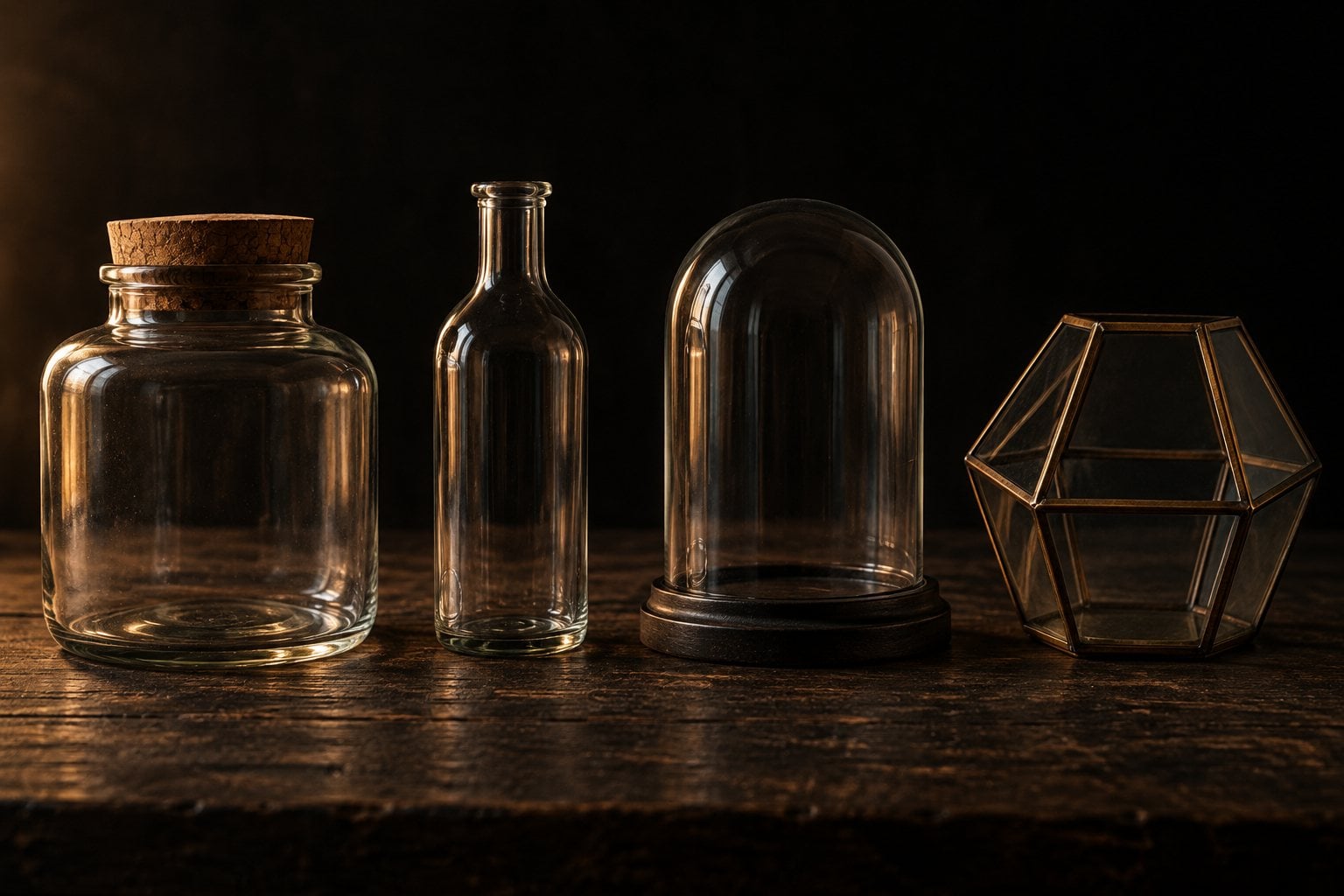
The three containers shown above cover the three main uses: the stoppered jar for a first tropical terrarium, the cloche for a showcase plant, the geometric glass for succulents.
Find the full range of containers in the glass containers section. And to find out what a whole project costs, read our guide how much does a terrarium cost.
- Terrarium bell jar, size S, egg shape, recycled glassØ 12 × H 25.5 cm€33.90
- Closed terrarium bottle, 3 or 8 L, cork or LED corkØ 19 to 23 cm, 20 to 25 cm tallFrom €25.90Choose
- Round terrarium bottle size L, 7 L, with or without corkØ 25 × H 26.5 cm · 7 LFrom €33.90Choose
- Round terrarium bottle size XL, 11 L, choice of corkØ 30 × H 31 cm · 11 LFrom €36.90Choose


Sources
Frequently asked questions
Can you make a terrarium in a kitchen jar?
Yes. A clear glass jar, well washed and rinsed, makes a very good terrarium. If it has a lid, it can hold tropical plants; without a lid, save it for dry-climate plants.
Is a plastic terrarium suitable?
Yes, as long as it's transparent. Plastic is light and unbreakable, handy for large formats or a child's room, but it scratches more easily than glass when cleaned.
Can you put succulents under a glass cloche?
It's not recommended. The cloche holds in a large part of the humidity, which succulents tolerate poorly. Prefer a widely open container, such as a bowl or a geometric terrarium.
What size terrarium should you start with?
A tabletop format your hand fits into is the simplest: it can be planted without special tools and holds one or two plants and some mosses. A larger container stays more stable, but needs more substrate and plants.