


BeginnerChoose

For terrariums sizes S to XL
4.8· 29 supplier reviews4 options
4.8(29 supplier reviews)
Free delivery from €89
Build your own, layer by layer.
Six steps, in the order you build. Each department offers what goes with the step before.
 Complete refillEverything but the glass: drainage, charcoal, soil, mossFrom €18.90The whole shop
Six kits. Everything is in the box.
The glass, the live plants, the soil and the guide. Every kit comes in three versions.
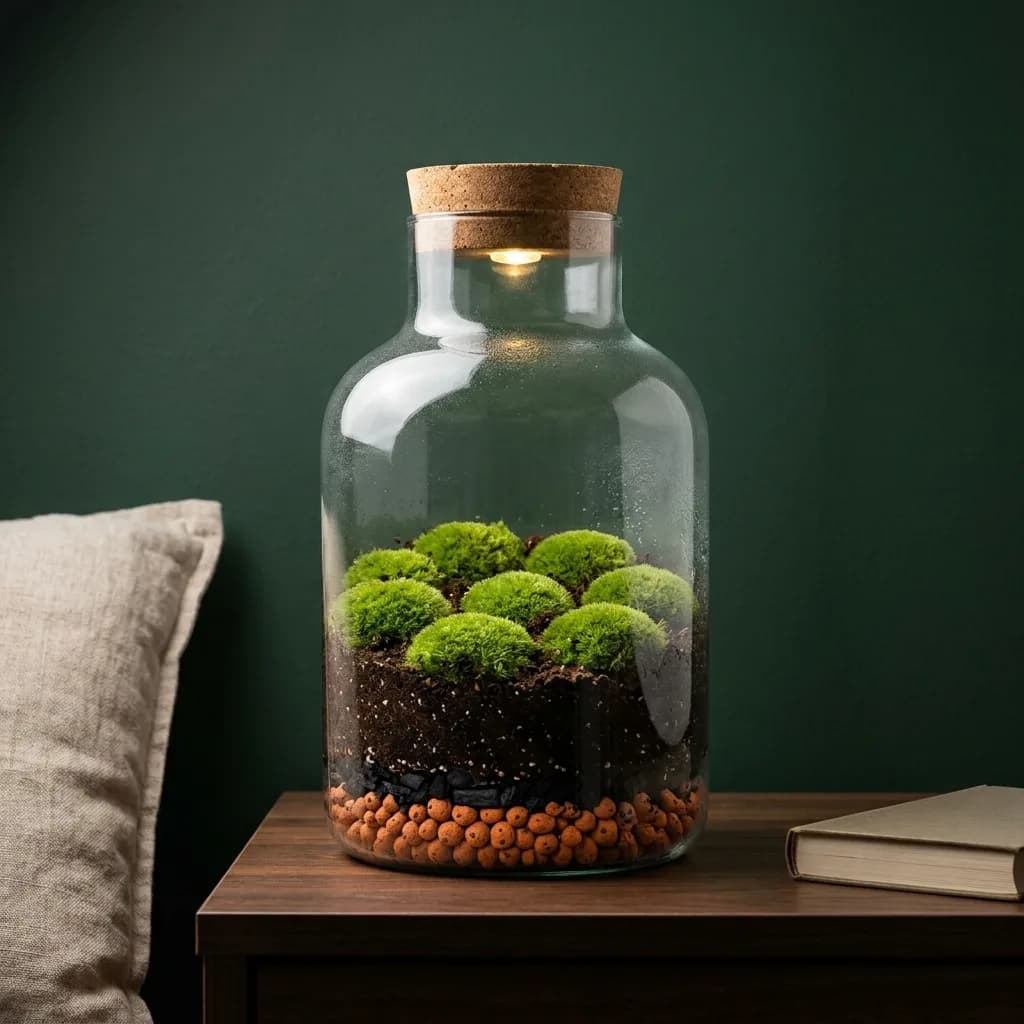 BeginnerMoss and lightClosed · M · LED4.8From €60.90
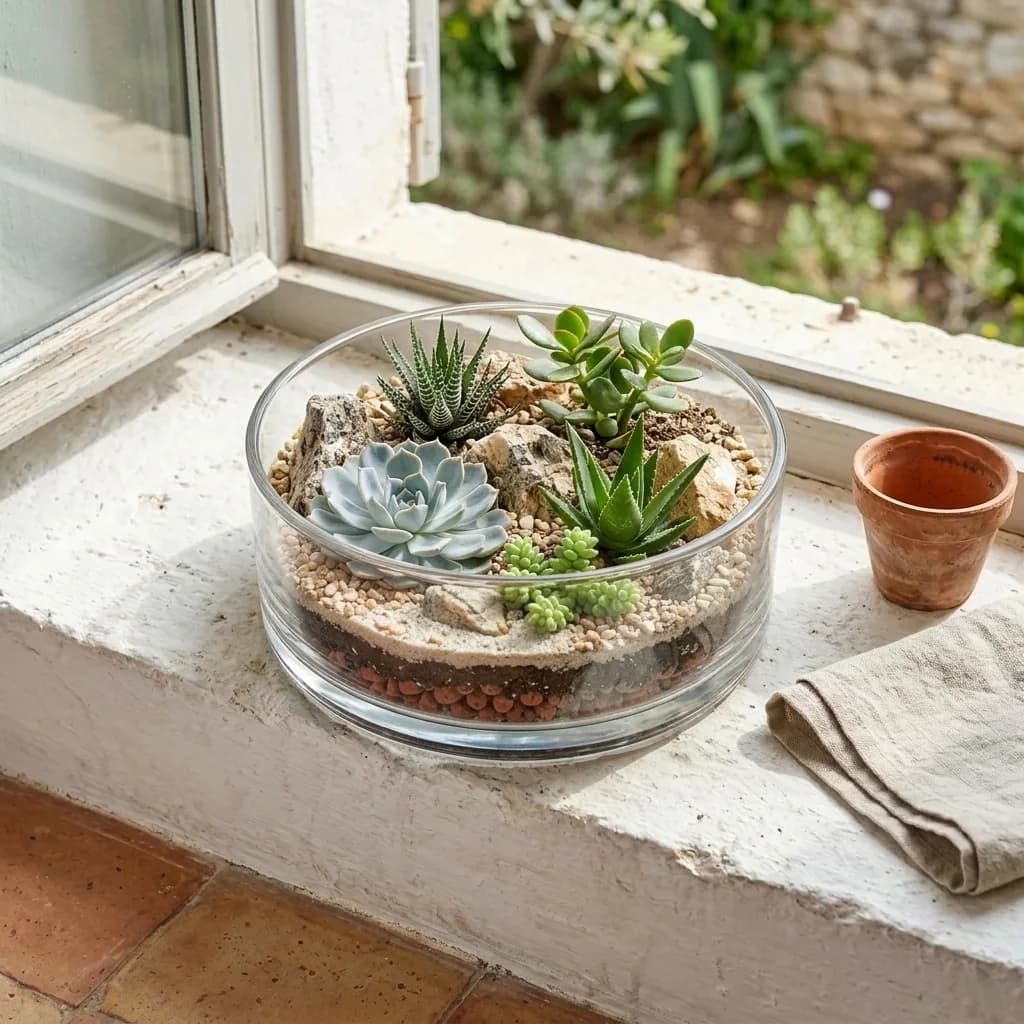 BeginnerOpen desertOpen · MNew kit, no reviews yetFrom €59.90
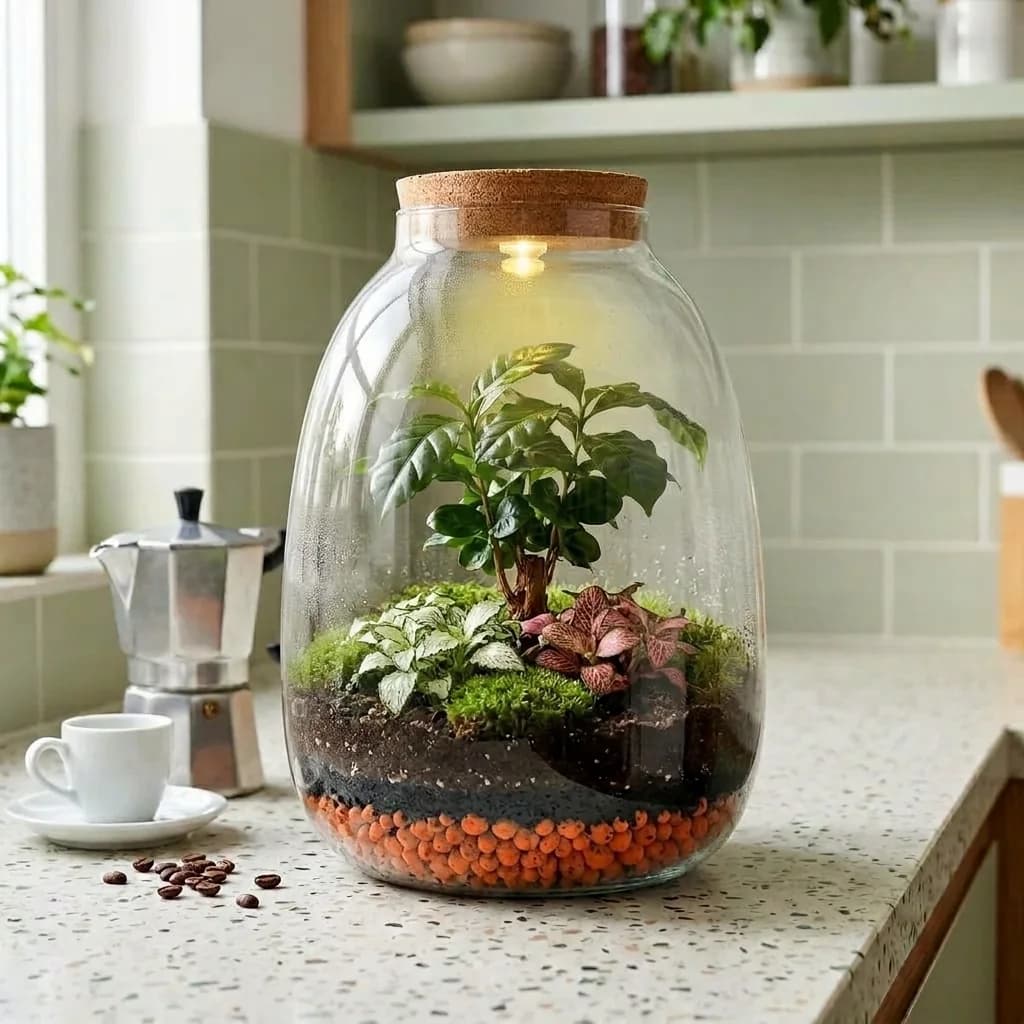 BeginnerTropical coffeeClosed · L · LED4.9From €63.90
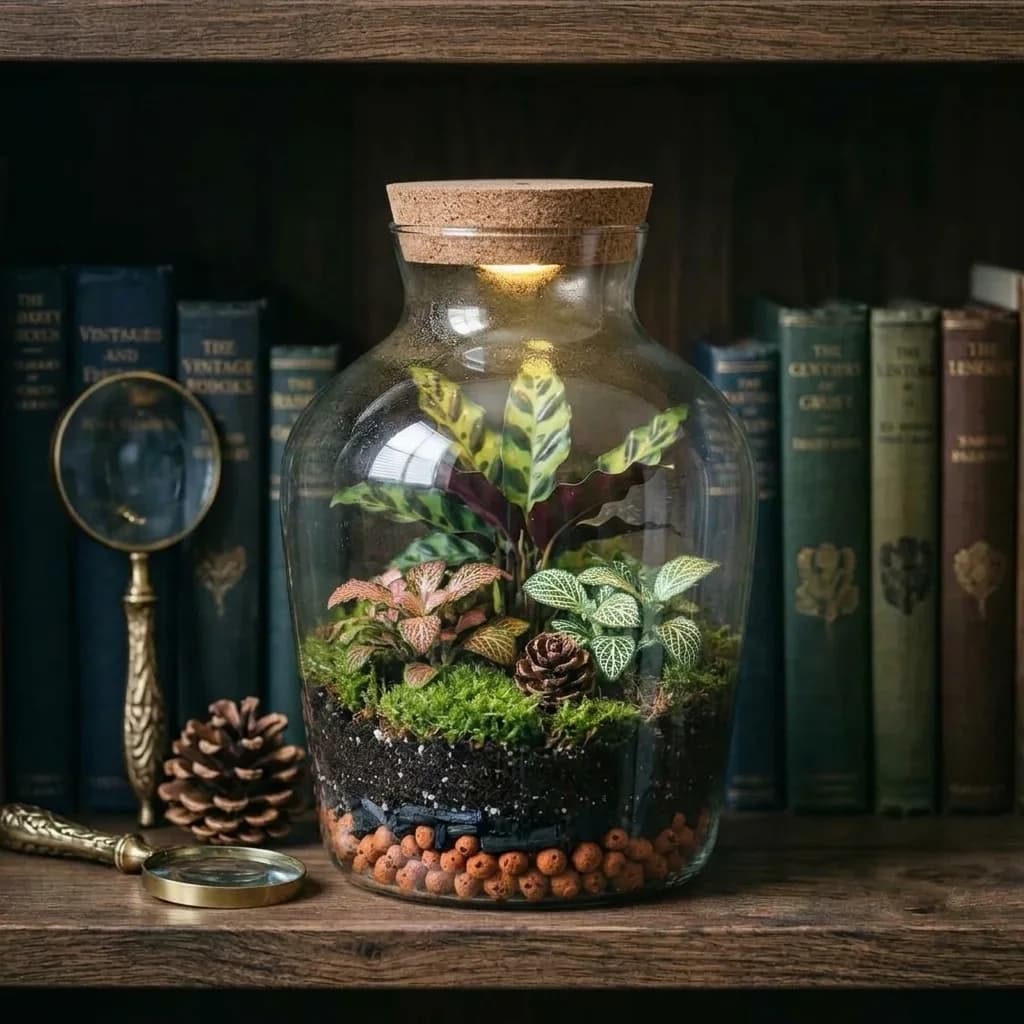 IntermediateForest floorClosed · M · LED4.6From €69.90
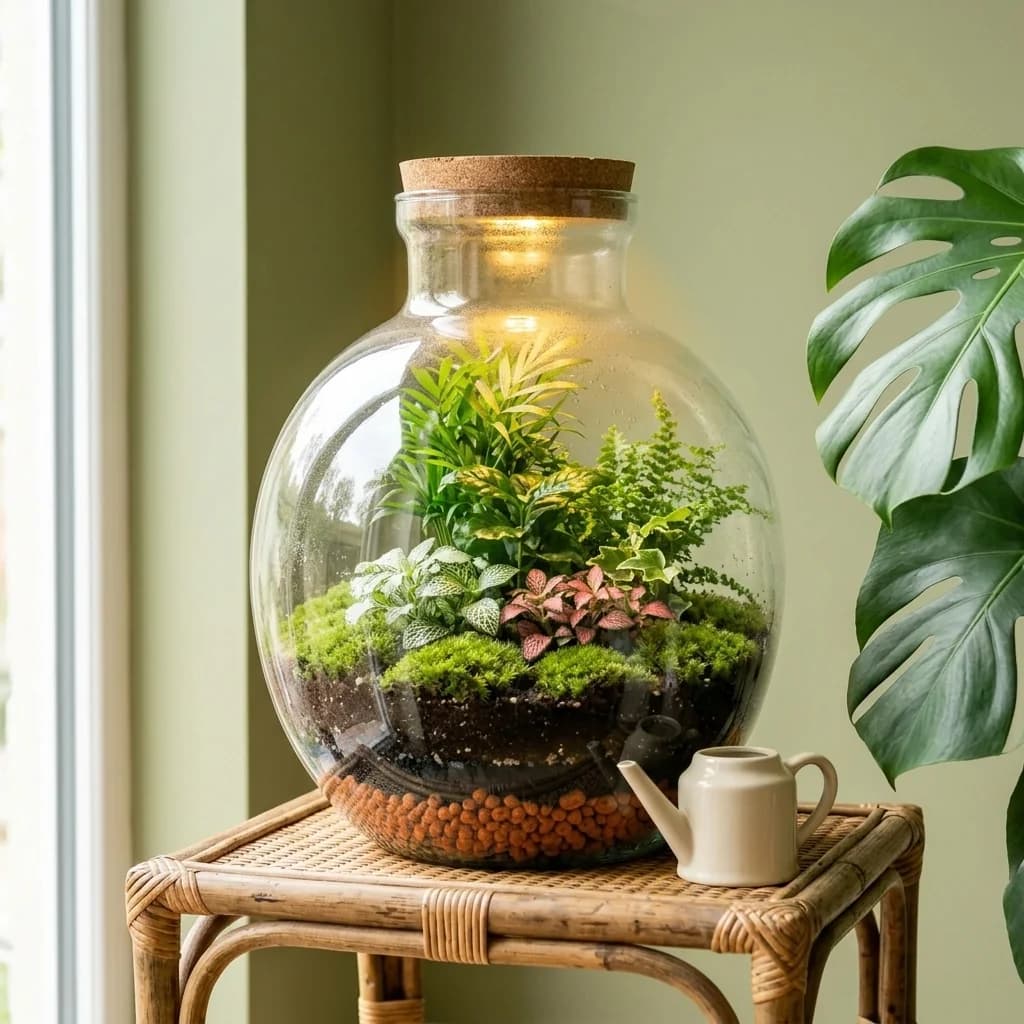 IntermediateJungleClosed · L4.9From €82.90
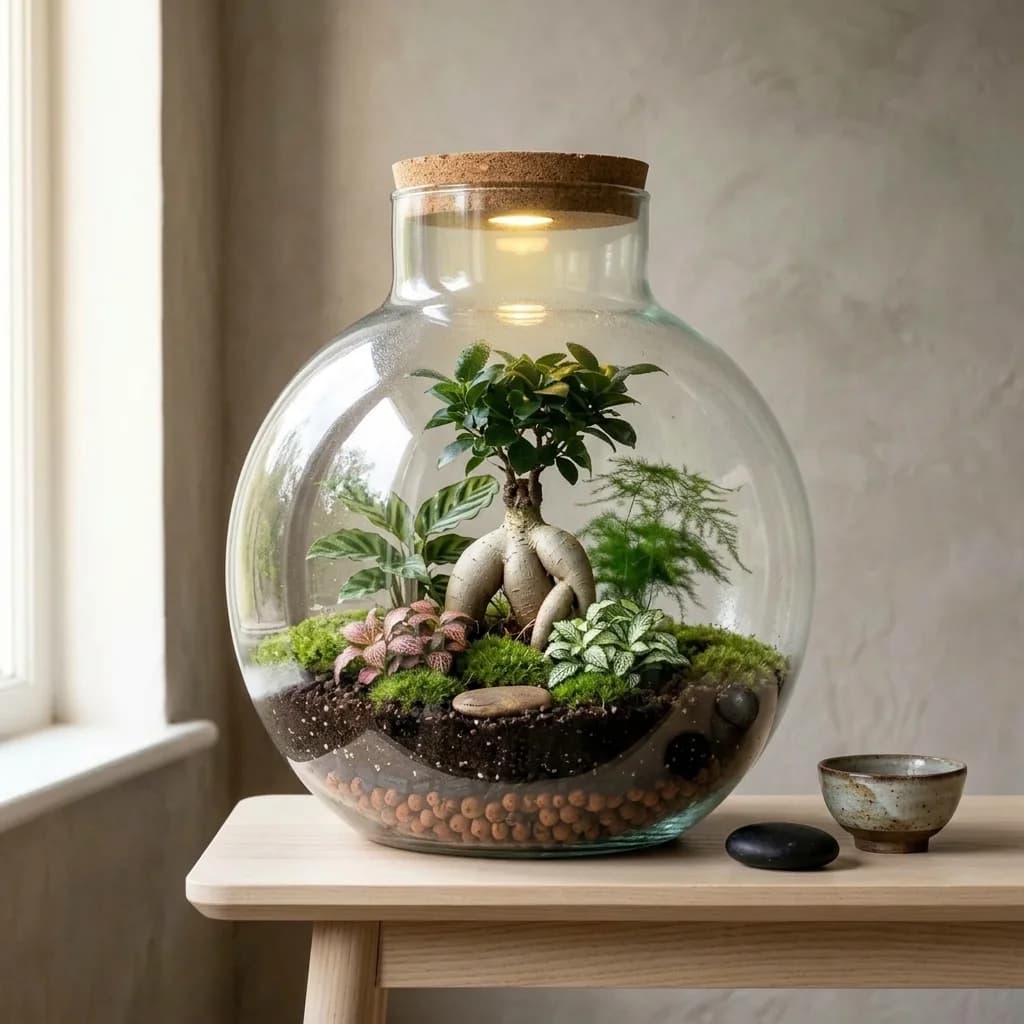 IntermediateZen bonsaiClosed · XL · LED4.8From €92.90
Give a small living world.
A gift that lasts for years, delivered with everything it needs and its assembly guide.
Guides and projects
Worlds
 TerraTerrariumOpen
 AquaAquaticComing soon
 FloraGrowOpen
 AéroWildComing soon
The layers that keep a terrarium alive: drainage, charcoal, tropical or mineral substrate, leaf litter and clean-up microfauna.
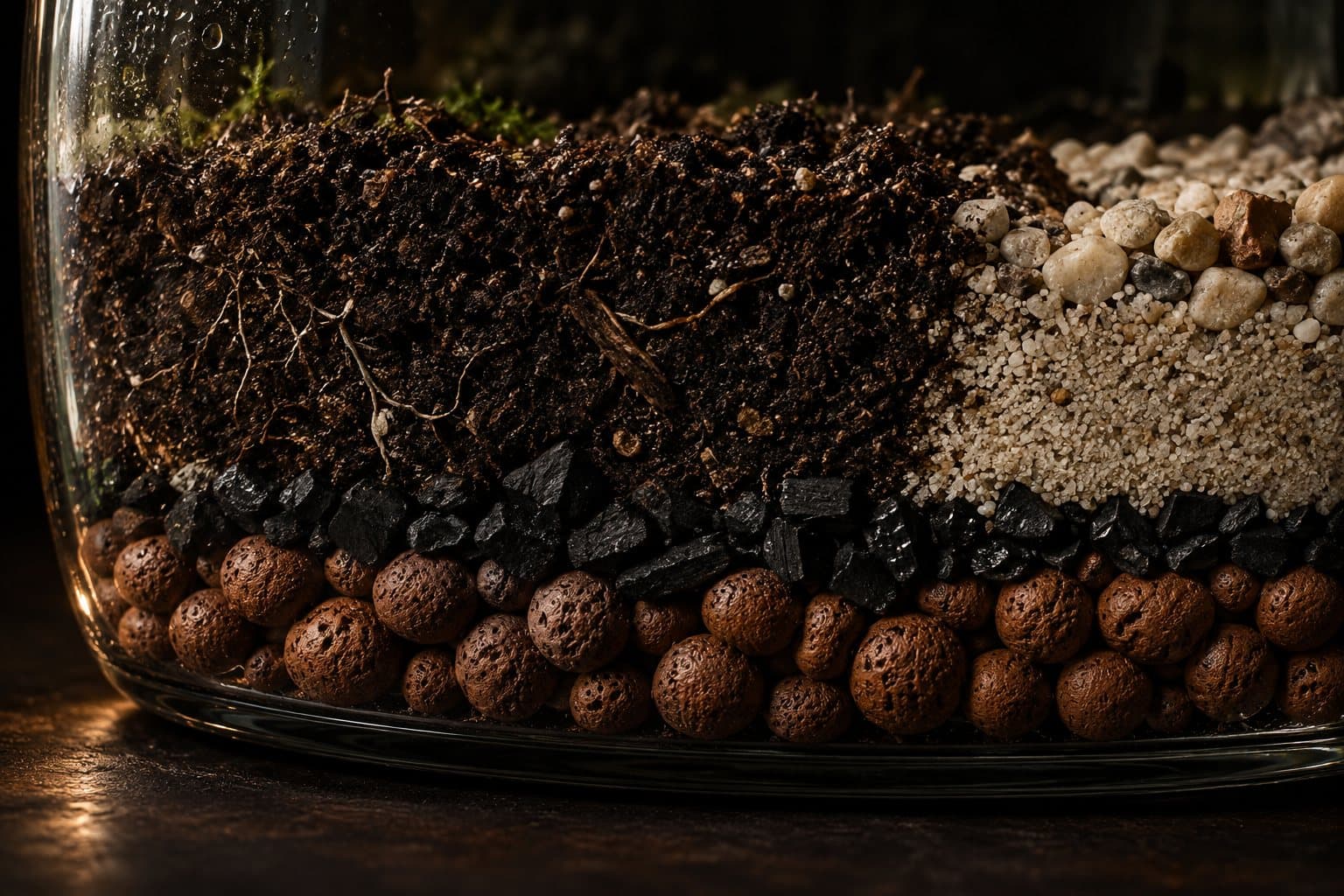
Under the moss and the plants, a closed terrarium stacks four layers, each with its own job. The clay balls at the bottom create a water reserve below the roots. Horticultural charcoal holds back what ferments and cuts down on bad smells. The substrate, aerated and free-draining, holds the roots without ever waterlogging them. The leaf litter on top feeds life in the soil. Skip a layer and you're only putting off the problem by a few weeks: the Which substrate for a terrarium guide sets out the thicknesses.
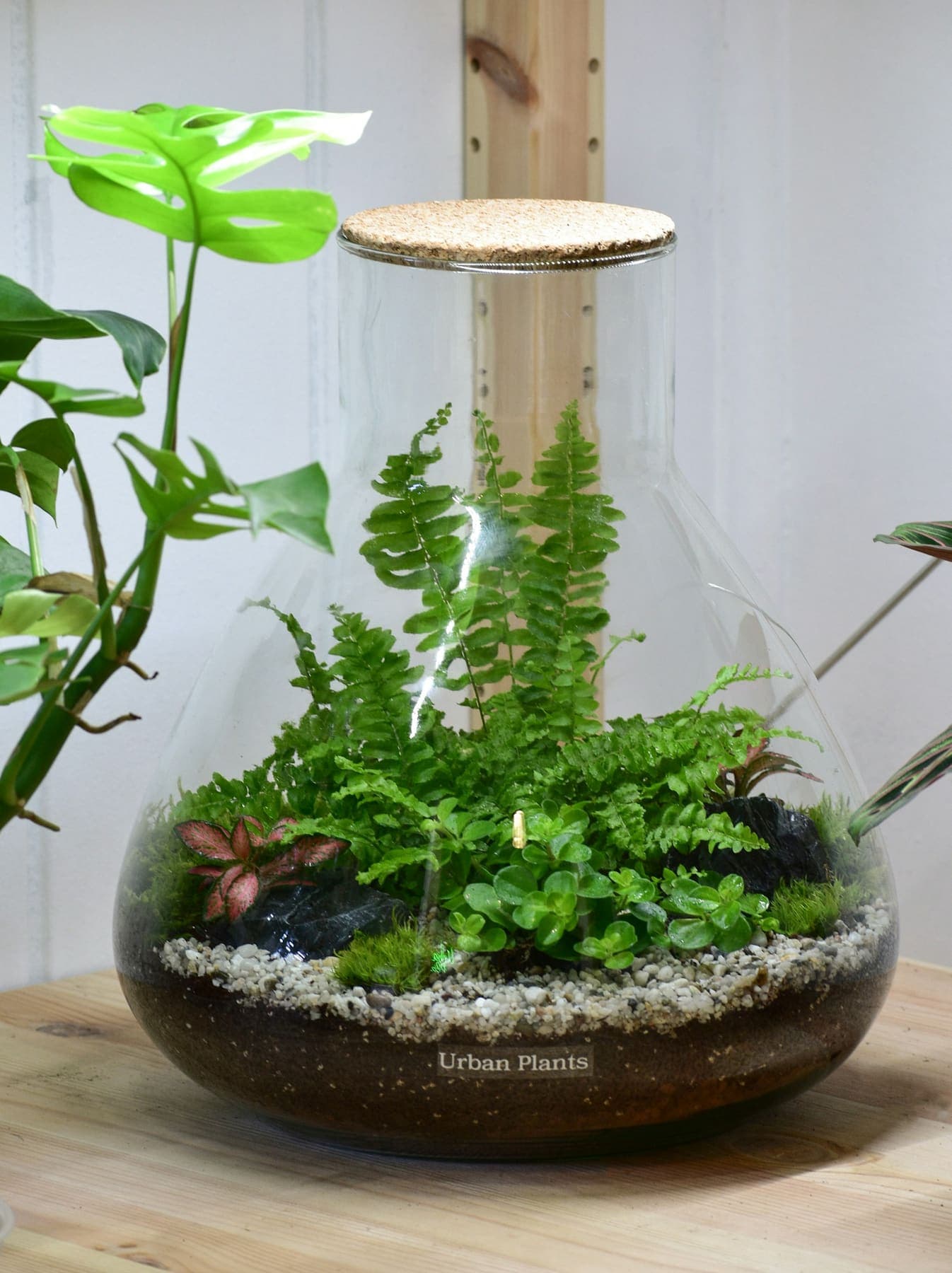
A tropical substrate blends coconut fibre, fine bark and sphagnum moss: it holds moisture without compacting, which is exactly what woodland plants need. A mineral substrate for cacti works the other way round: volcanic rock, coarse sand and very little organic matter, so water drains through in seconds. Getting it wrong shows up as rotten roots, not slow growth.
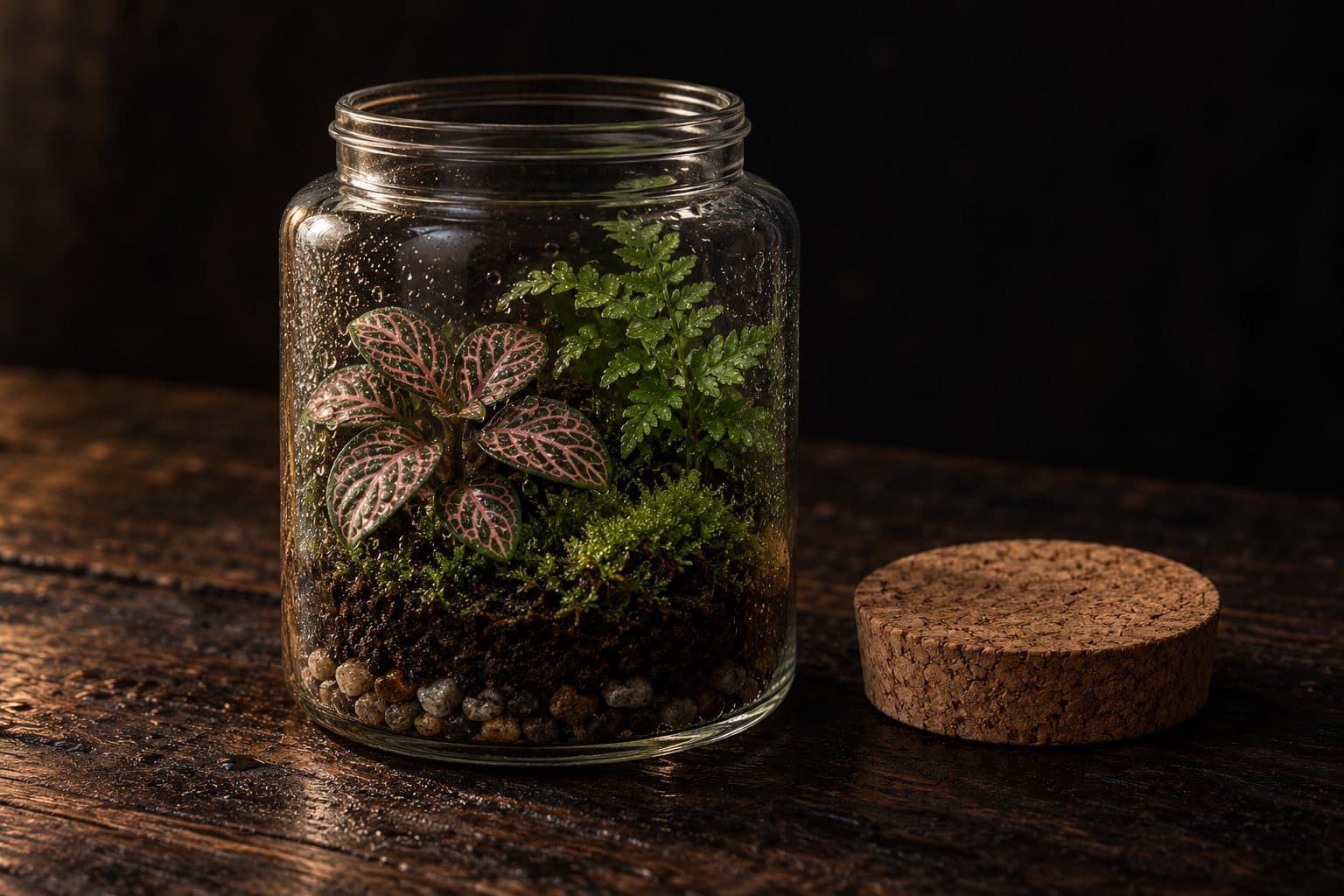
A bioactive terrarium adds a clean-up microfauna to the substrate, springtails and isopods, which eats plant waste and early mould. The soil starts to work like a woodland floor: the litter is recycled in place, and the terrarium no longer needs emptying and rebuilding. This calls for a permanent litter layer, constant humidity and a little patience: the colony takes a few weeks to settle in.
A well-balanced bioactive terrarium needs less intervention than a classic one: fewer dead leaves to pick out one by one, less mould to deal with. In exchange, it can't cope with either drying out completely or fungicide treatments, which kill the microfauna. For the full set-up, follow How to build a closed terrarium.
FAQ
A terrarium whose soil is home to living microfauna, springtails and isopods, that recycles plant waste in place. The litter is consumed as it builds up, which prevents mould and does away with clean-up maintenance.
It's not strictly necessary, but it helps in a small closed container: it holds back compounds from fermentation and limits odours if the substrate becomes waterlogged.
It's not recommended. Standard compost is too rich and compacts under glass: it ferments and suffocates the roots. A free-draining mix based on coconut fibre and bark works far better.
Build your own, layer by layer.
Six steps, in the order you build. Each department offers what goes with the step before.
Complete refillEverything but the glass: drainage, charcoal, soil, mossFrom €18.90The whole shopSix kits. Everything is in the box.
The glass, the live plants, the soil and the guide. Every kit comes in three versions.
BeginnerMoss and lightClosed · M · LED4.8From €60.90BeginnerOpen desertOpen · MNew kit, no reviews yetFrom €59.90BeginnerTropical coffeeClosed · L · LED4.9From €63.90IntermediateForest floorClosed · M · LED4.6From €69.90IntermediateJungleClosed · L4.9From €82.90IntermediateZen bonsaiClosed · XL · LED4.8From €92.90Give a small living world.
A gift that lasts for years, delivered with everything it needs and its assembly guide.
Guides and projects
Worlds
TerraTerrariumOpenAquaAquaticComing soonFloraGrowOpenAéroWildComing soonThe layers that keep a terrarium alive: drainage, charcoal, tropical or mineral substrate, leaf litter and clean-up microfauna.
Under the moss and the plants, a closed terrarium stacks four layers, each with its own job. The clay balls at the bottom create a water reserve below the roots. Horticultural charcoal holds back what ferments and cuts down on bad smells. The substrate, aerated and free-draining, holds the roots without ever waterlogging them. The leaf litter on top feeds life in the soil. Skip a layer and you're only putting off the problem by a few weeks: the Which substrate for a terrarium guide sets out the thicknesses.
A tropical substrate blends coconut fibre, fine bark and sphagnum moss: it holds moisture without compacting, which is exactly what woodland plants need. A mineral substrate for cacti works the other way round: volcanic rock, coarse sand and very little organic matter, so water drains through in seconds. Getting it wrong shows up as rotten roots, not slow growth.
A bioactive terrarium adds a clean-up microfauna to the substrate, springtails and isopods, which eats plant waste and early mould. The soil starts to work like a woodland floor: the litter is recycled in place, and the terrarium no longer needs emptying and rebuilding. This calls for a permanent litter layer, constant humidity and a little patience: the colony takes a few weeks to settle in.
A well-balanced bioactive terrarium needs less intervention than a classic one: fewer dead leaves to pick out one by one, less mould to deal with. In exchange, it can't cope with either drying out completely or fungicide treatments, which kill the microfauna. For the full set-up, follow How to build a closed terrarium.
FAQ
A terrarium whose soil is home to living microfauna, springtails and isopods, that recycles plant waste in place. The litter is consumed as it builds up, which prevents mould and does away with clean-up maintenance.
It's not strictly necessary, but it helps in a small closed container: it holds back compounds from fermentation and limits odours if the substrate becomes waterlogged.
It's not recommended. Standard compost is too rich and compacts under glass: it ferments and suffocates the roots. A free-draining mix based on coconut fibre and bark works far better.
5 products in Soil & refills


