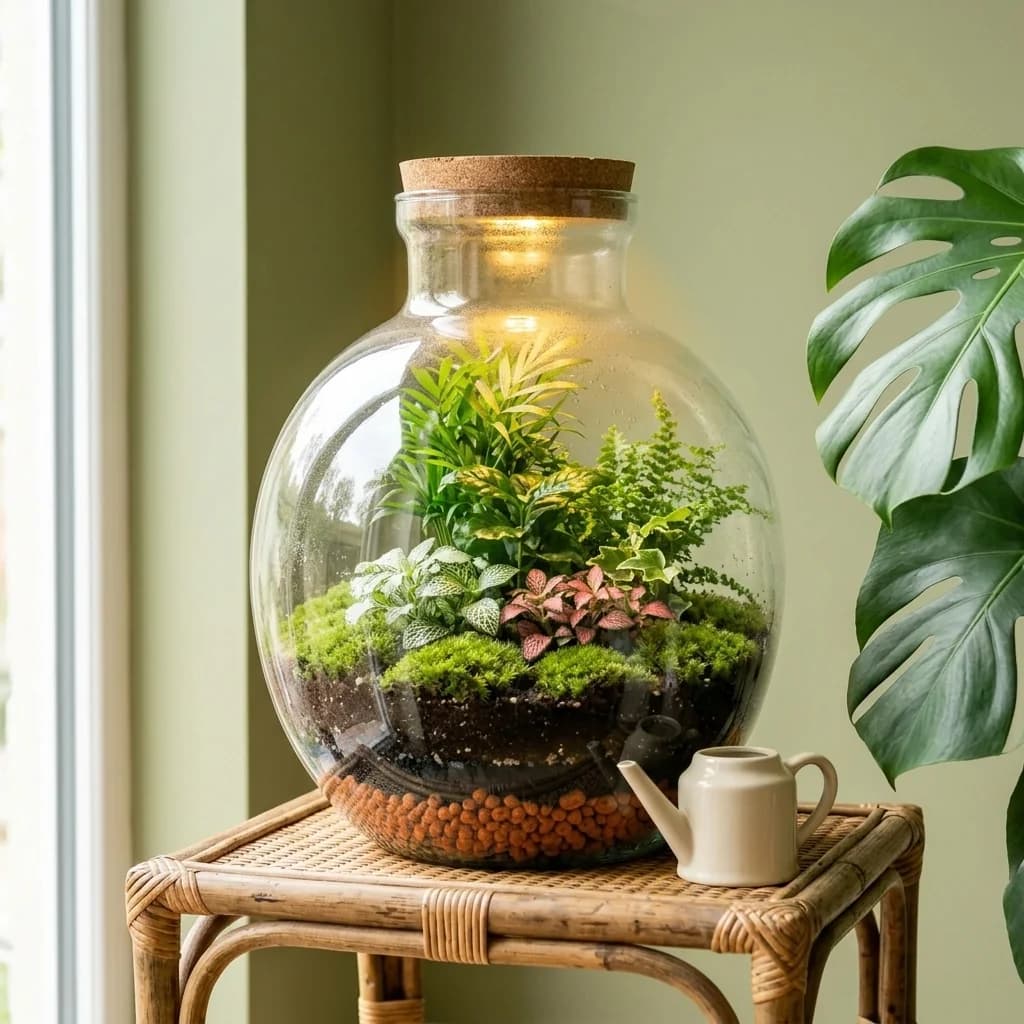
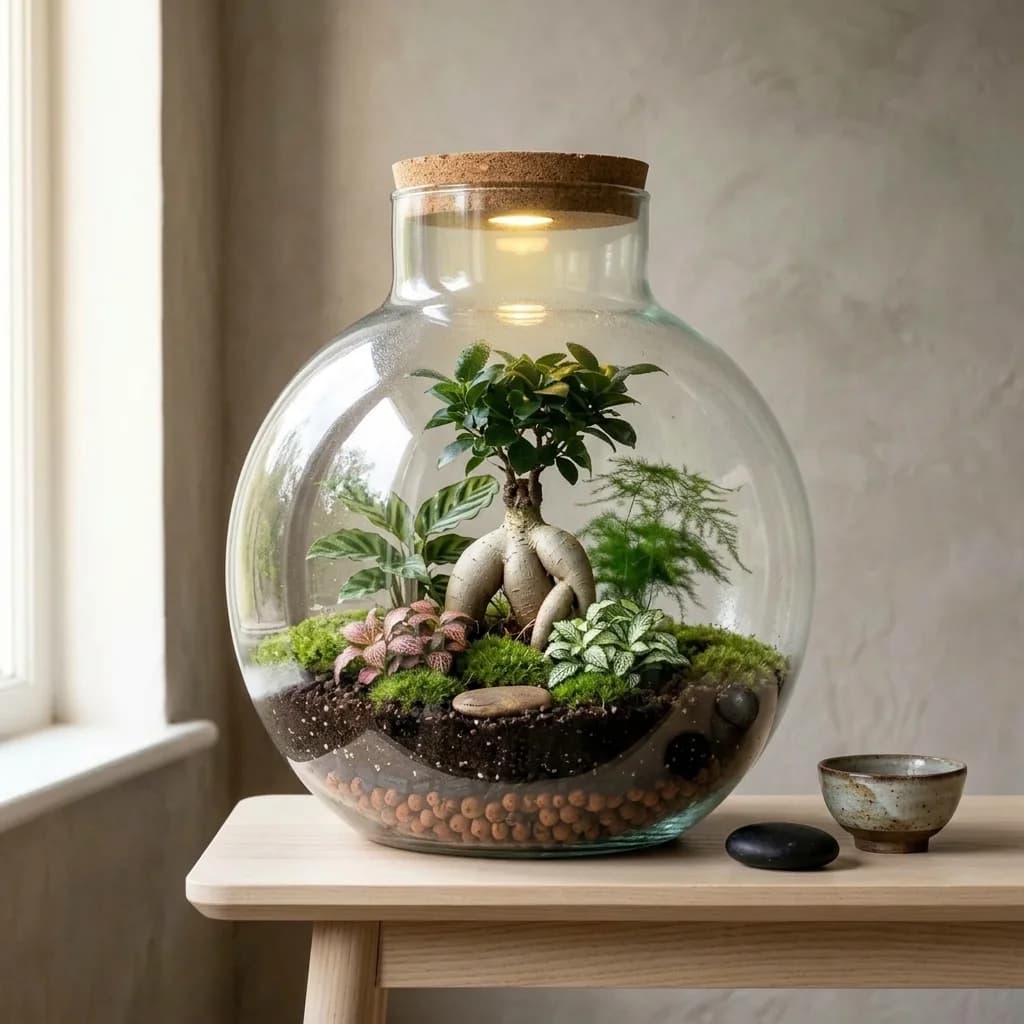


The bioactive terrarium: building one and understanding how it works
Living soil, plants and decomposers: prepare a planted bioactive terrarium, choose its microfauna and let the environment settle.
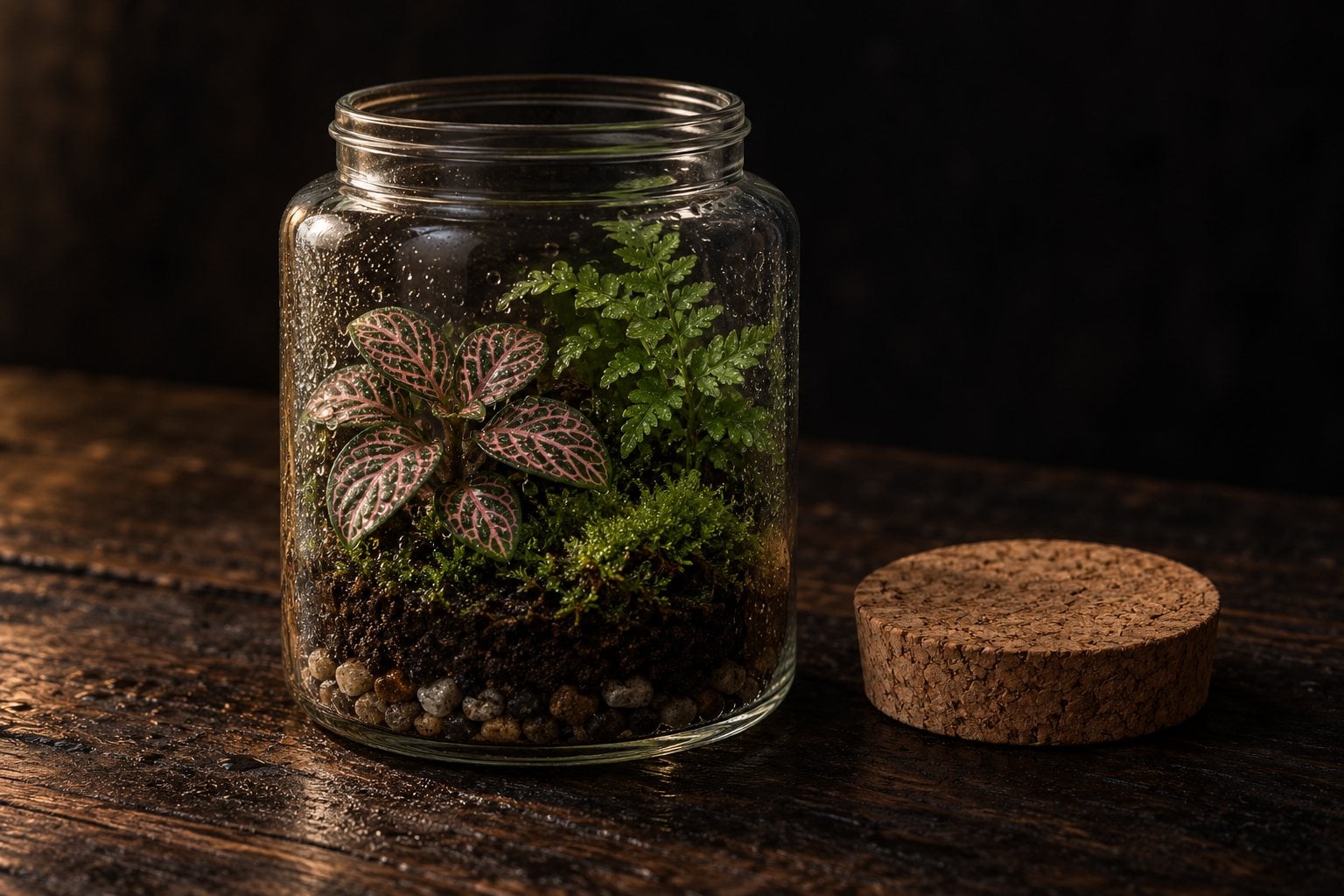
In this guide
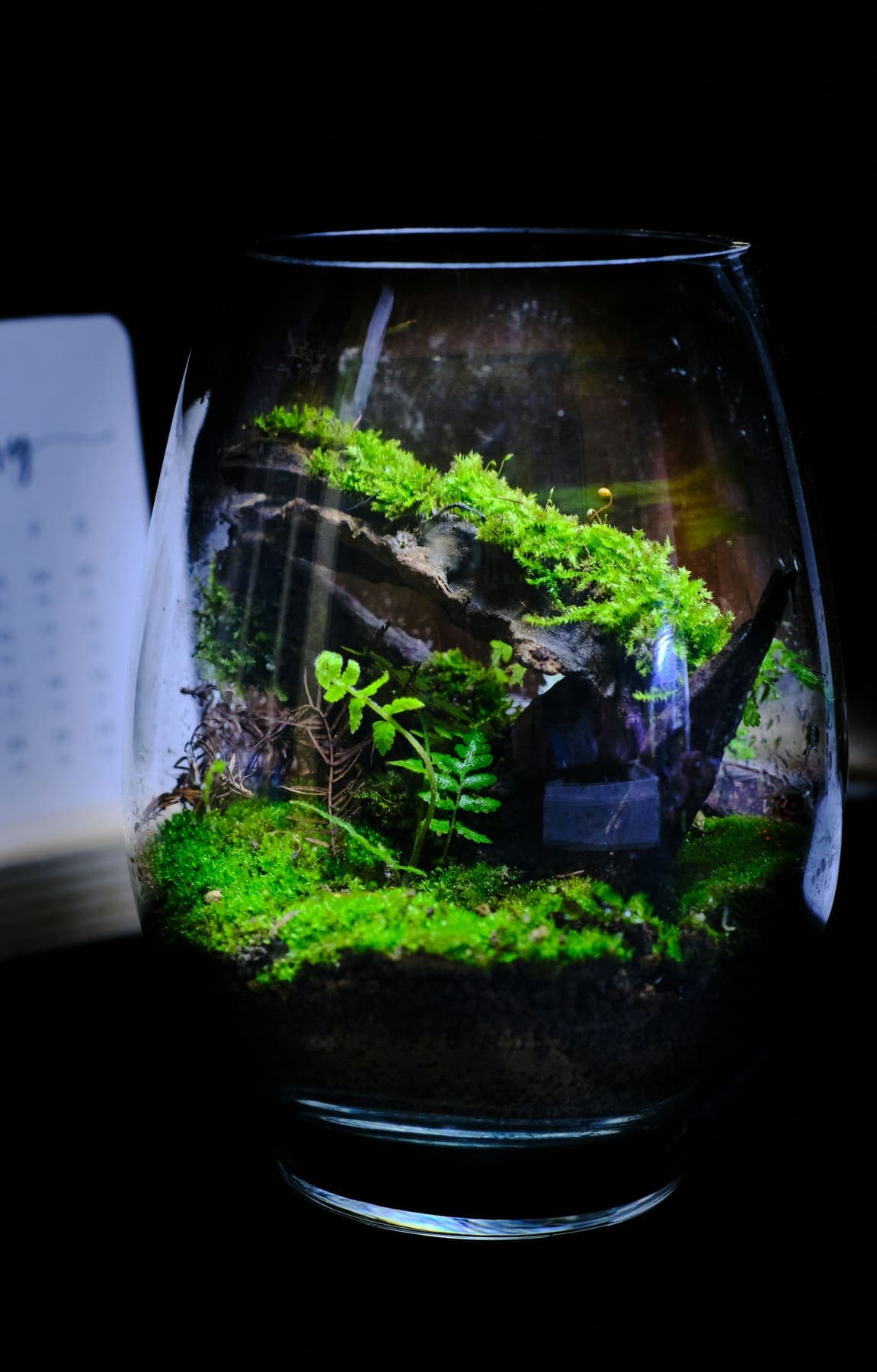
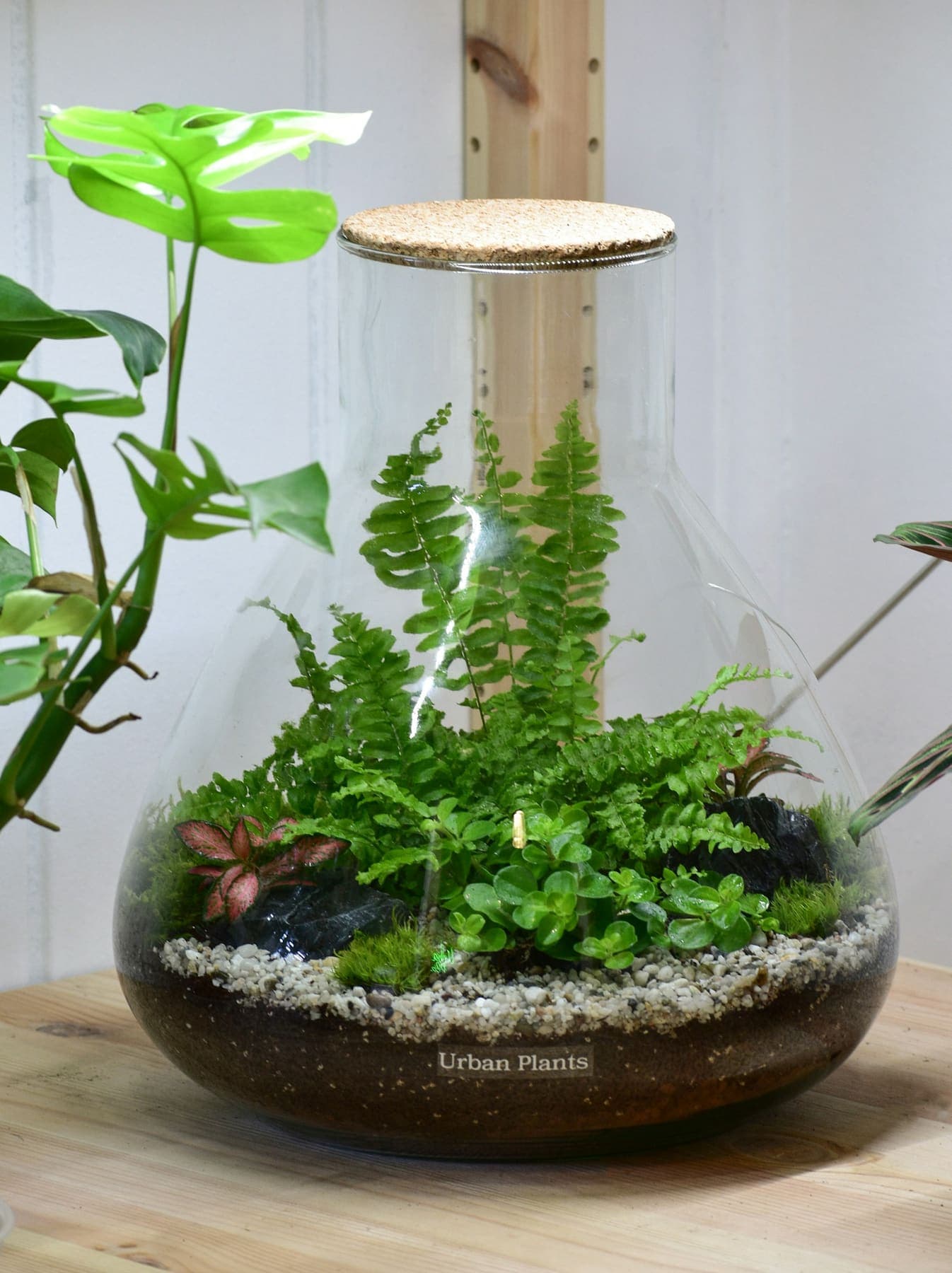
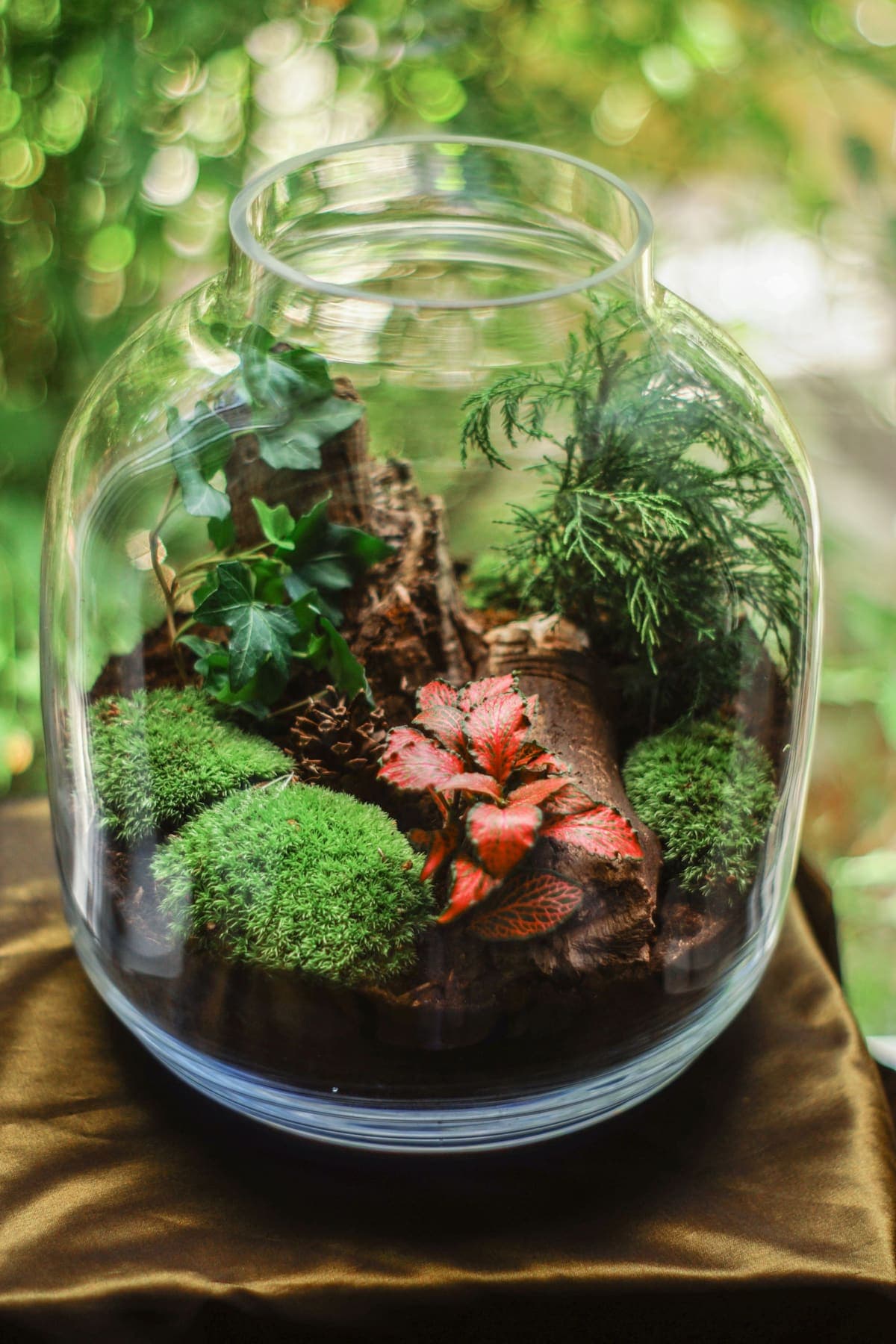
A bioactive terrarium brings together plants, a substrate inhabited by microorganisms, and decomposers chosen to suit the conditions. Part of the organic debris is broken down on the spot. The word means neither "sterile", nor "no maintenance", nor necessarily "closed".
A planted jar or a vivarium for animals?
This guide is about a humid planted terrarium. A vivarium meant for a reptile or an amphibian needs a design specific to the species: volume, ventilation, temperature, lighting and health monitoring. A recipe for a planted jar does not answer those needs.
Closure and biological activity are two different subjects. Soil can be bioactive in a ventilated setup; a closed jar can hold microorganisms with no deliberate introduction of microfauna.
The three elements to prepare
A substrate that keeps its air
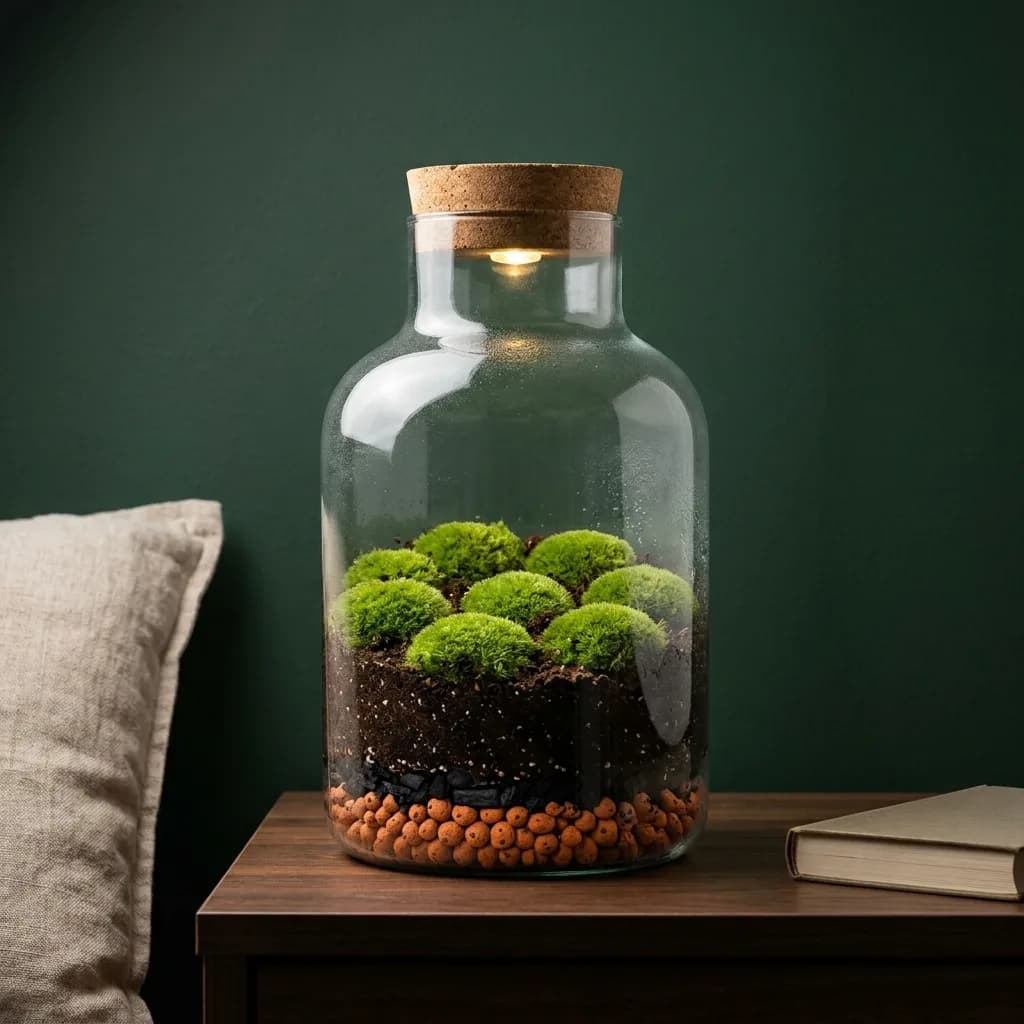
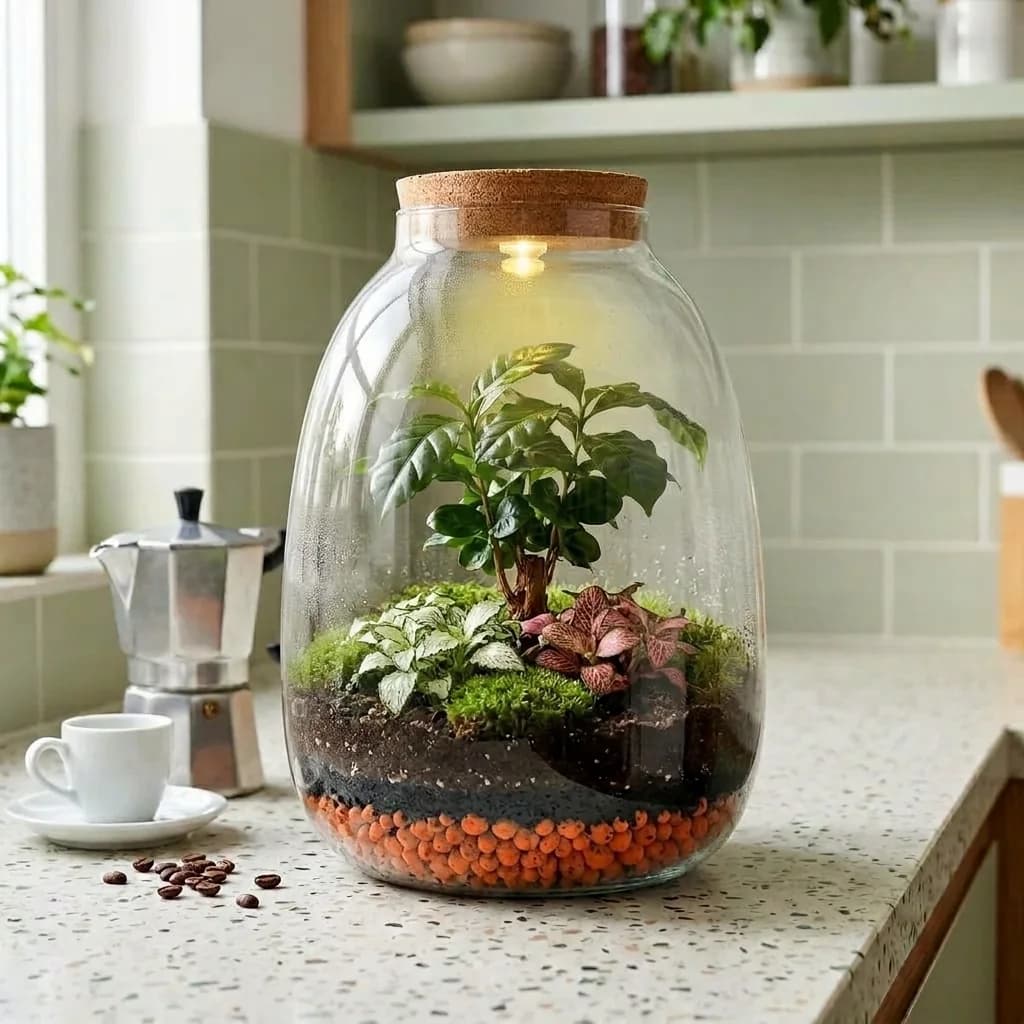
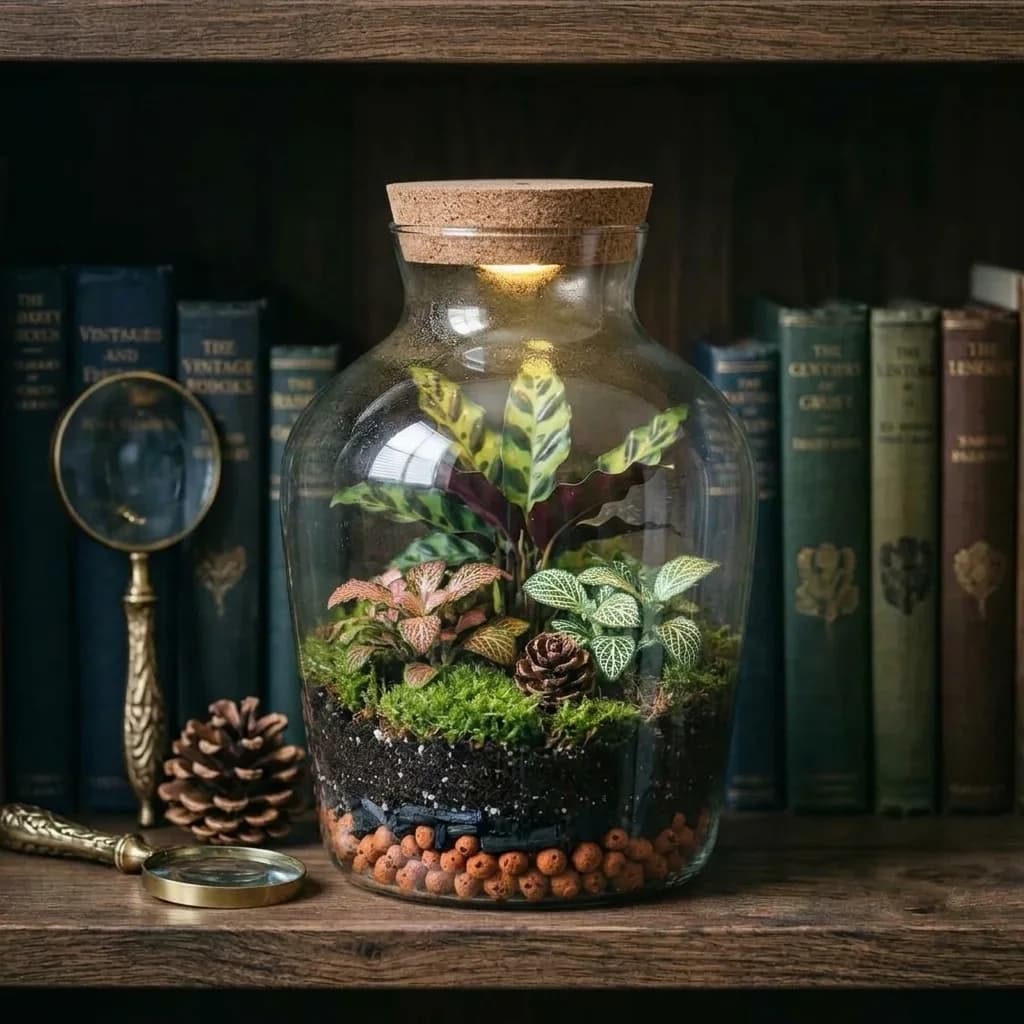
Choose a mix that suits the plants and holds moisture without turning into compact mud. Its composition and its depth follow from the roots and the container. See which substrate for a terrarium, then arrange the layers without counting on stones to remove the water.
Compatible plants
Favour small species suited to the humidity and to the light available. Inspect them before you put them in, particularly the undersides of the leaves and the root balls. Ask about recent treatments: some residues are incompatible with invertebrates.
Suitable decomposers
Springtails are often used in humid conditions. Isopods have varying needs depending on the species, especially for ventilation and places to shelter; they are not an automatic addition to every small jar. Choose an identified culture rather than something gathered at random.
Build it, then let the environment settle
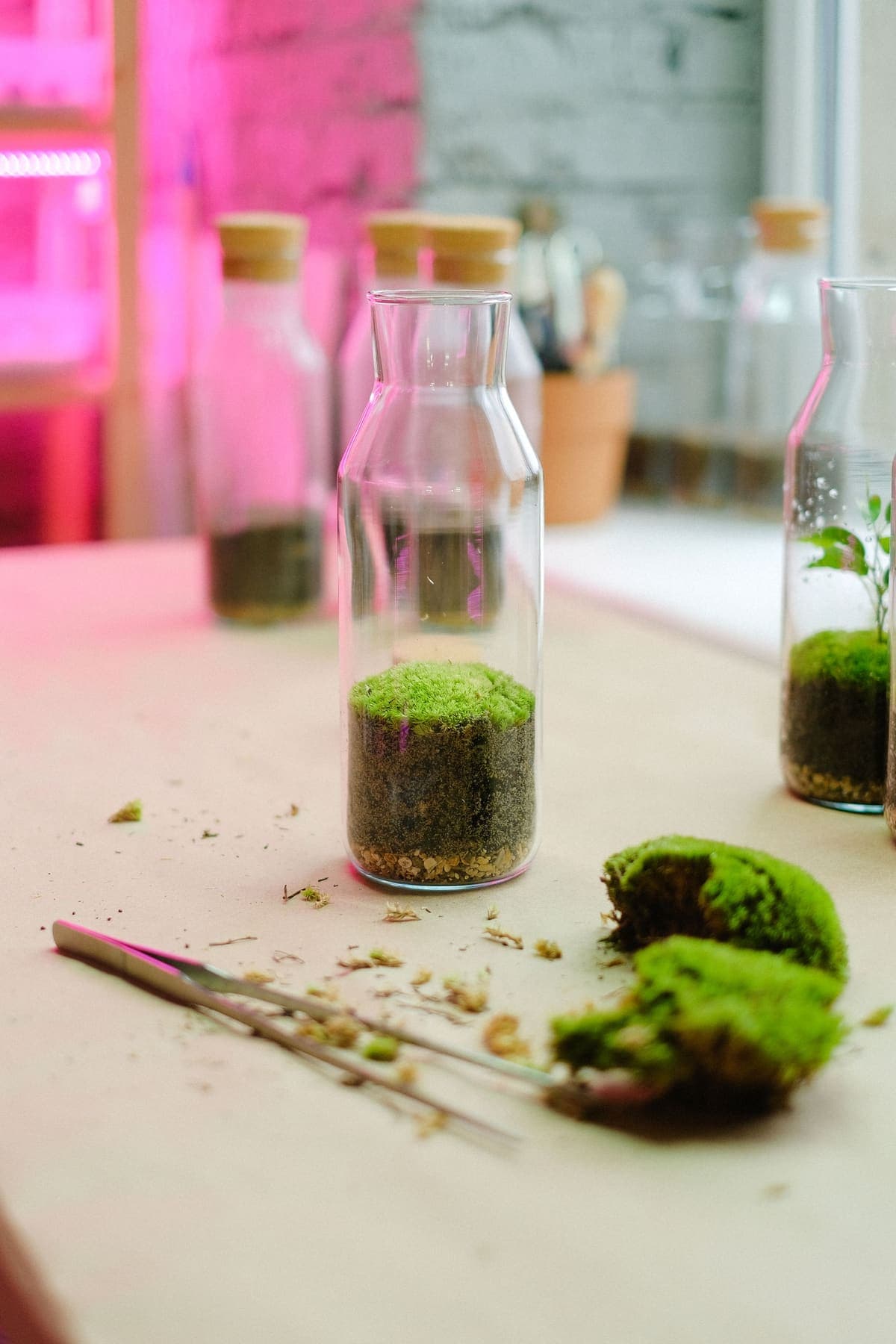
- Clean the container and prepare a damp substrate that is not saturated.
- Put the plants in and keep some areas accessible for observation.
- Add a small amount of suitable litter of known origin, with no treatment residue.
- Introduce the microfauna according to the instructions that came with the culture.
- Watch the plants, the soil and the decomposers before you change anything.
There is no single maturation time. A visible population and plants that are growing again tell you more than a date set in advance. Do not overfeed the system to speed the process up.
What bioactivity does not solve
A rotten plant has to be taken out. Water that has gathered has to be dealt with. Decomposers are no guarantee that pests or every mould will disappear. If gnats turn up, use the specific diagnosis.
Do not disinfect the whole soil at every cleaning: you would also destroy the living network you are trying to establish. The bioactive maintenance guide separates the waste to remove from the litter to keep.
To prepare the build, browse the substrates and bioactive materials. Check the needs and the availability of live cultures separately: a bag of substrate does not on its own ensure they are there.
Sources
ReptiFiles: establishing decomposers
University of Minnesota Extension: springtails and organic matter
Frequently asked questions
Does bioactive mean no cleaning?
No. You keep a useful litter layer, but you remove diseased tissue and excess waste. The water, the plants and the microfauna all still need watching.
Do you really need isopods?
No. Whether to introduce them depends on the volume, on the ventilation and on what the species needs. A small humid jar does not automatically suit every isopod.