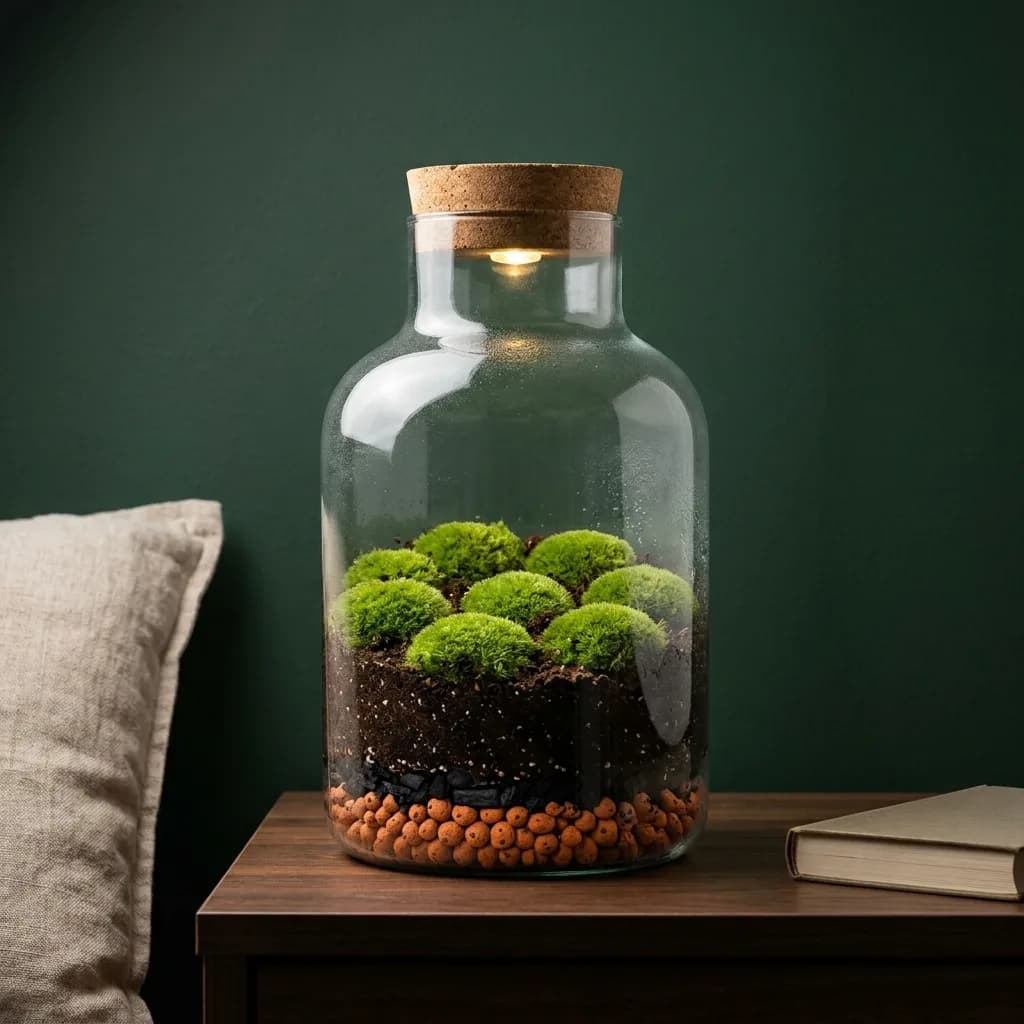
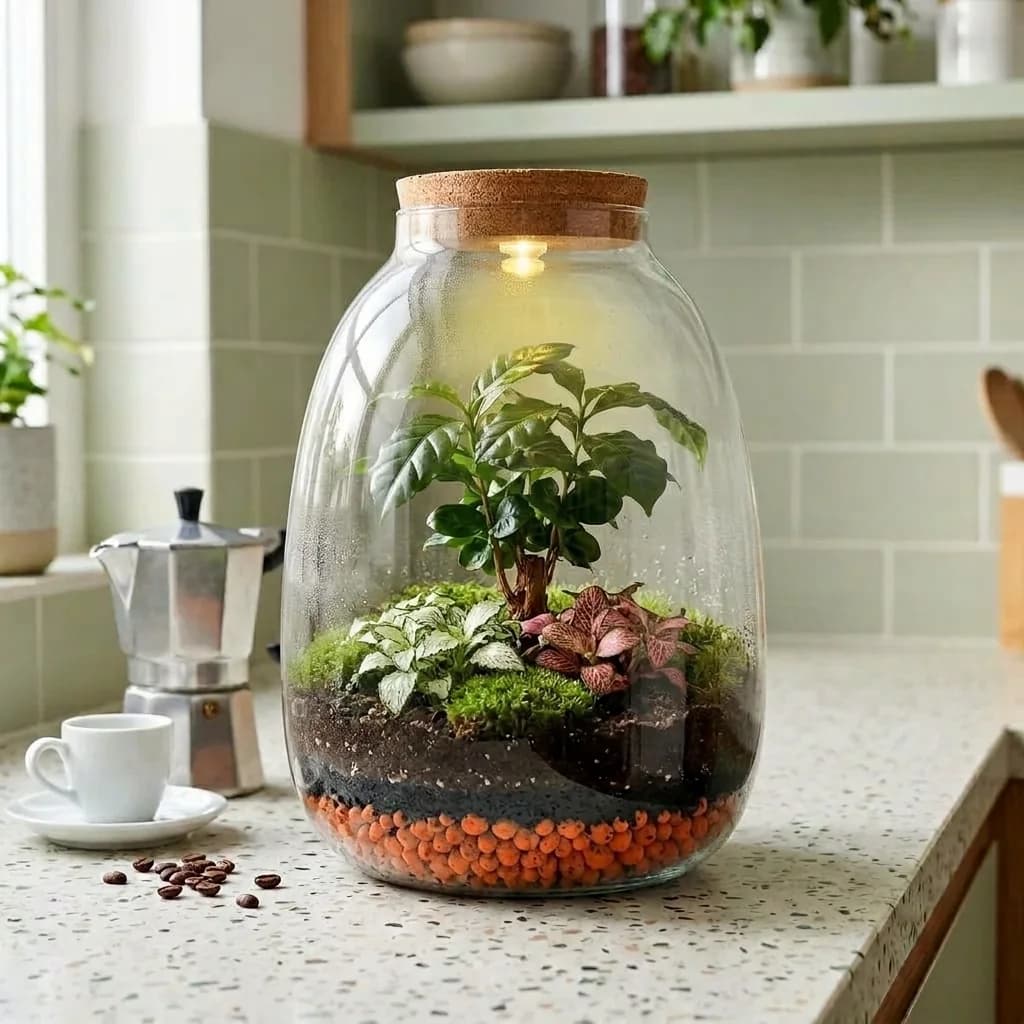
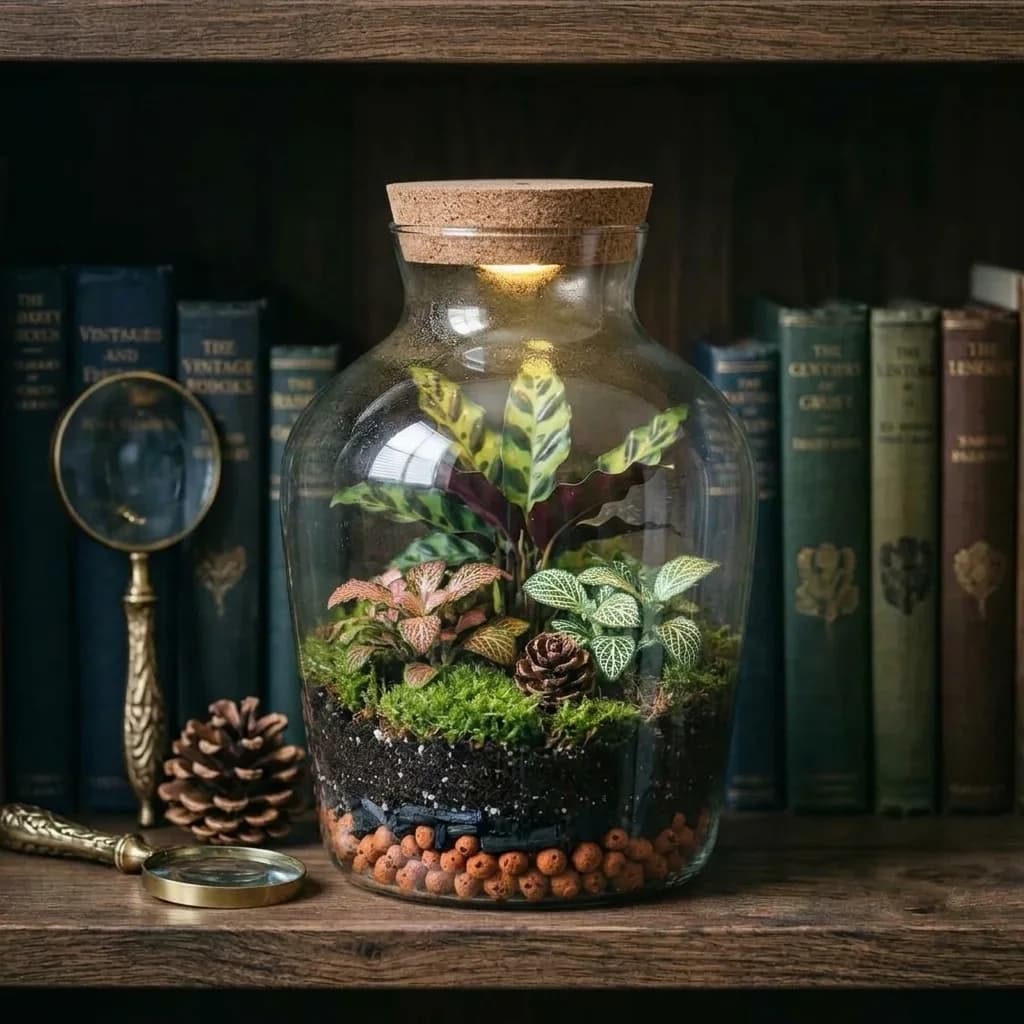
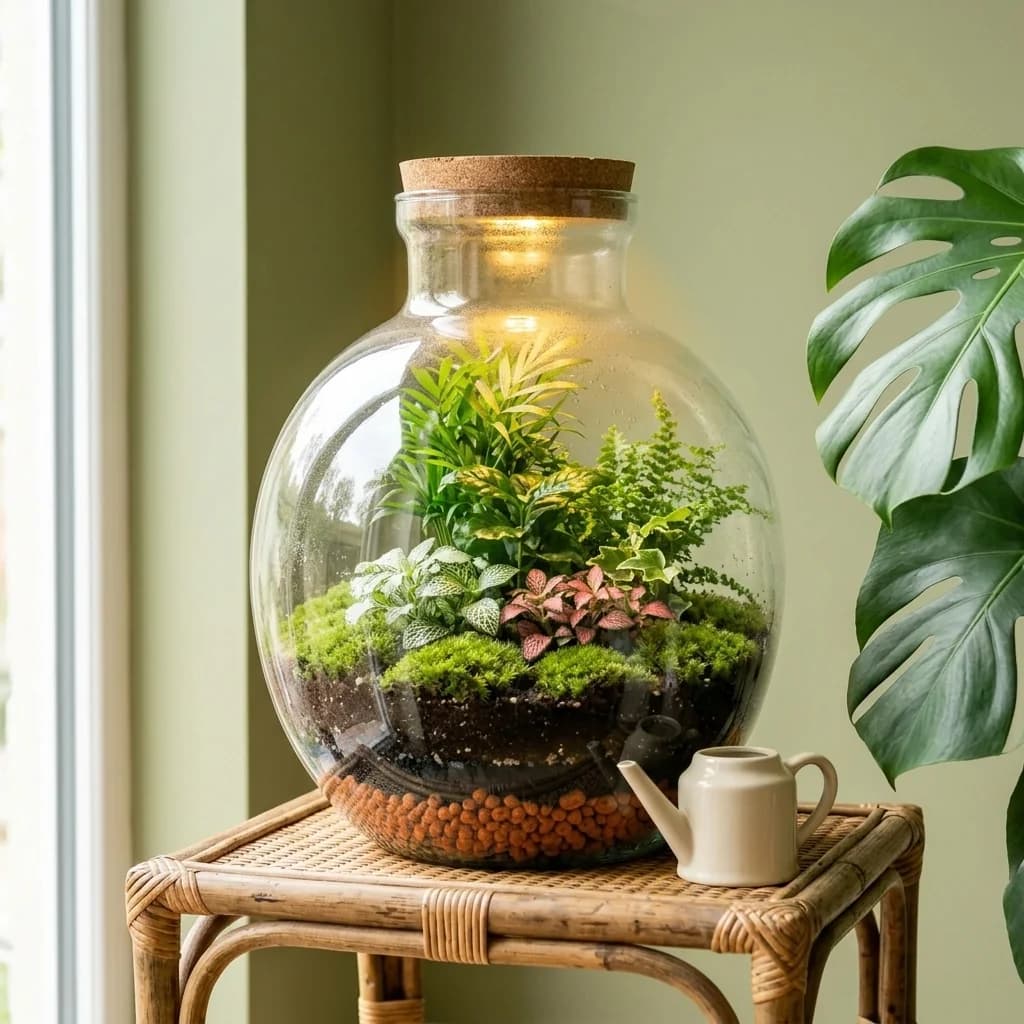
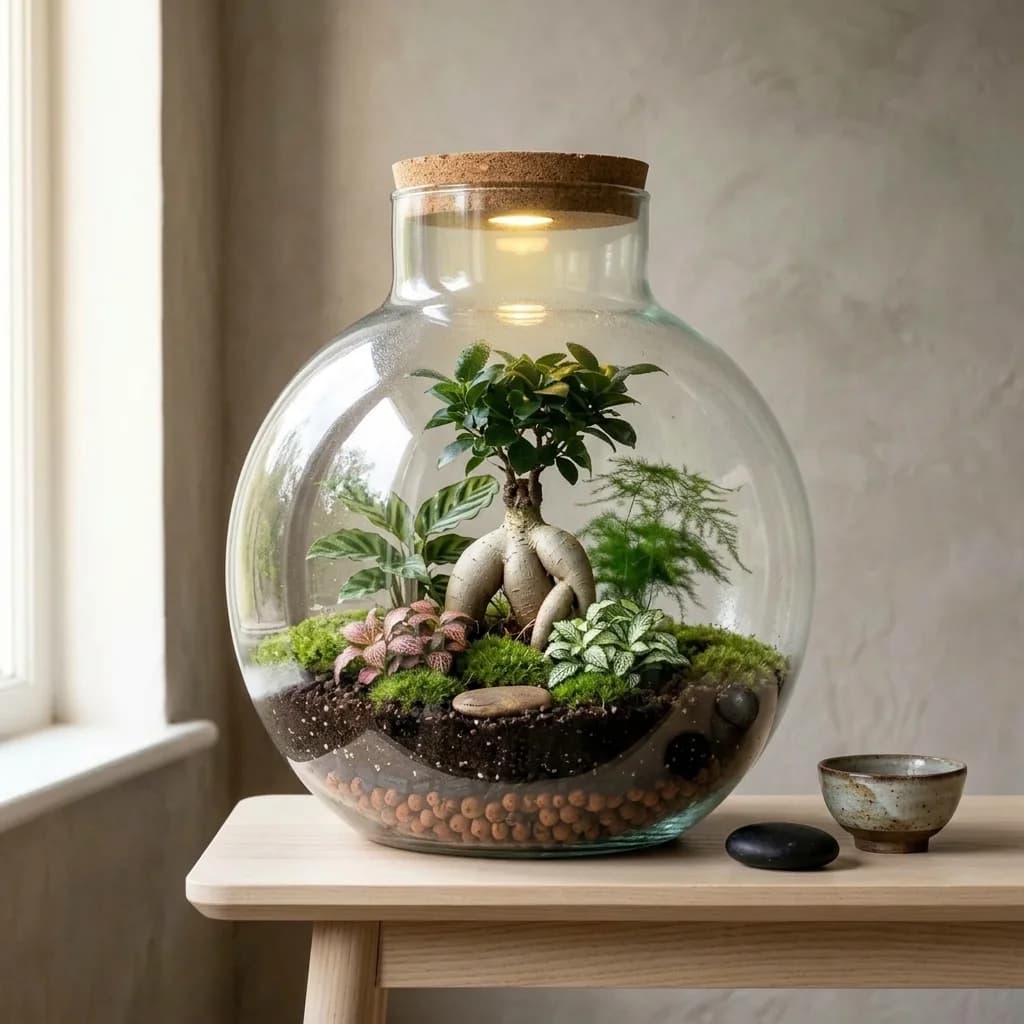


Bioactive terrarium care: soil and microfauna
What should you clean, which litter should you keep and when should you step in? Look after a planted bioactive terrarium without disturbing the decomposers needlessly.
In this guide
Looking after a bioactive terrarium means keeping conditions right for the plants and the decomposers, while taking out whatever the system is no longer handling properly. Soil that looks sterile is not the goal. This guide covers planted setups; vivariums with reptiles or amphibians also need care specific to their occupants.
Observe before you clean
Look at the new shoots, the moisture near the roots and the shelters used by the microfauna. An unusual smell, muddy soil or plants breaking down quickly deserve a closer look. A few decomposers that stay out of sight during the day do not mean the population has gone.
If the system has only just been set up, go back over the steps in the bioactive terrarium. Adding organisms or food all the time makes it harder to follow what is happening.
What should you keep, and what should you take out?
Keep a useful litter layer
Small quantities of suitable leaves, of known origin and untreated, provide shelter and resources. Top the layer up gradually, and only when the litter breaks down and the system needs it. Do not cover the crowns of the plants, and keep part of the substrate visible.
Remove the excess
Take out rotten stems, diseased plants and any food that is piling up. A decomposer is not insurance against every kind of contamination. A healthy leaf that is breaking down and a root ball turning to liquid do not call for the same response.
Water and ventilation: adjust without drying things out
Check the substrate, not just the condensation. If free water gathers, cut back on what you add and take out the excess you can reach. If an area is turning dry, moisten it a little at a time, bearing in mind what the culture needs.
The right amount of ventilation depends on the setup and on the organisms in it. Do not dry the whole jar out abruptly to get rid of a patch of mould: you risk losing plants and microfauna alike. Closing it up more tightly, on the other hand, is not an answer to soil that is already saturated.
Should you feed the springtails?
Look first at the resources already there. In a planted system, debris and microorganisms may be enough; feeding as a matter of course risks building up material that then rots. For a separate culture, apply the protocol for that species. The springtail guide covers their introduction and their limits.
If the population seems to be falling, check moisture, shelter and any treatments before buying another culture. A shortage of food is far from the only explanation.
Mould or gnats: avoid blanket treatment
A patch of mould on a piece of organic matter is no reason in itself to take the whole thing apart. Remove the excess and watch what happens; if the plants are affected, read the guide to mould in a terrarium.
Flying adults call for the fungus gnat diagnosis. Any treatment has to take the microfauna into account. Never pour disinfectant or a household remedy into living soil.
When should you rebuild it?
Persistent saturation, a collapsed structure or several plants beyond saving can justify a rebuild. Correct the cause first, then replace the parts that need it. To choose a suitable mix, see substrates and bioactive; replacing everything once a year is not a target to aim for.
Sources
Frequently asked questions
Should you remove every dead leaf?
No. A small, healthy and suitable litter layer is part of the system. Do remove diseased tissue, excess waste and anything that is rotting quickly.
Can you use an insecticide in a bioactive terrarium?
Not without checking that it suits every organism present and that you are using it as intended. A blanket treatment can also wipe out the useful microfauna; start by identifying the problem.