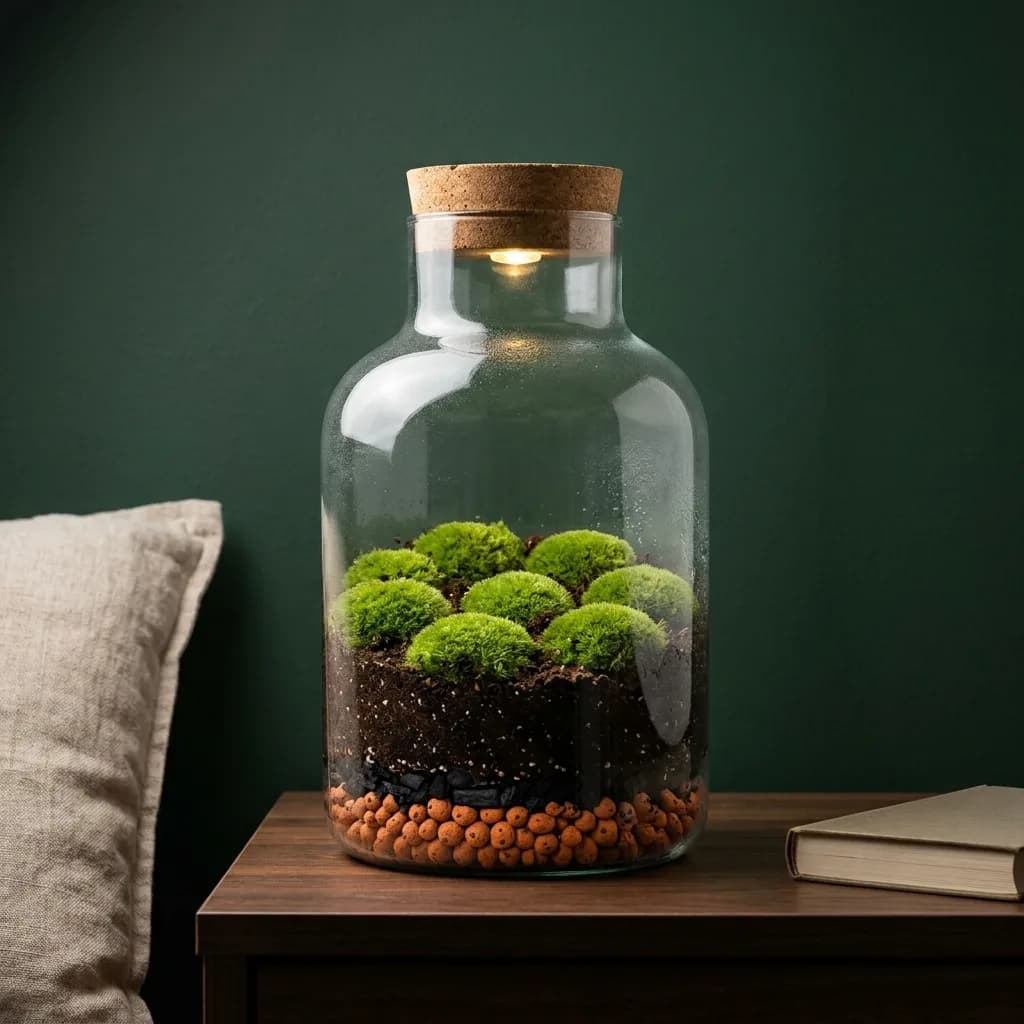
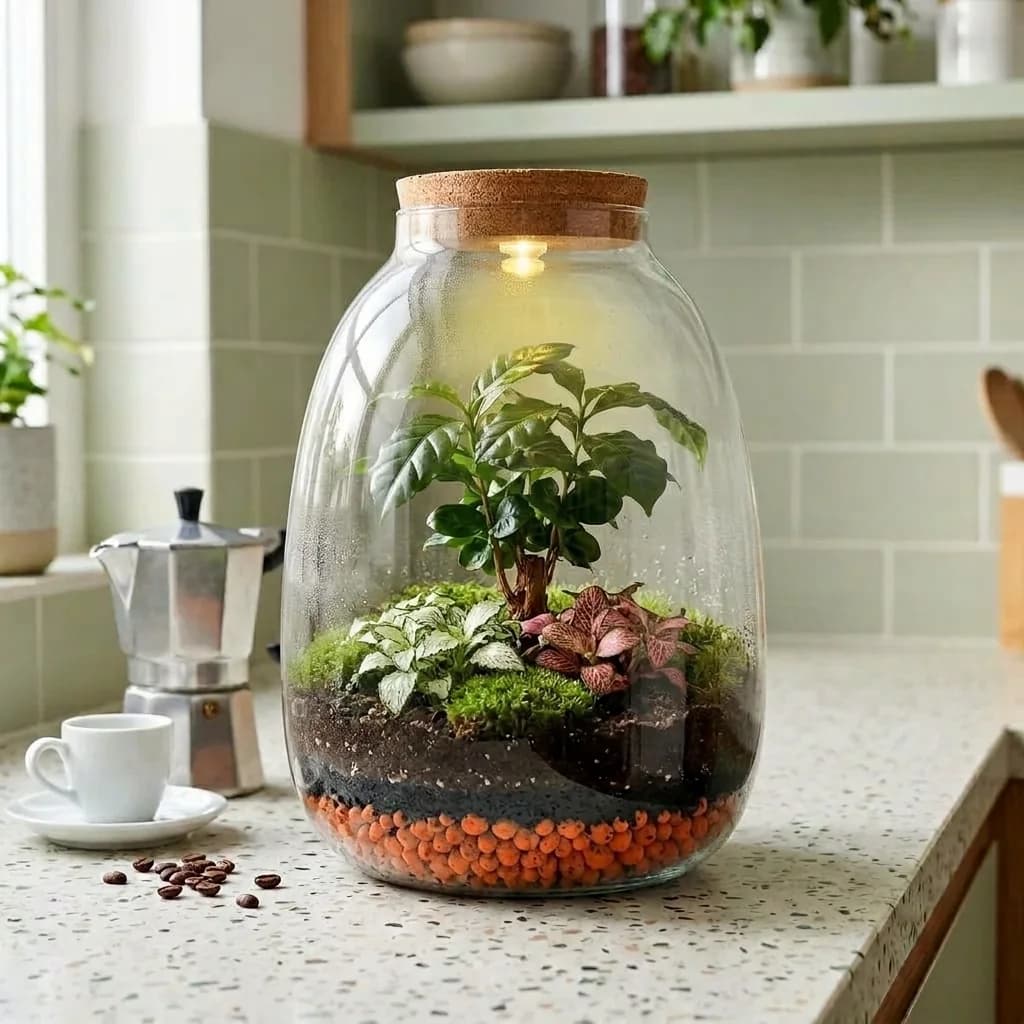
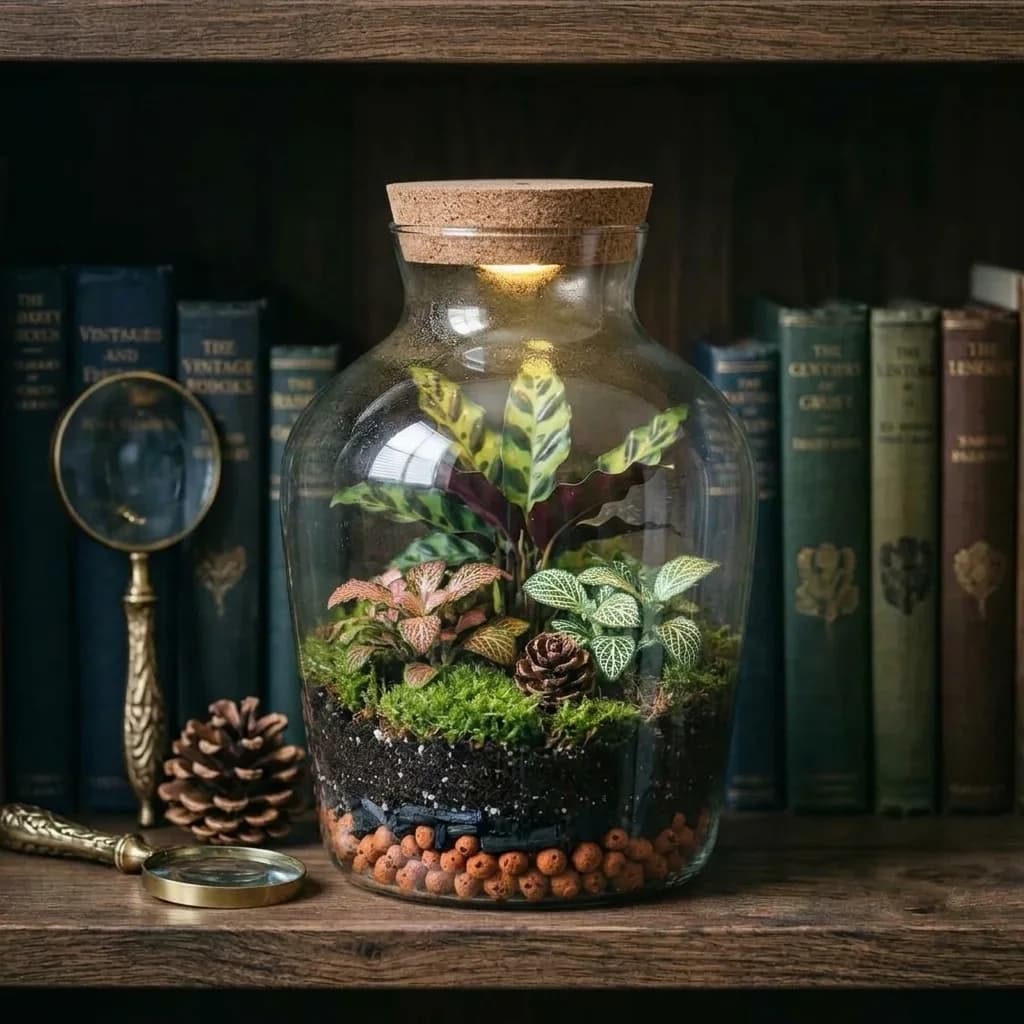


Terrarium condensation: too much mist or not enough?
Light mist, persistent droplets or dry glass: learn to read condensation and adjust the moisture without watering your terrarium blindly.
In this guide
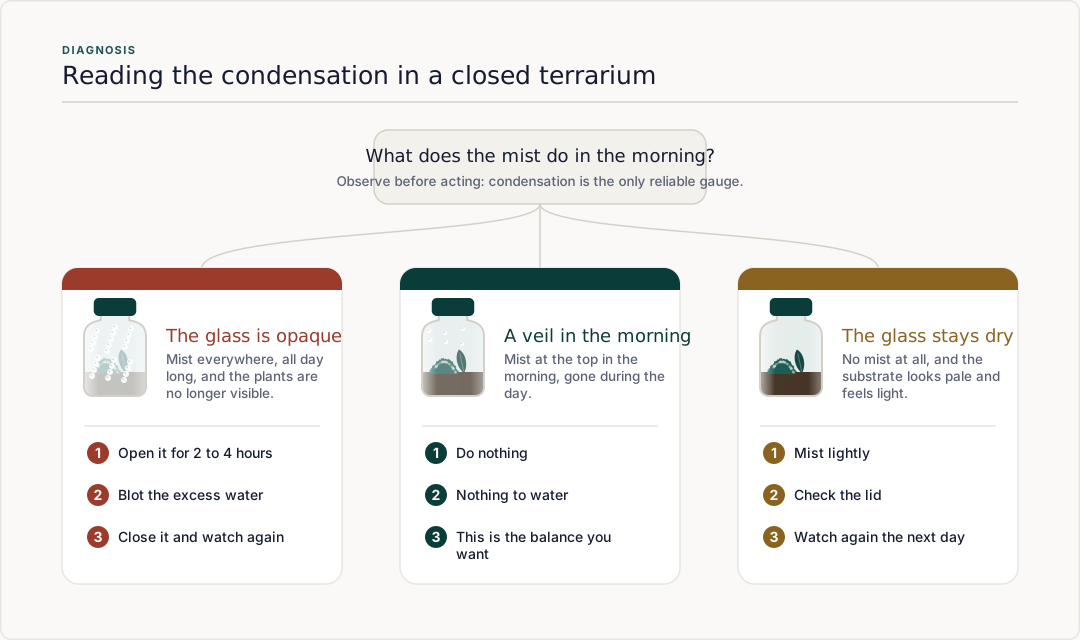
Condensation is water turning from vapour into liquid against a cooler surface. It tells you something about the way water and heat move around the jar, but it does not measure the moisture at the roots. A terrarium with no mist is not necessarily dry, and droplets on their own do not prove that you have watered too much.
Why mist appears and then disappears
Damp substrate and plants release water vapour. Depending on the temperature of the glass and of the air inside, that vapour condenses or stays invisible. A change of temperature in the room can alter the mist without the total amount of water having changed at all.
Look at several moments in the day, then compare days that resemble each other. Do not chase a precise percentage of misted glass: no single rule holds for every container.
Plenty of condensation: what should you check?
Water runs down the glass, but the plants look well
Check the position of the jar and the moisture of the substrate first. If the droplets appear mainly as things cool down and then clear again, avoid changing your watering abruptly. The way a self-sustaining terrarium works explains this recycling of water.
The substrate is soaked, or water is standing
Stop adding water. Open the lid for a while and take out the water you can reach at the bottom with a pipette, without digging through the roots. Close it again, then check once more. Never put the jar in the sun to speed up drying: the heat can damage the plants.
If water is already standing at the bottom and the leaves are going soft, follow the steps in terrarium too wet instead. If a smell or a fuzzy growth comes with the problem, read the guide to mould in a terrarium. Correcting the water will not repair a plant that has already rotted.
No condensation: should you water?
Not automatically. Touch a part of the substrate you can reach, or use a clean stick, rather than judging by the surface moss alone. Look at the state of the plants and at the way the lid sits, too.
- Damp substrate and firm leaves: wait and watch.
- Dry substrate near the roots and drooping leaves: rehydrate gradually.
- Damp substrate and limp leaves: look for another cause before adding water.
The guide to how much and how often to water sets out the method. Write down what you add, so that you do not make the same correction twice in one day.
The right method: one change at a time
After moving the jar or airing it briefly, give it time to settle back to its usual conditions. Then assess the substrate and the plants. If you change light, water and lid all at once, it will be hard to tell what helped.
A white deposit that stays on the glass once it is dry may be a mineral mark rather than condensation. Wipe it gently during a maintenance session, without pouring any product into the substrate.
For a suitable lid and easy observation, see the glass containers. Replacing the jar is only worth doing if its shape or its closure prevents the care the plants need.
Sources
Frequently asked questions
Should you wipe the mist away every morning?
No. Passing condensation is part of how the jar works. Wipe it to clean or to see inside, not to keep the glass artificially dry.
Is a terrarium without mist dead?
No. Check the plants and the moisture of the substrate. An even temperature can make condensation hard to see.