Terrarium infographics
Six diagrams to understand a closed terrarium at a glance. Reuse them on your website, your blog or in class, for free, on one condition: credit Small Eden with a link.
The infographics
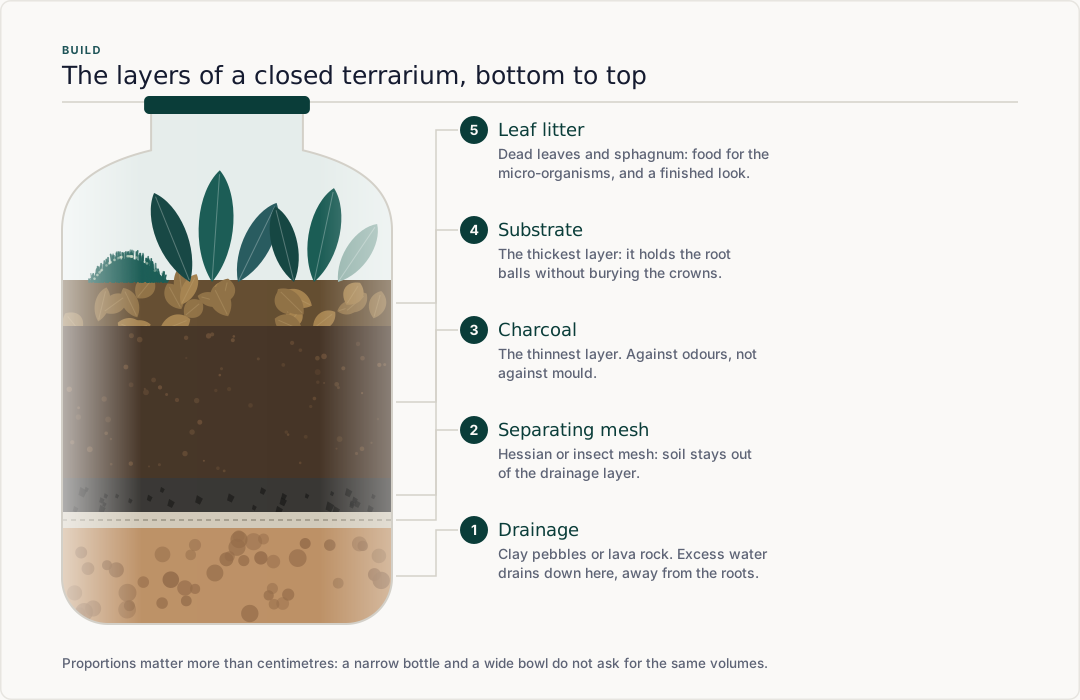
The layers of a closed terrarium
Cross-section of a closed terrarium: drainage, separating mesh, charcoal, substrate and leaf litter, bottom to top.
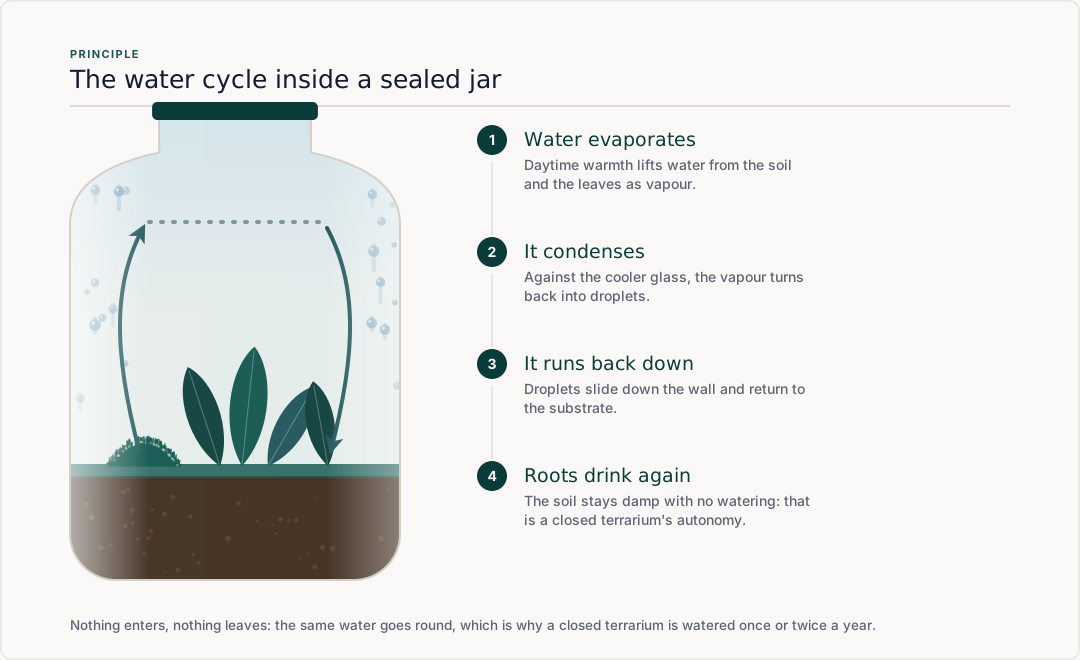
The water cycle in a sealed jar
The water cycle inside a sealed jar: evaporation, condensation on the glass, return to the substrate, uptake by the roots.
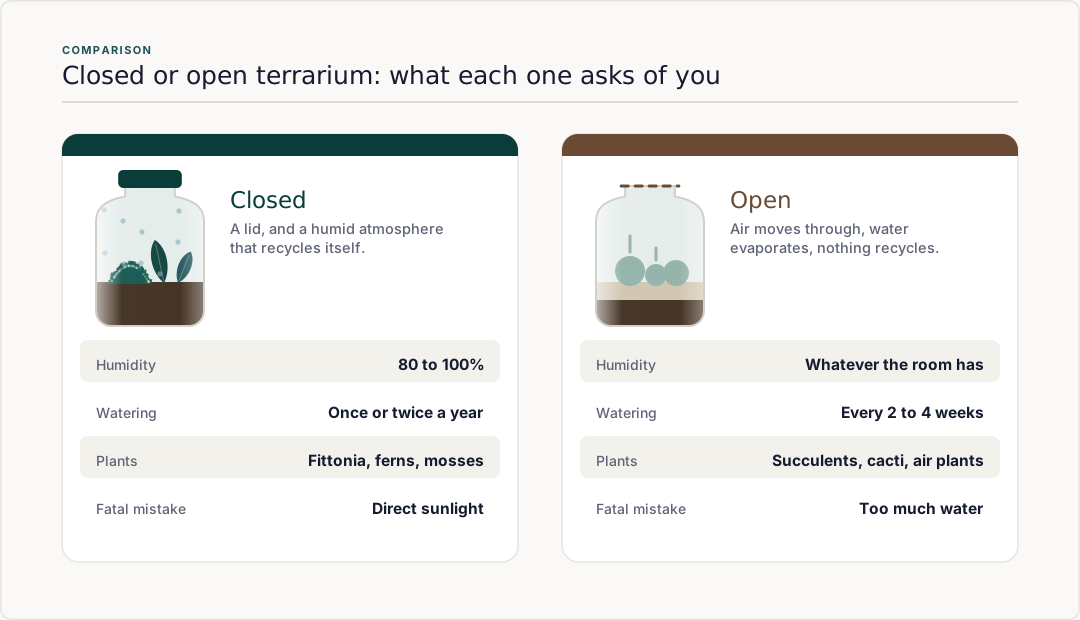
Closed or open terrarium: the differences
Closed and open terrariums compared: humidity, watering frequency, suitable plants and the fatal mistake.
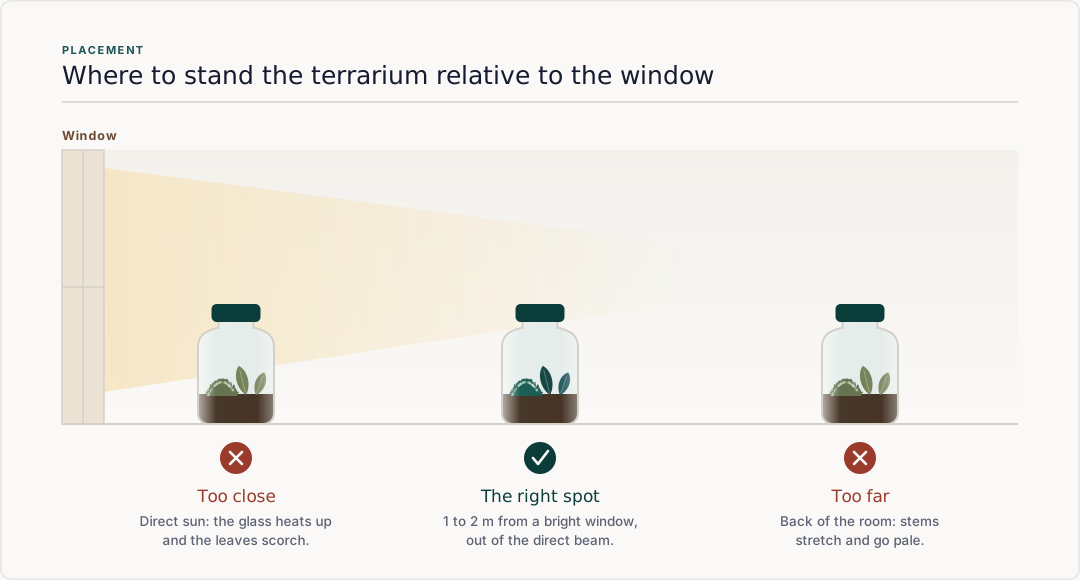
Where to place a terrarium relative to the window
Three positions for a terrarium relative to a window: too close, the right spot at one to two metres, and too far.
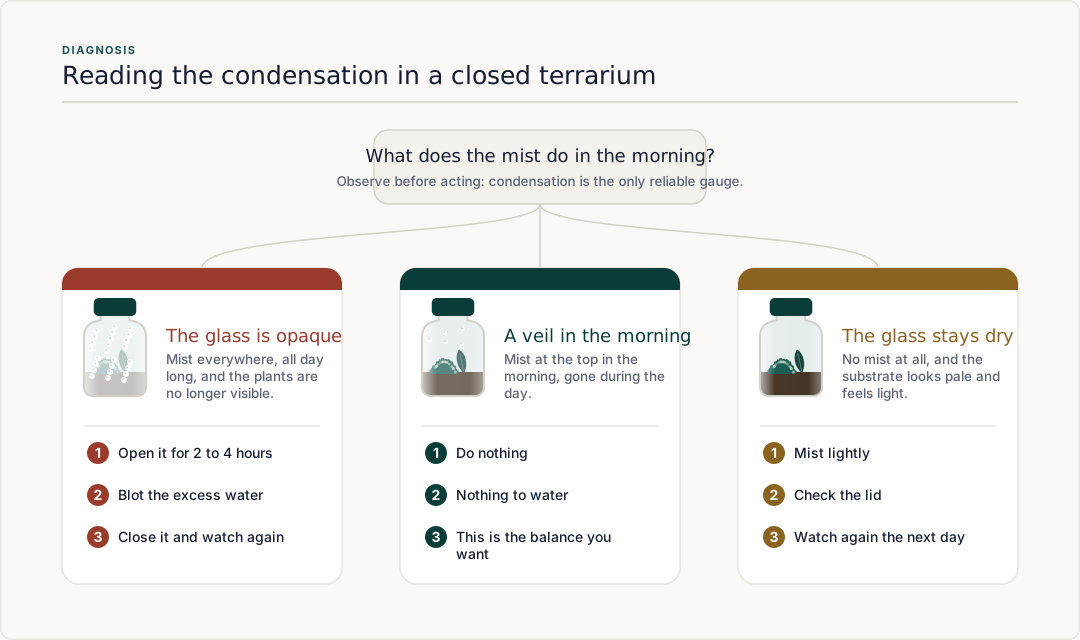
Condensation in a terrarium: what to do
Decision tree on the condensation in a closed terrarium: opaque glass, a morning veil, or dry glass, and what to do in each case.
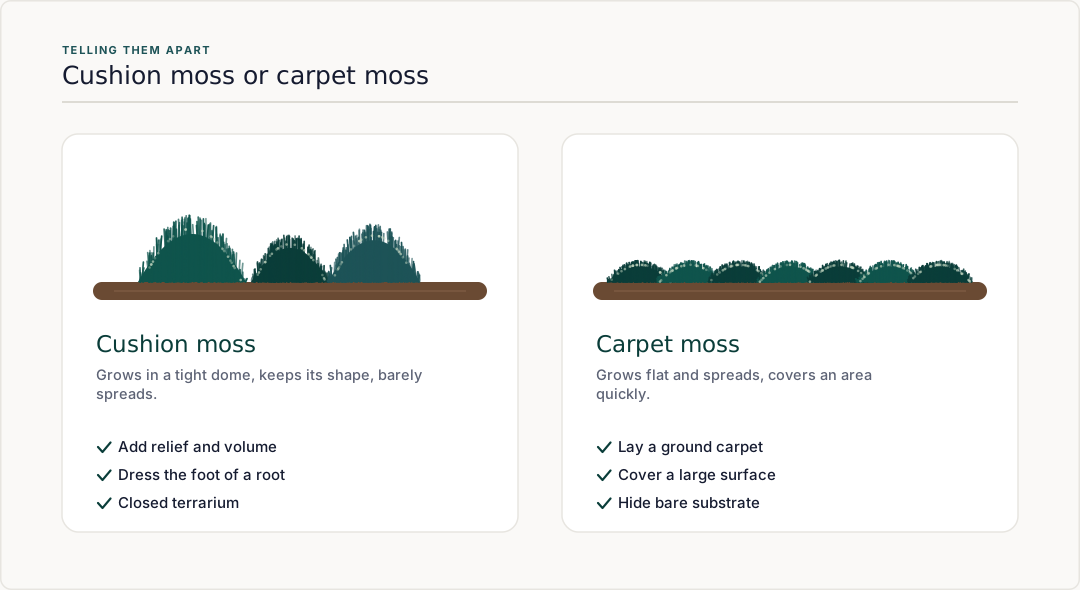
Cushion moss or carpet moss
Cushion moss, in a tight dome, and carpet moss, which spreads flat: the habit and use of each.