

Cushion moss or sheet moss: which should you choose?
Two mosses, two uses. Relief against surface, speed of establishment, requirements and pairings: the comparison for composing a terrarium floor well.
In this guide
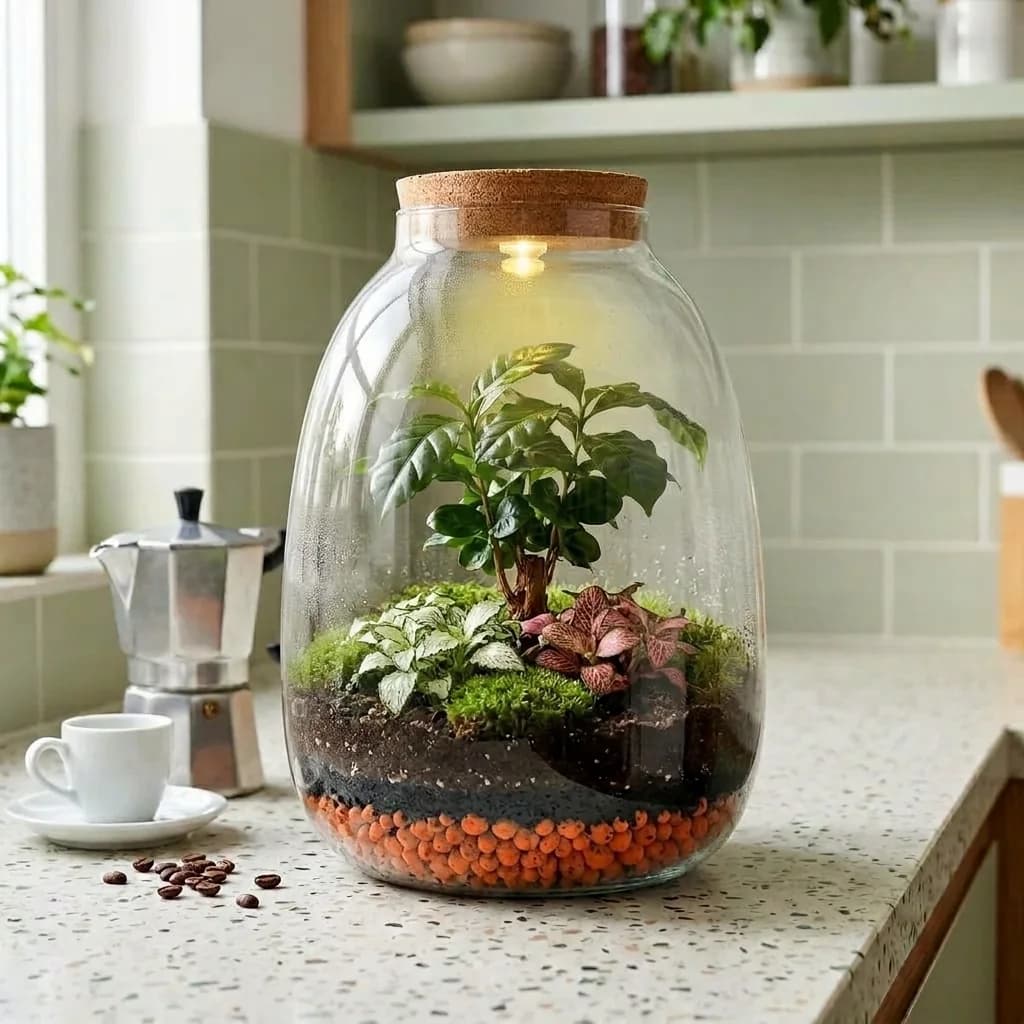
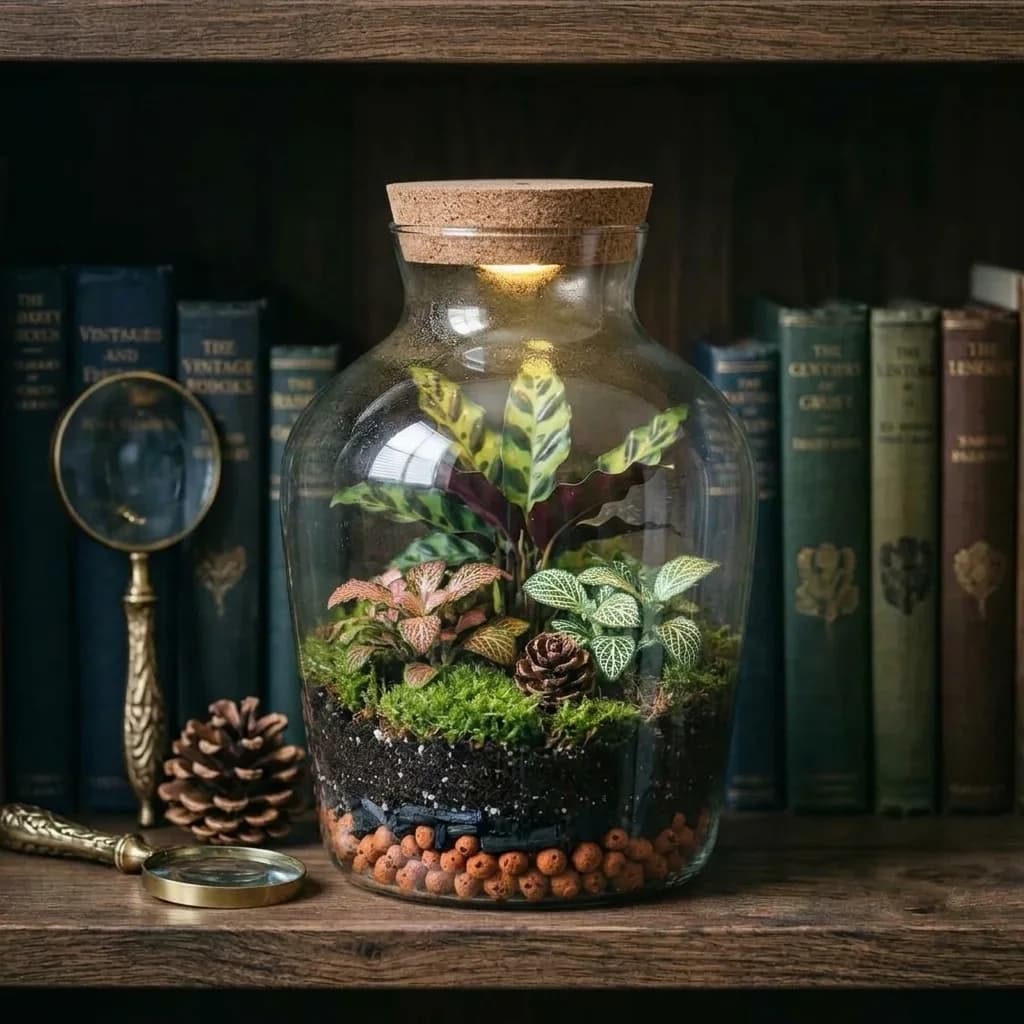
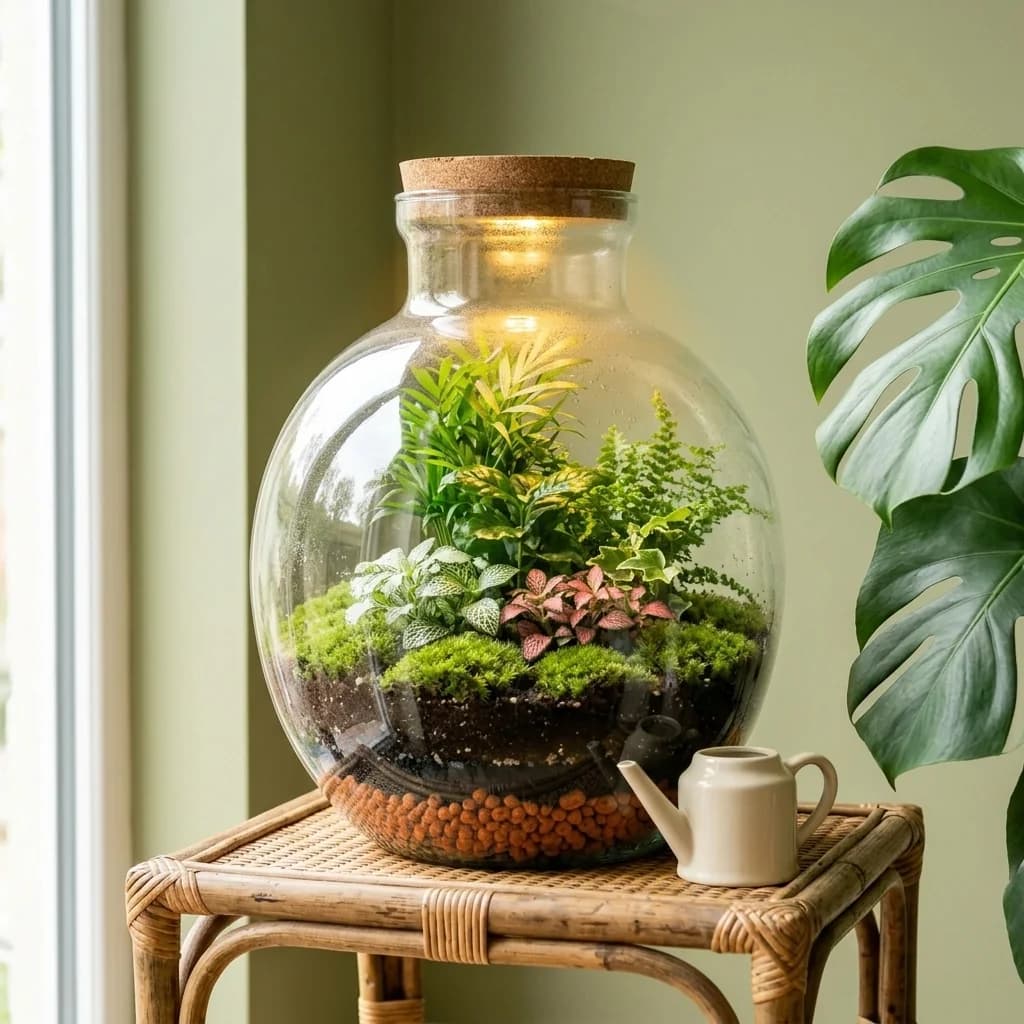
Sheet moss makes the floor: it spreads, covers quickly, and gives the continuous surface that makes a terrarium look finished. Cushion moss makes the relief: it forms dense domes that stand in for hills and give depth. They do not replace each other — in a container of 20 cm and up, the right answer is to use both.
The comparison
| Cushion moss | Sheet moss | |
|---|---|---|
| Common genus | Leucobryum | Hypnum and relatives |
| Shape | Rounded, dense domes | Soft, spreading carpet |
| Role | Relief, high points | Continuous floor, surfaces |
| Speed of establishment | Slow | Faster |
| Coverage | Local | Wide |
| Light requirement | Moderate | Moderate |
| Tolerance of standing water | Low | Low |
| Ideal for | Containers of 20 cm and up | Every format |
Cushion moss
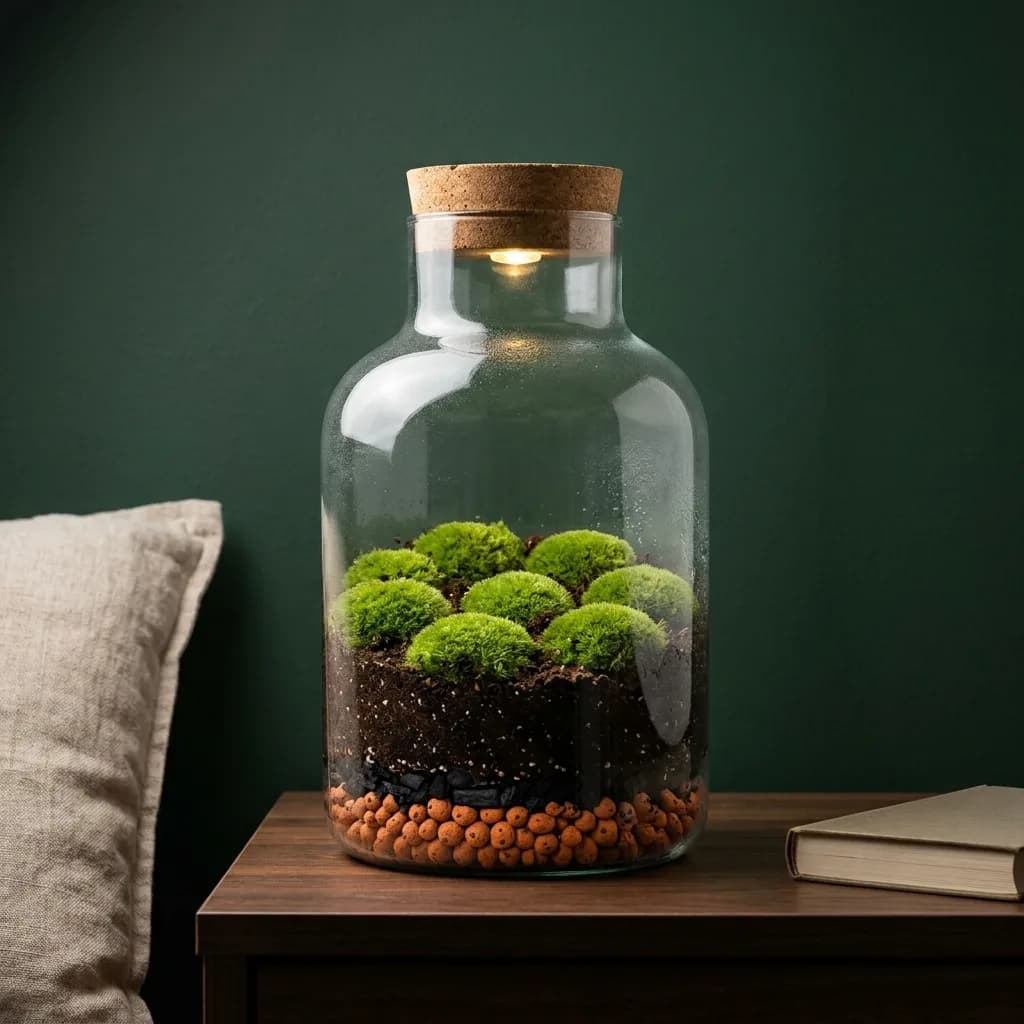
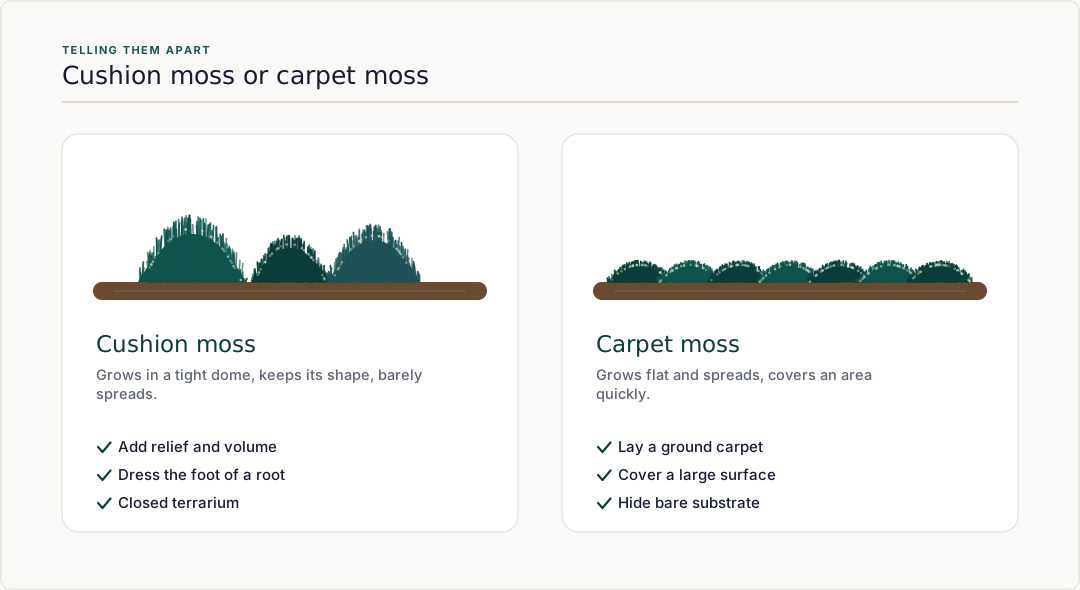
It grows in tight domes, a pale green with a slight silver cast when the surface dries. Its density is what makes it interesting: set on a mound of substrate, it immediately gives the illusion of a mossy hill seen in miniature.
Its use: to mark high points, underline a piece of relief, set a foreground in front of a root. It is used in touches, not as cover.
Its constraint: it is slow. It keeps its shape and grows very little. It also needs good contact at the base, or it lifts away — hence the importance of the technique described in How to lay moss in a terrarium.
Mind the format: a 6 cm cushion in a 12 cm jar flattens the sense of scale. Keep it for containers of 20 cm and up.
Sheet moss
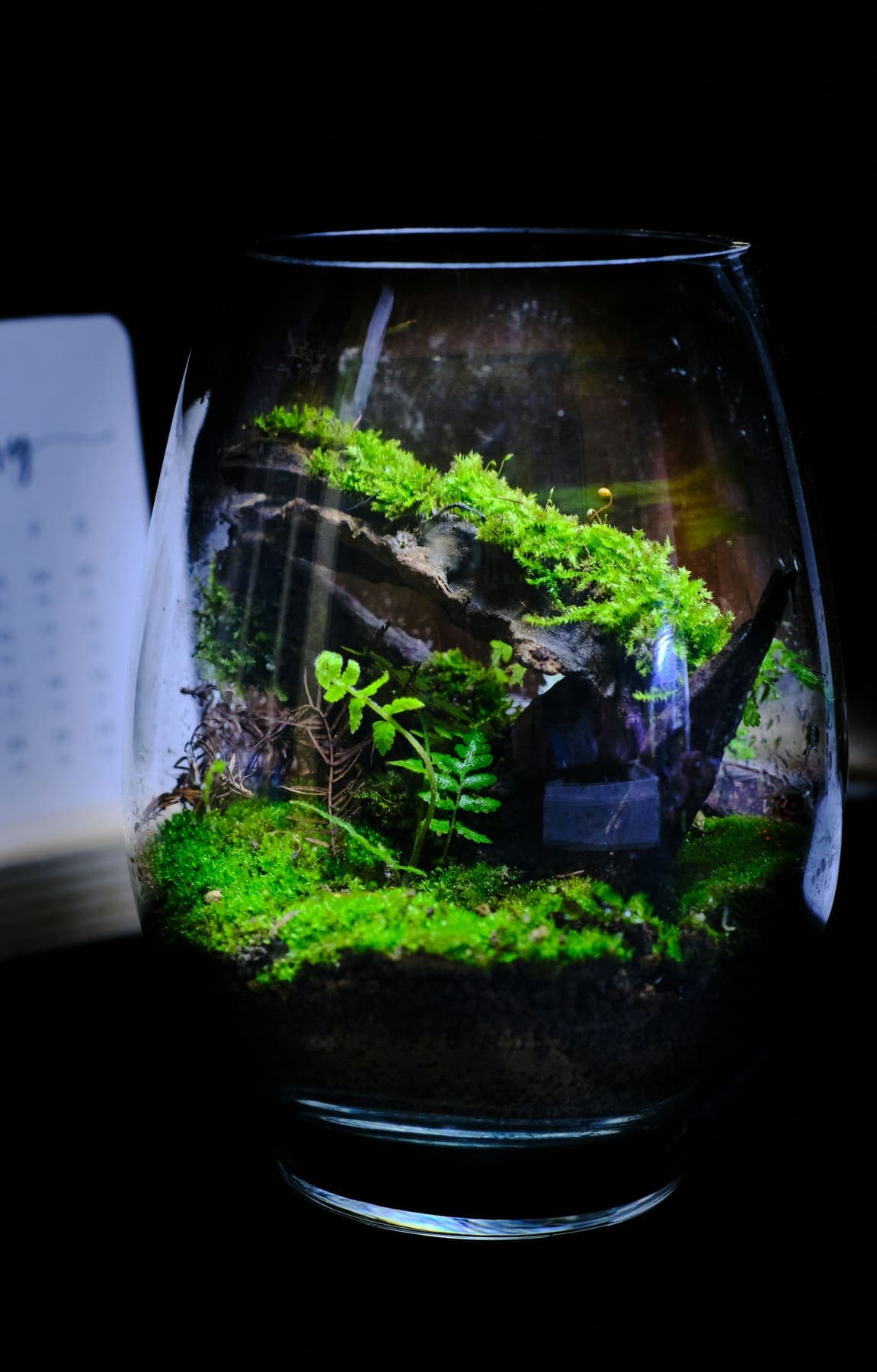
It spreads as a soft, thinner carpet in a clear green. This is what gives you the floor: the continuous surface on which everything else visually rests.
Its use: to cover, to tie things together, to hide the edges of root balls, to close up a composition.
Its advantage: it establishes and spreads faster than a cushion. Within two to three months the joins between pieces disappear and the carpet becomes continuous. It is also the one that multiplies best from fragments — see Growing moss in a terrarium.
Its limit: on its own it gives a flat floor. Without relief, a terrarium soon looks monotonous.
The mossy stone
A third option, often forgotten: a stone already covered in moss. It brings ready-made relief without having to build a mound of substrate, and it is stable — it will not lift away.
It does not replace a floor moss: it sits on a carpet of sheet moss, as a piece of hardscape. It is the quickest trick for giving volume to a flat composition.
How to combine them
The composition that works, in a container of 20 to 25 cm:
- Sheet moss over the whole visible surface of the substrate, cut to follow the edges;
- Two or three cushions set on mounds, never lined up or evenly spaced — nature does not do symmetry;
- A mossy stone as a high point, if the composition lacks volume.
Always leave a small area of substrate visible, usually at the front: it lets you keep an eye on the moisture, and it gives the eye somewhere to rest.
What they have in common
Both ask for exactly the same conditions, and both fail for the same reasons:
- indirect light every day, without which they pale and then brown;
- high humidity, so a closed terrarium;
- firm contact with the substrate when laid;
- no standing water, which rots them from underneath.
The symptoms and their causes are set out in Moss turning brown in a terrarium.
In short
Small container, under 20 cm → sheet moss alone.
Container of 20 cm and up → sheet moss as the floor, cushions for relief.
A composition that looks flat → add a mossy stone before you add more plants.
The species are covered in detail in Mosses for terrariums, and our selection is on the mosses shelf.
Sources
Frequently asked questions
Can cushion moss and sheet moss be mixed?
Yes, and it is in fact the best composition: the sheet moss makes the continuous floor, the cushions mark the high points. That is what gives a convincing woodland look.
Which one establishes fastest?
Sheet moss. It spreads and covers more quickly, whereas a cushion keeps its shape and grows slowly.
Which moss suits a very small terrarium?
Sheet moss: in a jar of 10 to 15 cm, a cushion takes up too much room and flattens the sense of scale. Keep cushions for containers of 20 cm and up.
Does a mossy stone replace both?
It brings ready-made relief, which saves time, but it does not cover the ground. It combines with a sheet moss, it does not replace one.