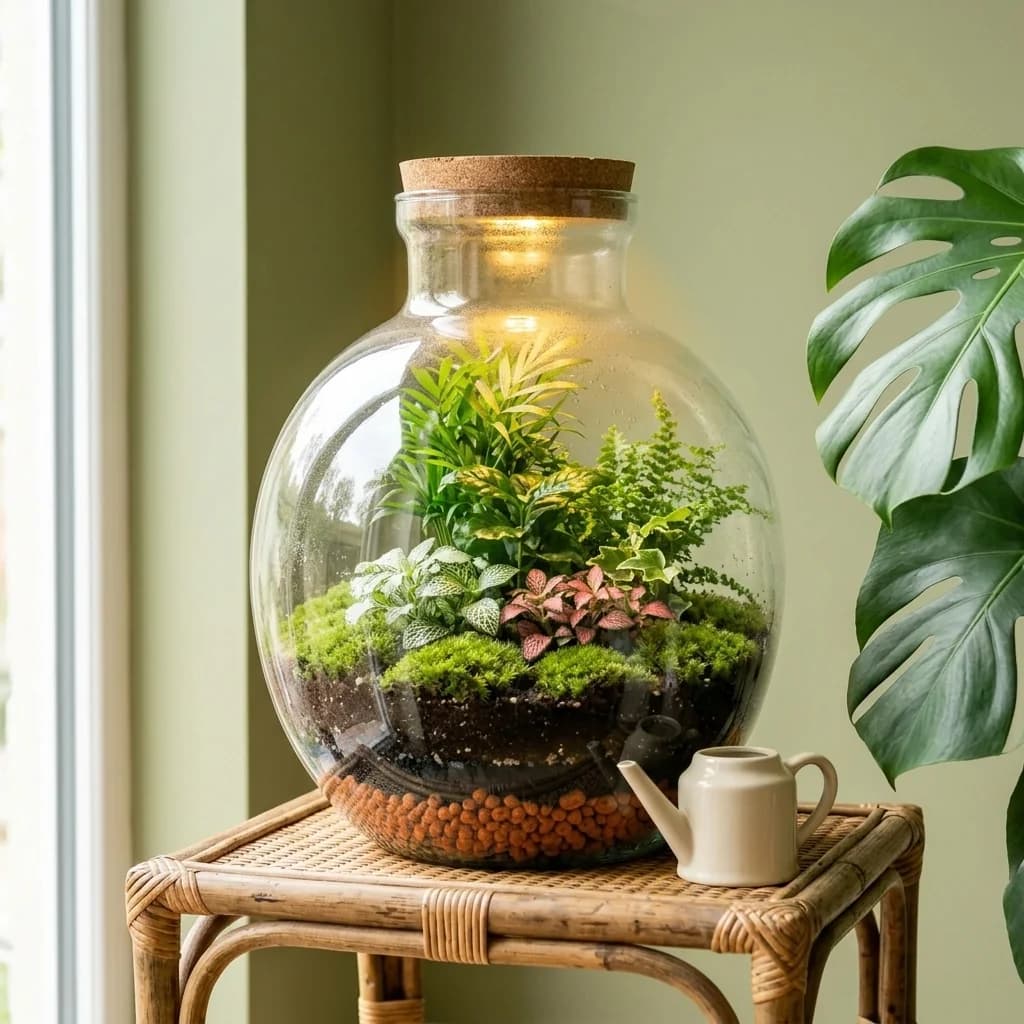
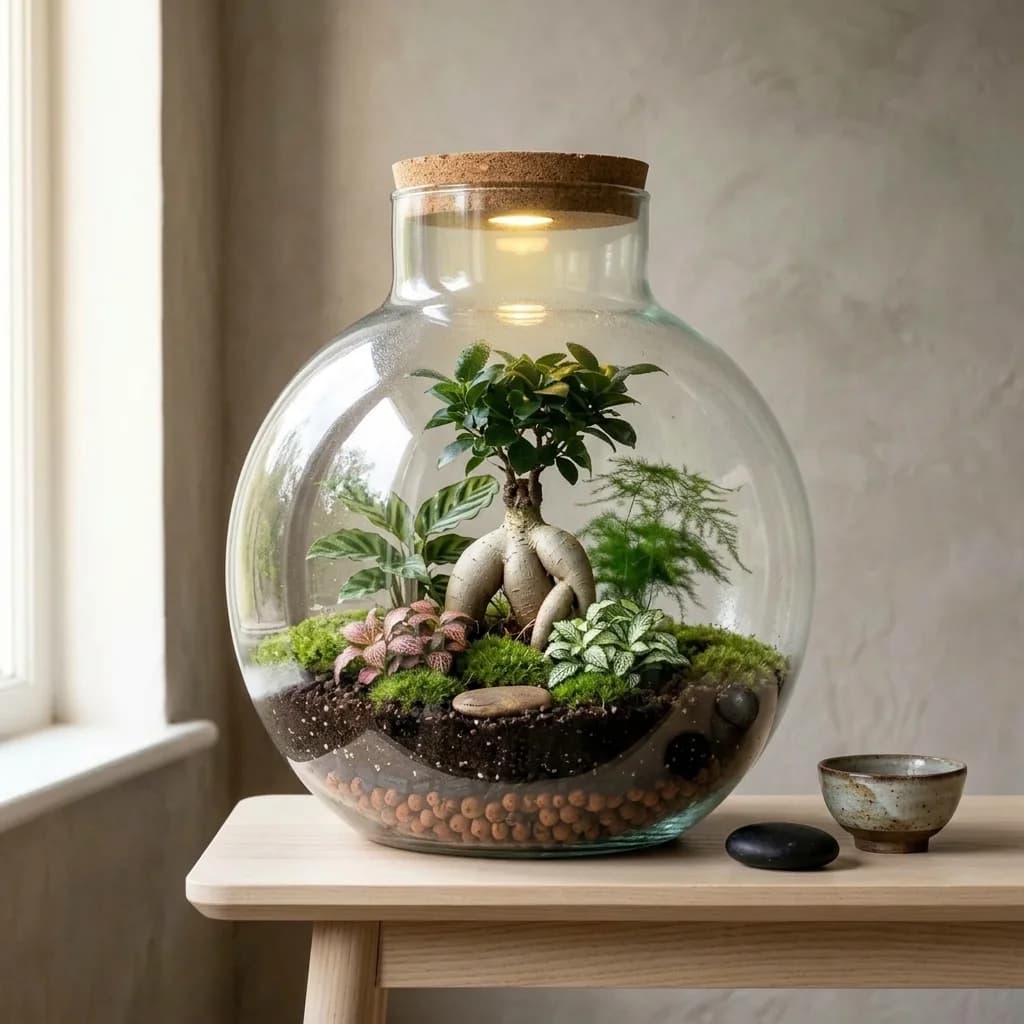


Fittonia in a terrarium: the complete guide
Light, humidity, substrate, pruning, leaves that flop: everything you need to grow a fittonia under glass, the most widespread terrarium plant of all.
In this guide
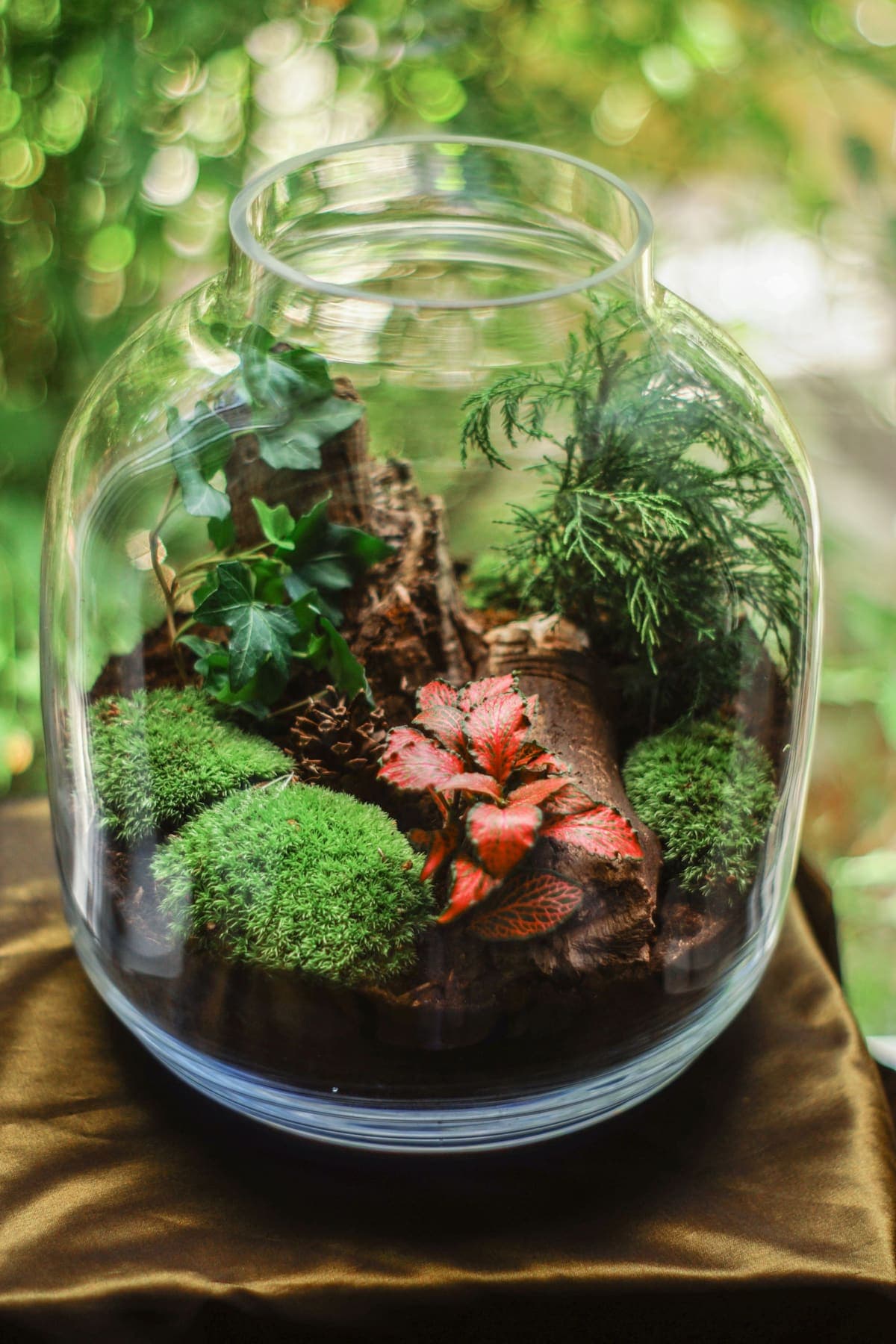
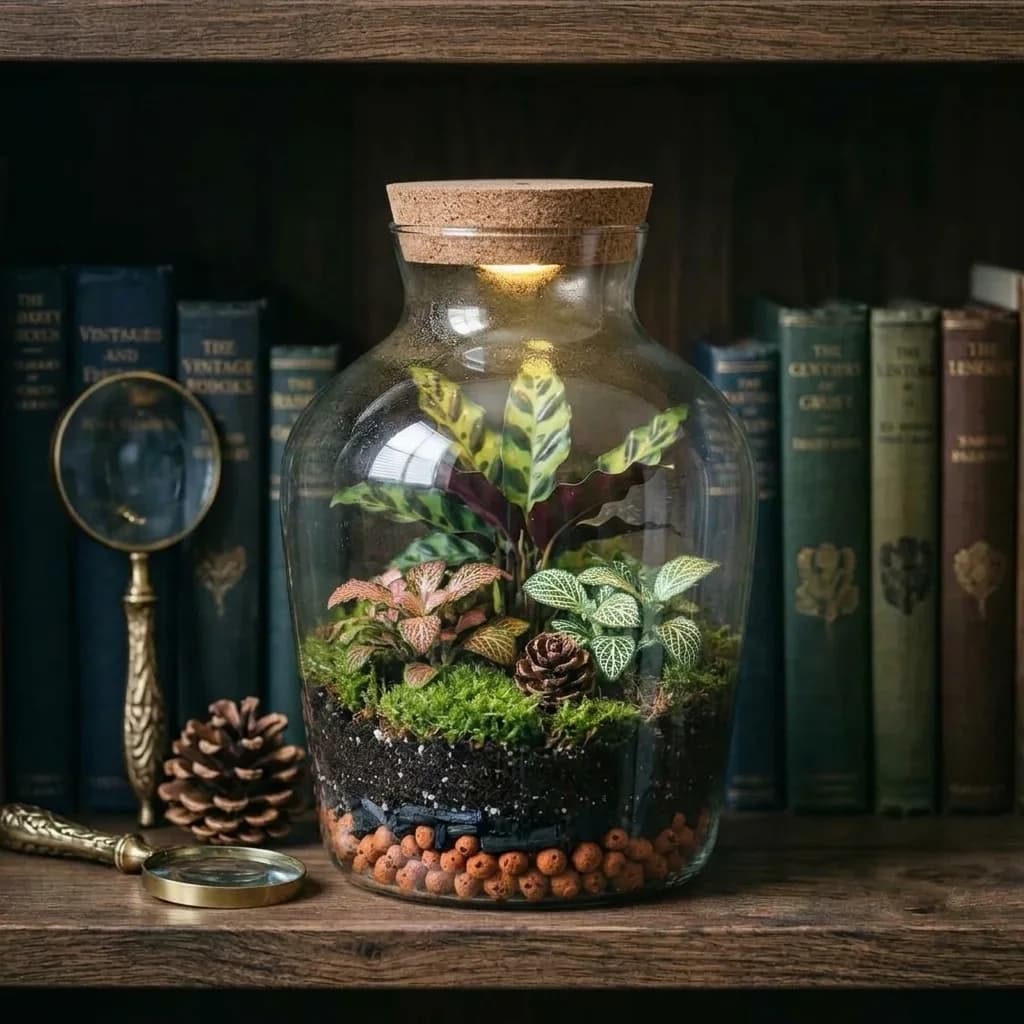
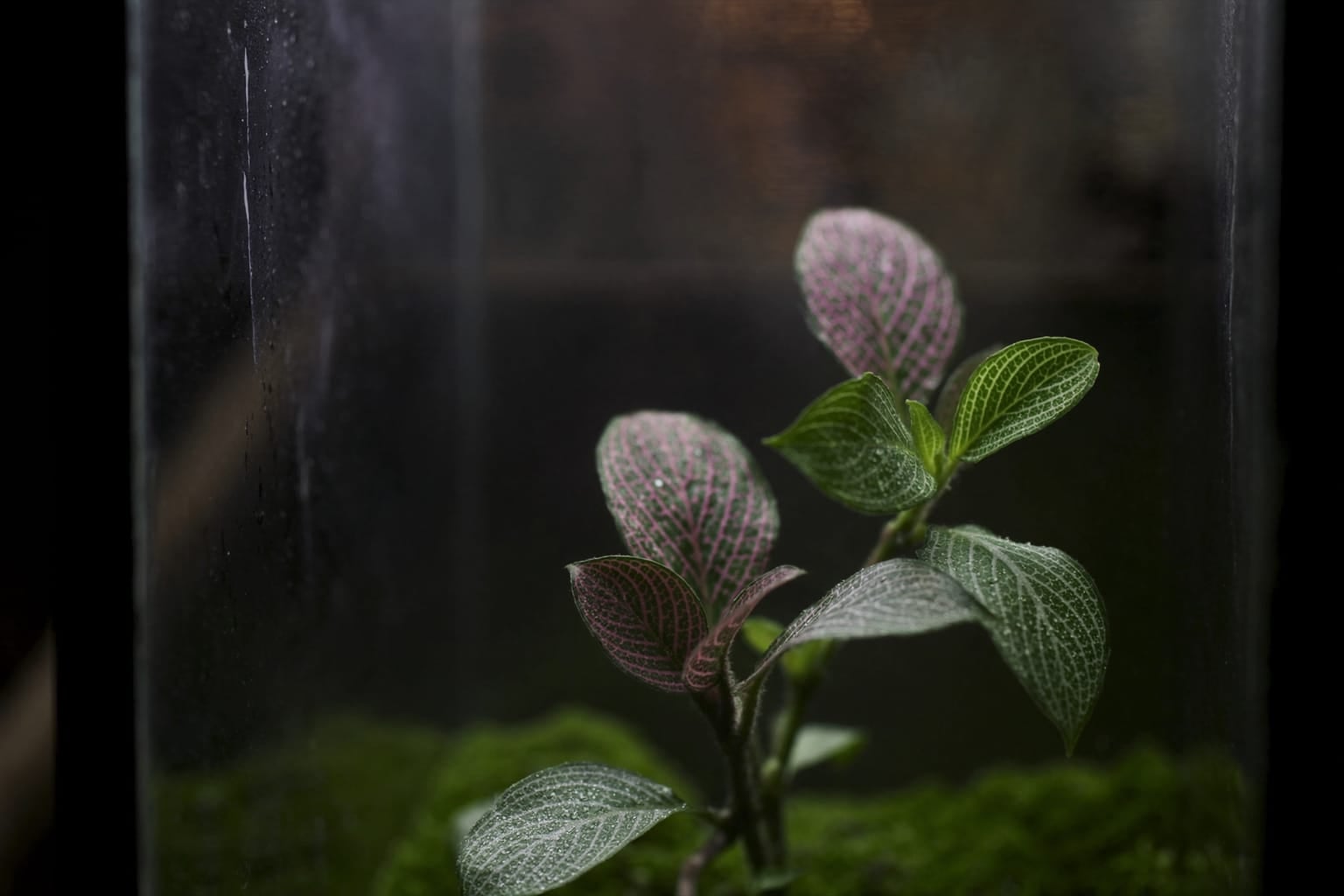
Fittonia is the terrarium plant par excellence: it stays small, it likes bright shade and air saturated with moisture, and its foliage, veined in white or pink, immediately gives a green composition a point of colour. Above all it has one rare quality: it warns you. When it runs short of water, its leaves flop within a few hours and lift again once watered. In a closed terrarium, that makes it a living gauge.
At a glance
| Botanical name | Fittonia albivenis |
| Other names | Fittonia, nerve plant, mosaic plant |
| Origin | Damp forest floors of South America |
| Adult size under glass | 10 to 15 cm tall, 15 to 20 cm across |
| Growth | Fast |
| Closed terrarium | Yes, its ideal place |
| Open terrarium | Not advised, unless misted daily |
| Light | Bright but indirect, never direct sun |
| Humidity | High, 60% and above |
| Temperature | 18 to 26 °C, with no cold draught |
| Difficulty | Easy under glass, demanding in open air |
Why it does so well under glass
Fittonia grows naturally on the floor of humid tropical forests, under the tree canopy. There it receives only filtered light, and the air stays loaded with moisture all year round. A closed terrarium reproduces both conditions effortlessly: the condensation keeps the humidity up, and the glass diffuses the light.
That is exactly what makes it difficult in an ordinary pot. In a heated living room the air often drops below 40% humidity, and fittonia wilts as soon as you forget it for a day. Many people think it is fragile: it is simply badly housed.
Light: bright, never direct
Put the terrarium near a bright window, but out of the sun's beam. Behind south-facing glass the temperature inside climbs very quickly and the leaves scorch within hours — dry brown patches appear on the upper leaves first.
Too little light, on the other hand, stretches the stems and fades the coloured veins, which are the whole point of the plant. An east or north-east aspect suits it well. In a dark room, a small grow lamp placed at a distance, six to eight hours a day, stands in for the window.
Substrate and planting
Fittonia needs a mix that holds a little moisture without ever staying waterlogged. An airy tropical terrarium substrate based on coir, fine bark and perlite does the job.
When planting, rinse the root ball in lukewarm water to wash off the nursery compost: it holds too much moisture for an enclosed environment and it is often what triggers the first mould. Ease the roots apart gently, plant without burying the crown, firm with a fingertip and mist.
Allow one to three plants in a 20 cm container, keeping room for moss on the ground. The full build is set out in How to create a closed terrarium.
Watering: let the terrarium do the work
In a balanced closed terrarium there is almost nothing to do. The water travels in a loop, and fittonia finds what it needs. You only step in when the condensation disappears from the glass for any length of time and the substrate goes pale on the surface: a few mists are then enough.
The reflex to avoid is the precautionary watering. A terrarium has no drainage hole: every drop you pour in stays there. The detail of quantities and timing is in Watering a terrarium.
Pruning, and why it matters
Fittonia grows fast. Without pruning it covers its neighbours within a few months and presses against the glass, where the stagnant damp rots the leaves at the point of contact.
Pinch the stems just above a pair of leaves with fine scissors, two or three times a year. The plant branches and thickens instead of running. Take off every yellowed or damaged leaf in the same pass: a dead leaf left in an enclosed environment feeds mould.
The three common problems
Leaves flopped, substrate dry. That is thirst, and it is reversible. Mist the plant and it will lift again the same day. If it has not recovered within twenty-four hours, look at the roots.
Soft, browned leaves, soaked substrate. That is too much water, and more serious. Open the terrarium for a few hours a day until the condensation becomes light again, remove the affected parts, and stop watering. See Why my terrarium plants are dying.
Dry brown leaf edges. Air too dry, or direct sun. Check that the terrarium closes properly and move it away from the exposed pane.
What to pair it with
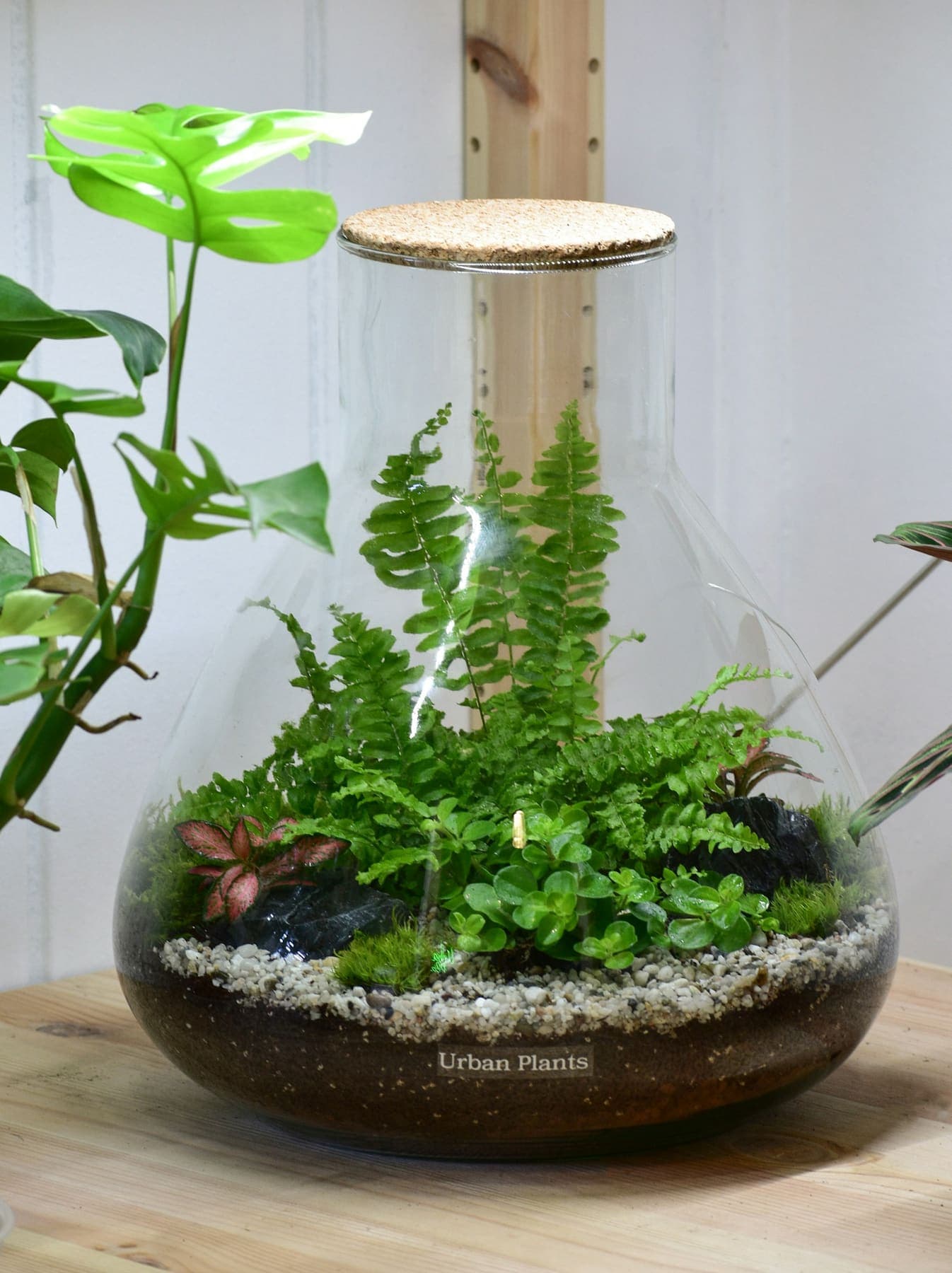
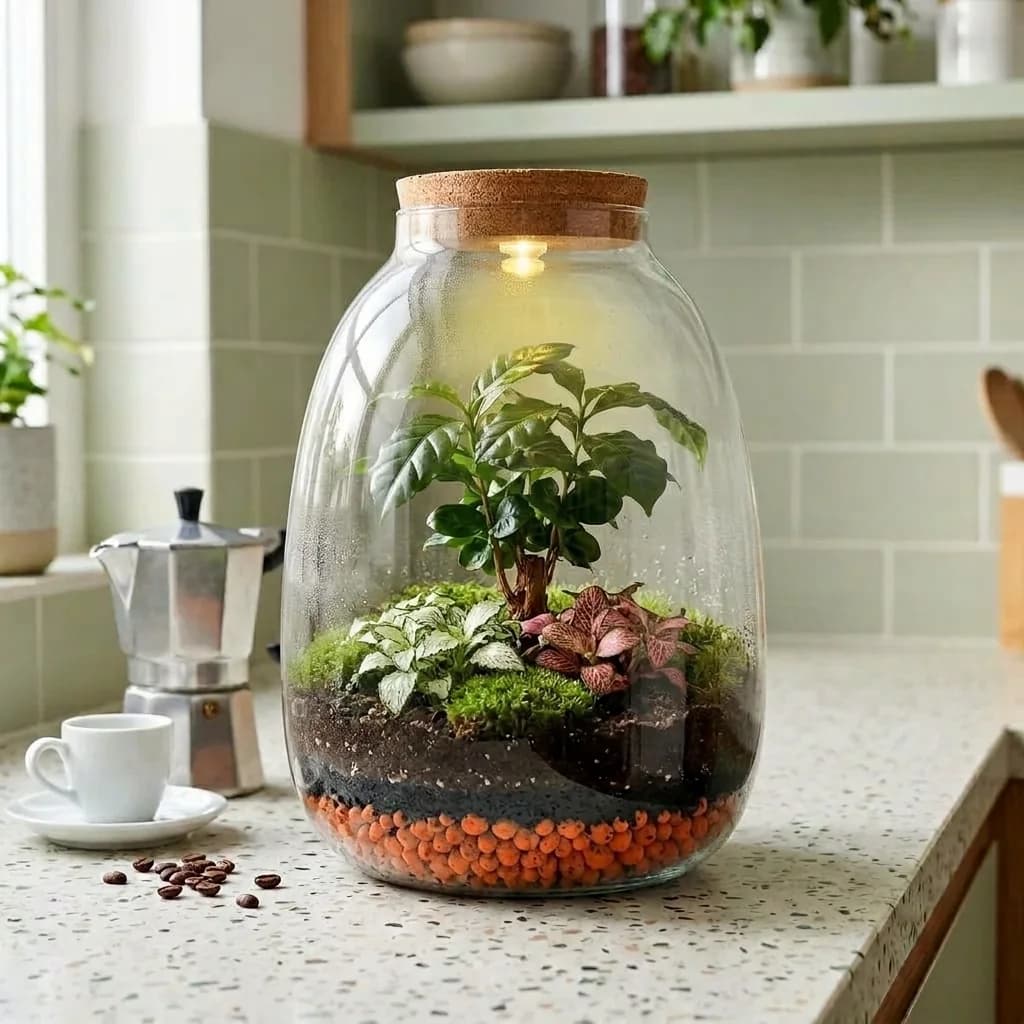
Fittonia gets on with every woodland-floor plant that asks for the same humidity: creeping fig for cover, selaginella for texture, peperomia for bulk, a small fern for the vertical. Our full selection is in Which plants for a terrarium, and the tropical plants shelf gathers the ones we stock.
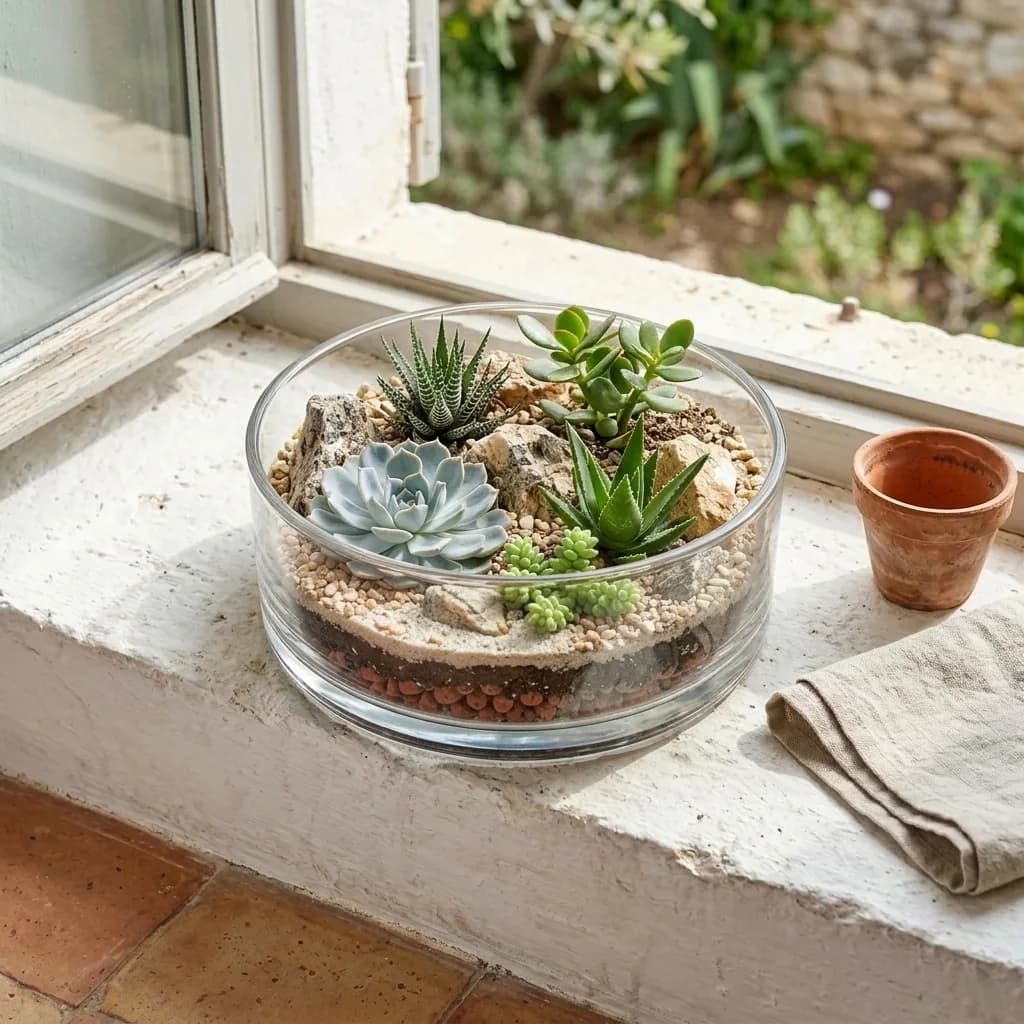
What not to do: mix it with succulents. The two cannot survive the same watering regime, and one of them will die however carefully you tend them.
Sources
Frequently asked questions
Why does my fittonia collapse all at once?
That is its normal reaction to a lack of water: the leaves flop within a few hours. Mist the plant or dampen the substrate lightly and it usually picks up again the same day. If it stays limp over a soaked substrate, the problem is the opposite one: the roots are rotting.
Can a fittonia live outside a terrarium?
Yes, but it then needs high humidity, which is hard to hold in a heated room. In an open pot it has to be misted often and it wilts at the first lapse. Under glass, that problem disappears.
Is fittonia dangerous for a pet?
Fittonia has no reputation as a toxic plant, but we do not give veterinary advice. In a closed terrarium the question hardly arises in any case: the plant stays behind the glass. If you have any doubt about a plant that has been eaten, call a veterinary poison centre.
How fast does a fittonia grow?
Fast for a terrarium plant: expect a light prune every two to three months under glass. That is an advantage when you build, as the composition closes up quickly, and a constraint afterwards.