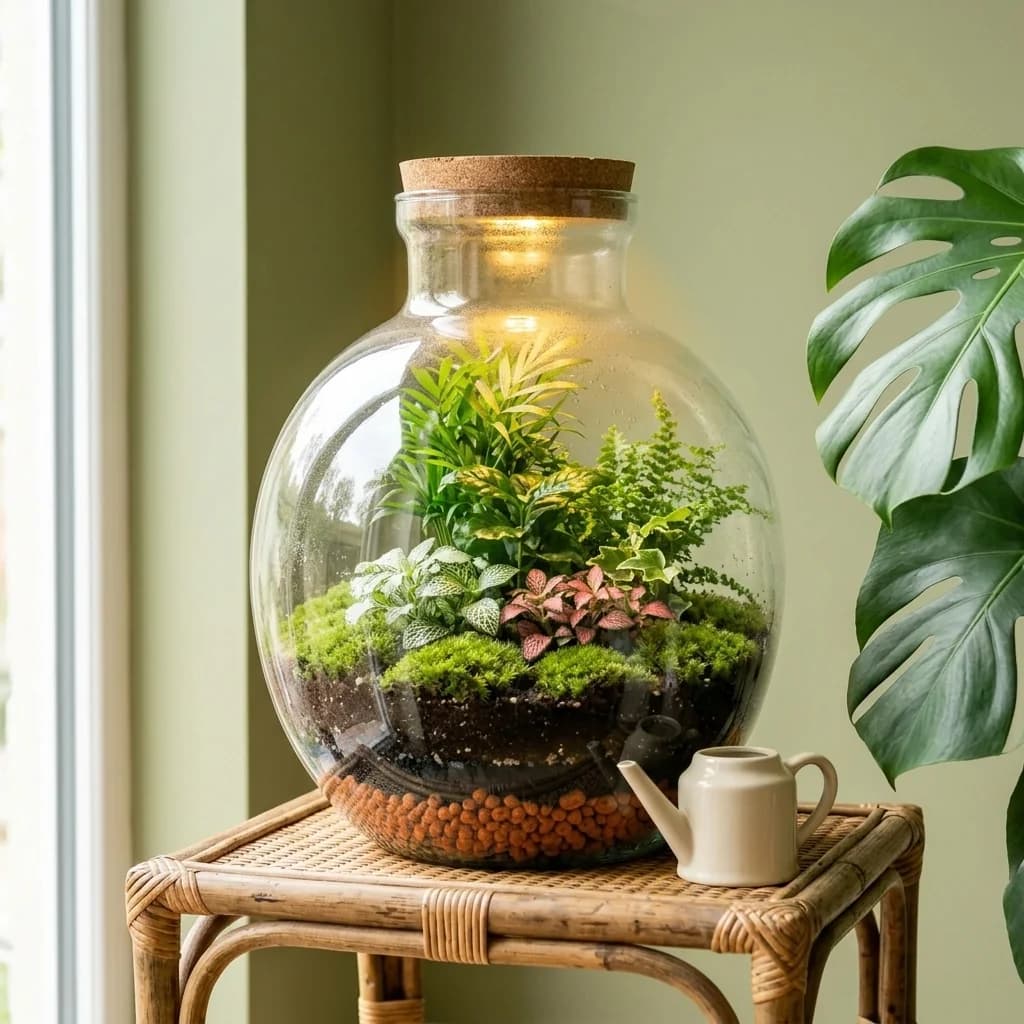
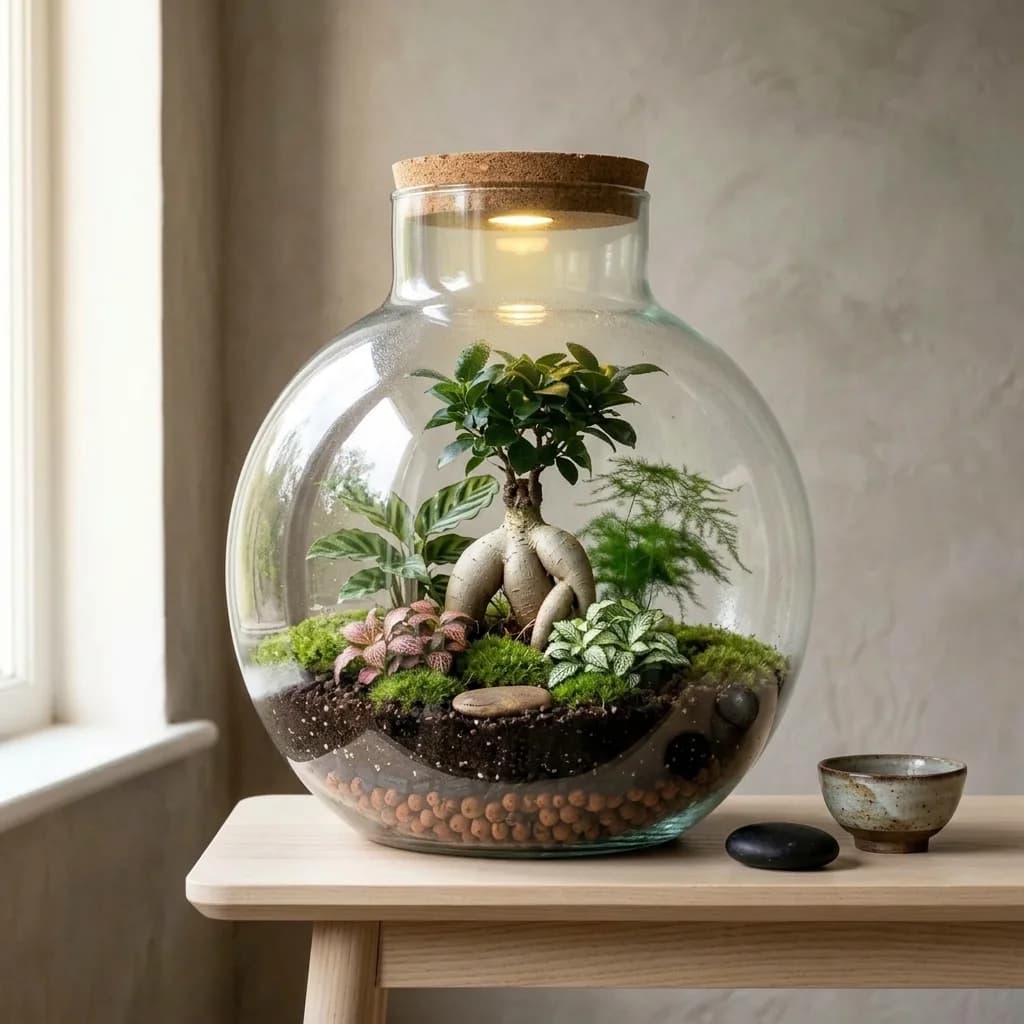


How to create a closed terrarium, step by step
Container, drainage layers, substrate, plants and mosses: the complete tutorial for building a closed terrarium that almost looks after itself.
In this guide
To create a closed terrarium, all you need is a glass container that seals shut, a drainage layer, an airy substrate, a few small tropical plants and some mosses. Once assembled, lightly watered and closed, it recycles its water in an almost closed loop: humidity evaporates, condenses on the glass and falls back onto the plants. Allow around an hour to build it and a few weeks of watching to find the balance.
The equipment you need
- a clear, transparent glass container, with a stopper or lid;
- clay pebbles, pozzolana or gravel for drainage;
- a separating layer: fine mesh, netting or a thin layer of moss;
- an airy tropical substrate, ideally with some activated charcoal;
- two to five plants suited to humidity, of small size;
- cultivated mosses;
- long tools: tweezers, spatula, funnel or long-handled spoon;
- a mister and low-lime water, rain or demineralised.
- Terrarium refill, with or without moss, sizes S to XLFor terrariums sizes S to XLFrom €18.90Choose
- Terrarium tool kit, 4 stainless steel pieces, 49 cm rake49 cm rake · 25 cm tweezers and scissors€26.90
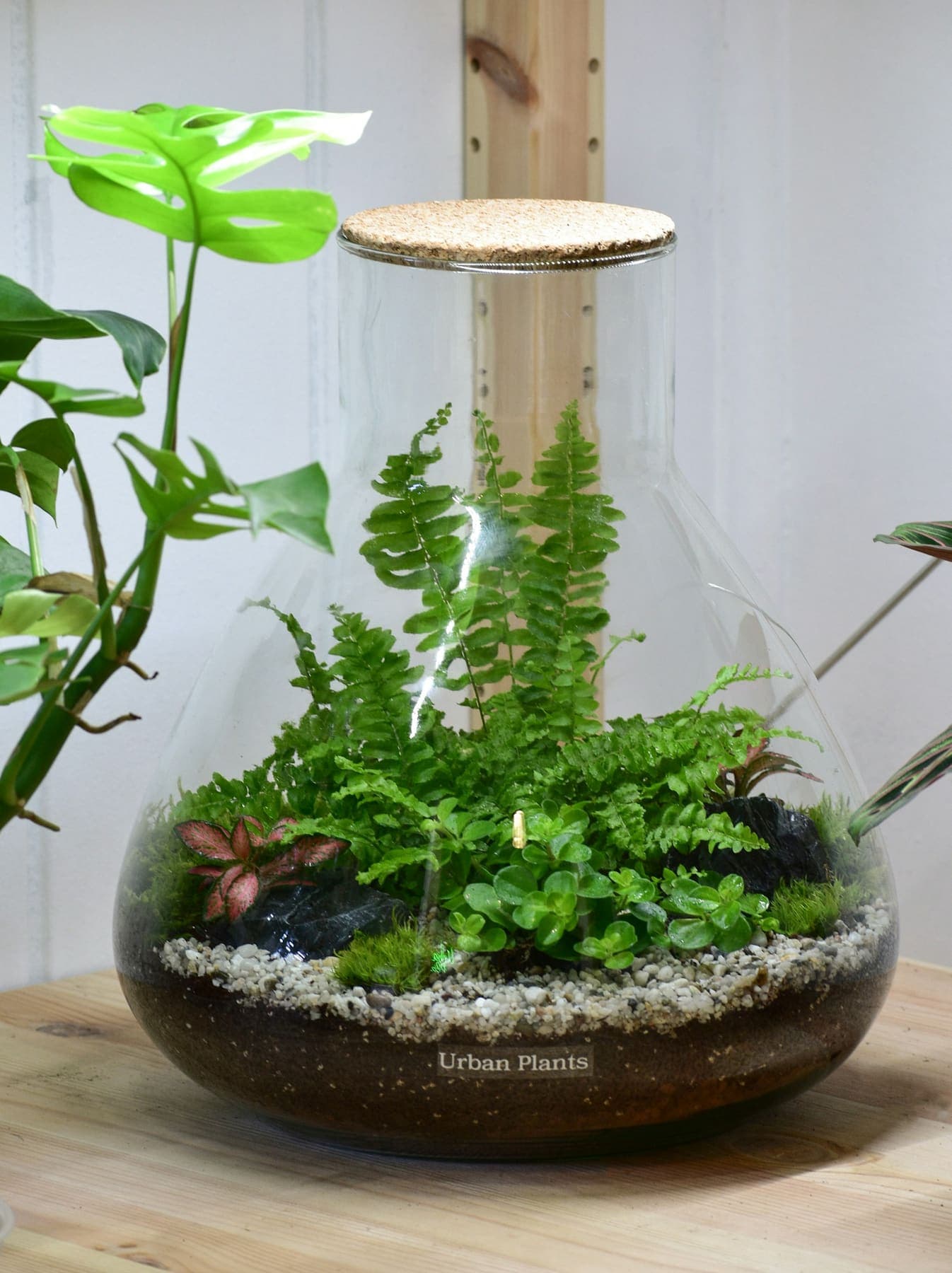
- Round terrarium bottle size XL, 11 L, choice of corkØ 30 × H 31 cm · 11 LFrom €36.90Choose
- Terrarium tool set, telescopic rake and scoop, 84 cmUp to 84 cm extended€19.90


Choosing the container
Clear, colourless glass lets through the light plants need. The wider the opening, the easier the assembly: a jar or a cloche is perfectly suited to a first attempt. Narrow-necked demijohns are stunning but need long tools and a bit of experience.
For a first try, aim for a diameter of 18 to 25 cm: enough space to build a small scene, without the volume of substrate becoming hard to manage.
Building the terrarium, layer by layer
Drainage
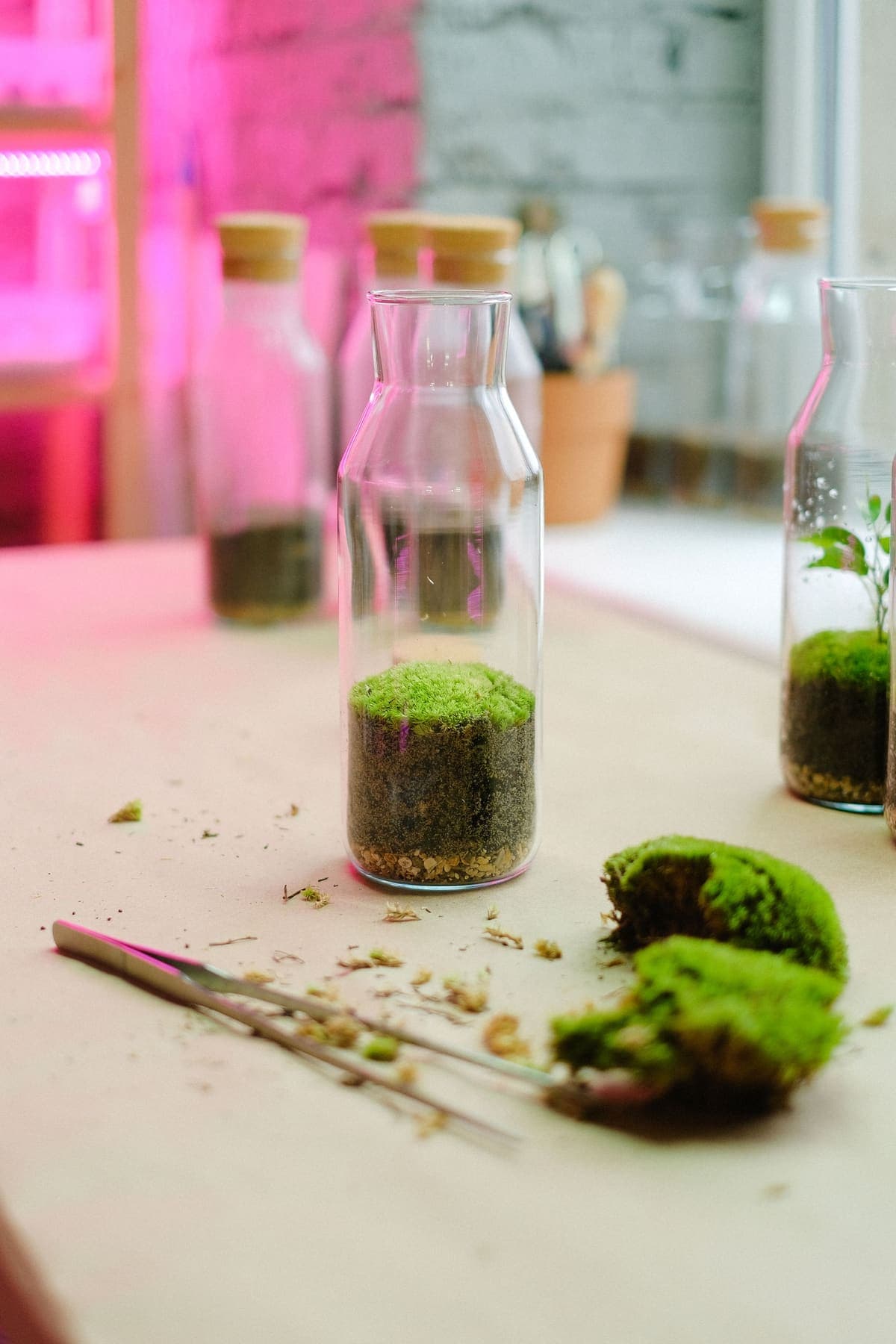
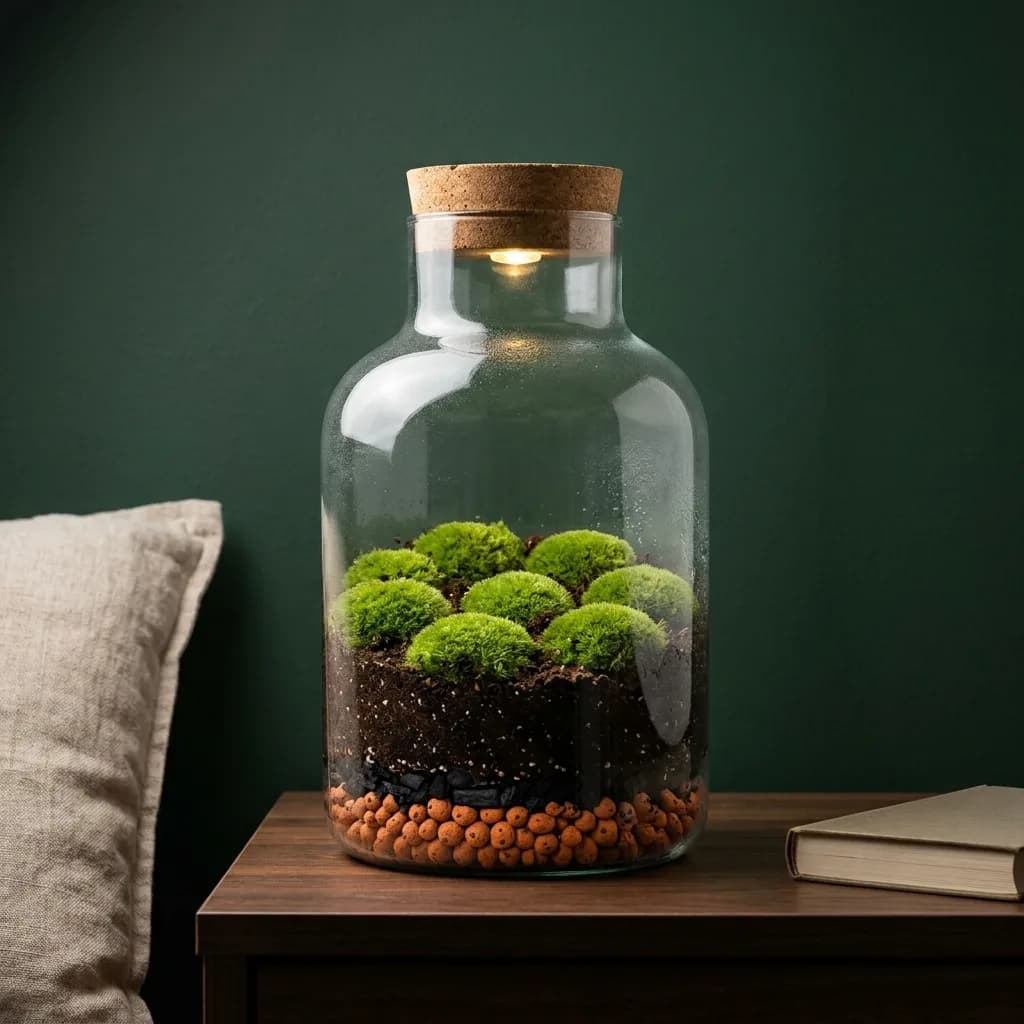
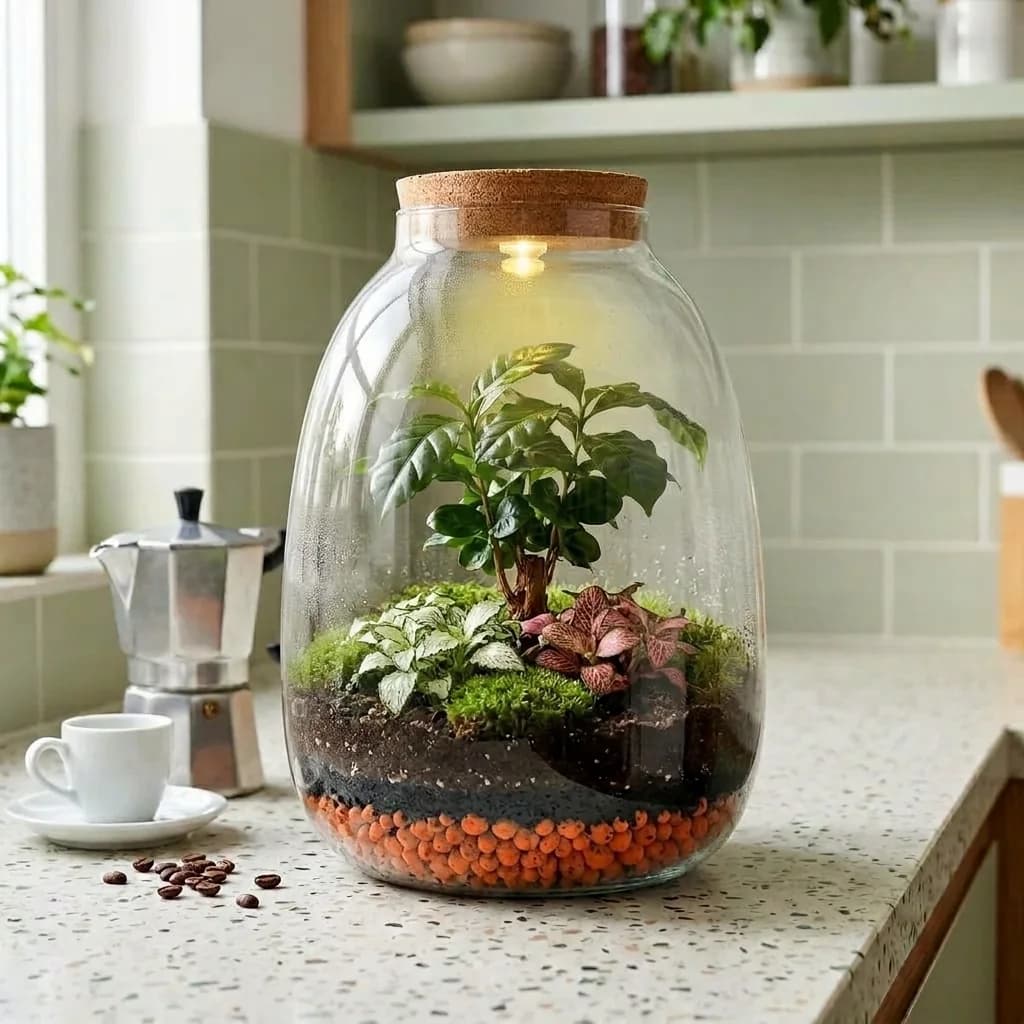
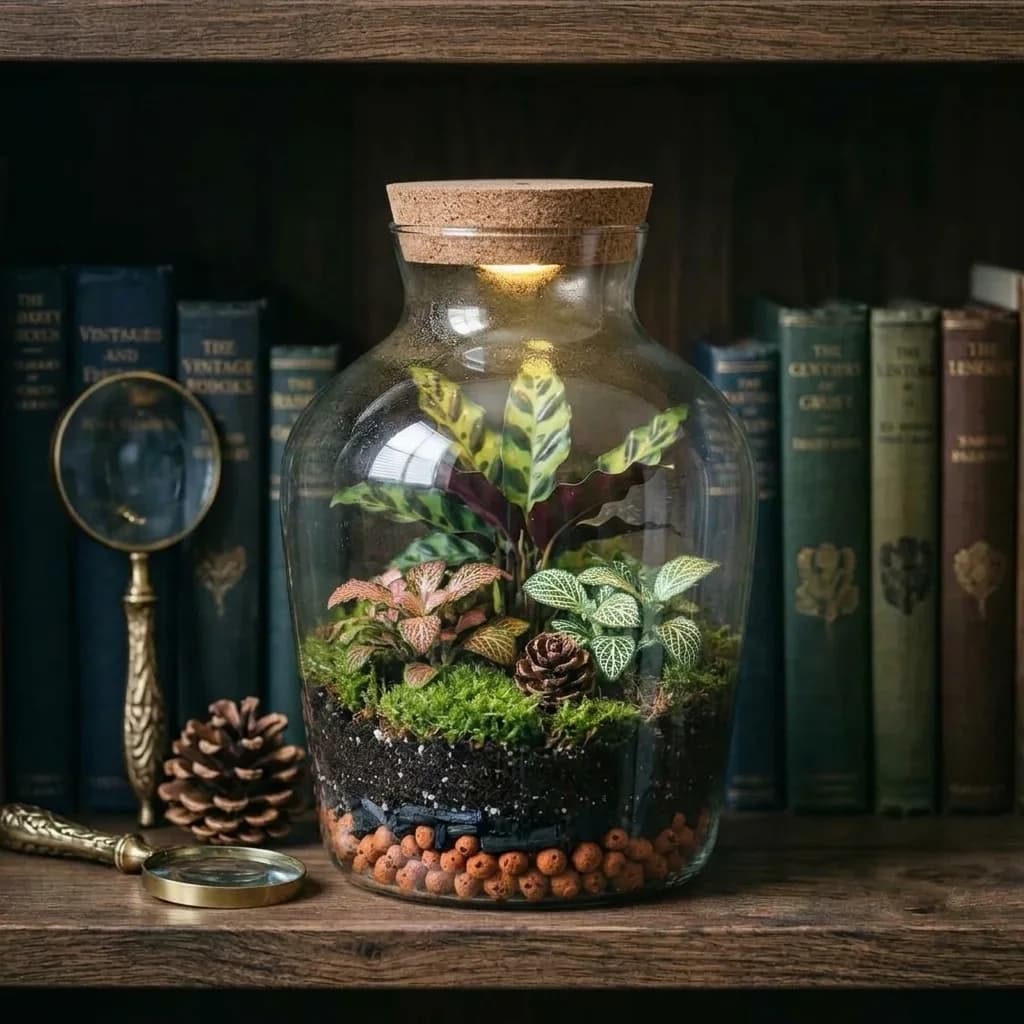
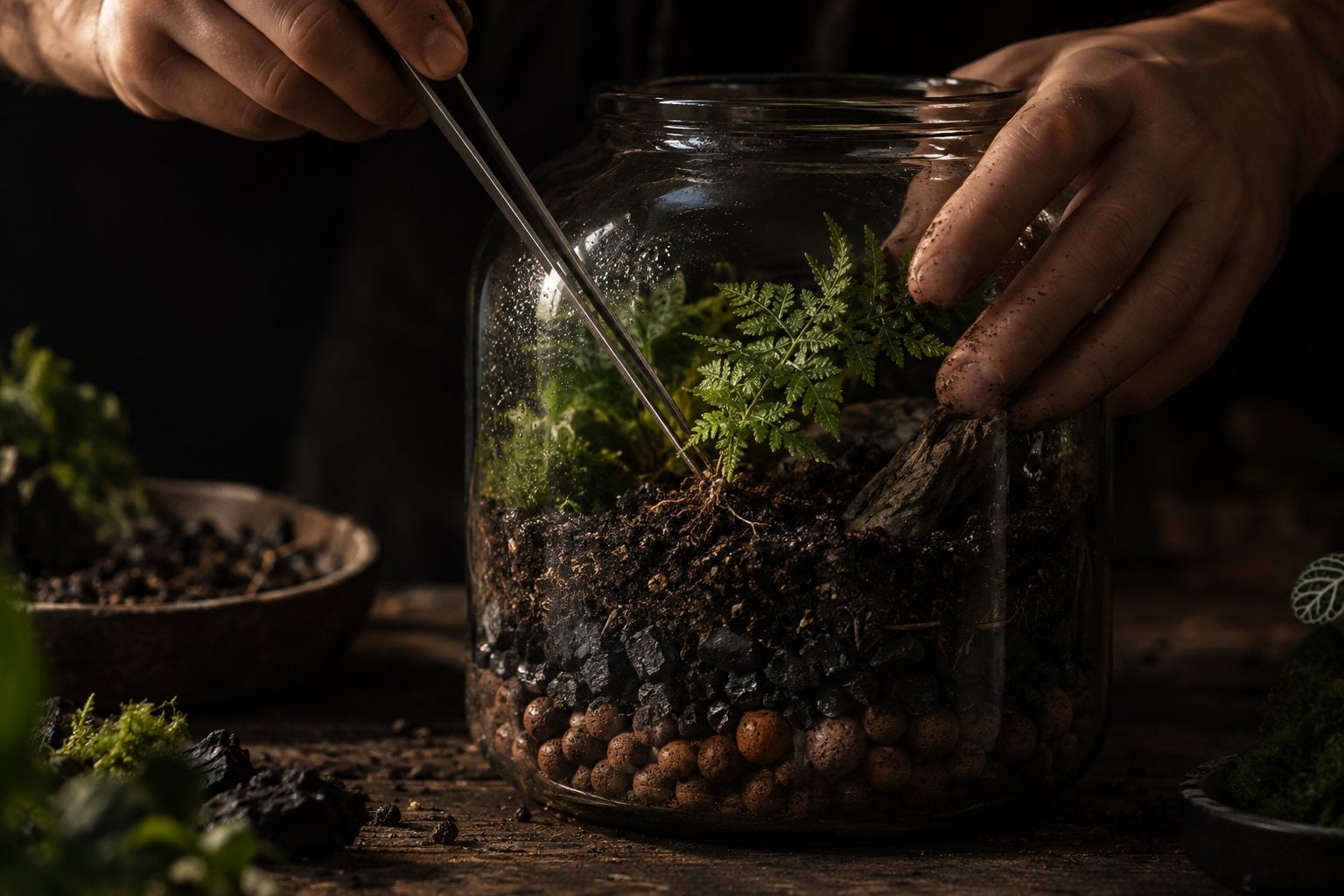
Pour 2 to 3 cm of clay pebbles or gravel into the bottom. This reserve collects excess water, away from the roots, and reduces the risk of rot. A closed container has no drainage hole: this layer is essential.
The separator
Lay a fine mesh or a thin layer of moss over the drainage layer. It stops the substrate from sinking down and clogging the water reserve.
The substrate
Add 5 to 8 cm of substrate, shaping it: higher at the back, hollowed at the front, to create relief. Good substrate stays airy and retains moisture without compacting. The Royal Horticultural Society suggests, for example, compost mixed with horticultural grit, roughly four parts to one; many enthusiasts also add a little activated charcoal. Our guide which substrate for a terrarium compares the options.
The plants
Take each plant out of its pot, gently remove some of the original soil and check for pests. Dig a hole with the spatula, place the rootball, press down lightly. Start with the tallest plant, at the back or off-centre, then work forward. Leave space: the plants will grow.
For choosing species, see our guide which plants for a terrarium.
Mosses and decor
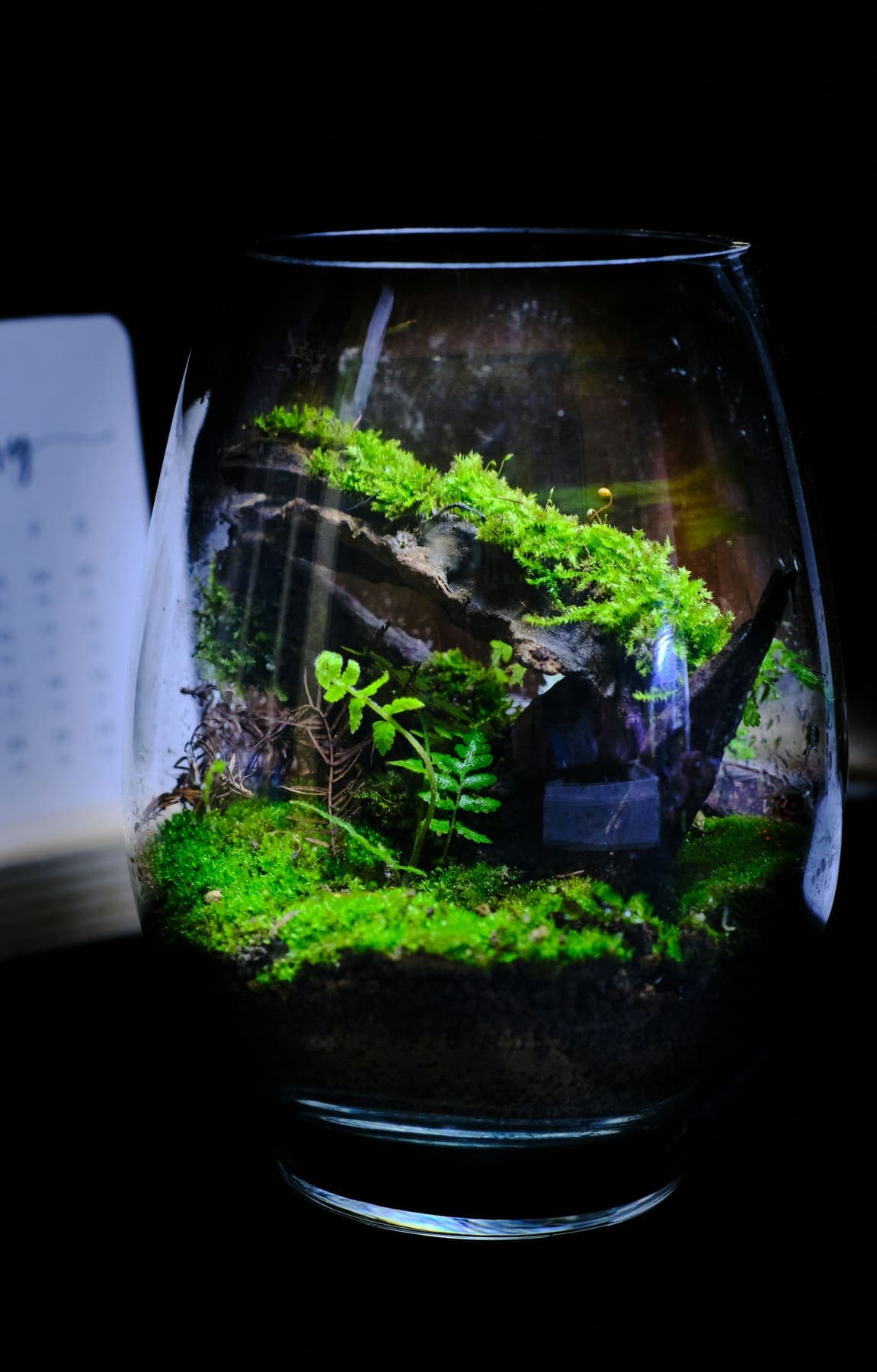
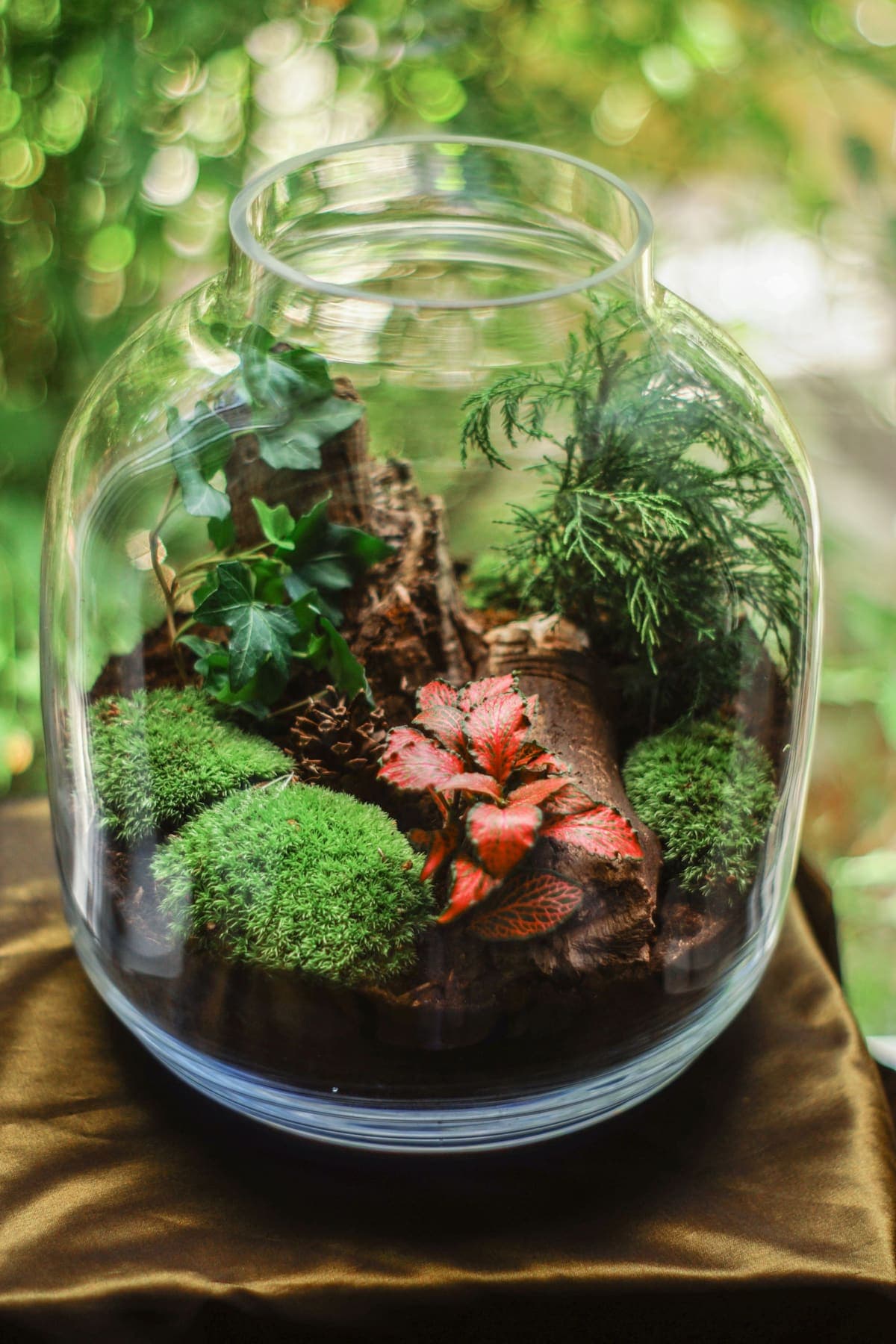
Press the moss sheets or cushions onto the damp substrate, without burying them. Add a piece of wood, a stone or a path of small pebbles to guide the eye.
Watering and closing
Mist the whole terrarium until the substrate is moist, but with no water pooling at the bottom. Clean the glass, then close it up.
Where to place your terrarium
Set it up in a bright room, near a window, but never in direct sunlight: the glass concentrates heat and can literally cook the plants within a few hours. The Royal Horticultural Society recommends bright, indirect light for at least six hours a day; a grow light held at a distance can supplement a room that's too dark. Also avoid placing it right next to a radiator.
The first few weeks
Watch the glass, especially in the morning:
- A light mist that clears during the day: the balance is good.
- Droplets that constantly run down: too much water. Open it for a few hours a day until the condensation reduces.
- No mist at all and softening leaves: the environment lacks water. Mist lightly.
A white film of mould may appear on a dead leaf or a piece of wood: remove it with tweezers and air the terrarium a little. If it comes back, here's what to do about mould. After that, maintenance is limited to trimming anything touching the glass, removing faded leaves and misting from time to time if the condensation disappears.
Common mistakes
- Placing the terrarium in the sun: overheating and scorching guaranteed.
- Skipping the drainage layer: water sits and the roots rot.
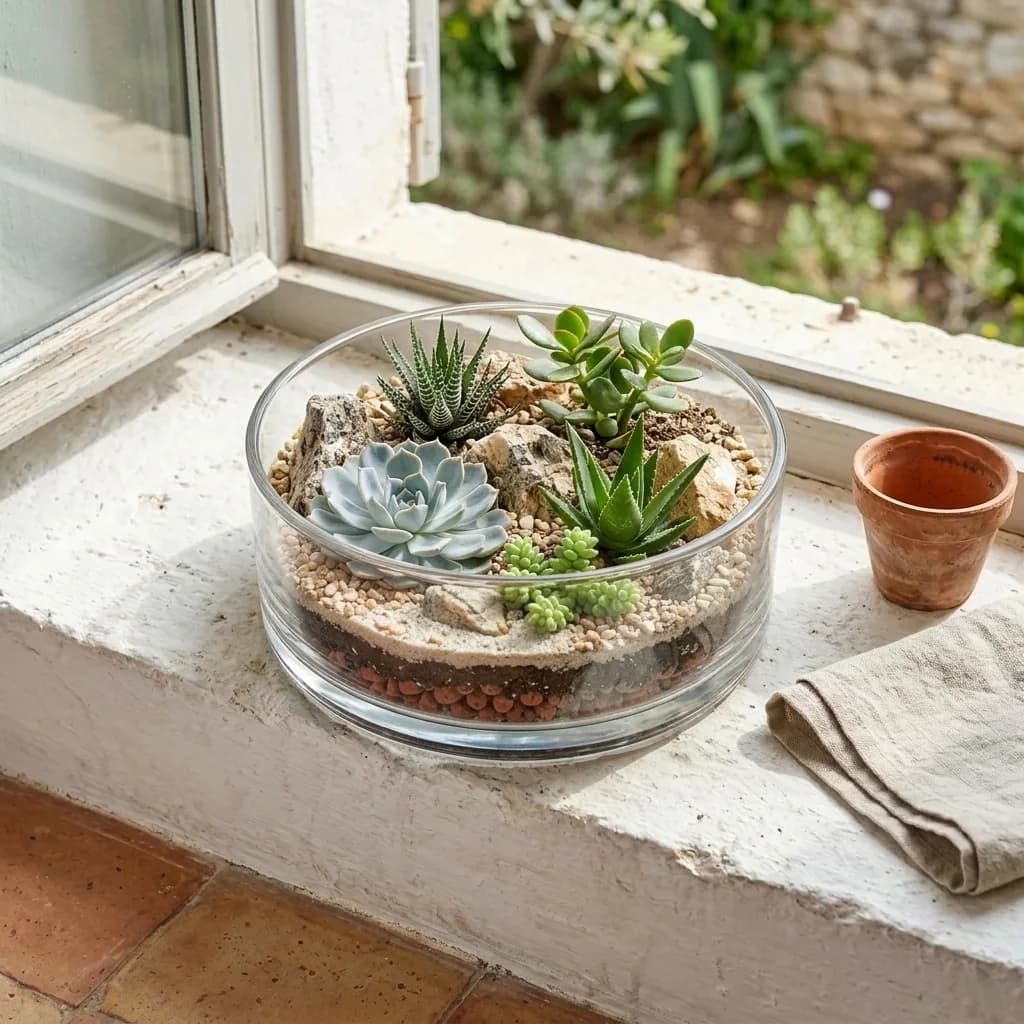
- Choosing succulents or cacti: they can't cope with the humidity of a closed environment.
- Overwatering at set-up: it's the most common excess.
- Crowding the plants: they compete for space and light within a few months.
- Choosing flowering plants: the RHS advises against them in a closed terrarium, since their care requires opening the container, which disrupts its balance.
- Using moss picked in the forest: it can bring in pests, and in France the Forestry Code forbids removing moss without the landowner's permission.
And afterwards?
If this is your very first terrarium, the beginner's guide goes over the four decisions to take before you even buy the glass. If you're still unsure about the format, our comparison closed or open terrarium will help you choose. For a more ambitious project in a demijohn, follow the step-by-step guide A tropical terrarium in a demijohn. And to know when to add water, read how to water a terrarium.
Further reading
After assembly, follow terrarium care. The closed ecosystem project focuses on observation; bioactive terrariums explains living soil.
Sources
Frequently asked questions
Do you need to water a closed terrarium?
Very rarely. Water circulates in a loop between the substrate, the plants and the glass. You mist lightly only when the condensation disappears for good and the substrate dries out on the surface, sometimes after several weeks or months.
Why does my closed terrarium always have condensation?
A light mist in the morning is normal. If water runs constantly down the glass, the terrarium holds too much water: open it for a few hours a day until the condensation becomes light again.
Does a closed terrarium need light?
Yes, the plants and mosses need light to live. Place it in a bright room, near a window but out of direct sunlight, or under a grow light held at a distance.