How long does a closed terrarium last? What keeps it going for years
A few months for a poorly balanced jar, years for a well-built terrarium. What limits its lifespan, what extends it, and when it needs redoing.
In this guide
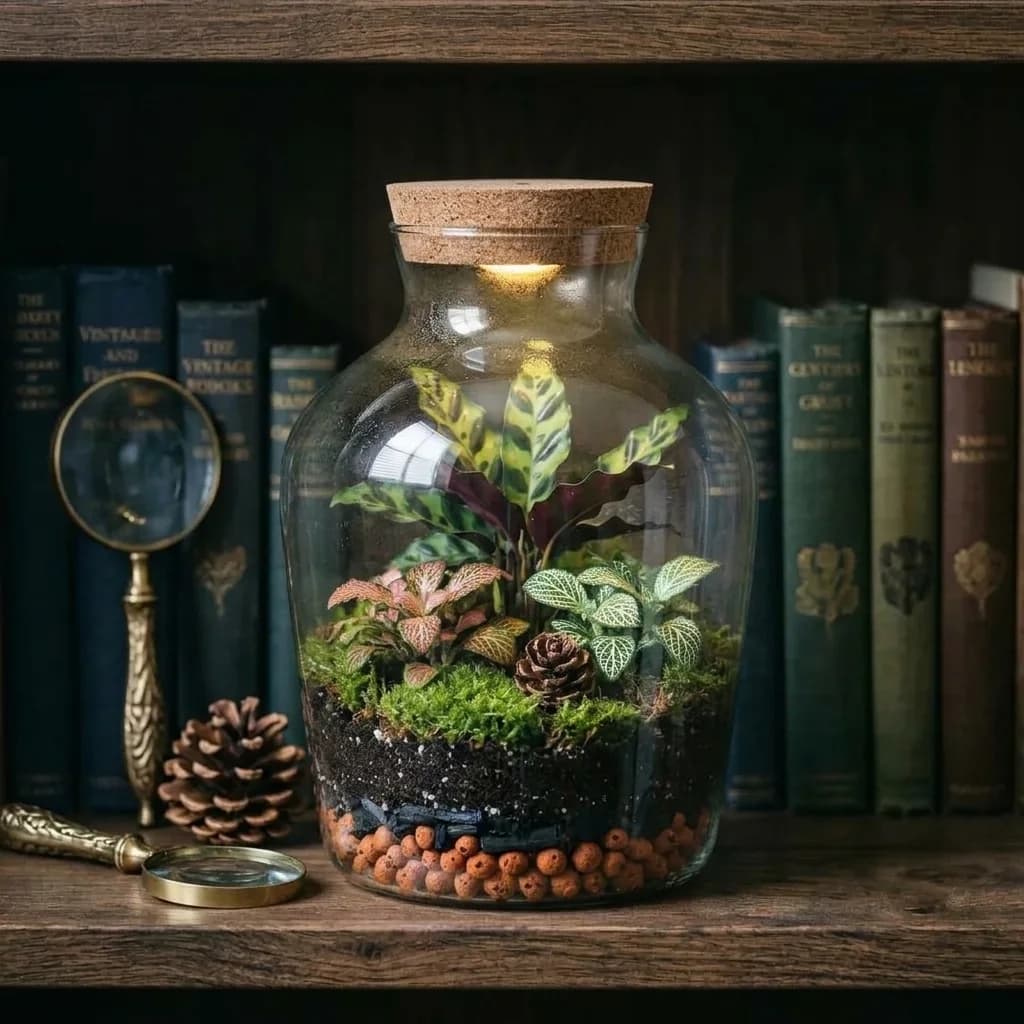
A closed terrarium has no expiry date. Well built, it lives for several years, with occasional pruning and the odd plant replaced. What kills it early is almost always a mistake at the start: too much water, not enough light, or the wrong plants. What eventually stops it, years later, is growth: the plants become too big for the jar.
The record everyone quotes
In 1960, Briton David Latimer planted a tradescantia in a large carboy. He watered it one last time in 1972, then sealed it again. When the British press told his story in 2013, the bottle was still green. It is not a promise for every jar, but proof that a closed environment can last for decades.
What limits its lifespan
| Cause | When it shows | What to do |
|---|---|---|
| Too much water when planting | In the first month | Open for a few hours, remove water from the bottom |
| Lack of light | After 1 to 3 months | Move closer to a window or add an LED |
| Plant that dislikes humidity | After a few weeks | Remove and replace it |
| Plants grown too big | After 1 to 3 years | Prune, then replace |
| Exhausted or compacted substrate | After several years | Redo the jar |
The first three causes account for most failures. They come from how the terrarium was built, not from time. Our guide my terrarium plants are dying helps you find which one is at play.
What keeps it going
- Sparing watering when planting. You can always add water. Removing it is harder.
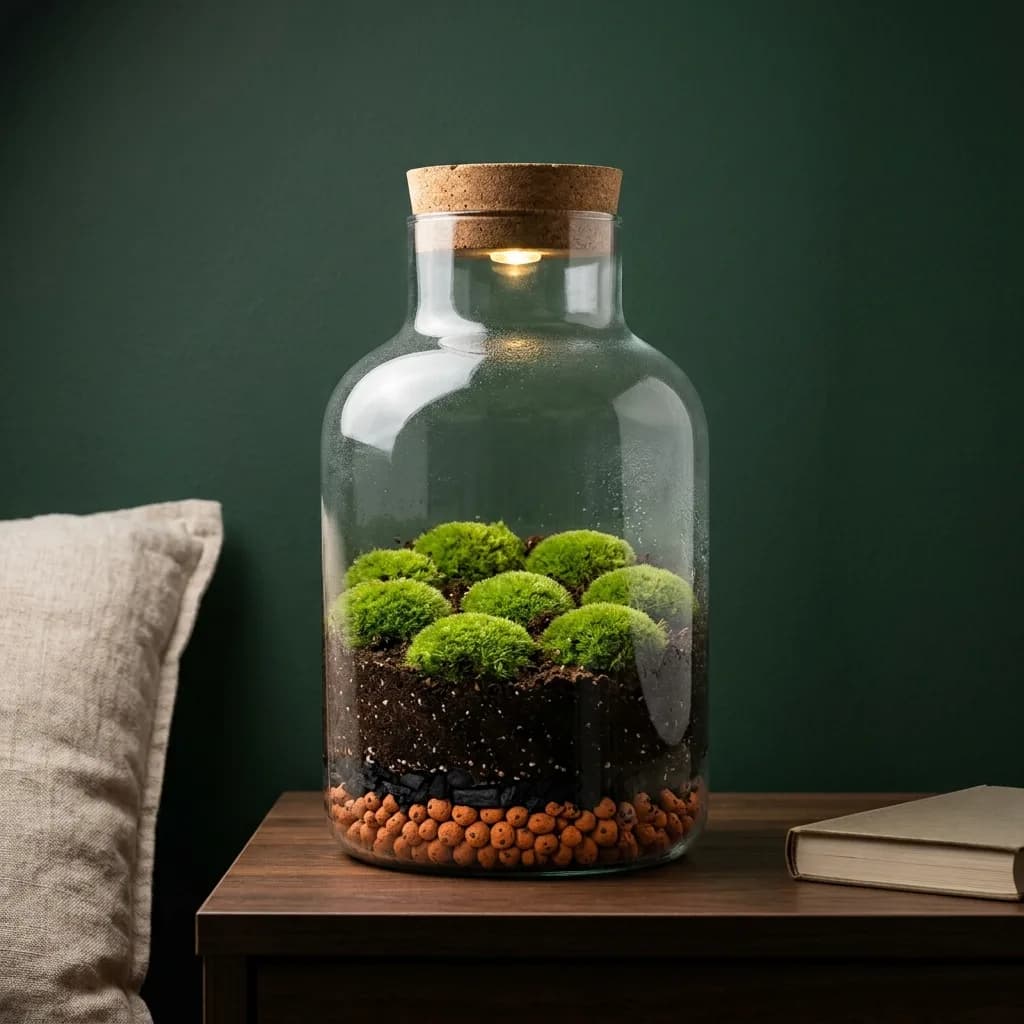
- A drainage layer and charcoal, which prevent stagnant water and smells. Details are in the layers of a terrarium.
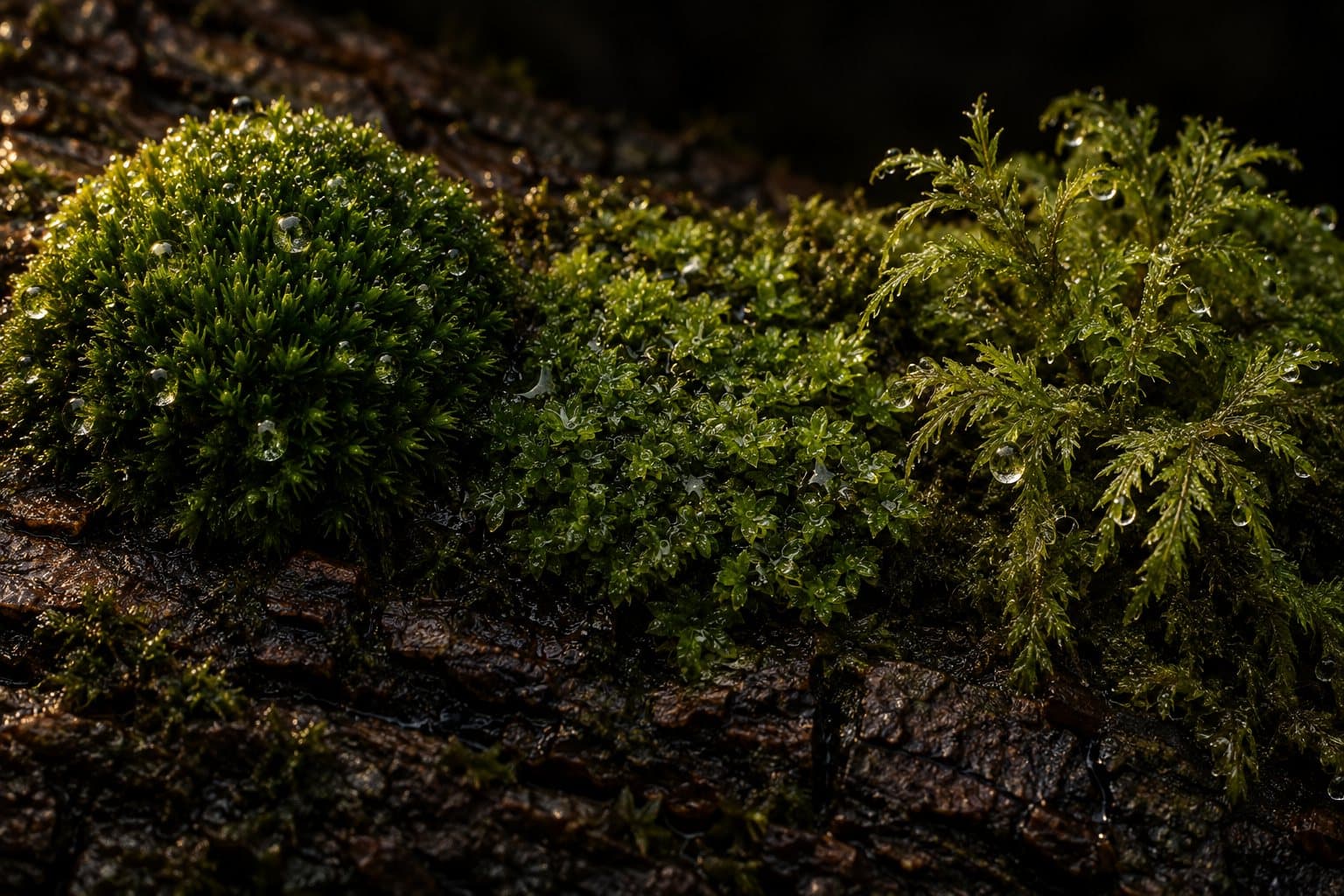
- Slow-growing plants: mosses, mini fittonia, selaginella, peperomia.
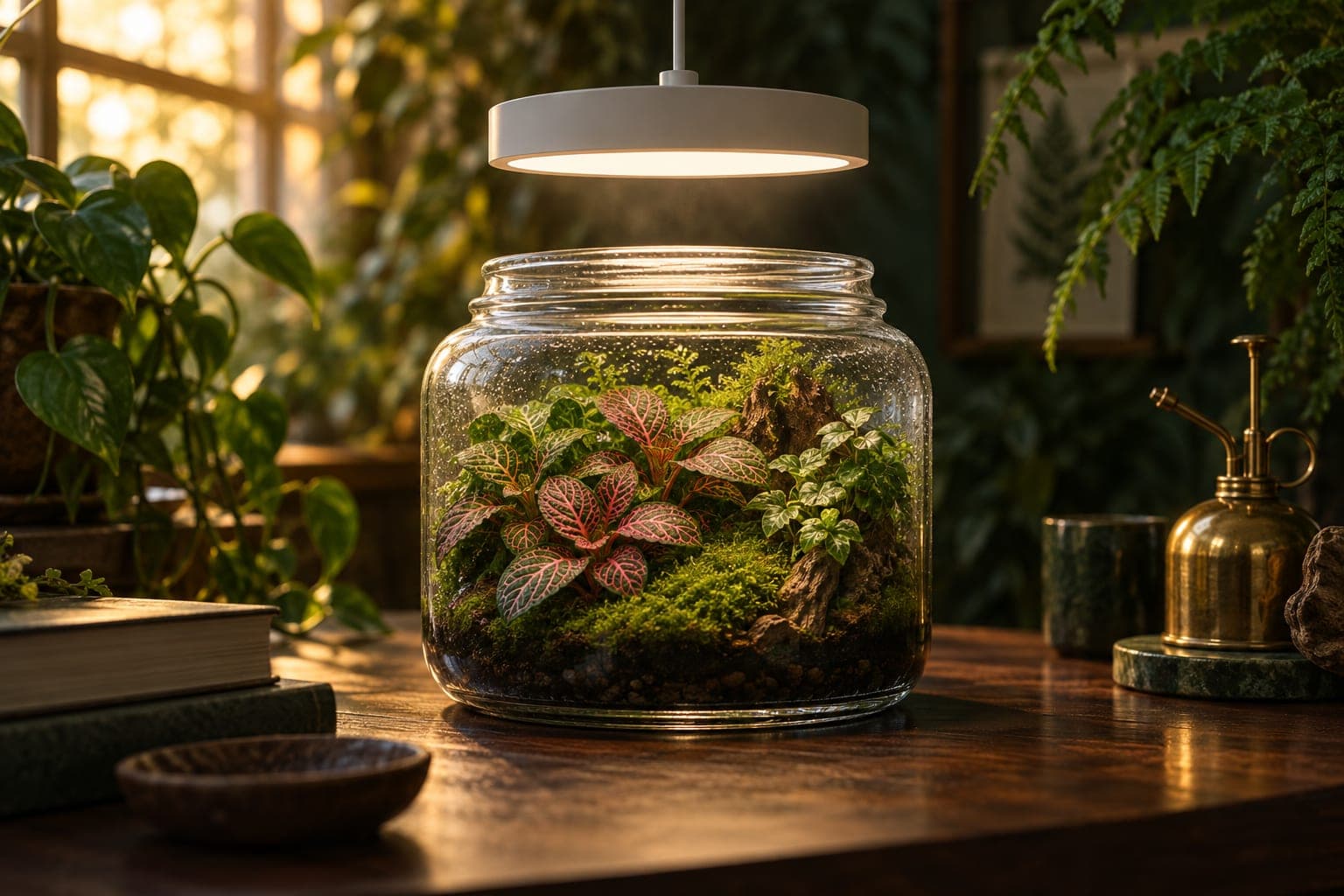
- Bright light without direct sun, or an LED cork in a dark room.
- Regular pruning, before the leaves touch the glass.
The Sous-bois kit brings these basics together: a corked bottle, drainage, charcoal and potting soil, with plants chosen for life under glass.
The stages of a jar's life
- The first month: humidity settles. A little condensation in the morning, not all day.
- From 1 to 12 months: the plants settle in and grow. The moss gets denser.
- From 1 to 3 years: you prune more often. A plant that grows too vigorously sometimes ends up replaced.
- Beyond that: the jar carries on as long as the plants have room and nothing rots.
Pruning to make it last
Pruning is what extends a closed terrarium's life the most. Cut any leaf that touches the glass, shorten stems that climb towards the cork, and remove the trimmings. Scissors with long blades fit through the neck without damaging the rest.
Our guide pruning a terrarium explains the method.
When to redo it
Redo the terrarium if:
- the plants are too big even after pruning;
- mould keeps coming back despite airing;
- the substrate smells bad deep down;
- you simply want a new look.
The steps are in redoing a terrarium. The moss and healthy plants can often be replanted.
In short
- A well-built closed terrarium lives for years.
- Quick failures come from the build: water, light, choice of plants.
- Regular pruning is what keeps it going.
- You redo it when the plants run out of room, not on a fixed date.
Sources
- BBC News, "Bottle garden has not been watered since 1972", January 2013.
- Royal Horticultural Society (RHS), advice on bottle gardens.
Frequently asked questions
How long does a closed terrarium last?
There is no expiry date. A well-balanced terrarium lives for several years, as long as you prune the plants that grow. The most famous one, David Latimer's bottle, was planted in 1960 and had not been watered since 1972 when the press made it known in 2013.
Why does my closed terrarium die after a few months?
Usually for one of three reasons: too much water when planting, too little light, or plants that dislike humidity, such as succulents. These mistakes show in the first few weeks.
Do you need to redo a closed terrarium?
Only when the plants no longer have room to grow, or a disease has set in. In a balanced jar, you replace a plant or prune, without taking everything apart.