

Redoing a terrarium: saving the plants and starting cleanly
Overgrown terrarium, compacted substrate or lost plants: choose between a repair and a rebuild, then rescue the healthy specimens step by step.
In this guide
Redoing a jar costs the plants time: you disturb their roots and change their environment. So the aim is not to start over on a fixed date, but to choose the smallest intervention that genuinely solves the problem.
Repair or strip out: the right level of intervention
| What you see | First option |
|---|---|
| A few stems touching the glass | Targeted pruning |
| One plant no longer suits | Local replacement |
| A little mould on some debris | Remove the debris and watch |
| Very compact medium, no access to the roots | Partial or complete rebuild |
| Several plants rotting and the medium smells bad | Take the plants out and look closely |
For too much water, start with terrarium too wet. For diagnosing the plants, read plants that are dying. This guide takes over after that decision, at the point of stripping out and rebuilding.
Get your containers ready before you open it
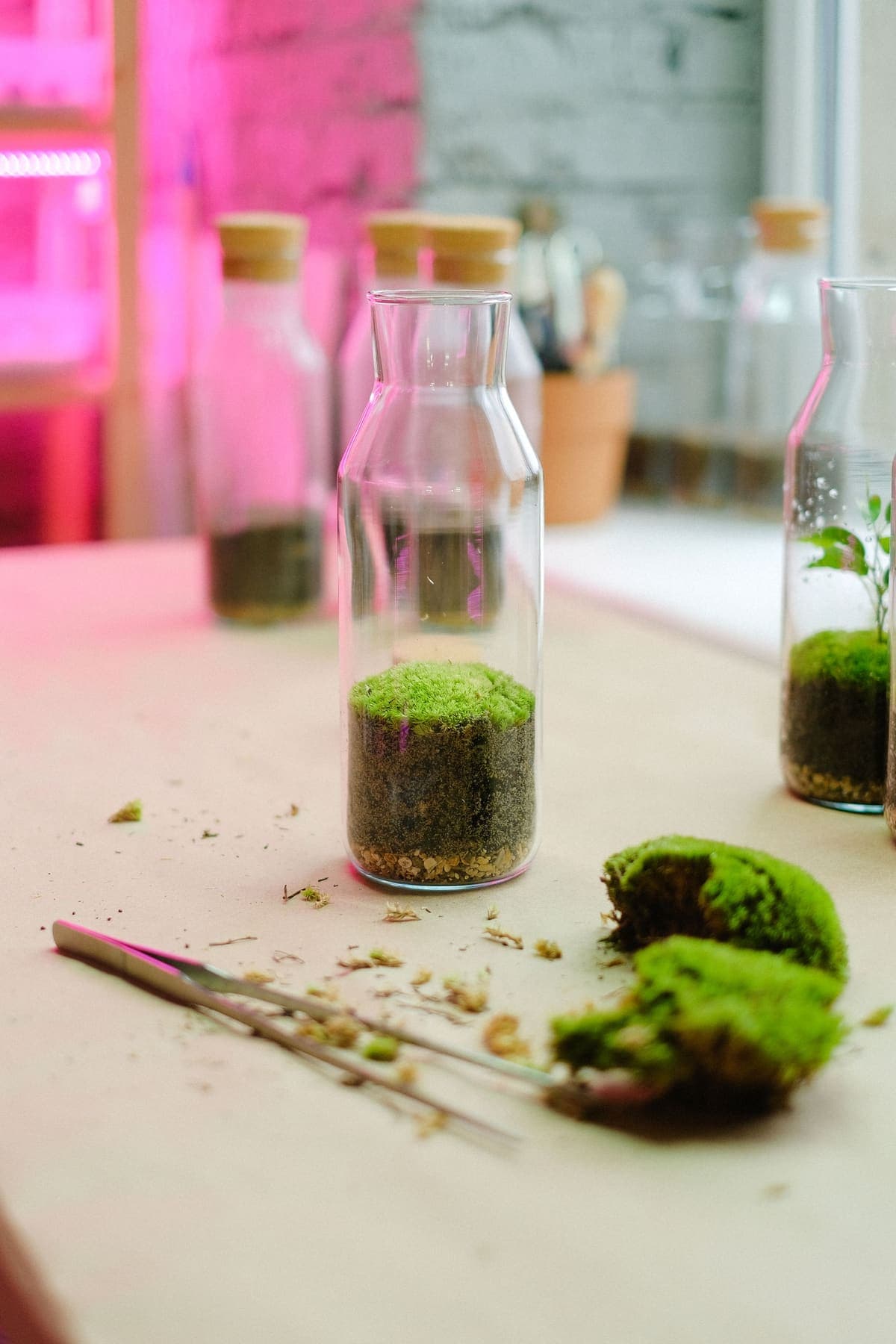
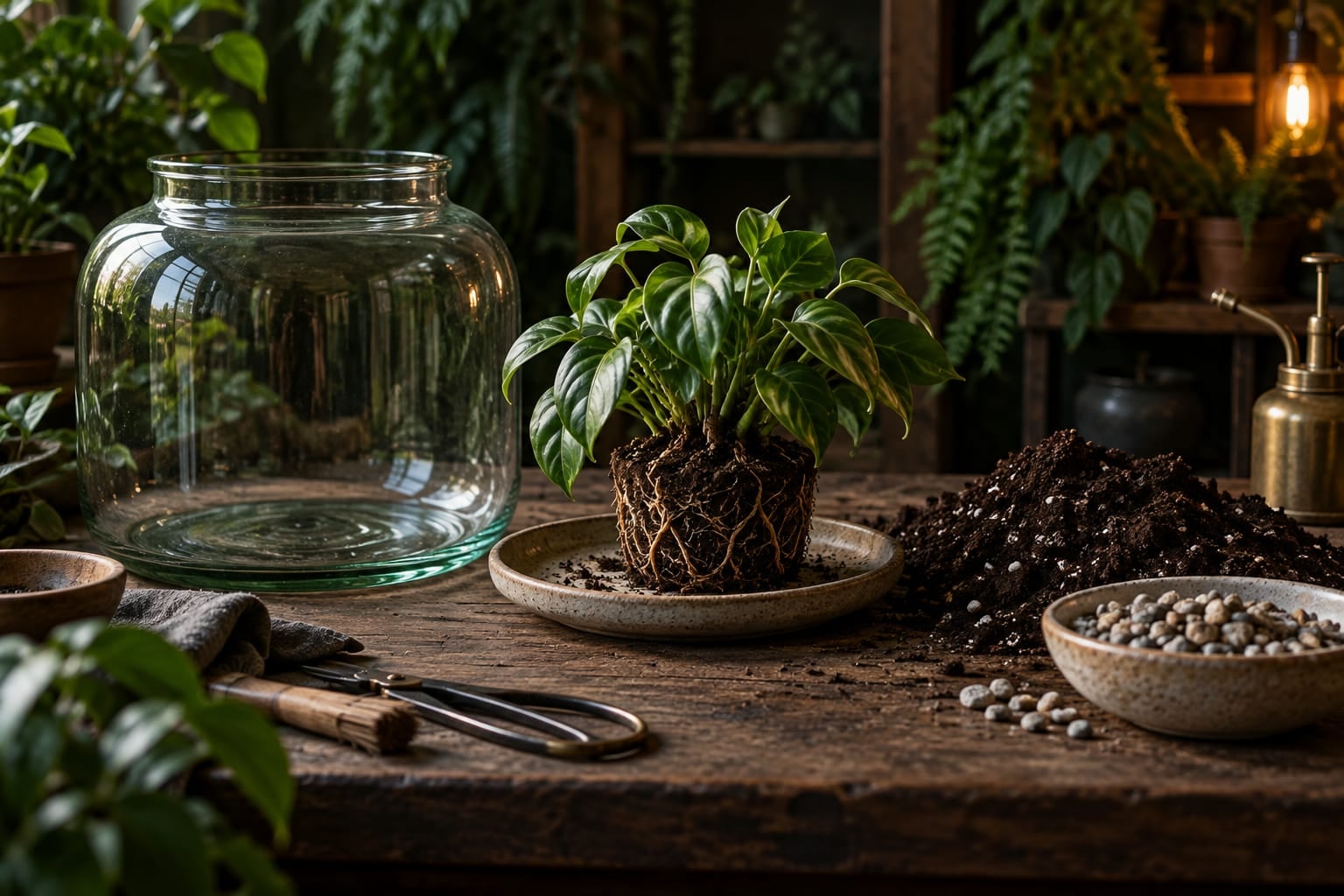
Set out a washable surface, several small drained pots, fresh suitable medium, clean tools and a container for waste. Photograph the layers and note what failed: the amount of water, a plant grown too large, insufficient light, wood that is breaking down.
If nothing is urgent, a period of active growth generally makes recovery easier. Where rot is spreading, do not put the work off simply to wait for an ideal season.
Lift the plants out without pulling on the stems
- Take out the loose pieces of hardscape to clear your access.
- Gently lift any cushions of moss you can keep.
- Free the root ball around each plant with a fine tool.
- Support the roots and the root ball rather than pulling on the foliage.
- Set the plants down separately so you can examine their base and their roots.
In a narrow demijohn, a root ball that has grown too large may be impossible to lift out intact. Do not force a tool against the wall, and do not try to break the glass. Taking a healthy cutting may let you keep the plant in another form.
Sort out what can be kept
The plants
Firm roots do not guarantee that nothing is wrong, but they are more reassuring than soft tissue that comes away in your fingers. Remove the clearly dead parts with a clean tool. Keep an affected specimen under separate observation; do not put it straight back among the healthy plants.
The substrate and the porous pieces
Do not reuse a medium you suspect of root rot to rebuild the same environment. Porous pieces that are hard to clean are also worth replacing if their condition is doubtful. Saving a few handfuls of soil is not worth the risk of repeating the problem.
The glass and the hardscape
Empty and clean the container, then rinse it thoroughly so no residue is left. Avoid thermal shock. If disinfection is needed after disease, use a procedure suited to the material and follow the product instructions strictly; never mix cleaning products. Degraded wood does not become sound again with a rinse.
Rebuild by correcting the cause
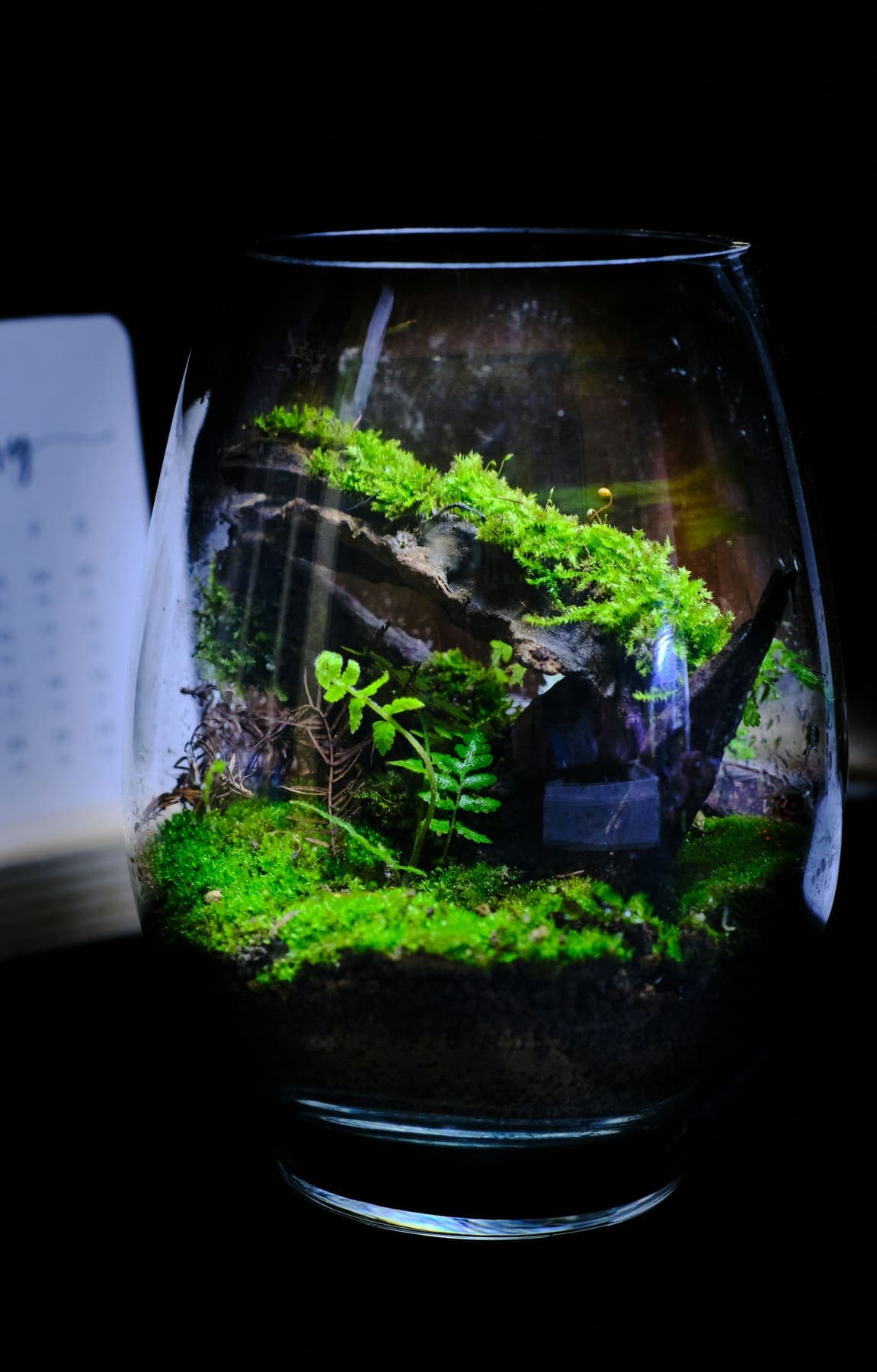
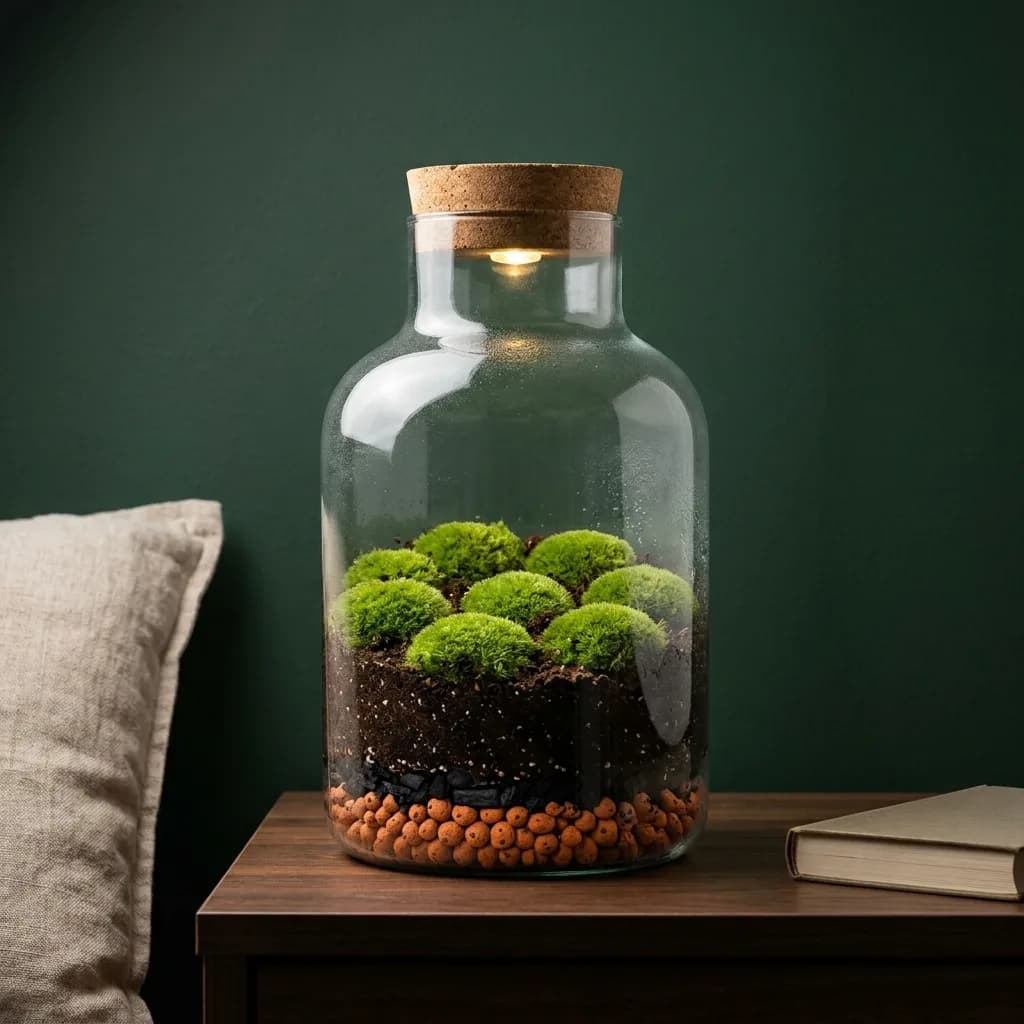
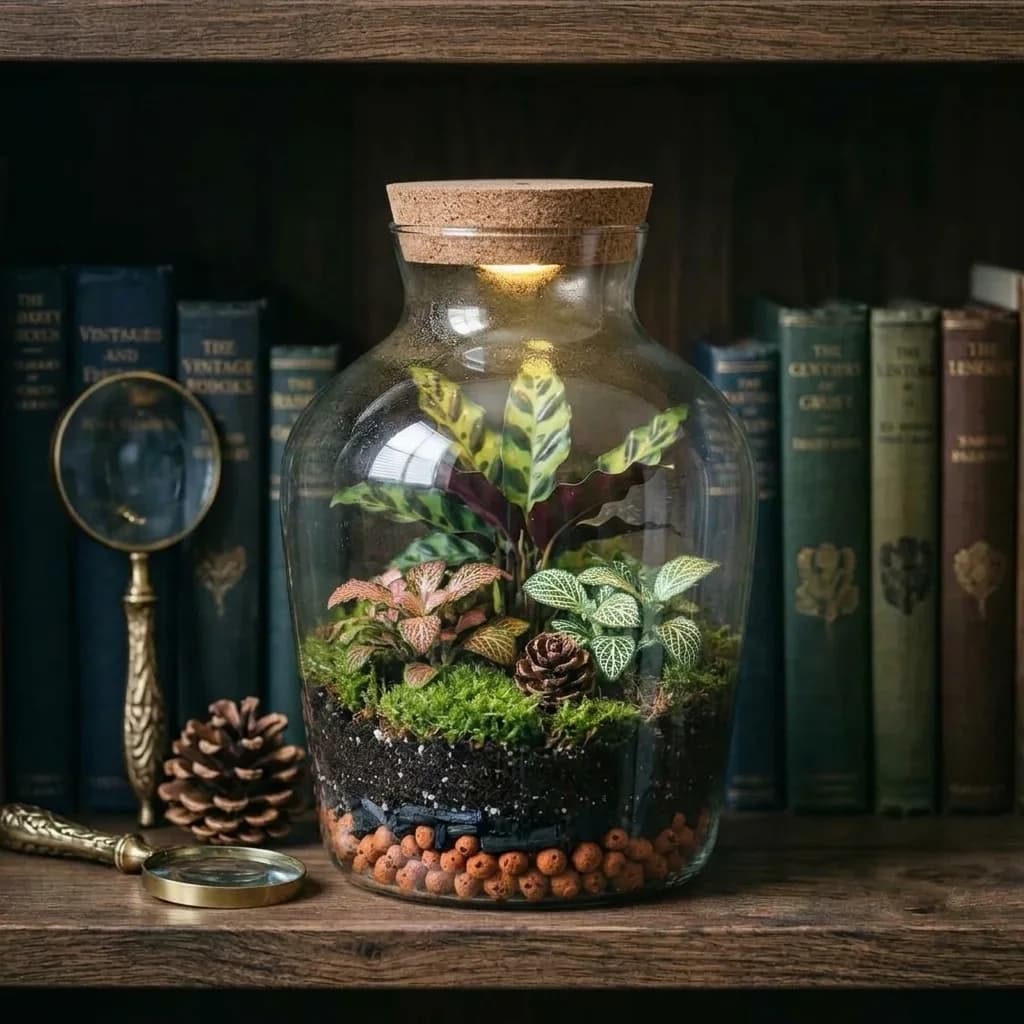
Go back over the terrarium layers, but do not reproduce them exactly if they were part of the problem. A more open medium, fewer plants and wider access can make maintenance easier for good.
Lightly moisten the fresh substrate before planting so you can control how much water goes in. Set the roots, steady them without packing the medium down hard, and keep space between the leaves and the walls. The bottom layer is still not a way for water to leave the jar.
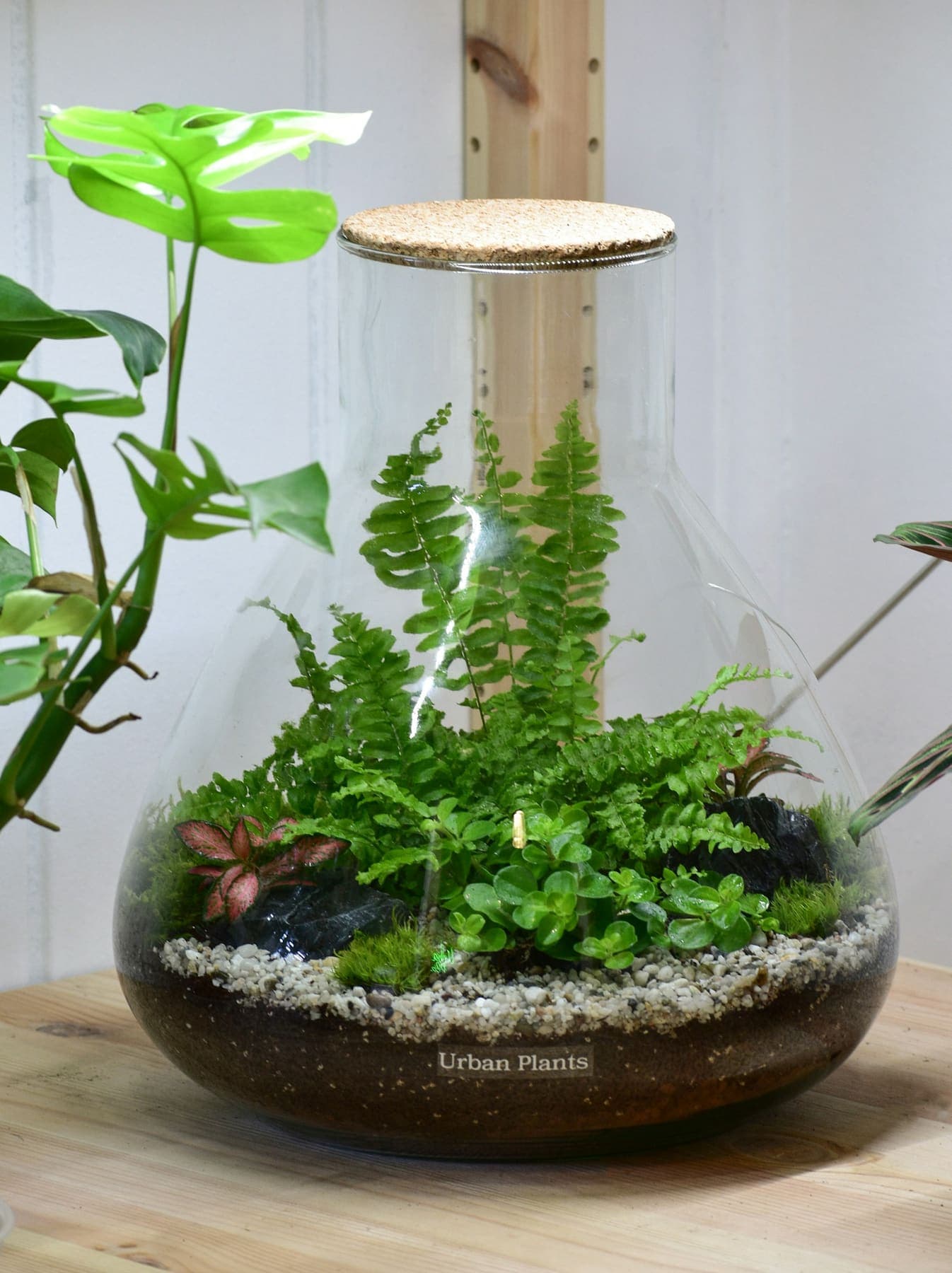
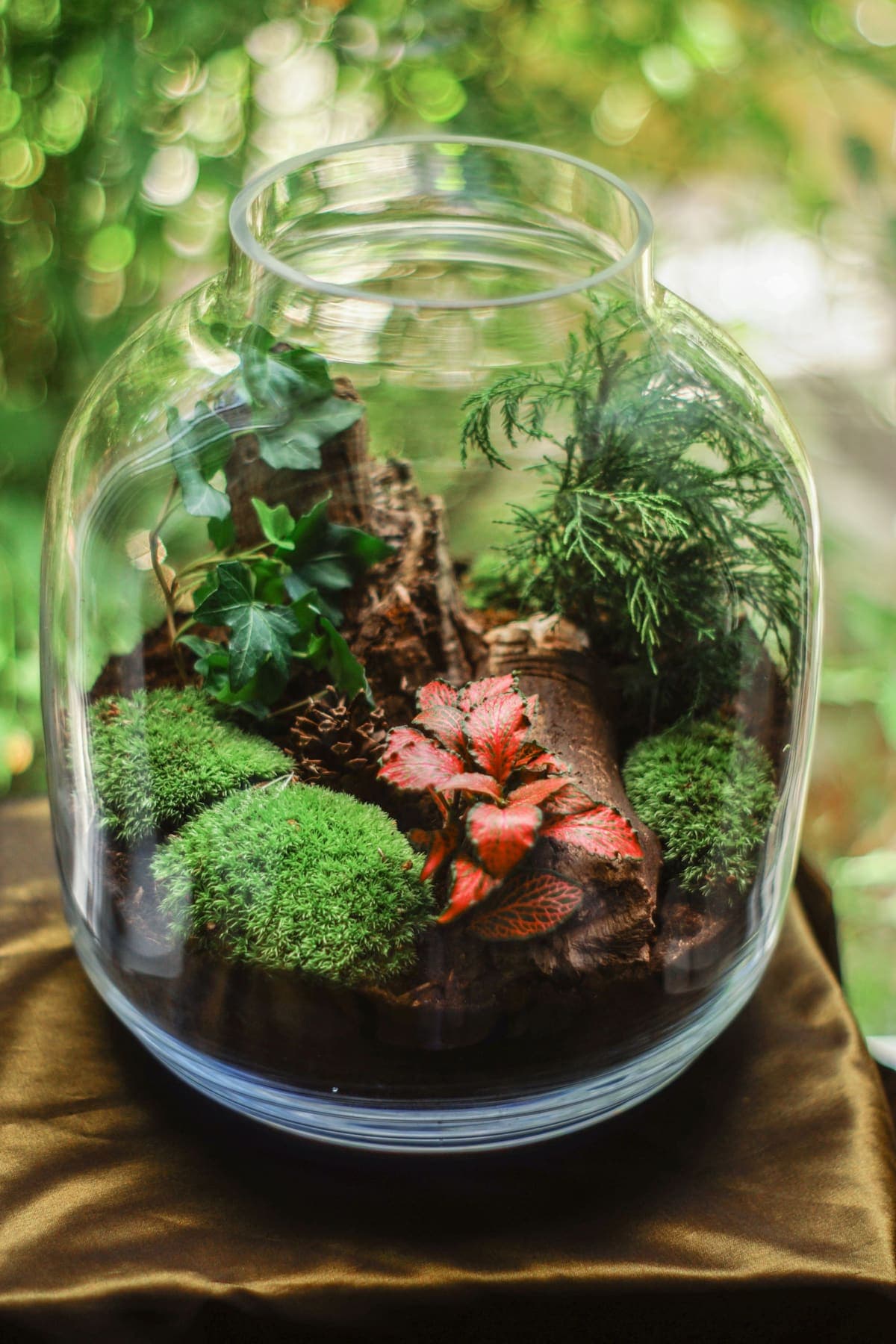
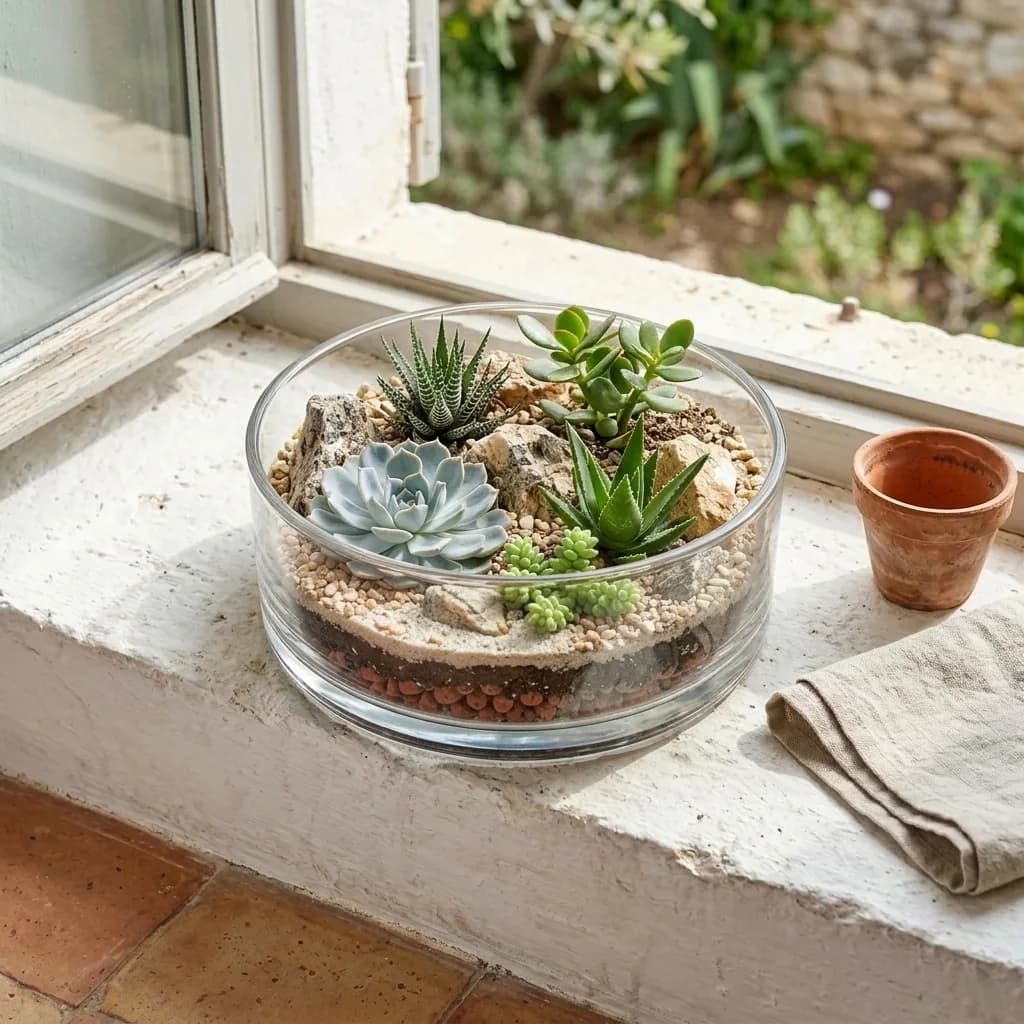
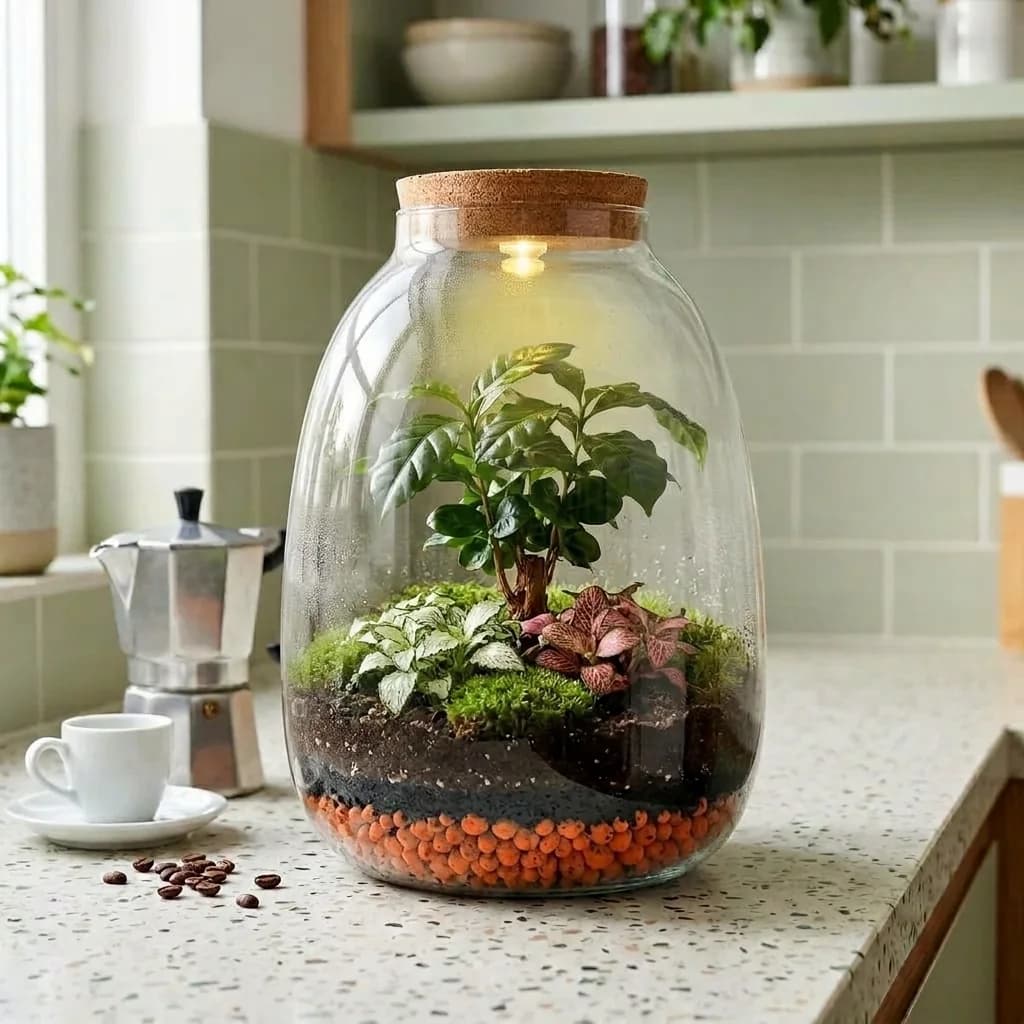
The miniature forest project gives you a base composition, while the glass containers let you compare how easy each one is to plant. Change container if the old one made any intervention impossible, not merely to gain volume.
Follow the restart
In the first few days, watch the moisture of the medium, the leaves and any tissue starting to break down. Take out the debris you can reach. Do not add fertiliser or water by reflex after every lost leaf. A freshly moved plant may stall before it picks up again.
Keep a photograph and a note of what you add. New growth tells you more than the amount of mist. Reintroduce the plants you kept under observation only gradually, and only if their condition allows it.
Sources and scope of this advice
- University of Wisconsin Extension — Root rots on houseplants: contaminated media and root rots.
- University of Wisconsin Extension — Houseplant care: repotting and recovery.
Rescuing a sick plant is never guaranteed. Generated illustration, for editorial purposes.
Frequently asked questions
Should you redo your terrarium every year?
No. Step in according to its condition, the space available and the structure of the medium, not according to a date on the calendar.
Can you keep the old substrate?
Avoid reusing a substrate that has broken down or that you suspect of carrying disease. A rebuild should correct the cause of the problem.
Does mould mean throwing everything out?
Not necessarily. A patch on a piece of debris can be dealt with locally. Widespread decline calls for a different diagnosis.