

Which wood should you choose for a humid terrarium?
Choose wood that suits a humid terrarium, prepare it without improvised treatments and fix the hardscape in place while keeping the plants reachable.
In this guide
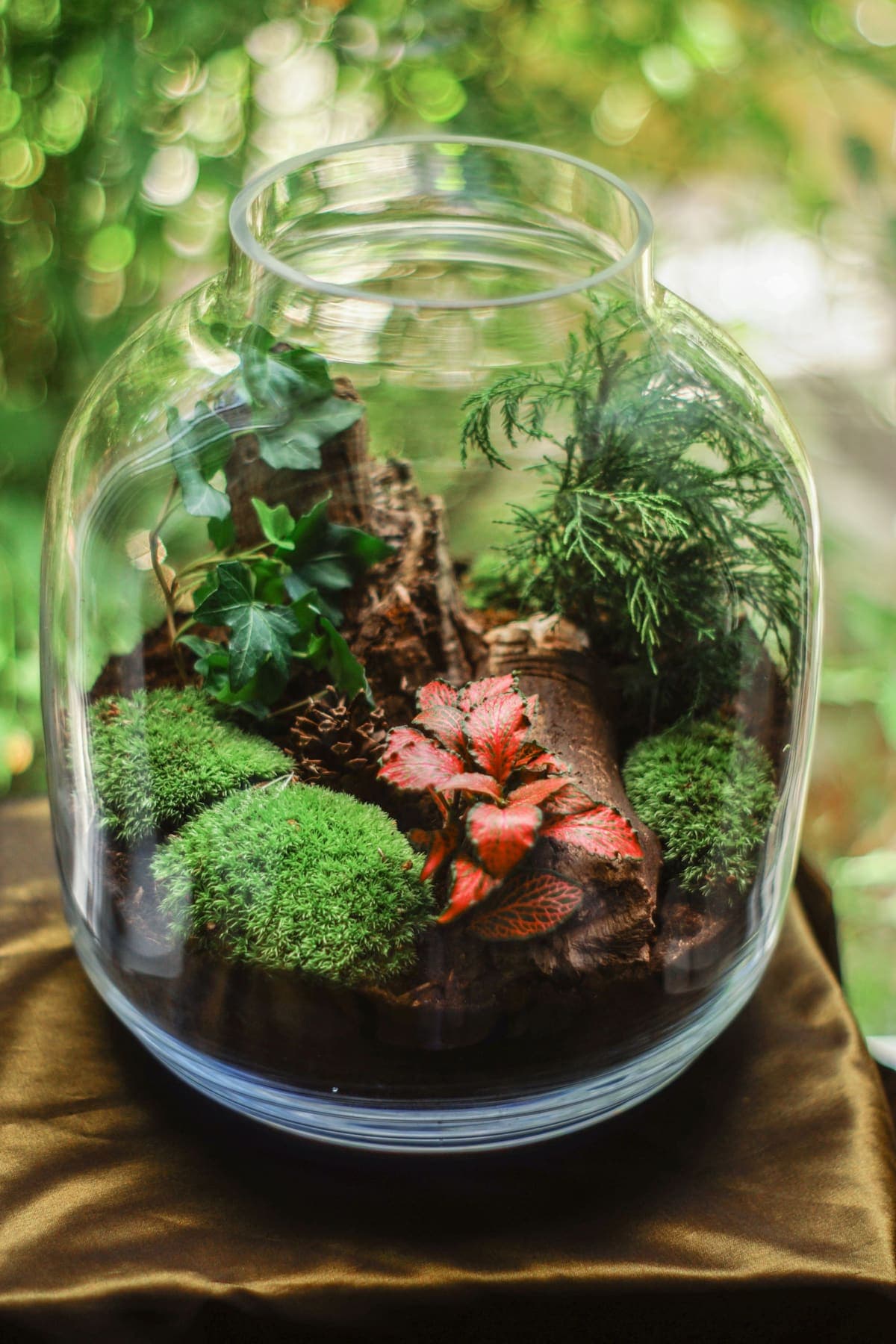
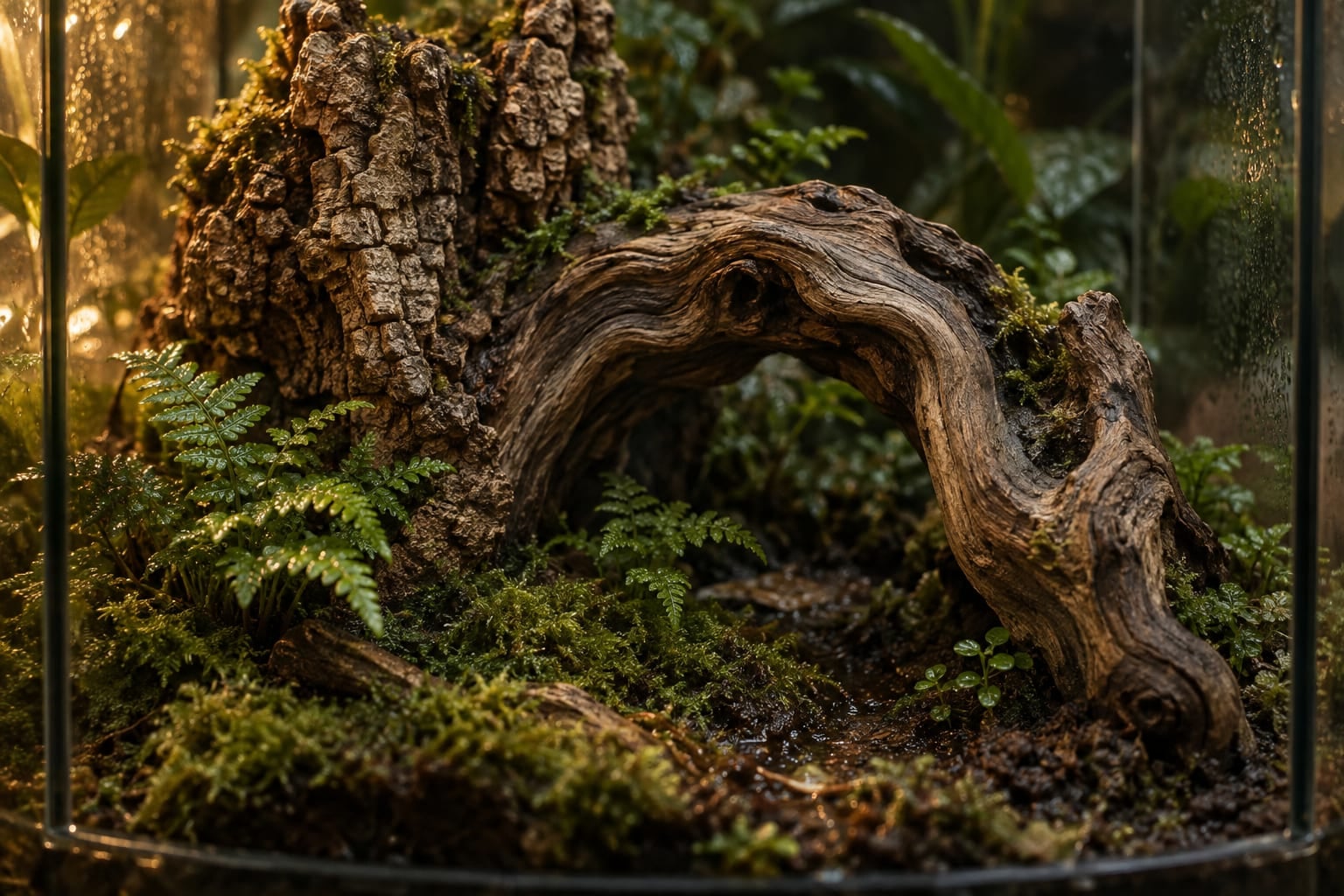
A root gives a miniature forest its relief, but the piece you choose also affects how you reach the plants and how much decaying matter sits in the jar. This guide covers selection and installation. For a fungus that has already appeared, use mushrooms on terrarium wood.
Choose a piece for what it will actually do
Ask what kind of wood it is, how it was prepared and whether it is described as suitable for a humid environment. "Natural" means neither identified nor free of treatment. A decorative branch for a dried arrangement has not necessarily been prepared to live in a watered jar.
| Material | Possible benefit | Check before buying |
|---|---|---|
| Horticultural cork bark | Light support and relief | No glue, paint or decorative treatment |
| Root sold for humid terrariums | Stable structure and sculptural look | Dimensions, preparation and instructions |
| Driftwood of known origin | Interesting shape | Salt, contamination and resistance to damp |
| Unidentified collected branch | Uncertain origin | Rule it out if you cannot establish its use |
| Painted, varnished or composite wood | Dry decorative use | Do not put it in the growing medium |
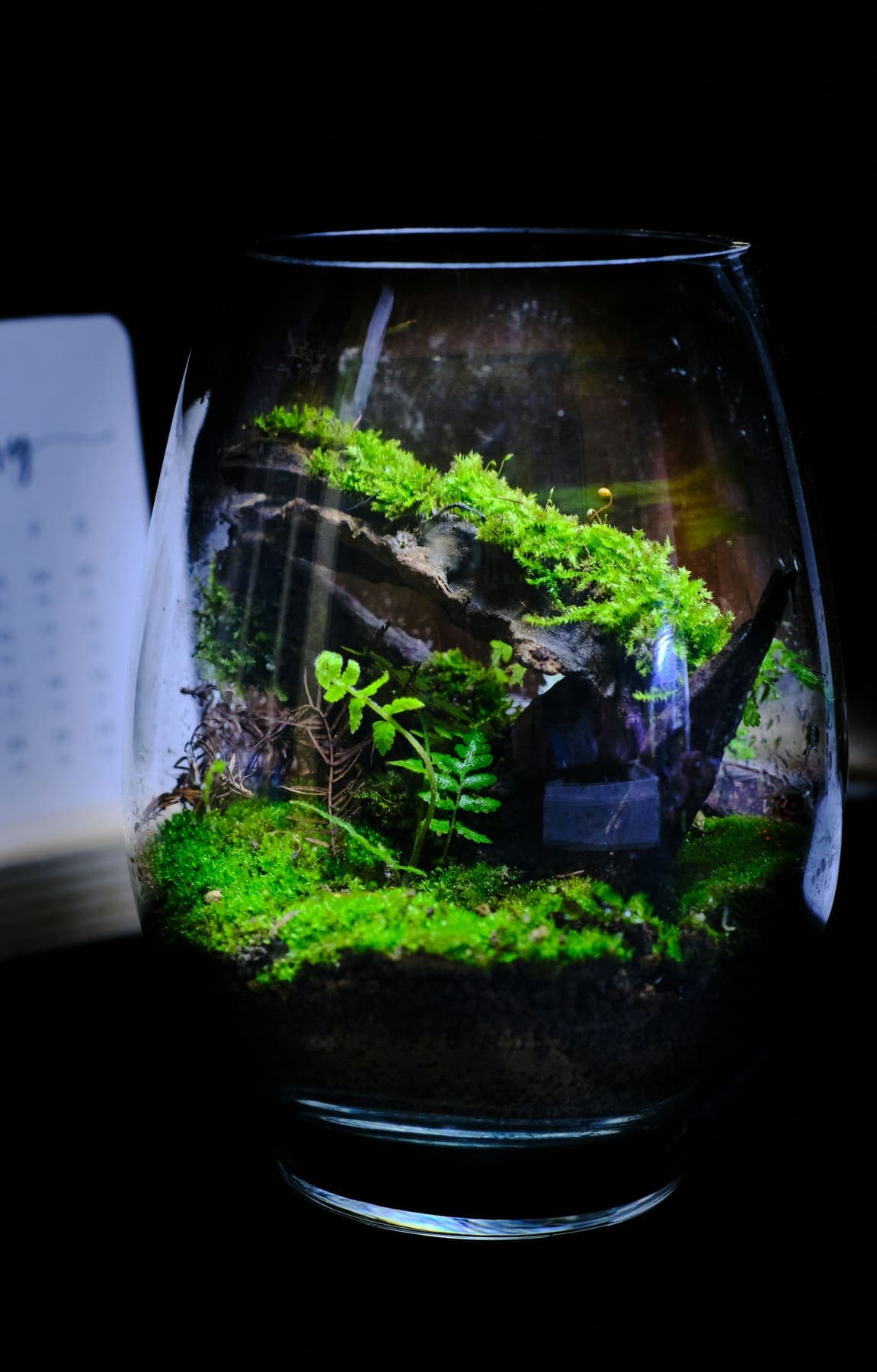
The shape must let a pair of tweezers reach the floor. A spectacular arch that makes it impossible to lift a plant out will complicate maintenance. Check too that the piece really goes through the neck: the widest point of a jar is not the width of its opening.
Inspect before you clean
Texture and soundness
Rule out parts that are soft or crumble badly. Wood that is already well rotted adds a heavy organic load and can collapse. For a small, simple composition, a modest stable piece beats a large stump that is hard to look after.
Smells and residues
A chemical smell, traces of paint or a sticky residue are reason enough to walk away. Rinsing does not neutralise an unknown substance inside the wood. Do not try to make a doubtful material acceptable simply by boiling it.
Prepare it without improvising a sterilisation
Brush off loose debris, rinse with water and follow the supplier's instructions. A soak may help remove dust or tannins, depending on the wood. Then let it drain and inspect the piece. Water stained by tannins is not proof of pollution on its own, but it does mean you need to know the material.
Avoid putting wood in the oven or the microwave, or through an improvised chemical treatment. A method found for an aquarium does not transfer automatically to a piece that is glued, very dry or of unknown species. Cleaning does not make wood permanently sterile: the terrarium will be colonised by micro-organisms again.
Fix it in place without threatening the glass
- Do a dry run in the empty container.
- Check that it is stable in several directions, without pressing hard against the walls.
- Put the heavy elements in stably before the plants.
- Leave access to the base of the plants and to any area likely to trap debris.
- If a glued fixing is essential, use only a product explicitly suited to the environment, and let it cure fully before planting.
Do not wedge a root under tension between two walls. Wood swells, and later handling changes the stresses. A small piece sitting stably is often enough. The guide to the minimalist terrarium helps you compose without stacking up hardscape.
Plants and mosses on wood
Not every plant grows with its roots in the air on a branch. For an epiphyte, match the support, the humidity and the ventilation to its needs. For a moss, check that it can genuinely hold on to that support, rather than gluing a cushion meant for the floor.
The guide to laying moss covers contact with the support. A small amount of sphagnum can help some set-ups, but a thick layer kept permanently wet is not a universal answer.
The first few weeks
Watch the wood and the plants near it. Surface filaments call for observation and the removal of any debris you can reach; heavy, persistent breakdown may mean taking the piece out. Springtails do not save you from removing an unsuitable material.
Compare the hardscape and wood by size and by the use each one is sold for. The miniature wood assortment is worth a look depending on the dimensions of your project, with no guarantee that any given piece will fit a particular jar.
Sources and scope of this advice
- Iowa State University Extension — Terrarium care: the decay risks of organic hardscape.
- Oregon State University Extension — Making a terrarium: the place of hardscape in a composition.
The right choice depends on the exact material; this guide does not offer a universal treatment. Generated illustration, for editorial purposes.
Frequently asked questions
Can you pick up a branch in the woods?
An unidentified branch may already be breaking down or be contaminated. Respect the rules of the place, and favour a material whose origin and intended use you know.
Should every piece of wood be boiled?
No. Follow the supplier's recommendations. Boiling does not make treated wood, or wood of unknown origin, suitable for a terrarium.
Does cork never go mouldy?
No organic hardscape should be presented as guaranteed free of fungal colonisation. Humidity, debris and the condition of the material all count.