

Acclimatising a new plant before you close the terrarium
After buying, inspect and acclimatise your plants before planting: isolation, humidity, roots and the signs to watch so you lose fewer of them.

In this guide
A plant sold for terrariums may have grown in a ventilated glasshouse, travelled in a box and then waited on a dry shelf. The name on the label tells you nothing about that journey. Acclimatising means making the change bearable; isolation is there to spot a problem before it joins a composition.
Start with identification
Check the name of the species, its mature size and its needs. A small plant is not necessarily a miniature one. Some are sold young and will outgrow the container quickly. Read which plant for a terrarium before you start working on humidity.
This guide covers tropical plants suited to a humid composition. It will not make a succulent compatible with a closed jar. A fundamental mismatch is not corrected by a few days of adjustment.
Inspect on arrival
Under good light, examine the undersides of the leaves, the leaf axils, the collar and the surface of the growing medium. Look for small cottony clusters, fine webbing, soft patches and insects. A leaf damaged in transit does not mean the same thing as damage that is spreading.
- Remove any packaging that blocks your view or squashes the foliage.
- Let the plant come back to a steady temperature, out of direct sun.
- Check how damp the pot is before watering.
- Photograph any marks so you can see whether they change.
- Keep the label and the grower's instructions.
A damp root ball does not need extra water simply because the plant has travelled.
Isolate and observe
Put the newcomer away from your other plants and give it its own saucer. Two to three weeks of observation is a practical precaution for bought plants; it does not guarantee that you will catch every pest. Extend it if the signs call for it, and do not introduce a specimen you still have doubts about.
Illinois Extension goes as far as three weeks of separation for new plants. The point is to limit transmission, not to reach a magic deadline after which any plant is safe. If you find insects, use the guide on small creatures in a terrarium to help with identification before you do anything else.
Change the humidity without waterlogging the soil
A plant still in its pot
Keep it in its drained pot at first: it is easier to tell its need for water apart from the humidity of the air. If a clear enclosure helps, start it ventilated and adjust step by step. Keep the light indirect and keep the sun off the plastic or the glass.
A plant raised in very humid conditions
A plant that comes from a propagation box may do the opposite and dry out when it meets room air all at once. Follow the grower's instructions and open the enclosure gradually. The direction of the change matters: acclimatising does not always mean closing things up further.
When to pause
Permanently wet foliage, soft tissue or an unusual smell all call for a check. Do not raise the humidity again to correct every sign of weakness. Look at the growing medium and the base of the plant before you change the ventilation.
Prepare the roots with restraint
Remove only the material that falls away easily, and only if its composition is compatible. A full wash is not compulsory. Avoid tearing off fine roots to get a perfectly bare root ball.
If the original medium stays very compact and sodden, moving to a suitable substrate may be necessary. Do that on its own, then wait for signs that things have settled. A freshly repotted plant does not need a dose of fertiliser to get going.
Plant, then watch the new growth
The plant is ready when its condition is stable, its tissue stays firm and no suspect problem is spreading. New growth is a good sign, though not an absolute guarantee. Choose a spot that leaves air and access around the foliage.
After planting, check it regularly without disturbing the roots. Match how far you close the jar to the real state of the medium and the leaves. There is no calendar that says you must seal it completely on day three.
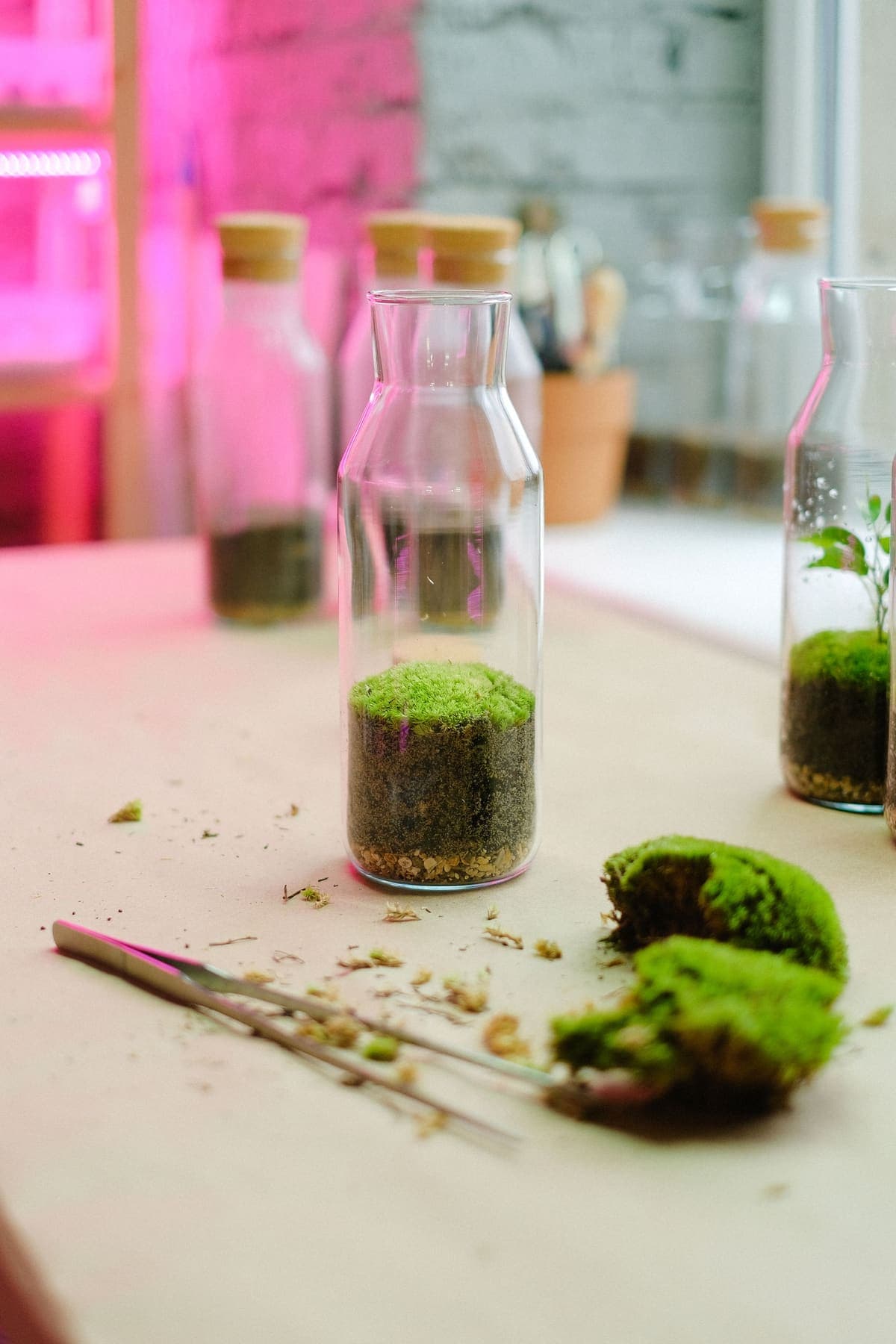
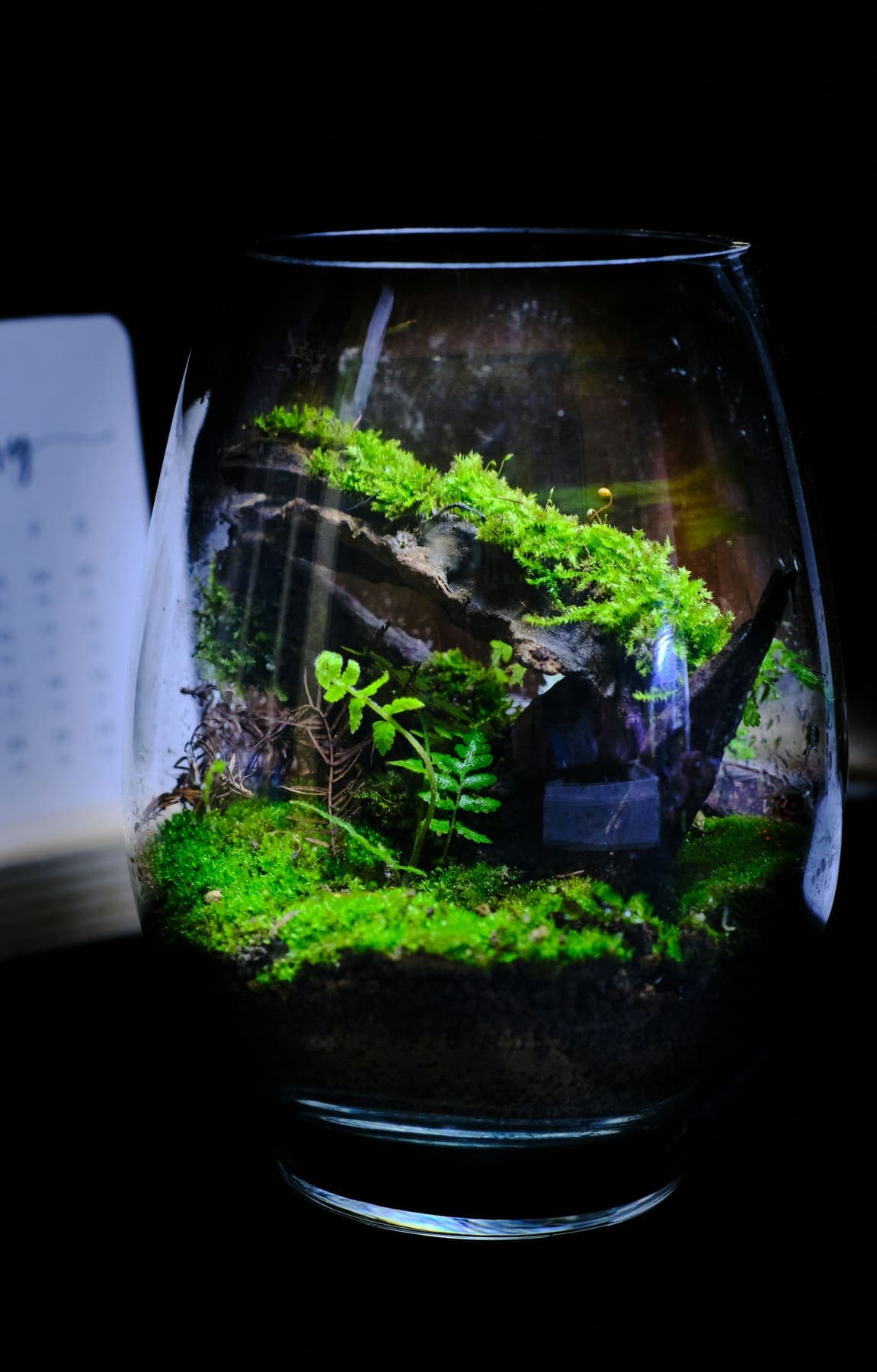
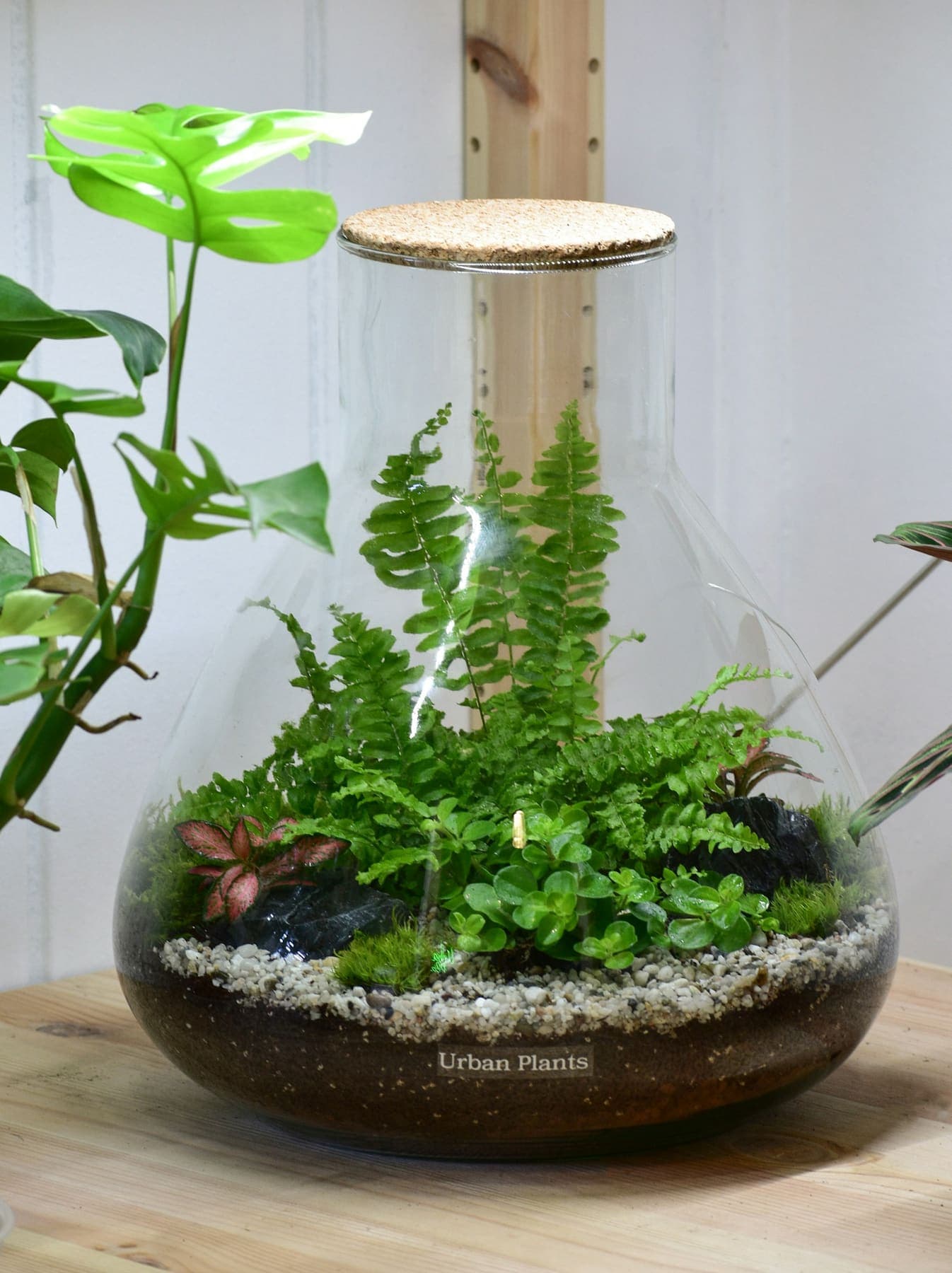
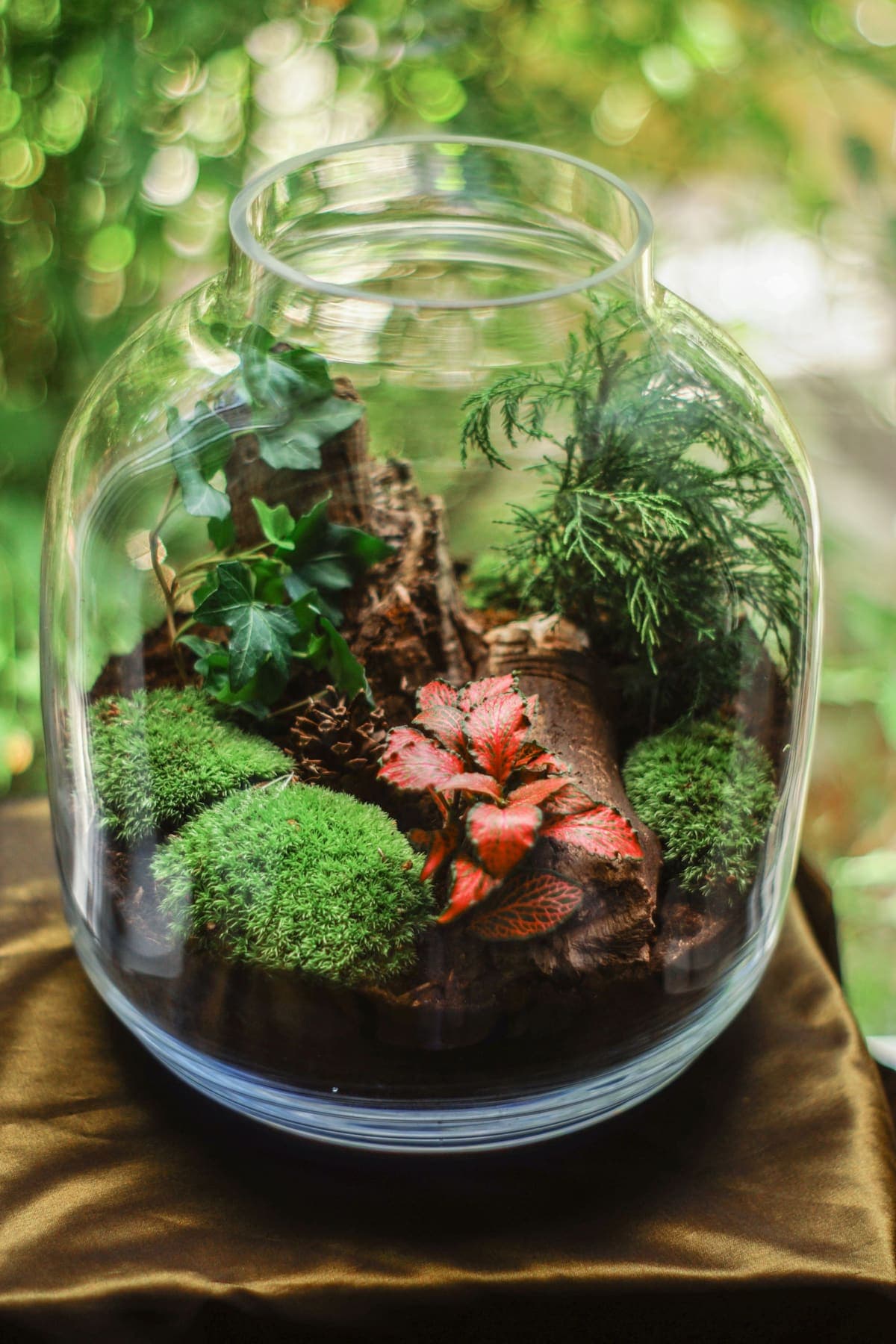
The miniature forest project helps you plan the positions, and the terrarium plants category lets you pick a set that works together. Preparing the plants separately gives you time to build the scene without holding them in a makeshift environment.
Sources and scope of this advice
- Illinois Extension — Get started with houseplants: inspecting and isolating new plants.
- RHS — Growing houseplants: light, humidity and care by species.
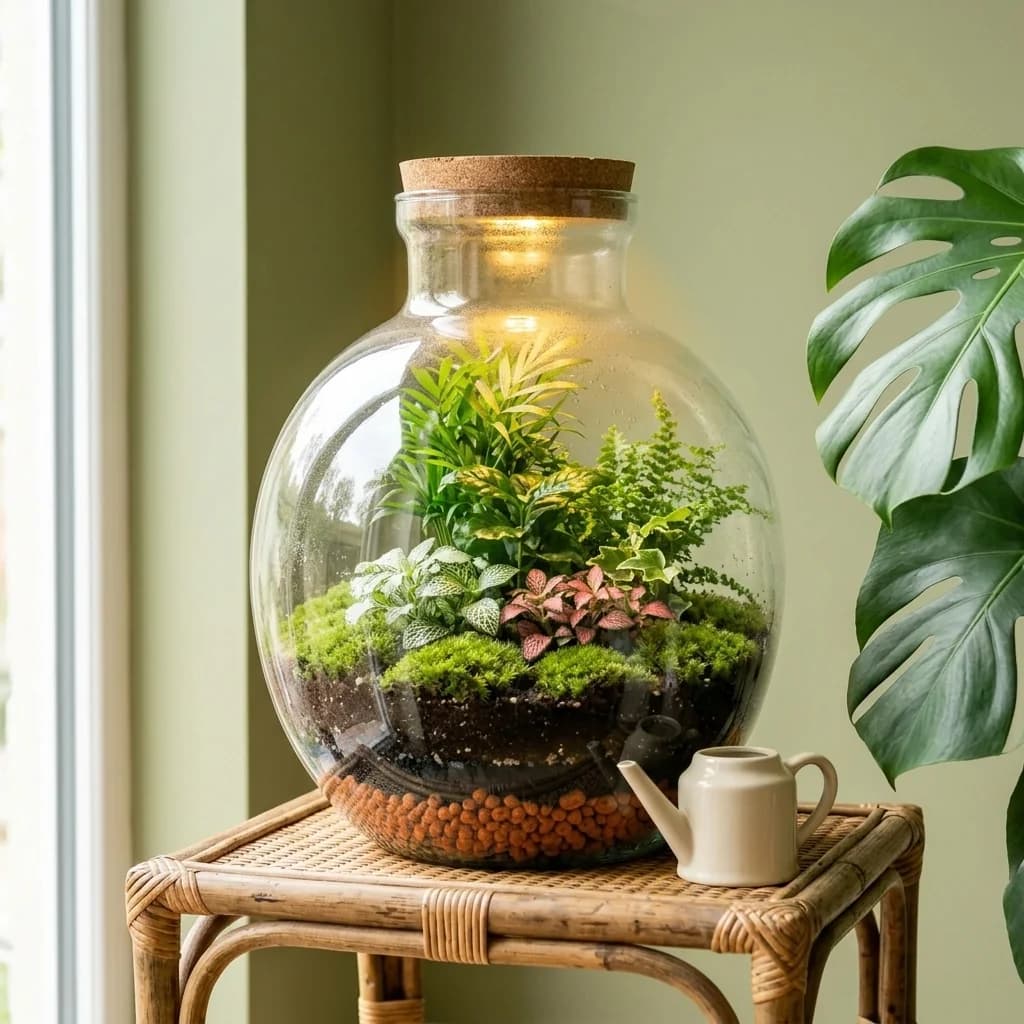
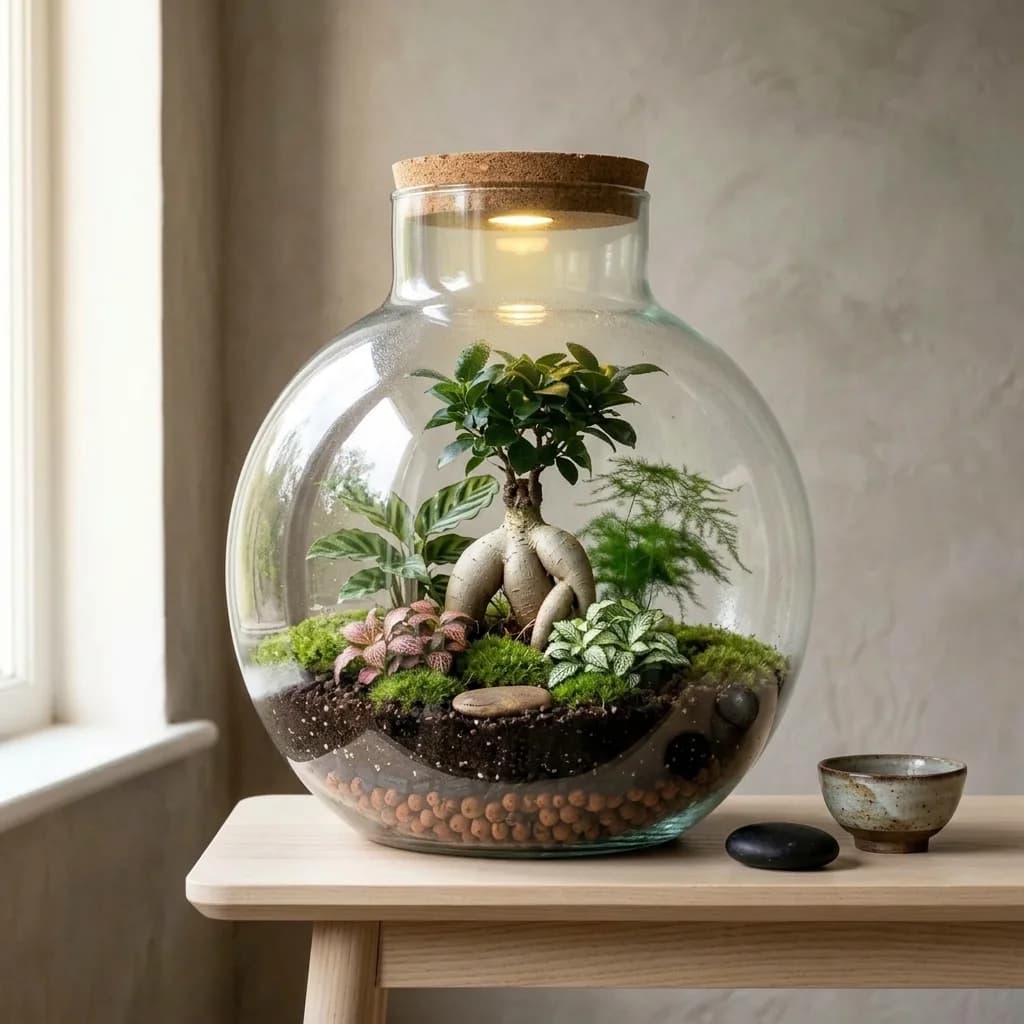
Adapt these steps to where your plants come from and to the grower's instructions. Generated illustration, for editorial purposes.
Frequently asked questions
Can you plant straight out of the box?
It is possible with a stable, suitable plant, but a spell of separate observation limits nasty surprises. Avoid planting a stressed or suspect specimen straight away.
Should you remove all the original compost?
No. Take away what needs to go without sacrificing healthy roots. A complete change of growing medium is justified by its condition and by what the plant needs.
How many days before closing the jar?
There is no universal number. Watch the leaves, the growing medium and the signs of recovery, then close it up gradually.