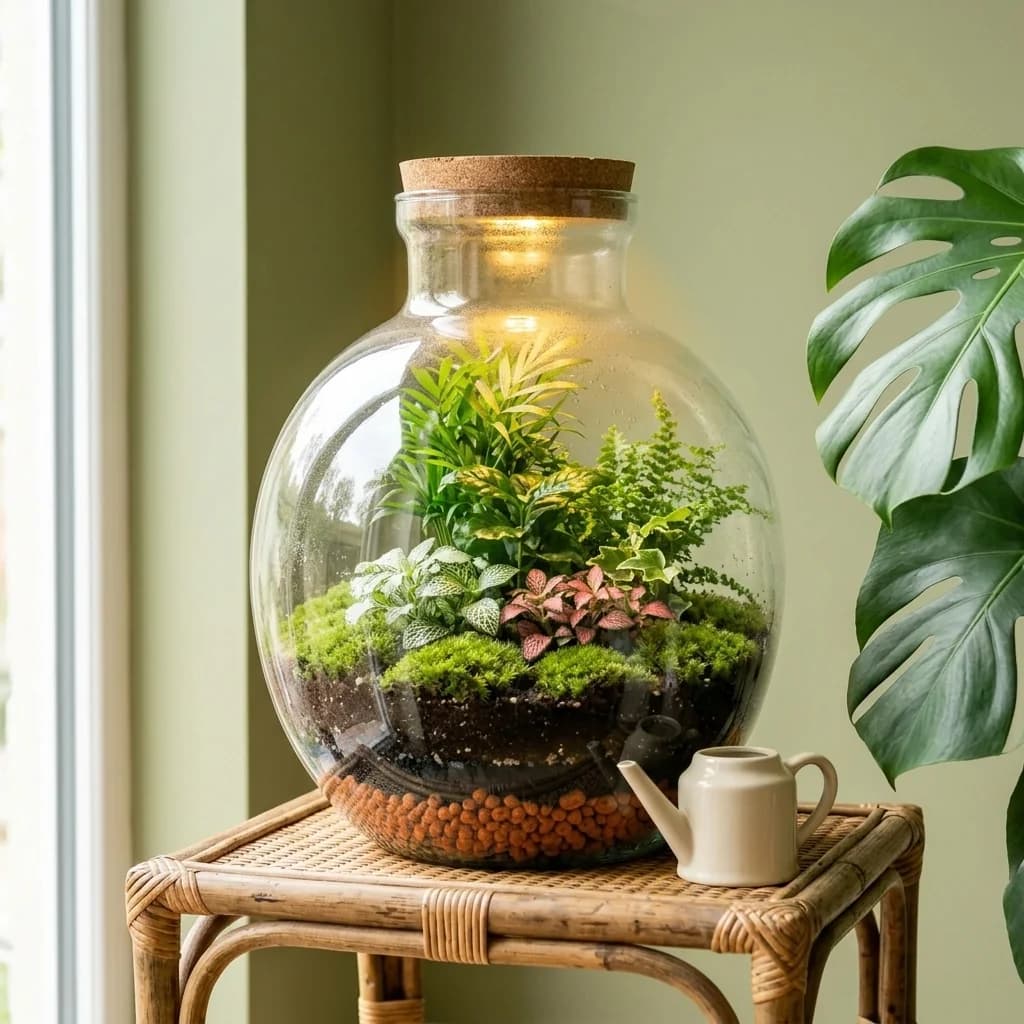
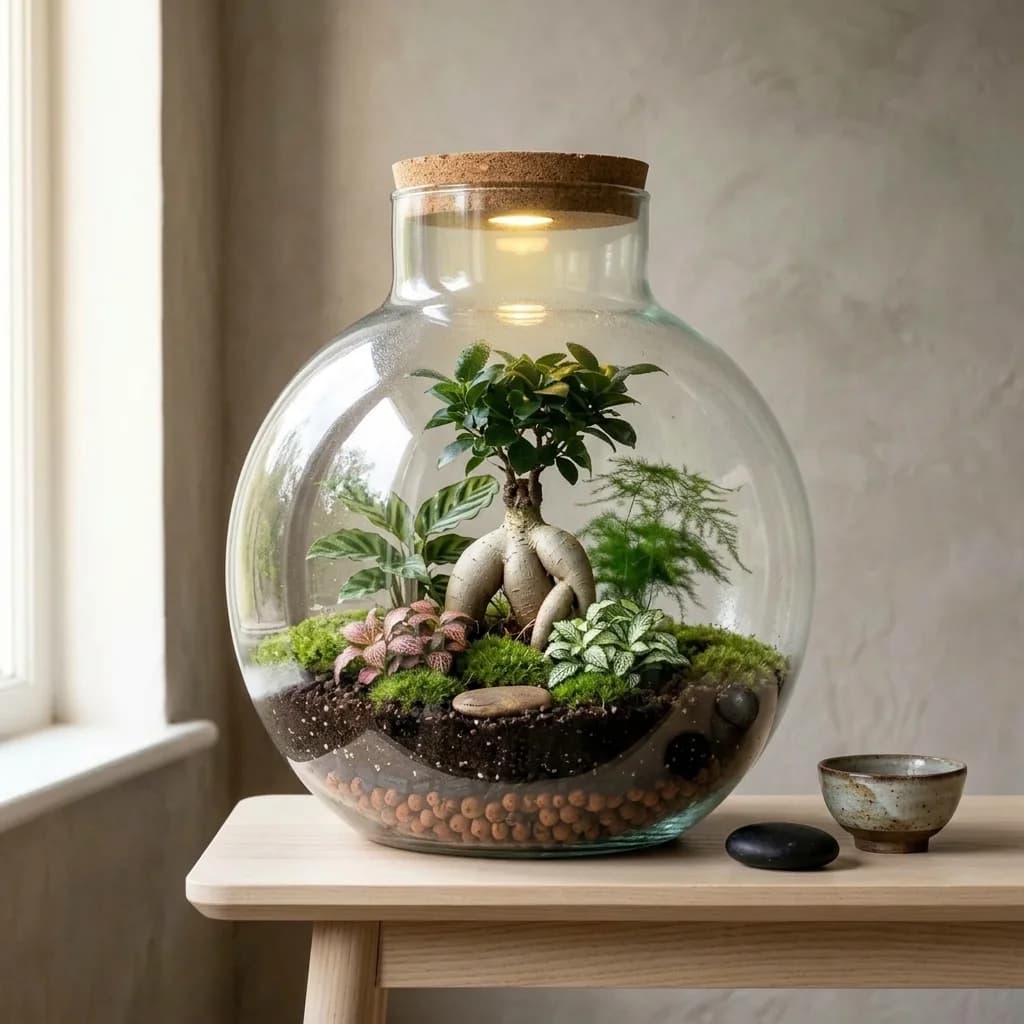


Which substrate should you use for a terrarium?
Choose airy substrate for your plants and container: moisture, fertility, materials to avoid and adaptation to a bioactive terrarium.
In this guide
Going further: For a fibrous medium, tell living sphagnum, dried sphagnum and peat apart before you change the mix.
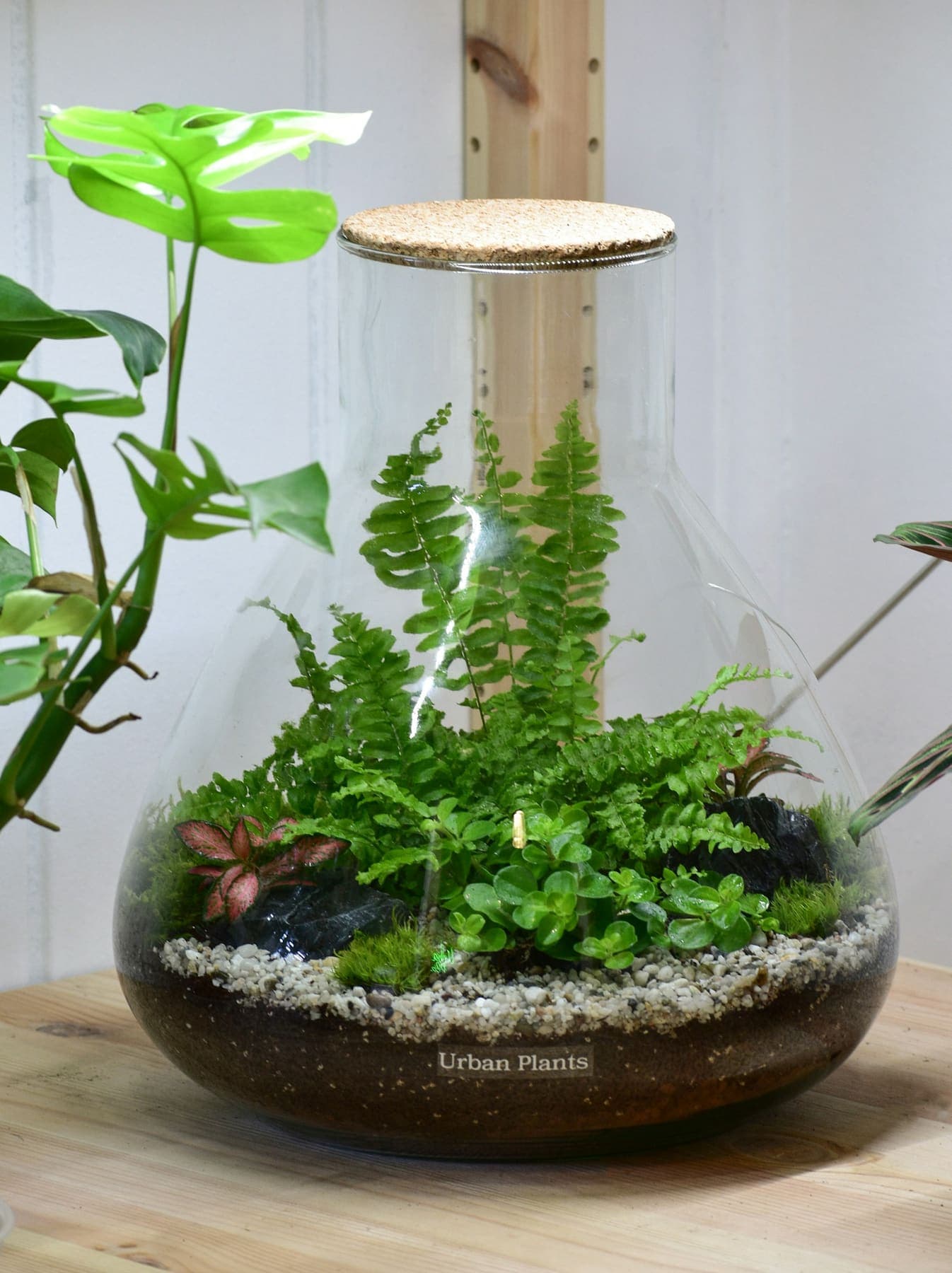
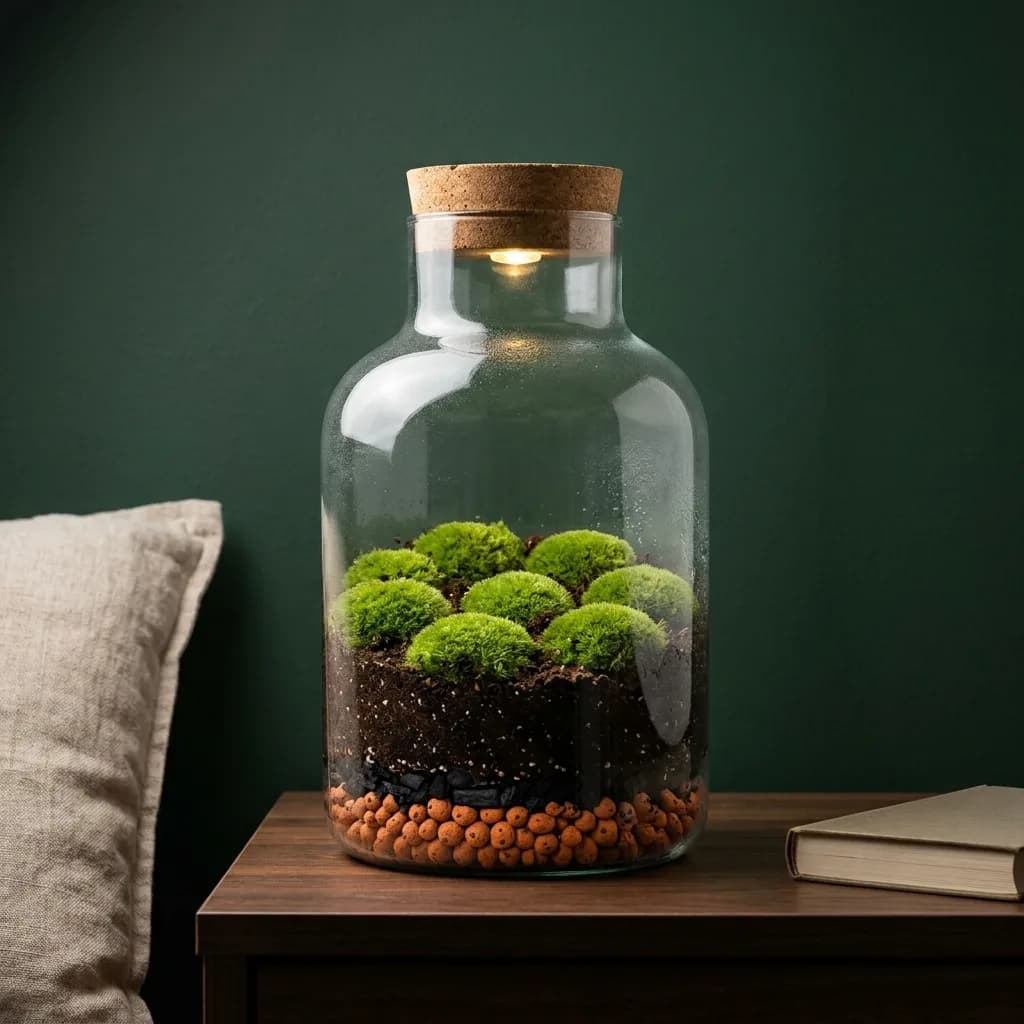
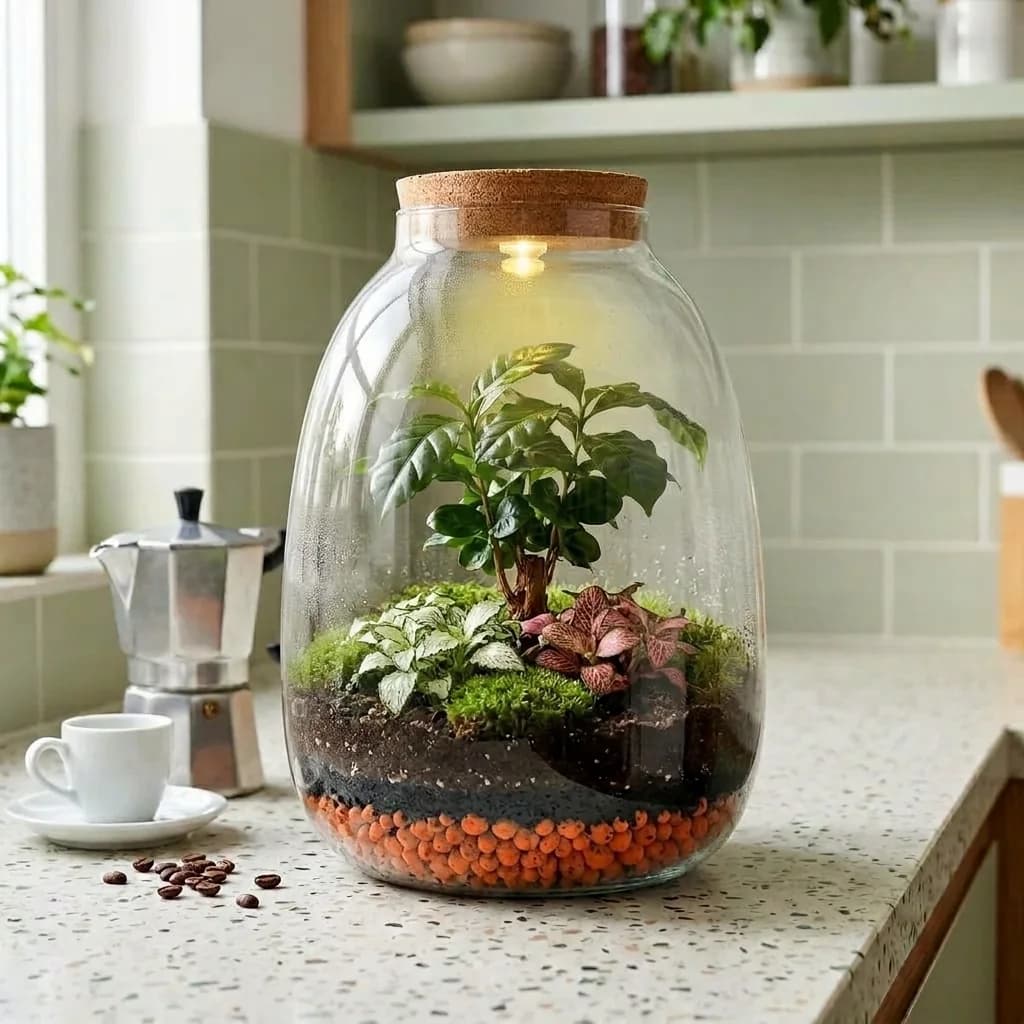
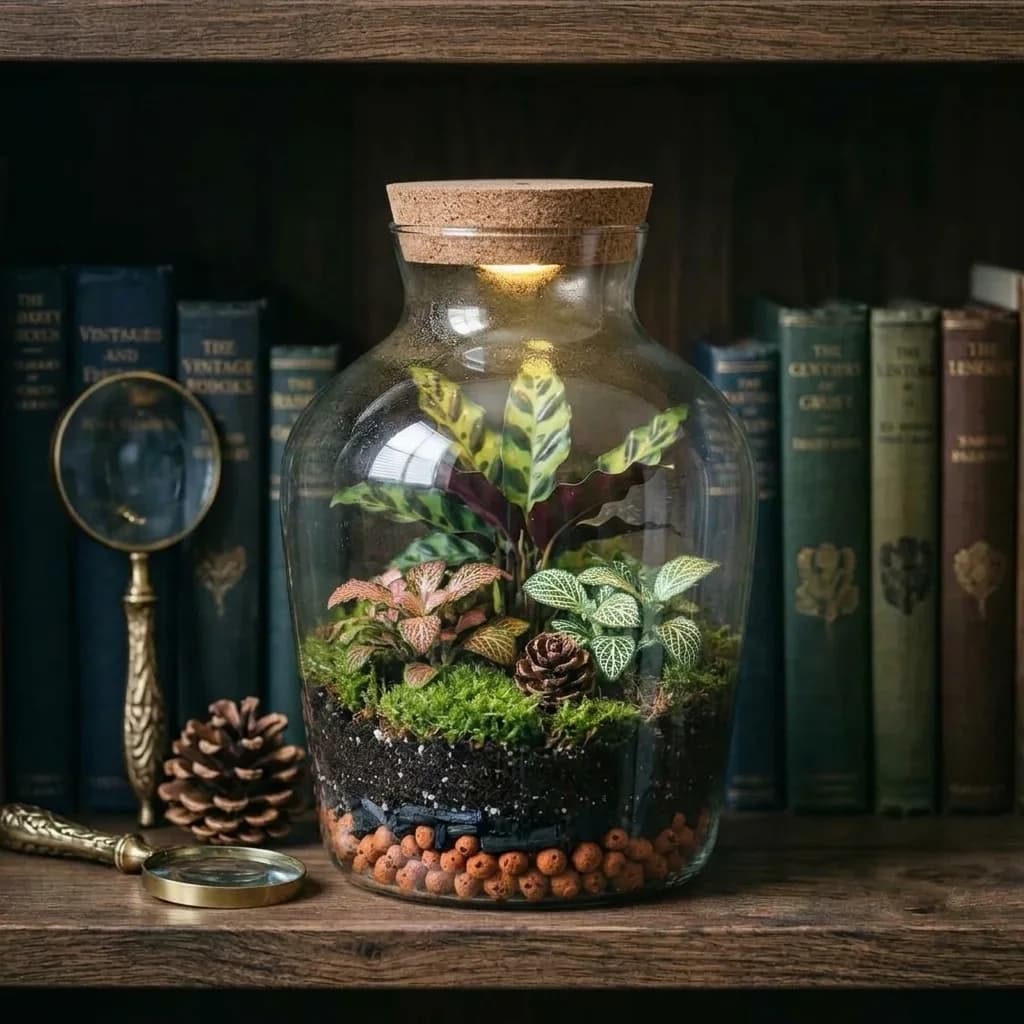
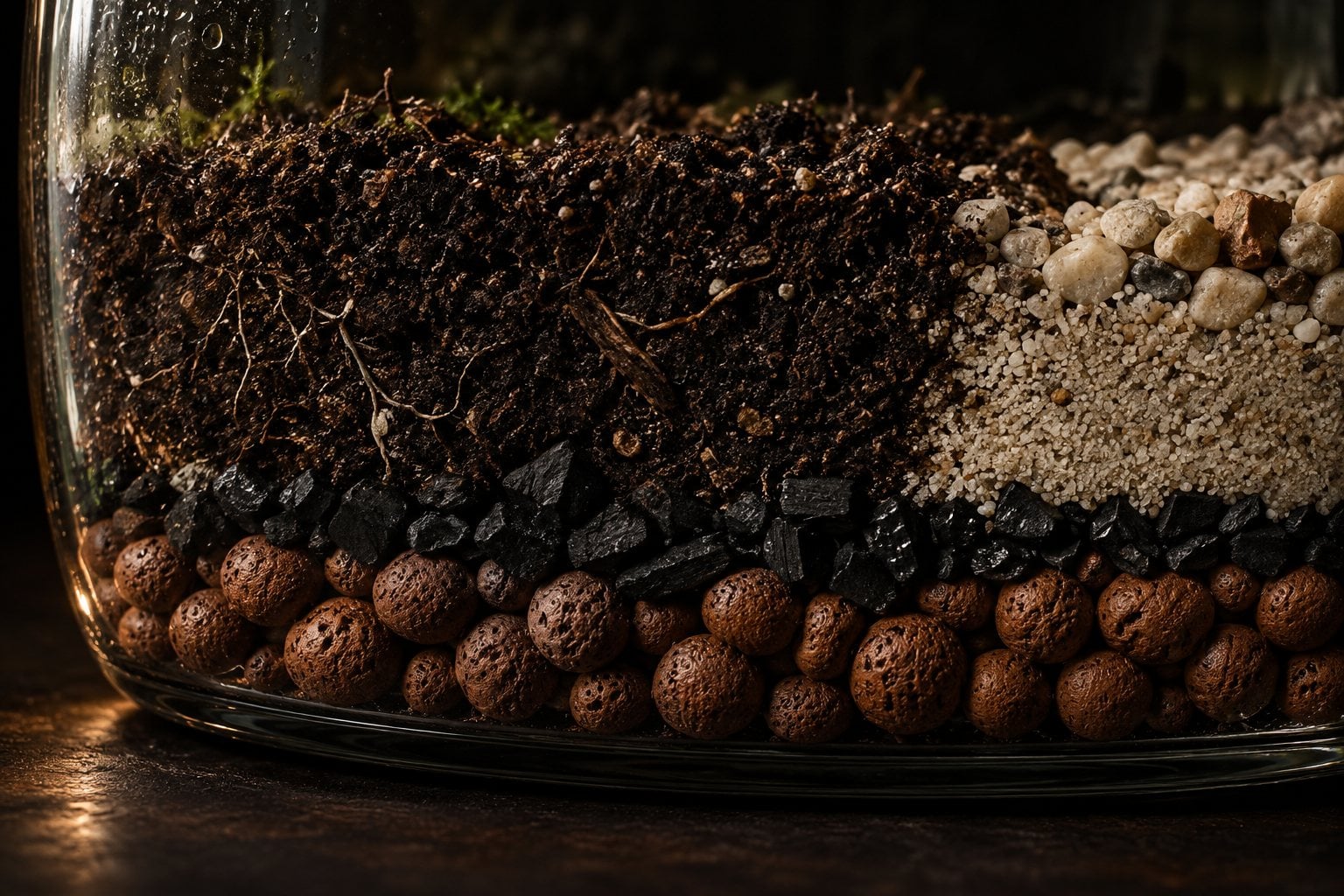
For a tropical terrarium, the classic substrate is made up of three or four layers: a draining material at the bottom (clay pebbles or gravel), a thin separator, a little horticultural or activated charcoal, then a light, low-nutrient potting mix, with no garden soil. For a desert terrarium of succulents, the potting mix is replaced with a very free-draining mineral blend that holds almost no water. In both cases, the combined layers shouldn't take over the container: the University of Illinois recommends they make up about a quarter of its volume.
Choose the mix before the layers
Rooting substrate must retain air: pebbles cannot make dense soil free-draining. No layer drains water outside a jar without holes. Charcoal is optional and does not sterilise the system. Match depth to root balls and leave room for leaves.
Terrarium layers explains assembly. For soil inhabited by decomposers, see bioactive terrariums: charcoal or a bag of soil alone does not guarantee biological activity.
Why does a terrarium need several layers?
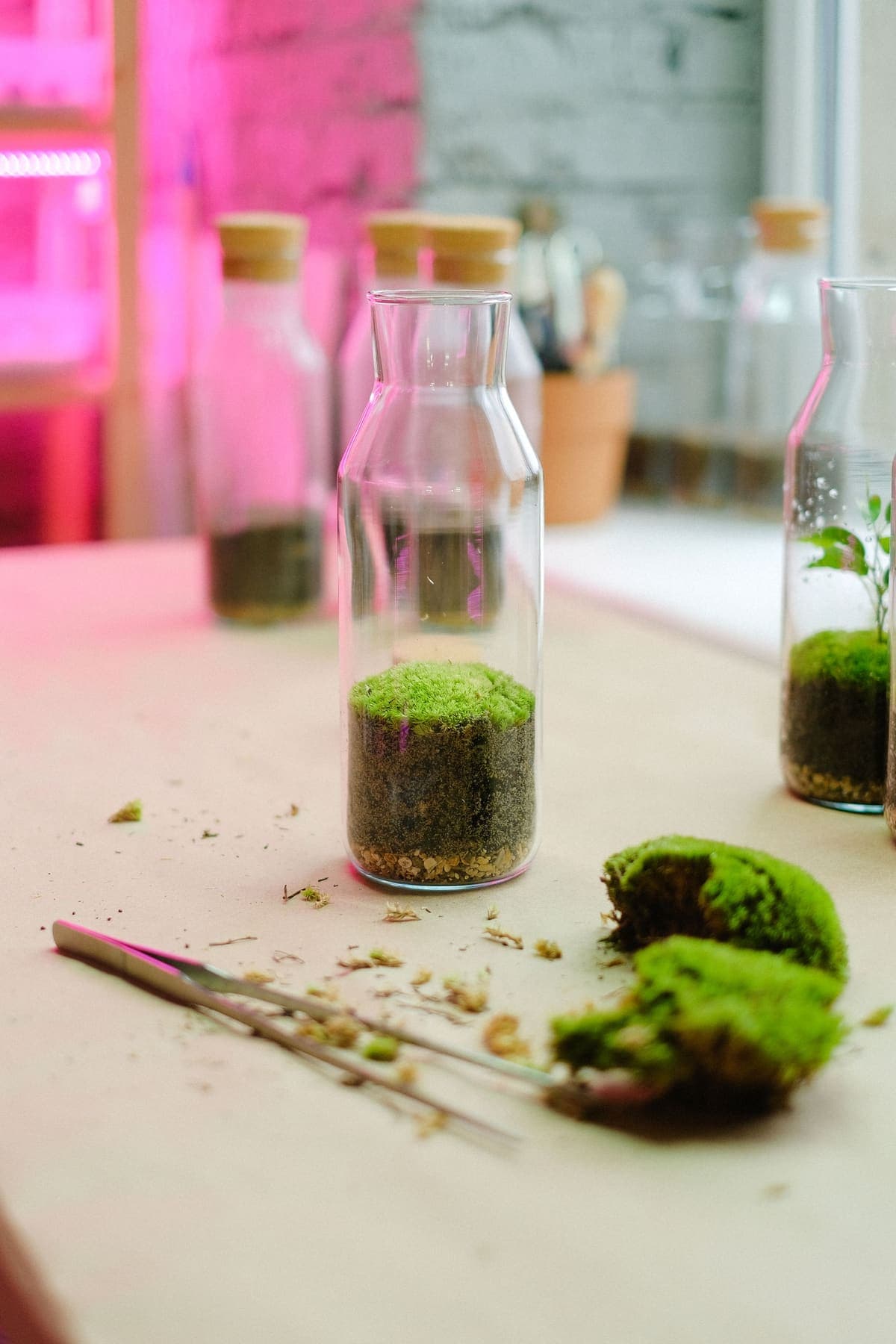
A terrarium has no drainage hole. In a plant pot, excess water runs out; in a jar, it stays put. The layers share out the roles: at the bottom, a zone where excess water can collect without reaching the roots; in the middle, something to keep the potting mix clean and limit odours; on top, a substrate where the roots find water and air. A single material would do all three jobs badly.
What's each layer for?
Drainage
This is the bottom layer: expanded clay pebbles, gravel or small washed pebbles. Mississippi State University, in its closed terrarium guide, recommends around 2.5 cm. It collects the water from a slightly over-generous watering and keeps it away from the roots.
One nuance is worth knowing. Penn State Extension now argues that a layer of stones doesn't really improve drainage, and suggests doing without it and watering with great care instead. Most guides, including those from Mississippi State and Illinois, keep it. For a first terrarium, we recommend keeping it: it doesn't replace measured watering, but it forgives a small excess.
The separator
A thin mesh, a scrap of netting or a fine layer of moss laid over the drainage. It stops the potting mix from working its way down between the pebbles and clogging the water reservoir. Without it, after a few waterings, the bottom turns to mud.
Charcoal
A thin layer of charcoal, or a few handfuls mixed into the potting mix. Mississippi State's guide recommends a little over half a centimetre, specifying horticultural-grade charcoal. Illinois links it to removing compounds that could harm the plants, and Penn State to absorbing odours. Use activated or horticultural charcoal, never barbecue briquettes.
The potting mix
This is the layer where the roots grow. Mississippi State recommends a sterile, soil-free mix, about 5 cm deep. Penn State recommends a low-fertility substrate, at a depth at least equal to the largest root ball among your plants. This last guideline is the most useful: it's the size of the roots that decides, not a fixed figure.
Which potting mix for a tropical terrarium?
The right tropical terrarium mix has three qualities:
- It's light: it holds moisture without compacting, so roots can breathe.
- It's low in nutrients: in an enclosed space, a rich substrate pushes plants to grow fast and touch the glass.
- It's clean: no weed seeds, no larvae, no fungi brought in from outside.
So rule out two materials:
- Garden soil, which compacts, holds too much water and can bring in pests.
- Multipurpose compost enriched with fertiliser, too rich for an enclosed space, and often too dense.
Esschert Design's terrarium potting mix is sold in a 5 litre bag. The manufacturer doesn't detail its composition, so we won't give you specific ingredients here. It forms the top layer; drainage and charcoal are bought separately.
And for a desert terrarium?
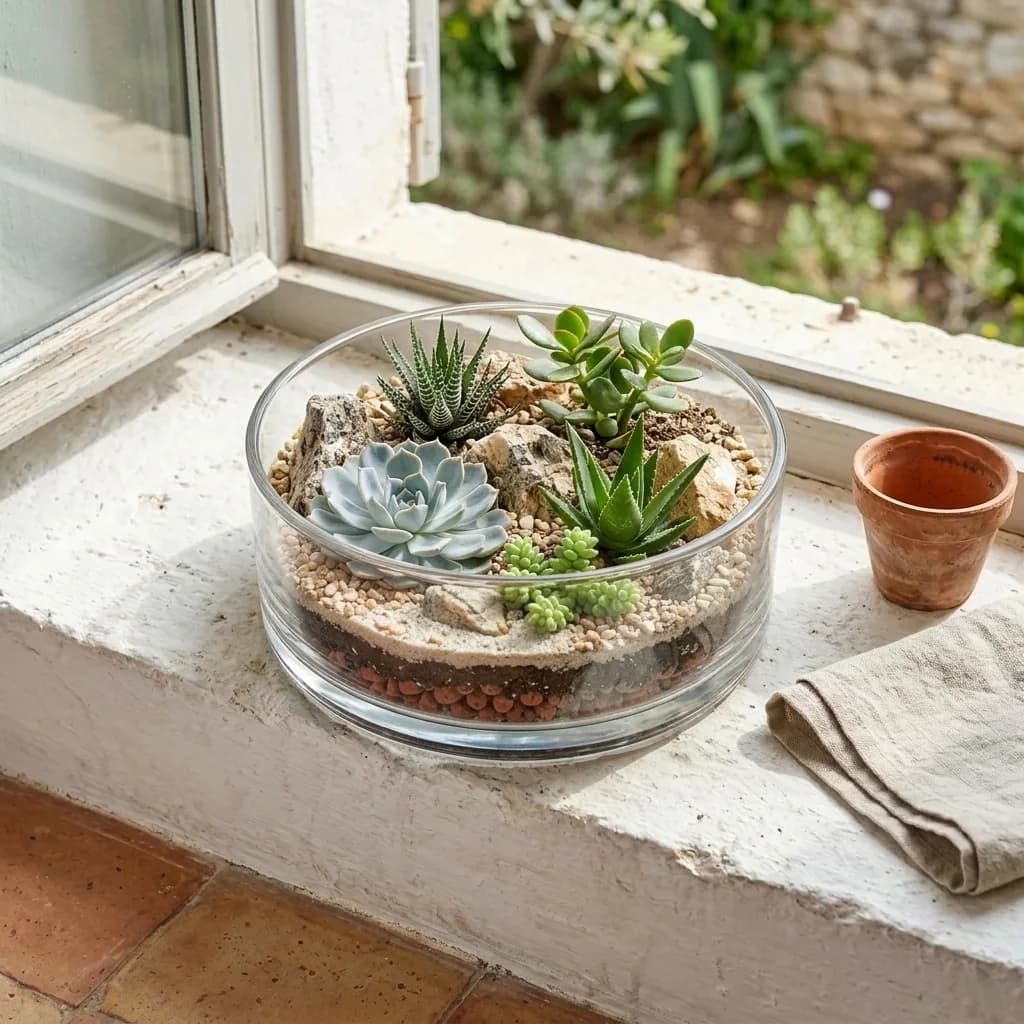
A succulent or cactus terrarium stays open, and its substrate follows the opposite logic. The Royal Horticultural Society recommends a very free-draining, gritty substrate for these plants, one that never becomes waterlogged. In a container with no hole, this matters even more.
- At the bottom, a draining layer of gravel or lava rock, as with tropical set-ups.
- On top, a largely mineral blend: lava rock, pumice, coarse washed sand, possibly a small amount of potting mix.
- On the surface, sand or gravel to keep the plants' collars dry.
No moss, no misting, no pure potting mix. Our succulent terrarium tutorial sets out the build in detail, and the desert section brings together suitable plants.
Tropical or desert: the differences at a glance
- Substrate's role: keeping constant humidity for tropical setups; drying out quickly between waterings for desert ones.
- Base: light, low-nutrient potting mix for tropical; mineral blend for desert.
- Charcoal: useful in a closed, humid environment; optional in an open, dry one.
- Surface: mosses for tropical; sand or gravel for desert.
- Container: closed or open for tropical; always open for desert.
How much substrate should you plan for?
Go by the University of Illinois's benchmark: drainage, charcoal and potting mix together make up around a quarter of the container's volume. Beyond that, plants lack height and soon touch the lid; below it, roots lack space.
In a wide, shallow container, the layers spread out and look thin: that's normal. In a tall jar, resist the urge to fill it more. A 5 litre bag of potting mix is usually enough for several small jars; for a large bottle, measure your container's volume with water first, then work out a quarter of it.
Should you prepare the substrate before use?
Yes, three simple steps:
- Rinse the drainage material. Gravel and clay pebbles release dust that dulls the glass.
- Dampen the potting mix before pouring it in, as recommended by the University of Illinois. It should be moist, not soaked: squeezed in the hand, it should hold together without dripping.
- Pour it in with a funnel or a paper cone for narrow-necked containers, so as not to dirty the sides.
Our tutorial How to create a closed terrarium covers the build layer by layer, plants included.
Common mistakes
- Using garden soil: compaction, excess water, pests.
- Skipping the separator: the potting mix clogs the drainage within a few weeks.
- Filling the container only halfway: there's no room left for the plants.
- Using rich potting mix: plants take off and take over the glass.
- Pouring in dry substrate then watering heavily: the water rushes to the bottom and sits there.
- Giving damp substrate to succulents: this is the most common cause of rot.
A substrate that's too wet and too rich in organic matter also encourages mould: our guide mould in a closed terrarium explains how to prevent it. To get watering right once the terrarium is built, read how to water a terrarium.
The kit
For a tropical terrarium, the potting mix is the main layer to choose with care.
If you'd rather not measure anything out yourself, the Noah closed terrarium kit brings together, in quantities set by the manufacturer for this jar, 0.75 litres of terrarium potting mix, 0.75 litres of clay pebbles and 35 g of activated charcoal, along with a fittonia and two moss balls.
Find plants, mosses and substrates for humid environments in our tropical section. The full kit list is in our guide DIY terrarium: the equipment you need.
Sources
- How to Design a Closed-System Terrarium — Mississippi State University Extension
- Creating a Closed Terrarium — Penn State Extension
- DIY bottle terrariums make great projects, gifts — University of Illinois Extension
- How to grow cacti and succulents — Royal Horticultural Society
- Noah, terrarium bottle garden DIY kit — urbanjngl
Frequently asked questions
Can you put multipurpose compost in a terrarium?
It isn't ideal. Multipurpose compost is often enriched with fertiliser and fairly dense: in an enclosed environment, it holds too much water and makes plants grow too fast. Choose a light, low-nutrient mix made for terrariums instead.
Is activated charcoal essential in a terrarium?
It isn't essential, but it's recommended in a closed terrarium, where humidity stays high: it's linked to absorbing odours and certain compounds. In an open succulent terrarium, you can do without it.
Can you replace clay pebbles with gravel?
Yes. Gravel, small pebbles or lava rock all do the same job, as long as they're rinsed before use. Clay pebbles have the advantage of being lighter, which matters in a large container.
Do you need to change a terrarium's substrate?
Not regularly. A balanced terrarium keeps its substrate for years. You only renew it if a problem persists: a smell, mould that keeps coming back despite airing, or water that stays permanently pooled at the bottom.