

The layers of a terrarium explained
Base, barrier, substrate and surface: understand the order of terrarium layers, how deep each one needs to be, and the limits of drainage with no outlet.
In this guide
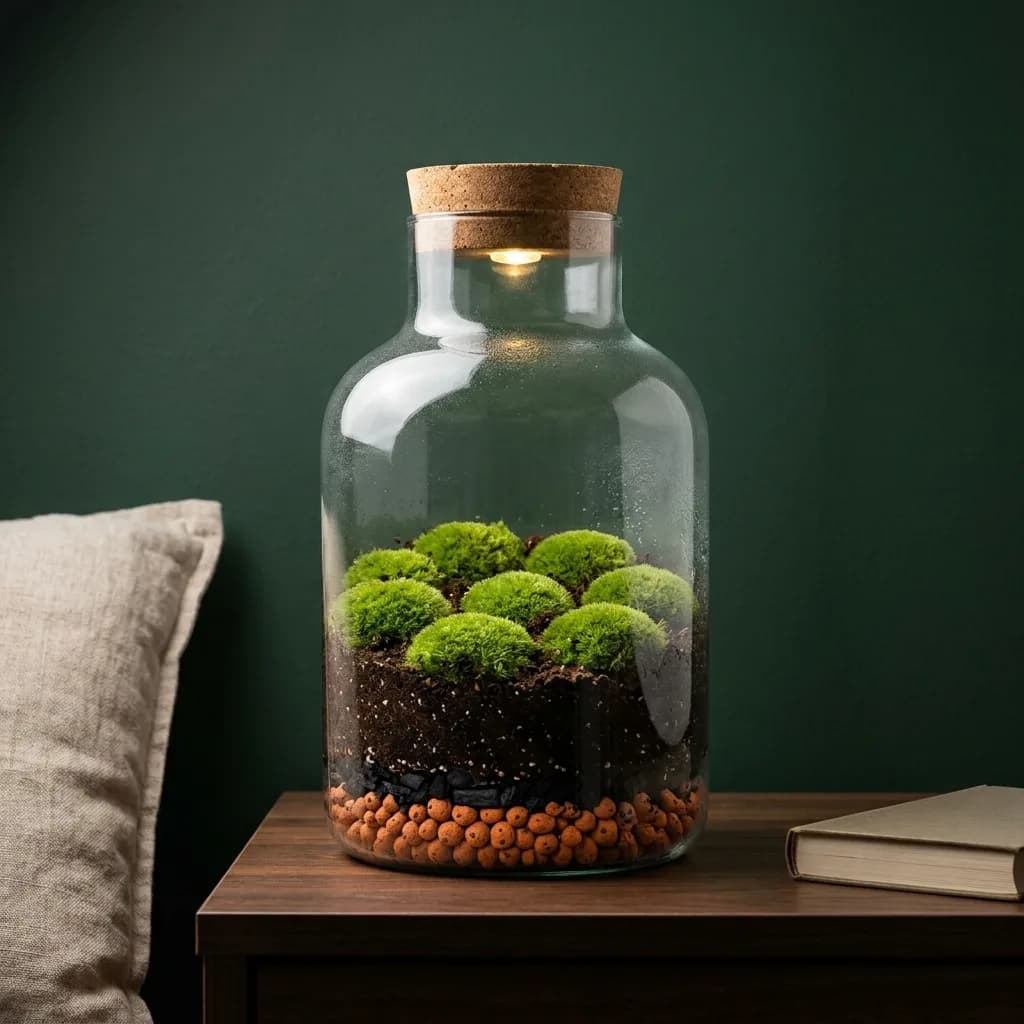
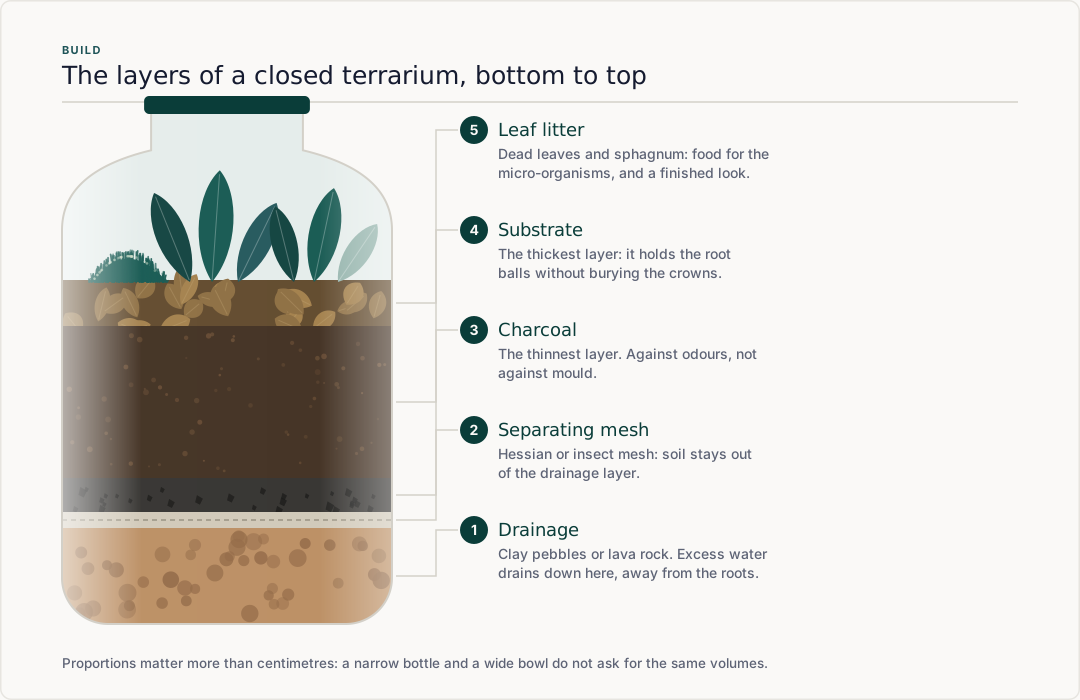
The layers of a terrarium organise the space for the roots and make the water easier to watch. They do not turn a closed jar into a pot with a hole in the bottom: no layer of stones sends water outside the container. The build therefore has to stay compatible with measured watering.
What order should they follow, from the base upwards?
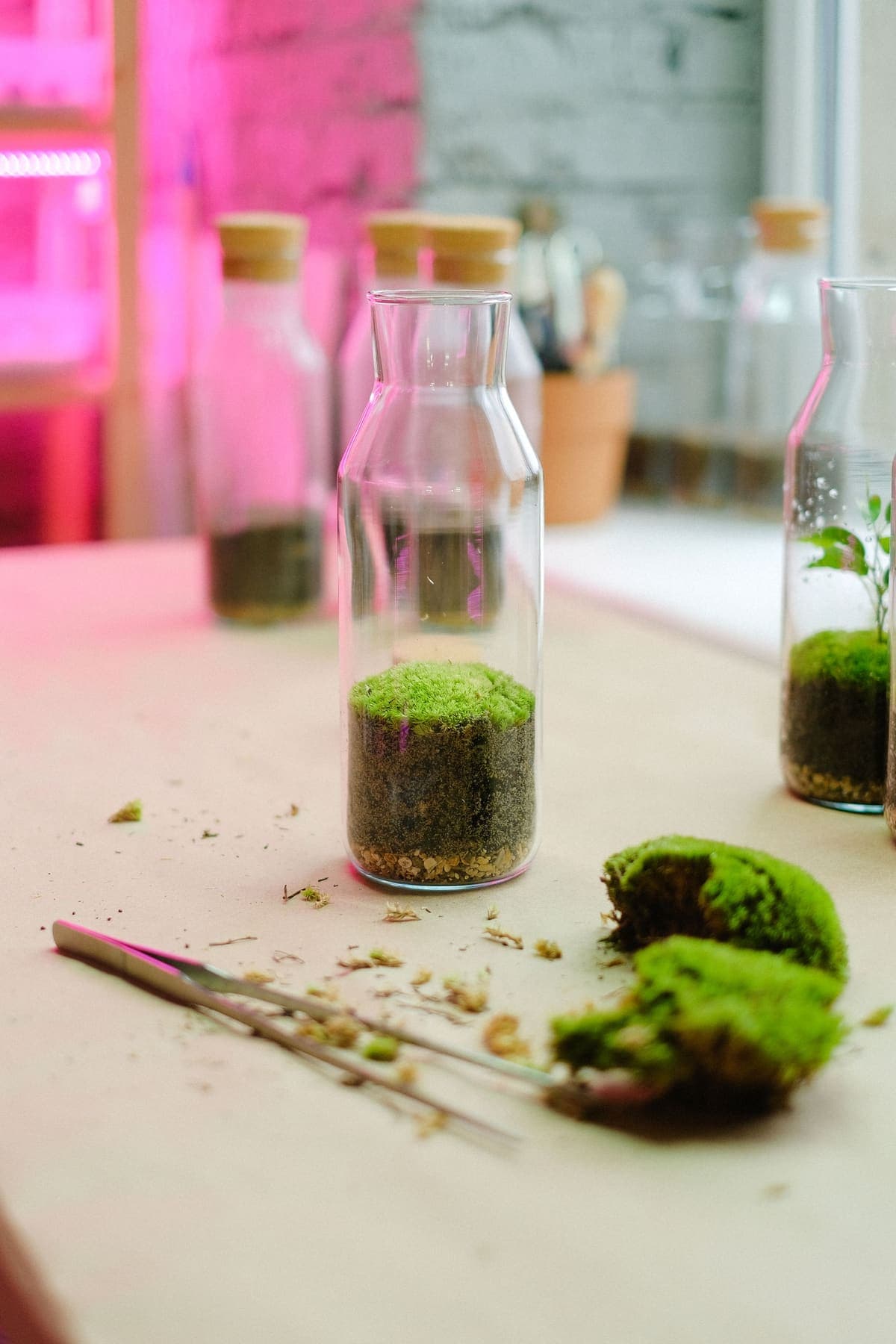
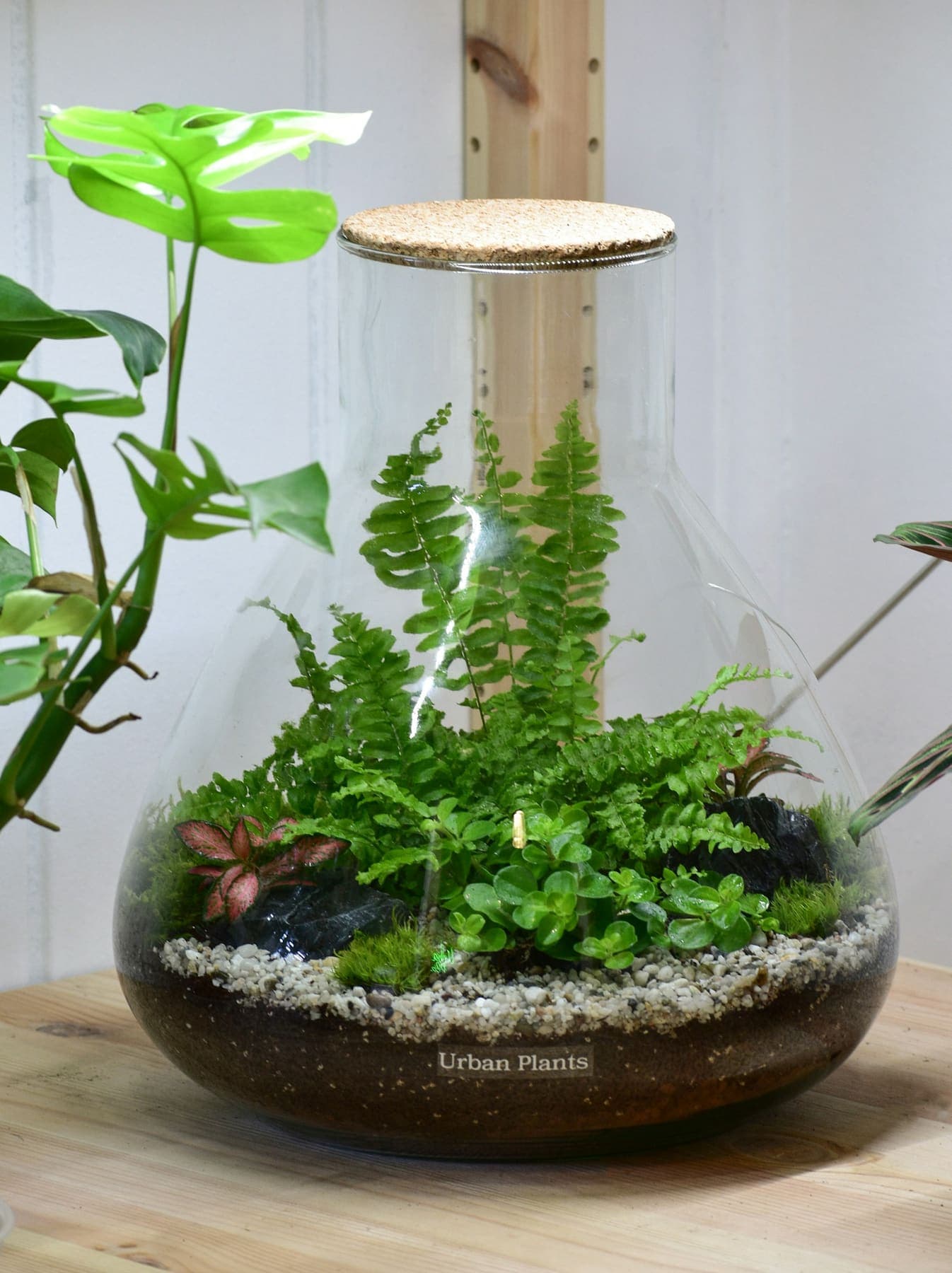
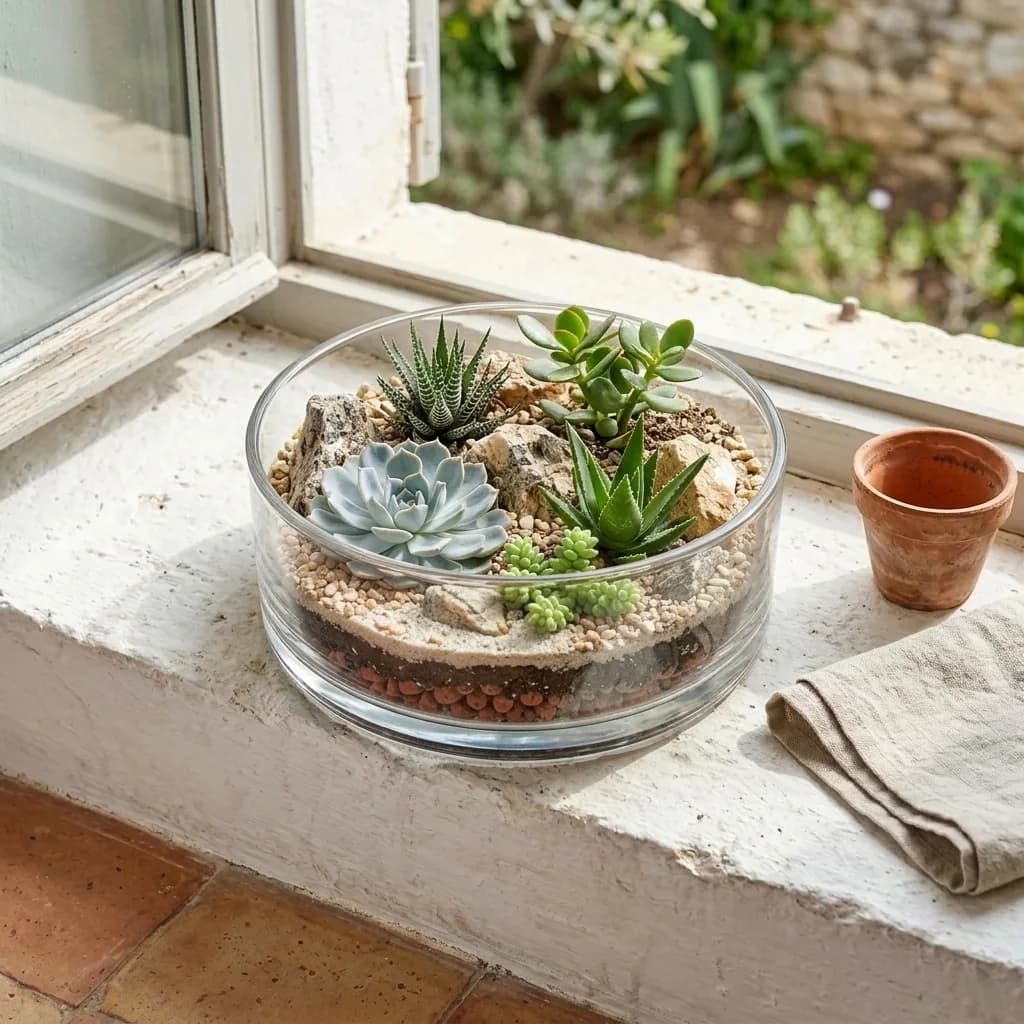
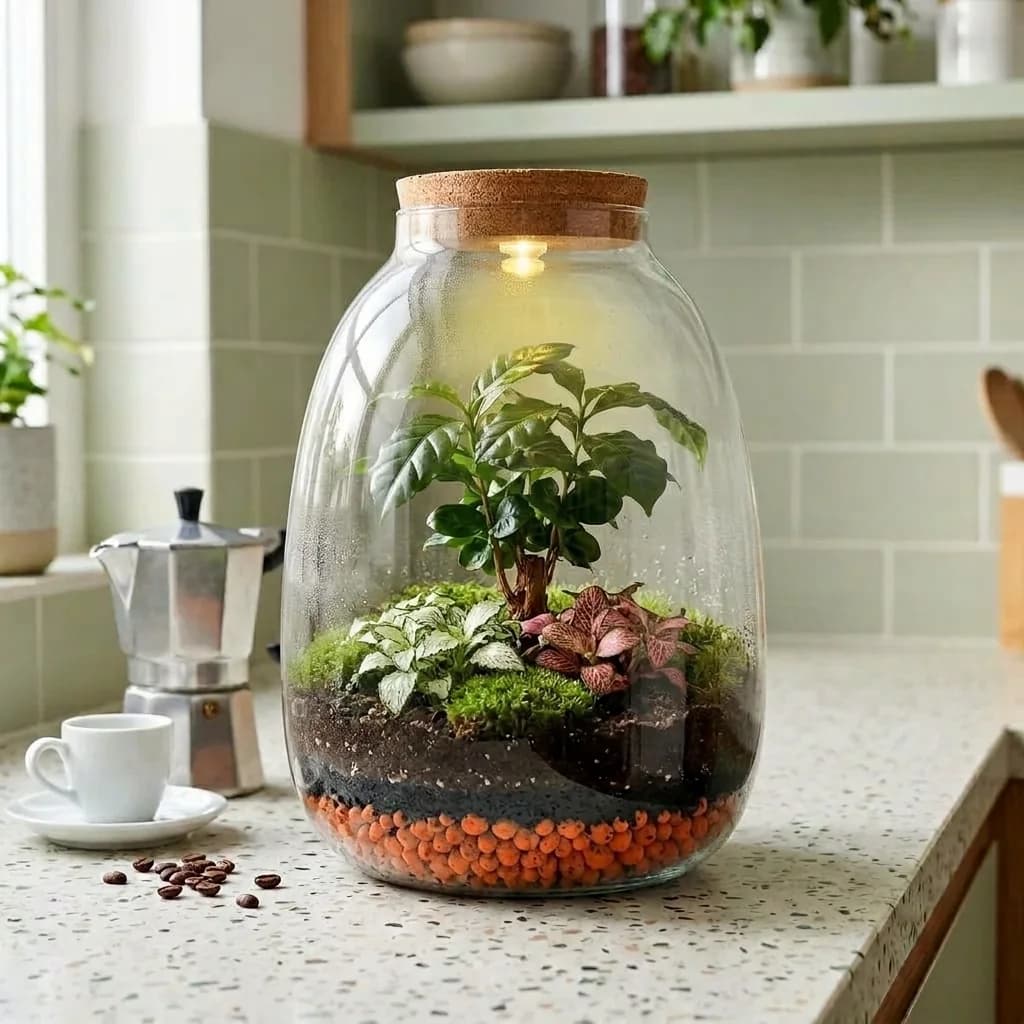
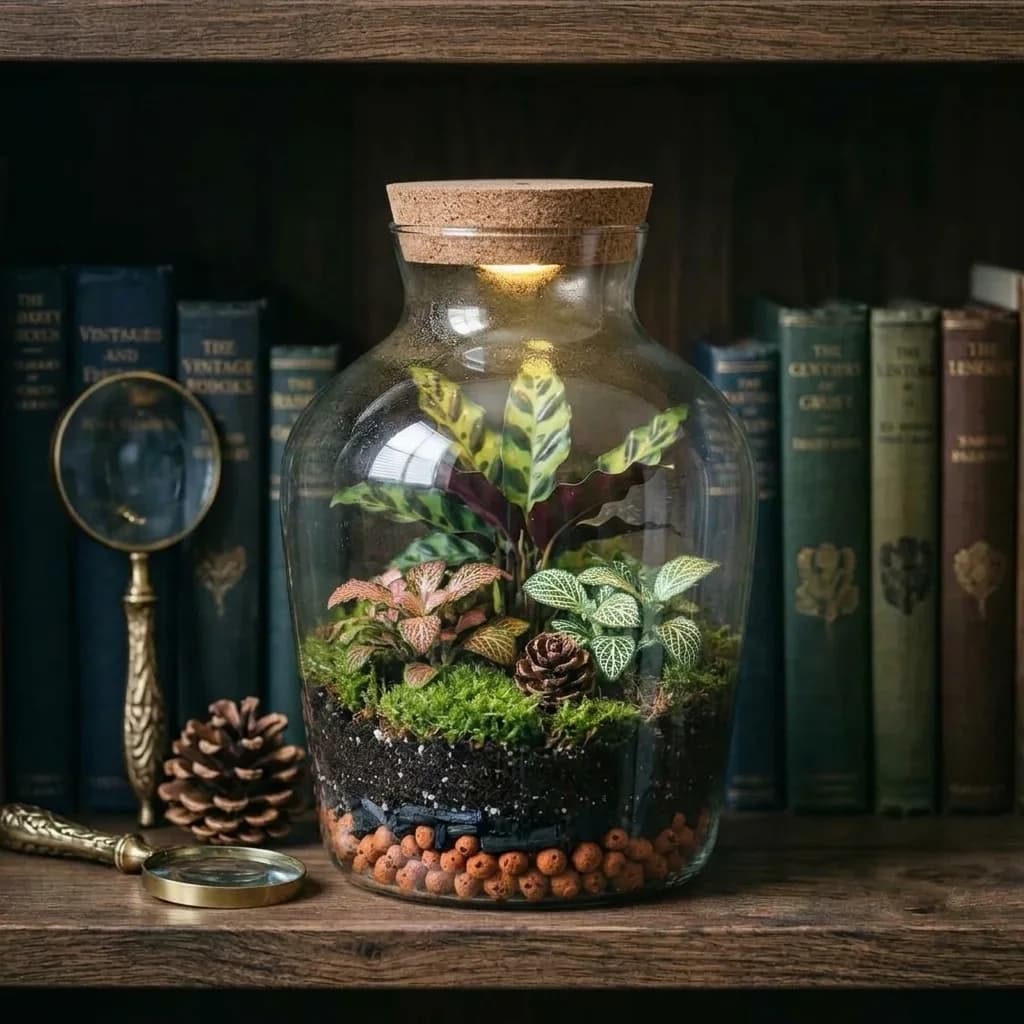
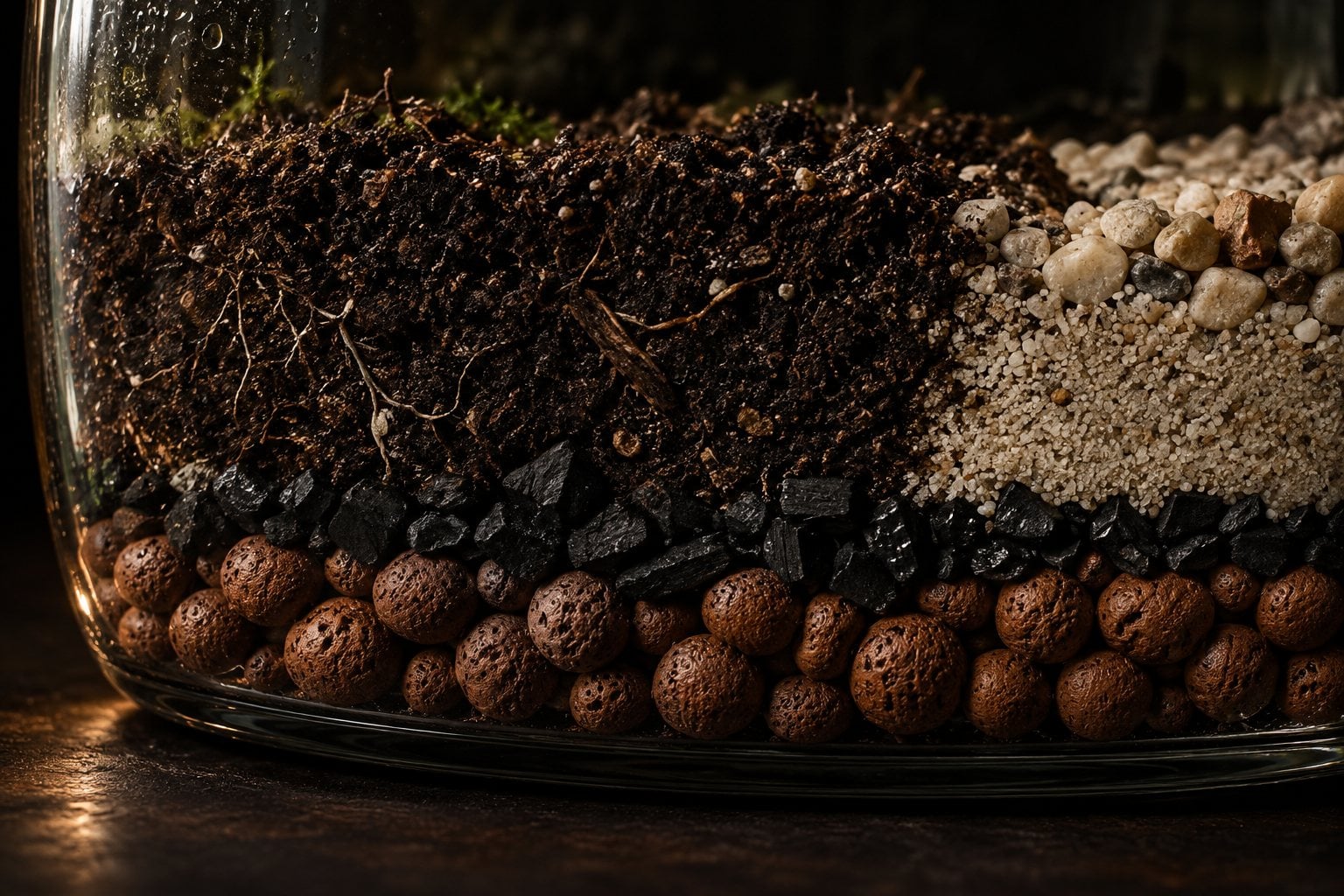
- An optional mineral layer forms a visible collection zone.
- A suitable barrier limits the migration of substrate if that zone exists.
- An airy substrate holds the roots.
- The surface takes the planting, a little moss or a suitable litter.
Horticultural charcoal is an option, not a compulsory magic layer: what it actually does, and how it differs from activated charcoal, is set out in charcoal in a terrarium. To choose the ingredients of the root mix, see which substrate for a terrarium; this guide is about where they go.
The base: a reserve to keep an eye on
Gravel or clay pebbles can make pooled water easier to spot. Rinse the material before you put it in. Keep the zone accessible enough to take out any excess with a pipette if you need to.
Why stones are not enough
The water never leaves the jar. On top of that, an abrupt change of texture between a fine mix and a coarse layer can hold moisture above the boundary. So do not count on the base to make a dense, soaked compost acceptable.
The barrier: useful, but permeable
A suitable mesh mainly stops particles falling between the larger pieces. It has to let water through: avoid a sealed plastic film. Cut it to the shape of the container, without an unsightly edge riding up against the glass. If you plant straight into the substrate with no mineral zone, this barrier has no part to play.
The substrate: sized for the roots
Allow enough depth to hold the root balls without burying the crowns. Check the headroom above the plants before you fill. A narrow bottle and a wide bowl do not call for the same volumes: a standard depth in centimetres would be misleading.
Moisten the mix before assembly so the water spreads evenly. Put it in without pressing it down hard. Roots need air as much as they need moisture.
Charcoal and the surface layer
If you use charcoal, use only a material intended for the job; no barbecue briquettes. It does not sterilise the jar and it replaces neither your attention nor a suitable substrate.
Leave a little of the surface visible so you can check the moisture. In a bioactive terrarium, a measured litter also shelters and feeds the decomposers. A thick decorative carpet can hide saturation: appearance should not stand in the way of a diagnosis.
Check before you close it
Make sure the stems are clear, that the soil is not muddy and that nothing is sitting in water at the bottom. Then follow the full build in how to create a terrarium and the materials in the substrates and bioactive section.
Sources
Frequently asked questions
Are clay pebbles essential?
No. They can create a visible collection zone, but they cannot drain water out of the jar. The choice of substrate and the amount you water remain the important things.
How many centimetres of soil do you need?
Match the depth to the root balls and to the height of the container. The roots must fit without burying the crown or taking away the space the plants need to grow.