

Closed terrarium care: the complete guide
Light, pruning, cleaning and observation: the right habits for looking after a closed terrarium and stepping in only when it needs you.
In this guide
Going further: before you feed anything, check when a terrarium fertiliser is genuinely useful.
Looking after a closed terrarium is mostly a matter of observing before acting. A stable jar needs neither weekly watering nor daily opening. Check the plants, the substrate and the glass together: none of these signs is enough on its own to decide on a treatment.
Where should the terrarium go?
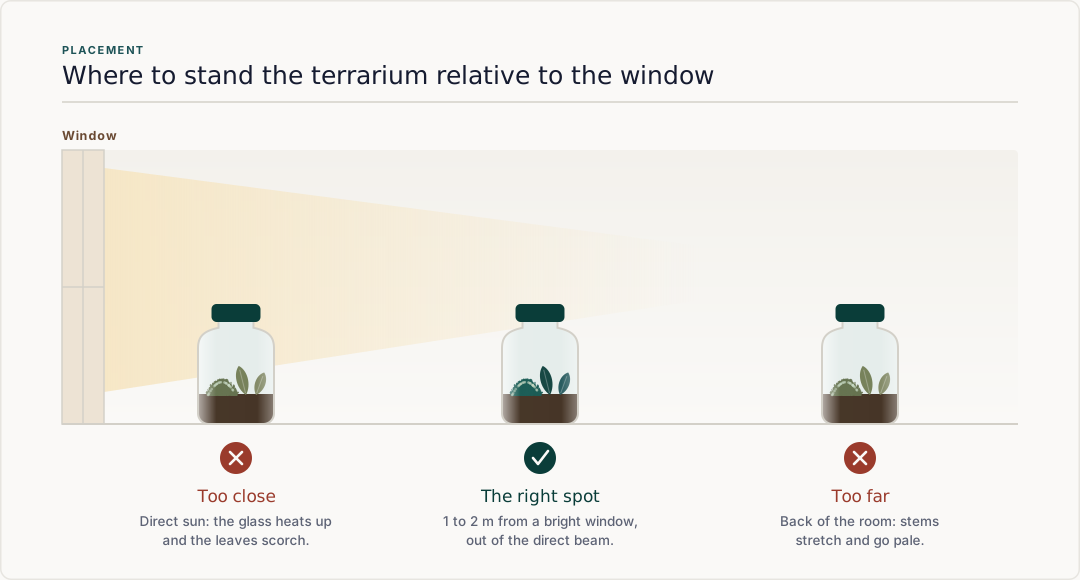
Choose a bright spot, out of direct sun and away from a radiator. Watch how the sun travels at different hours: a shelf that is shaded in the morning can overheat in the afternoon. A dark room does not become suitable simply because the jar holds its moisture.
Keep the terrarium within easy reach. If you have to move several things to look at it, a damaged leaf will easily go unnoticed. After a house move or a change of season, watch it more closely.
A simple routine, with no watering schedule
Observe regularly
Look at whether new leaves are growing, whether a stem is touching the lid and whether water is gathering at the bottom. A photograph taken from the same spot helps you follow a slow change. Mist also varies with temperature: our guide to terrarium condensation explains how to read it.
Water only when the substrate needs it
Check the moisture near the roots with a clean stick that you can slide in from the edge. If the substrate is still damp, limp leaves do not justify adding more water: look instead for damage at the roots. The guide to watering a terrarium covers the right amounts.
Prune and clean when needed
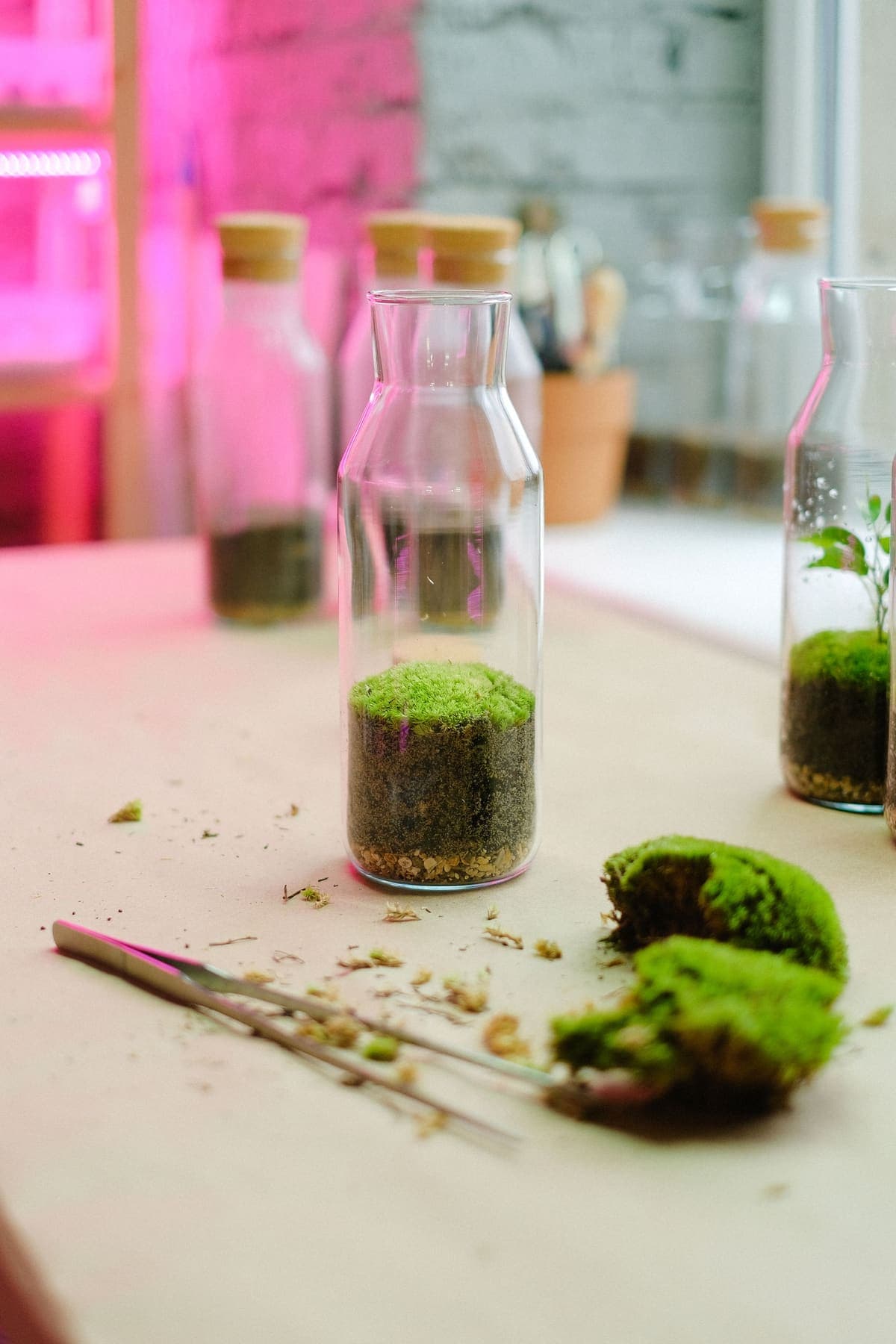
With clean scissors, shorten the shoots pressing against the glass or crowding a neighbour. Take the cuttings out with tweezers. Wipe the glass with a soft, slightly damp cloth; do not use household cleaner inside. Do not cut every plant back hard in a single session.
When should you open the lid?
Open it to carry out a task, or to release excess moisture that a saturated substrate has confirmed. Close it again afterwards and watch what happens. How long depends on the opening, on the room and on the water present: there is no universal figure. Airing the jar is no substitute for removing standing water you can reach at the bottom.
Dead leaves, fertiliser and going away
Take out soft or diseased tissue promptly. In a bioactive jar, a small healthy litter layer can stay: the bioactive maintenance guide explains the difference. Do not add fertiliser as a routine to "wake up" a weakened plant; check the light and the roots first.
Before a holiday, test the spot with the shutters in the position they will be left in. Do not water an already damp substrate as a precaution. Give whoever is looking after it something to watch for rather than a watering frequency.
What if things get worse?
An unusual smell, a soft stem base or several plants in decline call for a diagnosis. Remove the decayed parts, check the bottom of the jar and read why terrarium plants die before you rebuild everything.
To work without damaging the planting, compare the accessories in the terrarium kits and tools section. A tool you already own may well do the job.
Sources
Frequently asked questions
Should you open a terrarium every day?
No. Open it to carry out a task, or to correct an excess of moisture you have observed, then reassess once it is closed again.
Should you change all the soil every year?
No. A healthy substrate can stay where it is. Persistent saturation or widespread rot, on the other hand, can justify a targeted rebuild.