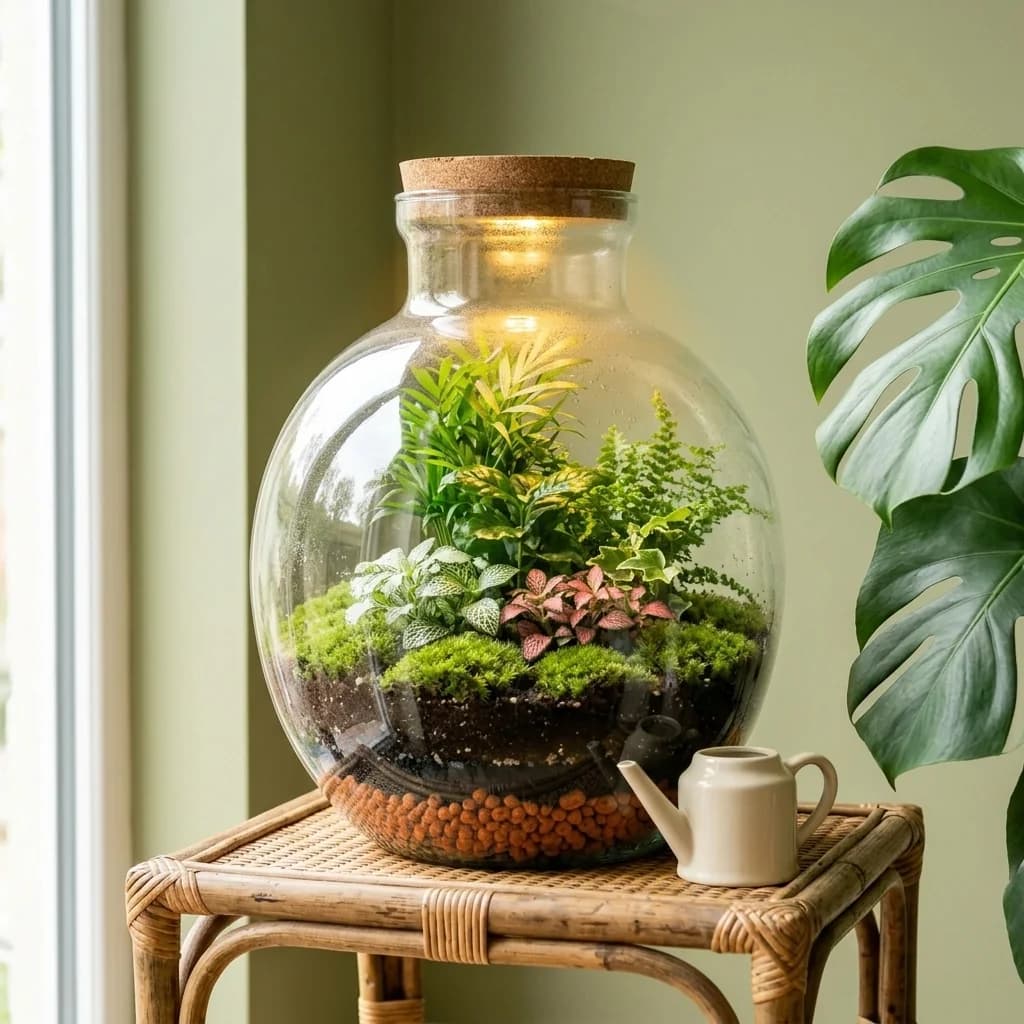
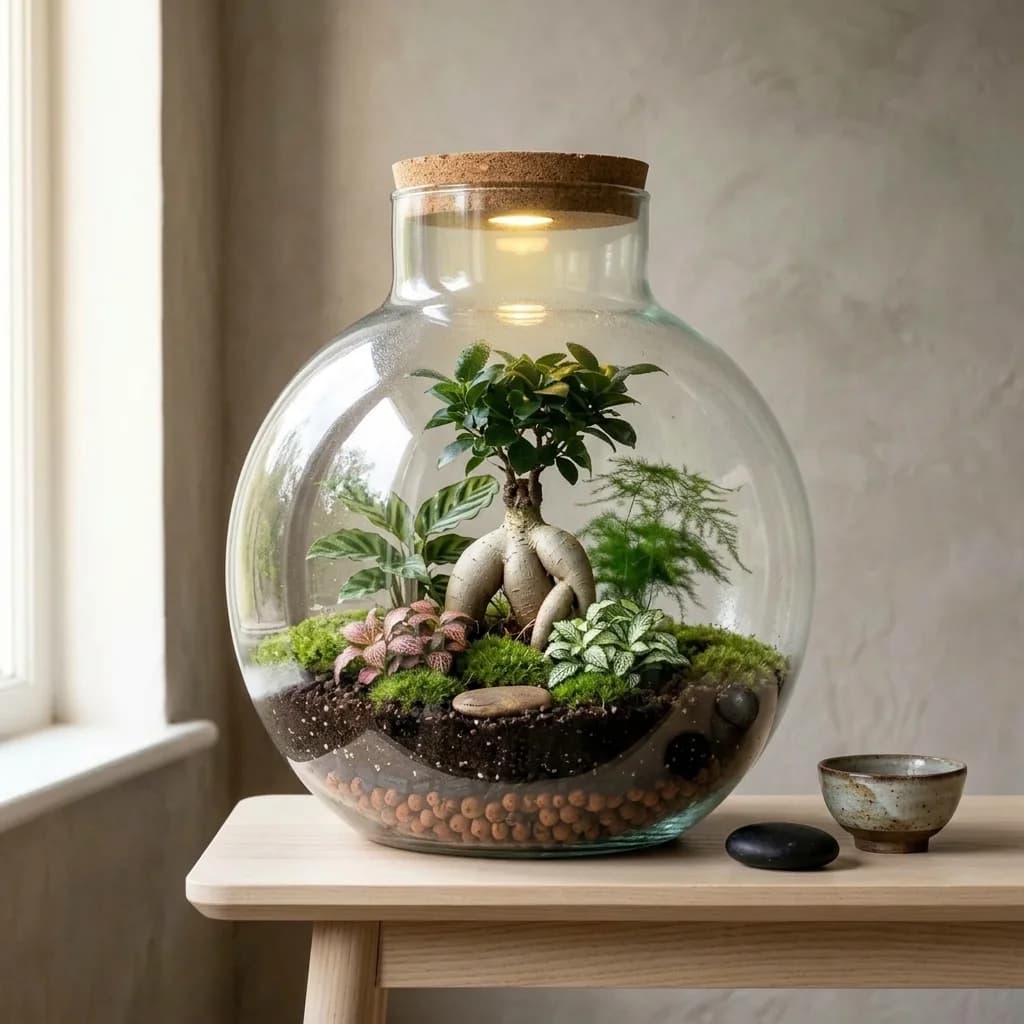


Why are the plants in my terrarium dying?
Yellow leaves, soft stems or brown moss: look at water, light and roots to understand the decline and save what can still be saved.
In this guide
Going further: if a rebuild turns out to be necessary, follow the steps for redoing the terrarium while keeping the healthy plants.
A plant in decline inside a terrarium is not necessarily short of water. A saturated substrate can also cause wilting, because the roots are no longer working properly. Before you water, look at the soil, at the base of the stems and at anything that has recently changed in the position or the care of the jar.
First check: too dry or too wet?
Limp leaves and dry substrate
Check at the level of the root ball, not just on the surface moss. If dryness is confirmed, moisten gradually, then watch before repeating. Our guide to watering a terrarium explains how to avoid adding too much.
Limp leaves and damp substrate
Do not add water. Look for a blackened base, soft roots or an unusual smell. Remove the decayed parts and any standing water you can reach. If the root ball is affected, lift the plant out to inspect it; a dark root is not necessarily rotten, its texture matters too.
Yellow leaves, brown patches: several possible causes
A single older leaf turning yellow does not mean the same thing as several plants declining together. Look at how the damage is spread and how quickly it appeared.
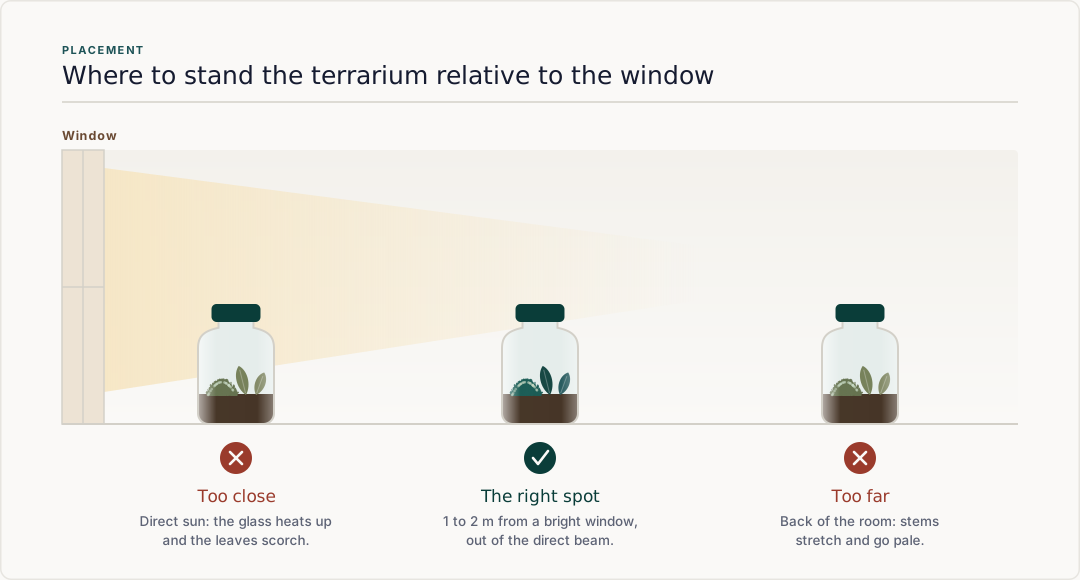
- Dry patches on the window side after a sunny day point towards overheating or scorching.
- Long, pale shoots point towards a lack of light.
- Soft, translucent tissue suggests checking for excess water and decay.
These signs guide the diagnosis without identifying a disease on their own. Put the jar in steady indirect light, then follow the new growth: a scorched leaf will not turn green again.
Are the plants compatible with each other?
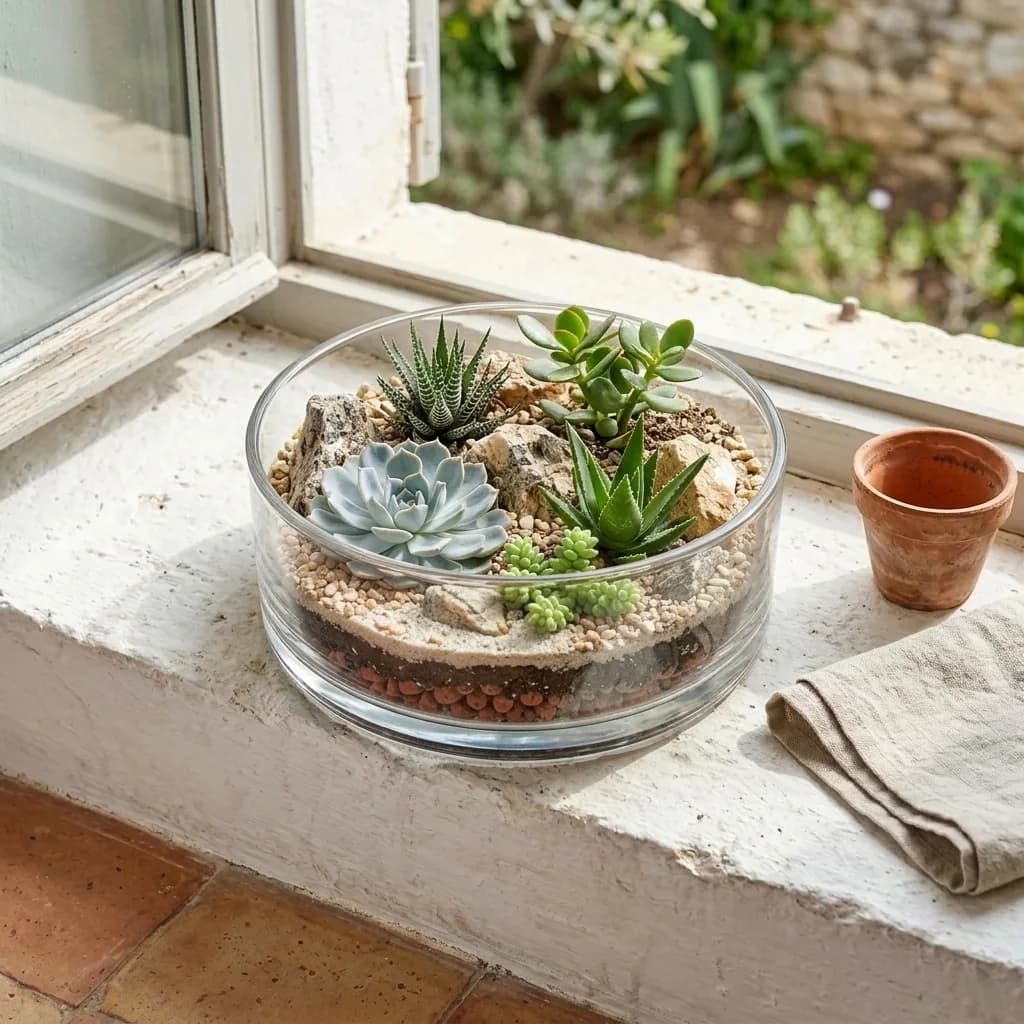
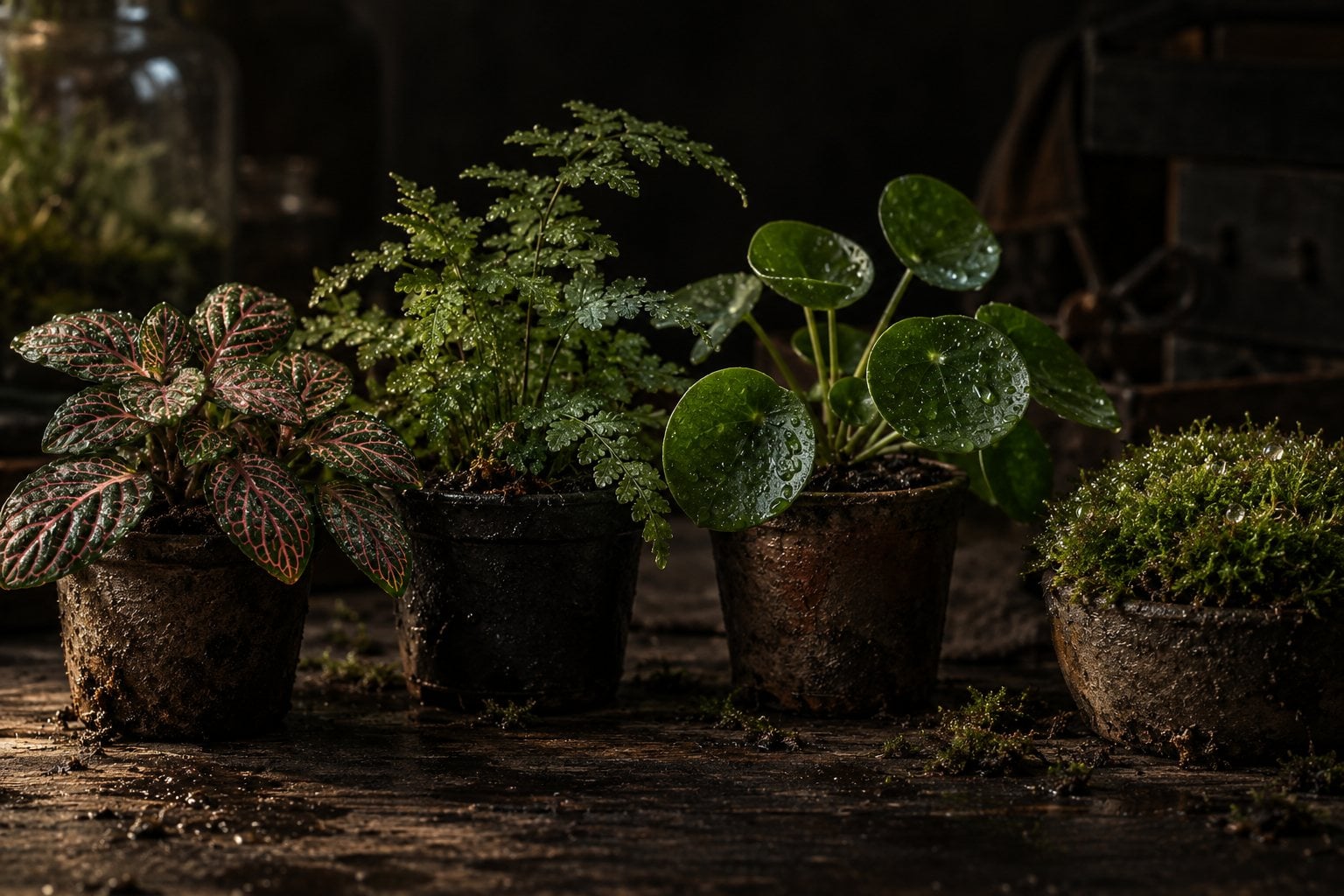
A cactus shut into the humidity that a fittonia enjoys does not share its needs. Some ferns grow too large, while a plant you have only just put in may drop leaves as it settles. Check the species, its mature size and its habitat in which plants for a terrarium.
Avoid comparing living moss with preserved decorative moss, too: the latter will not start growing again if you water it.
Saving the rest of the terrarium
- Photograph and note the signs before you change any conditions.
- Remove the rotten tissue with clean tools.
- Correct the most obvious problem, then observe.
- Replace only the plants beyond saving, once conditions have settled.
A base that has rotted through cannot be repaired by misting. Whether a cutting is possible depends on the species and requires a healthy part to work with. If several root balls are rotting in a muddy substrate, a rebuild may be more sensible than repeated corrections.
Avoiding a relapse
Keep the crowns clear, the substrate airy and some space around the leaves. The care routine helps you spot changes early. If a fuzzy growth appears, follow the mould diagnosis rather than treating the whole jar without identifying anything.
To replace a plant, compare what the species in the terrarium plants section need, and do not mix dry-habitat plants with humid tropical ones.
Sources
Royal Horticultural Society: plant choice and terrarium problems
Frequently asked questions
Does a yellow leaf mean a lack of fertiliser?
Not necessarily. Check the water, the roots, the light and the natural ageing of the leaves first. Fertiliser does not correct rot.
Can a plant that has rotted through be saved?
Rotten tissue does not become healthy again. A part that is still sound can sometimes be taken as a cutting, depending on the species; otherwise remove the plant and correct the conditions.