

Which plants for a terrarium? Our selection by type
Fittonia, spikemoss, peperomia, dwarf ferns or succulents: the plants that really thrive under glass, depending on whether the terrarium is closed or open.
In this guide
Going further: After buying, allow the plants an acclimatisation period before you close the terrarium.
The best plants for a closed terrarium are small tropical species with slow growth, which like high humidity and soft light: fittonia, spikemoss, miniature peperomias, creeping fig and dwarf ferns, alongside mosses. Succulents and cacti, on the other hand, only suit open terrariums, where air circulates and dries things out. So everything starts with one question: does your container close?
What makes a good terrarium plant
Before falling for a bit of foliage, check four points:
- Adult size: a plant that grows past 20 cm will soon be too big for a jar.
- Growth speed: the slower, the less pruning you'll have to do.
- Humidity needs: it should match the type of terrarium.
- Light: woodland-floor plants tolerate indirect light, while succulents demand a lot of brightness.
In a closed terrarium, the Royal Horticultural Society also advises against flowering plants: caring for them means opening the container, which upsets its balance.
Think about balance too: one tall plant for height, one or two low plants with contrasting leaves, and a carpet of moss to tie it all together.
For a closed terrarium
Fittonia
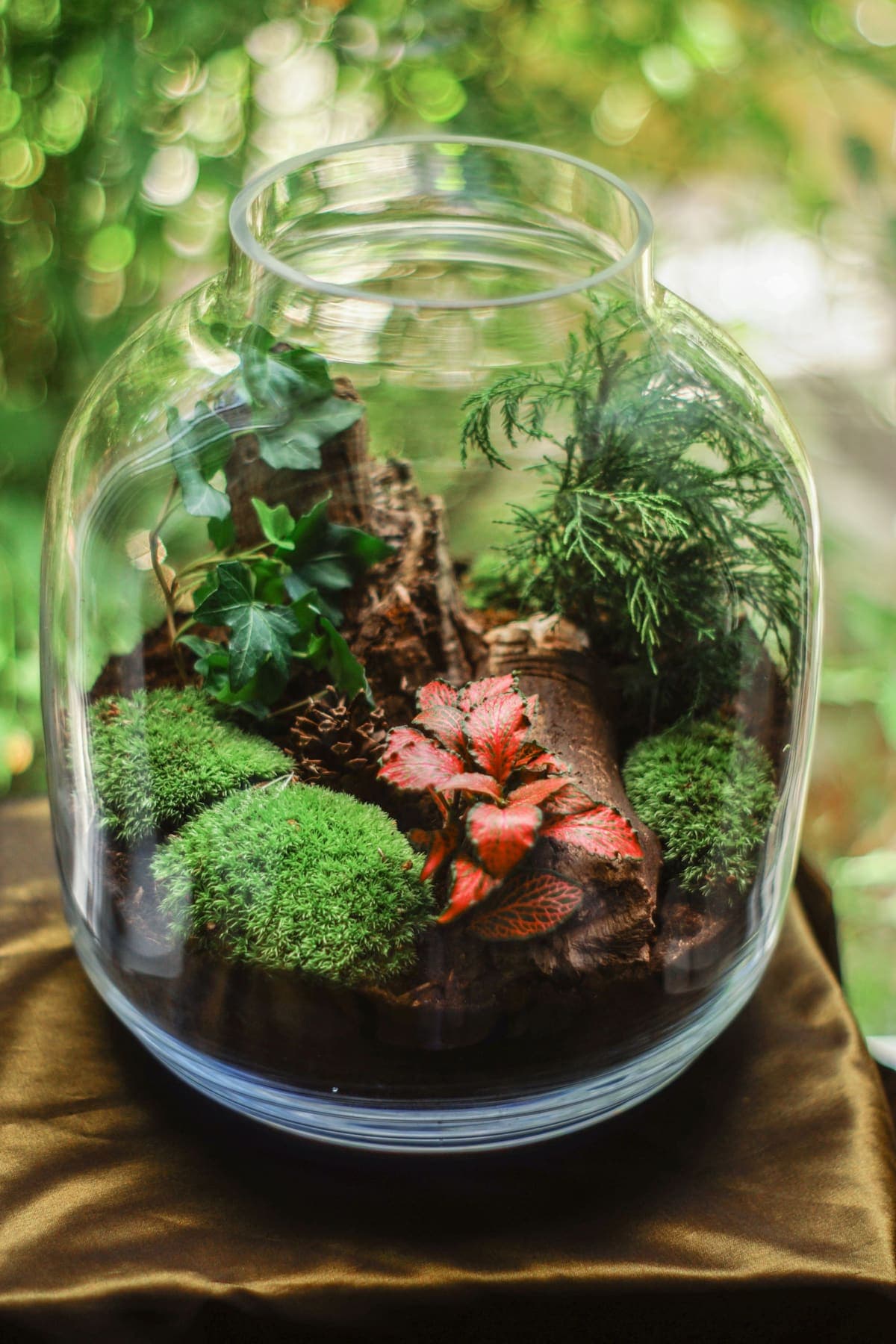
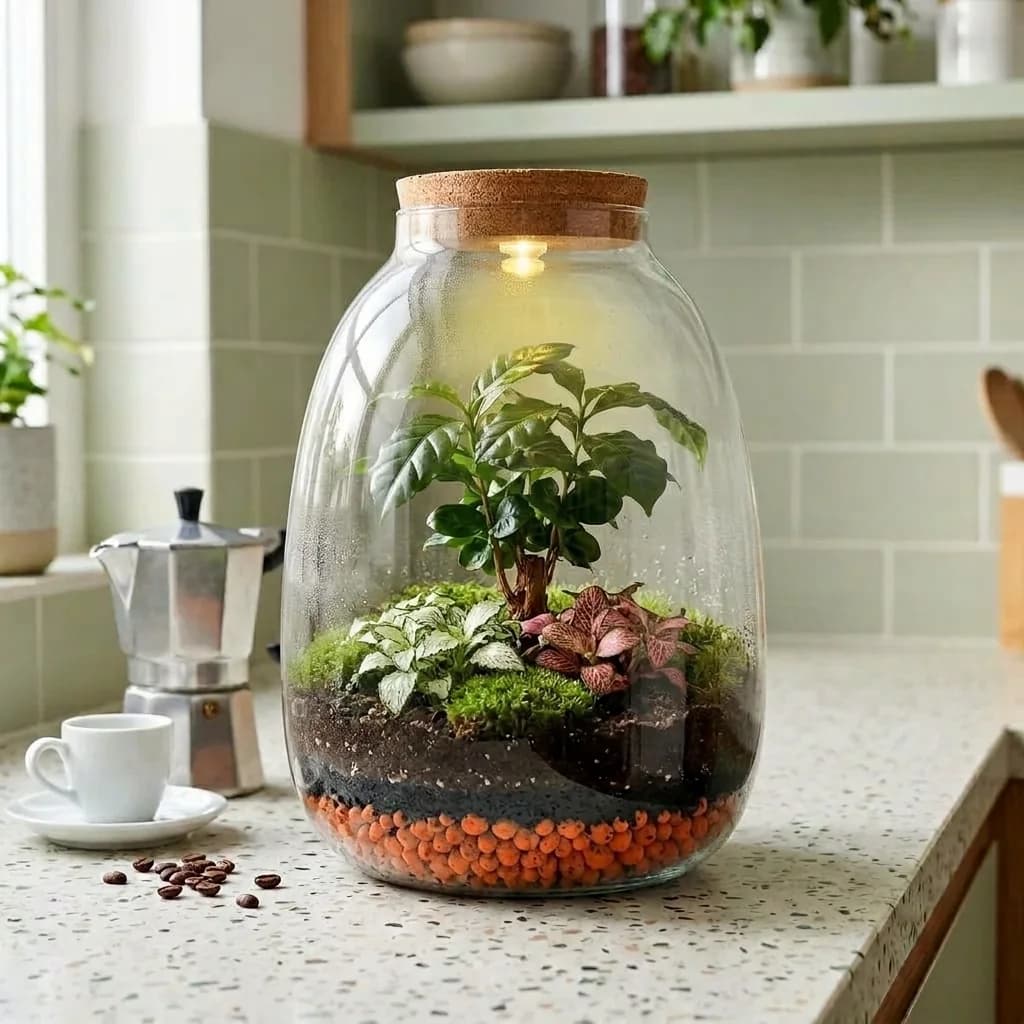
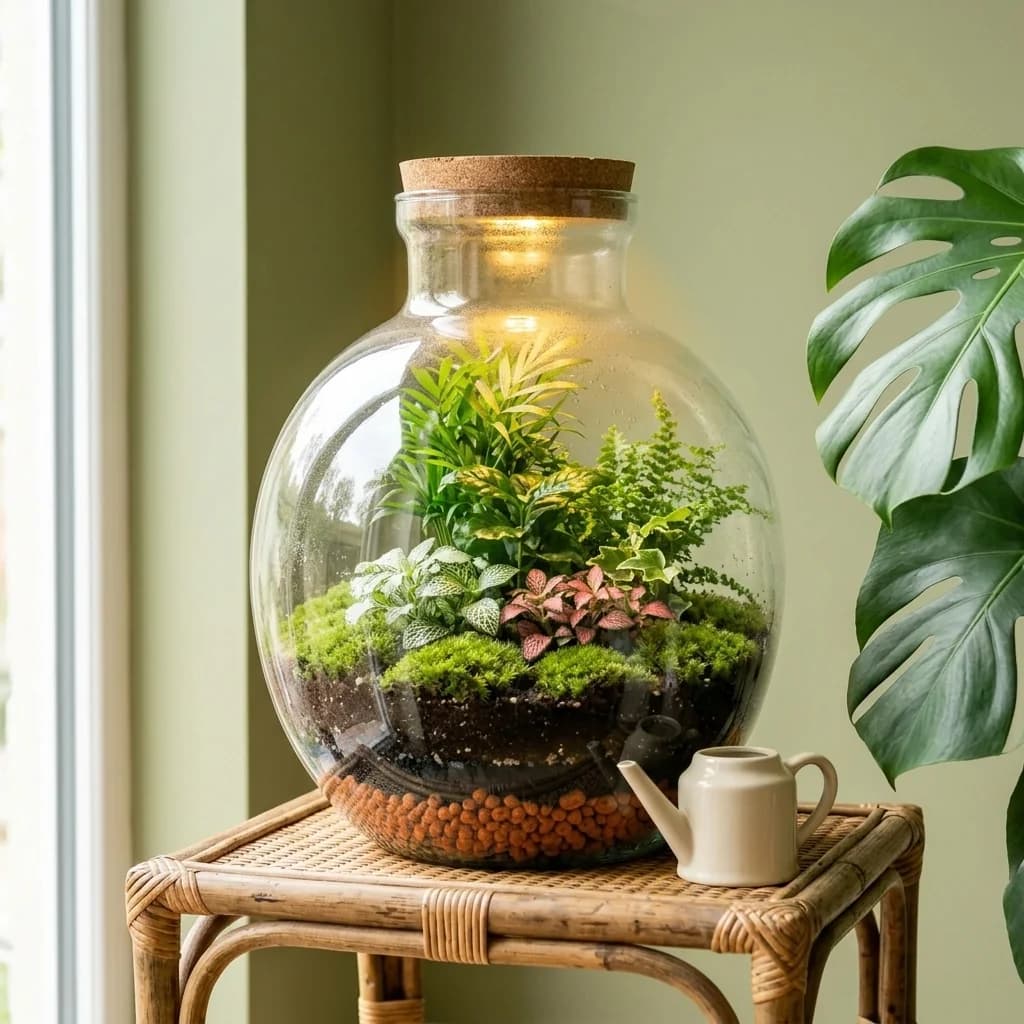
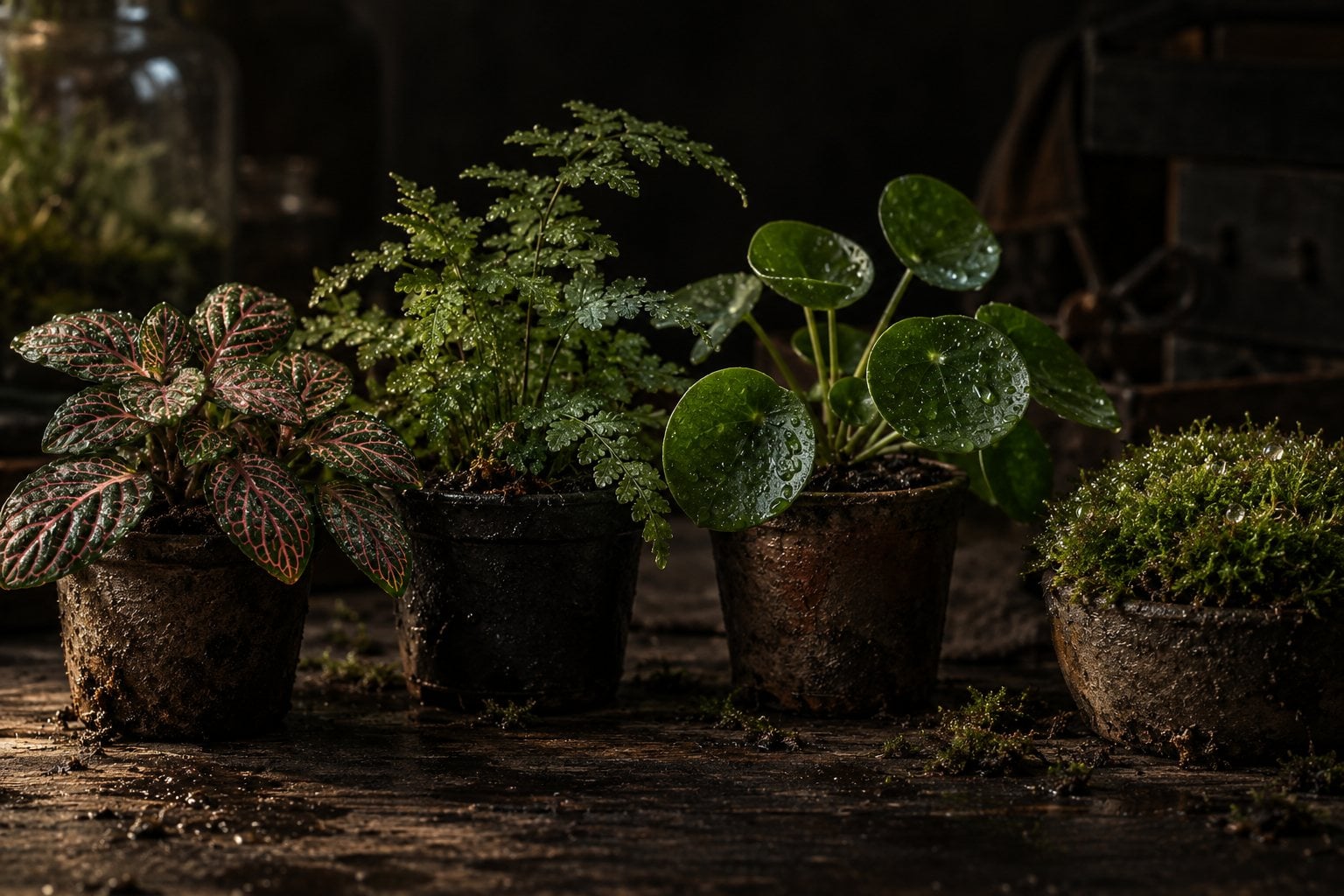
With its white, pink or red veining, fittonia is the star of terrariums. It loves humidity and filtered light. Outside the glass, it wilts dramatically the moment it runs short of water; under a cloche, it stays compact. Choose miniature varieties and pinch back stems that grow too long.
Spikemoss
Spikemoss, particularly Selaginella kraussiana, forms a small fern-like carpet, bright green or golden depending on the variety, such as the 'Aurea' form. It isn't a moss, but an ancient vascular plant. It likes constant humidity and spreads readily: trim it back so it doesn't smother its neighbours.
Ferns
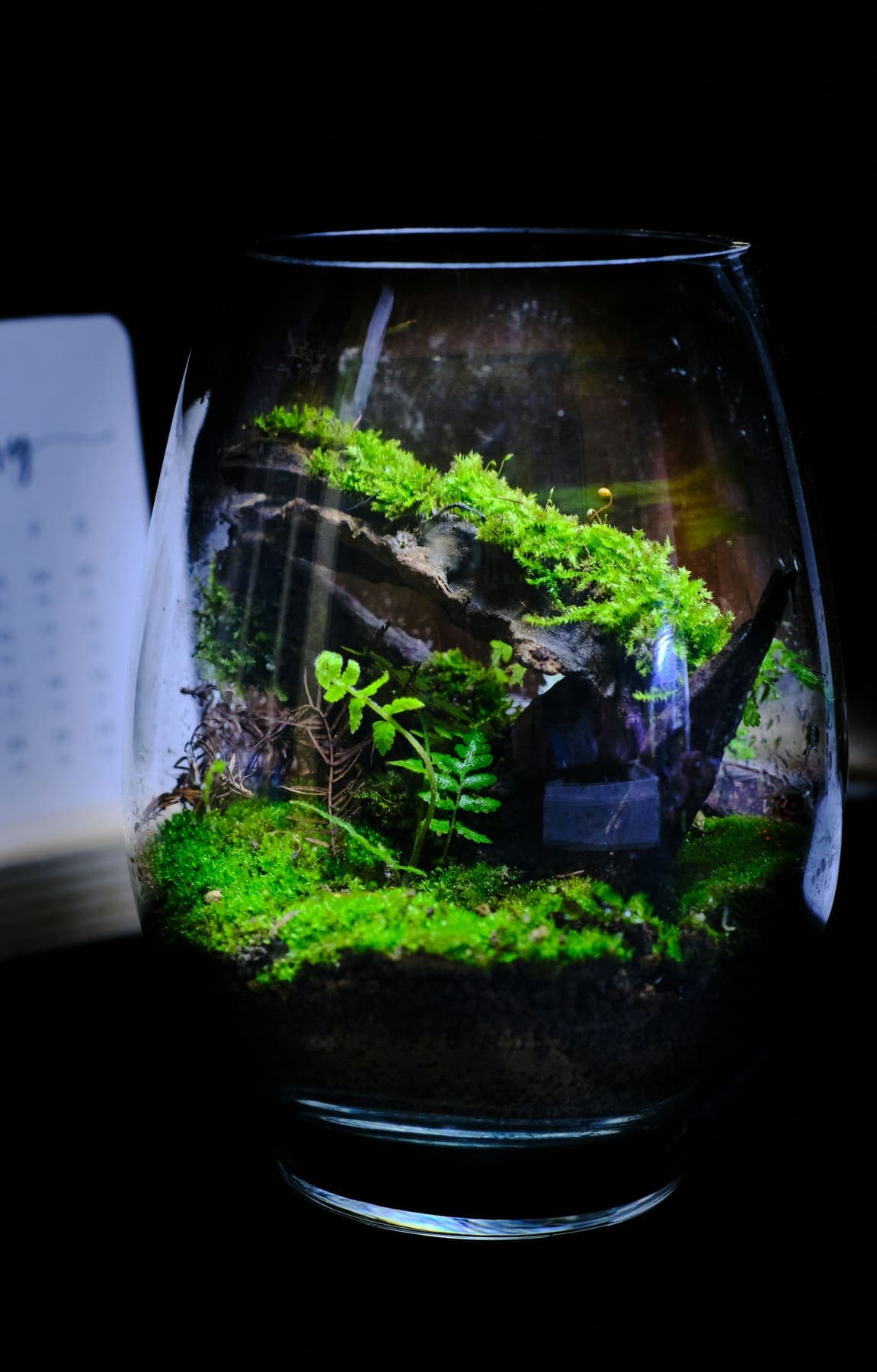
Small-leaved ferns, such as Pellaea or certain Pteris, add height and a light silhouette. Place them at the back or off-centre. They like a substrate that's cool but never waterlogged.
The bird's nest fern, Asplenium nidus, is often sold in small pots for terrariums. Be careful: it isn't a dwarf fern. It grows slowly, but the RHS notes that the 'Crispy Wave' variety can reach 1 to 1.5 m in five to ten years. Keep it for large containers, such as a demijohn, and take it out of the terrarium to repot it once its fronds touch the glass.
Miniature peperomias
Peperomia prostrata, with its small, marbled round leaves, or Peperomia rotundifolia form very decorative trailing cushions. Their slightly fleshy leaves cope better than you'd think with a substrate that dries out a little between mistings.
Ficus pumila
The creeping fig climbs and clings to the décor with its small leaves. It grows fairly fast: it suits larger containers, provided it's pruned regularly.
Other candidates
Soleirolia, or baby's tears, forms a carpet of tiny round leaves that loves humidity, but it spreads fast and needs frequent trimming. Small Pilea, such as the one sold under the label "Pilea glauca" — a trade name covering both Pilea libanensis and Pilea glaucophylla — add fine, silvery foliage. In every case, read the label to check the adult size, and favour dwarf varieties. Carnivorous plants have their own separate needs: see our guide which carnivorous plant for a terrarium.
Mosses
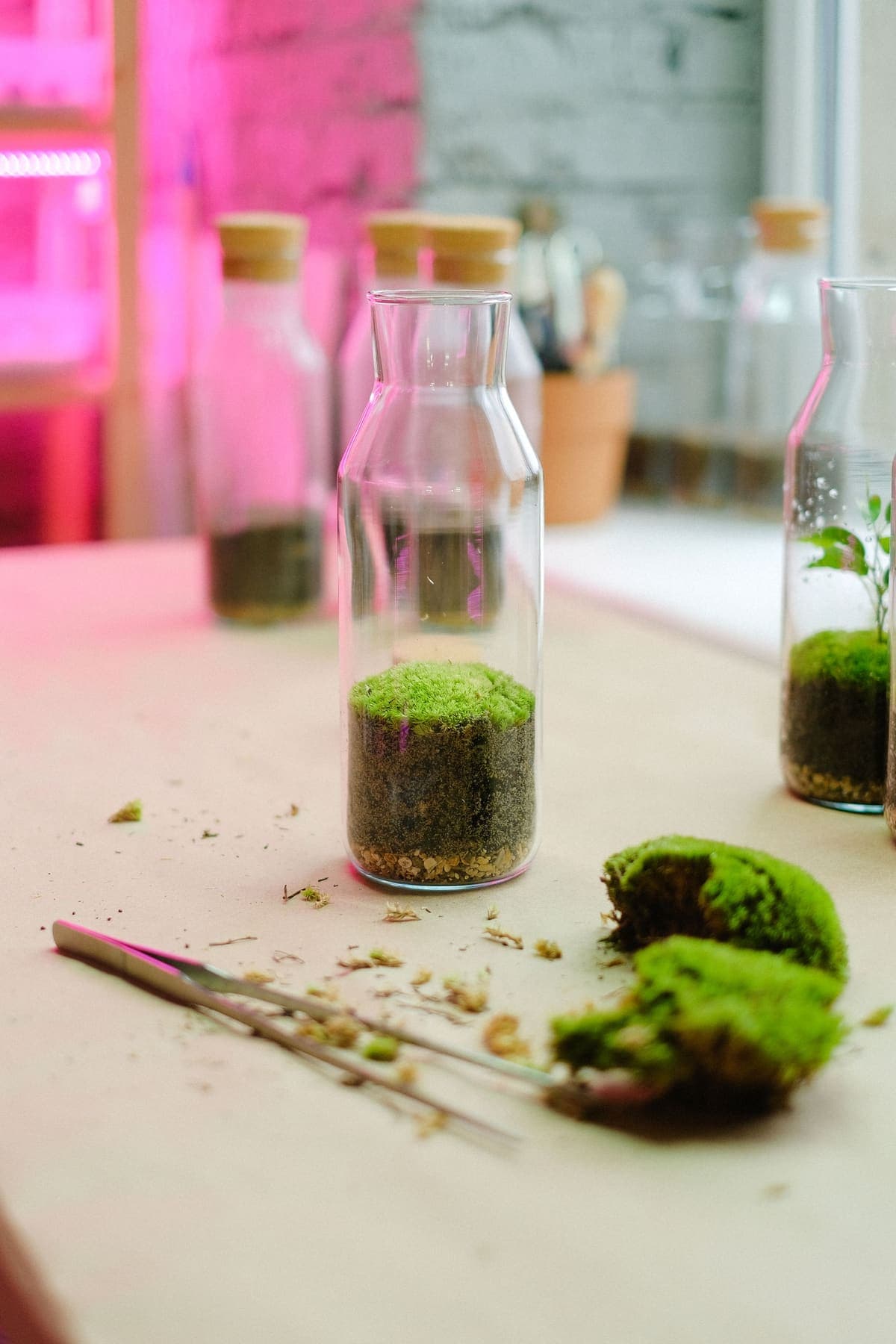
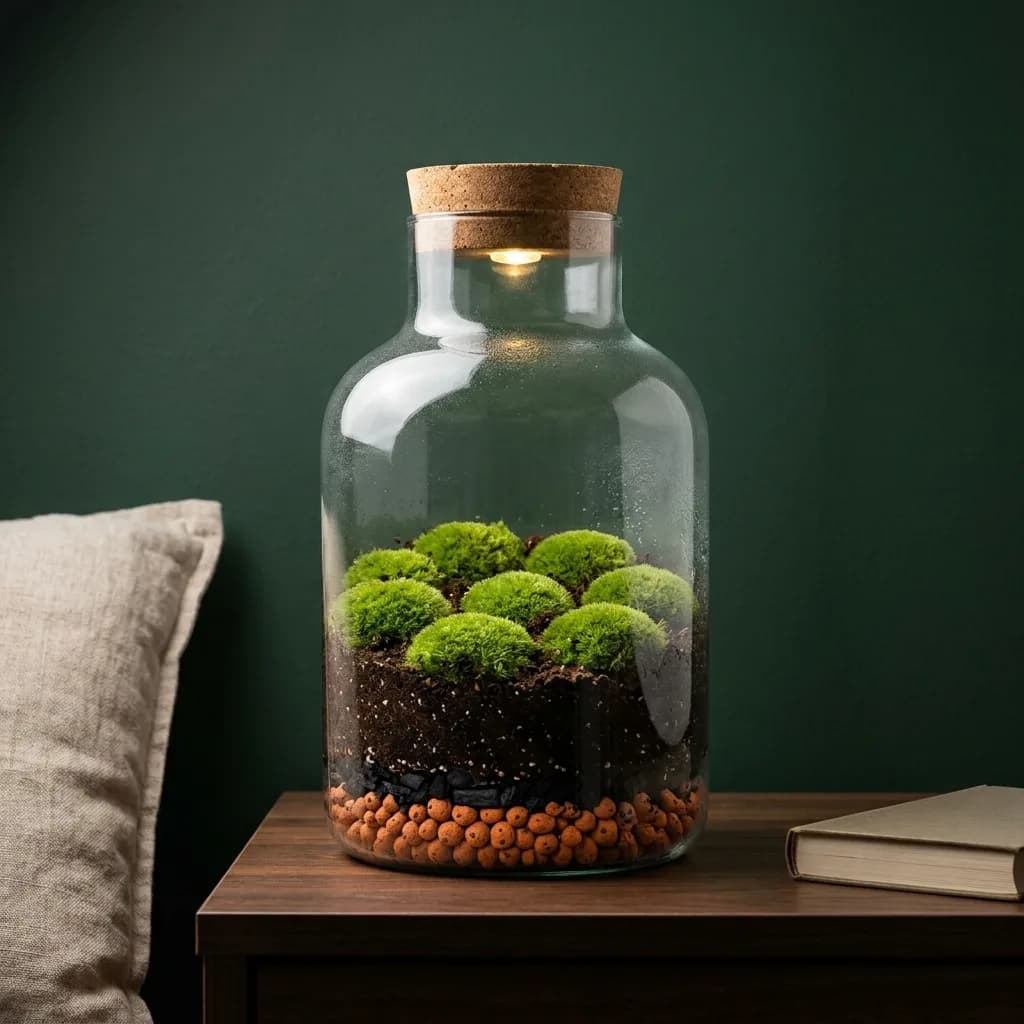
Essential for covering the substrate, holding in humidity and giving that woodland-floor look. Leucobryum in cushions, Hypnum in mats: we cover them fully in our guide mosses for terrariums. Always choose cultivated mosses.
For an open terrarium
An open terrarium, with no lid, lets humidity escape. It suits two very different families:
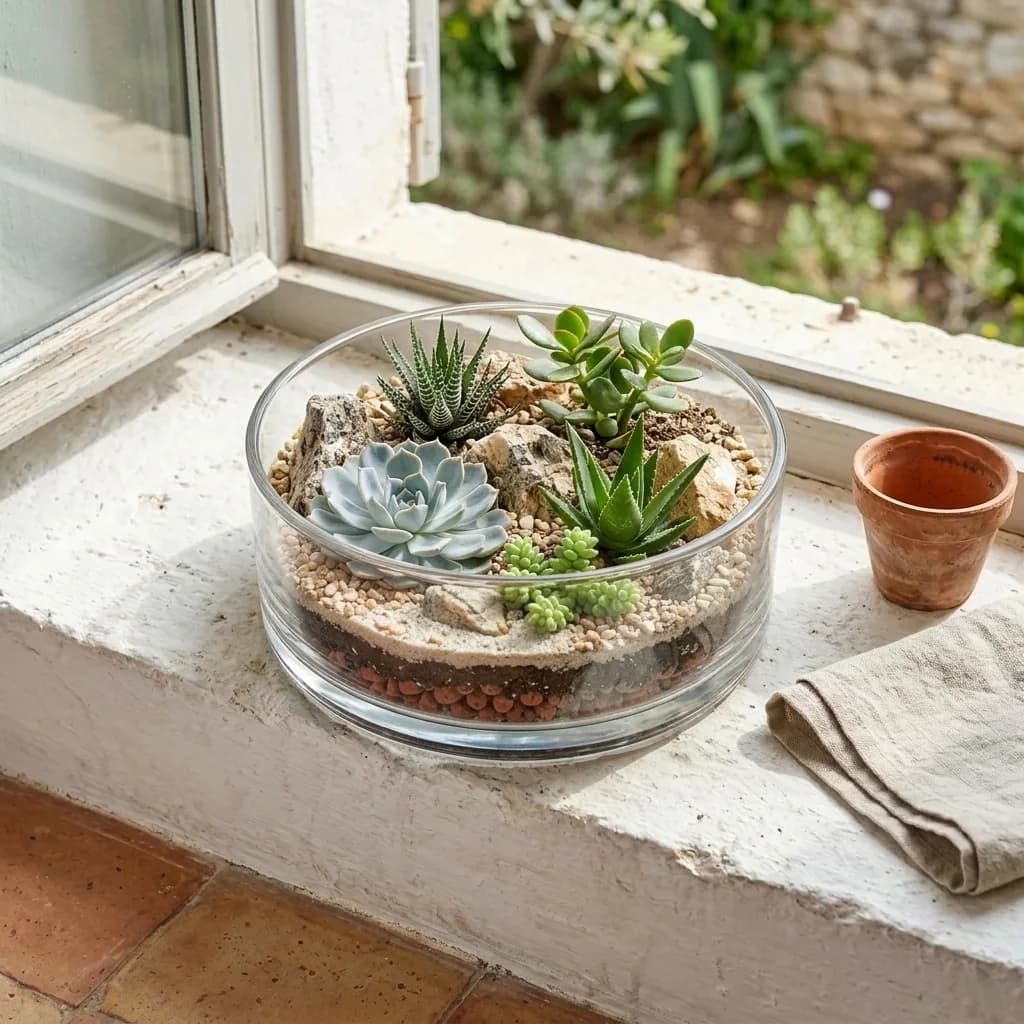
- Succulents and cacti: echeverias, haworthias, small cacti. They need plenty of light, a very free-draining mineral substrate, and rare watering at the base, only once the substrate is completely dry. The build is set out in the succulent terrarium tutorial.
- Hardy tropical plants, provided you mist often and group them in a wide-mouthed container that holds a little humidity.
Air plants, tillandsias, sit without any substrate in an open terrarium. They need air circulation and must dry completely after each soak or misting: never in a closed container.
Combining plants: an example
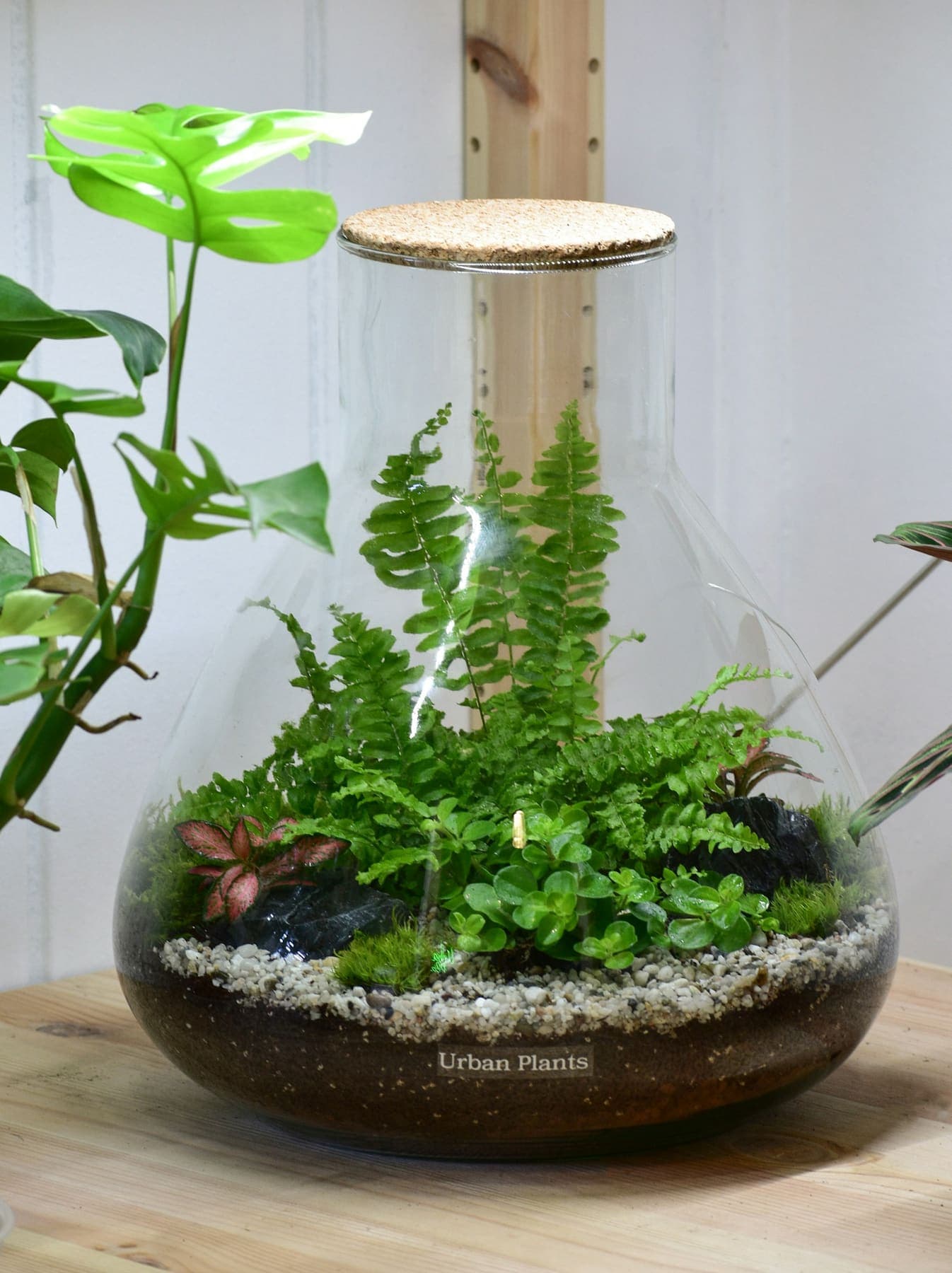
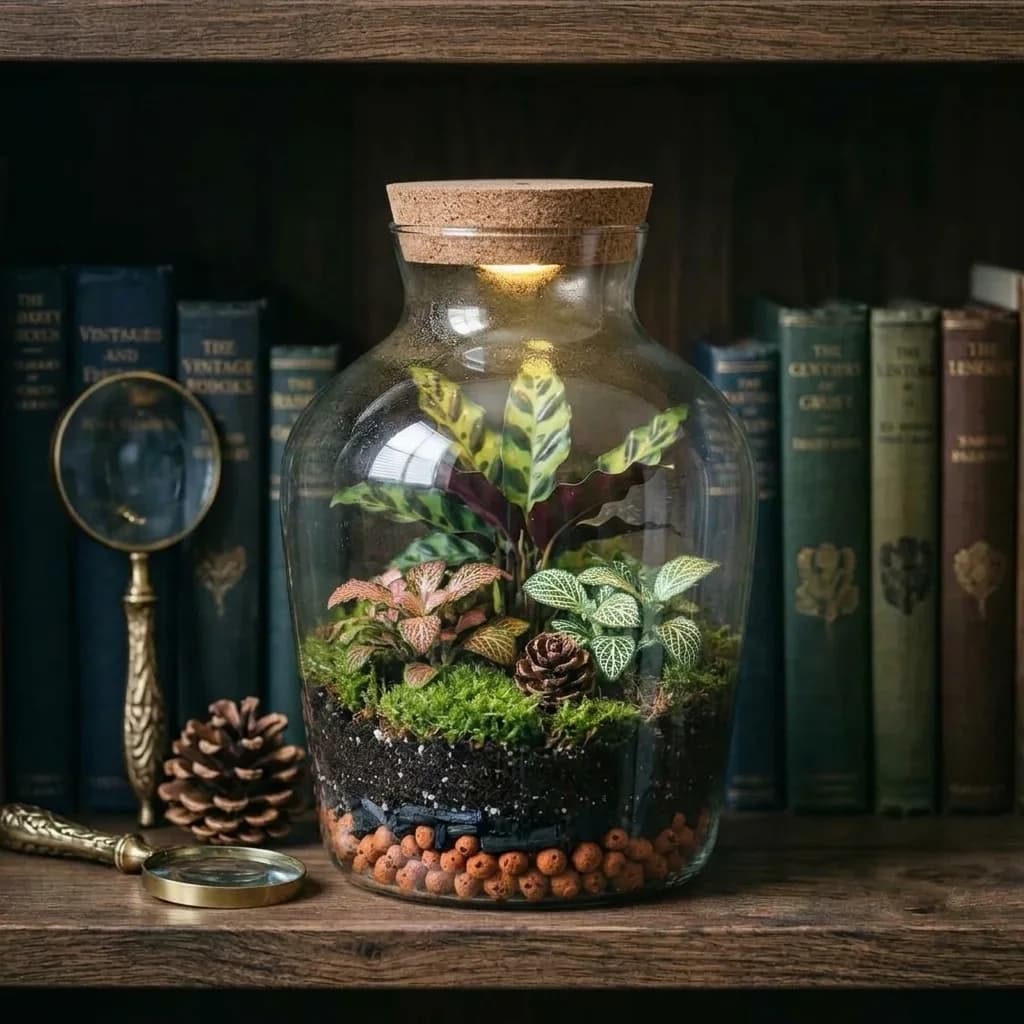
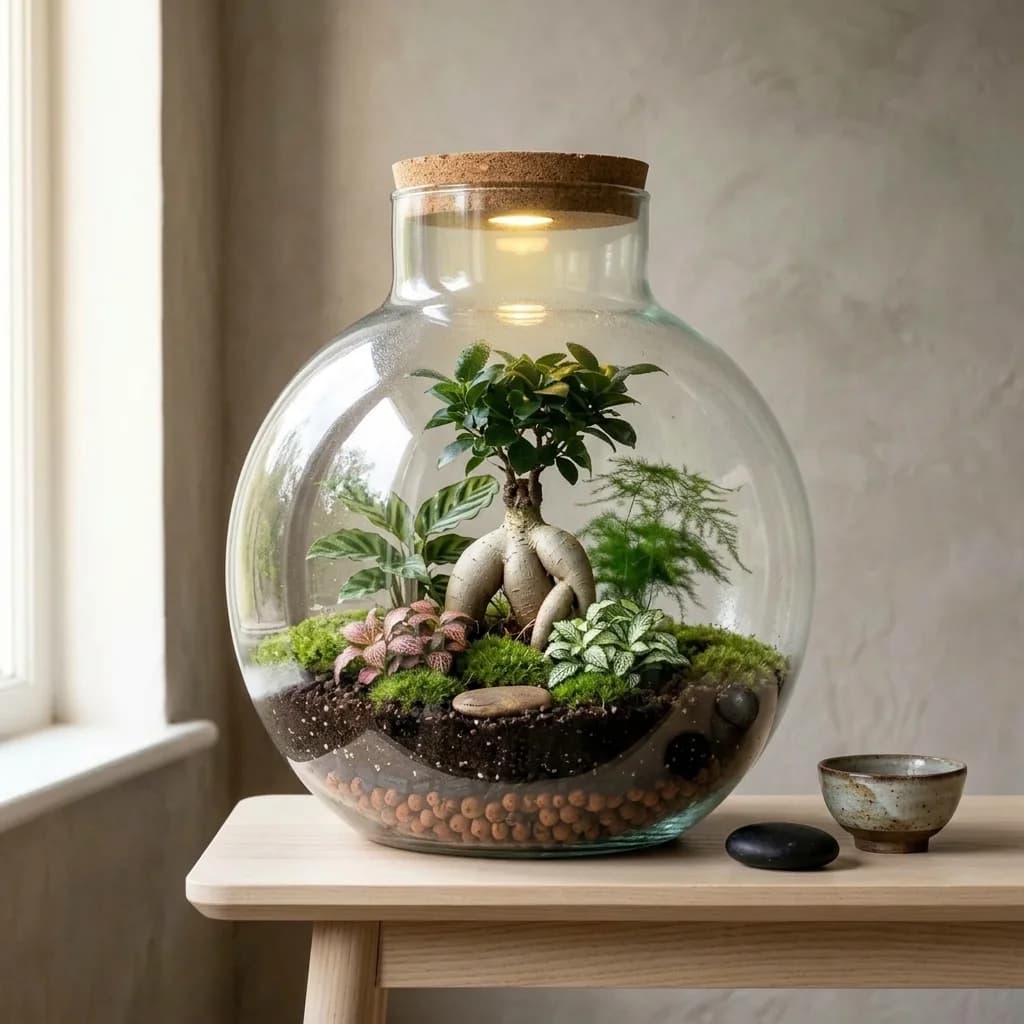
For a jar about 20 cm in diameter, a balanced arrangement might bring together:
- a small fern at the back for height;
- two fittonias of different colours at mid-level;
- a clump of spikemoss to one side;
- a Leucobryum cushion and a flat piece of moss in the foreground;
- a small piece of wood to structure the scene.
Common mistakes
- Buying plants that are too large: they touch the glass within a few weeks.
- Putting succulents in a closed environment: humidity rots them.
- Not checking the roots: mealybugs, aphids or snails often arrive with the root ball.
- Planting too closely: leave space between plants for growth and airflow.
- Placing the terrarium in direct sun: woodland-floor plants burn quickly under glass.
Going further
Fittonia, the most widespread of them, has its own detailed page: Fittonia in a terrarium. Once you've chosen your plants, follow our tutorial how to create a closed terrarium. If you're still torn on the format, our comparison closed or open terrarium sets out both approaches in detail. You'll also find the full selection in our tropical section.
Further reading
Before replacing a plant, consult why plants die. Limp leaves in damp soil do not automatically justify more watering.
Sources
Frequently asked questions
What's the easiest plant for a closed terrarium?
Fittonia is often the easiest: it enjoys the constant humidity of a closed environment, stays compact in miniature varieties, and clearly signals its needs. Spikemoss and cultivated mosses are also very forgiving.
Can you put succulents in a closed terrarium?
No. Succulents and cacti need dry air and a substrate that dries out between waterings. In a closed terrarium, humidity rots them. Keep them for open, well-lit terrariums.
How many plants should you put in a terrarium?
For a container about 20 cm in diameter, three to five small plants are enough, topped up with mosses. Leave space between them: they'll grow, and the air needs to circulate.