

Closed or open terrarium: how to choose
Humidity, plants, watering, placement: the comparison to help you choose between a closed, tropical terrarium and a more mineral, open one.

In this guide
Choose a closed terrarium if you love humid woodland-floor scenes and want minimal upkeep: it recycles its own water and suits fittonias, dwarf ferns and mosses. Choose an open terrarium if you prefer succulents, cacti or air plants, and don't mind watering from time to time: air circulates and the environment stays dry. Both are accessible to beginners; it all depends on the plants that appeal to you and the light you have available.
The closed terrarium: a small water cycle
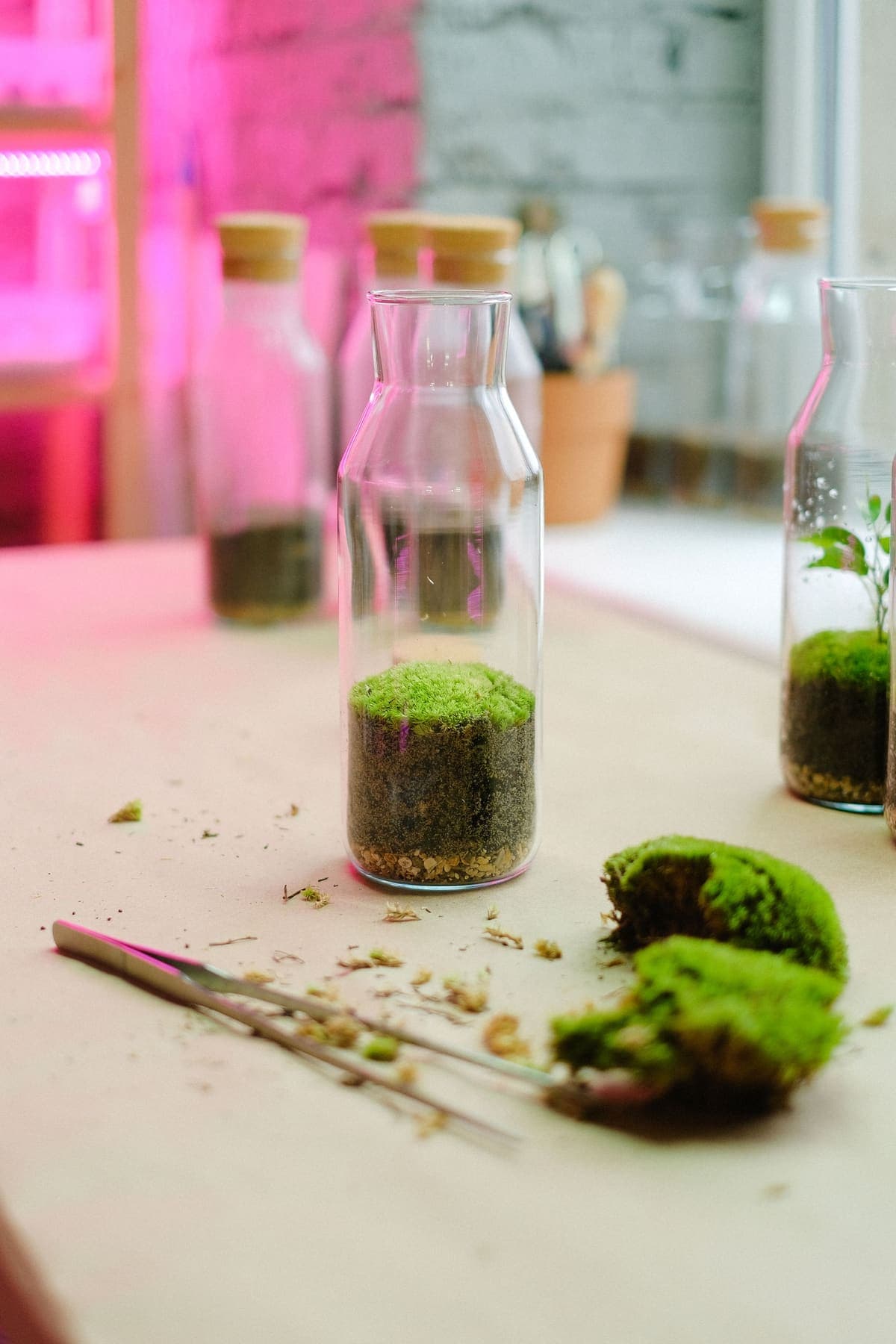
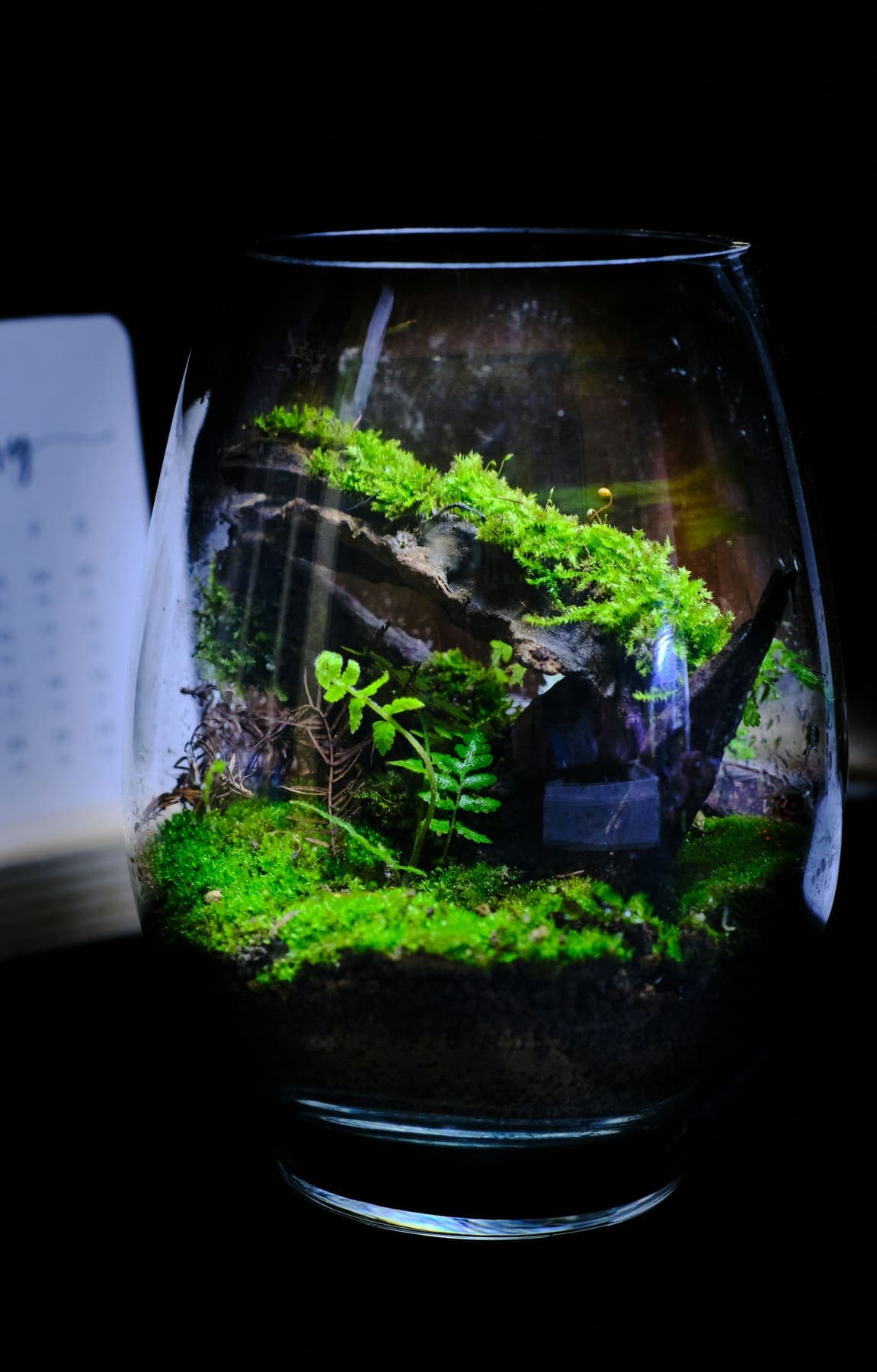
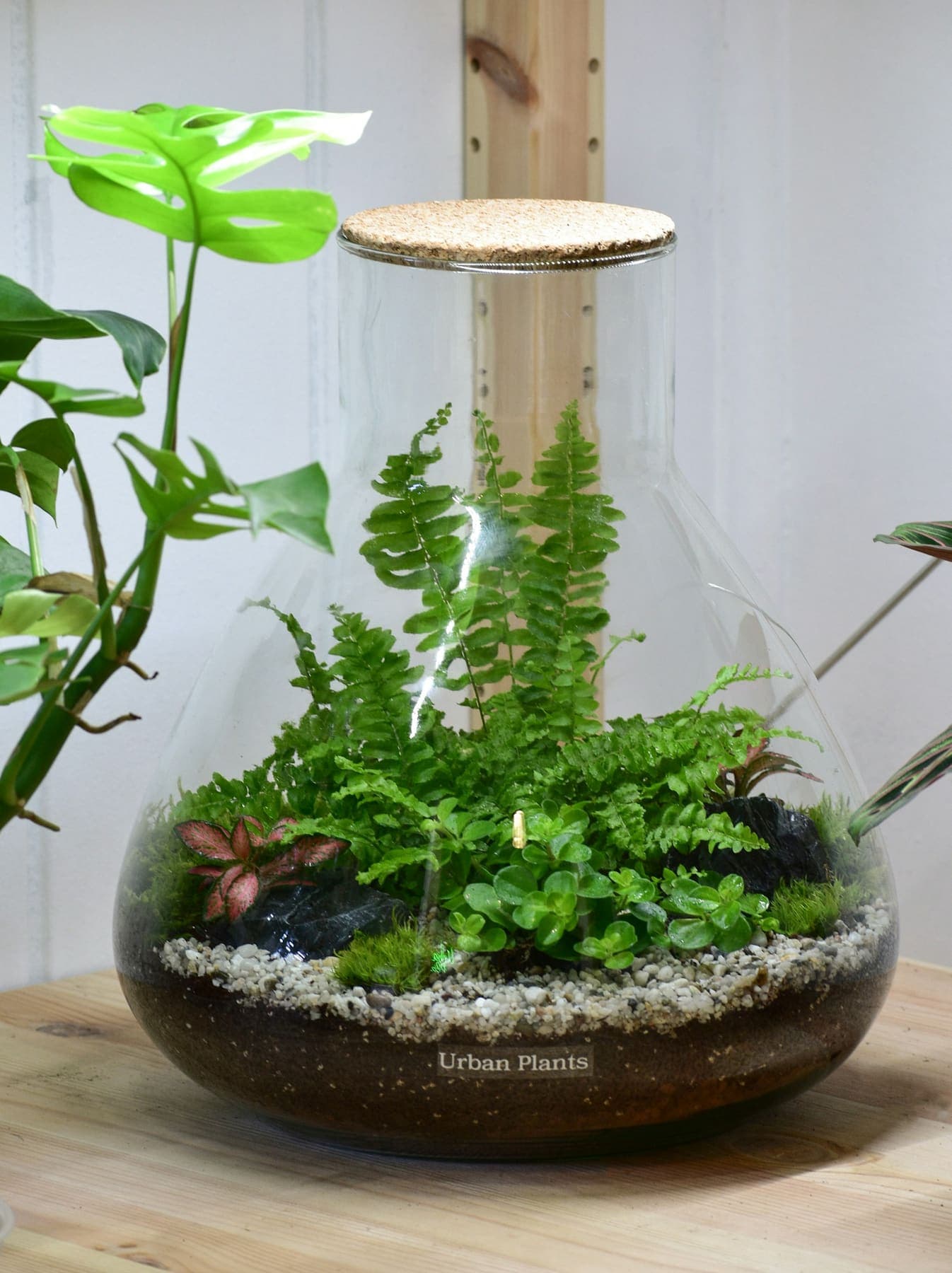
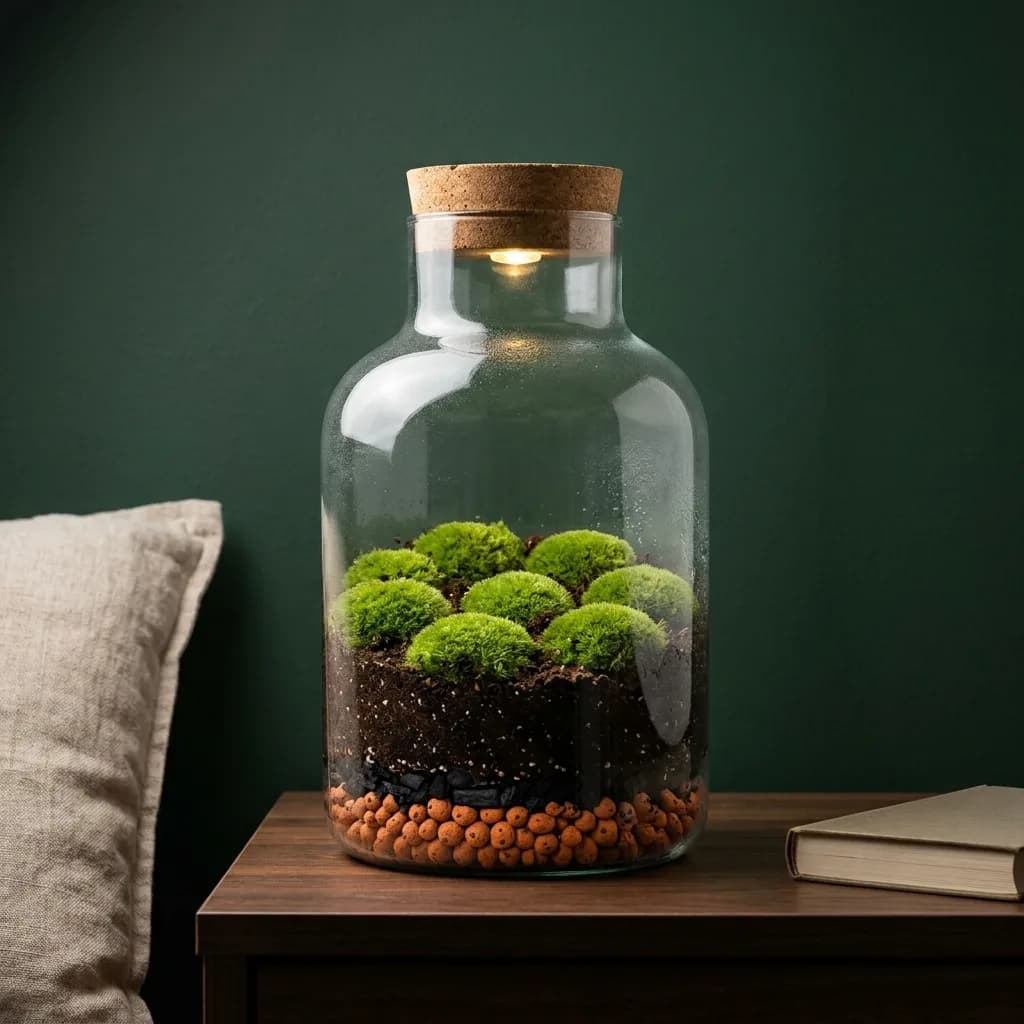
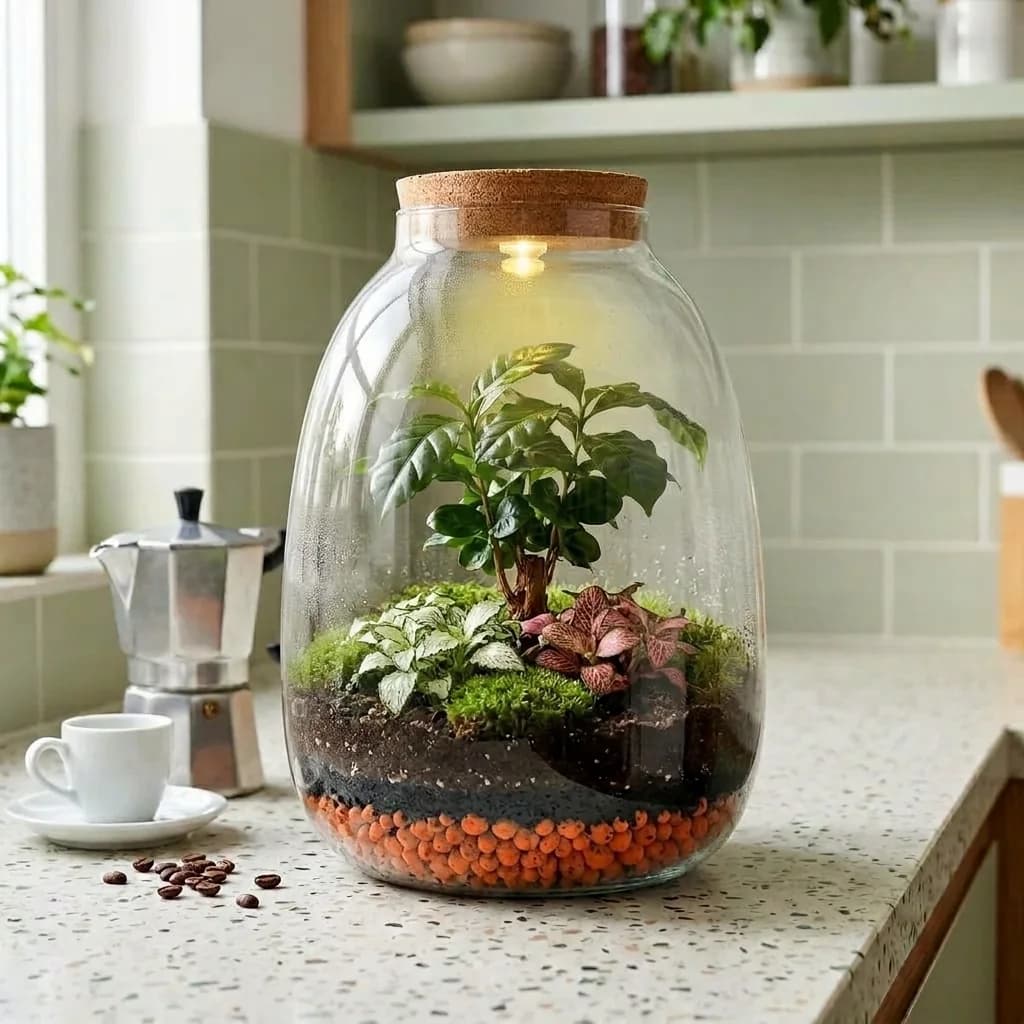
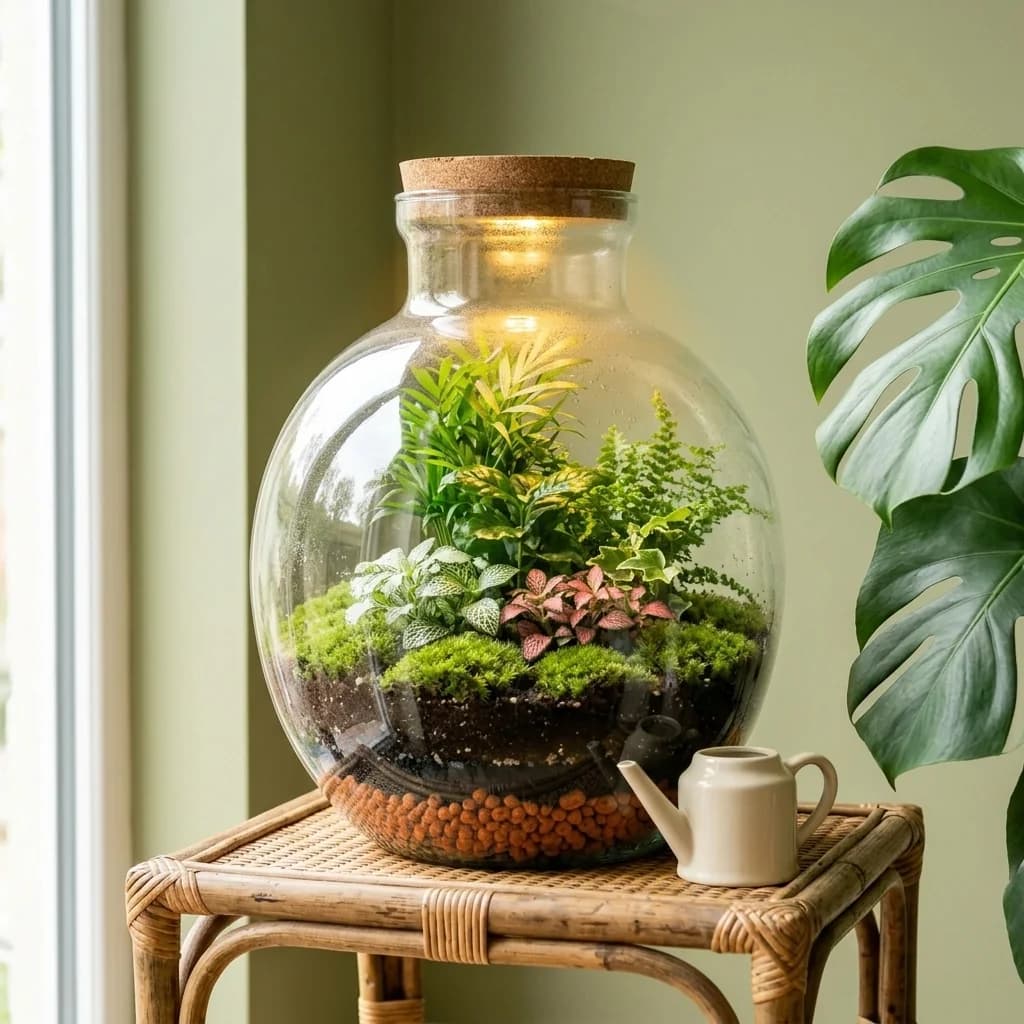
In a container sealed with a stopper, a lid or a cloche, water barely escapes. It evaporates from the substrate and the leaves, condenses on the cool glass, then trickles back down to the soil. This cycle keeps humidity permanently high.
Its strengths:
- very infrequent watering: according to the Royal Horticultural Society, a few times a year is generally enough;
- a lush, dense miniature rainforest feel;
- good tolerance of indirect light.
Its drawbacks:
- sensitivity to overwatering during the build;
- possible mould if the balance isn't right;
- a choice of plants limited to humidity-loving species.
Reading the condensation
Condensation is the best indicator for a closed terrarium. A light haze in the morning that clears during the day signals good balance. Glass that streams constantly means too much water: open it up for a few hours. Sides that stay permanently dry, on the other hand, mean a lack of humidity: mist lightly. For a container that goes for months with no attention, see our guide the closed terrarium without maintenance.
The open terrarium: air and light
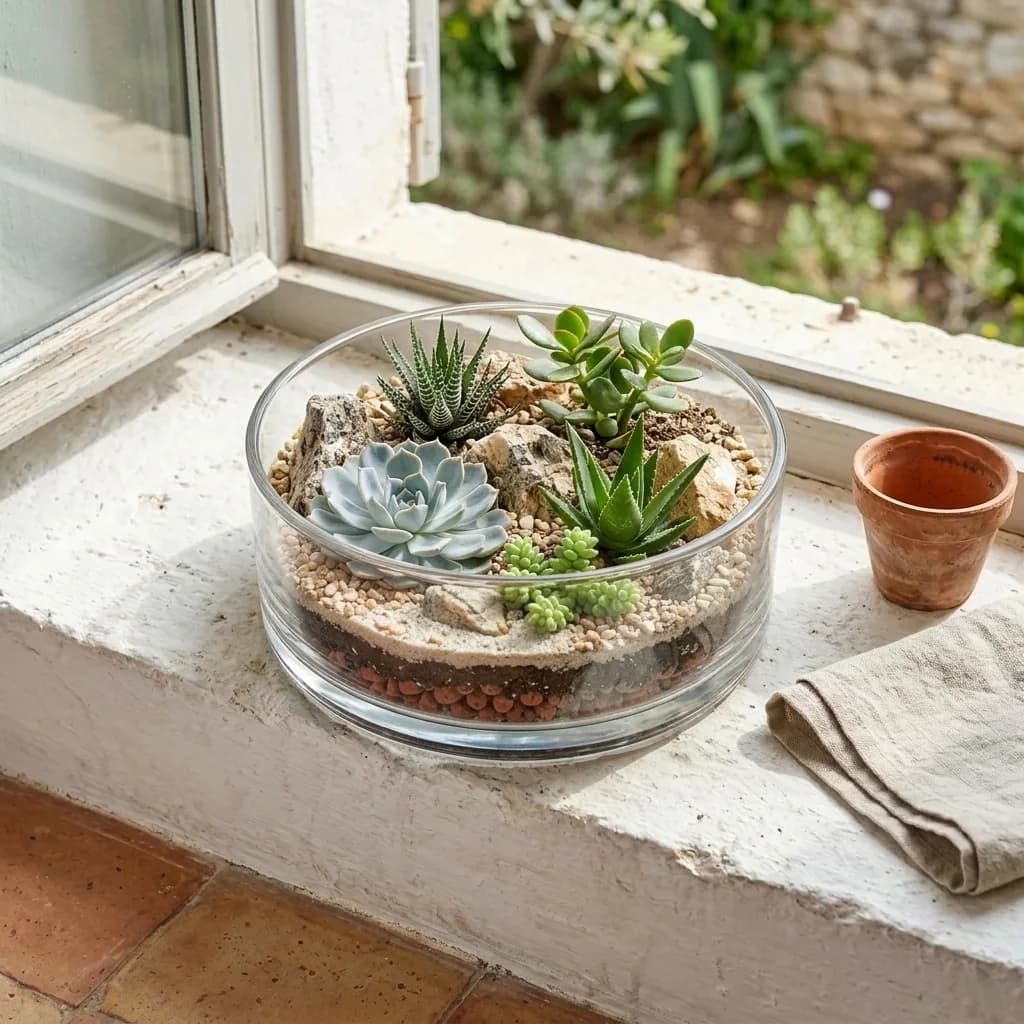
With no lid, or with wide openings like a geometric terrarium, air is refreshed and humidity escapes. The environment comes closer to an indoor pot plant sheltered under a display case. To get into the practical side of things, here's how to build a succulent terrarium.
Its strengths:
- ideal for succulents, cacti and air plants;
- no risk of excess condensation;
- easy access for planting, pruning or rearranging.
Its drawbacks:
- watering to keep an eye on, since water evaporates;
- a need for bright light, especially for succulents;
- a container with no drainage hole, which means watering sparingly.
The comparison point by point
Humidity
Closed: high and stable. Open: close to the room's own level.
Suitable plants
Closed: fittonia, spikemoss, miniature peperomias, dwarf ferns, creeping fig, mosses. Open: succulents, cacti, tillandsias, or hardy tropical plants provided you mist often. Our guide which plants for a terrarium covers each species in detail.
Substrate
Closed: draining layer, separator, then an airy organic substrate, rich in fibre and charcoal. Open for succulents: very free-draining mineral substrate, sand and gravel, with little organic matter.
Watering
Closed: rare. Open: regular but light, depending on the season and the room's warmth.
Light
Closed: bright, indirect light, at least six hours a day according to the RHS, never direct sun, since the sealed glass overheats. Open: plenty of brightness for succulents, as close as possible to a bright window; stay cautious with summer afternoon sun through glass.
Look and feel
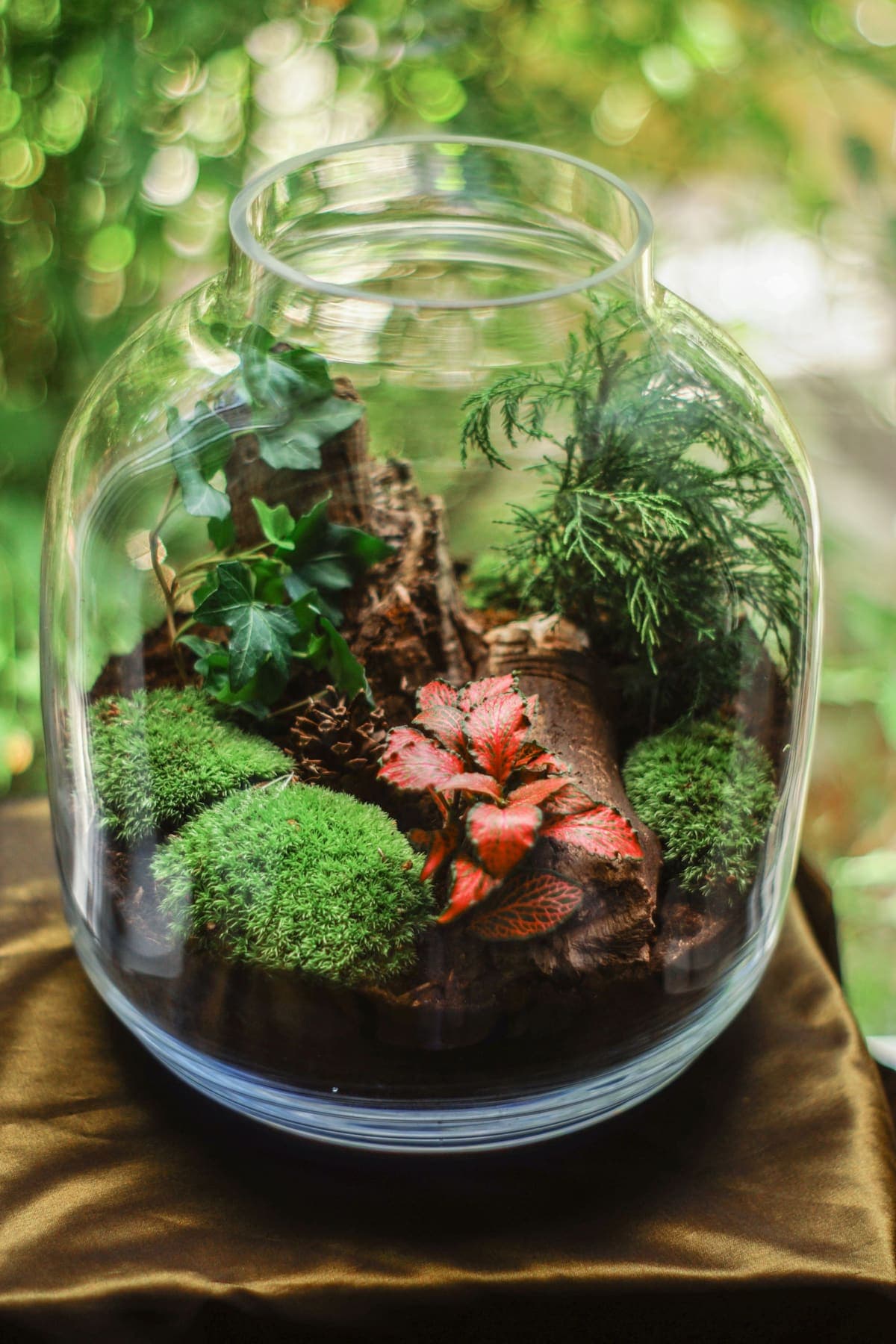
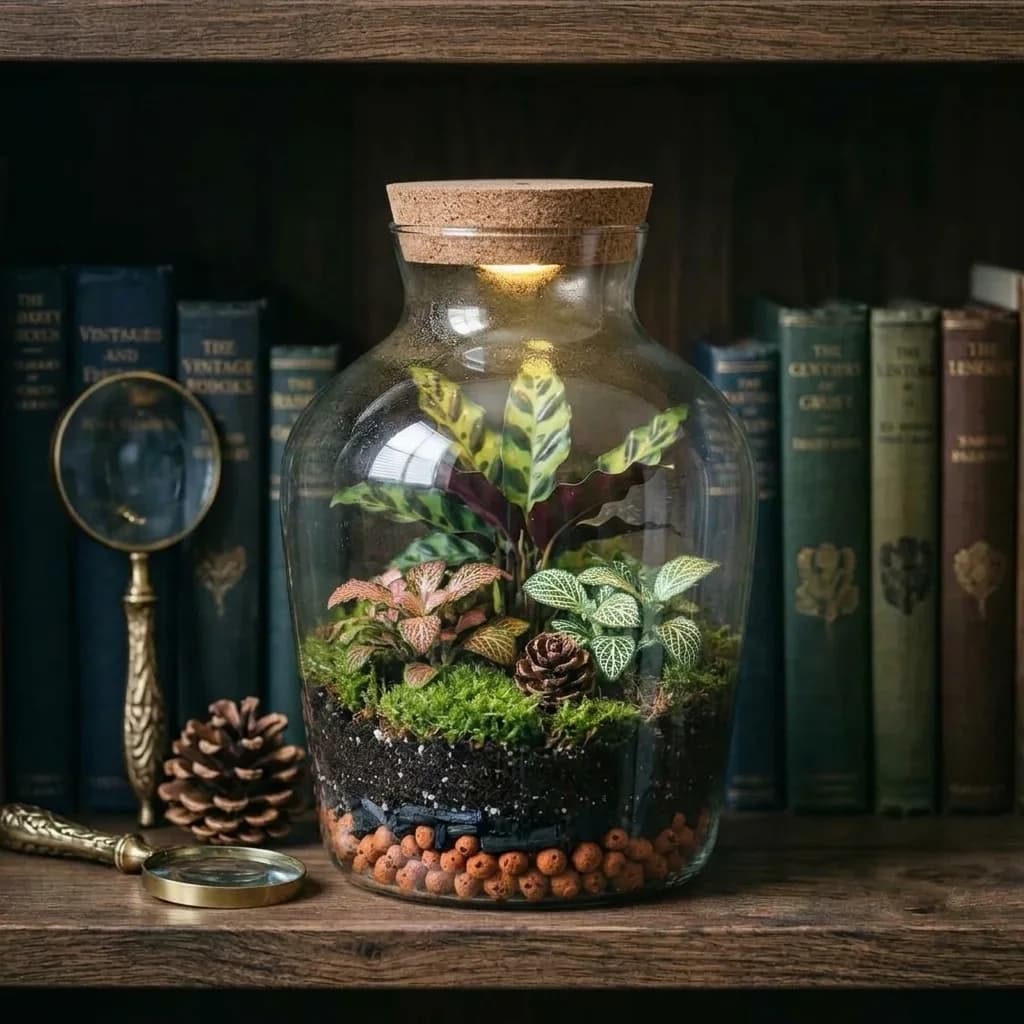
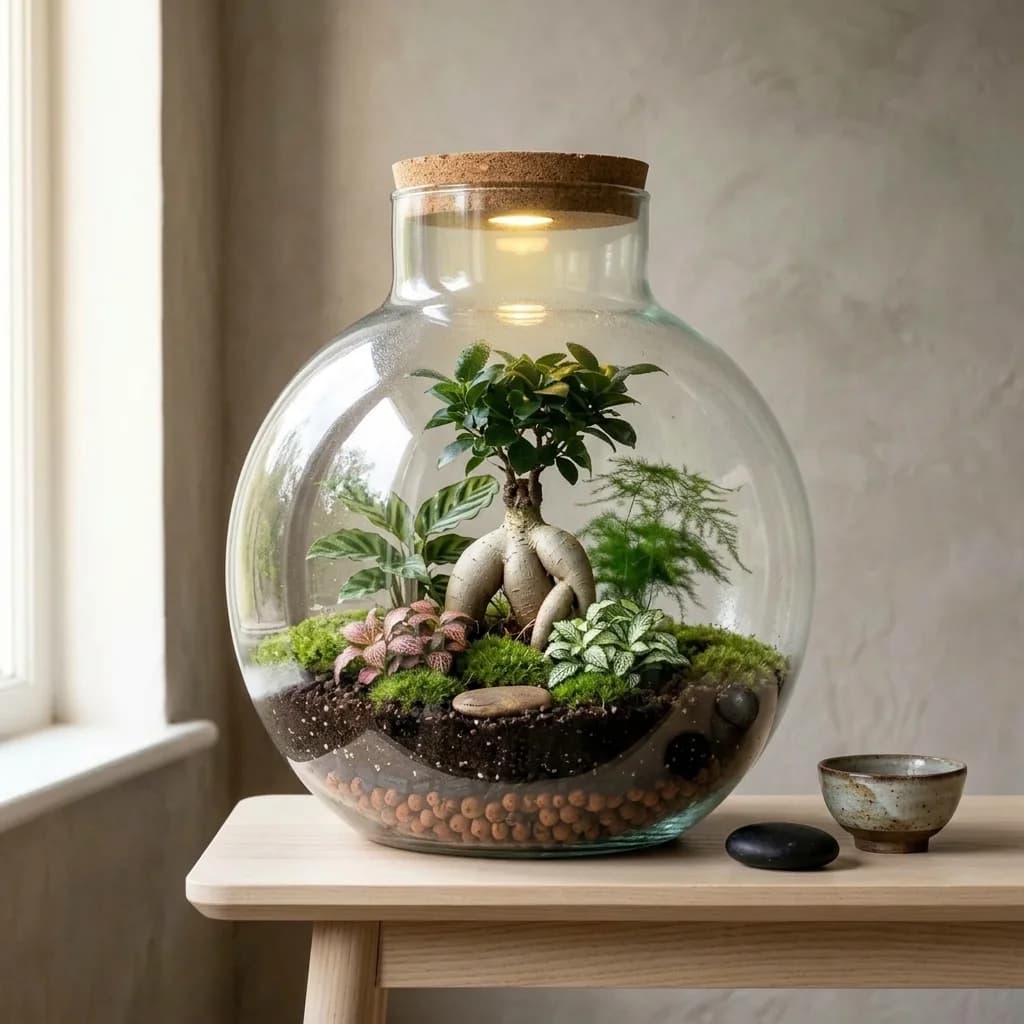
Closed: dense, condensation-lit plant scenes, in a bottle, a demijohn or a cloche, evoking a woodland floor after rain. Open: more graphic, mineral compositions, with layered sand, gravel, stones and sculptural succulent silhouettes, often set off by geometric containers.
Maintenance
Closed: trimming plants that touch the glass, removing wilted leaves. Open: watering, dusting, removing dry leaves.
And the semi-closed option?
A narrow-necked demijohn left open, or a jar with a lid simply resting on top, creates a middle ground: humidity stays high enough for tropical plants, with enough air exchange to limit mould. It's a good option for anyone wary of excess condensation.
Common mistakes
- Sealing in succulents: they rot in the humidity.
- Leaving fittonias in an open terrarium without misting: they dry out within days.
- Placing a closed terrarium in the sun: the greenhouse effect sends the temperature soaring.
- Watering an open terrarium like a pot with a drainage hole: water pools at the bottom and the roots rot.
- Mixing the two worlds: each container should hold just one type of plant.
Our advice on choosing
Start with the light in your room. A bright shelf out of direct sun suits a closed terrarium. A very bright windowsill is better suited to an open succulent terrarium. To get started on the closed side, follow our tutorial how to create a closed terrarium or the project A miniature forest under glass. On the open side, explore the succulents in the terrarium plants section and the airy containers.
Sources
Frequently asked questions
Which type of terrarium is easiest for beginners?
Both are accessible. A closed terrarium needs the least upkeep once its balance is found, while an open succulent terrarium forgives build mistakes more easily but needs occasional watering and plenty of light.
Can you leave a closed terrarium open?
Yes, but humidity will drop and tropical plants risk drying out. Opening it for a few hours is useful for reducing excess condensation; leaving it open permanently means misting regularly.
Why don't succulents belong in a closed terrarium?
Succulents store water in their leaves and are adapted to dry, well-ventilated environments. In the constant humidity of a closed terrarium, their roots and tissues eventually rot.