

DIY terrariums: the equipment you need, explained
Container, layers, plants, tools: the equipment list for building a terrarium yourself, with what's essential, what's optional and what you probably already own.
In this guide
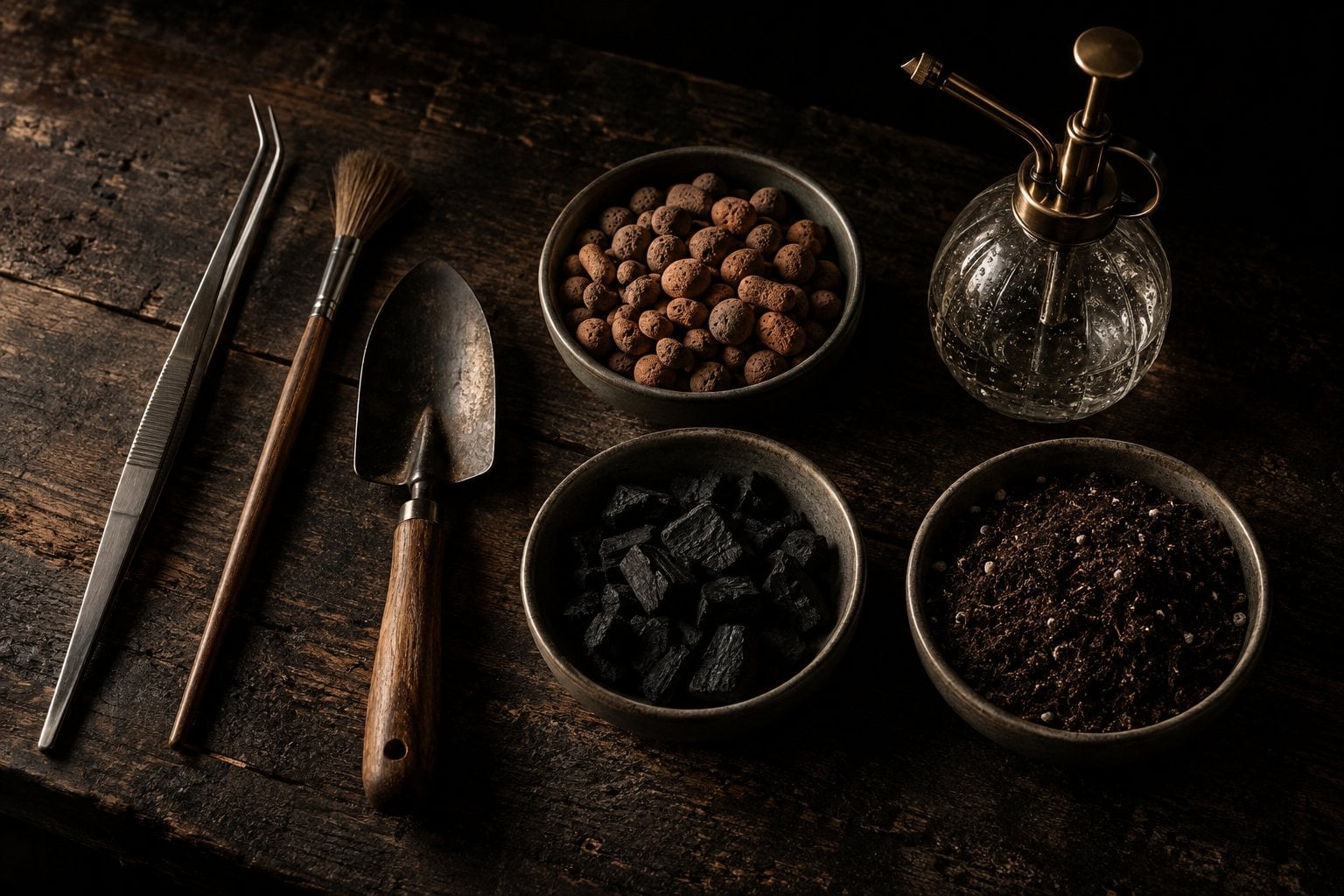
To build a terrarium yourself, you need a clear glass container, a draining material such as clay pebbles or gravel, a little activated charcoal, a light compost, two or three plants that enjoy humidity, cultivated moss and a mister. As for tools, a long-handled spoon and scissors are enough for a wide jar; long tweezers and a telescopic rake become useful as soon as the neck narrows. Everything else is optional. Here's the list explained, item by item.
The essentials
A clear glass container
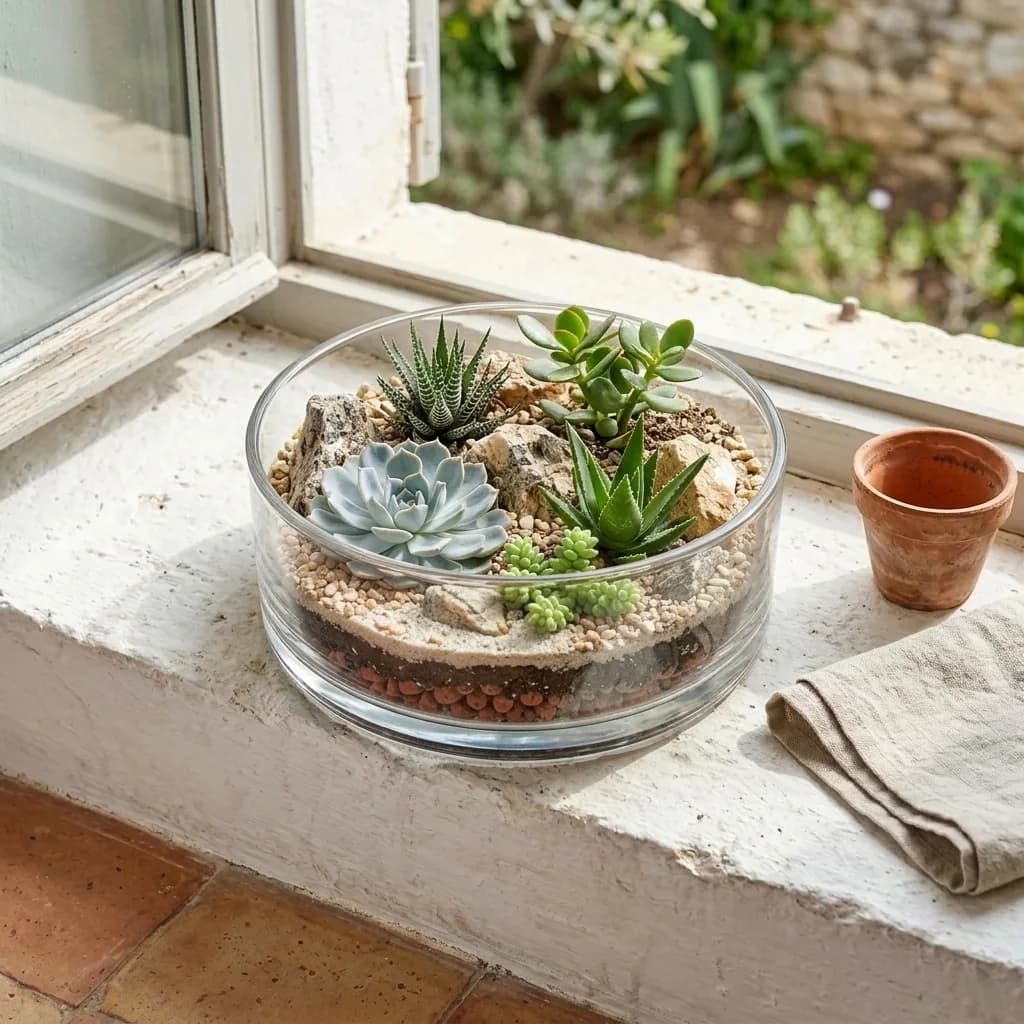
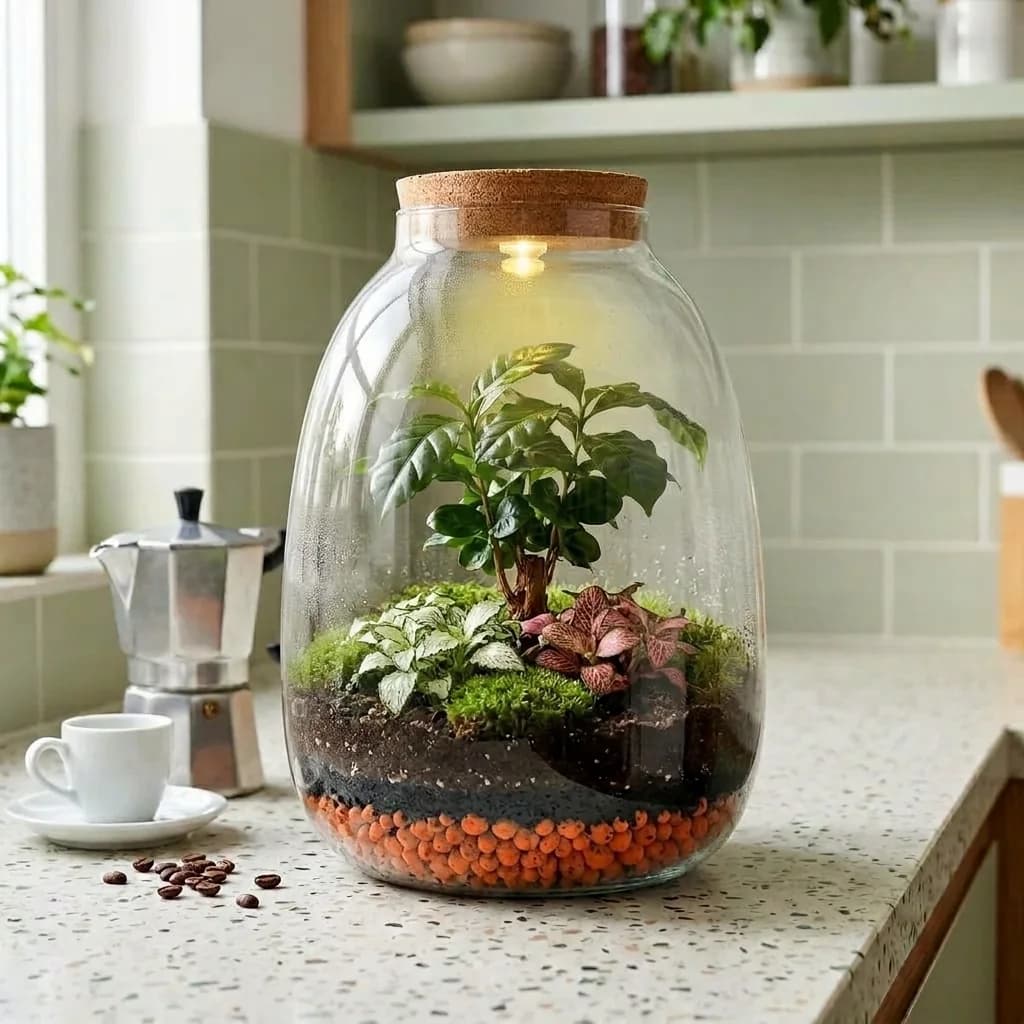
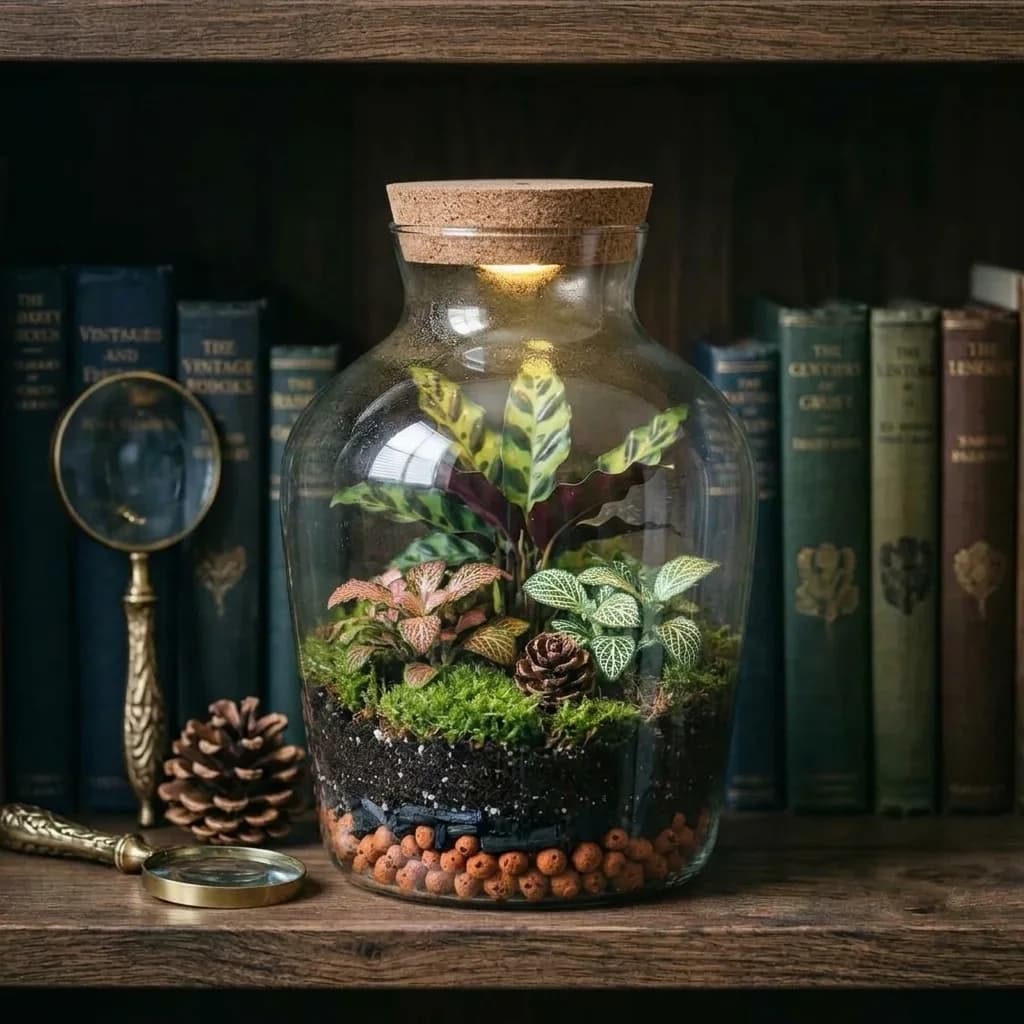
This is the one piece that decides everything else: the type of plants, the tools needed, the amount of substrate. Choose clear, colourless glass. A jar with a stopper or lid gives you a humid terrarium, for tropical plants; a wide-open container suits succulents. Our guide to which container for a terrarium compares the formats.
A draining material
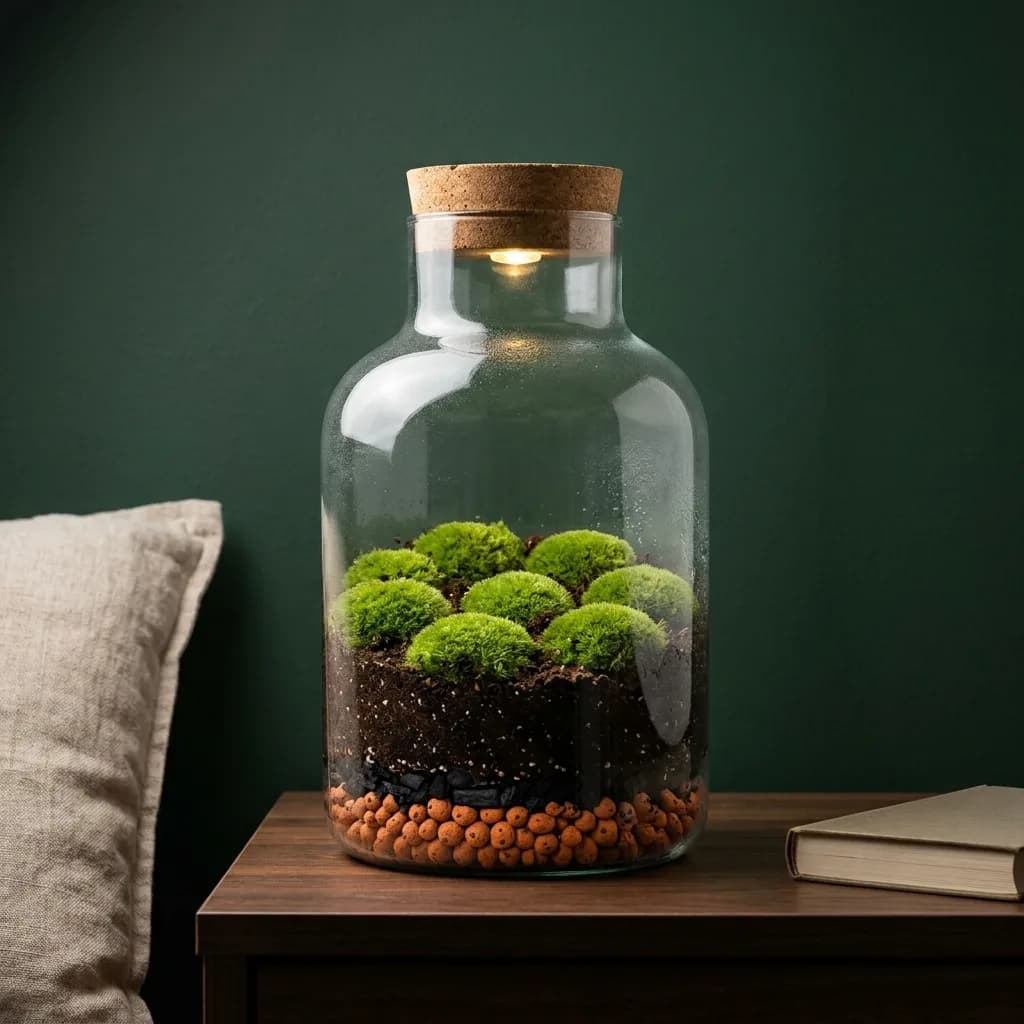
Expanded clay pebbles, gravel, pumice or small pebbles, rinsed before use. Mississippi State University recommends around 2.5cm at the bottom of a closed terrarium. This layer collects excess water, since the container has no drainage hole.
A separating layer
A fine mesh, a piece of netting or a thin layer of moss. It stops the compost sinking into the drainage layer. An offcut of horticultural fleece or a coffee filter will do the job.
Activated or horticultural charcoal
A thin layer, or a few handfuls mixed into the compost. The University of Illinois links it to removing compounds harmful to plants, Penn State to absorbing odours. It's mainly useful in a closed terrarium. Never barbecue charcoal.
A light, low-nutrient compost
A sterile, soil-free compost, according to Mississippi State University, low in fertility, according to Penn State. Avoid garden soil and compost enriched with fertiliser. Our guide to which substrate for a terrarium explains how to choose and layer each one.
Suitable plants
For a closed terrarium, small plants that enjoy humidity: fittonias, small ferns, spike mosses. For an open terrarium, succulents or cacti. Allow for two to three plants for a tabletop jar, bearing their adult size in mind. Our guide to which plants for a terrarium presents species by habitat.
Cultivated moss
It covers the substrate, keeps surface humidity in and gives that woodland-floor look. Buy cultivated moss: collecting it in the wild may be regulated depending on location, and it often brings unwanted insects with it. Our guide to terrarium mosses helps you choose a species.
A mister and low-lime water
The mister is on Mississippi State University's starter list: it's used for the first watering, then for upkeep. Use rainwater collected cleanly or demineralised water, which doesn't leave limescale marks on the glass. For technique, read how to water a terrarium.
Fine scissors
For trimming damaged leaves before planting, adjusting a moss mat and, later, trimming anything touching the glass.
Tools: which ones are actually useful?
It all depends on your container's opening.
If your hand fits through the opening, you don't need any specialist tools. Your fingers, a spoon and scissors are enough.
If the opening is narrow, four tools really change the build:
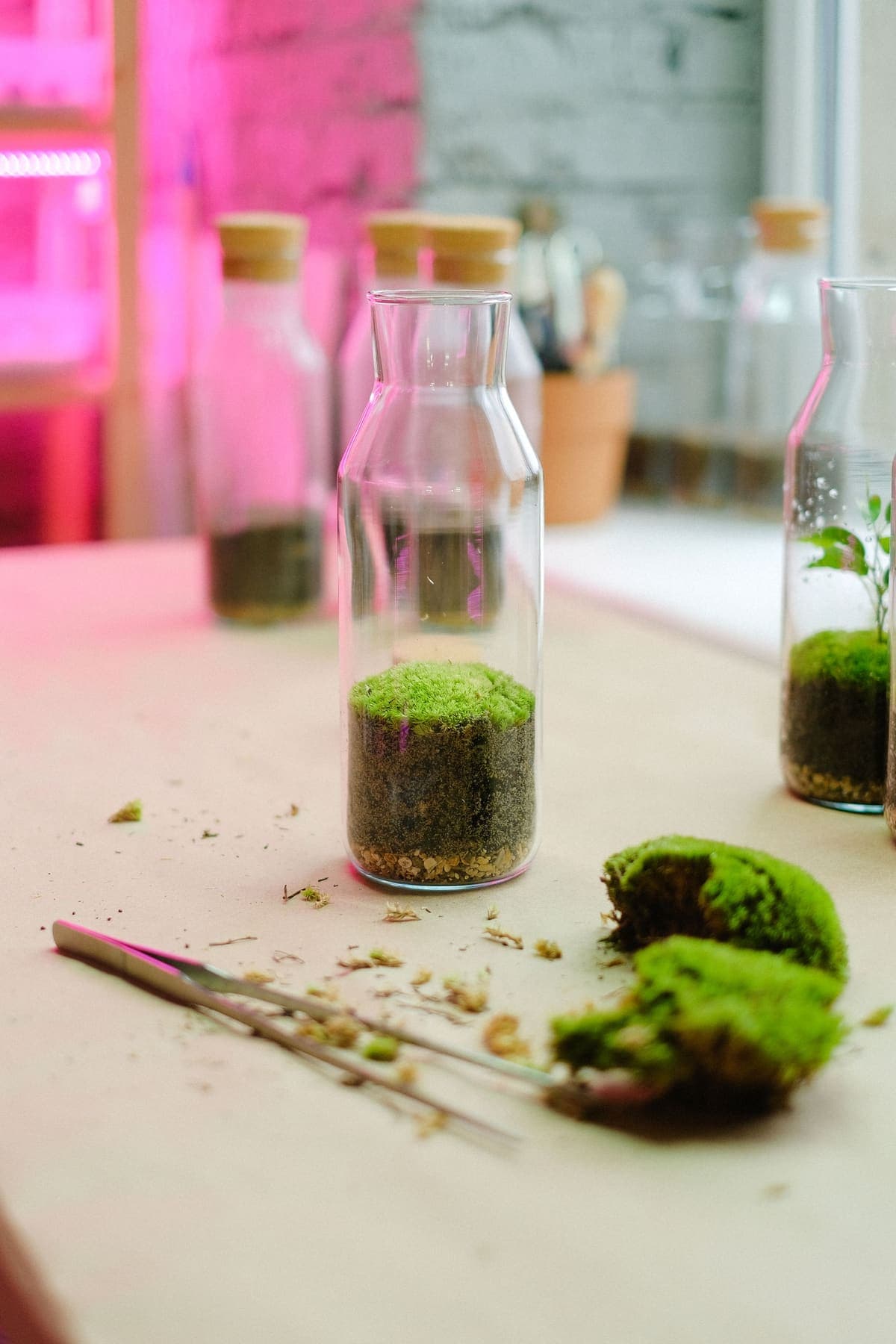
- long tweezers, for placing plants, moss and decorative elements without touching the sides;
- a long-handled rake or small trowel, for spreading and levelling the substrate at the bottom;
- a tamper, for pressing compost down around the roots;
- long scissors, for trimming inside without taking the plant out.
Our 4-piece stainless steel terrarium tool set includes a telescopic rake extending to 49cm, 25cm scissors, 25cm tweezers and a small pair of pruning shears. The rake is used for levelling substrate and moss in deep containers, the tweezers for placing plants precisely.
Swapping tools for things you already have
American university guides suggest plenty of substitutes:
- a long-handled kitchen spoon for digging and pouring, according to Penn State;
- a cork fixed to the end of a stick with an elastic band, for tamping down the substrate, again according to Penn State;
- kebab skewers and pipe cleaners for guiding plants through a narrow neck, according to the University of Illinois;
- a sheet of newspaper rolled into a cone, as a funnel, and spread out on the table to protect your work surface, according to Mississippi State University;
- a chopstick, for digging a planting hole.
With these substitutes, a first terrarium in a wide jar needs no tool purchase at all.
Optional equipment
These items improve the result or your comfort, without being necessary:
- Decorative elements: a stone, a piece of hardwood, a path of small gravel. Avoid softwood collected damp, which goes mouldy.
- A soft brush to clear soil from leaves and the glass.
- Kitchen paper to clean the inside of the glass after building.
- Thin gloves, for handling charcoal, which stains, and delicate plants.
- A grow lamp, if the room lacks natural light. Our grow lamps section presents the models.
- Terrarium tool kit, 4 stainless steel pieces, 49 cm rake49 cm rake · 25 cm tweezers and scissors€26.90
- Terrarium refill, with or without moss, sizes S to XLFor terrariums sizes S to XLFrom €18.90Choose
- Activated charcoal for terrariums, 200 g200 g€11.90
- Terrarium pickup claw, 72 cm, retractable clawLength 72 cm€11.90


Kit or à la carte equipment?
A kit saves you gathering each element, and supplies the quantities the manufacturer intends for its container. It doesn't always spare you buying tools: the Noah and Sam XL kits don't include any.
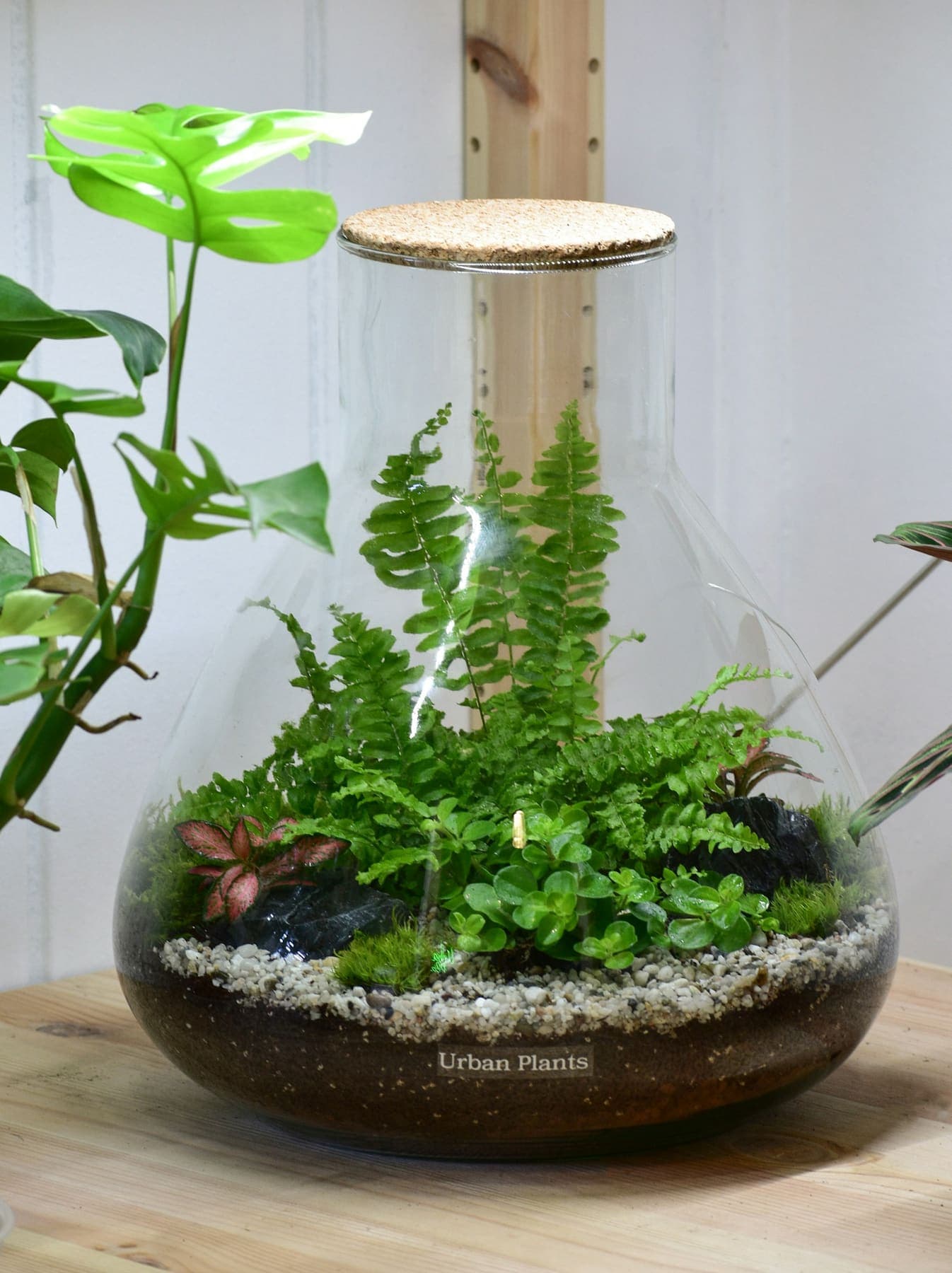
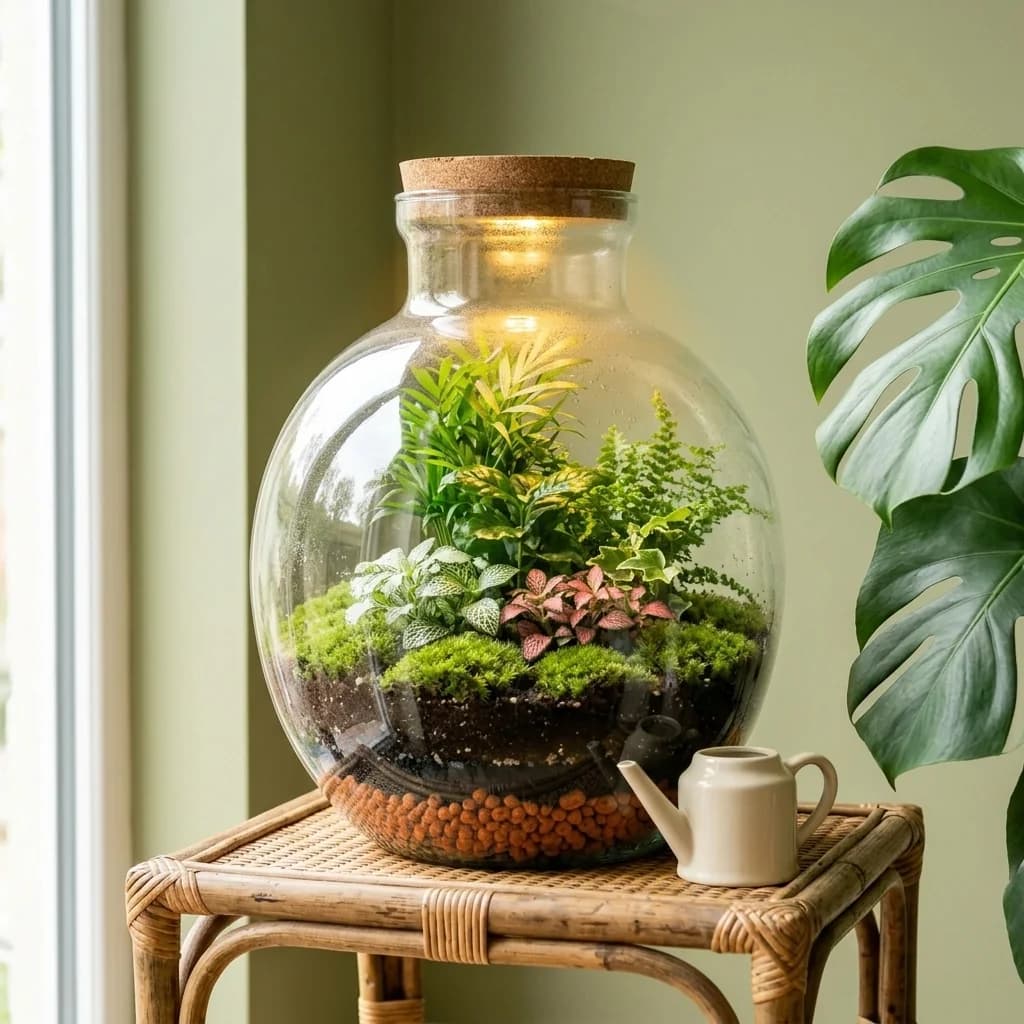
The Noah closed terrarium kit brings together an 18.5cm-diameter jar with a cork stopper, a fittonia of your choice, two moss balls, 0.75 litre of compost, 0.75 litre of clay pebbles and 35g of activated charcoal. The opening lets you plant by hand: the simplest option for beginners.
The 1L moss kit is devoted to moss: moss, lichen and a spike moss, in a one-litre jar. Fine tweezers will help you arrange the small elements.
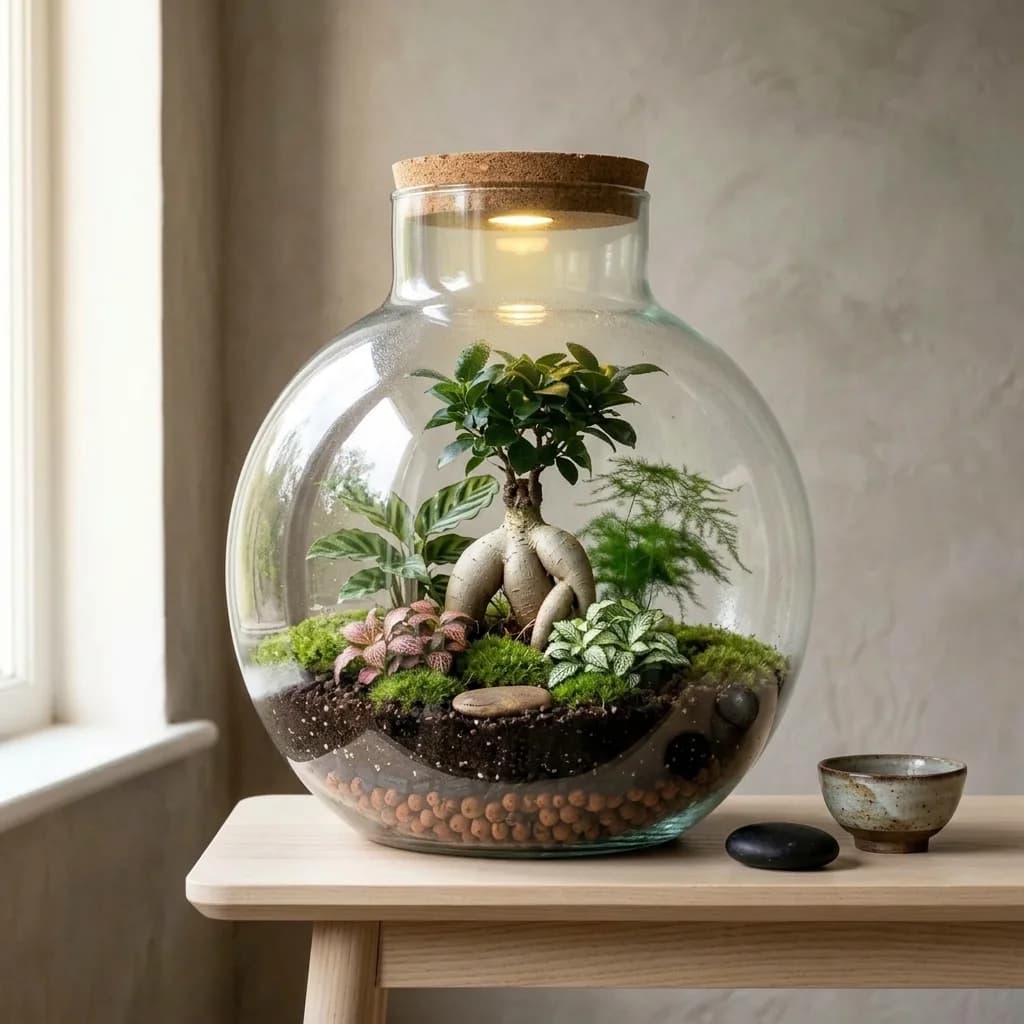
The Sam XL bonsai kit is the largest: a 30cm-diameter bottle with a light-up cork stopper, batteries not included, a Ficus ginseng, a fern, a fittonia, three cushions of moss, 1.75 litre of compost, 0.75 litre of clay pebbles and 35g of activated charcoal. For this size, plan on using long tweezers.
À la carte equipment becomes worthwhile once you want to choose your own plants, reuse a container, or build several terrariums. Our guide to how much a terrarium costs compares budgets.
Preparing your work surface
Before you begin, gather everything within reach:
- Protect the table with newspaper.
- Wash and dry the container, inside and out.
- Rinse the draining material to remove dust.
- Moisten the compost before pouring it in: damp, never soaked.
- Prepare the plants: take them out of their pots, remove some of the original soil, trim any damaged leaves and check for pests.
- Rehydrate the moss if it was delivered dry.
The build itself, layer by layer, is covered in detail in our tutorial How to create a closed terrarium.
What's best avoided
- Tinted or frosted glass: it deprives plants of light.
- Garden soil: it compacts, holds water and brings pests.
- Barbecue charcoal: use activated or horticultural charcoal instead.
- Succulents in a closed container: they can't cope with permanent humidity.
- Moss collected in the forest: for reasons of regulation, ecology and cleanliness.
The gear
For a first DIY terrarium, a kit or a few chosen pieces are enough: the rest is often already in your kitchen.
Find the kits and the tools in our self-assembly kits section, and the mixes in substrates & bioactive.
Sources
- How to Design a Closed-System Terrarium — Mississippi State University Extension
- Creating a Closed Terrarium — Penn State Extension
- DIY bottle terrariums make great projects, gifts — University of Illinois Extension
- Terrarium Tools Bundle — urbanjngl
- Sam XL Bonsai, terrarium with light, bottle garden DIY kit — urbanjngl
Frequently asked questions
Can you make a terrarium without activated charcoal?
Yes, especially an open terrarium of succulents. In a closed terrarium, it's still recommended: it's linked to odour absorption in an environment where humidity can't escape.
What tools do you need for a bottle terrarium?
At minimum, long tweezers for placing plants, a long-handled tool for spreading the substrate, and a tamper. A funnel, even a paper one, keeps the sides clean while pouring in the layers.
Where can you find clay pebbles for a terrarium?
Expanded clay pebbles are available at garden centres, in the hydroponics or repotting section. Rinsed gravel or pumice does the same drainage job.
Do you need gloves to build a terrarium?
It's not essential. Thin gloves are handy for handling charcoal, which stains, and thick gloves are useful if you're planting cacti.