

Springtails in a terrarium: the complete guide
What are springtails for? Identification, introduction, moisture and limits: learn how to welcome these small decomposers into a terrarium.
In this guide
Springtails are small soil arthropods, often used as decomposers in humid terrariums. They feed mainly on fungi and decaying organic matter. They can take part in the biological upkeep of the environment, but they will not repair overwatering or rotten roots.
How do you recognise a springtail?
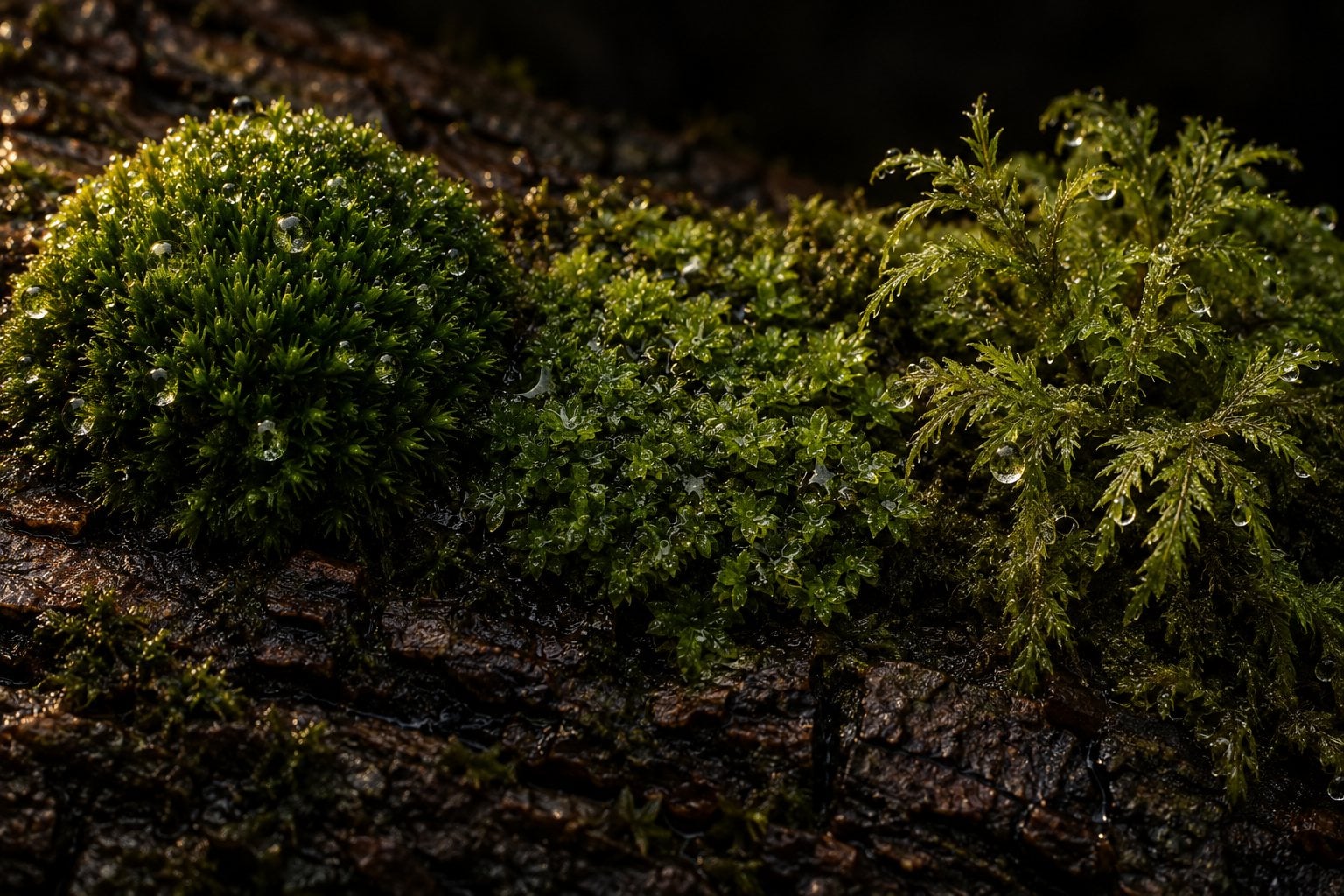
The individuals you usually see are tiny, wingless, and many of them jump when disturbed. Their colour varies from one species to another: they are not all white. A hand lens or a close-up photograph makes them easier to see.
Anything that flies is something else. Read the guide to fungus gnats in a terrarium if small flies are circling the glass. Do not reach for a treatment simply because the soil appears to be moving.
Their role in a bioactive terrarium
Springtails are one part of the decomposition network, alongside microorganisms and sometimes other invertebrates. They can eat some surface moulds, without removing every species of fungus or preventing its return.
The guide to the bioactive terrarium explains how this works. Their presence is no guarantee of balance: you still need suitable plants, an airy soil and a moisture level that matches the culture you have introduced.
How do you introduce them?
Choose an identified culture
Prefer a captive-bred culture whose seller states the conditions it needs. The word "springtails" on its own does not describe every requirement. Avoid tipping in soil collected outdoors in the hope of getting an unknown population.
Prepare conditions that suit them
The substrate should be damp without being waterlogged, with shelter and a little suitable organic matter. Correct any saturation before you introduce them. Do not install them in a container that still holds the residue of an incompatible treatment.
Transfer them without flooding everything
Follow the supplier's method for the culture medium they use. Moving them across with a little of that medium can work well; do not add a large volume of water simply to wash them in. There is no universal number of individuals per litre that guarantees success.
Do they need feeding?
In an established terrarium, plant debris and microorganisms already provide resources. Do not add rice, yeast or food as a matter of course: an excess can feed the moulds faster than the population consumes it. For a separate culture, follow a protocol written for that particular species.
A few healthy leaves suited to a litter layer are not the same thing as a plant that is rotting. Always remove badly decayed or diseased tissue.
If they vanish, or become very numerous
They may simply be hiding. Look gently underneath a piece of shelter before you conclude that they have gone. Then check the moisture level, what you have been feeding and any recent treatment. A large population can be a sign of plentiful resources; it does not automatically call for action.
The bioactive maintenance guide helps you adjust the environment. To prepare the soil, see substrates and bioactive materials; that category does not guarantee that live cultures are in stock.
Sources
Frequently asked questions
Are springtails dangerous to people?
They neither bite nor sting. They are mainly organisms associated with damp environments.
Does a closed terrarium have to contain springtails?
No. A planted terrarium can work without any deliberate introduction of springtails. They are one way of developing biological decomposition, not a universal requirement.