

Terrarium too wet: how to save it
Running glass, standing water at the bottom, soft leaves: how to diagnose a waterlogged terrarium, dry it out without taking it apart, and when to start again.
In this guide
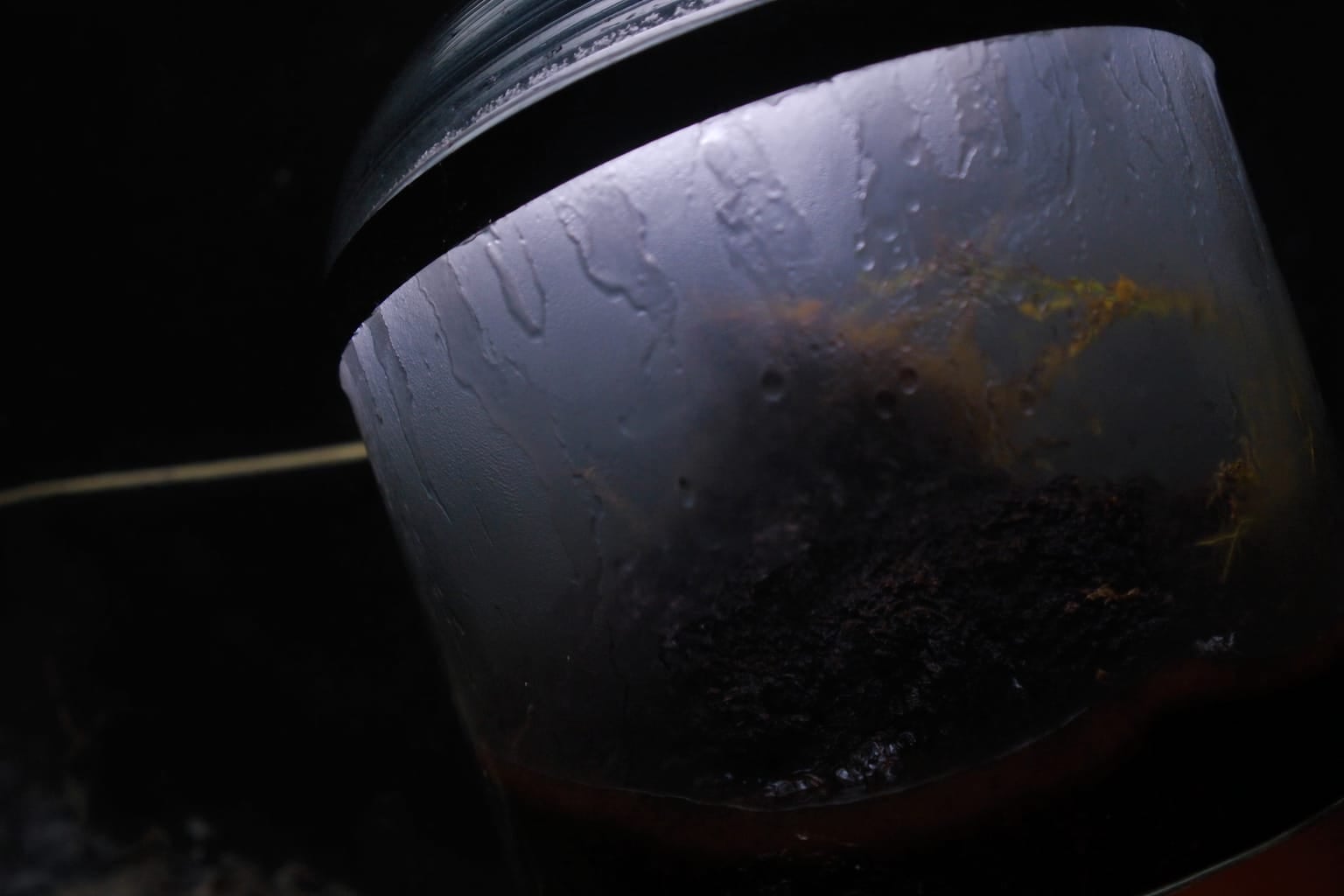
A terrarium that is too wet shows three signs: the glass runs with water permanently instead of carrying a light mist, a film of water stays visible in the drainage layer, and the leaves turn soft and translucent rather than dry. The treatment is simple and calls for patience: open it for a few hours a day until the condensation becomes light again, remove the water at the bottom, and stop watering. A waterlogged terrarium can nearly always be saved without taking it apart.
Why it happens so often
A flowerpot has a hole in the bottom: surplus water drains away. A terrarium does not. Every drop poured in stays there, for good, until it evaporates. The drainage layer absorbs a small occasional excess, not regular watering.
On top of that comes a very human reflex: we water just in case. In a closed terrarium, that is precisely the thing not to do. The rule is asymmetrical — a slightly dry terrarium is put right with a few sprays, a soaked one takes weeks.
The diagnosis in three looks
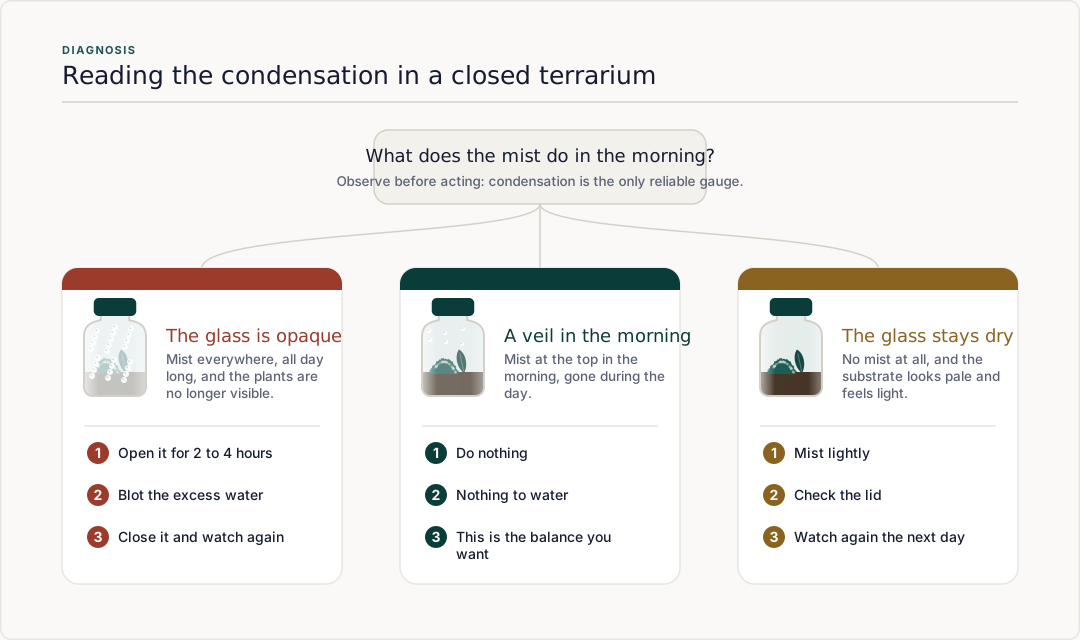
The glass. Look at it in the morning. A light mist that clears during the day is the right state. Large drops running down continuously, a permanently opaque pane: there is too much water. The fine reading of condensation is in Condensation in a terrarium.
The bottom. Crouch down to the level of the drainage. A layer of free water between the pebbles or the gravel is an excess. A little glistening moisture is not.
The plants. A plant short of water has drooping but firm leaves, or dry, brittle edges. A drowned plant has soft, translucent leaves, sometimes brown in the middle, and the stem gives way at the crown. These are two opposite pictures that are often confused — and watering a drowned plant finishes it off.
The treatment, step by step
Open it, but not continuously
Take the lid off in the morning, put it back in the evening. Repeat every day until the mist becomes light again: allow three days to two weeks depending on the volume and the season.
Do not leave the terrarium open permanently. Mosses and woodland plants live on that humidity; taking it away abruptly creates a second problem in place of the first.
Remove the water at the bottom
If free water is sitting in the drainage, do not rely on evaporation alone. Slide a syringe or a long pipette down to the bottom and draw it off in several goes. For a small container, a rolled-up piece of kitchen paper left in for a few minutes does the same job.
Clear away what is already affected
Take out soft or browned leaves, collapsed stems and any plant debris lying on the substrate. In a closed environment, dead matter feeds mould: that is the second wave, and it comes quickly. If a white film has already taken hold, follow Mould in a closed terrarium.
Stop watering, and wait
Once the mist is light again, leave the terrarium alone. The next drink comes only when the condensation has gone for a sustained period and the substrate lightens at the surface — often months later. The markers are in Watering a terrarium.
When you really do have to take it apart
Three signals, and they have to be unmistakable:
- the smell: a smell of pond mud or rotten egg means the bottom is short of oxygen;
- the roots: brown, soft, coming away when you pull the plant gently;
- mould that comes back after two or three successive cleanings.
In that case, take the plants out, rinse their roots in lukewarm water, cut off the brown parts, and rebuild on fresh substrate. Keep the container, rinsing it in hot water without detergent. The rebuild follows How to create a closed terrarium.
Avoiding a repeat
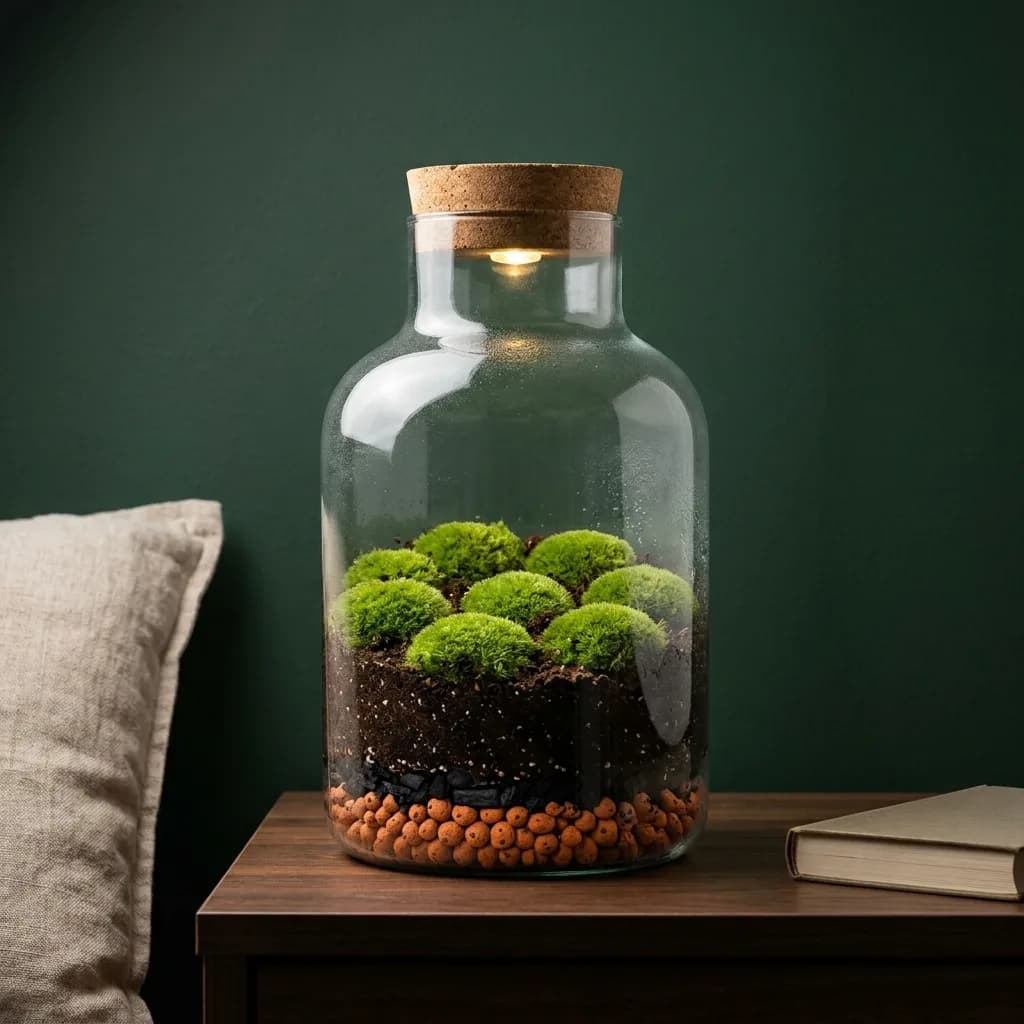
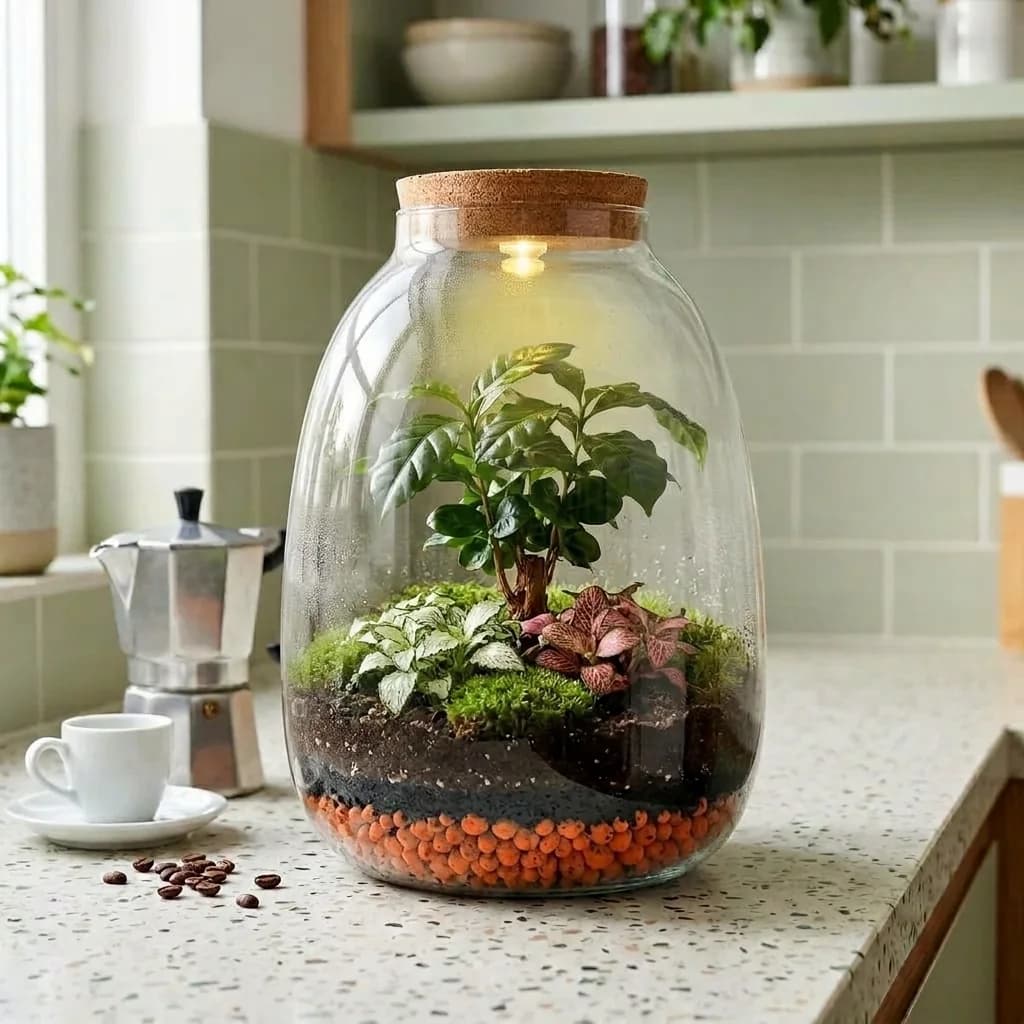
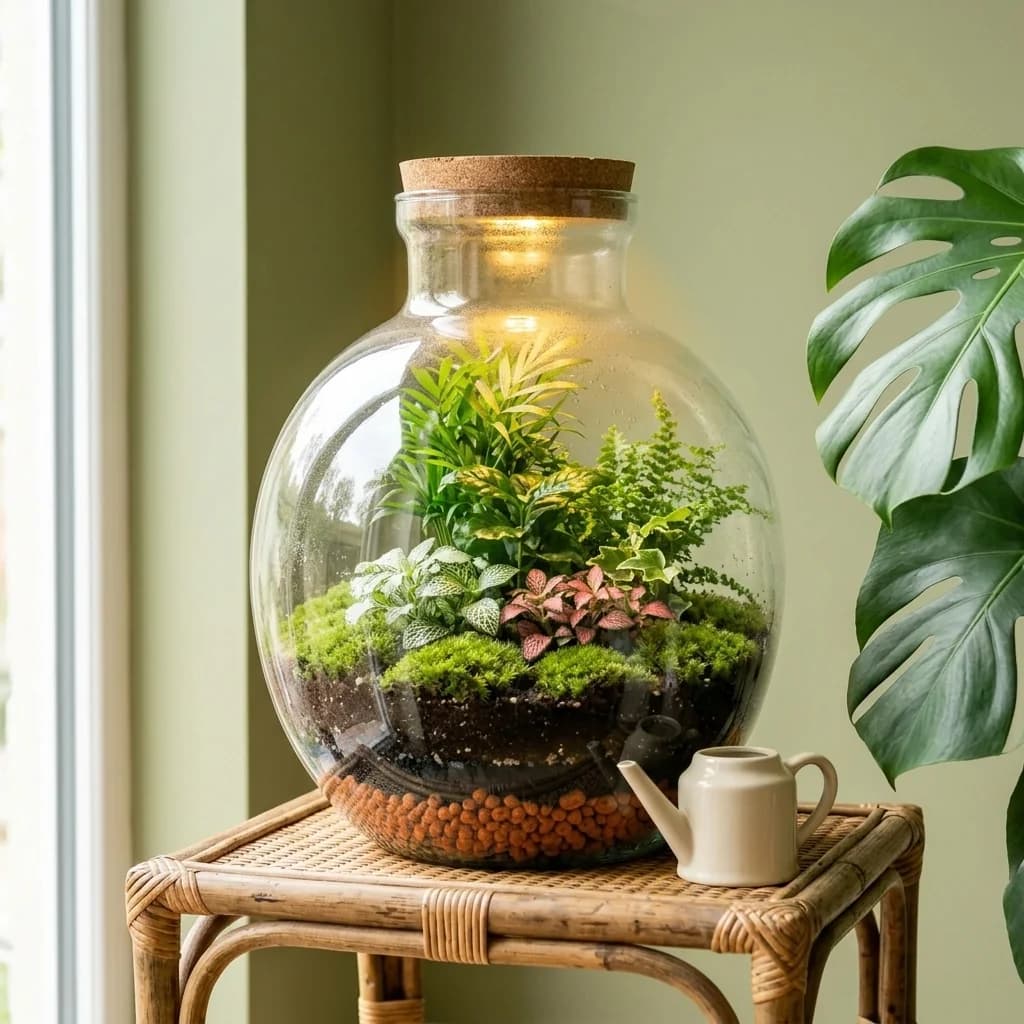
Real drainage. Two to three centimetres of clay pebbles or pozzolan at the bottom, topped with a separating layer that stops the substrate dropping down. The depths are in The different layers of a terrarium.
The right substrate. Shop-bought compost holds far too much water for a terrarium. An airy mix, based on coir, fine bark and perlite, dries and drains.
Watering with a pipette. Measure, make a note, wait until the next day before adding more. It is less satisfying than a generous burst from a mister, and far safer.
Sources
Frequently asked questions
How long should you leave a terrarium open to dry it out?
A few hours a day, not continuously. Open it in the morning, close it in the evening, and repeat until the mist becomes light again. Leaving it open permanently dries out the mosses and the woodland plants.
How do you remove standing water from the bottom of a terrarium?
With a syringe or a long pipette slid down into the drainage layer, drawing it off in several goes. A rolled-up piece of kitchen paper left at the bottom for a few minutes also works for small volumes.
Does a terrarium that is too wet smell bad?
Often, yes. A smell of pond mud or egg means the water is stagnant and the bottom of the environment is short of oxygen. That is the stage at which you need to act quickly, before the roots rot.
Do you have to take it all apart?
Rarely. A waterlogged terrarium can nearly always be saved by airing it repeatedly and removing the water at the bottom. Taking it apart is only needed if the substrate smells strongly, if the roots are brown and soft, or if mould returns after every cleaning.