

Bonsai in a terrarium: the limits and the alternatives
Can a bonsai live under glass? Tell outdoor trees from tropical figs, then choose a set-up that stays reachable and genuinely drained.
In this guide
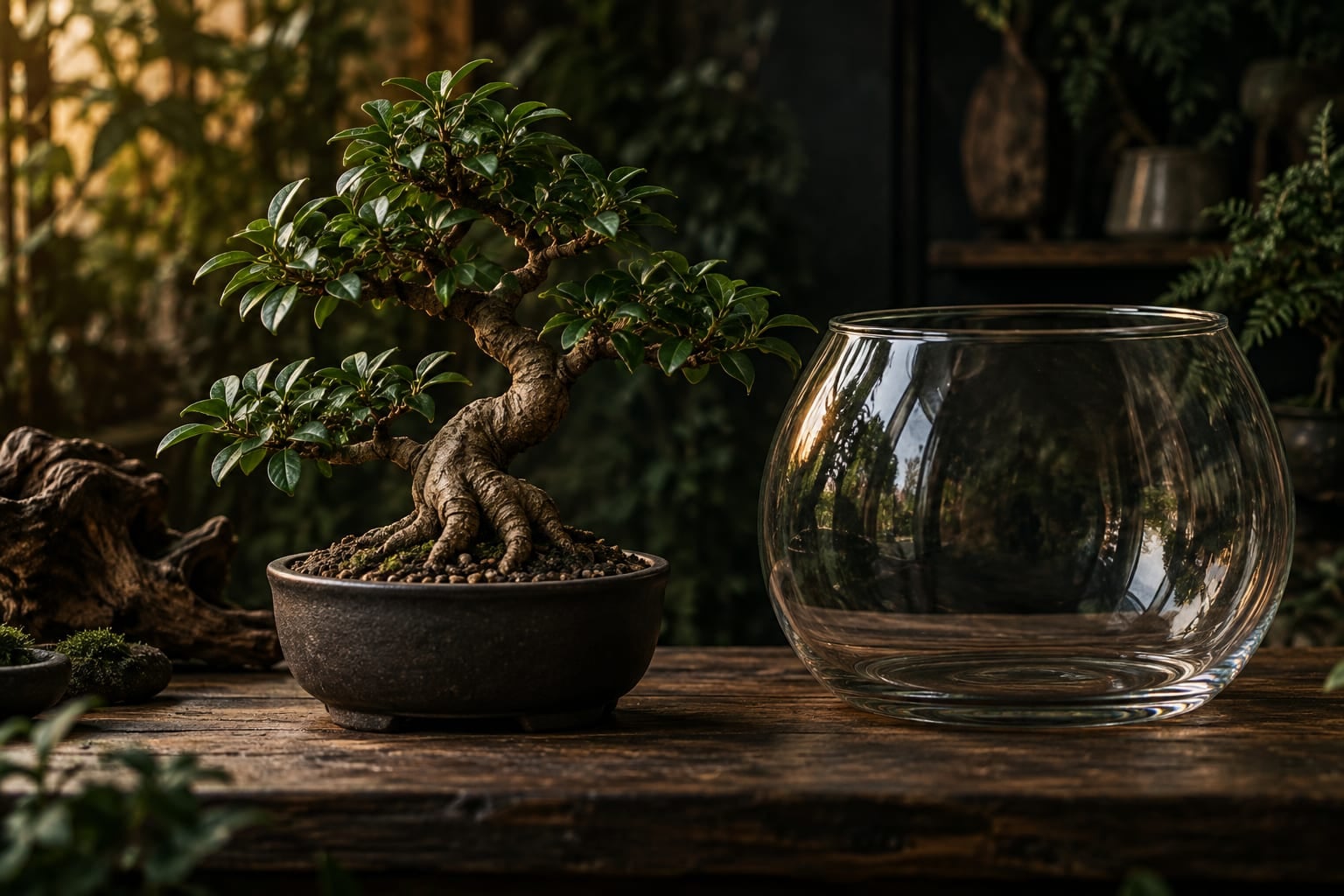
The outline of a miniature tree inside a demijohn is appealing. But "bonsai" describes a way of growing and shaping a tree, not a species with the same needs as a moss. So the choice starts with the tree's botanical name.
Outdoor trees do not turn tropical under glass
The pines, junipers and maples commonly trained as bonsai need outdoor growing conditions suited to their species. Shutting them in a warm, humid living room all year does not replace their seasonal cycle. Their small size does not reduce that need.
Avoid choosing a tree only because it fits through the jar on the day you buy it. Think as well about the light available, the size it will reach and whether you can take it out to work on the roots. The RHS principles on bonsai draw exactly this line between outdoor growing and the tropical or subtropical species grown indoors.
The case of the so-called "ginseng" ficus
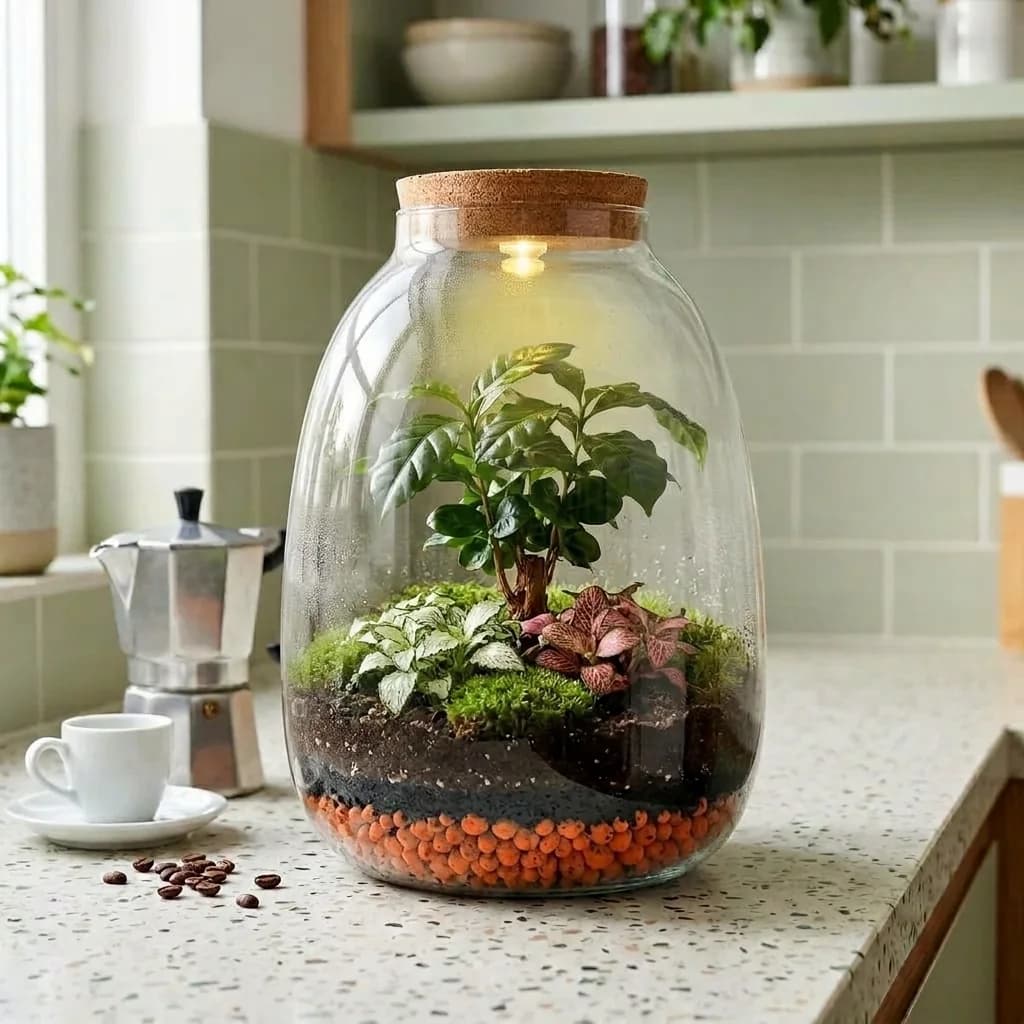
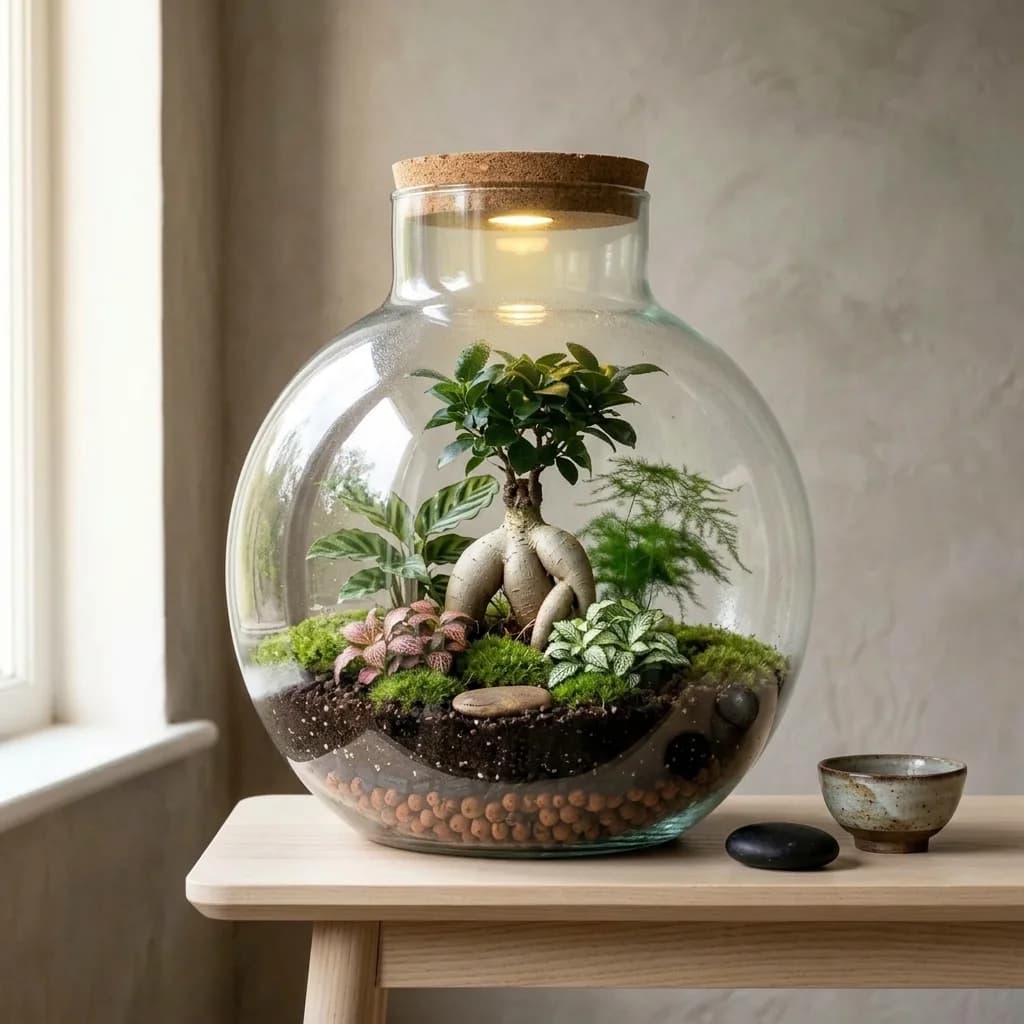
Figs sold under this trade name are generally forms of Ficus microcarpa. Check the label: a sales name is no substitute for identification. They can be grown in a bright interior and enjoy a suitable atmosphere, but that does not prove a sealed jar is their best home.
The swollen trunk and the crown must stay within reach. Leaves pressed against the glass, a base buried too deeply or a permanently saturated soil all make growing harder. The fig keeps growing: closing the lid does not turn it into a maintenance-free specimen.
Do not confuse it with Ficus pumila, a creeping or climbing species used in some terrariums. They have neither the same habit nor the same role in a composition.
Three ways to present a tree, compared
| Set-up | Strength | Main constraint |
|---|---|---|
| Drained pot outside the glass | Watering and care within reach | Room humidity has to be taken into account |
| Removable drained pot in a large open display | A planted look with access to the roots | You must lift the pot out to water and drain it |
| Planted straight into a closed jar | An enveloping visual effect | No drainage, difficult access, growth to manage |
A drained pot standing in a container full of water is no longer really drained. In a display with a cachepot or glass, tip out the standing water and keep the roots out of a permanent reservoir.
If you still want a composition under glass
Choose access before shape
Favour an opening that lets you lift out the root ball and handle the branches without breaking them. The guide on the terrarium container explains the difference between usable volume and access. A narrow-necked demijohn is awkward for a tree that needs regular work.
Keep it manageable
An open set-up with a removable pot is easier to watch than an inaccessible direct planting. Use the growing medium recommended for the species; do not automatically adopt a tropical soil recipe meant for fittonia. Match your watering to that medium and to the tree.
Test the real light level
Surroundings that look bright to the eye are not necessarily enough to keep a crown compact. Check the new growth, its orientation and the density of the foliage. If you use a lamp, the guide to terrarium lighting explains how to compare coverage and distance, without promising that one setting suits every tree.
Getting the shape of a tree without shutting in a bonsai
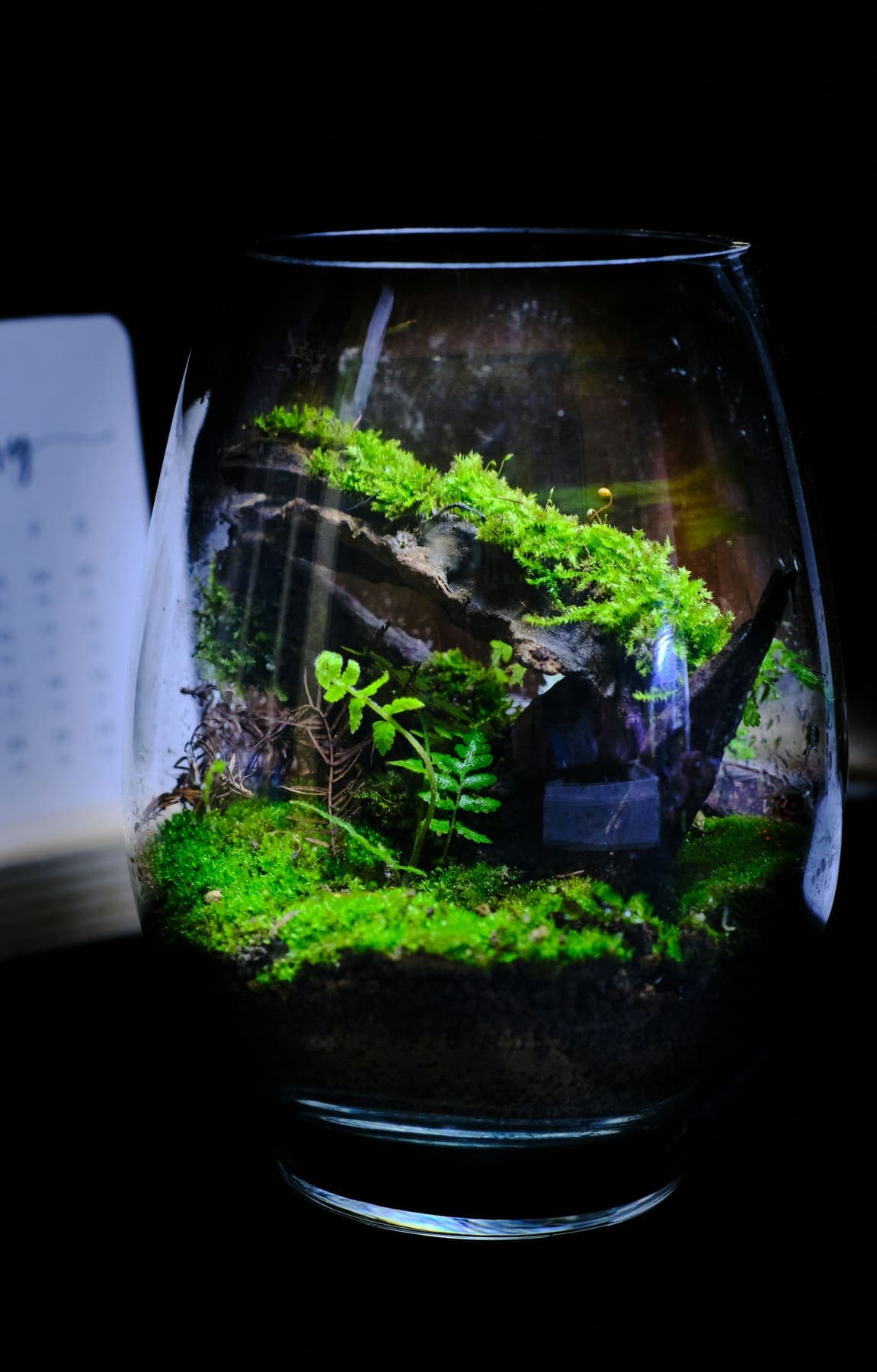
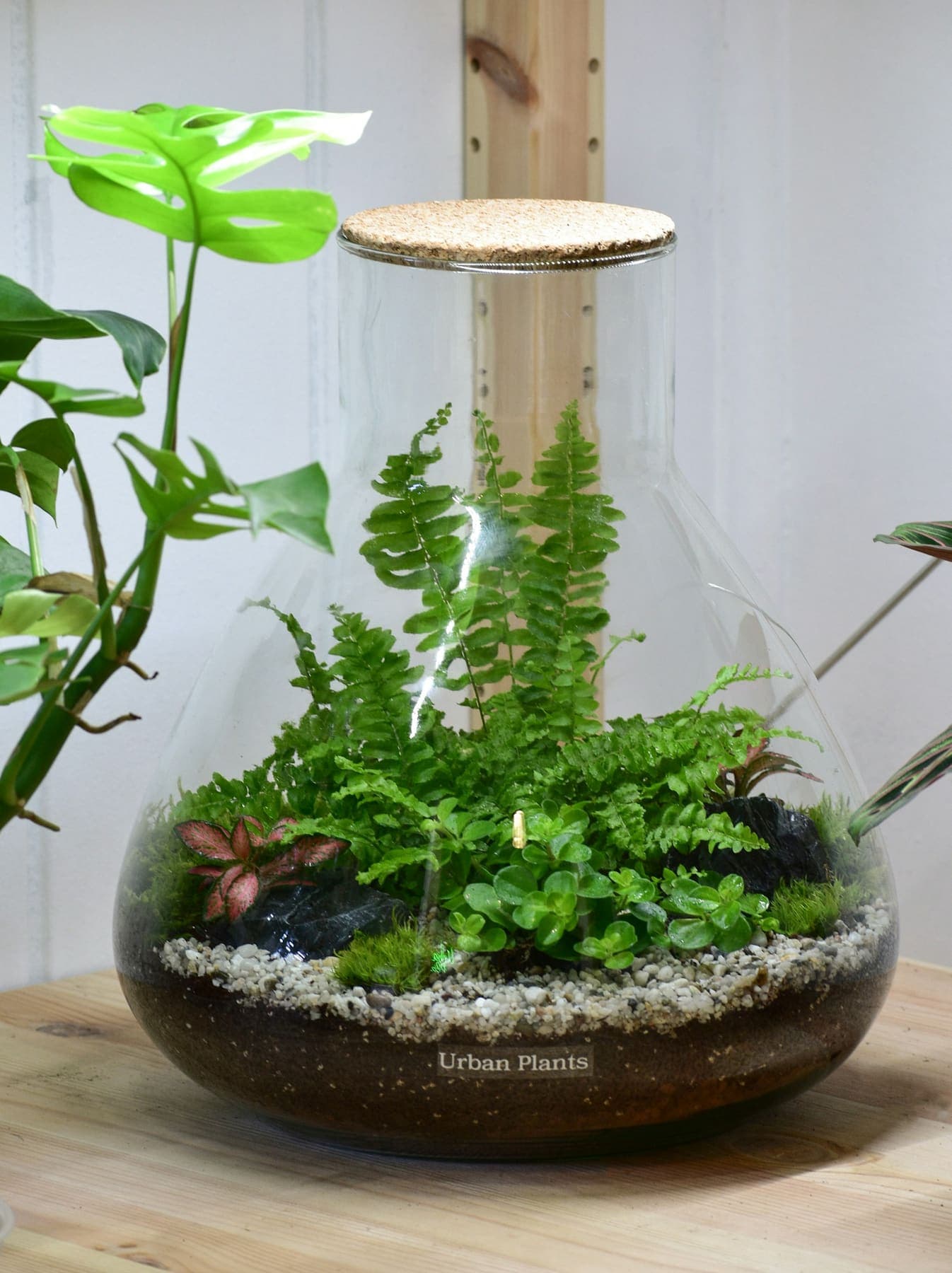
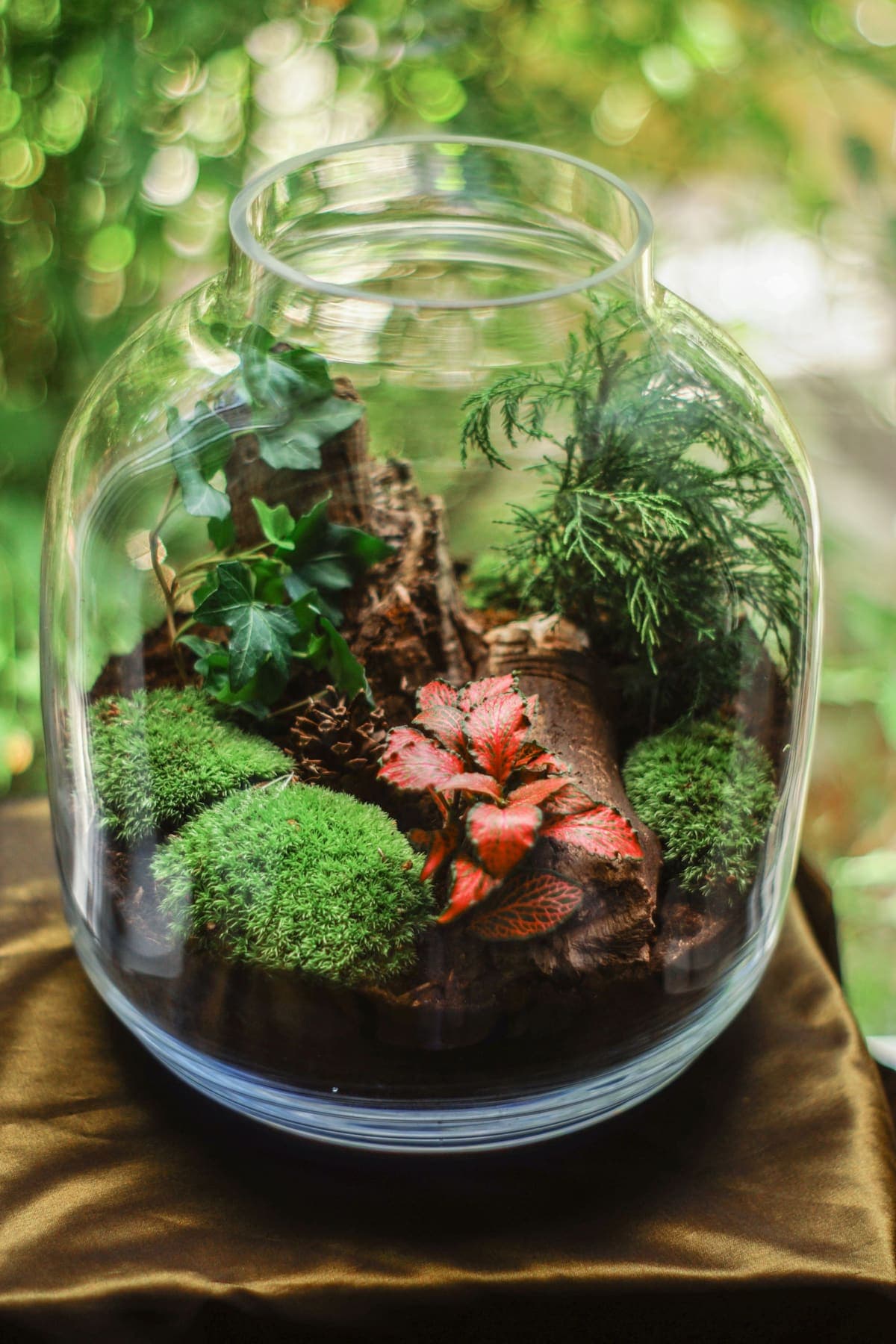
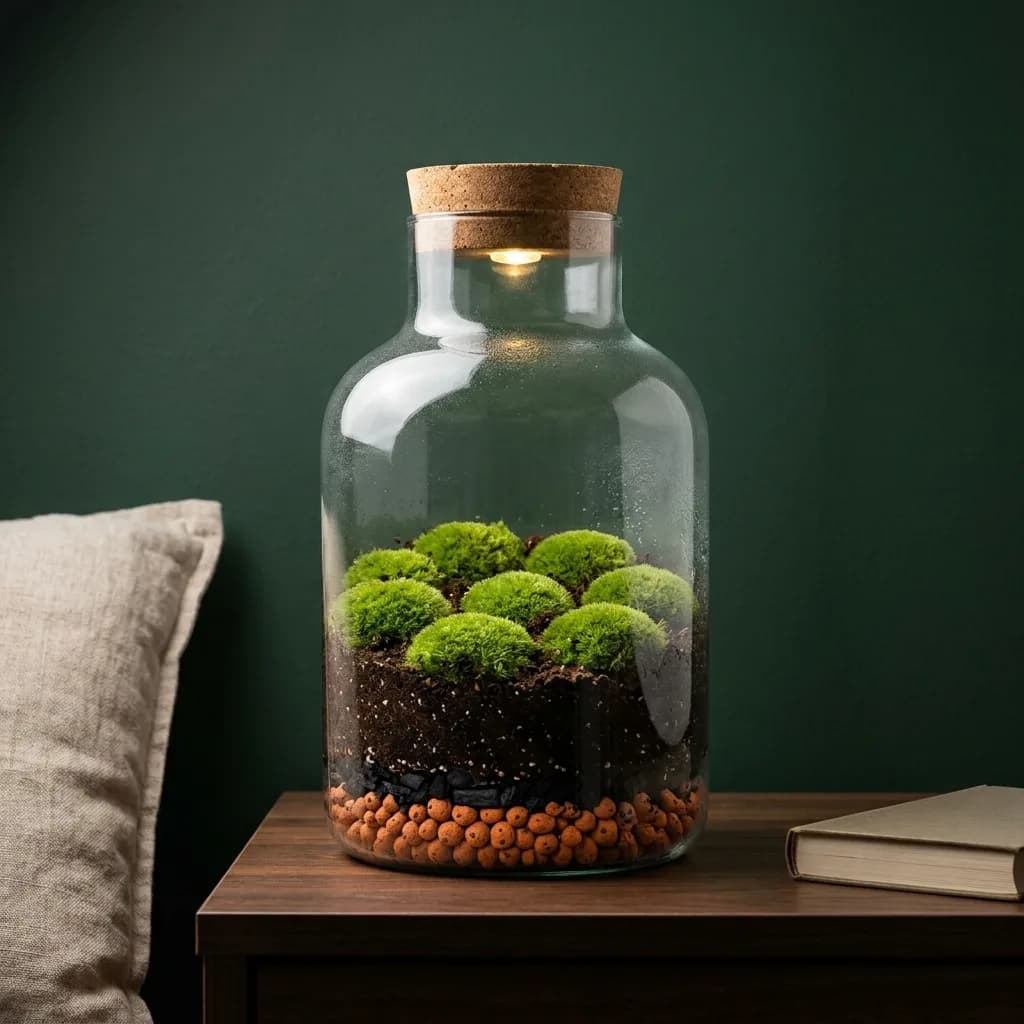
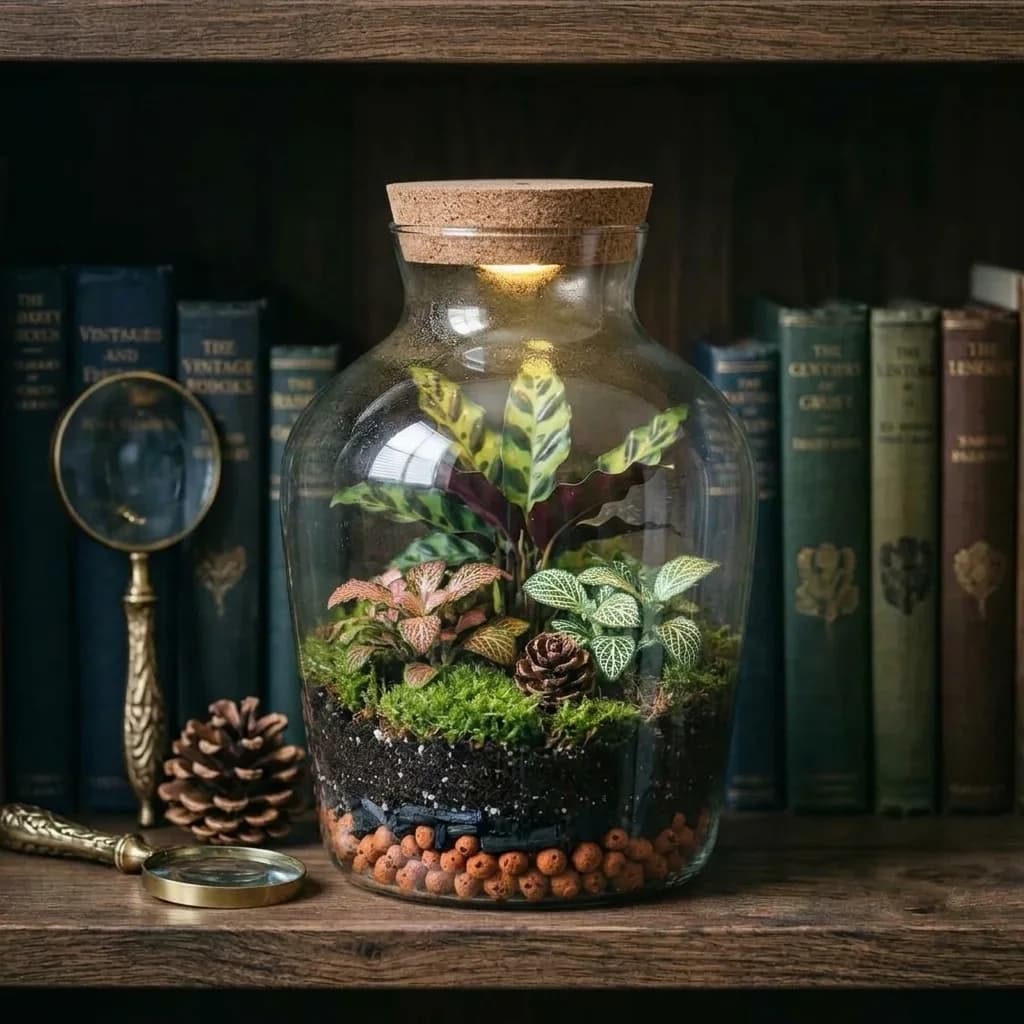
A branching root, a few small plants and some mosses can suggest a woodland floor. What you have then is a miniature landscape, not a living tree trained as a bonsai. That approach lets you choose plants that suit one another and keeps access easy.
The miniature wood can provide a structure worth considering, depending on the container. Read choosing terrarium wood first, then the miniature forest project. Do not attach a moss or a plant to a branch without checking that this support suits the way it grows.
The signs that say change the set-up
If the foliage stays wet, if the medium never dries back or if the tree becomes impossible to prune, reconsider the container. Leaf loss can have several causes: transport, light, water or roots. Adding fertiliser and closing the lid further is not a diagnosis.
Being able to take the tree out without destroying the composition is a measure of success from the very start. Choosing a conventional pot is a perfectly valid way to grow it, even when the original plan was a jar.
Sources and scope of this advice
- RHS — Bonsai: the distinction between outdoor trees and indoor bonsai.
- Illinois Extension — Houseplants: why drained containers matter.
These presentation options are practical adaptations, not an endorsement of any given species in a closed jar. Generated illustration, for editorial purposes.
Frequently asked questions
Can you put a juniper in a closed terrarium?
It is not a good way to grow one long term: this outdoor bonsai needs outdoor conditions suited to its species.
Is a ficus ginseng care-free under glass?
No. It still needs light, watering, pruning and root management. Glass does not stop it growing.
Which set-up is easiest to look after?
A genuinely drained, reachable pot, ideally one you can lift out of an open display, gives you far better control of water and roots.