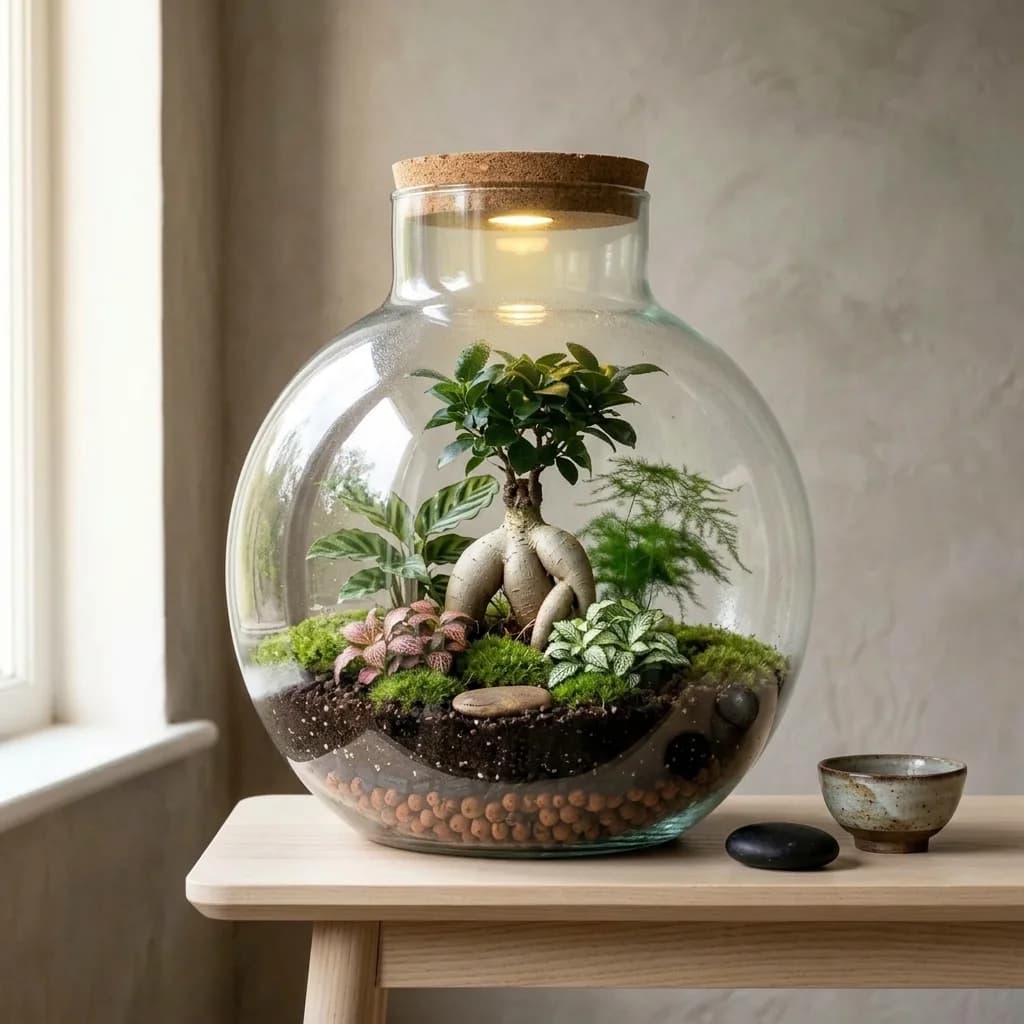


A terrarium in a flat: which format, and where to put it
Little space, little light, heating that dries everything out and regular absences: a closed terrarium answers those four constraints better than a potted plant. What remains is choosing the format and the spot.
In this guide
Further reading: To brighten a dark room, see how to choose and set up terrarium lighting.
A closed terrarium is the most tolerant house plant there is. It fits in thirty centimetres, makes do with indirect daylight, produces its own humidity despite the radiator, and lets you leave for three weeks without asking for anything. Success rests on two decisions taken before you buy: the format, and the exact spot where it will stand.
The four constraints of a flat
Space. A potted plant needs floor space, a cover pot, a saucer and room around it. A terrarium takes up the footprint of its glass, no more, and does not mind being pushed against a wall or wedged between two books.
Light. City flats often get side light, filtered by the building opposite. That is not enough for most of the green plants sold in garden centres, but it is exactly the regime of the woodland plants that make up a closed terrarium: they grow at ground level, beneath a canopy, and dislike direct sun.
Dry air. From November to March, central heating drops the humidity of a room to between 30 and 40 per cent. Potted ferns brown, leaf tips dry out. Inside closed glass the air stays saturated: the constraint disappears.
Absences. A weekend, a week's holiday, a business trip. A closed terrarium comes through all of it untouched, which no potted plant does.
Which format for which room
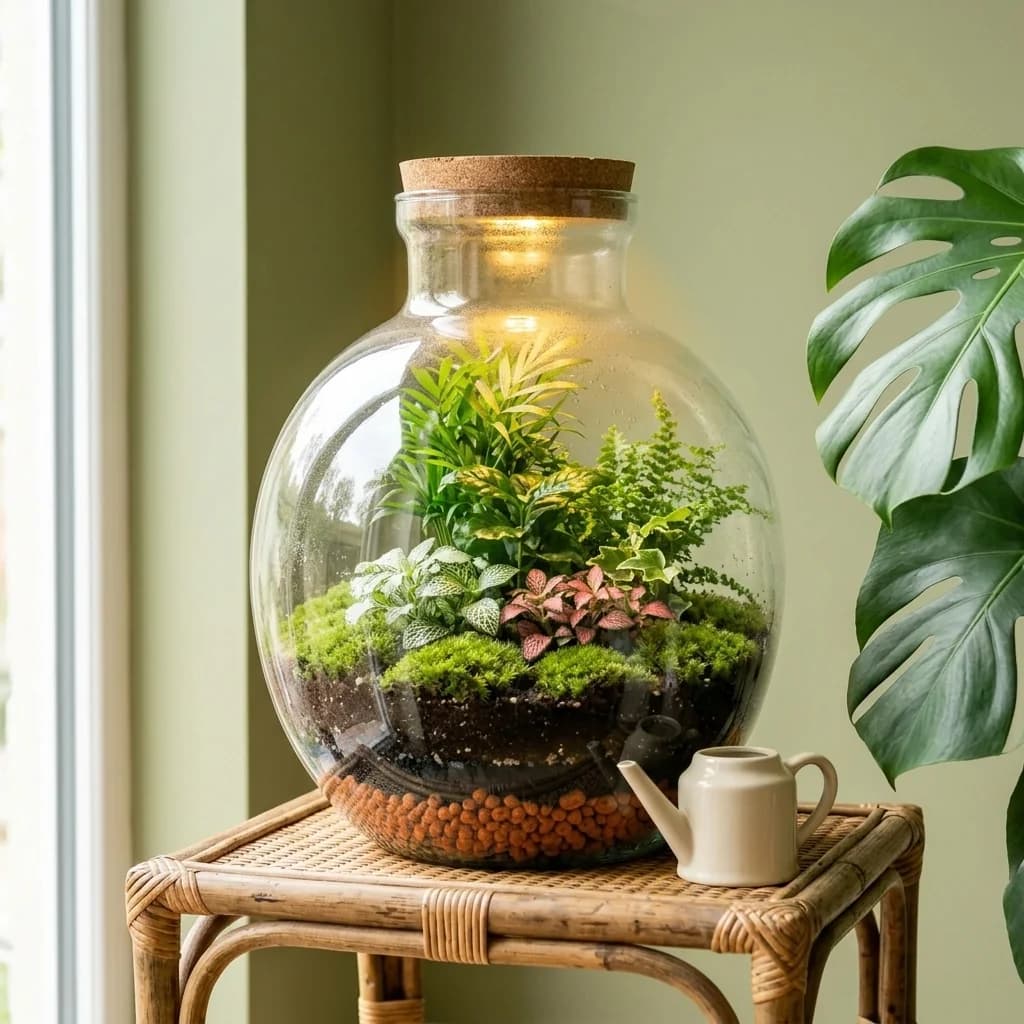
The living room. This is the room that allows the largest volume, and therefore the most stable one. A 5 to 10 litre jar on a console or a low shelf, two or three metres from a window, finds its best conditions here. Avoid the windowsill itself: the light there is too direct in summer.
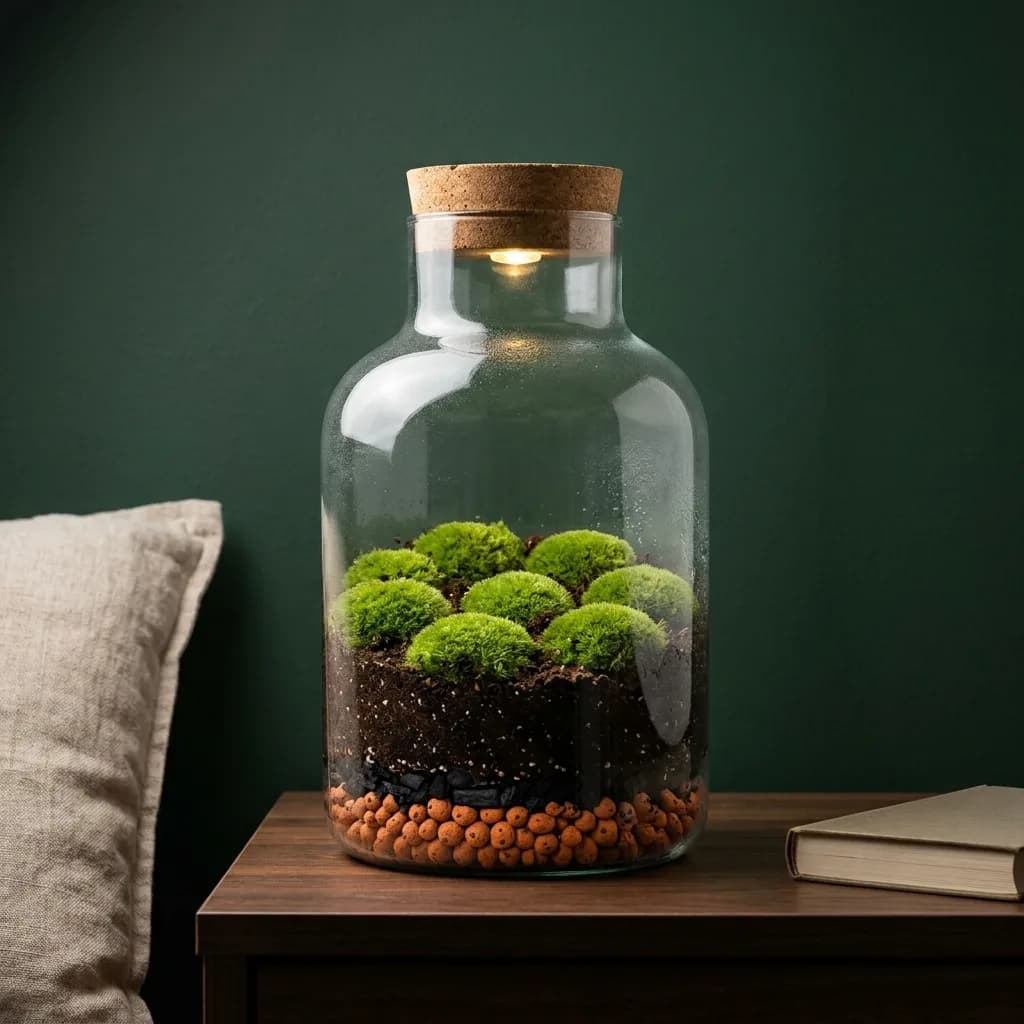
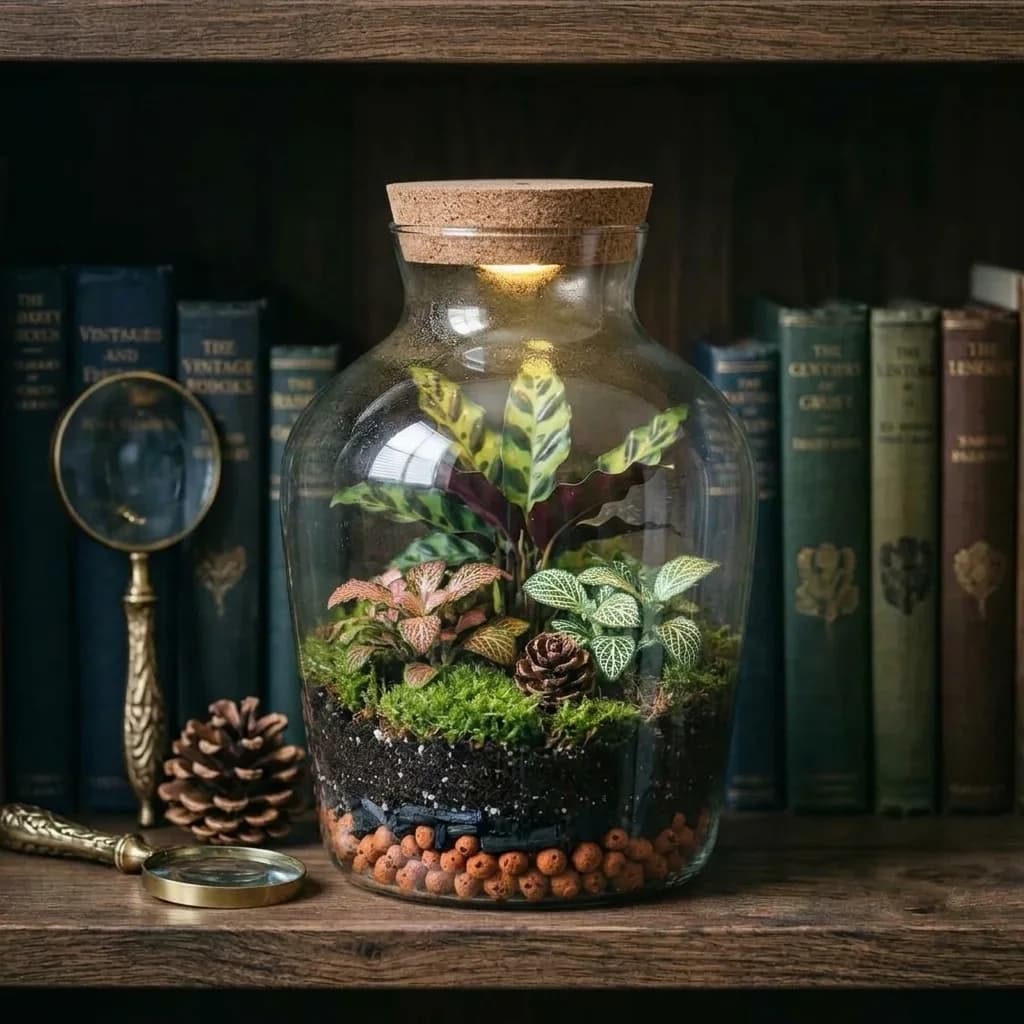
The bedroom. A terrarium here is usually seen close up, from the bed. A narrow upright format, a carboy or a flask, sits on a bedside table and gives you a detail to look at rather than a volume to take in. Nothing to fear at night: the oxygen a jar of moss uses is negligible.
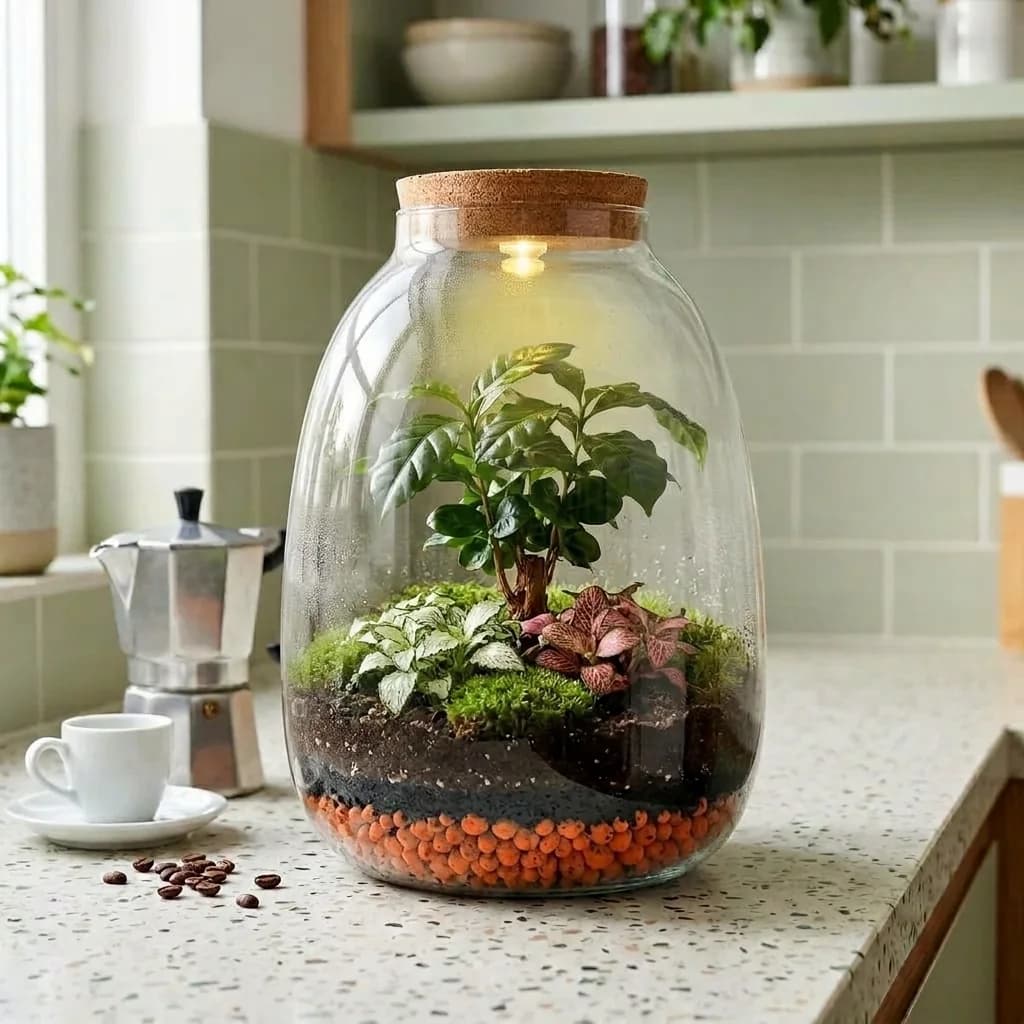
The kitchen. The air is warm and greasy. A closed terrarium does well there as long as it stays away from the hob and the oven. The glass films over with cooking residue after a few months: plan on cleaning the outside regularly.
The bathroom. Against intuition, this is not the ideal place. Ambient humidity does nothing for a sealed container, and the light is often an opaque window or none at all. Keep it for an open terrarium of epiphytes, if the room gets daylight.
The hall and the corridor. These are the spots where mistakes happen most: a fine free surface, and almost no light. A terrarium will only survive there if a glazed door or a window in the next room brings it daylight.
Where to put it, in practice
The rule is simple: the terrarium should see the sky without the sun seeing it. In practice, place it so that someone sitting at its height would glimpse a piece of window, but never the disc of the sun.
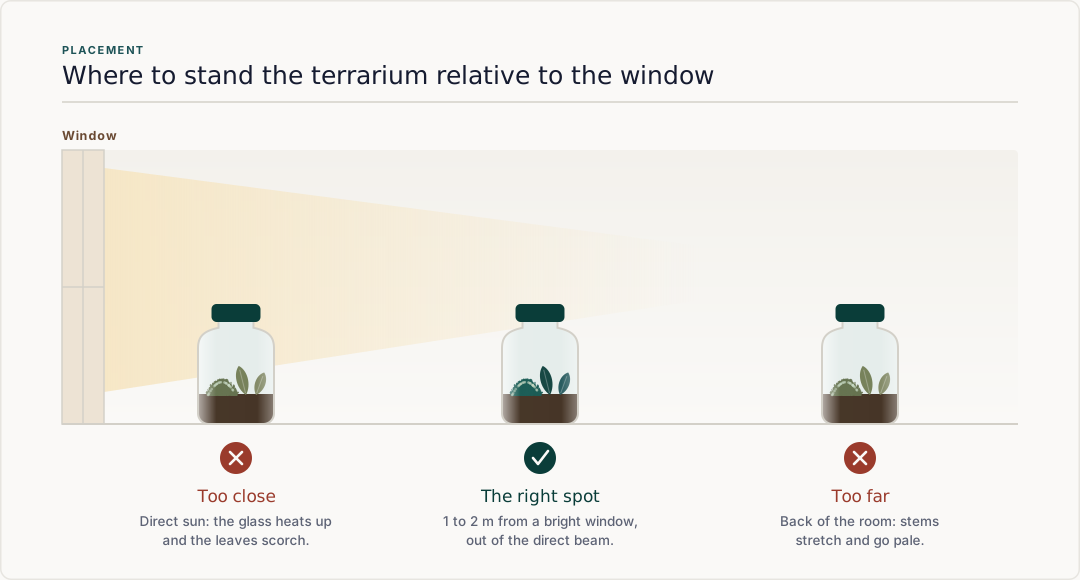
- North-facing window: up to a metre from the glazing, the best case for a closed terrarium.
- East-facing window: one to two metres back, as morning sun is gentle but real.
- South- or west-facing window: two to three metres, or behind a net curtain. Afternoon sun raises a closed jar 15 to 20 °C above the room in under an hour.
Think about the night as well: single-glazed windowsills drop far lower than the room, as the guide Terrariums in winter explains.
What works in a dark flat
Mosses first. They live in the shade of a wood, have no roots and get by on modest indirect light. A moss terrarium is the most forgiving build there is, and the most readable in a small format — the Moss range brings together the species that suit it.
Next come tropical woodland plants: fittonia, selaginella, small ferns, pilea. They accept low light and constant humidity. The guide Which plants for a terrarium covers their needs species by species.
What will never work there
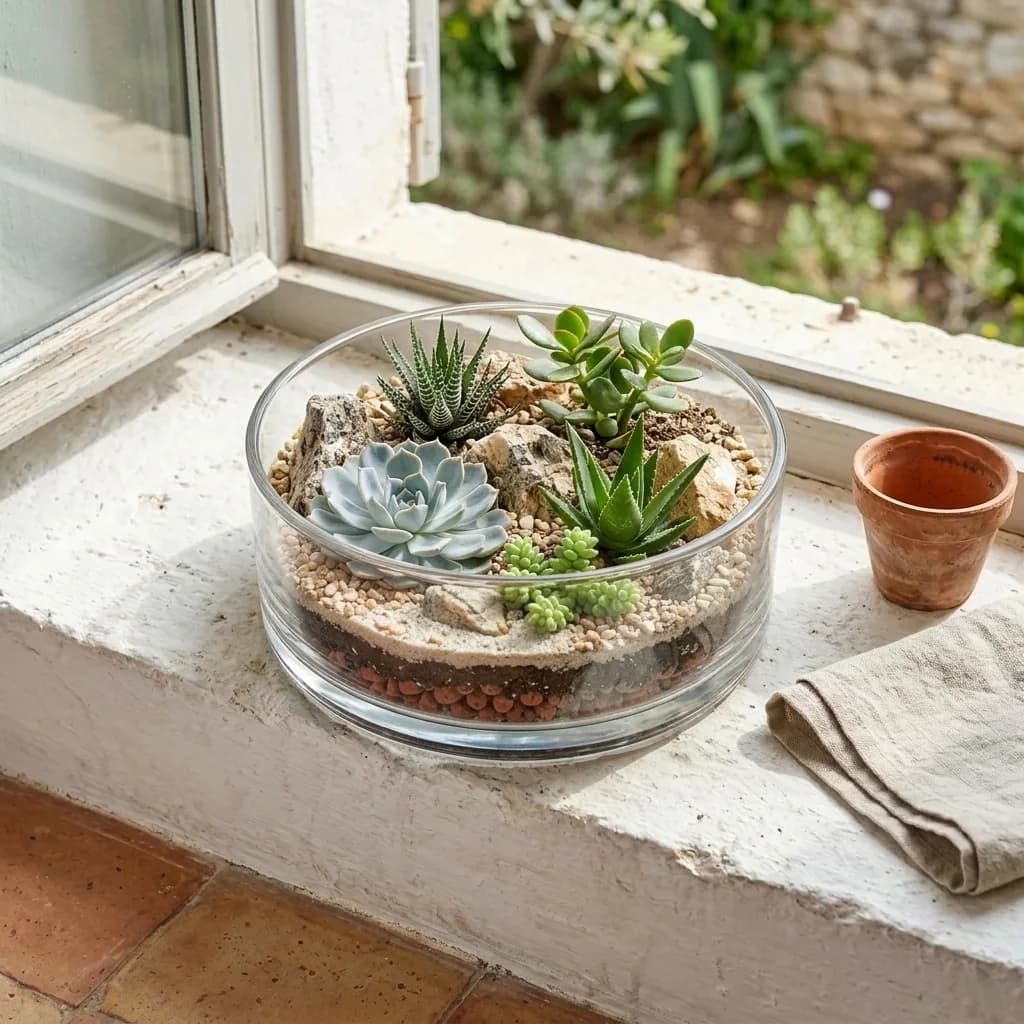
Succulents and cacti. They want several hours of direct sun a day and dry air. In a dim flat they stretch within weeks: the stems lengthen, pale, then collapse. If the flat has a south-facing windowsill, that is where they belong, in an open container, as the succulent terrarium tutorial explains.
Demanding carnivorous plants. Sarracenias and Venus flytraps want full sun and a cold winter rest. A living room at 20 °C will not give them that.
A terrarium in a windowless room. No plant lives without light. In a bathroom with no window or an internal corridor, you either accept a small grow light or give up.
The radiator, the quiet enemy
Most failures in flats come not from lack of light but from heat. A terrarium on a windowsill, directly above a radiator, takes the same punishment twice over: solar radiation from the front, a column of hot air from below. Leaves blacken, condensation becomes permanent, moss yellows.
Keep a metre between the glass and any heat source — radiator, stove, broadband router, television, high-power bulb. If the jar feels warm to the touch at the end of the day, it is in the wrong place. The guide Terrarium too hot lists the signs to watch for.
One last point that is often overlooked: electronic equipment. A router, a set-top box or an amplifier gives off a modest but constant heat, with no day-night variation at all. A terrarium sitting on one, or just above it, lives three or four degrees warmer than the room all year round. Television-unit shelves, so handy in a small flat, are poor spots for that reason.
Leaving without worrying
This is the deciding argument in a flat, above all for anyone who travels. A balanced closed terrarium goes weeks without watering, because the water it holds moves in a closed loop: it evaporates, condenses on the glass and falls back onto the substrate. What to do before an absence, by length, is set out in Terrariums and holidays.
For a first build, the simplest course is to start with a medium volume rather than a miniature: see What size of terrarium to choose. And if you are still weighing up the lid itself, the comparison Closed or open terrarium settles it in a few lines.
Frequently asked questions
Can a terrarium live in a flat without a well-exposed window?
Yes, as long as it gets indirect daylight for several hours. A north-facing room suits a closed terrarium of mosses and ferns very well. What does not work is a windowless room or a corridor with no daylight: there you need a small grow light.
Does central heating harm a closed terrarium?
It dries the air of the room, not the air of the terrarium, which stays sealed. The real risk is heat: a jar above a radiator climbs in temperature and cooks its plants. A metre away from any heat source is enough.
What size of terrarium suits a studio flat?
A container of 3 to 8 litres, about twenty centimetres tall, sits on a shelf or the corner of a table without getting in the way. Below 2 litres the environment turns unstable and needs more attention, not less.
Does a closed terrarium smell in a small room?
No, as long as it stays closed and properly drained. A stagnant smell means standing water at the bottom: open it, let it evaporate for a few days, and check that the drainage layer is not flooded.