

Terrarium lighting: choosing and setting up an LED lamp
Choose a lamp for a planted terrarium: useful light, placement, a timer and the signs to watch so you can adjust without overheating the jar.
In this guide
Are you looking for a lamp because the jar sits far from a window, or because the plants are stretching? Start by separating a shortage of light from simply slow growth. This guide is about plants: the UV and heating needs of reptiles belong to a different set of equipment.
Check whether a lamp is needed at all
Look at the recent growth. Lengthening gaps between nodes, leaves turning towards the window and a looser overall shape can all point to insufficient light. A single yellow leaf is not enough: check the water and the roots too, with the guide to yellow leaves in a terrarium.
Photograph the jar from the same spot, then compare the new growth a few weeks later. Old stretched stems will not shorten again. A bright position out of direct sun is still a good answer before you buy anything. The page on a terrarium in a flat helps you choose the room; here we are setting up artificial light specifically.
What actually counts when you buy
An area lit, not just a power rating
Check the area covered at the recommended distance. A small spot can light the top and leave the floor in shadow. A bar spreads light more evenly over a wide container. Watts describe electrical consumption; two lamps of the same power can deliver very different amounts of light to the plants.
If the maker supplies a PPFD map, it describes the flow of photons useful for photosynthesis at a given distance. Compare readings taken at the same distance, without hunting for one universal figure that suits every moss and fern. Leaf density and the lid change the light that actually arrives.
White light, spectrum and visual comfort
A white horticultural LED makes it easier to see the colours and fits into a living room. Colour temperature describes how the light looks, not whether it is sufficient for growth. Purple light is not compulsory. Prefer documented specifications and a timer to a vague promise of a "perfect spectrum".
Fit it without heating or wetting the equipment
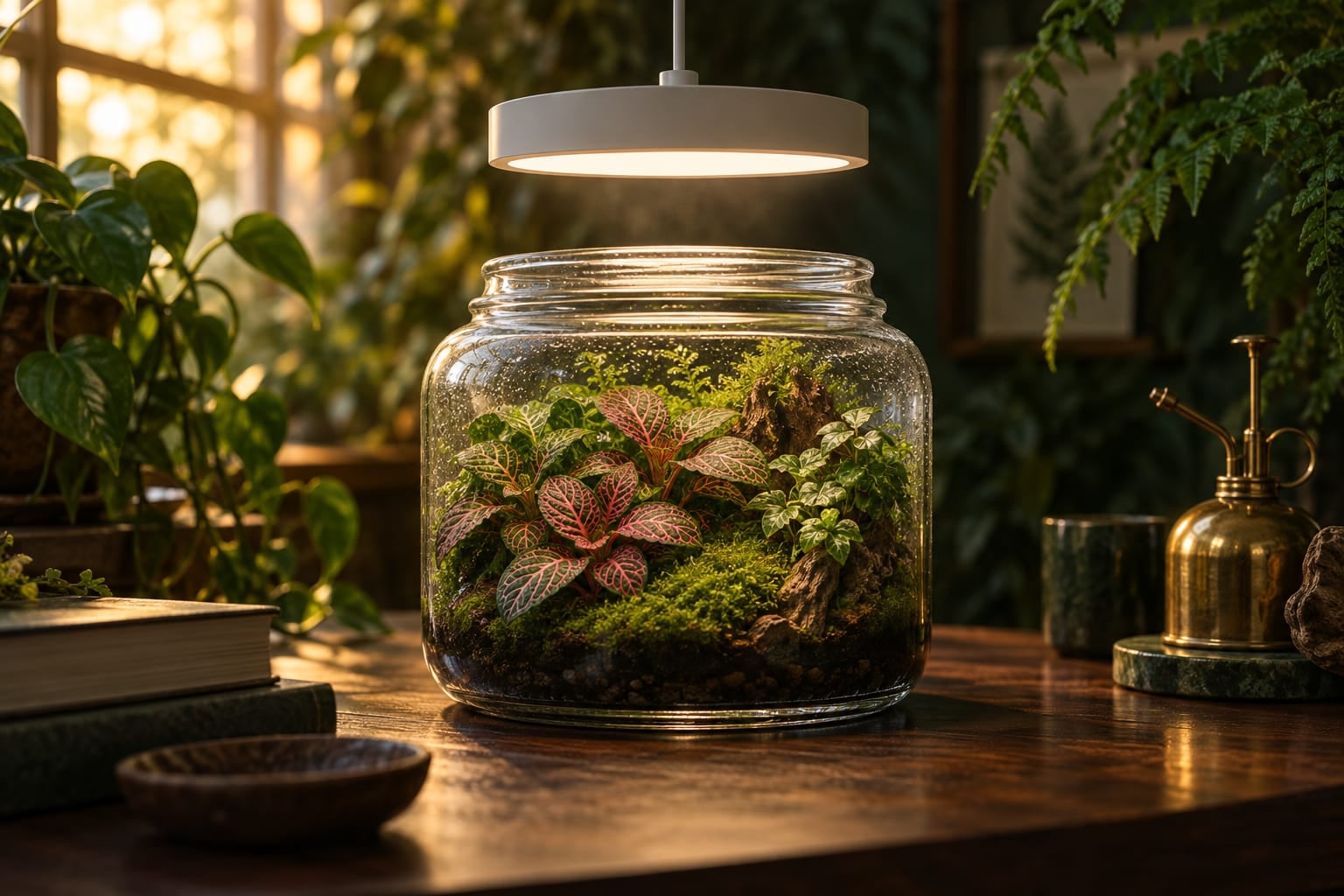
- Place the lamp outside, on a stable support, following the maker's distances and instructions.
- Keep the power supply and connections out of the watering zone. Do not shut an ordinary lamp inside a humid atmosphere.
- Light the foliage and the floor, limiting the shadow of the stopper and the branches.
- Check the temperature of the container after several hours of running.
- Check again if you move the lamp closer or change the lid.
LED lighting gives off heat too. If the jar warms up, increase the distance or reduce the power within the limits allowed. A terrarium does not need a heat lamp to make up for a badly chosen position.
Set the duration gradually
For a mix of small tropical foliage plants, an initial range of 10 to 12 hours is a practical starting point, to be adapted to the species and to the daylight they already get. It is not a prescription valid for every plant. Keep a genuine night period. A longer day does not always make up for a lamp that is too weak.
Change one thing at a time: position, intensity or duration. Note the setting and watch the new growth for two to three weeks, unless signs of scorch or overheating call for an immediate correction.
| What you see | Check first | Possible adjustment |
|---|---|---|
| Very stretched new stems | Shade, distance, area covered | Reposition the lamp as its instructions say |
| Bleached leaves on the lamp side | Intensity and heat | Move it away or dim it gradually |
| Dry moss near the top | Local heat and the moisture of the medium | Fix the heat before watering |
| Compact, slow growth | General state of the leaves | Keep the setting as it is |
Choose plants to suit the installation
Modest lighting suits a coherent selection of terrarium plants better than a mixture of woodland and full-sun species. The miniature forest project gives you a base composition. To compare equipment, look at the grow lamps and read each listing: being in that category does not guarantee use in a humid atmosphere.
Once the light is set, keep up your usual watching of the water. More active growth can change what the plants need, but it does not automatically justify more fertiliser.
Sources and scope of this advice
- University of Minnesota Extension — Lighting for indoor plants: the basics of light and choosing lighting for indoor plants.
- RHS — Terrariums and bottle gardens: growing under glass and choosing a position.
These settings are starting points to adjust, not the results of Small Eden trials. Generated illustration, for editorial purposes.
Frequently asked questions
Is a desk lamp enough?
Sometimes, for a small volume, but how bright it looks does not prove it gives the plants enough light. Check coverage, distance and new growth.
Can you light a terrarium all night?
Keep a regular day-night cycle. Permanent lighting is no shortcut to a balanced terrarium.
Do terrarium plants need UV?
A UV lamp meant for reptiles is not needed for an ordinary planted terrarium. Choose lighting designed for plant growth.