

Terrarium in the sun or too hot: the damage and the remedy
Under glass, the temperature climbs very quickly. How to recognise heat damage, save what can be saved, and choose a spot that works all year round.
In this guide
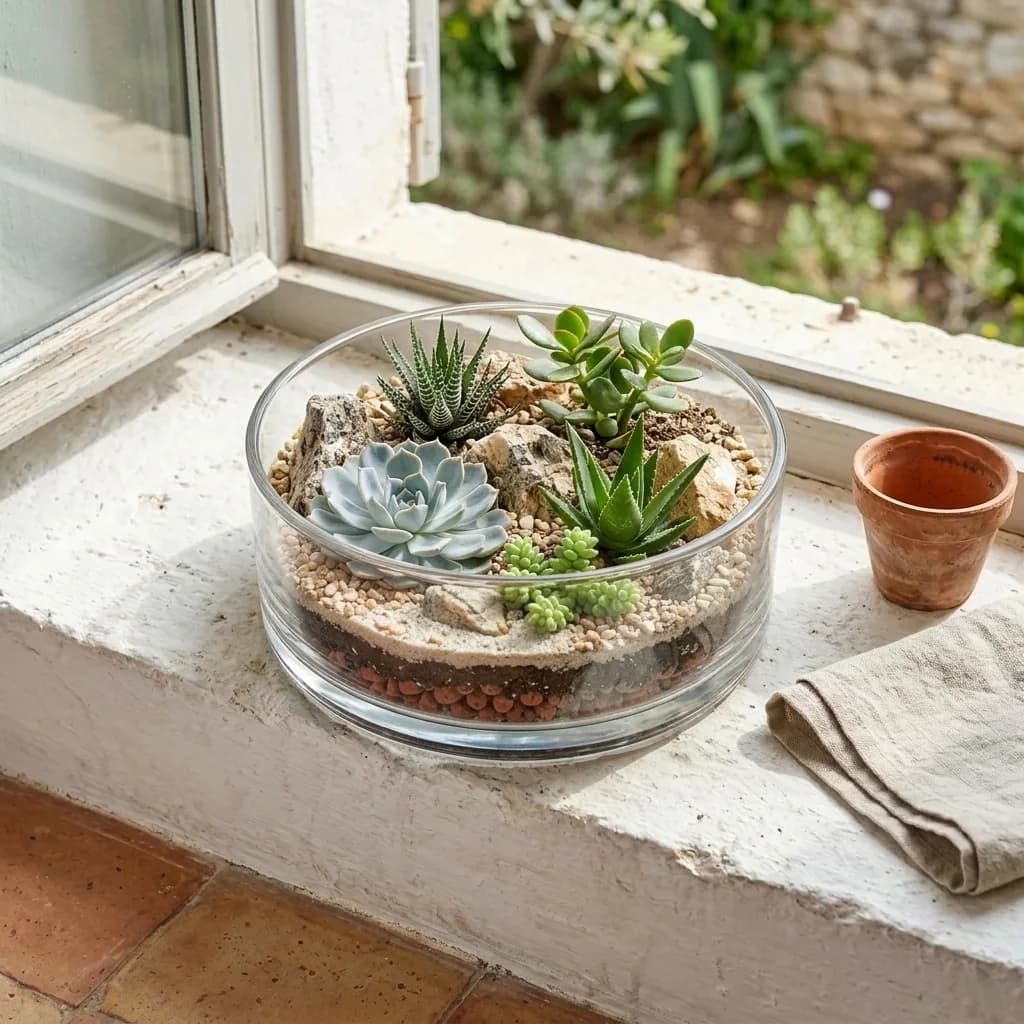
A terrarium should never be placed in direct sunlight. Glass lets the radiation in and holds the heat: in a single afternoon behind a south-facing window, the temperature inside climbs well above that of the room, and woodland plants cook. The damage is quick and largely irreversible — which is why the spot should be chosen before you even buy the container.
What happens under the glass
The tropical plants in a closed terrarium come from the forest floor, under the tree canopy. There they live in filtered light and a steady temperature, between 18 and 26 °C. They have no adaptation to full sun at all.
The glass, for its part, works like a small greenhouse: it lets the light through, and the warm air cannot escape. Add that the water in the terrarium evaporates all the faster, and you end up with an environment that is both scorching and saturated. That is the most destructive combination there is for moss.
Recognising heat damage
On the leaves: brown patches, dry and sharply outlined, first on the upper leaves and on the exposed side. They do not spread to the rest of the plant — which is what tells them apart from a disease.
On the moss: rapid browning, in patches, on the brightest area. Here too the geography of the damage gives away the cause: it is where the sun was striking.
On the glass: very heavy condensation during the hot hours, which then clears all at once.
In the smell: in severe cases, a scent of cooked greenery, then of fermentation over the following days.
What to do within the hour
- Move the terrarium into the shade, in a cooler room. Do not put it in the fridge or in front of a fan: the opposite thermal shock will finish off what is left.
- Open it until the temperature comes back down, an hour or two, then close it again.
- Do not water straight afterwards. The substrate is often still damp, and water added to stressed roots makes matters worse.
- Wait two or three days before pruning: some leaves that look lost will pick themselves up.
What can be saved
Marked leaves do not repair themselves: cut them out with scissors once the plant has stabilised. If the crown and the roots are intact, the plant grows back normally.
Cooked moss can rarely be rescued. Lay a fresh sheet following How to lay moss in a terrarium.
If the terrarium has become both hot and soaked, deal with the water first: see Terrarium too wet.
Choosing a spot that works all year round
The right aspect: a bright room, one or two metres from a window, out of the direct beam. A north- or east-facing window even allows the sill itself.
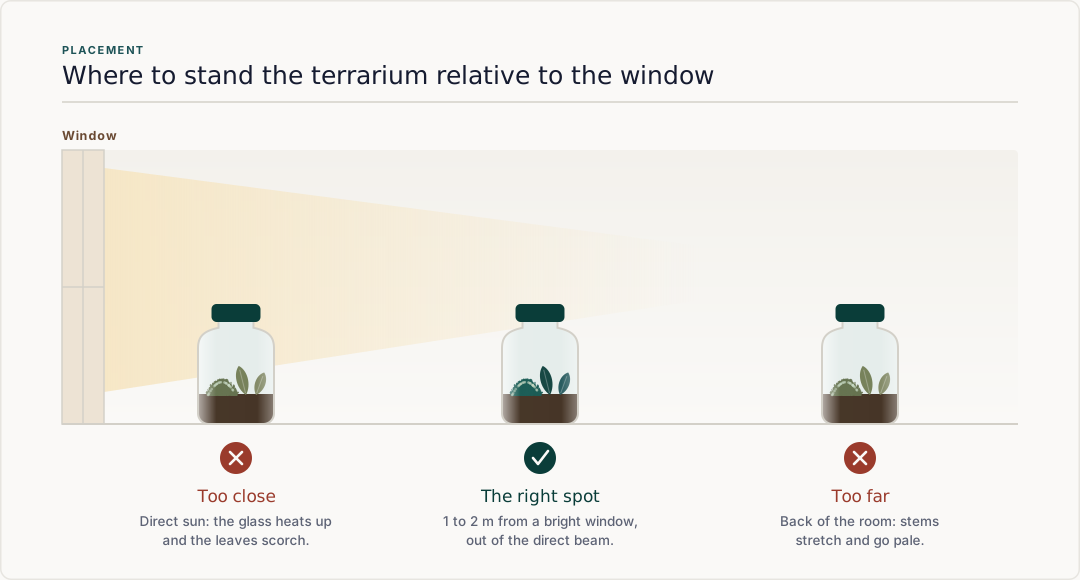
The traps: the top of a radiator, a shelf just under a halogen spotlight, a conservatory, a south-facing sill in summer. A conservatory is the worst of the three: it combines the glass of the terrarium with the glass of the building.
The change of season: a spot that is perfect in December can turn scorching in June, because the sun rises higher and its path changes. When summer comes, check where the beam actually falls at 3 pm.
In a heatwave: moving it is better than opening it. Keep it away from any window, and if the whole room is heating up, put the terrarium down at floor level, where the air is cooler.
And if the room is dark?
The instinct to move it closer to the window often comes from a genuine lack of light. There is a middle way: a small grow lamp set at a distance, six to eight hours a day. It gives the light without the direct radiation — see Your first terrarium: the beginner's guide for the detail on where to put it.
Sources
Frequently asked questions
Can a terrarium stay on a windowsill?
On a north- or east-facing window, yes. Facing south or west, no: the glass concentrates the heat and the inside temperature can climb well above that of the room in a single afternoon.
At what temperature does a terrarium suffer?
Tropical woodland plants are comfortable between 18 and 26 °C. Beyond about thirty degrees, and above all if it lasts several hours, the leaves become marked and the mosses cook.
Should you open a terrarium during a heatwave?
Moving it is better than opening it. Take it away from the window and from any heat source. If that is impossible, opening it partly during the hottest hours limits the overheating, but dries it out: close it again in the evening.
Does a sun-scorched plant recover?
Marked leaves do not repair themselves and should be cut out with scissors. If the crown and the roots are intact, the plant grows back. Cooked moss, on the other hand, can rarely be rescued.