

Terrarium too cold: spotting cold damage and putting it right
Growth at a standstill, limp or blackened leaves, mist gone: the signs of cold in a terrarium, the minimum temperatures, and what to avoid in winter.
In this guide
A terrarium that is too cold does not die overnight, unless it is touching a windowpane with sub-zero temperatures outside. It fades slowly: growth stops, the mist disappears, the leaves go limp, then blacken at the edges. The cause is almost always the location, and the remedy is first of all to move the jar, never to heat it from below. The tropical woodland plants used in terrariums are comfortable between 18 and 26 °C; below 15 °C they stop growing, and below 10 °C they start to suffer.
The signs, in the order they appear
- The mist becomes occasional, then disappears. Water evaporates less when it is cold. The glass stays clear even though the substrate is still damp. This is the earliest signal, and the easiest to misread.
- Growth stops. No new leaf for weeks, even though the light has not changed.
- The leaves go limp. They lose their firmness and droop, without being dry. A collapsed fittonia that does not pick itself up after watering is cold, not thirsty.
- The edges blacken. Dark, translucent patches, soft to the touch, appear first on the leaves touching the glass. That is the cold reaching the tissue.
- Rot sets in. The substrate stays soaked for want of evaporation, and the stems go soft at the base.
Do not confuse this with a lack of water: a thirsty plant has dry, brittle leaves and a pale substrate. The guide Terrarium too dry sets out the difference in detail. Clear yellowing, for its part, comes from causes other than cold.
One last sign, less visible, is worth knowing: the water you give takes much longer to disappear. If the substrate you moistened ten days ago is still just as dark, it is not that it holds too much, it is that nothing is evaporating or being used. A cold terrarium almost always drifts towards an excess of water, and you then have two problems to treat instead of one.
Minimum temperatures, by type of plant
| Plants | Comfortable | Slowing down | Damage |
|---|---|---|---|
| Fittonia, calathea, hypoestes | 18 to 26 °C | Below 15 °C | Below 10 °C |
| Selaginella, woodland ferns | 18 to 25 °C | Below 15 °C | Below 10 °C |
Plants with colourful foliage are the most delicate, and they are precisely the ones most used in closed terrariums. The Fittonia and Selaginella pages give their exact requirements.
Mosses are the exception. They take cool temperatures without harm, and simply pause their growth until milder weather returns: a moss terrarium will get through a winter in a barely heated room where a fittonia would lose its foliage. The succulents in an open terrarium also tolerate cool air, as long as the substrate stays dry, but they cannot take frost.
A word on winter deliveries. A plant or a terrarium delivered in freezing weather may have spent several hours in an unheated vehicle. Unpack it indoors, let it come back to room temperature without standing it near a heat source, and wait a few days before judging its condition: foliage that looks collapsed on arrival often picks itself up on its own.
The windowsill trap
This is the leading cause of cold damage, and it closes on you exactly when you think you are doing the right thing. In winter light is short, so you move the terrarium closer to the window. But a windowsill is the coldest place in the home at night: the glass radiates outwards, and the air there drops several degrees below the rest of the room. A jar in contact with the glass can fall below 10 °C while the room is at 20 °C.
Three other traps of the same kind:
- The draught from a window left ajar or from a front door. A breath of cold air, however brief, burns the exposed foliage.
- The curtain drawn in the evening, which shuts the terrarium in between the fabric and the pane, in the coldest zone of all.
- The unheated room — a conservatory, an office closed at the weekend, a spare bedroom — where the temperature drops at night without anyone noticing.
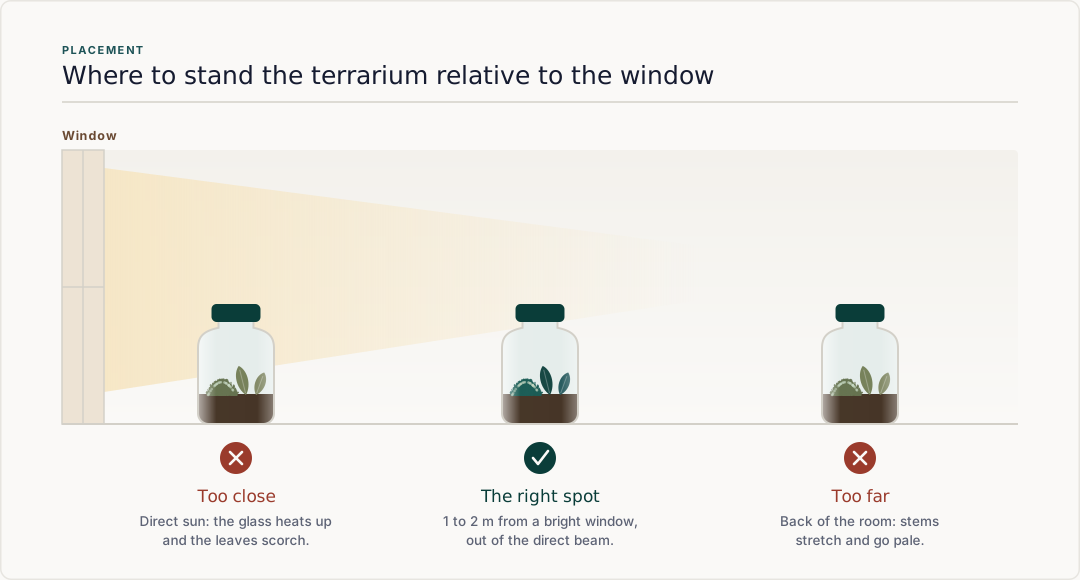
The right place is one or two metres from a bright window, never on the sill or pressed against the glass. That distance also protects against the opposite excess, described in Terrarium too hot, when the spring sun turns the jar into a greenhouse.
What to do
- Move the terrarium further into the room, onto a shelf or a table, away from the glass and out of the path of draughts. This is the most effective correction, and it costs nothing.
- Measure before you conclude. A small thermometer set beside the jar, read first thing in the morning, gives you the real night-time temperature, which is the one that matters.
- Make up for the light another way. If you move the terrarium away from the window, the light drops. A white supplementary lamp, on for eight to ten hours a day, replaces what you lose without adding any cold.
- Water less often. A cold terrarium uses less. Refer to Watering a terrarium: in winter the interval often doubles.
- Remove the affected parts. Blackened leaves do not turn green again. Cut them out with tweezers so they do not rot in place, following the method in Pruning a terrarium.
- Be patient. A plant put back in the warm starts again within two to four weeks. Do not repot, do not feed, change nothing else during that period.
What you must not do
No aquarium or reptile heat mat under a glass jar. This is the most common and the most costly mistake. These mats are designed for a flat tank base, in continuous contact. Under a thick glass container they create a localised hot spot: the drainage cooks, the roots just above it burn, and the temperature difference across the thickness of the glass can crack it. The terrarium dies from the bottom while the top stays cold.
No radiator nearby. A jar standing above a convector heater is subjected to dry, scorching air, exactly the opposite of what its plants need.
No heat lamp. The incandescent lamps sold for reptiles give off a dry, direct heat that cooks the foliage within a few hours under glass.
No hot water. Watering with lukewarm water warms nothing for long and shocks the roots. Water at room temperature is always enough.
If the ideal spot does not exist in your home, the answer is to choose plants suited to what the room actually offers. The guide Which plants for a terrarium and the Tropical plants section help you make that choice before you build, rather than rescue a badly placed composition. And if you are unsure which format suits a cool room, Find my project starts from your real conditions.
Sources
Frequently asked questions
At what temperature does a tropical terrarium suffer?
Tropical woodland plants are comfortable between 18 and 26 °C. Below 15 °C, growth stops. Below 10 °C the tissue becomes marked, and a fittonia or a calathea can lose its foliage in a single night behind a cold window.
Can you put a heat mat under a terrarium?
No, not an aquarium or reptile heat mat placed under a glass jar. It heats one precise point of the base, creates a temperature difference across the thickness of the glass and cooks the roots just above. Move the terrarium into a milder room instead.
My terrarium has no more mist in winter, is that serious?
It is often the first sign of cold. Evaporation slows down with the temperature, so the glass stays dry even though the substrate is still damp. Do not water to bring the mist back: you would drown a terrarium that is using less water. Raise the temperature first.
Should you water a terrarium less in winter?
Yes. The plants slow down, and so does evaporation, so the same amount of water stays in the substrate far longer. Space out the watering and check the drainage before adding a single drop.