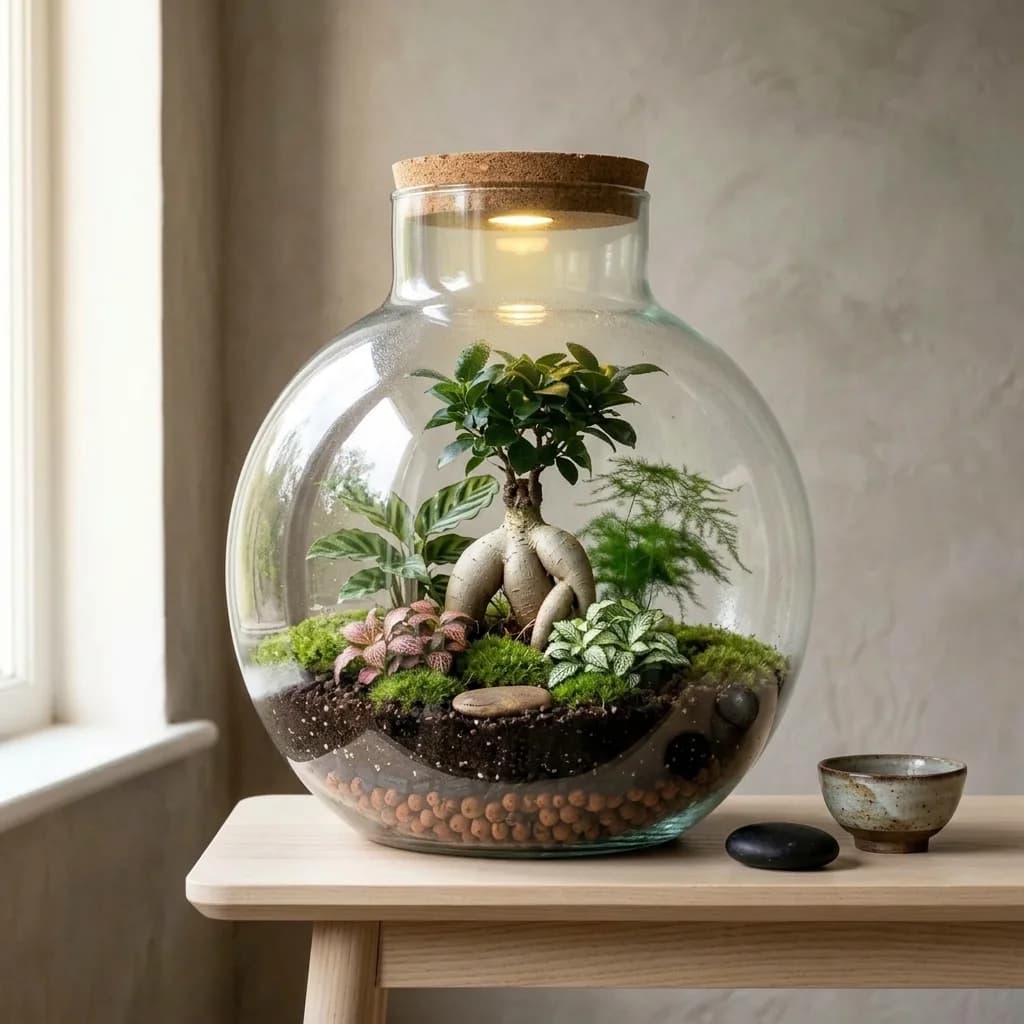


Clay pebbles or lava rock for terrarium drainage?
Weight, porosity, price, appearance: what really separates the two drainage materials, and which to choose for your container and type of terrarium.
In this guide
Both work. Clay pebbles are light, pale and regular: they are the default choice, especially in a large container where weight counts. Lava rock is heavier, more porous, and a dark red-brown that visually disappears behind the glass: it is the better choice for an open terrarium of succulents, and for anyone who wants a discreet finish. The real factor in success is neither of them, it is the separating layer you lay on top.
The table
| Clay pebbles | Lava rock | |
|---|---|---|
| Origin | Fired expanded clay | Crushed volcanic rock |
| Weight | Very light | Heavy |
| Porosity | Good, honeycombed inside | Very good, irregular surface |
| Grade | Regular, 8 to 16 mm | Irregular, 3 to 15 mm |
| Colour | Pale orange-brown | Red-brown to black |
| Visibility behind the glass | Pronounced | Discreet |
| Price | Low | Low |
| Best for | Closed terrarium, large volume | Open terrarium, succulents, dark finish |
What a drainage layer really does
A terrarium has no drainage hole. The bottom layer therefore drains nothing away: it stores surplus water out of reach of the roots, and leaves air at the bottom of the build.
It is a safeguard, not a solution. A terrarium watered too often ends up waterlogged whatever its drainage — see Terrarium too damp. The layer buys time; measured watering does the rest.
Clay pebbles
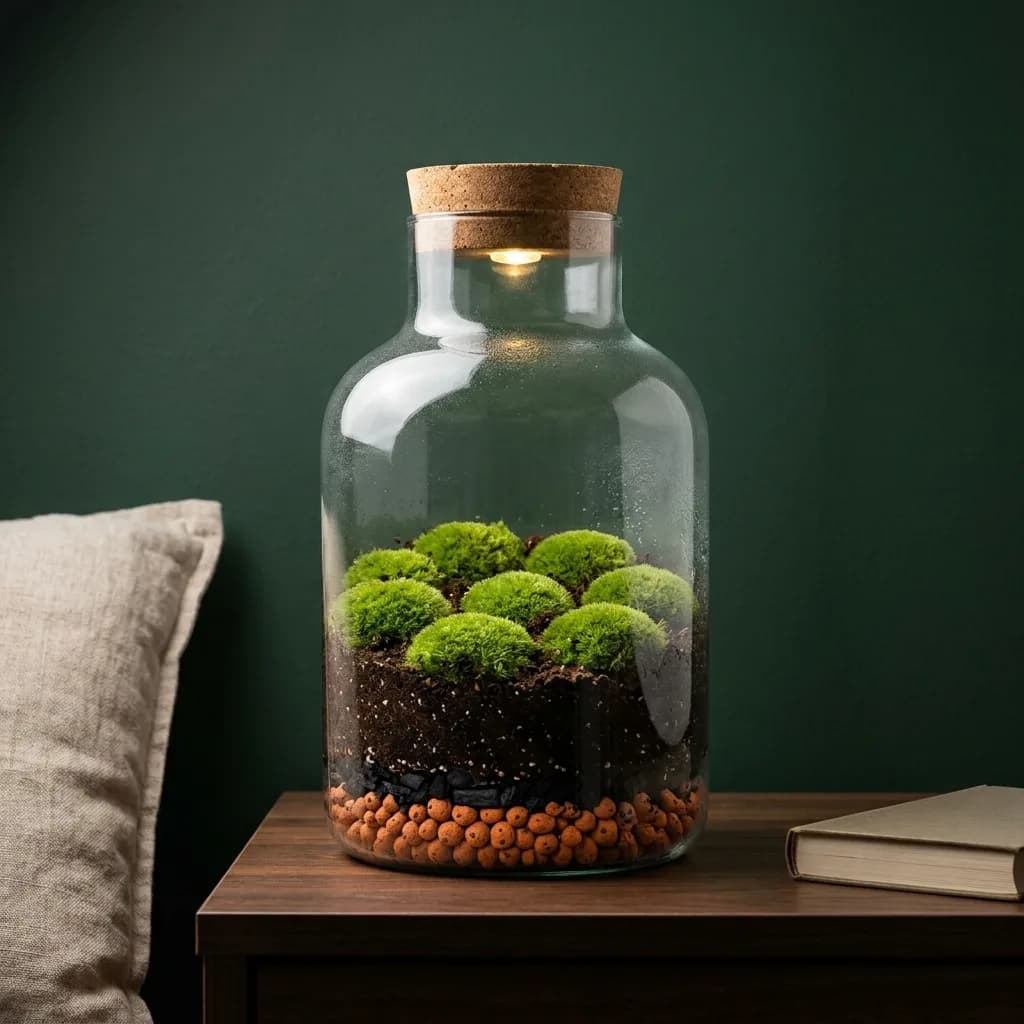
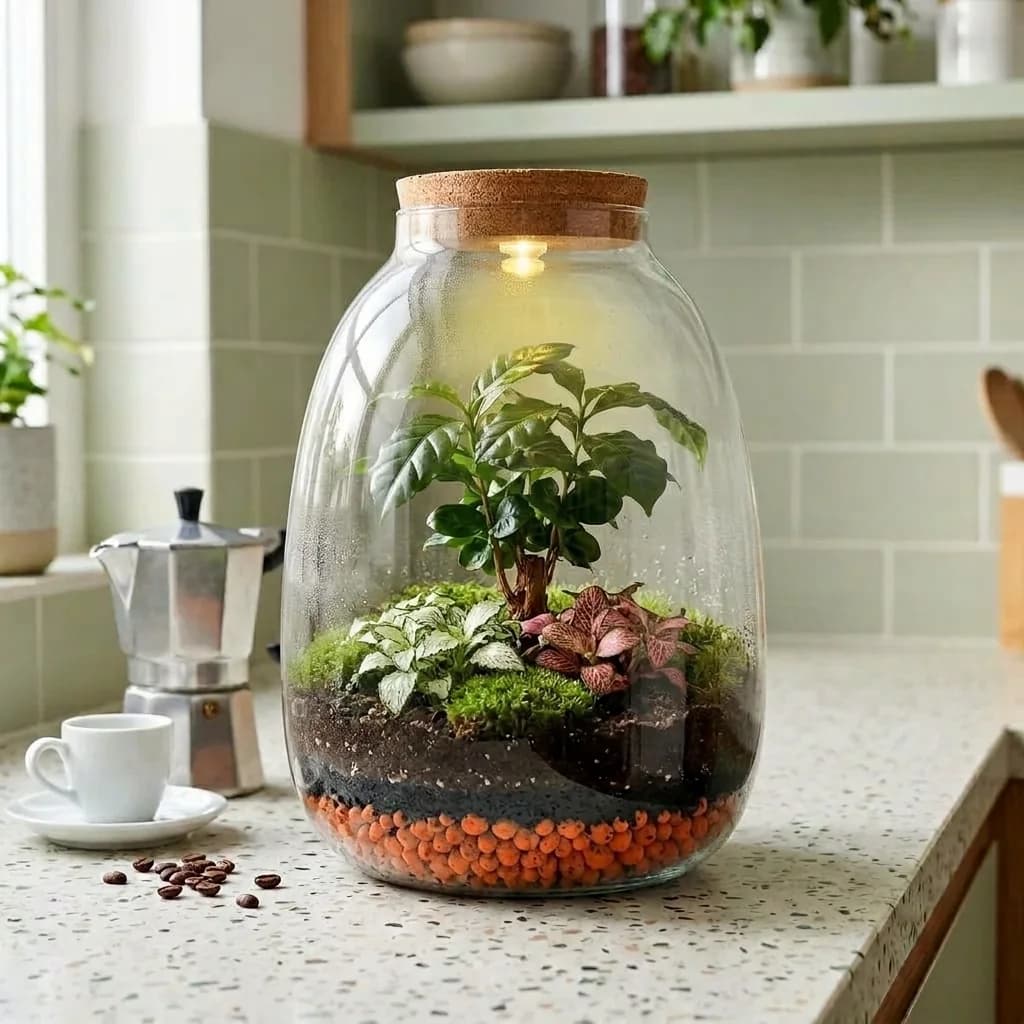
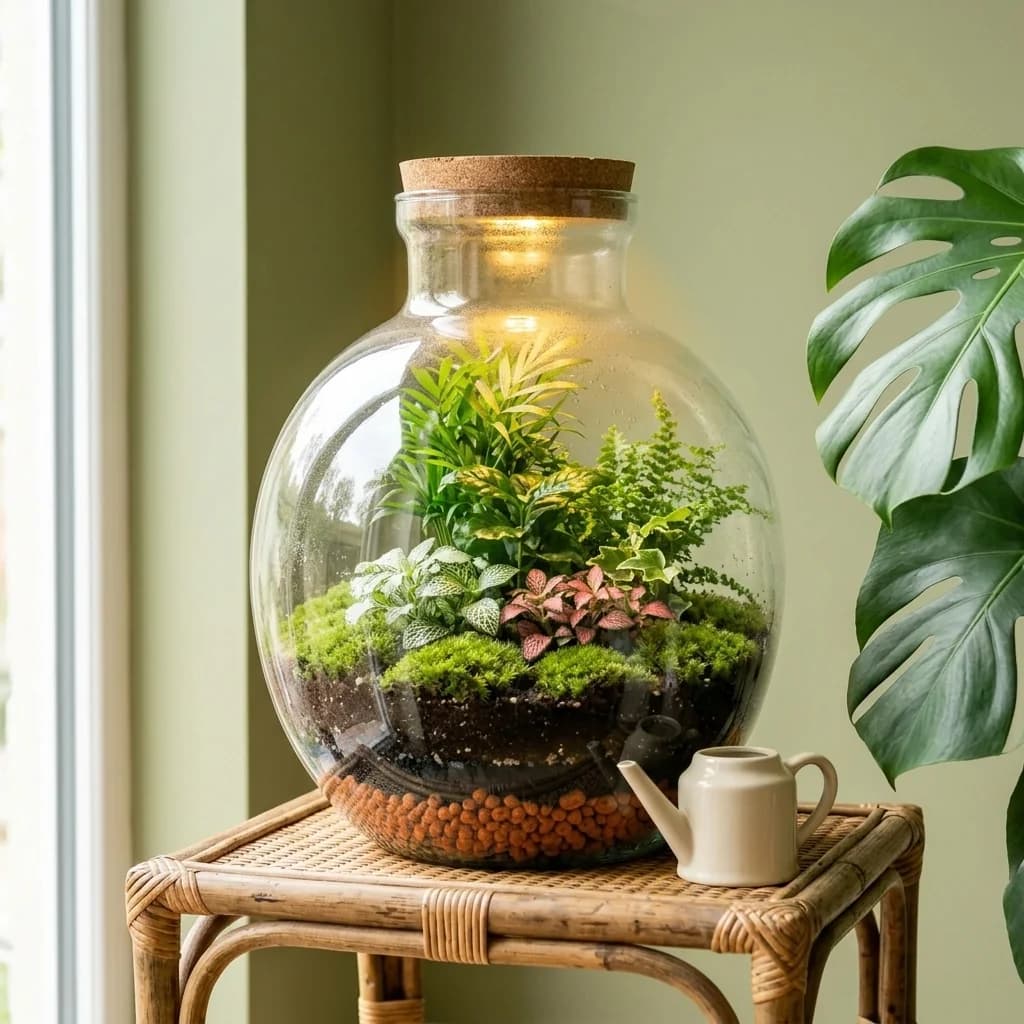
Their main advantage is weight. A 10-litre container with three centimetres of gravel is already heavy to carry; with clay pebbles it stays manageable. On a large demijohn, the difference is striking.
Their regular grade creates large gaps, and so plenty of air. They are porous and hold a little moisture, which returns to the terrarium by evaporation — exactly what you want in a closed terrarium.
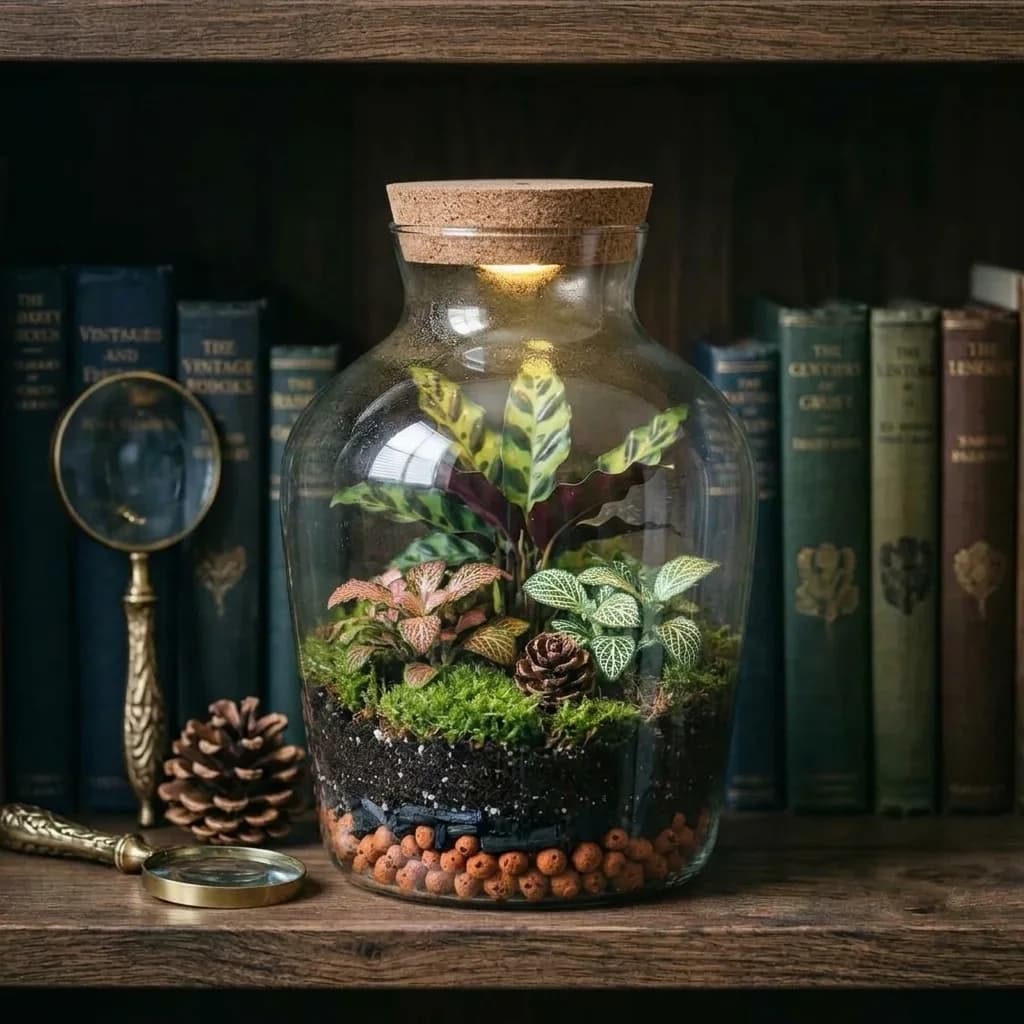
Their drawback is visual: they are pale and very visible behind the glass. Some people like the pronounced band, others do not.
Lava rock
A volcanic rock, very porous, with an irregular surface. It holds more water and more air than clay pebbles, and offers more surface to the microfauna of a bioactive terrarium.
Its dark red-brown blends in behind the glass: visually the layer almost disappears, and the eye goes straight to the plants. This is often what people after a natural finish are looking for.
Its drawback is weight. On a small container it makes no difference. On a 10-litre demijohn, the whole thing becomes heavy to move.
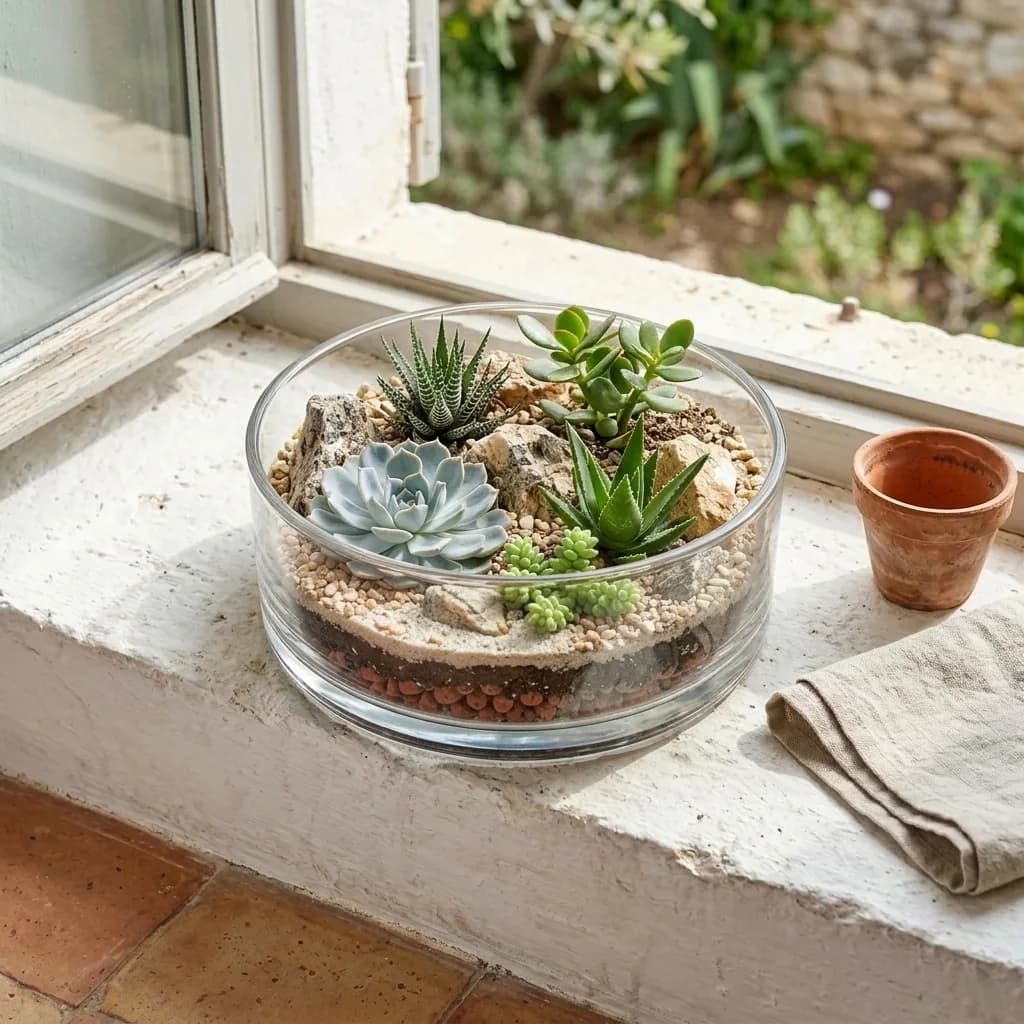
It is, on the other hand, the better choice for an open terrarium of succulents, where it also appears in the substrate itself.
The separating layer, which matters more than the choice
This is the most common mistake: laying the substrate straight onto the drainage. Within a few waterings the soil works down between the pebbles, fills the gaps, and the drainage layer becomes a waterlogged block — exactly what it was meant to prevent.
Slip in a permeable separator: horticultural separating fleece, fine mesh, a piece of cut insect screen, or a one-centimetre layer of sphagnum. It lets water through, not soil.
The full order of the layers and their thicknesses is in The layers of a terrarium.
How thick
Two to three centimetres for a container 20 to 25 cm across. A little more for a large volume, a little less for a small jar — but never less than a centimetre and a half, or the layer stops doing its job.
Beyond three or four centimetres you are taking space from the substrate without gaining any safety, and the root volume shrinks accordingly.
What about charcoal?
It goes on top of the drainage layer, in a thin band, and does not replace it. What it actually does, and the difference between activated carbon and horticultural charcoal, is set out in Charcoal in a terrarium.
In short
Large container, closed terrarium, you want it light → clay pebbles.
Small container, open terrarium, succulents, or you want the layer to go unnoticed → lava rock.
You cannot decide → use whatever you already have. The difference between the two is real but minor next to the separating layer and the watering.
Sources
Frequently asked questions
How thick should the drainage layer be?
Two to three centimetres for a container 20 to 25 cm across, a little more for a large volume. Beyond that you take space from the substrate without gaining any safety.
Do you need a separator between drainage and substrate?
Yes. Without one, the substrate works down between the pebbles and fills the drainage layer, which then serves no purpose. A separating fleece, fine mesh or a layer of sphagnum will do.
Can you use river gravel instead?
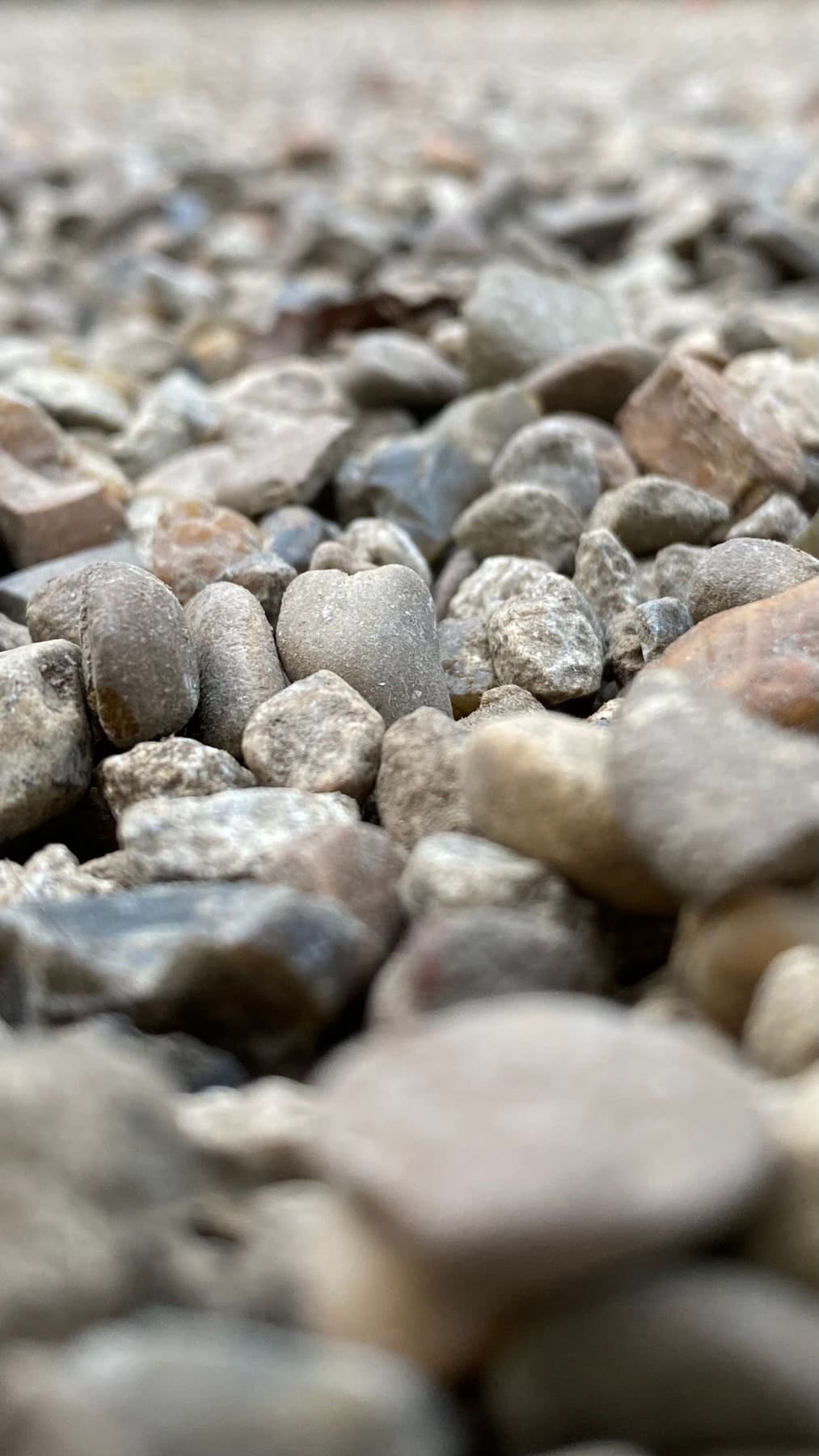
It drains, but it is heavy and not porous. For a closed terrarium, clay pebbles or lava rock, which hold a little water and air, are preferable.
Should these materials be rinsed before use?
Yes, both of them. They are dusty: a rinse under clean water stops the dust clouding the substrate and marking the glass at the first watering.