

Dirty glass, marks and white veil: cleaning a terrarium
Limescale, splashes of soil, green algae, dried mist: identify each mark on the glass of a terrarium and remove it without taking the composition apart.
In this guide
To clean the glass of a terrarium, the rule fits in one sentence: a damp microfibre cloth on the end of long tweezers is enough in nine cases out of ten, and you never pour any product inside the jar. The white veil that resists is limescale, and it comes off with a little white vinegar put on the cloth, never in the terrarium. The rest of the job is understanding which mark you are looking at, because each one has a different cause and comes back as long as that cause stays in place.
Identify the mark before you rub
Four kinds of soiling cover almost every case. Look at the pane from the side, in raking light: that is the best way to tell them apart.
| Mark | Appearance | Origin | Action |
|---|---|---|---|
| White veil | Milky circles, gritty to the touch | Limescale from tap water | White vinegar on the cloth |
| Brown splashes | Specks of soil, low down on the glass | Watering too briskly, substrate thrown up | Damp cloth, as soon as possible |
| Green film | Translucent veil, even | Algae, direct light and a damp pane | Scrape dry, then move away from the window |
| Blurred runs | Vertical streaks, flat | Mist that has dried in place | Dry microfibre, in a single pass |
Limescale is the most stubborn. It settles when a droplet of tap water evaporates on the glass and leaves its mineral salts behind. It will not come off with plain water, and rubbing harder only scratches the pane.
Splashes of substrate nearly always come from water poured in at the neck. They are easy to remove if you deal with them quickly, far less so once dried and baked against the glass by the heat.
Green algae appear where the light strikes directly and where the condensation never evaporates. They are harmless to the plants, but they hide the landscape and come back as long as the location does not change.
Dried mist leaves pale streaks. It is the most harmless of the four, and often the only one visible in a well-run terrarium.
Read the mist before chasing it away
A pane veiled in the morning, which clears again during the day, is the sign of a jar in balance. It is not soiling and it is not cleaned off. A pane running with water permanently, on the other hand, means an excess of water, and glass that stays dry several days running means the opposite. Both end up marking the pane, one in runs, the other in mineral deposit.
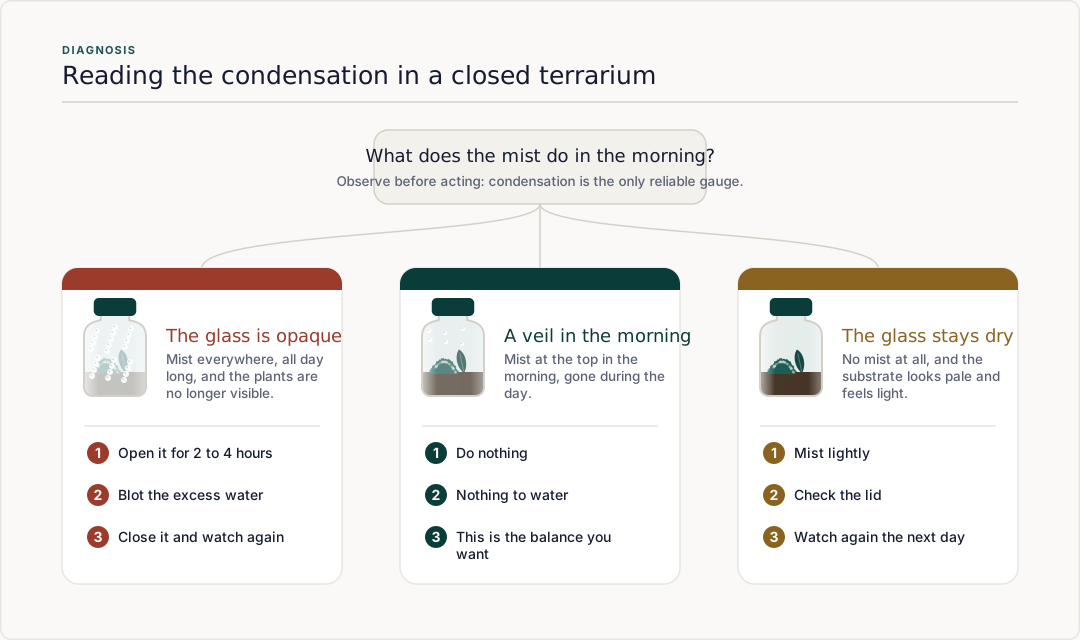
If your glass never clears, read Terrarium too wet first: cleaning the pane of a waterlogged jar is like wiping in the rain. The guide Condensation in a terrarium sets out what each type of mist is telling you.
Cleaning inside a narrow neck, without dismantling anything
A demijohn, a bottle or a cork-stoppered jar can be cleaned very well through the opening, provided you have the right tool and work slowly.
- Prepare the tool. Fold a square of microfibre or a cotton pad into four and grip it firmly with long tweezers. The fabric must stick out beyond the tweezers: it is the fabric that touches the glass, never the metal.
- Barely dampen it. The cloth should be damp, not wet. A drop falling to the bottom adds water to an environment that is not asking for any.
- Run it down the pane, pressing on the side opposite the composition. Work from top to bottom, in vertical bands overlapping by a centimetre.
- Turn the cloth over as soon as it picks up soil, otherwise you spread the dirt around.
- Dry in one pass, with a second dry square, again from top to bottom. Glass dried in a zigzag keeps its marks.
For the corners of a geometric container, a bamboo stick wrapped in microfibre reaches what the tweezers miss. The workshop's long tweezers and tools are designed for this work at the bottom of a container.
Limescale: the only exception to the damp cloth
When the white veil resists, soak the cloth in neat white vinegar, wring it out, then wipe the area concerned. Leave it for a minute, rub gently, then go over it with a cloth wetted in plain water and a dry cloth. Vinegar dissolves calcium carbonate without scratching the glass.
Three precautions, and they are not negotiable:
- Nothing runs. Vinegar burns the foliage of fittonias and selaginellas, and acidifies the substrate if it reaches the bottom.
- Never spray it. A mister spreads an acid fog over the whole composition.
- Protect the moss with a piece of kitchen paper laid at the base of the glass during the operation.
The real answer lies upstream: mist with demineralised water, reverse-osmosis water or filtered rainwater. With no limescale in the water, there is no more deposit on the glass. That is also what the guide Watering a terrarium recommends, setting out the amounts and the rhythm.
Green algae on the glass
Scrape them off dry, with the corner of a flexible card or a folded square of microfibre, before going over with the damp cloth: wet, they spread into a film. Then deal with the cause, which is almost always the light. A terrarium placed one or two metres from a bright window gets what it needs without feeding the algae. Pressed against the pane, it heats up, it greens over, and the guide Terrarium too hot explains what that exposure costs the plants.
Keeping it from coming back
- Water with a pipette, against the pane, not at the neck: no more splashes of soil.
- Take out dead leaves as you go, with the tweezers. They stick to the glass as they dry and leave a ring.
- Prune before the leaves touch the pane. A leaf in permanent contact with the glass browns and marks the point of contact; the method is described in Pruning a terrarium.
- Clean the outside of the glass separately, with a window product sprayed onto the cloth, away from the opening.
- Get into the habit of a monthly once-over: ten minutes, glass inside and out, dead leaves removed. That is the upkeep rhythm described in Caring for a closed terrarium.
Clean glass is not only a matter of looks. It is also the only way to see what is going on inside: a spot of mould, a yellowing leaf, a substrate drying out are all noticed weeks earlier through a clear pane.
Sources
Frequently asked questions
Can you use white vinegar in a terrarium?
Yes, provided you apply it to the cloth and not into the jar, stay on the glass and never let a drop fall onto the moss or the substrate. Vinegar dissolves limescale, but it burns foliage and acidifies the soil if it runs to the bottom.
Why does the white veil come back after every cleaning?
Because the water used for misting is hard. The deposit forms again with every evaporation cycle. Switch to demineralised water, filtered rainwater or reverse-osmosis water: the mark then goes for good.
Do you have to take the plants out to clean the glass?
No, in almost every case. Long tweezers holding a square of cotton or microfibre reach the whole pane of a narrow-necked jar. Dismantling an established composition damages the roots and the moss for a cosmetic result you can get another way.
Are green marks on the glass dangerous?
No. They are algae taking advantage of light that is too direct and a permanently damp pane. They do not attack the plants. Above all they are a sign that the terrarium should move away from the window and the glass be allowed to dry now and then.