

Selaginella in a terrarium: the complete guide
A carpet of green lace that does not forgive dry air. Species, light, humidity and the habits that make selaginella work under glass.
In this guide
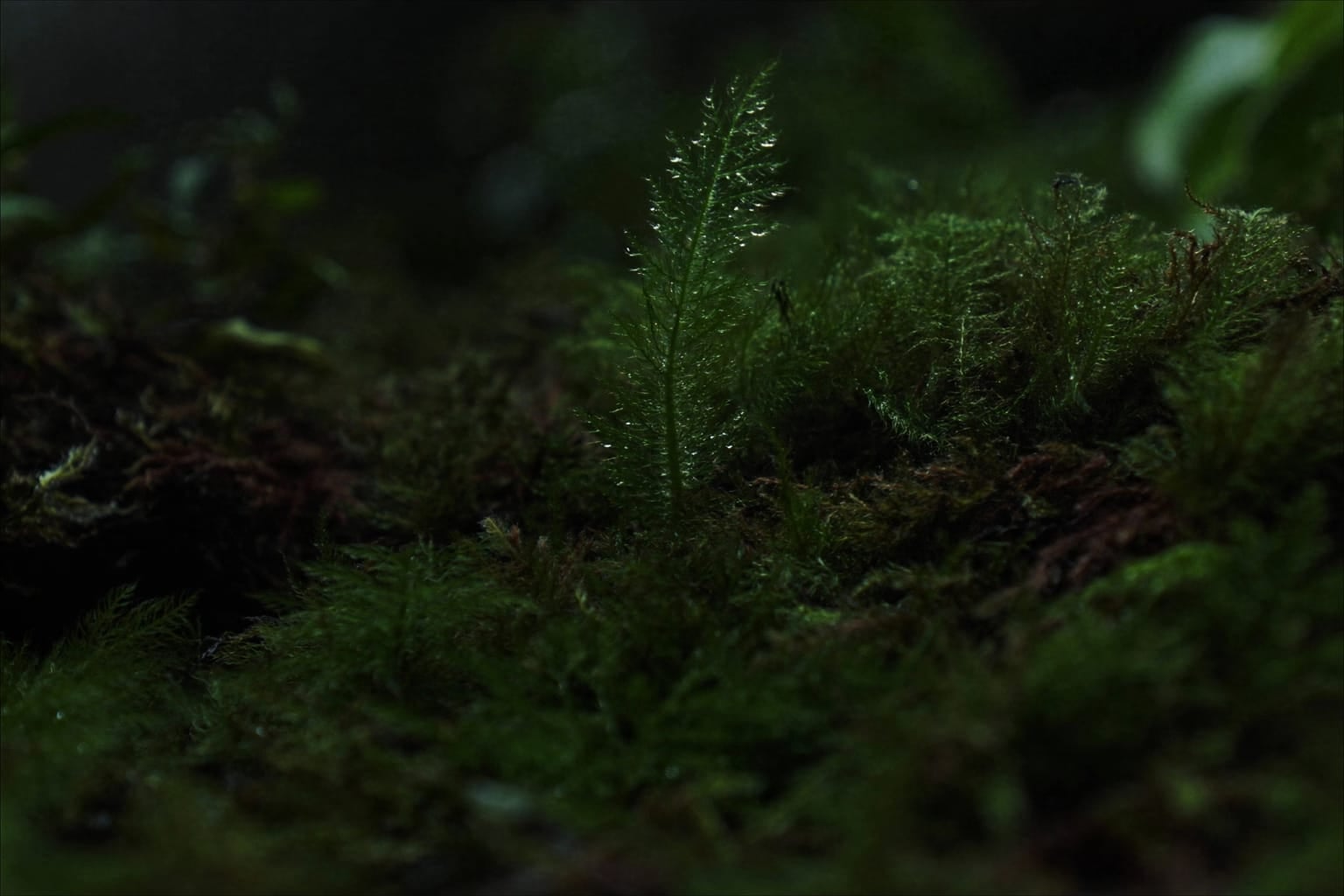
Selaginella gives the finest texture you can get in a terrarium: a dense carpet of light-green lace that immediately suggests a woodland floor. It is also the most demanding plant in the usual selection — it needs high and constant humidity, and browns within a few hours of dry air. In a closed terrarium that seals properly, it is easy; anywhere else, it fails.
Identity card
| Botanical name | Selaginella spp. |
| Common species | S. kraussiana, S. martensii, S. uncinata |
| Origin | Humid tropical and subtropical woodland floors |
| Size under glass | 5 to 15 cm tall, wide spread |
| Growth | Medium to fast |
| Closed terrarium | Yes, essential |
| Open terrarium | No |
| Light | Partial shade to bright indirect |
| Humidity | Very high, 70 % and above |
| Temperature | 18 to 25 °C |
| Difficulty | Medium — easy under glass, impossible in open air |
What it brings
Scale. Its finely cut shoots are so small that they make the rest of the composition look larger: next to a selaginella, a 20 cm jar looks like a woodland floor. It is one of the few plants that produce that miniature effect without any trick.
It also covers the ground quickly, spreading by shoots that root where they touch. It works well alongside moss, with which it forms two very different layers of green.
Humidity: the critical point
This is the whole story with this plant. Selaginella has no thick cuticle to hold its water: it lives in the saturated air of the forest floor. In a heated room, it browns within a day.
What it needs: a closed terrarium whose stopper or lid really seals, with mist that comes back every morning. If the mist disappears for any length of time, it is the first to show it — before the fittonia, before the moss.
The browning always starts at the tips of the shoots. That is a very useful early signal: correct it as soon as you see it, following Terrarium too dry.
Light
Partial shade to bright indirect light. It tolerates less light than most of its neighbours, which makes it a good candidate for a terrarium placed away from the window.
Never direct sun, which scorches it very quickly — see Terrarium too hot.
Substrate and planting
An airy terrarium substrate that holds moisture: coir, a little fine bark, a touch of sphagnum if you have some.
Rinse the root ball in lukewarm water, spread the clump out rather than pushing it in, and press lightly to make contact. Mist straight afterwards: this is the plant you must not let dry out, even for an hour, between leaving the pot and the closing of the terrarium.
Care
Almost nothing. It spreads by itself and makes do with the water circulating in the terrarium. Only two things to do:
- Keep the spread in check: it can cover smaller plants. Cut the excess shoots with scissors; they do not regrow from the cut, but the clump thickens.
- Remove the browned parts, which will not green up again and would feed moulds in a closed environment.
Common problems
Brown, dry tips. Air too dry. This is the most frequent case and the quickest to correct.
Soft clump, brown at the base, soaked substrate. Too much water and roots starved of air — see Terrarium too humid.
Green that pales without browning. Too little light, or water that is too hard.
White veil at the base. Mould on dead matter caught in the clump: remove the debris, air it out, see Mould in a closed terrarium.
What to pair it with
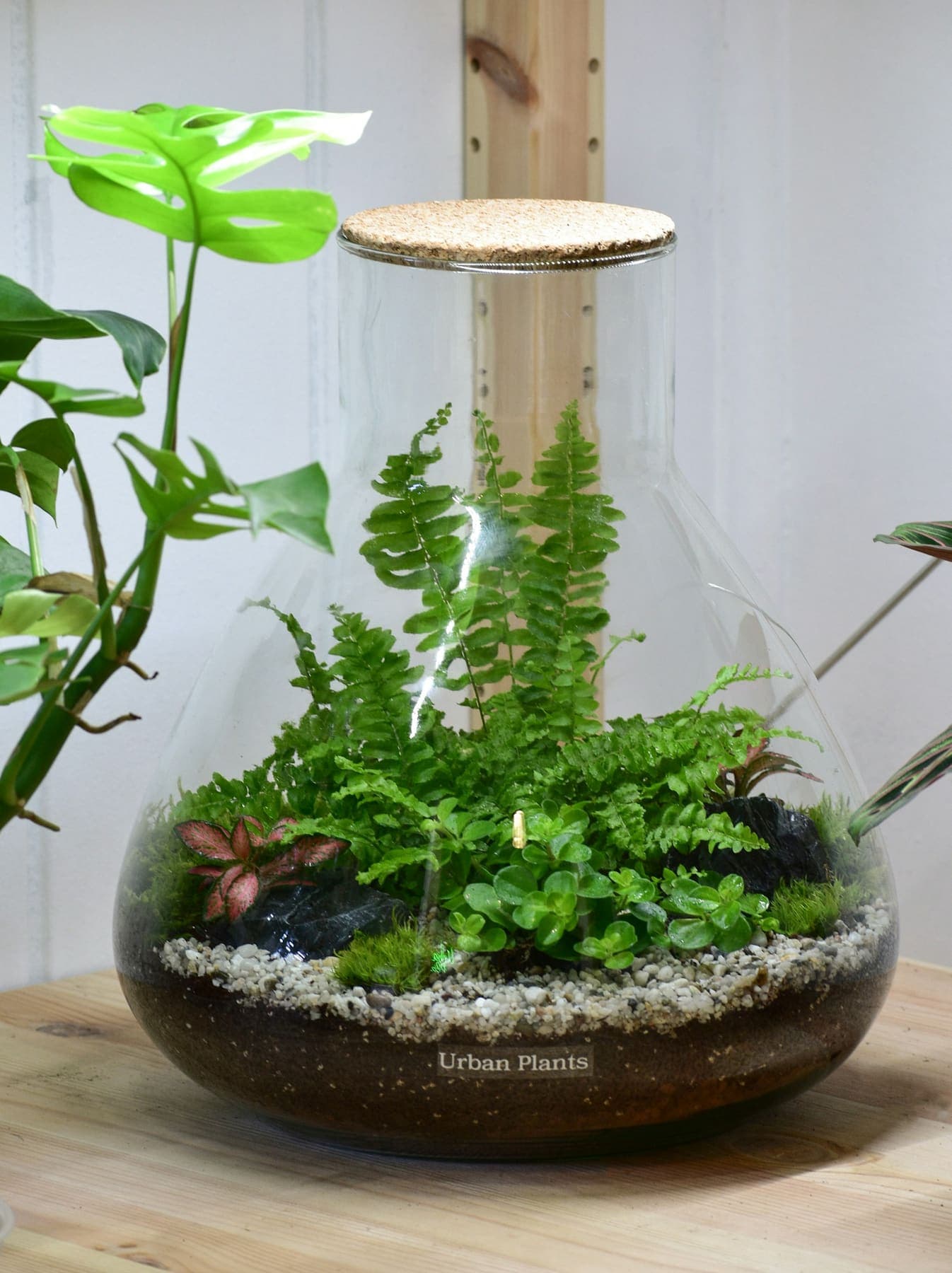
It gets on with anything that likes humidity: fittonia, Ficus pumila, peperomia, a small fern, mosses.
It is incompatible with succulents, without exception — their needs are opposites. See Closed or open terrarium.
Our selection is in the tropical plants section.
Sources
Frequently asked questions
Can selaginella live outside a terrarium?
Only with great difficulty. It is the plant in this selection that needs the highest humidity: a few hours of dry air are enough to brown it. It is made for the closed terrarium.
My selaginella is browning at the tips of the shoots, why?
The air is too dry, or the terrarium no longer closes properly. The browning always starts at the tips. Rehydrate and check the seal: the brown parts do not green up again, but the plant recovers.
Is it a fern or a moss?
Neither. Selaginella belongs to the Selaginellaceae, a very old group close to the clubmosses. It reproduces by spores as ferns do, but it is not one.
How do you propagate it?
By division: split a clump in two with a little substrate, and replant. It settles in within two to three weeks in the humidity of a closed terrarium.