

My terrarium smells bad: why, and what to do
A pond smell, a musty smell or rotten eggs: what each smell says about the state of the terrarium, and how to clear it up without taking everything apart.
In this guide
A terrarium in good condition smells of damp earth and woodland. An unpleasant smell almost always means the same thing: there is too much water at the bottom, and organic matter is decaying there without oxygen. The steps to take are short — air it for a few hours a day, remove the standing water, take out the plant debris — and they settle the great majority of cases in one to two weeks, with no dismantling.
What each smell tells you
| Smell | What it indicates | Urgency |
|---|---|---|
| Damp earth, woodland | Living soil in good condition | None |
| Stale, cellar-like | Stagnant air, permanent condensation | Low |
| Pond, marsh | Standing water at the bottom, fermentation | Real |
| Rotten egg | Decay without oxygen, roots rotting | High |
| Mushroom, musty | Fungal veil settled on wood or debris | Medium |
The rotten-egg smell is the only one that calls for action the same day. The others can be corrected calmly.
The cause, in nearly every case: water
A terrarium has no drainage hole. Every drop of water poured in stays there. When it builds up at the bottom, it drives the air out of the gaps, and the bacteria that work without oxygen take over from those that use it. They are the ones that produce the sulphur compounds with the egg smell.
A second cause often adds to the first, and feeds it: dead matter left in place. A fallen leaf, a plant that has collapsed, a piece of damp wood. In a closed environment, nothing carries it away.
The steps to take
Open it, in sessions
Take the lid off in the morning and put it back in the evening. Repeat every day. The air is renewed, the excess water evaporates, and the smell fades noticeably after a few days.
Do not leave the terrarium open all the time: mosses and woodland plants live on that humidity. The detail of drying out is in Terrarium too humid.
Take the water off the bottom
If a layer of water is standing in the drainage, evaporation alone will not be enough. Slide a syringe or a long pipette down to the bottom and draw it off in several goes. In a small container, a rolled piece of kitchen paper left in for a few minutes does the same job.
Remove everything that is dead
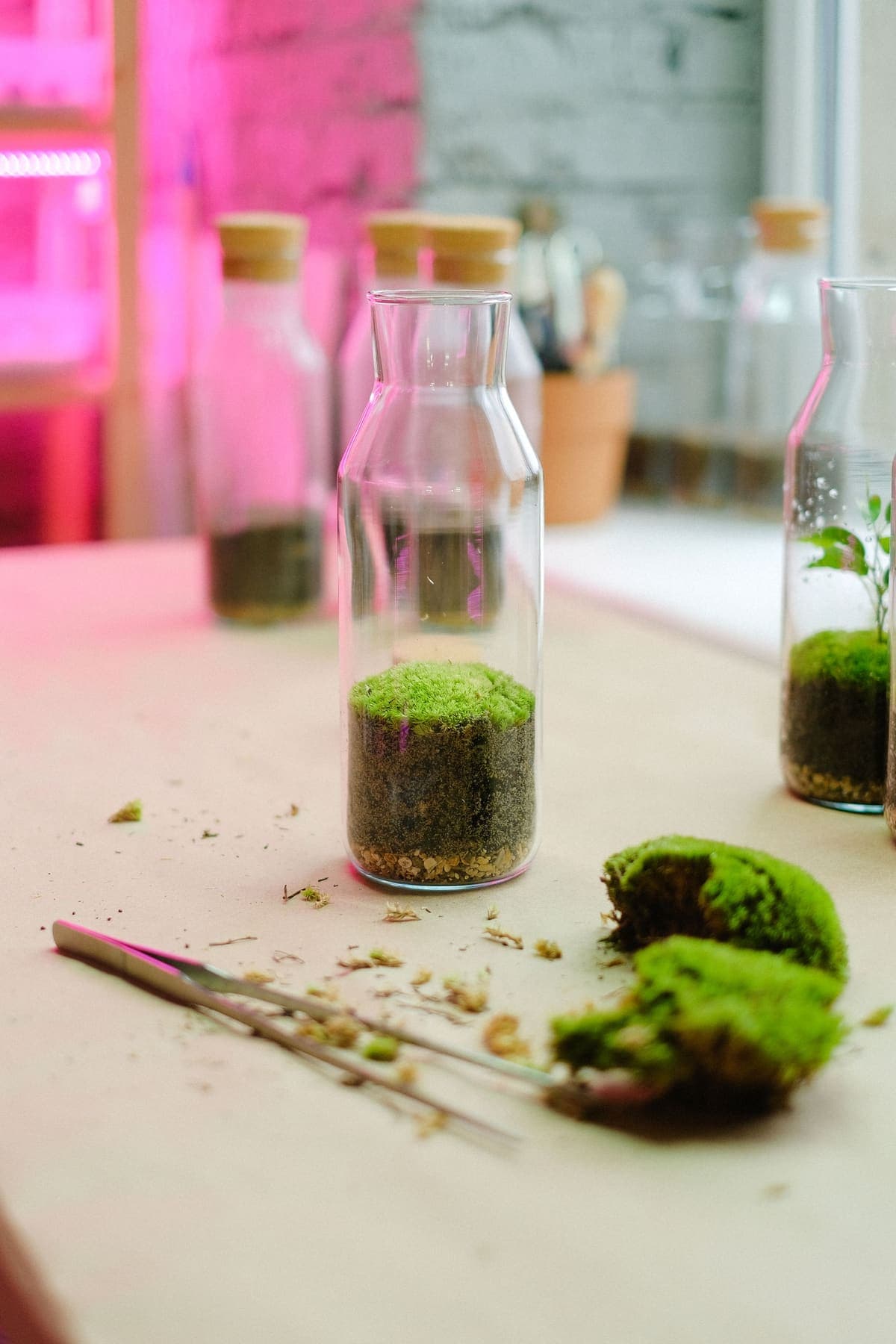
Fallen leaves, collapsed stems, a plant that has melted away, a spongy piece of wood. Take the tweezers everywhere, including under the moss if the smell is concentrated there. This is often the single step that settles the problem.
Wait, without watering
Once the mist has become light again and the debris is out, let it be. The smell takes one to two weeks to disappear completely. Do not add water during that time, and mist nothing but water: no household product belongs in a terrarium.
The case of wood
Wood that was not perfectly dry, or that still had bark on it, ferments in a closed damp environment. The smell is then clearly mushroom-like, and often comes with a white veil on its surface.
Take it out. You can let it dry in the open air for several weeks and put it back, or replace it with a decorative wood meant for terrariums, dry and free of bark. The white veil itself is covered in Mould in a closed terrarium.
When you do have to dismantle
Three signals together, not just one:
- the rotten-egg smell persists after two weeks of airing;
- the roots are brown and soft, and come away when you pull the plant gently;
- the substrate is black, compacted and waterlogged deep down.
In that case, take the plants out, rinse their roots in lukewarm water, cut off the brown parts, and rebuild on fresh substrate with proper drainage. Rinse the container in hot water, without detergent. The rebuild follows How to create a closed terrarium.
Stopping it coming back
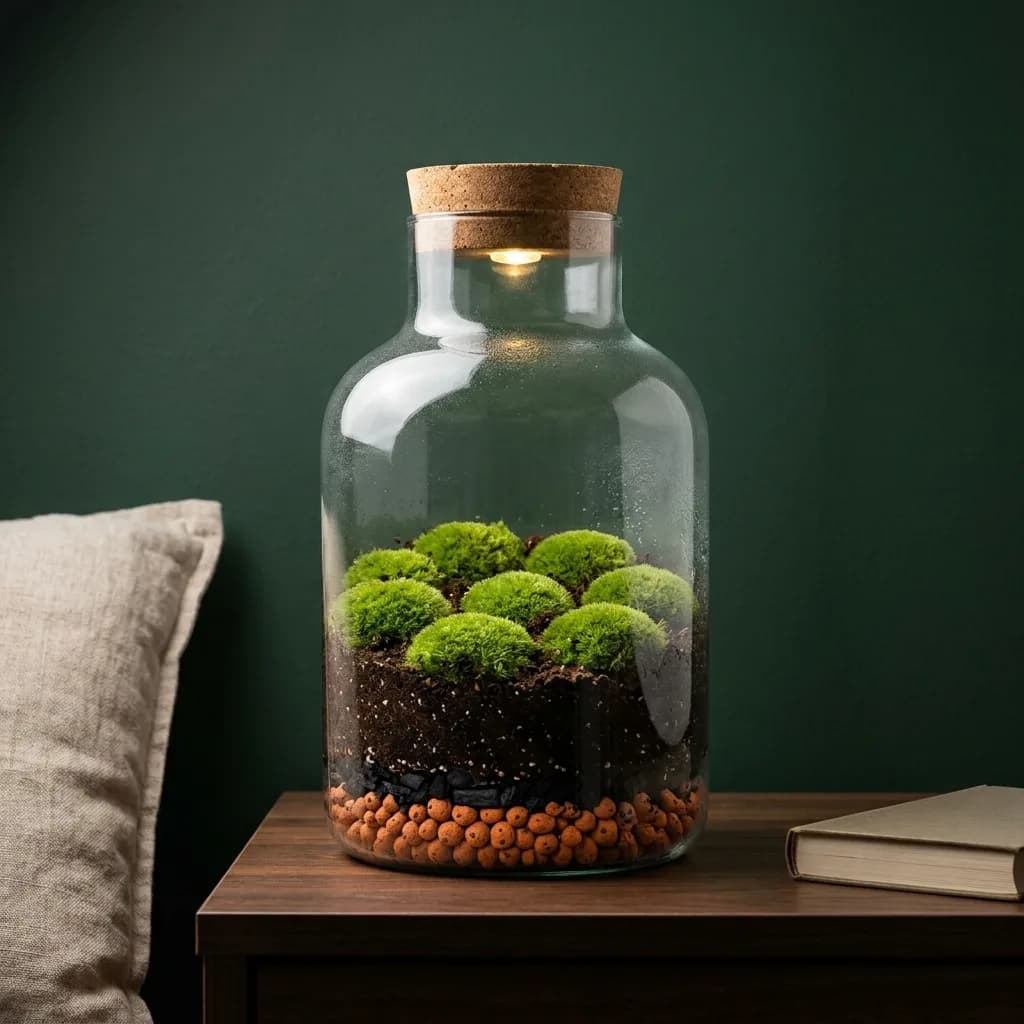
Real drainage of two to three centimetres, with a separator that stops the substrate dropping through — see The layers of a terrarium.
An airy substrate, never shop-bought potting compost on its own, which holds far too much water under glass.
A pass with the tweezers two or three times a year to take out faded leaves. That is most of what caring for a closed terrarium amounts to, and it is what stops the smell settling in.
Sources
Frequently asked questions
Is an earthy smell normal in a terrarium?
Yes. A woodland smell, of cool damp earth, is the sign of a living soil in good condition. It is the pond, stale or rotten-egg smell that should put you on alert.
Should you change the substrate when a terrarium smells bad?
Not straight away. The smell almost always comes from too much water or from decaying matter. Air it out, take the water off the bottom and remove the debris: in most cases the smell goes within one to two weeks without dismantling anything.
Does charcoal get rid of the smell?
It absorbs some of it, but it does not treat the cause. A waterlogged terrarium will still smell. Charcoal is a safety net, not a remedy.
Can a smell come from the decorative wood?
Yes, if the wood was not dry or still had its bark. It then ferments in the closed humidity. Take it out, let it dry in the open air, or replace it with a wood meant for terrariums.