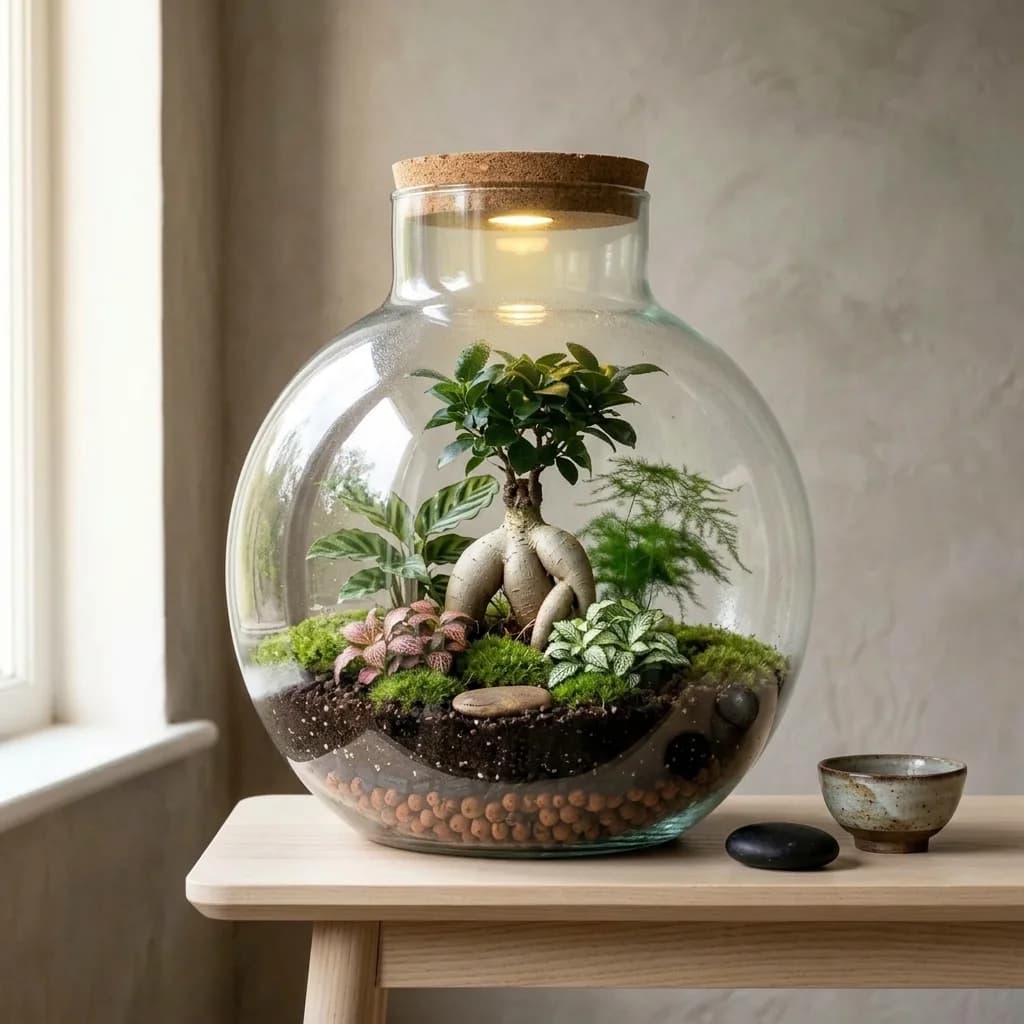


Growing moss in a terrarium
Light, humidity, contact, patience: the four conditions that make moss spread instead of sitting still, and the ways to propagate it.
In this guide
Moss spreads when four conditions come together: indirect light every day, high and constant humidity, firm contact with the substrate, and time. It is not planted and not fed the way a plant is — it has neither roots nor vessels. That is why it succeeds or fails on criteria very different from those of the rest of the terrarium.
Understanding how it lives
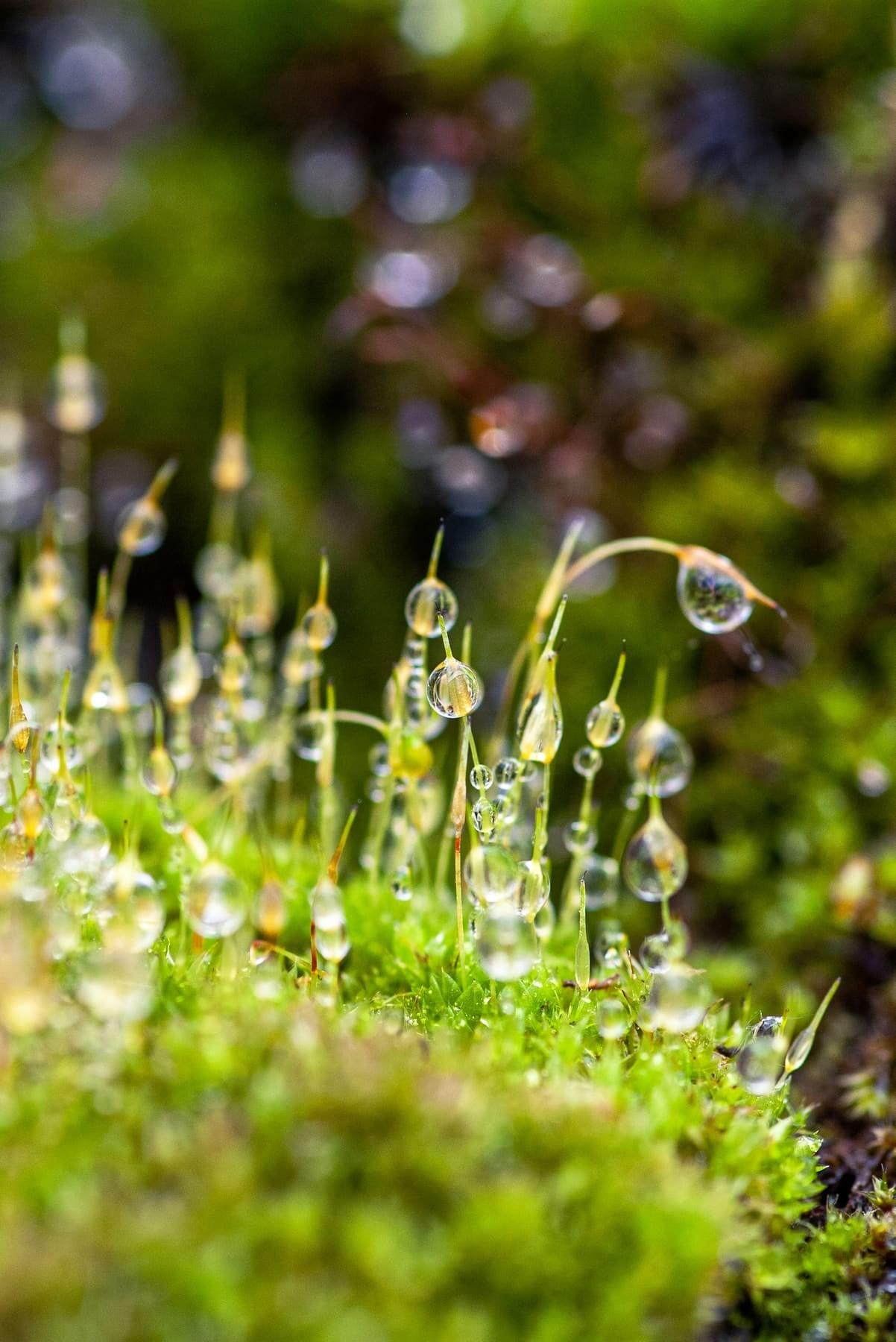
Moss has no roots. What look like roots, the rhizoids, serve only as an anchor: they absorb almost nothing. Water and minerals enter directly across the whole surface of the plant.
Three practical consequences:
- It is laid, not buried. Buried, it rots.
- It drinks from the air. Moss laid on sodden ground but in dry air dries out all the same.
- It needs no fertiliser. Feeding does not help it and feeds the algae on the glass.
The four conditions
Light, every day
This is the condition most often missing. Mosses ask for little intensity, but they ask for it regularly. A terrarium at the back of a room, far from any window, condemns its moss to fade and then brown within weeks.
Aim for bright but indirect light: one or two metres from a bright window. Never direct sun, which cooks under glass — see Terrarium too hot.
In a dark room, a small grow light at a distance, six to eight hours a day, is enough.
Humidity in the air
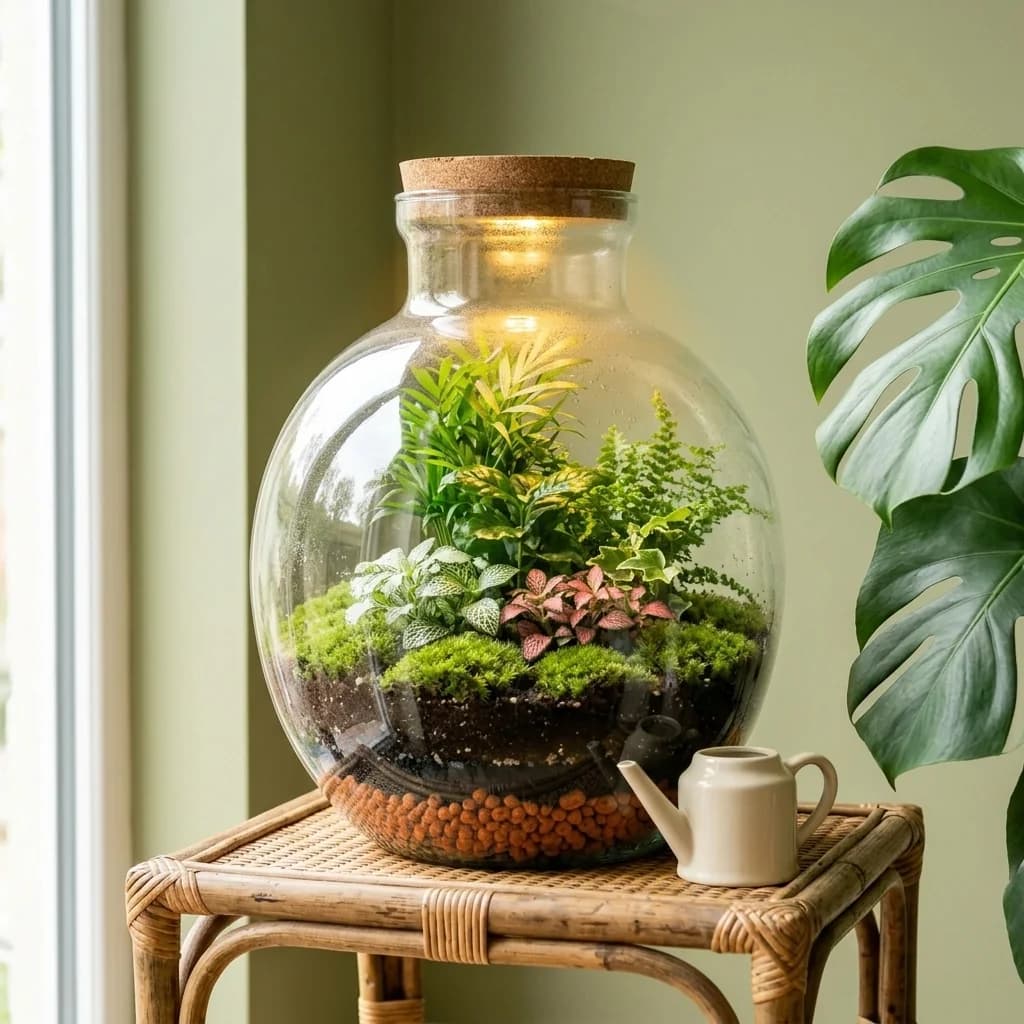
Moss lives in saturated air. That is why it belongs in the closed terrarium and does not last in an open container.
The marker is the morning mist: light, fading through the day. If it stops coming back, moss is the second to signal it after selaginella — see Terrarium too dry.
Conversely, permanently sodden ground makes it rot from below. Humid air, yes; marsh, no.
Contact
This is the step people rush. Moss simply set down does not take hold: its rhizoids need contact with a damp surface in order to develop.
Lay it on a substrate that is already damp, press firmly with the flat of your hand, and mist. The detailed method is in How to lay moss in a terrarium.
Time
Moss is slow. Allow two to four weeks for it to anchor, two to six months for it to gain visible ground. Many people conclude they have failed after three weeks, when the plant is only just starting.
Propagating moss
By fragments — the method that works
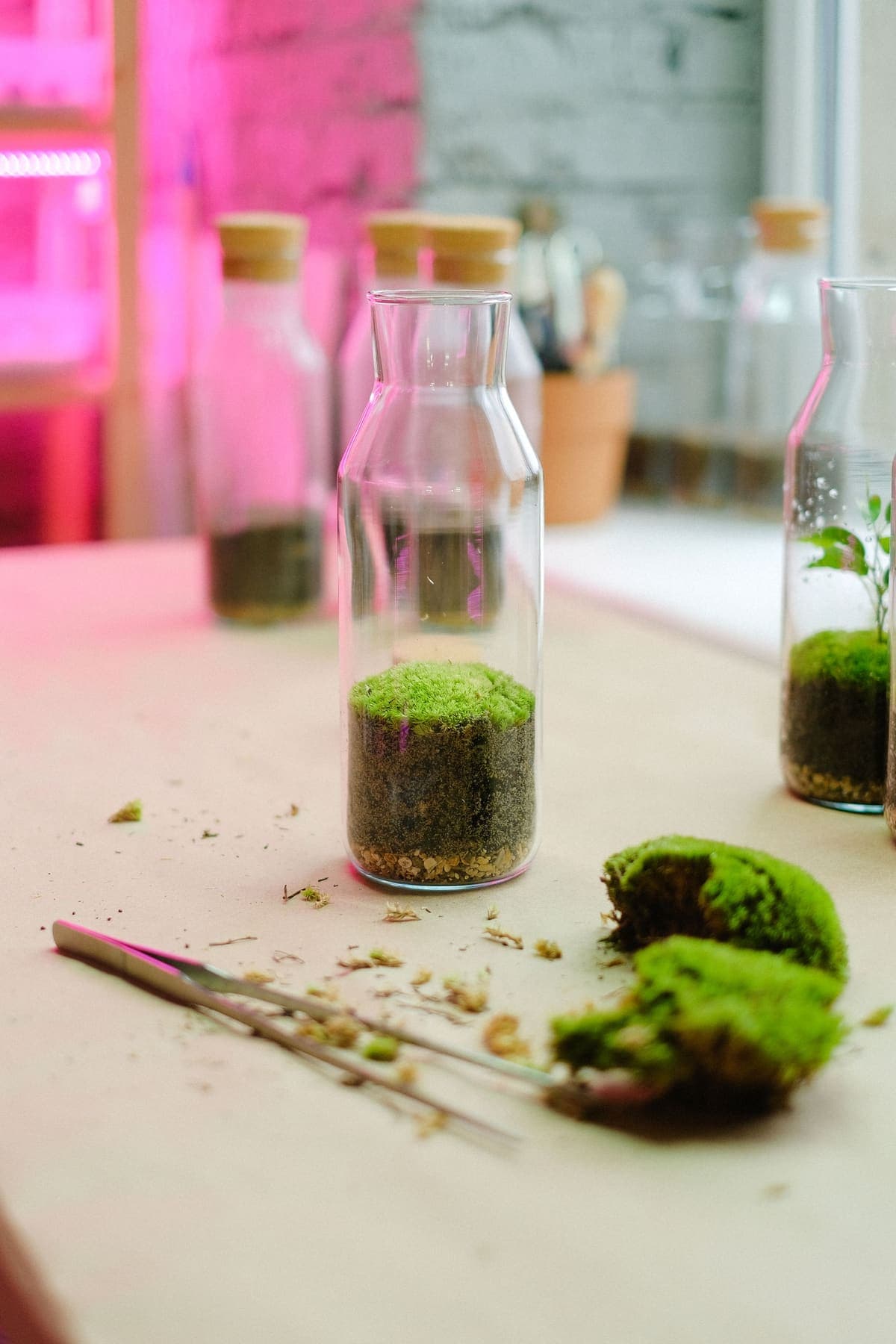
Take a sheet of moss, crumble it into fragments a few millimetres across, and spread them over the damp substrate about a centimetre apart. Press, mist, close the container.
Each fragment anchors and spreads from its own point. In two to four months the colonies meet and form a continuous carpet, often more natural-looking than a single sheet laid down whole.
It is also the most economical method: one sheet covers three to four times its own area.
By division
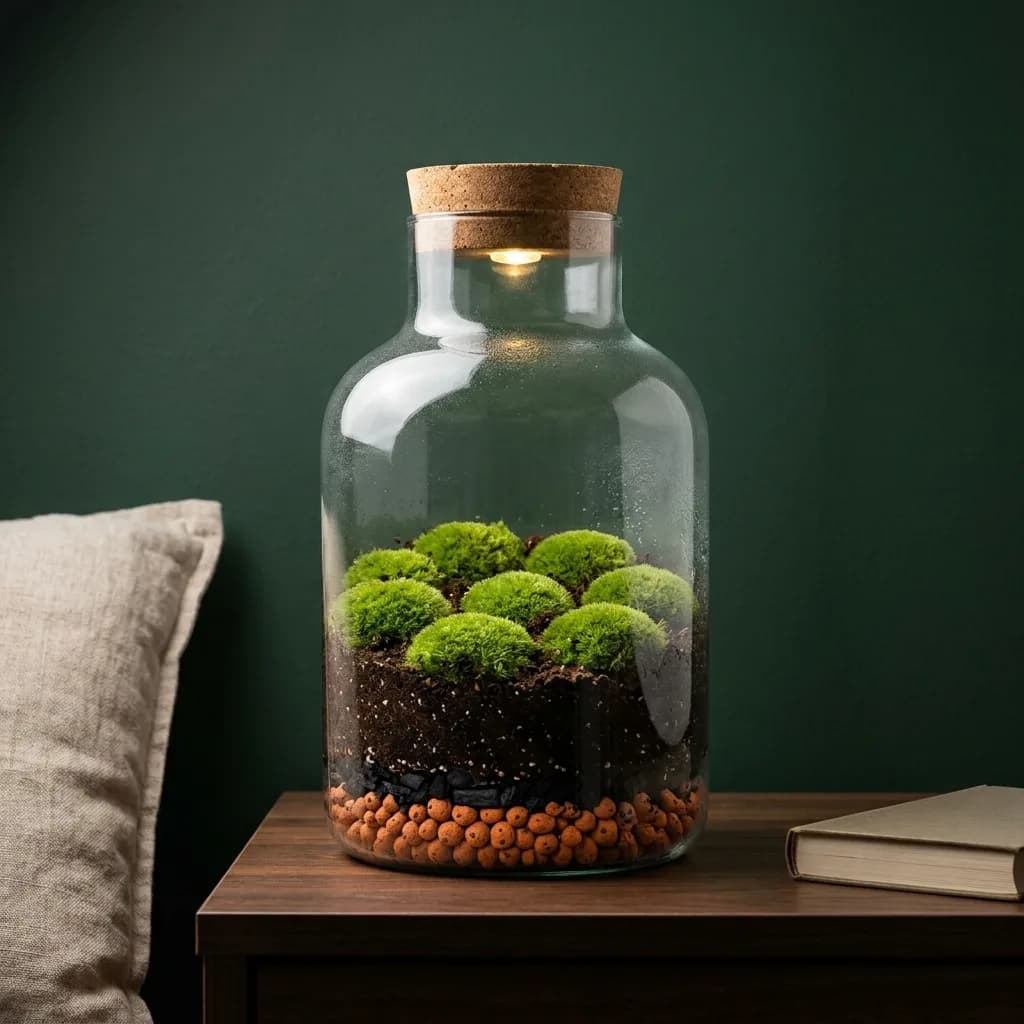
For cushion moss, simply split a dome into two or three pieces and lay them back down. Each one recovers its rounded shape within weeks.
On wood or stone
Hold the moss against the support with cotton thread or fine fishing line, in spaced turns. It takes hold in four to six weeks. The cotton eventually breaks down on its own; the line is removed.
What does not work
The blender recipe with milk, yoghurt or beer. It goes round and round online. Outdoors, on a wall, it has a logic. In a closed terrarium, the organic matter it adds goes mouldy — you get a white veil before you get moss. Water on its own is enough.
Fertiliser. Useless, and it turns the glass green with algae.
Moss gathered in a wood. That is another subject, covered in Can you take moss from a wood?.
If it is not growing
Go back through the four conditions in order. In nine cases out of ten it is the light. If it browns rather than merely sitting still, the diagnosis is in Moss turning brown in a terrarium.
To choose a species for the effect you want, see Mosses for terrariums and the mosses section.
Sources
Frequently asked questions
How long does moss take to spread?
Two to four weeks to anchor, two to six months to gain visible ground. Moss is slow: that is normal, not a failure.
Can you grow moss from fragments?
Yes, it is the simplest method. Crumble a sheet into small fragments, spread them over damp substrate, press and mist: they anchor and meet up within a few months.
Does the blender recipe with milk or yoghurt work?
It goes round and round online, but we do not recommend it in a terrarium: milk and yoghurt add organic matter that goes mouldy in a closed setting. Water on its own is enough.
Does moss need fertiliser?
No. It has no roots and takes up everything across its surfaces. Fertiliser does not help it and makes algae spread on the glass.