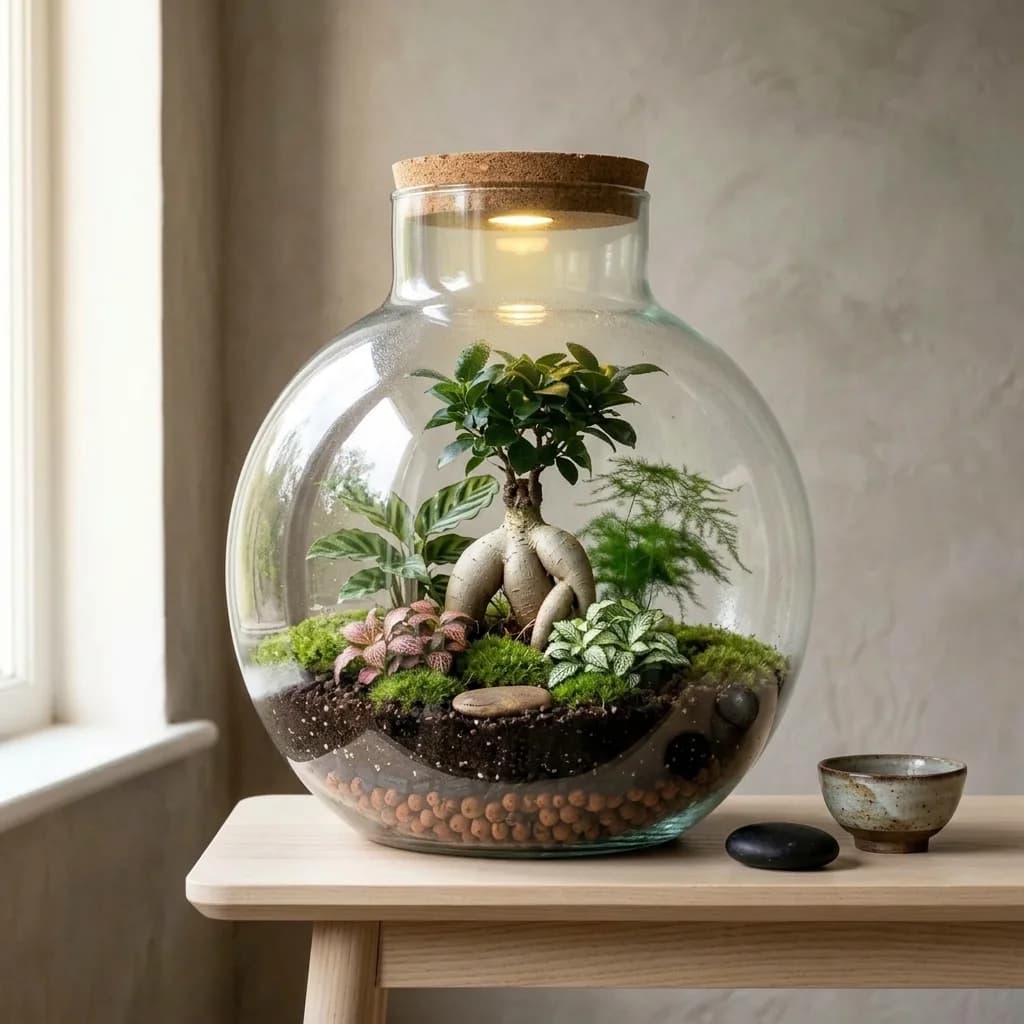


Terrarium, vivarium, paludarium: what is the difference?
Three words often confused for three different things. What each one holds, what it asks of you, and which matches what you want to do.
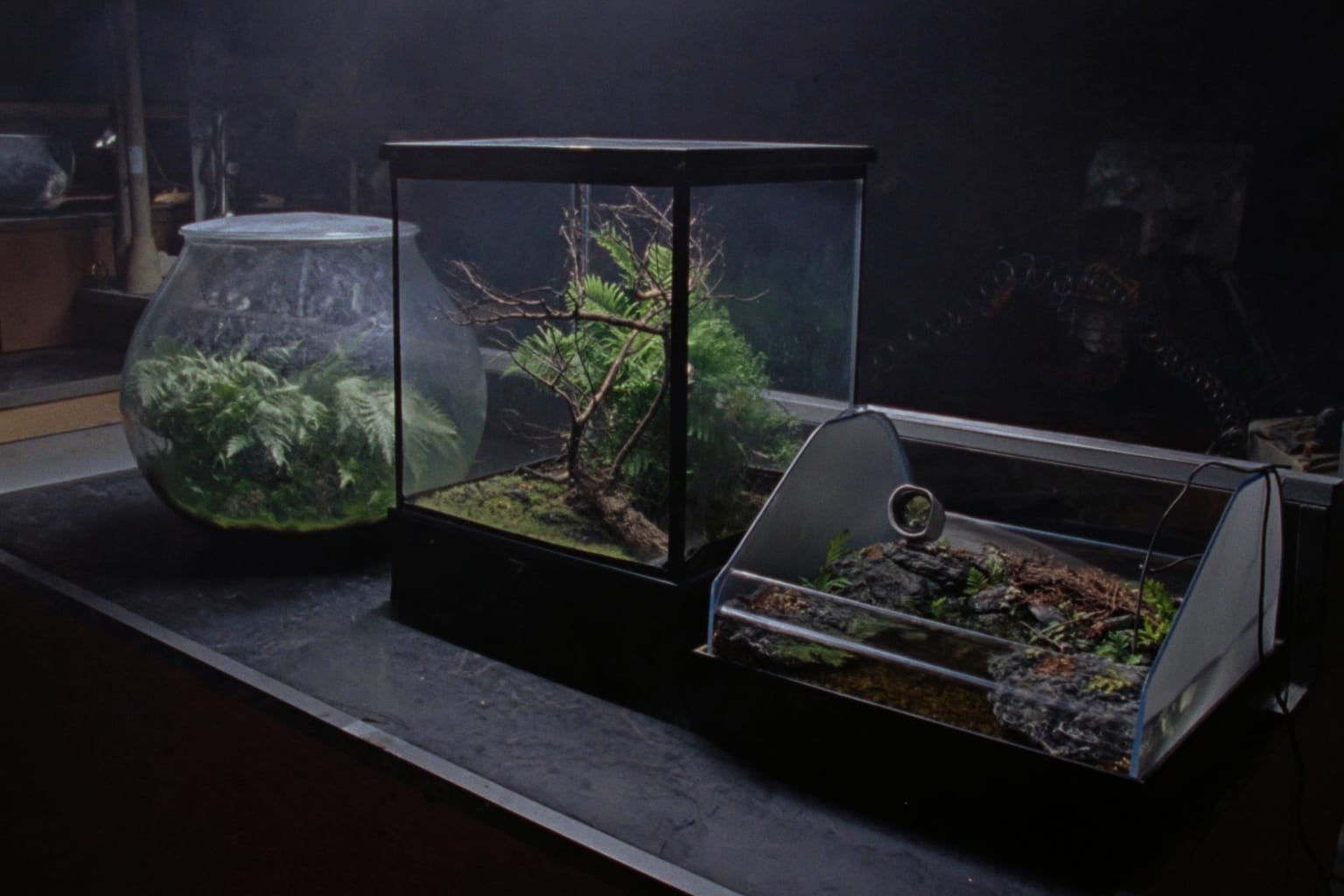
In this guide
In one sentence: a terrarium is a land-based environment of plants under glass, a vivarium houses a living animal, and a paludarium combines an aquatic part with a land part. The word decides everything that follows — equipment, regulations, upkeep, budget. If you want a miniature garden with no animal and no technical kit, it is a terrarium, and it is the simplest of the three.
The table
| Plant terrarium | Vivarium | Paludarium | |
|---|---|---|---|
| Holds | Plants only | Animal + living decor | Water + soil + plants |
| Open water | No | A water point depending on the species | Yes, part of the volume |
| Technical equipment | None | Heating, lighting, ventilation | Pump, filtration, lighting |
| Upkeep | 2 to 3 times a year | Daily | Weekly |
| Regulations | None | Depending on the species | Depending on the species |
| Typical volume | 5 to 15 L | 60 L and up | 50 L and up |
| Starting budget | 40 to 80 € | 250 € and up | 200 € and up |
| Good for beginners | Yes | No | No |
The plant terrarium
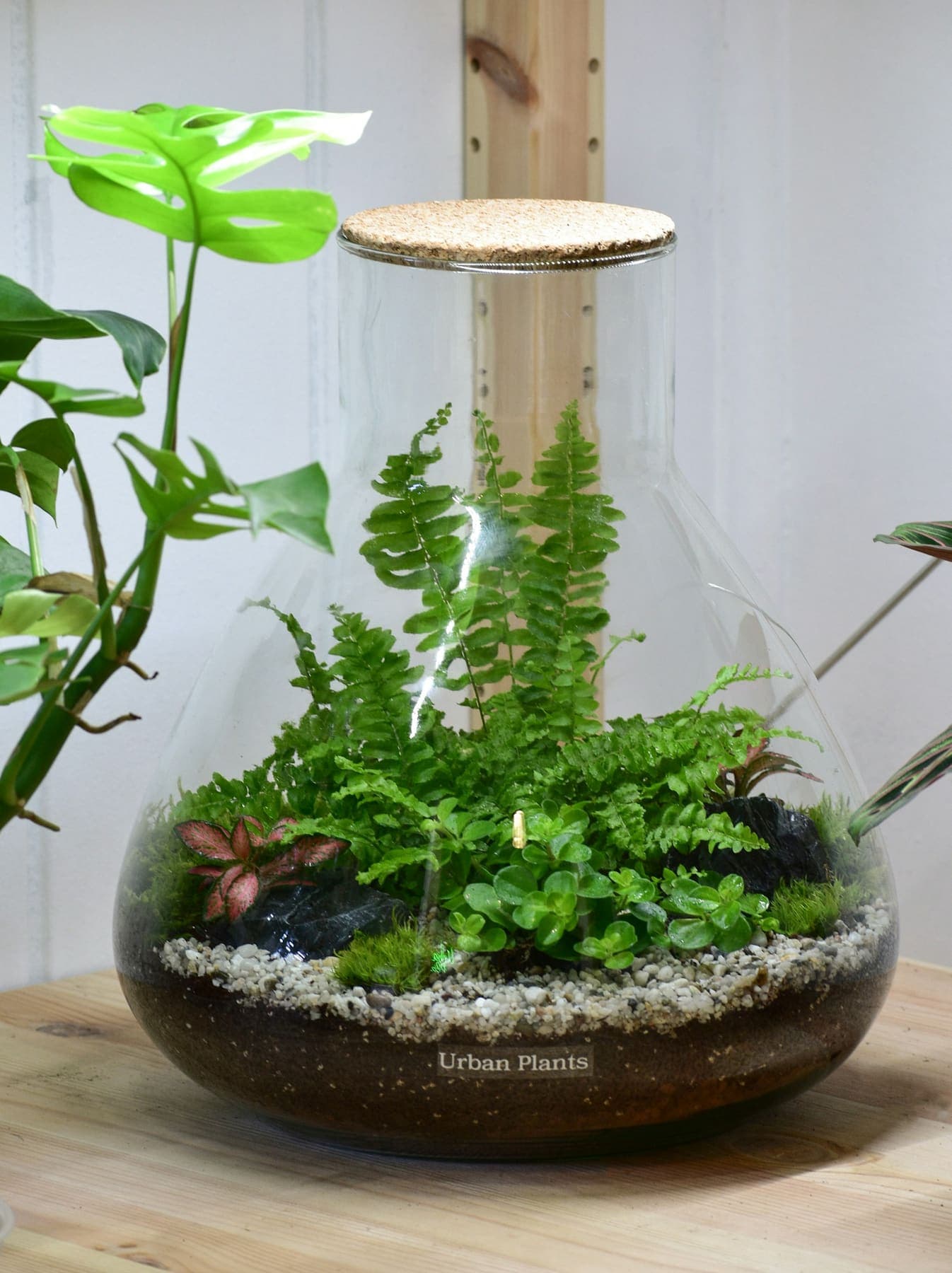
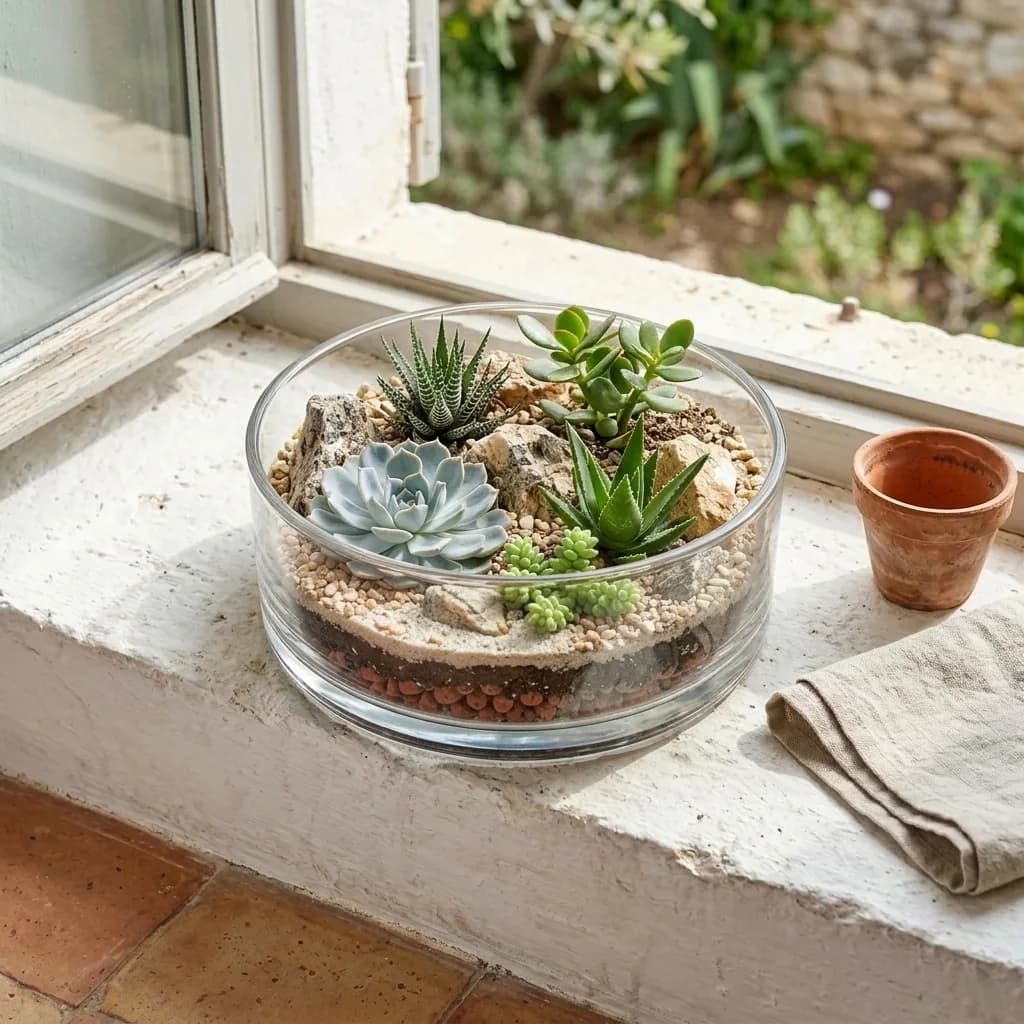
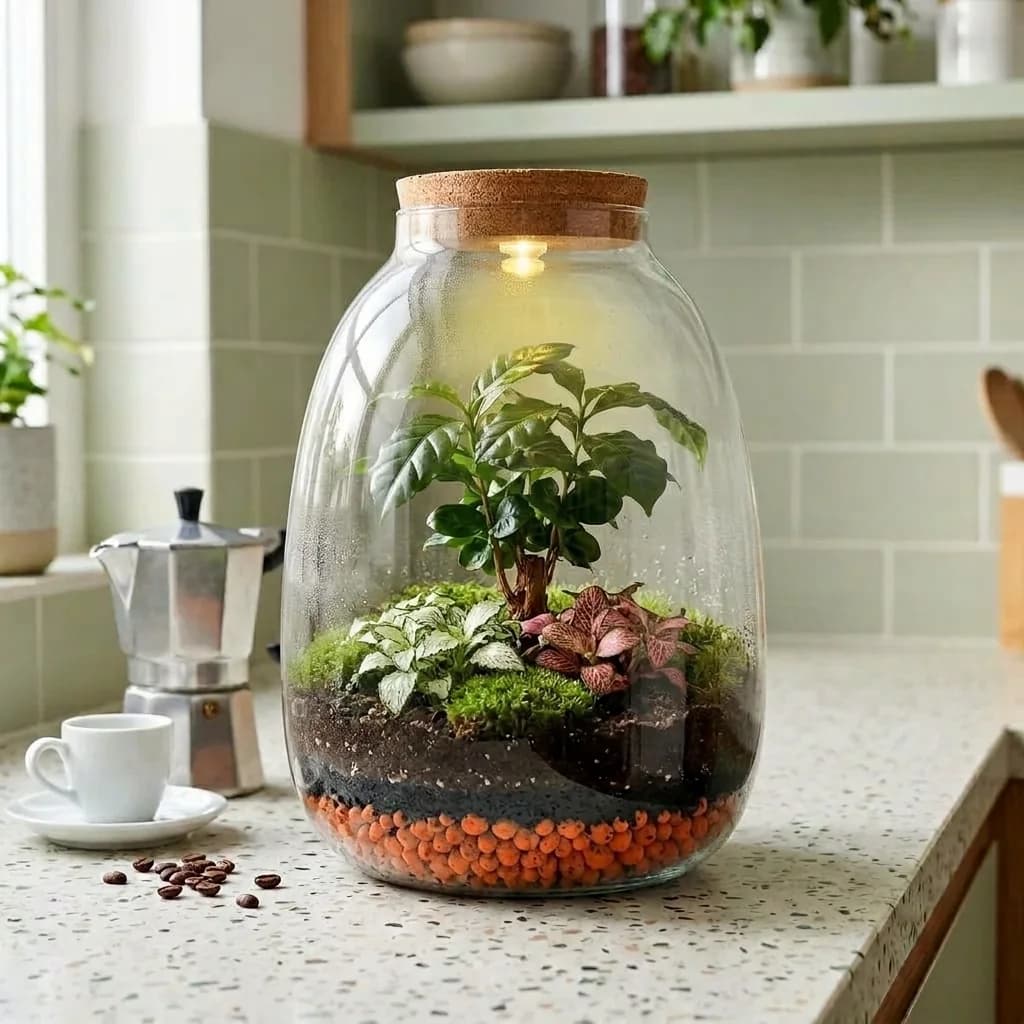
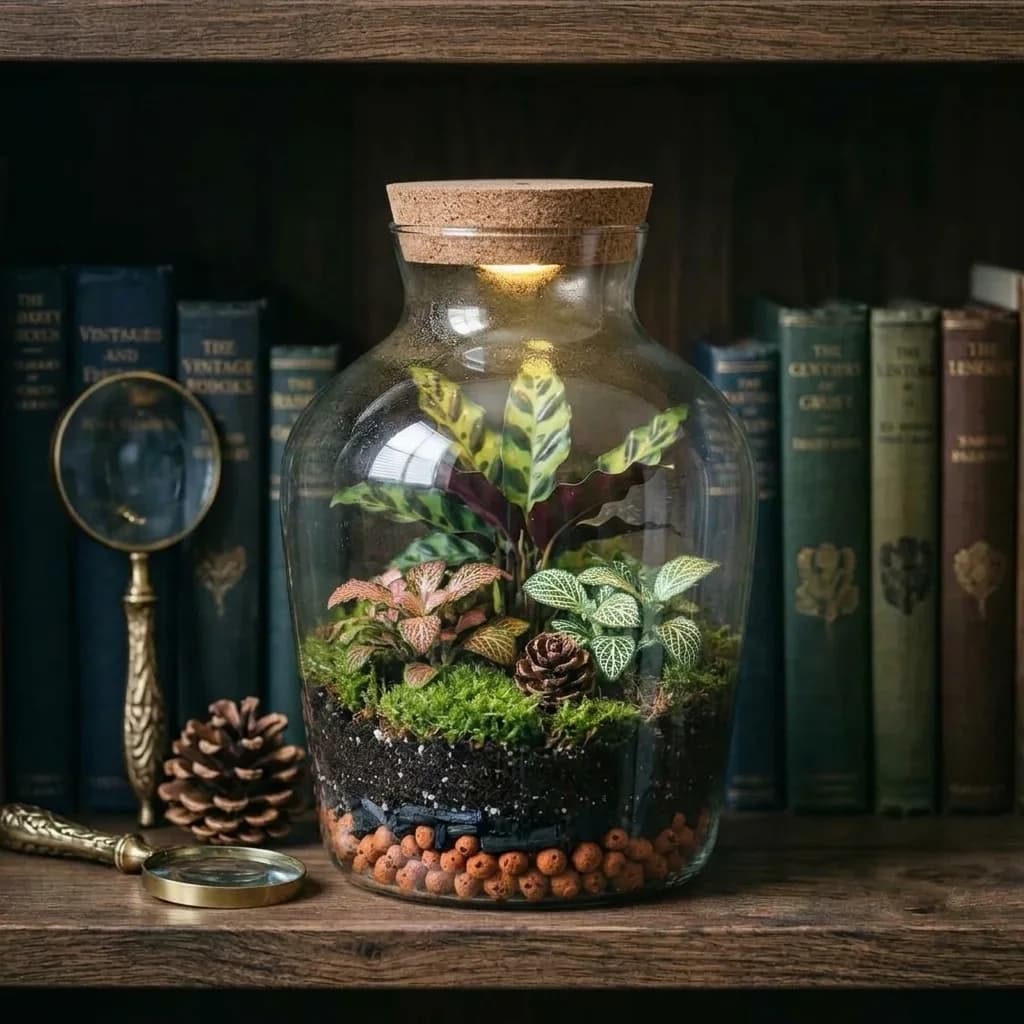
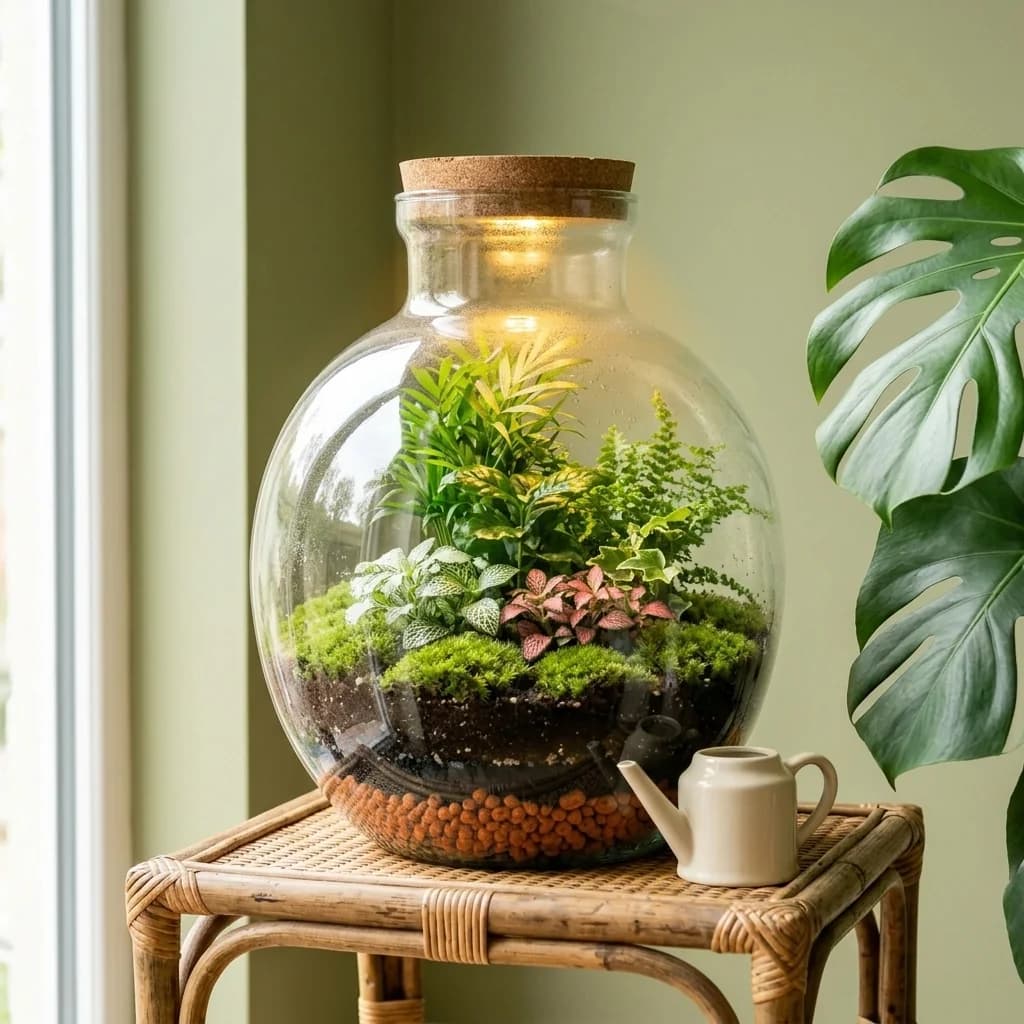
This is our subject, and the most approachable. A glass container, layers, suitable plants, indirect light. No appliance, nothing to plug in.
It comes in two regimes, and that is the real choice to make: closed, which recycles its water and suits tropical woodland plants; or open, which lets the air circulate and suits succulents. The comparison is in Closed or open terrarium.
Its upkeep comes down to a few steps two or three times a year: prune what touches the glass, take out dead leaves, clean the pane. To get started, everything is in Your first terrarium: the beginner's guide.
The vivarium
The word comes from the Latin vivere, to live: it means a container housing an animal. A reptile, an amphibian or an arthropod, as the case may be.
This is not a variant of the terrarium, it is another trade altogether. You need:
- a volume suited to the species, far larger than that of a plant terrarium;
- a thermal gradient: a warm zone and a cool zone, with regulated heating;
- specific lighting, often with ultraviolet for reptiles;
- real ventilation, the opposite of the sealing of a closed terrarium;
- daily attention: food, water, cleanliness, observation.
To this are added regulatory obligations: depending on the species, keeping one may require a certificate of competence, a declaration, or may be forbidden outright. Look into it before acquiring the animal, never after.
We do not sell vivariums or terrarium animals. Our containers are designed for plants, and have neither the ventilation nor the volume an animal requires.
The paludarium
It combines a water section with an emerged section: a bank, a planted wall, sometimes a waterfall. It is the most spectacular of the three, and the most technical.
It calls for faultless watertightness, a clear separation between the submerged zone and the land zone, generally a pump and filtration, and powerful lighting for the plants of both environments. The water parameters are monitored as in an aquarium.
If water appeals to you, there is a simpler way in: a planted nano-aquarium. Our aquarium section and the guide Getting started with aquascaping cover the basics.
And the neighbouring words
Mossarium: a closed terrarium made up only of mosses, with no vascular plants. It is not a separate category, it is a terrarium with an aesthetic stance. See Mosses for terrariums.
Aquaterrarium: a common synonym for paludarium, with a shade of difference in usage — paludarium suggests more of a planted marsh.
Bioactive terrarium: a plant terrarium whose soil deliberately hosts a microfauna of decomposers, springtails in particular. It remains a terrarium — see Bioactive terrarium and Springtails in a terrarium.
Which one to choose
You want a living object, attractive and undemanding → a plant terrarium. Allow 40 to 80 € and two hours to build it.
You want to look after an animal → a vivarium, and start by choosing the species, not the container. Its needs will decide everything else.
You want water and relief → a paludarium if you accept the technical side, a planted nano-aquarium otherwise.
To find the project that matches your space, your budget and your level, the quiz Which little living world should you create? answers in four questions.
Sources
Frequently asked questions
Can a terrarium hold animals?
As soon as a terrarium houses an animal, it is called a vivarium, and the obligations change: heating, ventilation, specific lighting, a minimum volume and, for some species, a declaration. Our terrariums are plant terrariums.
What is the difference between a paludarium and an aquaterrarium?
Both combine water and land. Paludarium stresses the marsh-type environment, with a planted bank; aquaterrarium is the broader term. In practice, usage often blurs the two.
Which is the simplest to start with?
The plant terrarium, without hesitation. No animal in your care, no technical equipment, no water parameters to monitor. A closed 5 to 10 litre jar and three plants are enough.
Can you turn a terrarium into a paludarium?
Technically yes, but it amounts to starting again: you need watertightness, a separation between the wet part and the dry part, and usually a pump. It is better to start from a suitable container.