




Planted aquarium and aquascaping
Create an underwater world.
Aqua departments
The whole shop Nano aquariumsComing soon
 AquascapingComing soon
 Aquatic plantsComing soon
 ShrimpComing soon
 Equipment & maintenanceComing soon
To begin, three guides first.
The basics, in order. The rest you learn by watching it live.
All getting-started guides
Aéro is on its way.
Leave your email: the newsletter announces each opening.
Everything for the aquatic universe.
A planted aquarium that fits on a desk
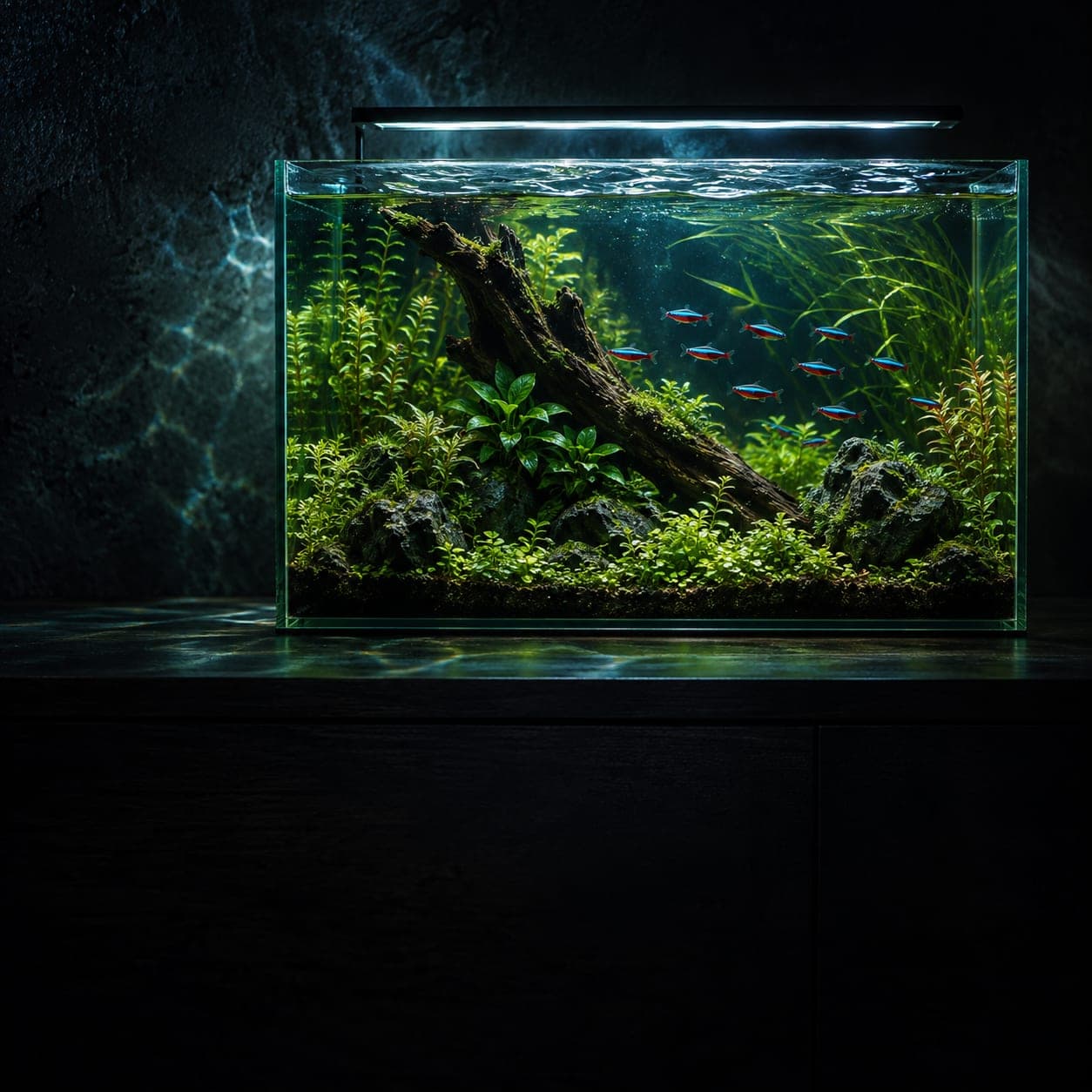
A planted aquarium doesn't need to take up a whole wall. In 20 to 30 litres, you can create a real landscape: a few rocks, a piece of driftwood, plants that grow without CO₂ injection and, once the water is ready, a small colony of shrimp. Success doesn't come from the most powerful equipment, it comes from the right order of steps and patience during the first few weeks.
Start by choosing a volume and a stable spot, away from direct sunlight. Then set up the substrate, the décor and the plants, and let the tank finish its nitrogen cycle before welcoming any animals. If algae appear, our guide to algae in nano aquariums will help you restore the balance.
To see it all in one place, follow the My first aquascape project. And if you're dreaming of shrimp, first read which shrimp to choose for a nano aquarium.
FAQ
Questions about the aquatic universe
How long should I wait before adding animals?
You need to wait until the nitrogen cycle is finished, which usually takes several weeks, often four to six. Water tests showing zero ammonia and nitrite levels for several consecutive days show that the tank is ready.
Do you need CO₂ to succeed with a planted aquarium?
No. Anubias, ferns, cryptocorynes and mosses grow very well without CO₂ injection. It becomes useful for foreground carpets and fast-growing plants under strong lighting.
What weekly maintenance should I plan for?
Replace around a quarter of the water with treated water at a similar temperature, clean the glass, trim the plants if needed and remove damaged leaves. Rinse the filter media in water taken from the tank, never under the tap, to protect the useful bacteria.
Is a nano aquarium suitable for a beginner?
Yes, as long as you don't choose too small a volume. Between 20 and 30 litres, the water stays stable enough to learn calmly, while keeping a compact size for a desk or a shelf.
Can I use tap water in an aquarium?
Yes, in most cases, provided you treat it with a water conditioner that neutralises chlorine and heavy metals. Also check its hardness and pH: these are often suitable for easy plants and Neocaridina shrimp, but not for species that need very soft, acidic water.
Can a betta live in a nano aquarium?
Yes, a male betta does well on its own in a planted tank of at least 20 litres, heated to around 24 to 28°C, with gentle filtration and a lid. It isn't suitable for a vase or a bowl without a filter. Avoid keeping it with shrimp, which it may hunt.
Why does the water in a new aquarium turn cloudy?
A milky white haze in the first few days is often caused by a bloom of suspended bacteria while the balance settles in. It usually clears up on its own within a few days. Don't change all the water and don't clean the filter: that would delay maturation.
How do I go on holiday when I have an aquarium?
A stable tank can handle a week away. Set a timer for the lighting, do a water change a few days before you leave, and don't overfeed. Healthy adult fish can cope with a few days without food. For a longer absence, leave pre-measured doses with someone you trust.
Freshwater or saltwater aquarium for beginners?
Freshwater is much simpler for a first aquarium. A marine nano aquarium needs prepared saltwater, very stable salinity and temperature, and more technical monitoring. Start with a planted freshwater tank: you'll learn the nitrogen cycle and maintenance with more room for error.
Aquatic: what you need to know
Composing a planted aquarium step by step
A successful aquascape follows a simple order. Start by laying the substrate, gently sloping from front to back, then add the hardscape: the rocks and driftwood form the structure of the landscape and go in before the plants. Then plant densely, fill the water slowly by pouring it onto a plate so you don't dig up the substrate, and start the filtration.
Then comes the step that's most often overlooked: maturation. The bacteria that turn toxic waste into less harmful compounds take several weeks to settle in. Our guide to the nitrogen cycle explains how to track it with water tests, and why no animal should be introduced before it's finished. For the full method, read Getting started with aquascaping.
Choosing the right nano aquarium
The smaller the volume of water, the faster its parameters change. For a first tank, a size of 20 to 60 litres offers a good balance between footprint and stability. Check the strength of the support: allow roughly one kilo per litre of water, plus the glass, the substrate and the décor. The nano aquariums in our range come bare or as complete kits, with a matching filter and lighting.
Lighting drives plant growth, but also algae growth. Start with a moderate duration, around six to eight hours a day, then adjust based on how the tank reacts. The Equipment & maintenance category brings together filters, LED units, CO₂ and test kits.
Plants and shrimp: a balance to build
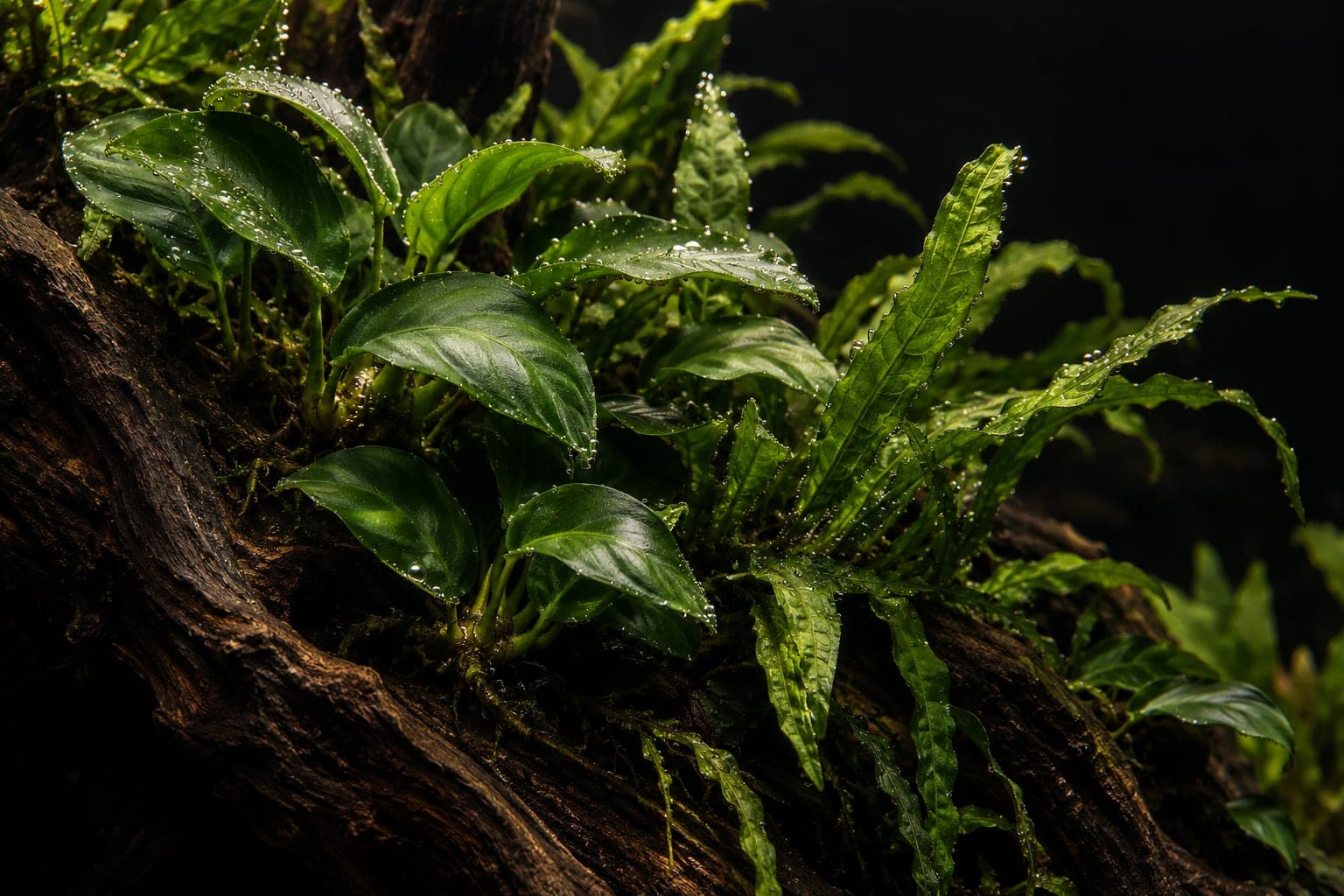
Easy aquatic plants, such as anubias, ferns or mosses, grow without CO₂ injection and forgive beginner mistakes. Foreground carpeting plants need more light and more regular care.
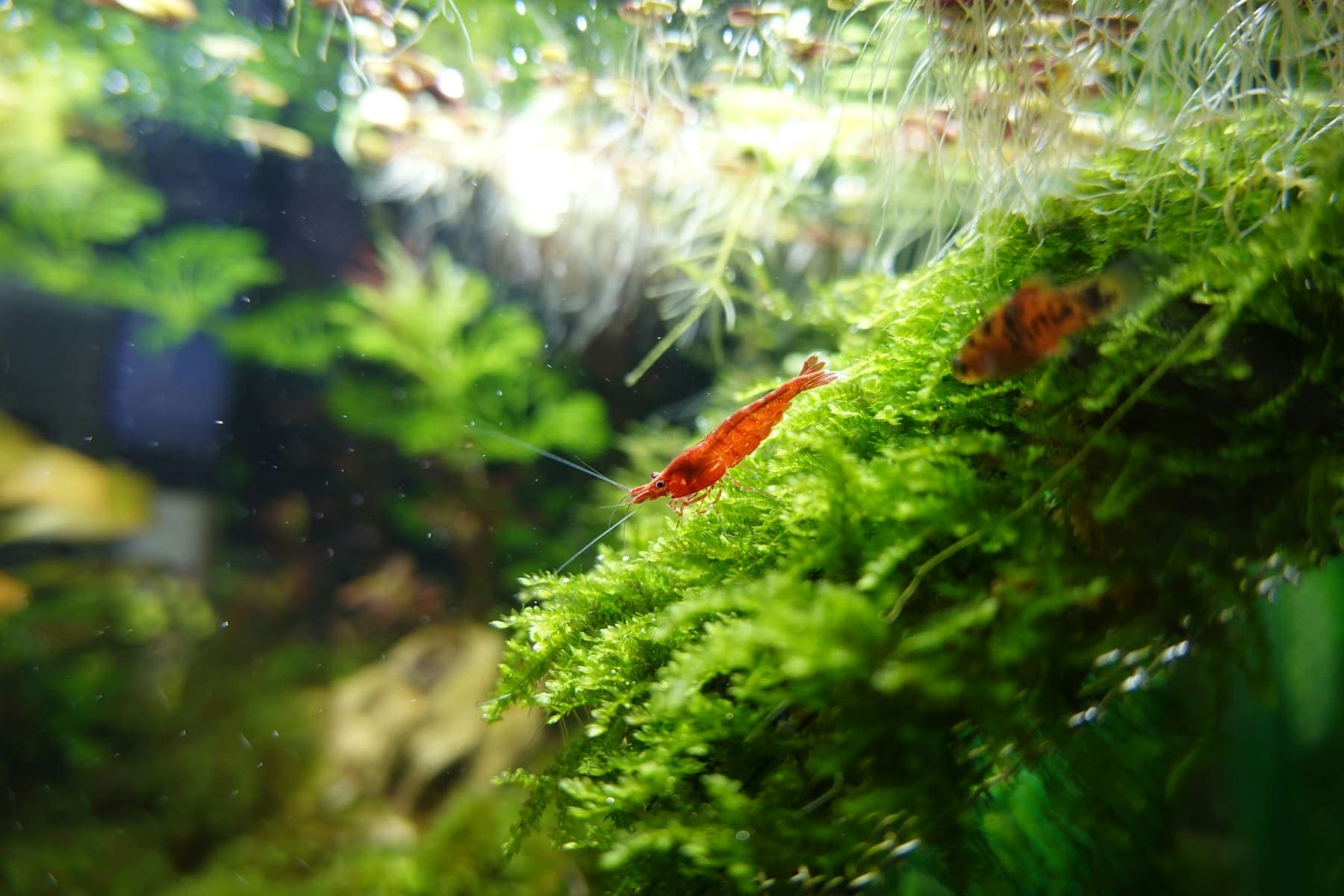
Freshwater shrimp are perfect residents for a small volume, provided you offer them stable water, hiding places and a fully matured tank. The A nano shrimp tank project and the comparison Which aquarium for freshwater shrimp? will help you prepare for their arrival.