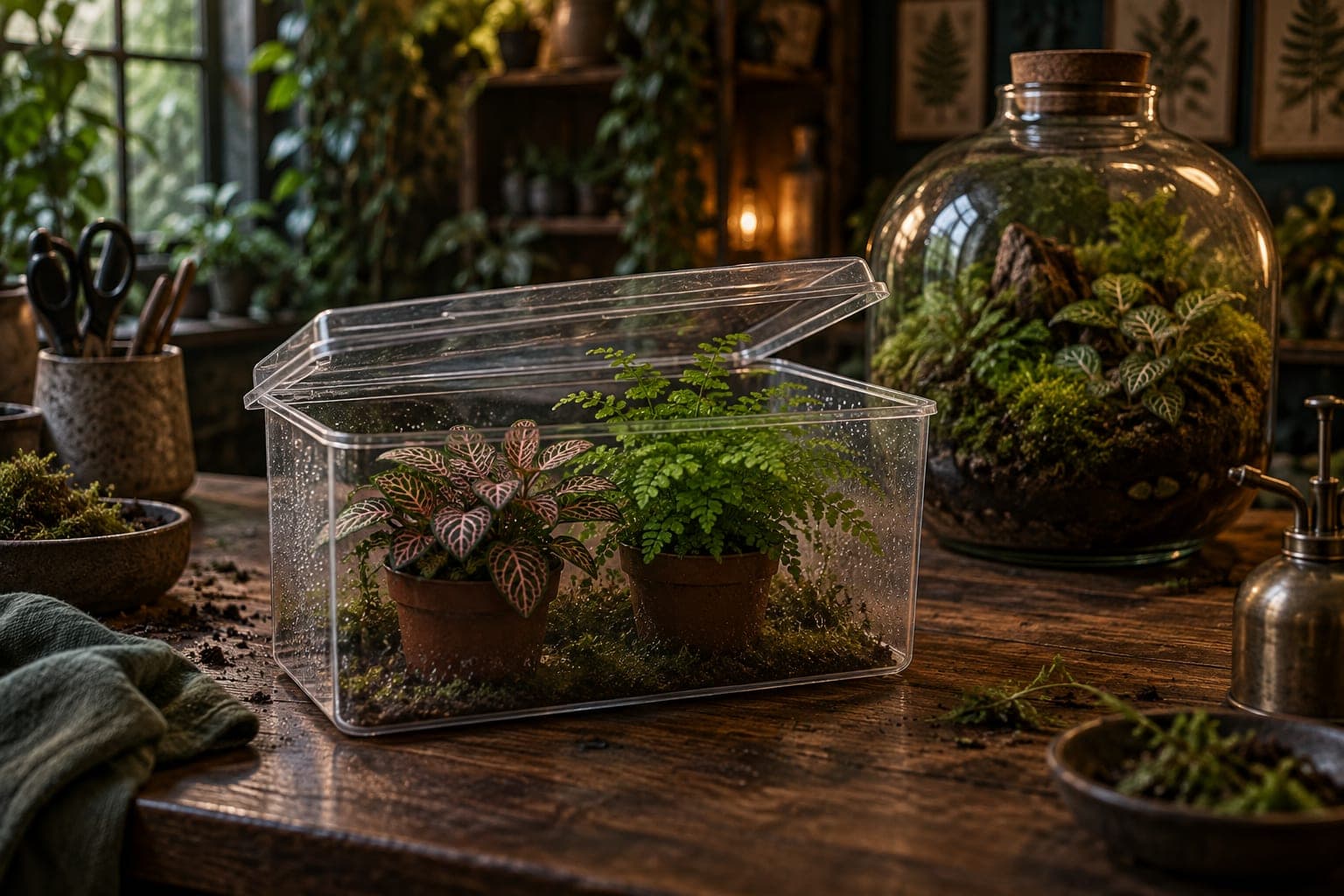
Beginner

Ø 6 cm pot · plant about 10 cm tall
Free delivery from €89
Build your own, layer by layer.
Six steps, in the order you build. Each department offers what goes with the step before.
 Complete refillEverything but the glass: drainage, charcoal, soil, mossFrom €18.90The whole shop
Six kits. Everything is in the box.
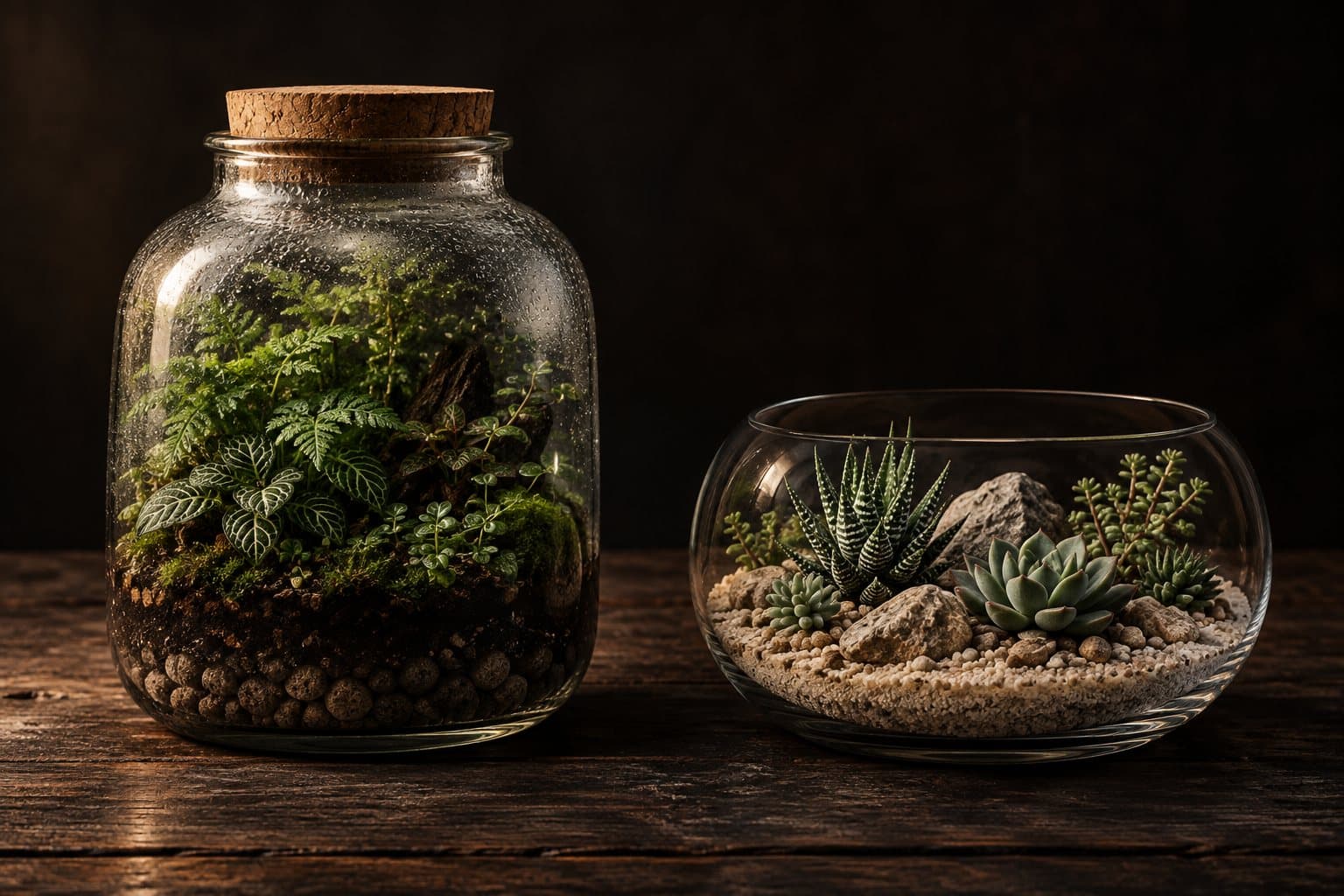
The glass, the live plants, the soil and the guide. Every kit comes in three versions.
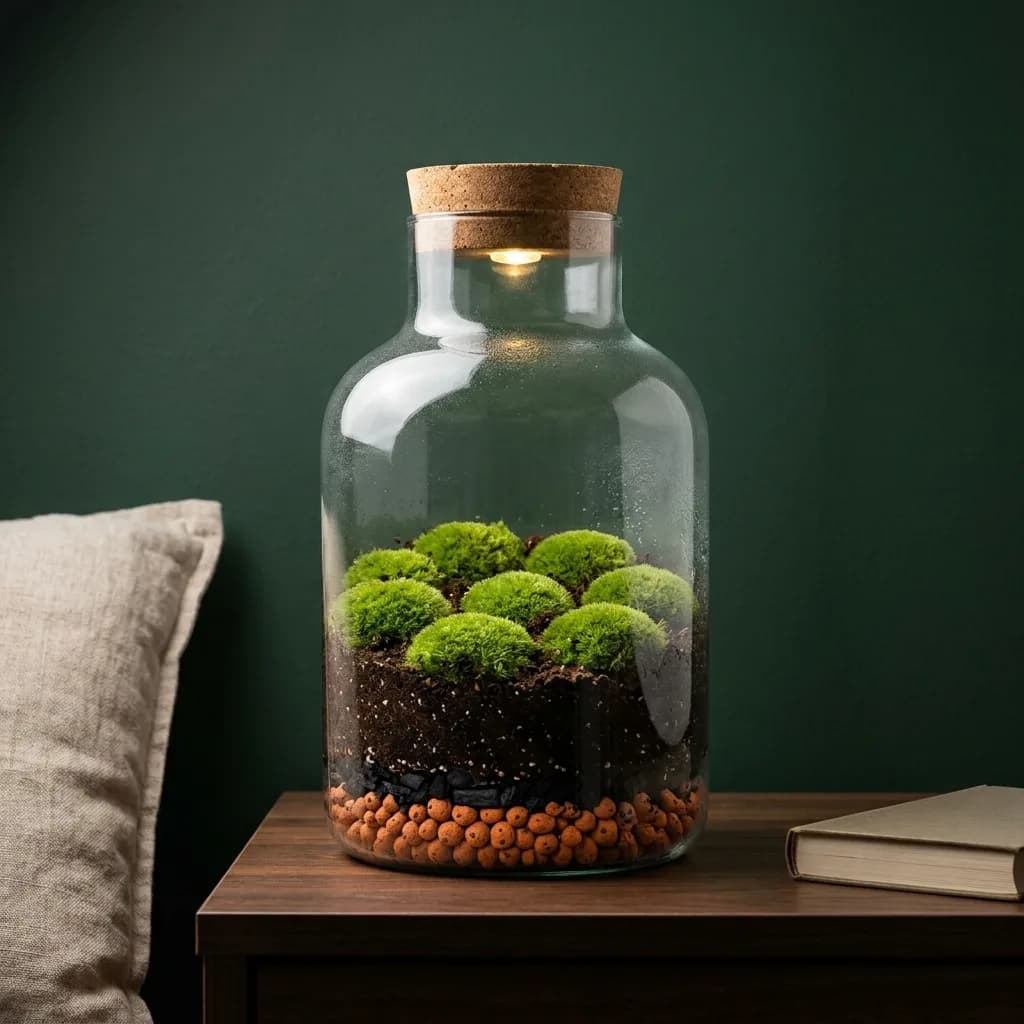 BeginnerMoss and lightClosed · M · LED4.8From €60.90
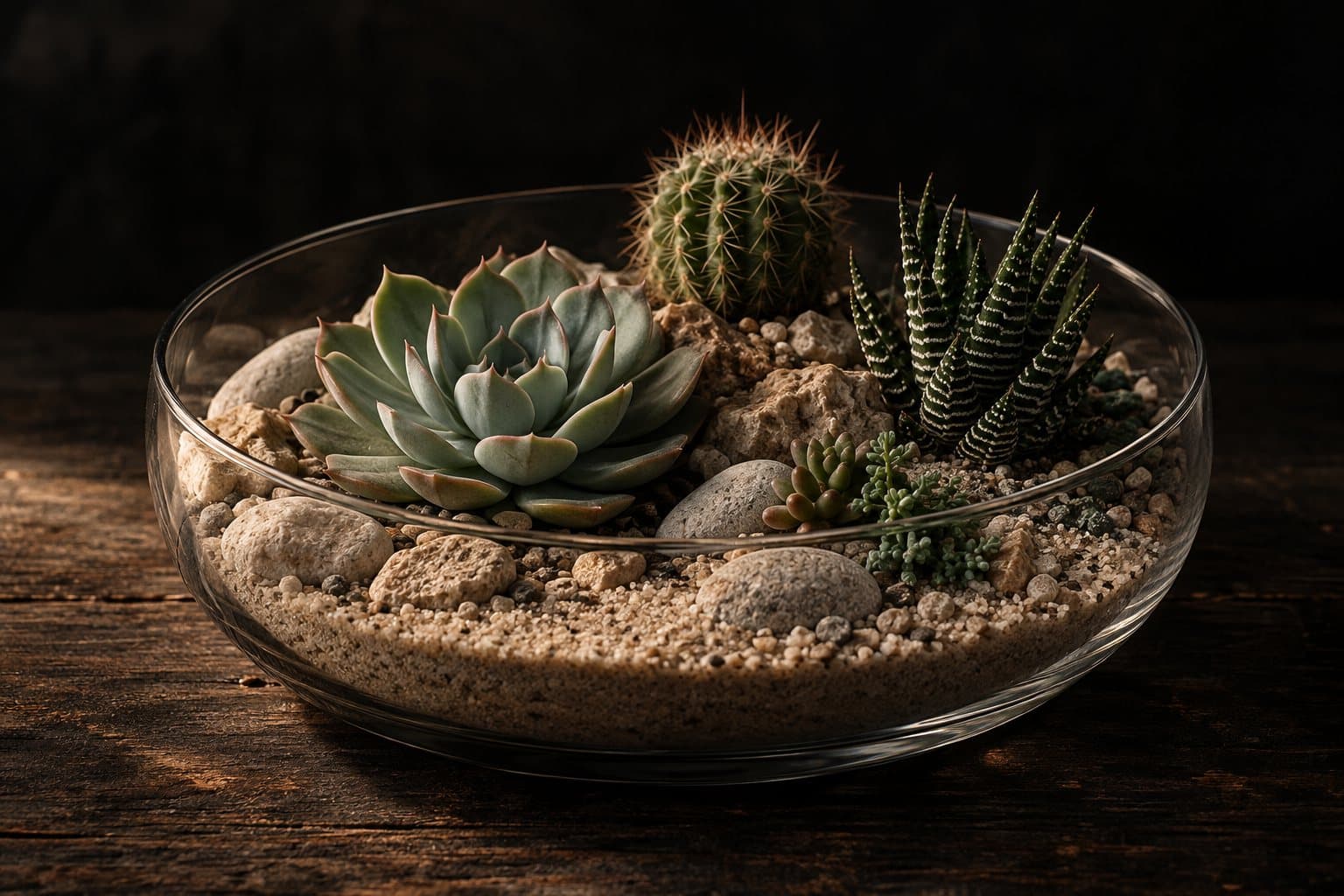
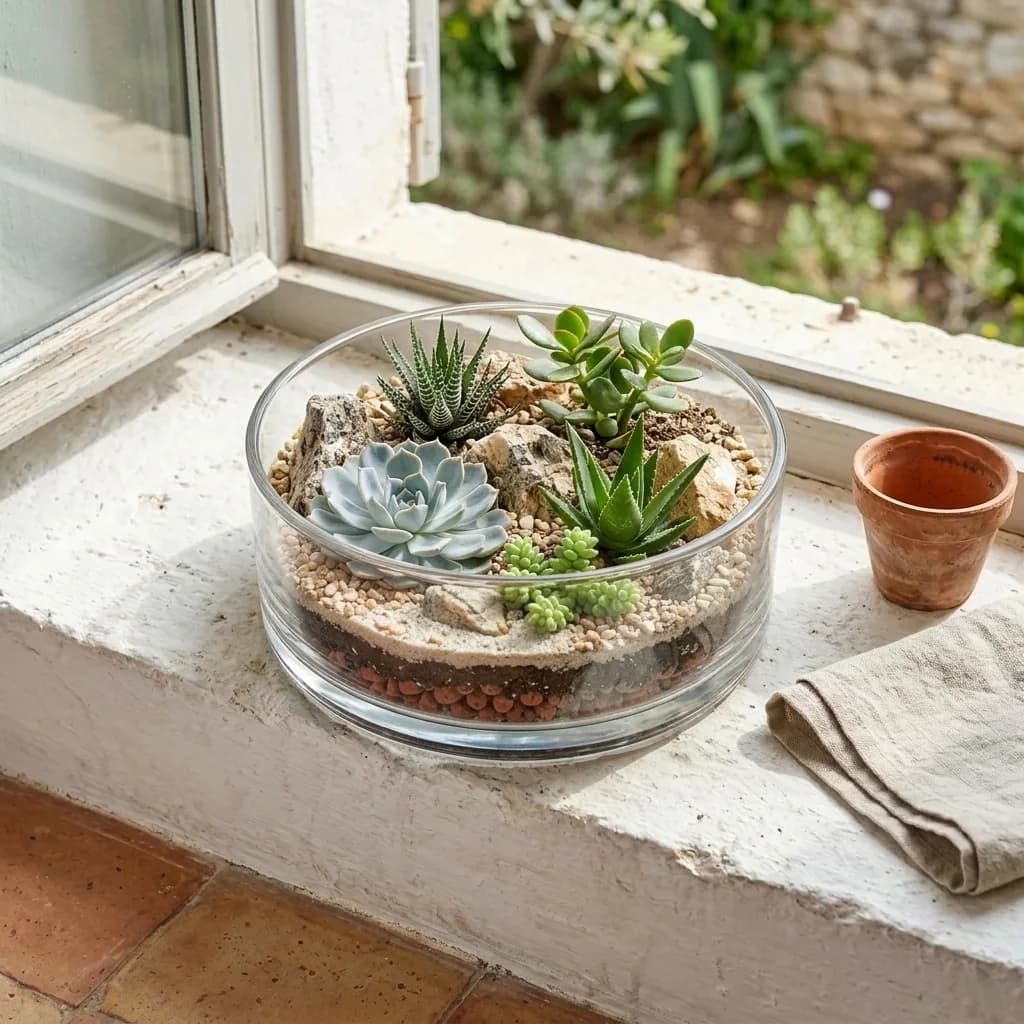 BeginnerOpen desertOpen · MNew kit, no reviews yetFrom €59.90
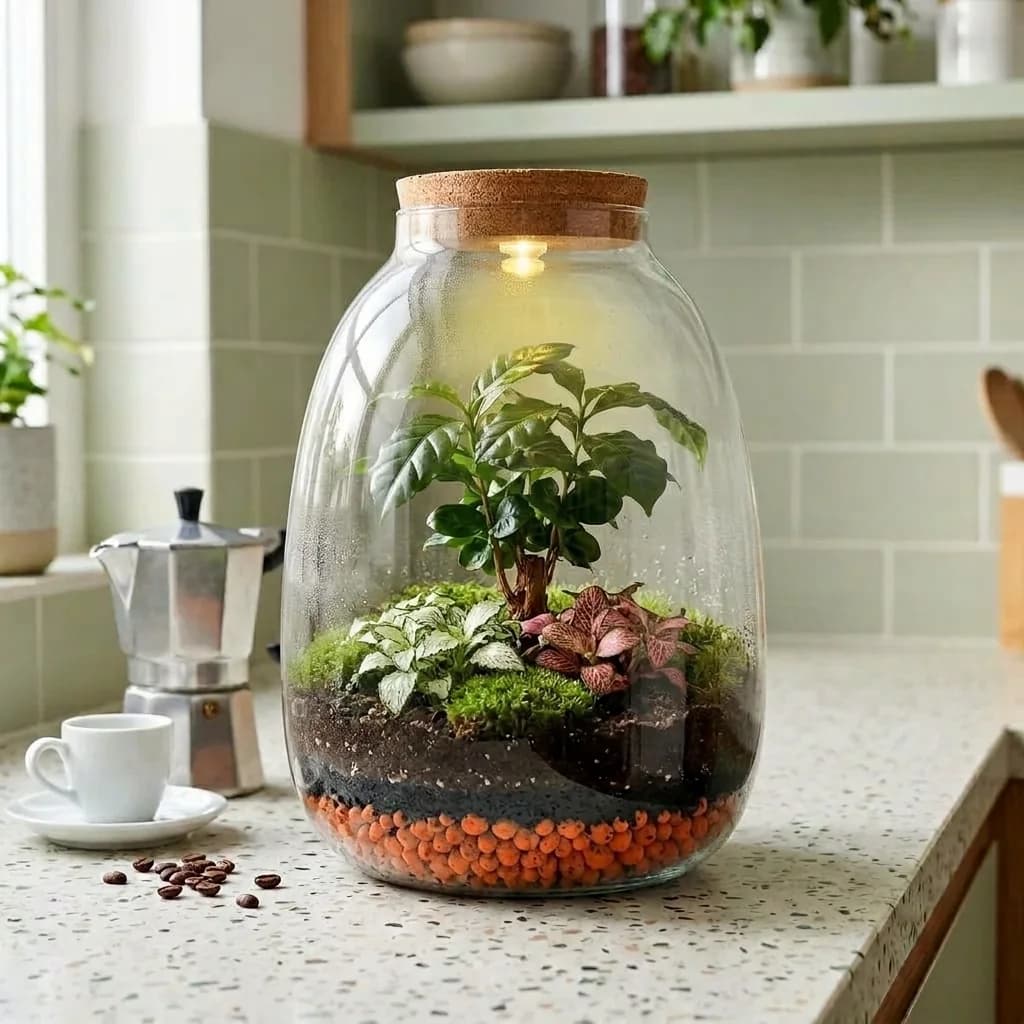 BeginnerTropical coffeeClosed · L · LED4.9From €63.90
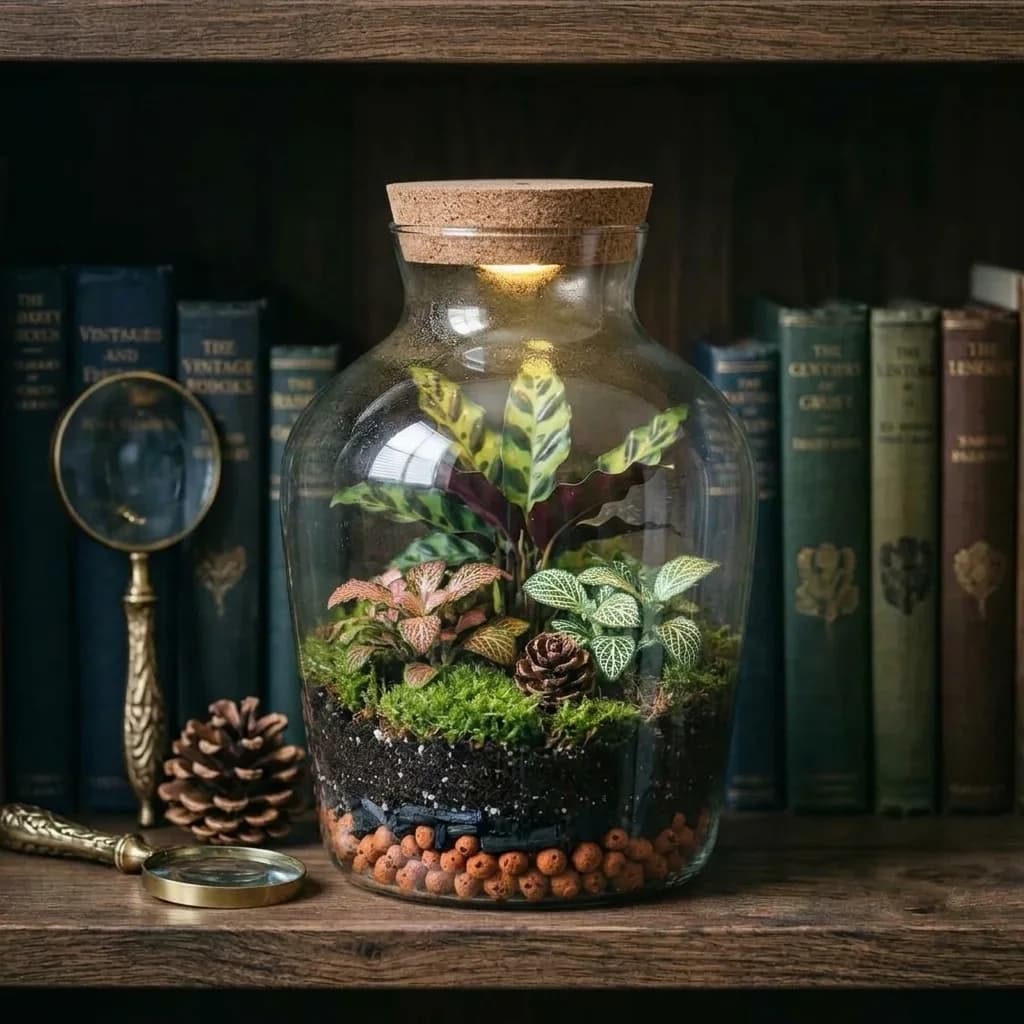 IntermediateForest floorClosed · M · LED4.6From €69.90
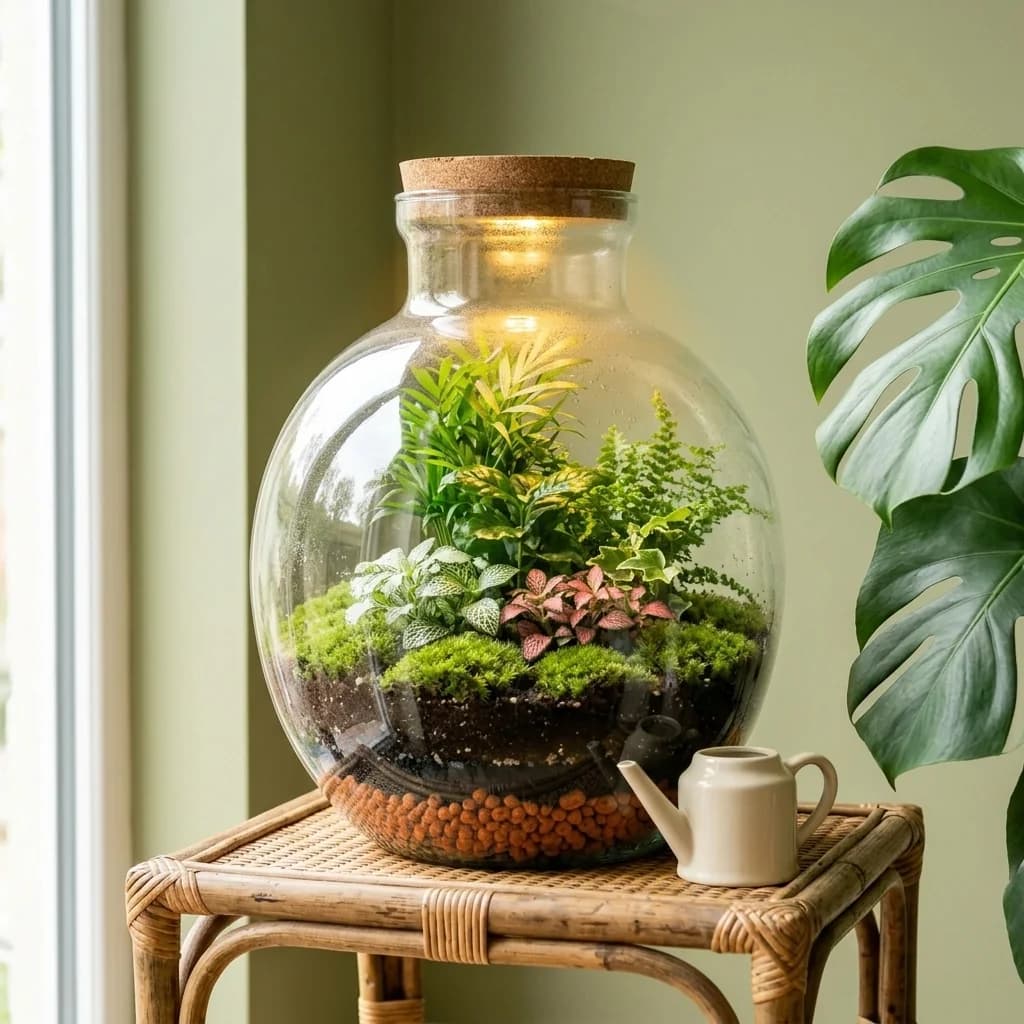 IntermediateJungleClosed · L4.9From €82.90
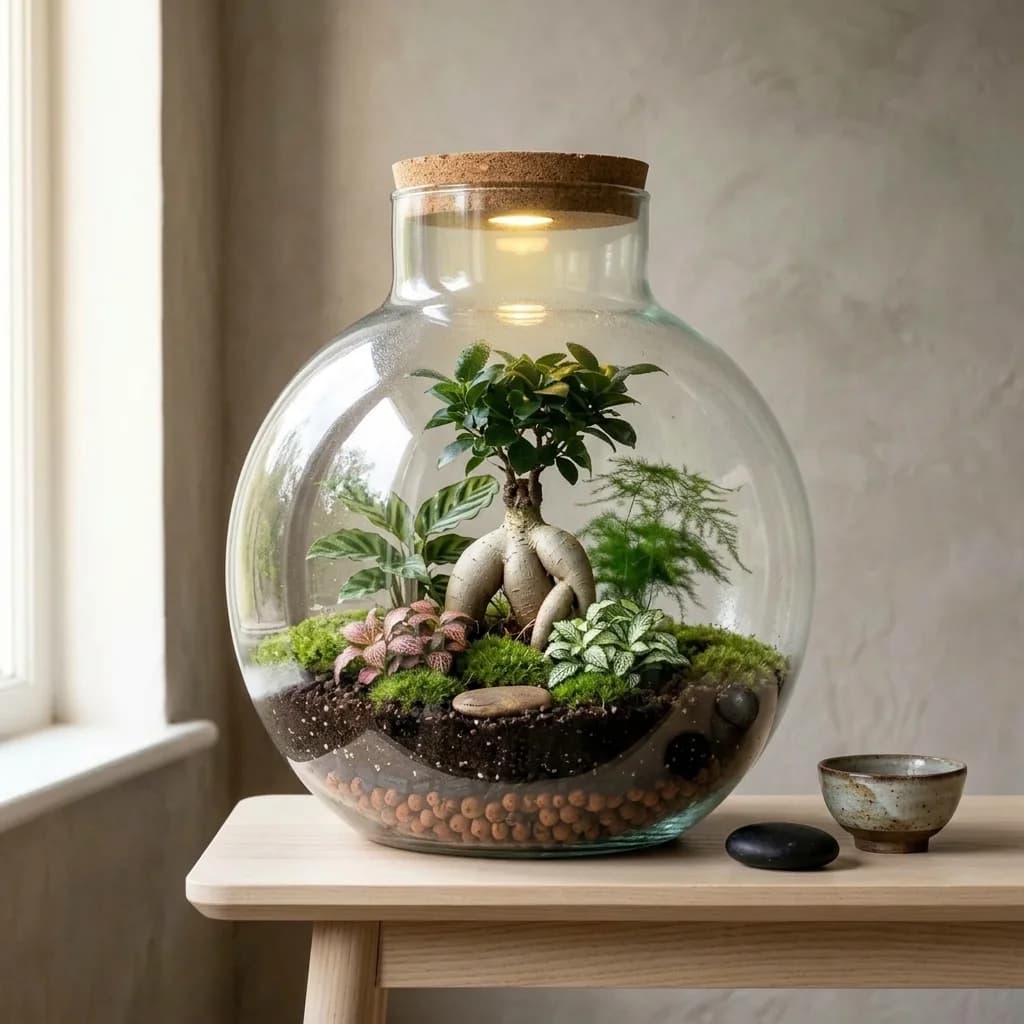 IntermediateZen bonsaiClosed · XL · LED4.8From €92.90
Give a small living world.
A gift that lasts for years, delivered with everything it needs and its assembly guide.
Guides and projects
Worlds
 TerraTerrariumOpen
 AquaAquaticComing soon
 FloraGrowOpen
 AéroWildComing soon
Palm trees, ficus, monstera, dracaena, calathea, philodendron, orchids and yucca: large living plants to furnish a home, from the living room to the office.
Light is the first thing to consider, before available space or looks. A ficus or a philodendron do well in bright but indirect light, near a window with no direct sun. A yucca or a dracaena tolerate lower light and a darker corner of the living room. A monstera prefers filtered light, never full afternoon sun, which scorches its leaves. Before buying, look at the room at the time of day the plant will spend there: a north-facing window gives little light, a south-facing one plenty, often too much for delicate foliage.
The most common mistake isn't too little water but too much: a permanently waterlogged root ball rots the roots long before a plant dies of thirst. Let the top few centimetres of compost dry out between waterings for most large green plants, and always empty the saucer afterwards. Needs vary with the season, pot size and room temperature: our guide Watering indoor plants explains why there's no universal schedule.
A large plant bought in a growing pot benefits from repotting into a container just a little bigger, with suitable compost and good drainage at the bottom. The right moment shows in roots coming out of the drainage hole, or soil that dries out within hours of watering. Pots, compost and repotting tools are in the Pots & compost category.
In a dim room or in winter, a grow light extends the growing season without replacing daylight. Large ornamental plants are happy with around twelve hours of light a day: our guide on light duration indoors sets out the benchmarks for different crops.
Some common indoor species, including several philodendrons, dieffenbachia and dracaena, are irritant or even toxic to cats and dogs if ingested. This isn't universal, and isn't always stated on the label: if in doubt about a specific species, it's worth checking before buying if a pet likes to chew on leaves, and placing the plant out of reach as a precaution.
FAQ
It depends on the species: a ficus or a philodendron need bright but indirect light, while a yucca or a dracaena tolerate a darker corner. None of them enjoy direct afternoon sun, though, which scorches the leaves.
Leaves that yellow and drop, compost that stays waterlogged for days, or a smell of rot at the base of the plant are signs of too much water far more often than too little. Let the top few centimetres of compost dry out between waterings.
Some are: several philodendrons, dieffenbachia and dracaena are irritant or toxic if ingested. If a pet chews on leaves, it's worth checking the species before buying or keeping the plant out of reach.
Build your own, layer by layer.
Six steps, in the order you build. Each department offers what goes with the step before.
Complete refillEverything but the glass: drainage, charcoal, soil, mossFrom €18.90The whole shopSix kits. Everything is in the box.
The glass, the live plants, the soil and the guide. Every kit comes in three versions.
BeginnerMoss and lightClosed · M · LED4.8From €60.90BeginnerOpen desertOpen · MNew kit, no reviews yetFrom €59.90BeginnerTropical coffeeClosed · L · LED4.9From €63.90IntermediateForest floorClosed · M · LED4.6From €69.90IntermediateJungleClosed · L4.9From €82.90IntermediateZen bonsaiClosed · XL · LED4.8From €92.90Give a small living world.
A gift that lasts for years, delivered with everything it needs and its assembly guide.
Guides and projects
Worlds
TerraTerrariumOpenAquaAquaticComing soonFloraGrowOpenAéroWildComing soonPalm trees, ficus, monstera, dracaena, calathea, philodendron, orchids and yucca: large living plants to furnish a home, from the living room to the office.
Light is the first thing to consider, before available space or looks. A ficus or a philodendron do well in bright but indirect light, near a window with no direct sun. A yucca or a dracaena tolerate lower light and a darker corner of the living room. A monstera prefers filtered light, never full afternoon sun, which scorches its leaves. Before buying, look at the room at the time of day the plant will spend there: a north-facing window gives little light, a south-facing one plenty, often too much for delicate foliage.
The most common mistake isn't too little water but too much: a permanently waterlogged root ball rots the roots long before a plant dies of thirst. Let the top few centimetres of compost dry out between waterings for most large green plants, and always empty the saucer afterwards. Needs vary with the season, pot size and room temperature: our guide Watering indoor plants explains why there's no universal schedule.
A large plant bought in a growing pot benefits from repotting into a container just a little bigger, with suitable compost and good drainage at the bottom. The right moment shows in roots coming out of the drainage hole, or soil that dries out within hours of watering. Pots, compost and repotting tools are in the Pots & compost category.
In a dim room or in winter, a grow light extends the growing season without replacing daylight. Large ornamental plants are happy with around twelve hours of light a day: our guide on light duration indoors sets out the benchmarks for different crops.
Some common indoor species, including several philodendrons, dieffenbachia and dracaena, are irritant or even toxic to cats and dogs if ingested. This isn't universal, and isn't always stated on the label: if in doubt about a specific species, it's worth checking before buying if a pet likes to chew on leaves, and placing the plant out of reach as a precaution.
FAQ
It depends on the species: a ficus or a philodendron need bright but indirect light, while a yucca or a dracaena tolerate a darker corner. None of them enjoy direct afternoon sun, though, which scorches the leaves.
Leaves that yellow and drop, compost that stays waterlogged for days, or a smell of rot at the base of the plant are signs of too much water far more often than too little. Let the top few centimetres of compost dry out between waterings.
Some are: several philodendrons, dieffenbachia and dracaena are irritant or toxic if ingested. If a pet chews on leaves, it's worth checking the species before buying or keeping the plant out of reach.
6 products in Indoor plants