

Watering houseplants: frequency does not exist
No plant drinks once a week. How to check the substrate before every watering, tell too much water from too little, and water properly from above or from below.
In this guide
The question “how often should I water?” has no answer, and that is the first thing to accept. You do not water to a calendar, you water to the state of the substrate: push a finger in about 5 cm, two knuckles' worth, and only water if it is dry at that depth. Then water generously, until water runs out of the drainage hole, and empty the saucer afterwards.
Why a fixed frequency does not work
A plant does not use the same amount of water from one week to the next. The same pot, in the same spot, can take three days to dry out in July and three weeks in January. What changes between those two moments has little to do with the plant itself.
- Light. The brighter and longer it is, the more the plant transpires and the more it drinks.
- Temperature and room air. Heating on dries a room out and speeds up evaporation; a cool bathroom slows it down.
- The container. A porous wall lets water evaporate through the sides, a plastic wall does not.
- The volume of roots. A rootball full of roots empties its reserve in a few days; a pot too large for the plant stays damp for weeks.
- The season. Growth slows in winter, and needs slow with it.
Too much water is by far the leading cause of death in a houseplant, well ahead of too little. Roots held in a saturated substrate run short of oxygen, turn necrotic, and the plant ends up wilting even though the pot is full of water. The trap is a cruel one: it looks like thirst, which prompts more watering, and that finishes the plant off.
Checking before you water: three methods
The finger is still the reference method. It goes about 5 cm into the substrate, away from the stem. If it comes out clean and dry, it is time; if it comes out cool, wait. Succulents and cacti are the exception: they want the substrate dry much further down.
If the finger cannot get in that far, that means something. The substrate is either too compacted or completely colonised by roots, and repotting comes before any other correction. The method is set out in our guide to repotting a supermarket herb, and it holds for any plant in a pot.
Weight is the quickest method for small pots. Lift a freshly watered pot in your hand, then do it again a few days later: the difference is striking, and the hand soon learns to recognise a pot that has run dry.
A moisture meter saves you digging and gives a reading you can compare from one time to the next. The probe goes two thirds of the way down the pot, halfway between the stem and the rim, and comes out again after the reading: left permanently in damp substrate, it degrades. On a scale of 1 for dry substrate to 10 for waterlogged substrate, herbs and foliage plants are watered around 3 or 4, succulents wait for 1 or 2, and ferns prefer to stay between 5 and 7.
Too much water or not enough: reading the signs
At first glance the two problems look alike. The table below helps you tell them apart.
| What you see | More likely too much water | More likely too little water |
|---|---|---|
| Leaves | Yellowing, lower leaves dropping | Dull, grey-green foliage, dry edges |
| Substrate | Waterlogged, sometimes covered in green | Dry deep down, shrunk away from the rim |
| Smell | Smell of stagnant soil | No particular smell |
| Roots | Brown, soft, brittle | Pale but dry and stringy |
| After watering | No improvement, sometimes worse | Picks up within hours |
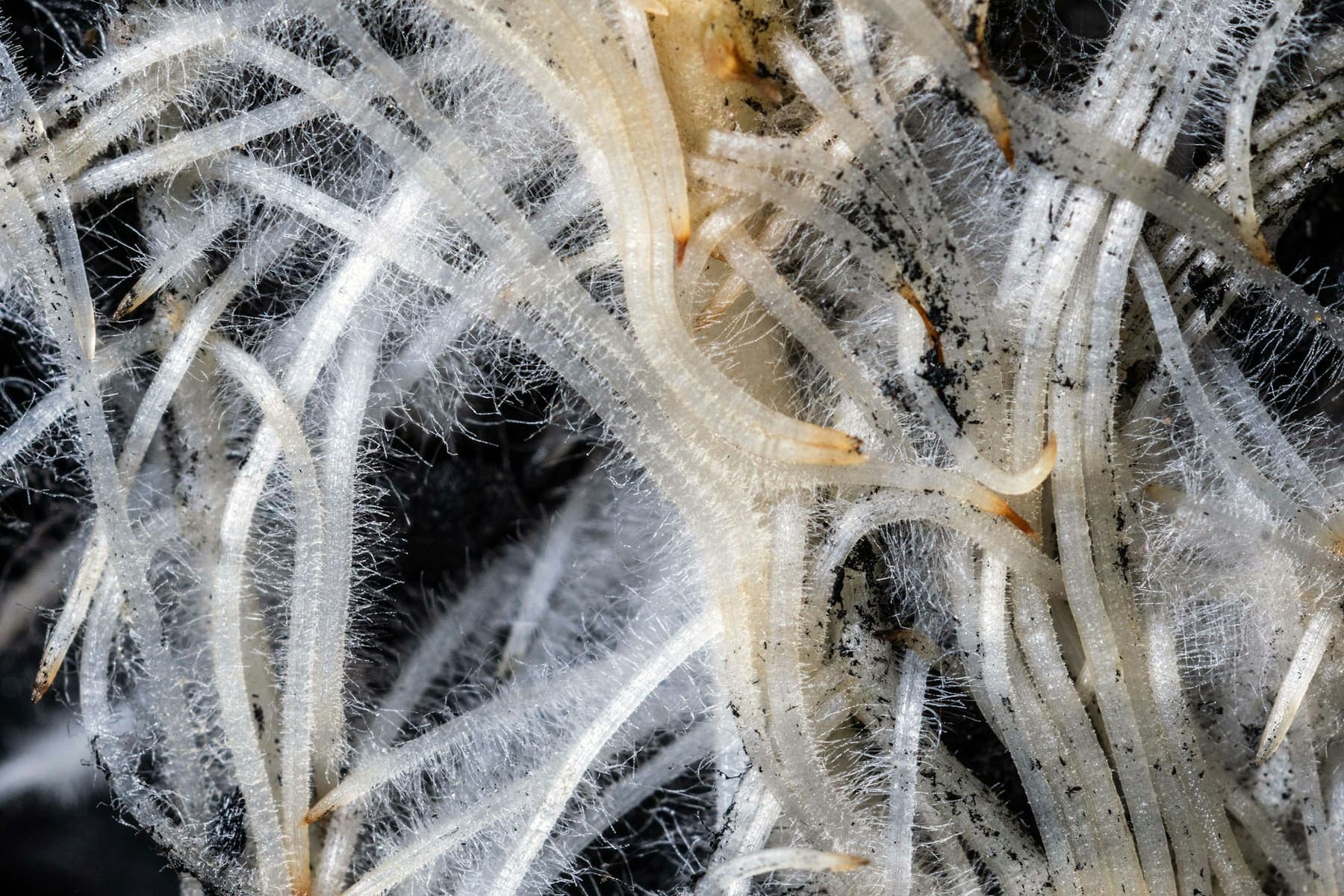
The root line is the most reliable: it means sliding the rootball out of the pot, which carries no risk as long as the plant is handled by the rootball and not by the stem. Healthy roots are pale and firm.
One last signal is worth knowing, because it misleads: a drowned plant can wilt exactly like a thirsty one. Its damaged roots no longer carry water, even surrounded by soaking substrate, and the foliage droops. The reflex to water more then makes things a notch worse. The only way out of that loop is to touch the substrate before every watering, without exception, and to deal with the rootball rather than the leaves when the two signs contradict each other.
Watering from above, watering from below
From above, water slowly over the whole surface of the substrate, until water runs freely out of the drainage hole. That run-off is not waste: it carries away accumulated salts. A trickle at the foot of the plant, wetting a quarter of the rootball, leaves the rest of the roots dry. The saucer is emptied twenty minutes or so later, without exception.
From below, the pot sits in a saucer or a bowl filled with water, and the substrate draws up what it needs by capillary action. The method suits seedlings, plants with downy foliage that are better left dry, and substrates that have dried out too far. Here too, the remaining water is tipped away after twenty minutes or so.
A plant must never be left standing in water. Check a decorative cachepot after every watering: water builds up in there out of sight, and that is one of the most common routes to root rot.
The pot and the substrate change everything
The same watering gives a different result depending on the container. Unglazed terracotta lets water evaporate through its wall: substrate dries faster in it than in a plastic pot, which suits Mediterranean herbs and plants that dislike standing moisture, and calls for closer attention in summer. A 2 to 3 cm bed of clay pebbles at the bottom helps drainage.
The white marks that appear on terracotta or on the surface of the substrate are deposits of limescale and mineral salts. Beyond the look of them, those salts end up getting in the way of water uptake by the roots, and show as brown leaf tips, lower leaves dropping and slowed growth. A deep flush every four to six months is enough to clear them: lift the surface crust off by hand, then run at least twice the volume of the pot through in clean water, letting it all drain away. This flush is done before feeding, never after. On the terracotta itself, scrubbing with water and vinegar removes the marks.
The season counts as much as the container. In winter, light drops, growth slows and water needs fall with it, even though heating gives the opposite impression by drying the air. You correct the gap by spacing waterings out, not by making them smaller: half a watering wets the top of the rootball and leaves the bottom dry. Grouping plants with the same needs on one shelf makes the round much simpler, and stops you watering a succulent at the pace of a fern.
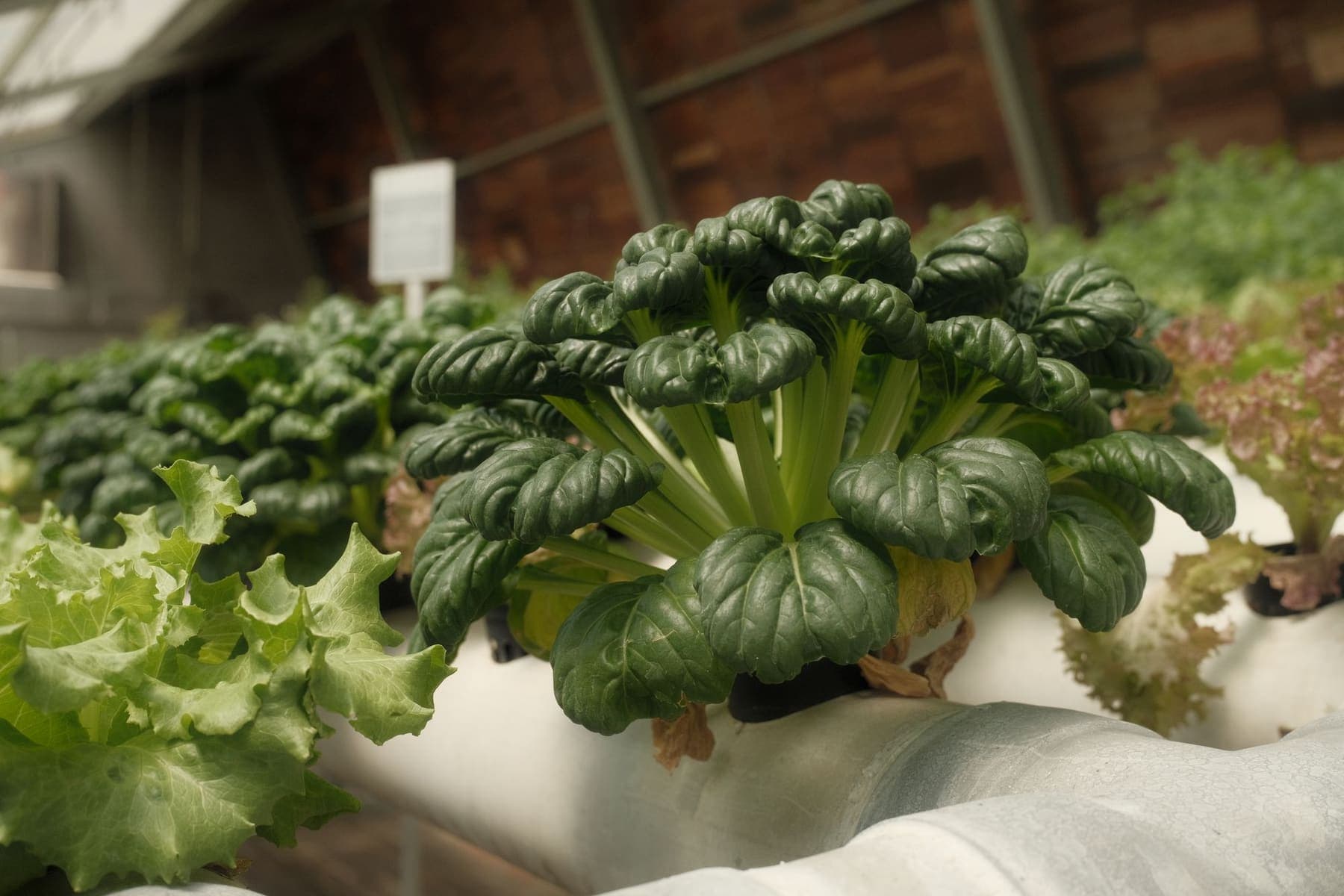
That leaves soilless growing, where the question of frequency simply disappears, since the roots sit permanently in an oxygenated solution: our comparison of hydroponics or soil sets out what each one asks for. And if small black flies appear above the pots, it is usually the sign of a substrate watered too often: the guide to fungus gnats in potting mix explains what comes next.
Sources
Frequently asked questions
How do I water my plants while I am away on holiday?
For a week away, it is enough to group the pots out of direct sun, in the coolest room, after a thorough watering: evaporation slows markedly when plants stand close together. Beyond ten days, capillary watering takes over, with a cotton wick running from a water reservoir into the substrate, or a shallow tray filled with damp clay pebbles. The plants that suffer most from being forgotten are the ones in small terracotta pots, best left with someone. Succulents, for their part, go three weeks without harm.
Should I water in the morning or in the evening?
Morning is better, especially for herbs. Water and surface moisture evaporate during the day, whereas a late watering leaves the substrate, and sometimes the foliage, damp all night. That prolonged night-time moisture encourages leaf spots and disease, and attracts fungus gnats. The same rule applies to misting, which is best avoided at the end of the day.
Can I water with tap water?
In most cases, yes. Water from a domestic softener is one to avoid, however, because it carries more dissolved salts than ordinary water. To limit deposits, water can be drawn the day before and left to stand: a day of evaporation is enough to drive off a good part of the chlorine and let the heaviest minerals settle at the bottom. The last few centimetres in the container are then thrown away rather than ending up in the pot.
What do I do with a plant whose substrate no longer takes up water?
A completely dried-out substrate turns hydrophobic: water slides across the surface and comes straight back out of the drainage hole, giving the illusion of a successful watering. The answer is to stand the pot in a bowl of tepid water up to halfway and let it drink for twenty to thirty minutes, long enough for the substrate to rewet by capillary action. The pot then drains completely before it goes back in place. If it keeps happening, that is often the sign that repotting is due.