

Little flies in the compost: fungus gnats, and how to clear them
Those small dark flies, 3 to 4 mm long, running over your pots are fungus gnats. They do not come from the plant but from compost that is too wet: how to recognise them, break their cycle and keep them from coming back.
In this guide
Those small dark flies that run across the surface of the compost and drift up weakly as soon as you come near are fungus gnats, also called sciarid flies. They do not come out of the plant but out of the compost, and a single condition explains their presence: a growing medium kept permanently damp. Letting the top few centimetres dry out between waterings, watering from below and setting a few yellow traps is enough to bring a population down within three to four weeks.
Recognising a fungus gnat
The adult is a small dark grey-brown fly, 3 to 4 mm long in most species, with long legs and visible antennae. Its flight is slow and hesitant. You mostly see it running over the compost, along the rim of a pot or against a nearby window.
The larva is a whitish, translucent maggot, 6 mm long at most, with a black head. Its body often shows the dark contents of its gut. It lives in the top few centimetres of the compost and sometimes comes to the surface after watering.
Three mix-ups are common.
- Springtails are small organisms, often white, with no wings, and many of them jump when disturbed. They take part in decomposition and are not treated as an infestation. Colour alone never settles the question: it is the absence of wings and the jump that give them away.
- Fruit flies, the vinegar flies, circle ripe fruit and the sink, not the compost. They are stockier and often ochre, with red eyes.
- Leaf miners and whitefly stay on the foliage, not on the compost, and whitefly rises in a white cloud when the plant is shaken.
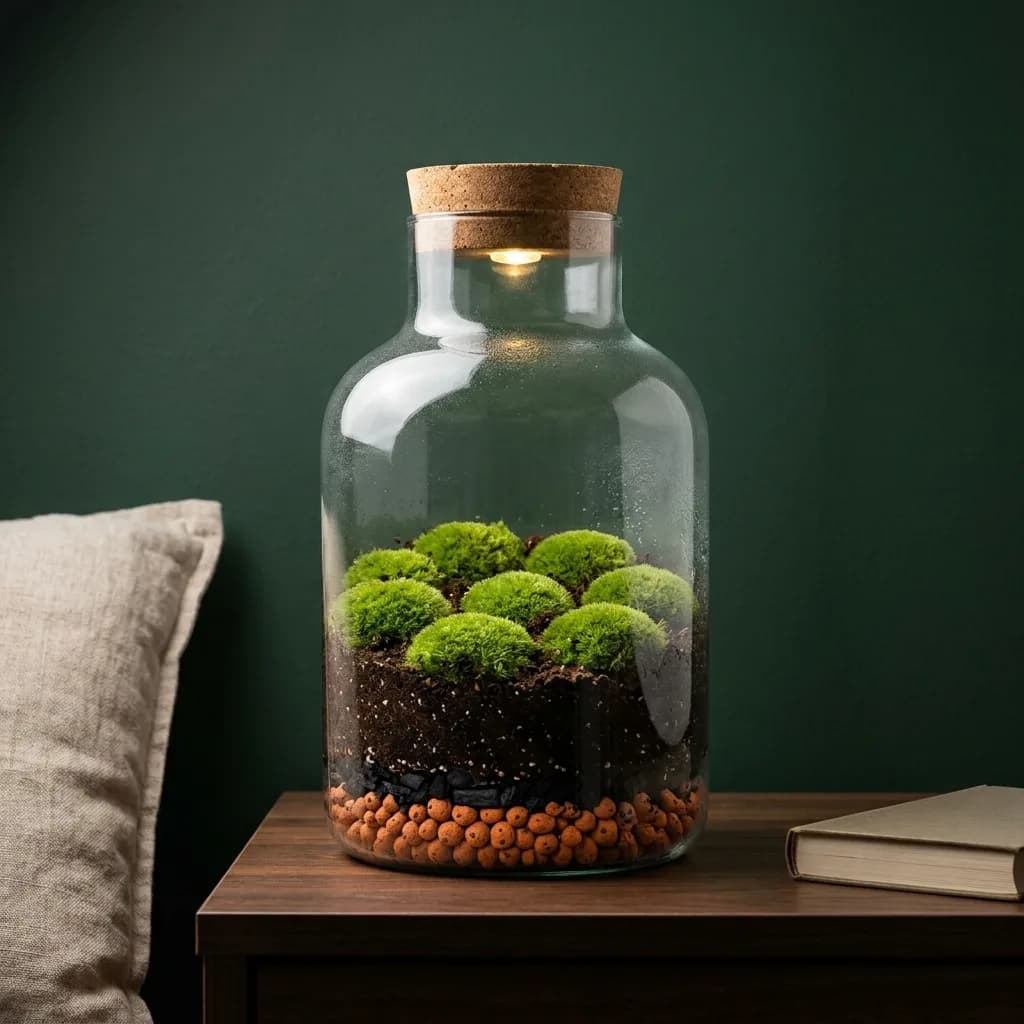
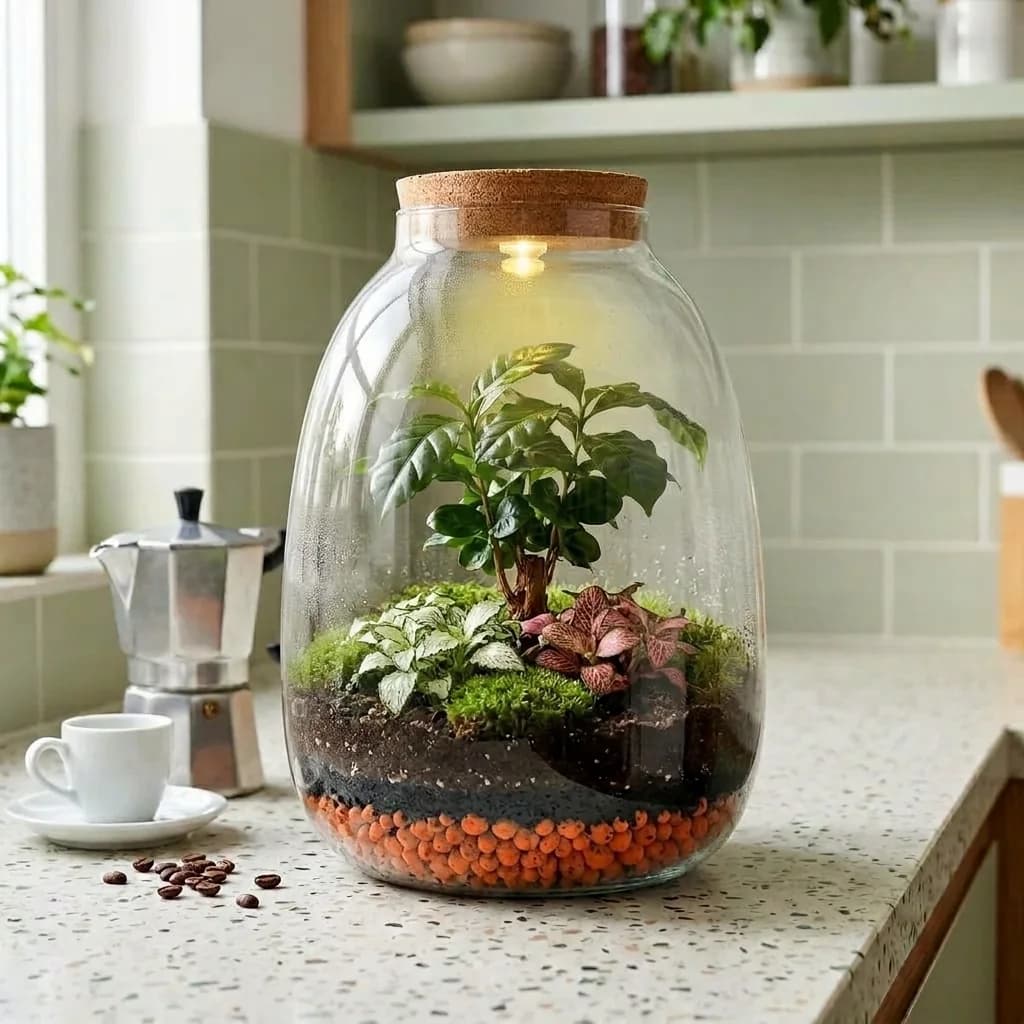
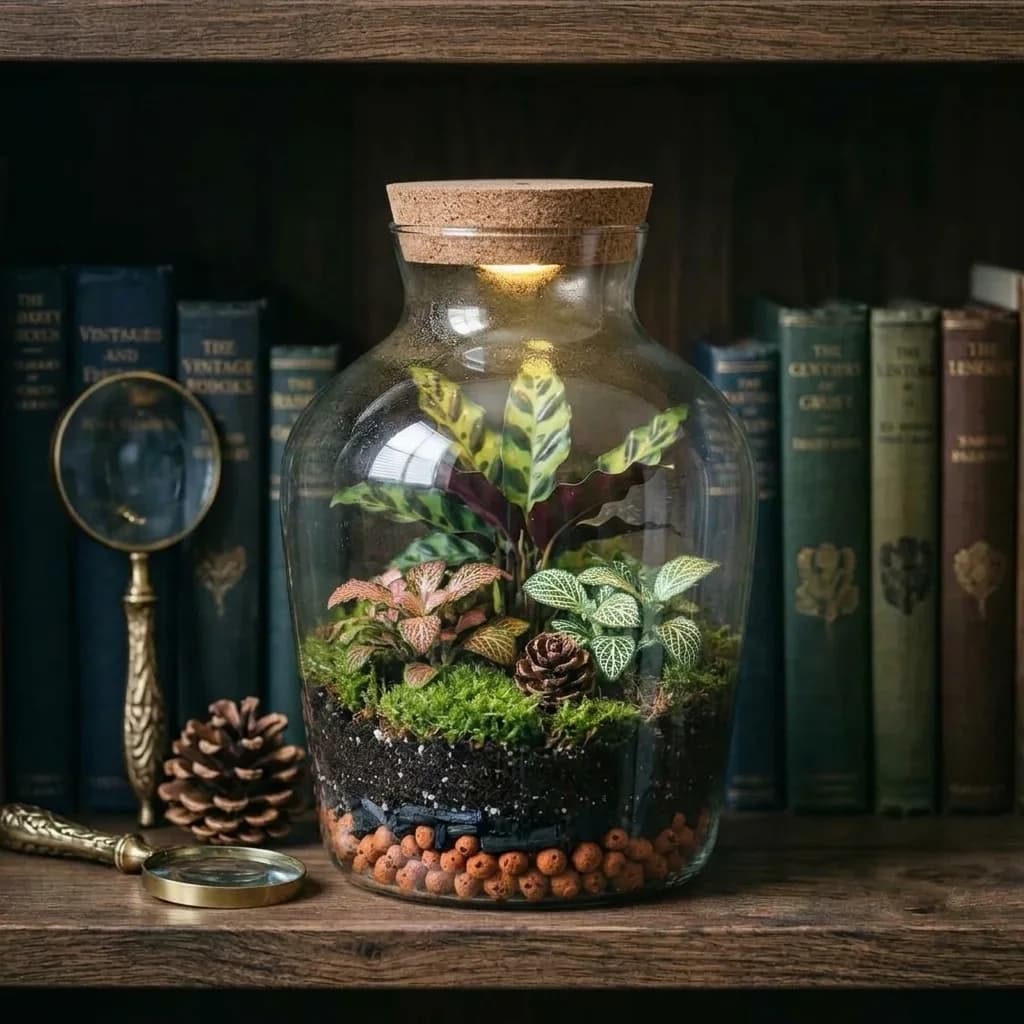
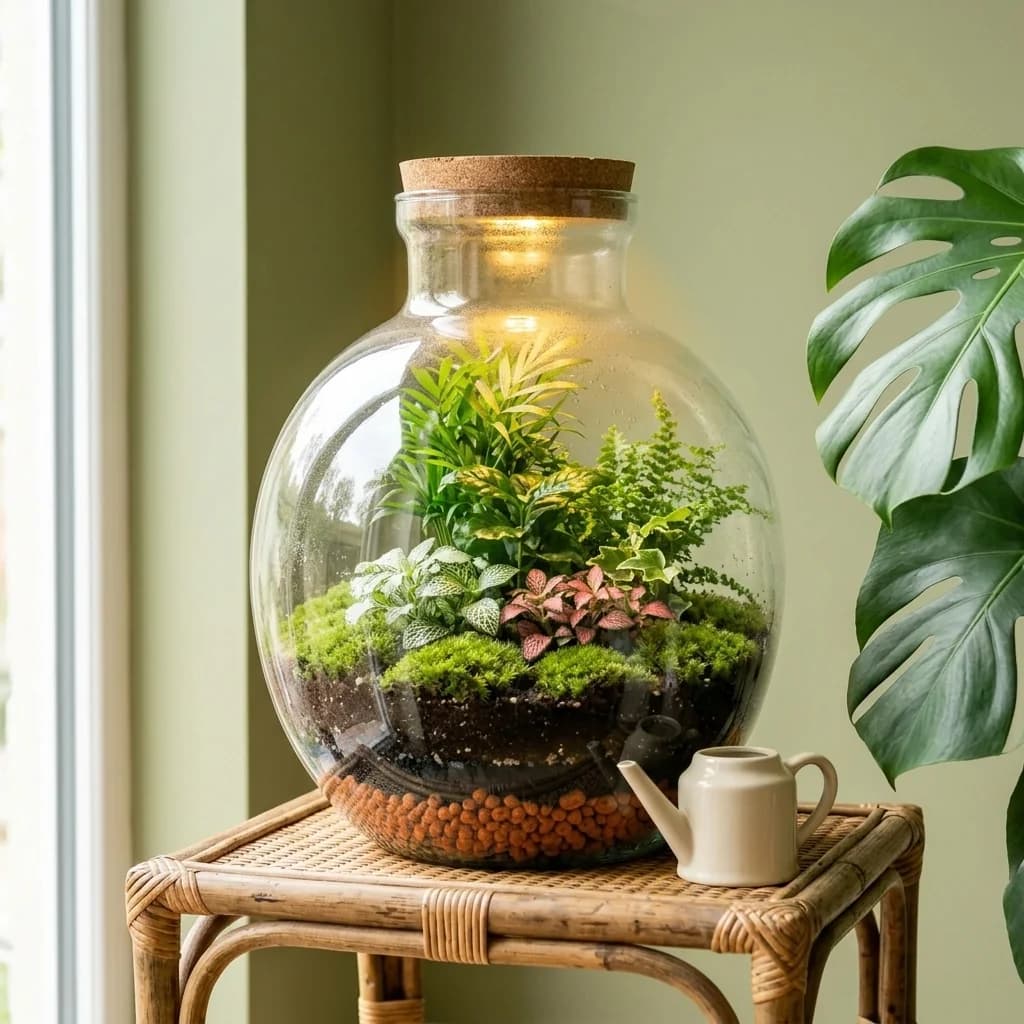
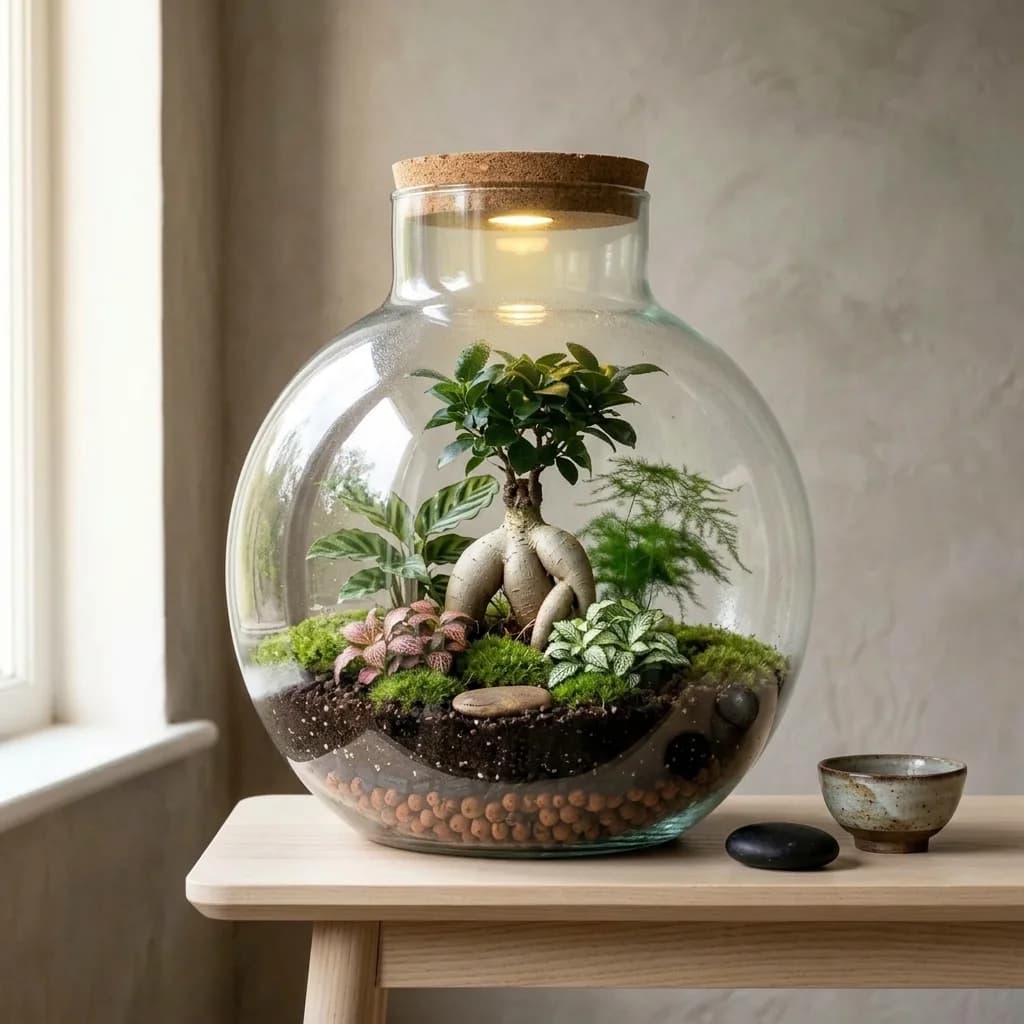
A close-up photo taken on a phone in macro mode is almost always enough to settle the doubt. The same reasoning applies to terrariums, where the small fauna is far more varied: our guide on fungus gnats in a terrarium sets out how to sort the useful organisms from the ones that cause trouble.
A short cycle, which repeats as long as the compost stays damp
The female lays her eggs in the surface layer of the compost. That is why an infestation seems to keep coming back: every generous watering puts the surface back into exactly the state the species is looking for.
| Stage | Where it is | Typical length | What acts on it |
|---|---|---|---|
| Egg | In the very top millimetres of the compost | A few days in a heated room | A surface that dries out |
| Larva | In the top few centimetres, near the roots | One to two weeks | Nematodes, watering from below |
| Pupa | Buried in the compost | A few days | Nothing you can reach |
| Adult | In flight, on the compost, against windows | A few days to a week | Yellow traps |
In summer, or in a heated room, the full cycle closes in about a month. It stretches out in a cool room. That length sets the right horizon: something done today is not judged two days later but after three to four weeks, once the generation already in the compost has finished hatching.
Correct the watering first
Everything else is secondary. The larvae need compost that is damp and rich in organic matter; compost whose surface dries between waterings becomes inhospitable, and the population falls on its own.
- Let the top two or three centimetres dry before each watering, as long as the plant can take it. A fern or a delicate seedling will not accept the same drying out as a tough foliage plant.
- Water from below. The pot stands in a saucer of water, the compost drinks by capillary action, and the surface stays dry. Tip away whatever is left after twenty minutes or so.
- Always empty saucers and cachepots. Water standing unseen at the bottom of a cachepot keeps the whole root ball damp.
- Take out decaying matter. Fallen leaves, dead roots, seeds that never came up: all of it feeds the larvae directly.
- Cover the surface, as a last resort, with half a centimetre of coarse sand or fine grit. The barrier hinders egg-laying and the emergence of the adults. It does not replace correcting the watering, and it makes the moisture harder to read.
Still, you have to know whether the compost really is too wet, which a finger pushed in 5 cm already tells you, and which a probe measures the same way from one time to the next. On a scale of 1 for dry compost to 10 for waterlogged compost, a reading that never drops below 5 or 6 between waterings explains the flies on its own.
The whole watering method is covered in our guide on watering houseplants.
Catch the adults, treat the larvae
Yellow sticky traps laid flat or pushed in near the compost cut the number of adults and, above all, let you follow the trend: a trap replaced every week gives an honest measure of progress. One important reservation, pointed out by the Royal Horticultural Society: these traps also catch a great many non-target invertebrates, including useful predators. Use them in small numbers, for the length of the episode, then take them out.
Biological control works where the traps reach nothing, that is on the eggs, the larvae and the pupae. Specialist suppliers offer three helpers: the soil nematode Steinernema feltiae, predatory mites and a small beetle, the rove beetle Atheta coriaria. They are applied into the compost, with the watering for the nematodes. These organisms are not strictly specific: the nematodes can affect other insects and the predators eat other small invertebrates. That is a reason to keep them for situations where seedlings or cuttings are at risk, rather than using them on principle.
Repotting remains the most drastic option when a root ball is badly affected. The plant moves into fresh compost from a bag that was still sealed, and the old compost goes on the compost heap rather than back into use: the eggs and larvae go with it. A fine, free-draining compost also limits any return of the problem, as our comparison of seed compost and multi-purpose compost sets out.
Keeping them from coming back
- Keep compost bags closed and under cover between uses.
- Isolate and watch new arrivals for two or three weeks, and inspect the root ball before settling them near the others.
- Never reuse compost that fungus gnats have come out of.
- Keep heating and watering consistent: a warm room and damp compost are the pairing that lets the species breed indoors all year round.
- Judge over time. A single day without a gnat proves nothing: it is the trend over several weeks, traps in hand, that says whether the episode is over.
The trickiest period is late-winter sowing, when everything works in the insect's favour: trays kept constantly damp, a heated room, a lid that holds the moisture in and seedlings with no defences. The answer is to take the lid off as soon as the seedlings appear, to water the trays from below and to set a yellow trap over each tray from the very first sowing, so the episode is spotted at its start rather than at its peak. A tray watched this way is put right within days, while an infestation found three weeks later often costs the whole batch.
One last point is worth repeating: outdoors, fungus gnats are part of a balanced garden and do no damage there. The problem belongs to a pot that is heated and watered without pause, not to the insect.
Sources
Frequently asked questions
Can fungus gnats kill a plant?
A plant that has been settled for two or three years, with a developed root system, is in almost no danger: the larvae feed mainly on decaying plant matter and on the fungi that grow in it. The risk is real, on the other hand, for seedlings and soft cuttings, whose roots or stem bases some fungus gnat species attack. So it is on seed trays that you have to react quickly. On a mature plant the flying adults are a nuisance, not a danger.
Where do they come from when the house is clean?
They almost always arrive with compost or with a plant. A bag of compost opened long ago, a plant bought at a garden centre or a pot brought in from the balcony often already holds eggs or larvae. How clean the house is plays no part: what makes them multiply is compost that is constantly damp and rich in organic matter, not dust. Outdoors, these same insects take part in decomposition and cause no trouble at all.
Do washing-up liquid and cinnamon work?
These household remedies circulate widely and their effectiveness is not established. Compost watered with soapy water can also damage young roots, and a layer of powder on the surface changes nothing about the moisture deeper down, which is the real cause. That energy is better spent on correcting the watering, setting yellow traps and, for seedlings at risk, using nematodes. The result is slower on day one and far more solid after three weeks.
Should the plant and its compost be thrown away?
Rarely, and never as a first move. Correcting the watering is enough in most cases, because the larvae do not survive compost whose surface dries out regularly. Repotting into fresh compost stays useful when a root ball is badly affected or a seed tray is being destroyed. The old compost then goes on the compost heap rather than in the bin.