

Rescue a supermarket herb: divide it and repot it
A shop-bought pot of basil holds dozens of seedlings crowded into a few centilitres of compost. Splitting it into three or four clumps and repotting them changes how long it lives.
In this guide
A pot of herbs bought in a supermarket is not a plant: it is a very dense sowing, several dozen stems raised together under glass to be sold within a few days. The answer comes down to one job, done as soon as you get home from the shops: take the root ball out, cut it into three or four whole blocks and repot each block in its own pot, with fresh compost. A basil treated this way is picked for months instead of a fortnight.
Why these pots run out so fast
The shop pot is designed for a short life. The seed is sown in very large numbers to give an attractive volume of foliage straight away on the shelf, and the compost, often a light mix with very little feed in it, only has to last as far as the till.
Three limits add up once the plant is home.
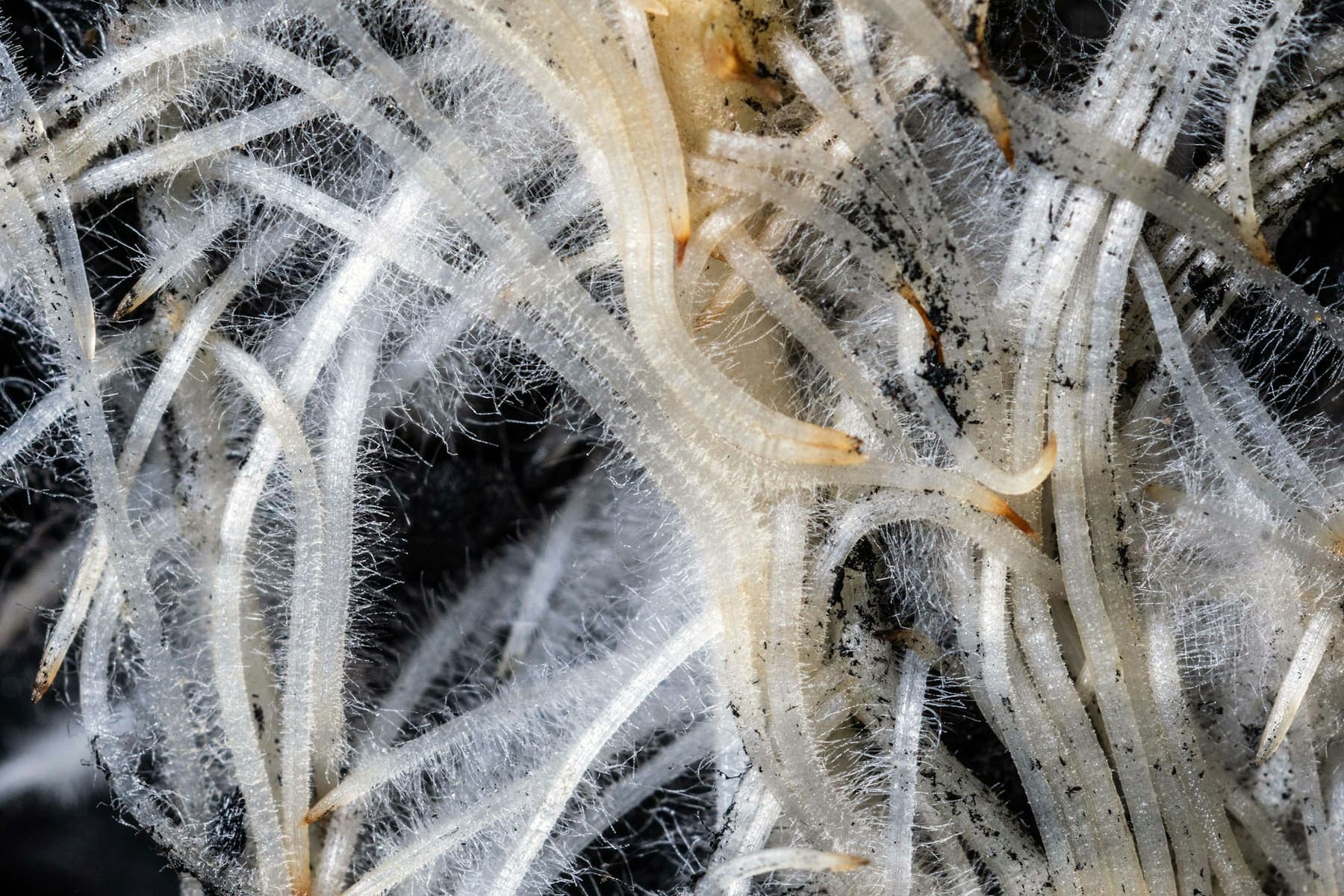
- Room. The roots already fill the whole pot at the moment of purchase. They coil, they tangle, and they find no fresh space to explore.
- Water. A root ball packed with roots holds almost nothing: water runs straight through and out of the bottom in seconds, while the centre stays dry.
- Food. The few nutrients present at the start are used up in two or three weeks. The leaves pale, and new shoots come smaller.
The clearest sign is this: the plant wilts between two waterings that are already close together, and the new leaves are smaller than the old ones. Those are exactly the signs that, on a houseplant, say repotting is due.
Not every herb can be divided
Before cutting, you need to know what is in the pot. Some species are clumps of seedlings that division relieves; others grow on a single root that a blade would damage.
| Herb | What the pot holds | Division | Life expectancy afterwards |
|---|---|---|---|
| Basil | Several dozen crowded seedlings | Yes, into 3 or 4 blocks | A season, longer if the room stays warm |
| Chives | A clump of small bulbs | Yes, very easily | Several years, it comes back after every cut |
| Mint | A rootstock with running rhizomes | Yes, every fragment takes | Several years |
| Parsley | Seedlings with a taproot | Rather not: wide blocks or nothing | Two years, it runs to seed in the second |
| Coriander | Seedlings with a taproot | No, it bolts if disturbed | A few weeks, sow again regularly |
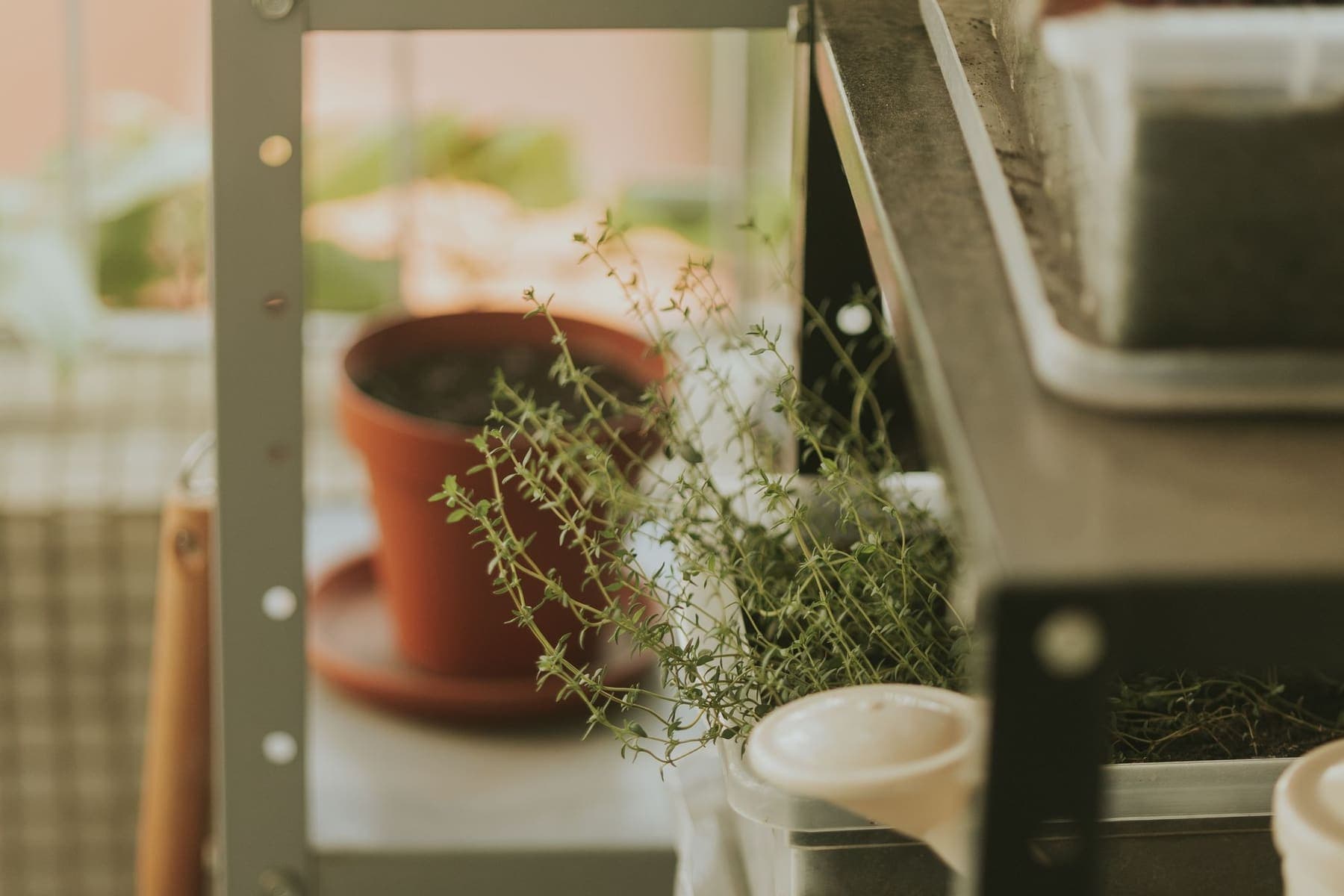
| Thyme, rosemary | A single plant grown from a cutting | No, repot it as it is | Several years |
For basil, chives and mint, then, division is the right move. For coriander, better to use the pot up quickly and start again from seed: our calendar for sowing indoors gives the timings. Thyme and rosemary simply want a bigger pot and a free-draining compost.
Setting up the workbench
Repotting makes a mess and goes better in one run, without having to go and fetch a tool halfway through. Gather in advance:
- Pots with drainage holes, terracotta for preference. The porous wall lets the roots breathe and carries off excess moisture, which suits herbs well. A 14 cm pot takes one clump of three or four stems; a 20 cm pot takes three or four clumps together.
- Fresh compost, potting or multipurpose, moistened before use.
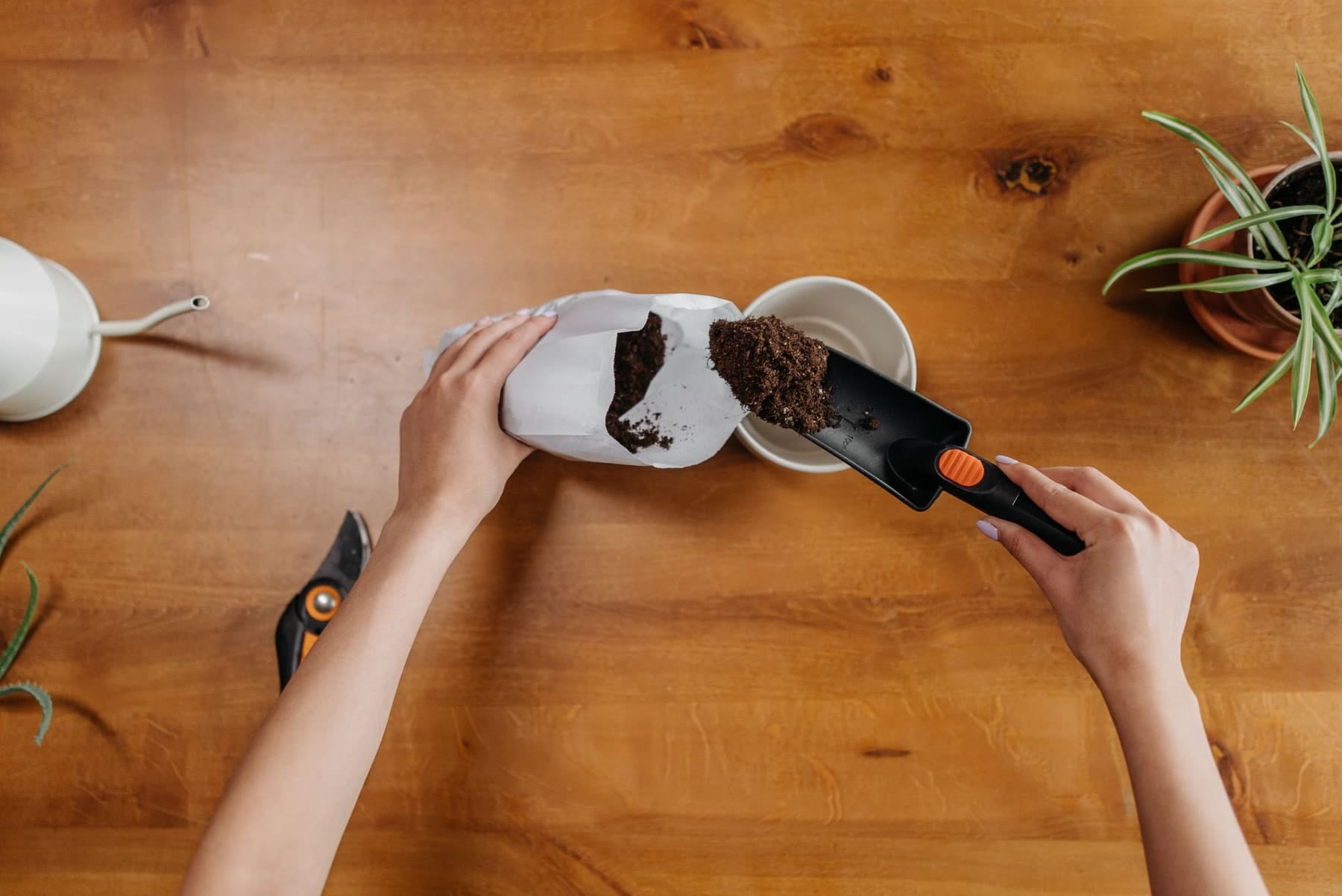
- A hand trowel and a dibber, handier than a spoon for filling without compacting and for settling a root ball.
- A clean knife or a straight blade, to cut the root ball cleanly.
- Saucers, or one large tray.
New terracotta pots are soaked for around thirty minutes in clean water before first use: dry terracotta otherwise absorbs part of the water meant for the compost.
Dividing and repotting, step by step
- Water the plant an hour beforehand. A moist root ball comes apart without crumbling; a dry one turns to dust and takes the fine roots with it.
- Get the root ball out. Turn the pot over, one hand flat on the compost, and tap the base. Never pull on the stems.
- Look at the roots. If they are spiralling round against the wall, unwind them by hand or cut the longest: left as they are, they would go on circling instead of colonising the fresh compost.
- Cut the root ball into three or four blocks. Stand it on its side and cut cleanly through, like a slice of cake. Each block must keep a good share of roots and soil. Separating the stems one by one would do far more damage.
- Fill the pots one third with moistened compost, set a block in the middle, fill in around it and firm barely at all with your fingers.
- Keep the original depth. The crown, the point where the stem meets the roots, stays at the same level as before. Leave one or two centimetres clear below the rim so you can water without it running over.
- Water straight away, gently, until water beads at the drainage hole. Empty the saucer some twenty minutes later.
The fortnight that follows
The first days are a convalescence: cut roots heal and start again, and the plant barely grows.
Light first. Put the pots in the brightest place in the house, without pressing them against the glass. Allow four to six hours of direct light for kitchen herbs; below that the stems stretch and the leaves space out, and a grow light becomes useful. Watch out for cold glass in winter: basil blackens from around 10 °C.
Water next, but without excess. Freshly repotted blocks sit in a volume of compost bigger than themselves; that compost stays damp for a long time, and watering them at the old rhythm would amount to drowning them. The principle is set out in our guide to watering houseplants: you water when the compost asks for it, never by the calendar.
No feed straight away. Fresh compost feeds the plant for three to four weeks. After that, a liquid organic feed at 5 mL per litre of water, every two weeks from March to October, keeps production going. It always goes onto compost that is already damp, never onto a dry root ball, and feeding stops in winter when growth slows.
The first pinch after two to three weeks. Once the clumps have taken and reach fifteen centimetres or so, pinch the tip of each stem just above a pair of leaves. New shoots start from that point and the plant fills out instead of running up. Flower buds are removed as soon as they appear. Pinching is covered in detail in our guide to basil in hydroponics, and it applies just as well to a pot of compost.
What goes wrong most often
- Separating plant by plant. This is the costliest mistake: almost all the fine roots are destroyed and the plant never takes.
- Repotting into too large a pot. A volume of compost far bigger than the root ball stays wet too long and suffocates the roots. A diameter 3 to 5 cm larger than the old one is enough.
- Choosing a container with no hole. Water collects in the bottom, out of sight, and the roots rot. A decorative cache-pot stays a cache-pot: the pot with a hole slips inside it, and any water that collects there is tipped out.
- Burying the crown. A stem covered with damp compost ends up rotting at the base.
- Making up for it with extra feed. A weakened plant does not take up more: mineral salts build up, leaf tips brown and a white crust appears on the surface.
Sources
Frequently asked questions
How long does a divided clump take to start growing again?
Allow two to three weeks before you see new shoots, and patience is the real difficulty here. During that time the cut roots heal and colonise the fresh compost, with nothing happening above the surface. A clump that wilts slightly for the first two days and then picks up is a good sign, not a warning. Leaves that turn clearly yellow after a week, on the other hand, nearly always point to too much water.
Can a herb be repotted in winter?
Yes for a plant bought in a supermarket pot, since it was grown under glass and does not follow garden seasons. Repotting is normally done during the growing period, in spring or early summer, but here waiting would do more harm than the job itself. Recovery will simply be slower if light is short. A grow light makes up for most of that slowdown.
Should the seedlings be separated one by one?
No, and it is a common mistake. Pulling each stem apart breaks nearly all the fine roots and the plant takes weeks to recover, when it recovers at all. Better to cut the root ball into three or four whole blocks, each with its share of roots and soil. Each block then behaves like a small independent clump.
Which compost should I use to repot a herb?
A potting compost or a multipurpose compost will do, as long as it drains well. Seed compost on its own would be too poor for an established plant: mixed half and half with a richer compost, though, it makes a good compromise. Mediterranean herbs such as thyme and rosemary appreciate an extra third of sand or perlite. In every case, the pot must have a hole.