

Sowing indoors: the month-by-month calendar for herbs and vegetables
Aubergines and peppers in February, tomatoes in March, basil from spring onwards: what to sow indoors each month, at what temperature, and how to get transplanting right.
In this guide
Indoors, the first things to sow are the vegetables that need a long season: aubergines from February, peppers from mid-February to early April, tomatoes from late February to early April. Basil follows, from March to July. Most seeds germinate at around 18 °C; the real challenge comes afterwards, when the seedlings demand plenty of light. The dates below come from Royal Horticultural Society fact sheets, set for a temperate climate: shift them by a few weeks depending on the last frost date in your area, earlier in the south, later at altitude.
Why sow indoors?
- Gain time on the season. Tomatoes, peppers and aubergines need a long growing period. Sown in the warmth at the end of winter, they're ready to plant out as soon as the frosts have passed, and crop for longer.
- Protect tender plants. These vegetables, like basil, can't cope with frost. Indoors, young plants grow up sheltered.
- Control germination warmth. Some seeds need a temperature the garden won't offer for several months.
- Grow without a garden. In a flat, herbs and microgreens can be sown and harvested on the spot, all year round under a lamp.
January-February: the long-season vegetables
Aubergine
This is the earliest, and the most demanding when it comes to warmth. The RHS recommends sowing it indoors from February; January is only worth considering with a heated greenhouse. Its seeds need at least 21 °C to germinate: a heated propagator or a warm spot in the house are needed. Once up, keep the seedlings at around 16 to 18 °C, in full light. For aubergines destined for outdoors, you can wait until early March.
Pepper
For a greenhouse crop, sow from mid-February to early March. The seeds germinate between 18 and 21 °C, in a propagator or on a warm windowsill. The seedlings are then kept at around 16 to 18 °C, in full light, with the compost kept moist.
Tomatoes for the greenhouse
If your tomatoes will end up under glass, sow from late February to mid-March. Without a greenhouse, wait until the following month: plants sown too early become tall and leggy before they can go outside.
March: outdoor tomatoes, peppers and the first basil
- Tomatoes for outdoors: sow from late March to early April. The seeds germinate at around 18 °C.
- Peppers for outdoors: late March or early April.
- Aubergines for outdoors: by early March at the latest.
- Basil: sowing can start in March. It germinates well at around 20 °C.
This is the busiest month: make sure there's room in the light for all the trays before you start sowing. Seedlings crowded away from the window will leggy up within days.
April: the last vegetable sowings and basil
- Tomatoes: up to early April for an outdoor crop.
- Peppers: by early April at the latest.
- Basil: keep sowing, in small batches. The RHS gives sowings from March to July.
In spring, most tender flowers and vegetables destined to be planted outside in late spring or early summer are also sown indoors. Check the instructions on each seed packet: they remain the best guide for a given variety.
May to July: basil in relay
Basil can still be sown up to July. Keep the young plants indoors as long as there's any risk of frost. By sowing a few seeds at regular intervals, you replace plants that are tiring or bolting.
All year round under a grow lamp
With a grow lamp, the calendar fades away for plants that are harvested young:
- Microgreens of radish, sunflower, pea or rocket are ready in one to two weeks, in any season. Follow our microgreen growing guides.
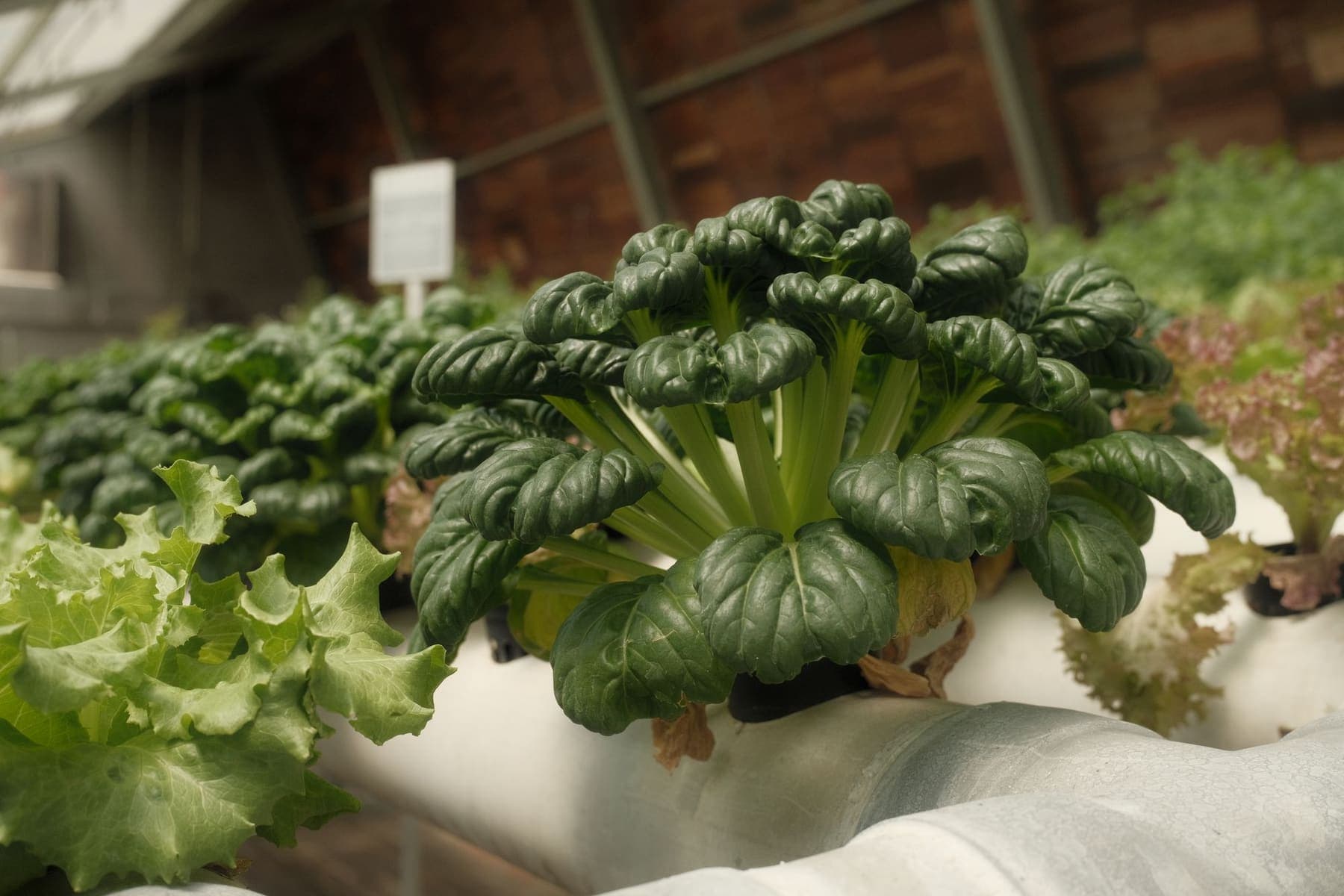
- Basil and herbs grown hydroponically grow continuously in a heated room. Our guide hydroponic basil covers sowing in plugs and pruning.
Light, warmth, transplanting
Sowing
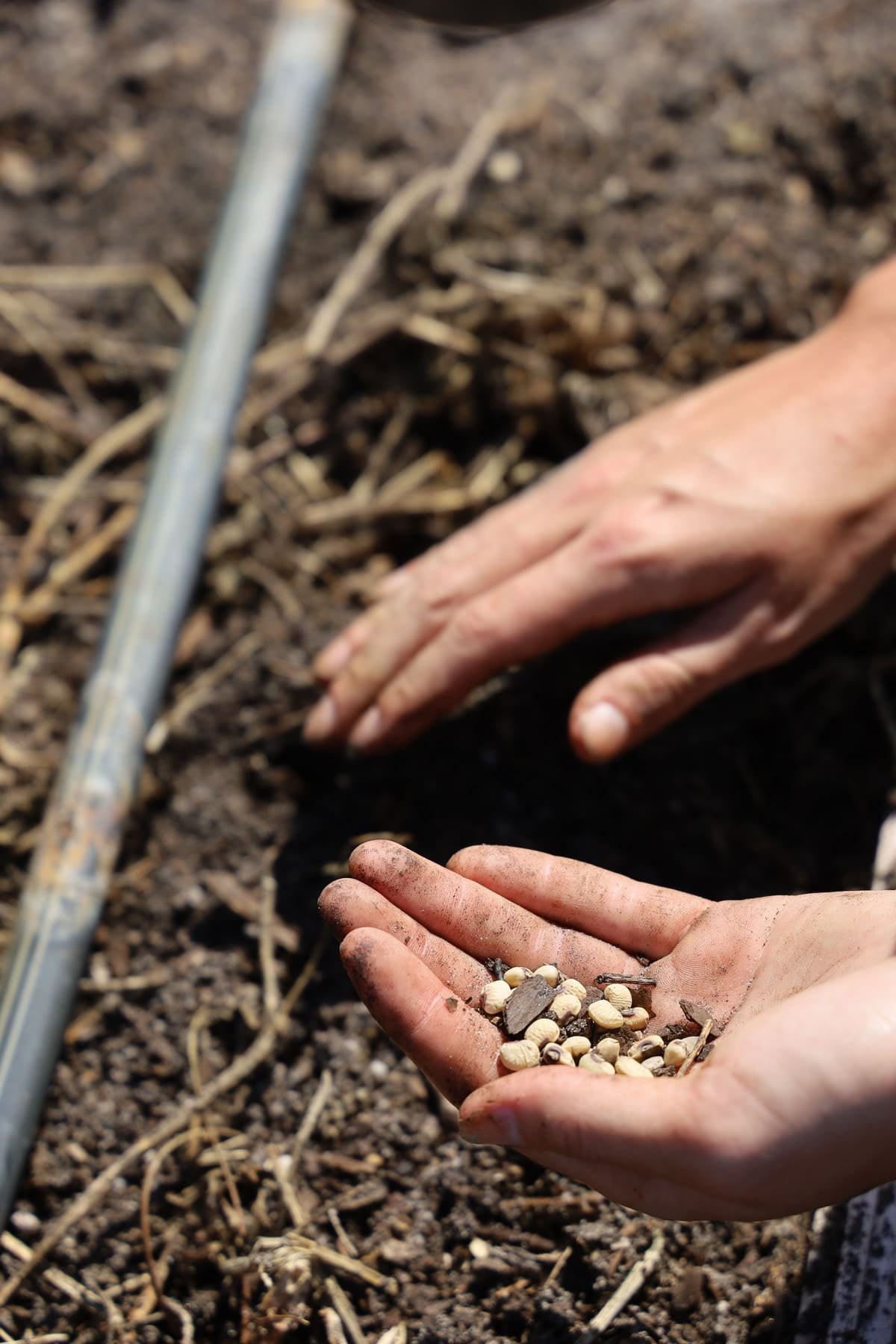
Fill trays or pots with a peat-free seed compost, up to just below the rim, not forgetting the corners. Sow thinly and evenly; large seeds are placed one by one. Cover with a thin layer of sieved compost, generally no thicker than the seed itself. Water with a fine spray so as not to shift the seeds.
Warmth
Most seeds germinate at around 18 °C, but needs vary: around 20 °C for basil, up to 21 °C or more for aubergine. Place a sheet of glass, a propagator lid or a clear tray over the pots: it holds in humidity and speeds up germination. Remove this cover as soon as the seedlings appear.
Light
As soon as they come up, give the seedlings as much light as possible. Otherwise, they stretch towards the window, become thin and flop over. At the end of winter, a windowsill isn't always enough: our guide grow lamps indoors explains how to add extra light and how far to place the lamp.
Transplanting
Once the seedlings are large enough to handle, generally at the two true-leaf stage, move each one into its own pot. This step stops them crowding each other and gives them room to grow. For peppers, the RHS recommends a pot of 7.5 to 9 cm. Always hold a seedling by its leaves or its root ball, never by the stem.
Hardening off and planting out
Before planting outside, gradually get young plants used to the outdoors: this is hardening off. Tomatoes go to their final spot at the start of summer, once the temperature stays reliably above 16 °C. Peppers stay warm indoors until at least the end of May. Aubergines are planted in an unheated greenhouse in early May, and outdoors in late May or early June, once the frosts have passed.
Common mistakes
- Sowing too early. Plants sown weeks before they can go outside stretch, weaken and cope poorly with planting. A few days' delay is better than a month too early.
- Sowing too thickly. Crowded seedlings compete for light and stretch. Sow thinly, then transplant before the leaves start to overlap.
- Burying the seeds too deep. A thick covering delays or prevents small seeds from coming up. Stick to the depth of the seed itself, unless the packet says otherwise.
- Leaving the cover on after germination. Trapped humidity serves no purpose once the seedlings are up: remove it straight away.
- Watering with a jet. A strong stream of water shifts the seeds and flattens the seedlings. Water with a fine spray, or from below by standing the pots in a saucer.
- Moving plants outside with no transition. Going from a heated room to the open air in one day slows their growth. Take the time to harden them off.
- Forgetting labels. Two weeks after sowing, all the seedlings from the tomato, pepper and aubergine family look alike. Note the variety and the date on each pot.
The calendar at a glance
- February: aubergines, peppers under glass, tomatoes under glass at the end of the month.
- March: tomatoes under glass until mid-March, outdoor aubergines, outdoor peppers and tomatoes at the end of the month, first basil.
- April: last outdoor tomatoes and peppers, basil.
- May to July: basil in staggered sowings.
- All year round under a lamp: microgreens and hydroponic herbs.
The kit
A good seed compost, some seeds and a few tools are enough for most indoor sowing.
Find seeds and supports in our seeds and pots and substrates sections.
Sources
Frequently asked questions
Can you sow indoors without a grow lamp?
Yes, on a bright, warm windowsill. But at the end of winter, light is often lacking and seedlings stretch out: a lamp becomes useful as soon as the seedlings lean strongly towards the glass.
Do you need a heated propagator for sowing?
It isn't essential for most seeds, which germinate at around 18 °C. It does help, though, for aubergines and peppers, which need more warmth to germinate.
Can you sow into multipurpose compost?
Yes, as long as you sieve it to get a fine texture. The RHS recommends a peat-free seed compost or, failing that, sieved peat-free multipurpose compost.