

Basil in hydroponics: from sowing to continuous harvest
Sowing in plugs, heat, light, pruning and blackening leaves: everything you need to grow soil-free basil indoors and harvest it for months.
In this guide
Basil is one of the easiest herbs to grow in hydroponics: it germinates quickly in warmth, roots well in a nutrient solution and can be harvested for months if pruned regularly. If it blackens indoors, think first of cold: its leaves can blacken from around 10°C, for example against a cold window pane or near a window left open in winter. Downy mildew and stagnant humidity on the foliage come next. Here's how to take it from sowing to harvest, and how to react when it struggles.
Why basil thrives in hydroponics
Basil is a warm-climate plant, grown for its leaves. It brings together everything that works well without soil: fast growth, a small footprint and a harvest that doesn't require waiting for fruit. The University of Illinois Extension actually names lettuces and herbs as the best plants for starting out in hydroponics, precisely because they grow fast and take up little space.
The system gives it a steady supply of water and minerals, without the ups and downs of a forgotten watering. It doesn't replace either warmth or light: indoors, supplemental lighting is often necessary.
If you're new to soil-free growing, start with how hydroponics works: this guide explains the role of the nutrient solution, oxygen and the support medium.
Which variety should you choose?
For a first attempt, take a large-leaved "Genovese" basil, also sold as "Sweet Basil". This is the classic basil of Italian cooking, fragrant and vigorous. Choose seeds intended for vegetable growing, not coated with treatment products, since you'll be eating the leaves.
If basil downy mildew has already given you trouble, note that varieties bred for resistance to this disease exist: it's worth checking when buying your seeds.
Sowing basil in coco plugs
Sowing plugs hold the seed, keep it moist and let the roots pass through. Once the seedlings are established, you slide them straight into the system's basket, without transplanting or rinsing off soil.
- Moisten the plugs with clean water, then let them drain. They should be moist, not soaked.
- Place a few seeds in the hollow of each plug. Barely cover them: for most seeds, the covering layer shouldn't exceed the thickness of the seed.
- Keep warm and humid. Basil seeds germinate well around 20°C. A clear cover retains humidity; remove it as soon as the seedlings appear.
- Wait about five to seven days for the first seedlings to emerge.
- Thin out. Once the seedlings are big enough to handle, keep the strongest one in each plug.
- Place the plugs into the system once the roots start to grow out of them.
For a continuous harvest, sow a new plug roughly every two weeks: the young plants take over from the older ones.
Light, temperature, nutrient solution
Light
Basil loves the sun. Behind a window, especially in winter, it soon lacks light: its stems stretch, the leaves space out and the plant droops. A grow light on a timer solves the problem. Our guide indoor grow lights explains how to choose one and how far away to place it.
Temperature
This is the most important setting. Basil suffers from cold well before frost: the University of Illinois notes damage and blackened leaves from as low as 50°F, or 10°C. Set the system up in a heated room, away from draughts, an entrance door or a window left open for long periods in winter. A windowsill can become very cold at night, even if the room feels pleasant during the day.
The nutrient solution
Use a fertiliser formulated for hydroponics and follow the dose on the label: a more concentrated solution doesn't make it grow faster, it can instead burn the leaves. Most soil-free plants absorb nutrients best when the solution's pH sits between 5.5 and 6.5. Top up the level with clean water and renew the solution regularly. The full routine is covered in our guide indoor hydroponics without the jargon.
First harvest and pruning to branch out
The first pickings are possible around four to five weeks after sowing, once the plant carries several tiers of well-formed leaves.
Don't pick the large lower leaves one by one: the plant would grow leggy on a single stem. Instead, cut the tip of the stems, just above a pair of leaves. Pinching the tip this way makes new shoots appear at that spot, and the plant becomes bushier, rounder and more productive. Take a little from each plant rather than a lot from just one, and always leave enough foliage for the plant to keep growing.
The flowers
As soon as you see a spike of flower buds appear at the top of a stem, pinch it off. Letting basil flower changes the taste of the leaves, and the plant then puts its energy into seeds rather than foliage.
Why is my indoor basil blackening?
Three causes come up most often. Look closely at the underside of the leaves: it's what lets you tell them apart.
Cold
Leaves blacken suddenly, often after a cool night or prolonged airing, and the underside shows no fuzz. The plant isn't sick: its tissue has been damaged by cold. Move it to a warmer spot, remove the damaged leaves and, if the stems and heart are still green, let it grow back from new shoots.
Basil downy mildew
Leaves turn yellow, then a fuzzy growth appears on their underside; the affected parts eventually die off. The disease likes humidity and foliage that stays wet. Remove affected plants without delay, space out the remaining plants so air can circulate, and avoid wetting the foliage. For future sowings, choose a resistant variety.
Humidity on the leaves and lack of airflow
Even in soil, the Royal Horticultural Society advises avoiding splashing basil's foliage and watering in the morning instead. In hydroponics, don't mist the leaves in the evening and don't crowd the plants too closely: dense foliage that stays wet all night favours spots and disease.
And if the problem comes from the roots?
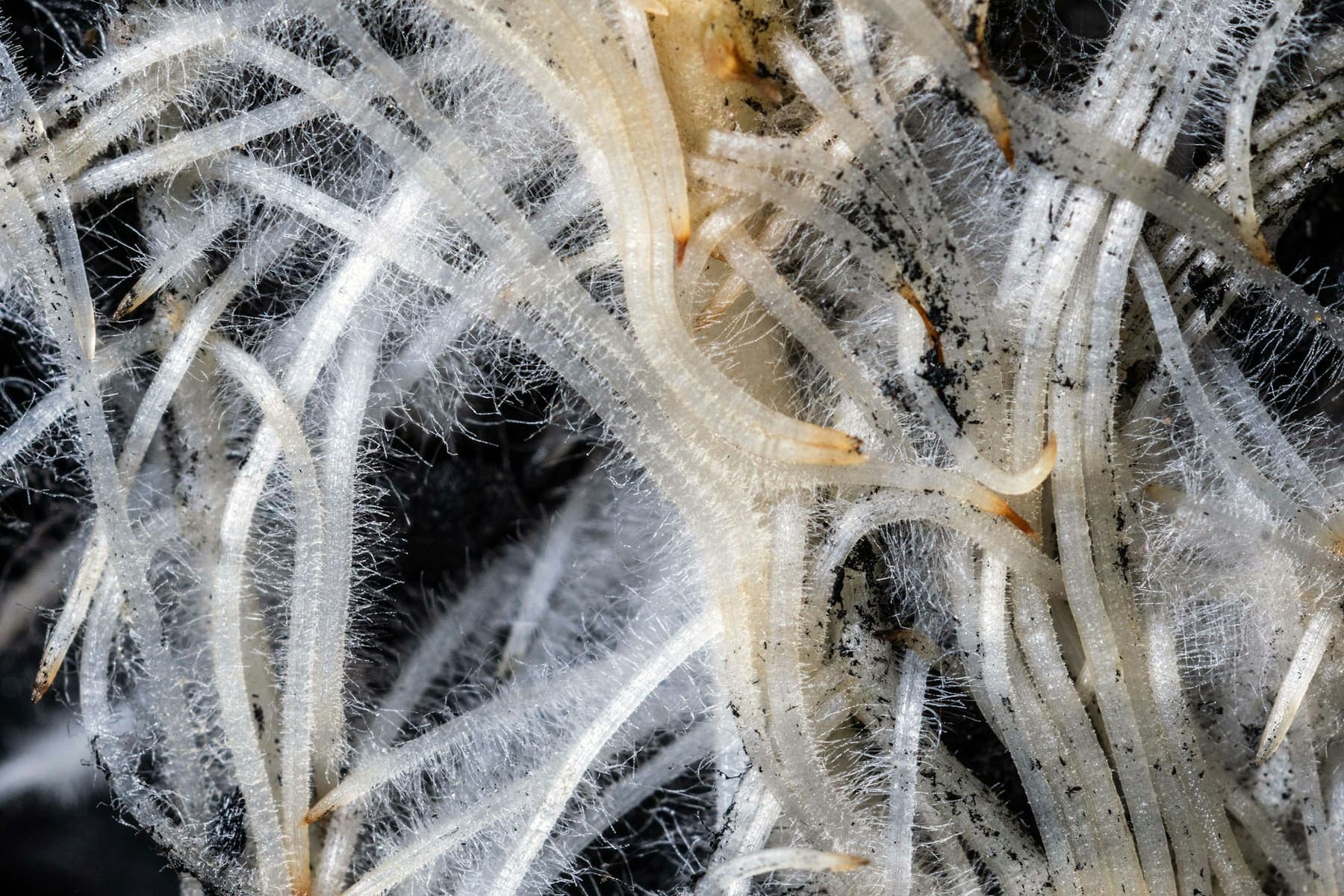
All roots need oxygen, and most die in stagnant water. If the basil wilts while the reservoir is full, take out a basket: healthy roots are pale, brown and mushy roots lack air. Check the pump or aeration, clean the reservoir and renew the solution. If it's mainly the leaf tips and edges that dry out, check instead that the fertiliser hasn't been overdosed.
How much can you harvest?
We won't give a figure: we haven't measured the output of a small indoor system under conditions reliable enough to publish. The harvest depends mainly on light, temperature, the number of plants and how regularly you prune. In practice, for regular use in the kitchen, several often-pruned plants give more than a single large plant that gets stripped, and staggered sowings avoid gaps when one plant ages.
What's next?
Basil coexists well with other leafy plants in the same system: our guide which plants to grow in hydroponics helps you put together a small herb garden. If you're still unsure about switching to soil-free growing, read our comparison hydroponics or soil, then browse the hydroponics section.
Sources
Frequently asked questions
Why does my hydroponic basil have yellow leaves?
Check the pH first: outside the 5.5 to 6.5 range, some nutrients are absorbed less well, even in a well-dosed solution. If the underside of the yellowed leaves has a fuzzy growth, it's more likely downy mildew.
Does basil grow back after cutting?
Yes, provided you cut the tip of the stem just above a pair of leaves and leave foliage on the plant. New shoots grow from that point, which makes the plant bushier.
Can you grow basil in hydroponics all year round?
Yes, indoors, if the room stays warm and there's enough light. In winter, a grow light is often necessary, and the system needs to be kept away from cold windows.
Does basil need a special fertiliser in hydroponics?
It needs a fertiliser formulated for hydroponics, which supplies all the minerals dissolved in the water. Follow the dose on the label: an overdose damages the leaves instead of speeding up growth.